Under Oslo Rain: A Nobel Prize Without Its Laureate
Outside the Grand Hotel in central Oslo, umbrellas bloom like a field of black flowers. Police lines crease the sidewalks. Reporters huddle under awnings, clutching notebooks and hot coffee as the Norwegian drizzle threads through their collars. Inside the gilded halls, a reserved seat remains empty. The press conference announced for Monday afternoon — a rare chance to see Maria Corina Machado on an international stage after months in hiding — never happened. It was postponed, then quietly cancelled. The question floating in the damp air felt almost metaphysical: where do you award a prize whose recipient cannot safely appear?
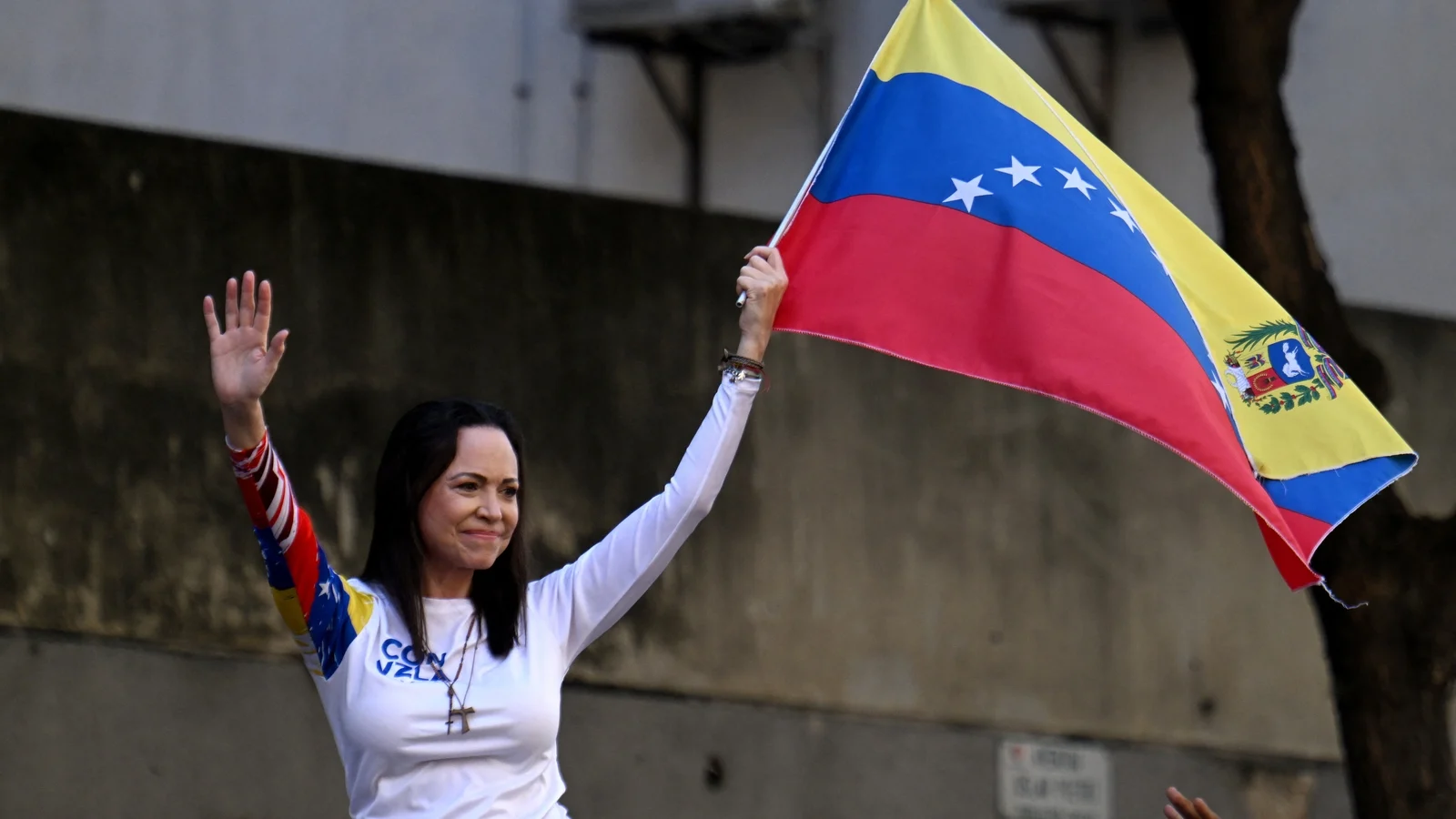
Machado, a 58-year-old opposition leader and thorn in Nicolás Maduro’s side, was awarded the Nobel Peace Prize in October for her years of campaigning for democratic change in Venezuela. The accolade has lit a global spotlight on a country that, over the past decade, has offered one of the most dramatic stories of political collapse and human displacement in the Hemisphere.
The arresting image of absence
The absence of Machado is itself a story. Her relatives — a mother, three sisters and three children, according to people who met them in Oslo — arrived days earlier, moving through the city with guarded smiles. “We came for dignity,” one sister told me, voice low, gloved hands folded around a cup of tea in a hotel lobby. “But dignity is complicated when your sister must decide between exile and a bullet.”
For many at the ceremony, the missing figure underlined a wrenching reality: modern awards and ancient dangers now intersect in new ways. A spokesperson for the Nobel Institute admitted that Machado had told officials she could not easily travel to Norway. Yet that admission left more questions than answers: Is she in a safe house in Caracas? Has she crossed a border? Is she in exile already, forced into mobility by threats and legal prosecutions?
Between fugitive and laureate
Venezuela’s government has declared Machado a criminal in absentia — accusing her of conspiracy, “incitement,” even “terrorism” — a label that can be used to bar travel or justify arrest. “If she leaves Venezuela, she will be considered a fugitive,” a government official told state media last month. For the regime in Caracas, branding opposition leaders as criminals is a method of delegitimizing dissent. For the dissidents and their supporters, it is a way to keep them off the streets, out of sight and out of reach of voters.
But the calculus of exile is not solely legal; it’s profoundly personal. “My mother keeps asking me if Maria is safe,” said a family friend who declined to be named. “She thinks if Maria comes, we will have proof that rebels can return without fear. But some of us believe that once you leave, you cannot truly lead the struggle at home.”
Leadership from afar
This is the headache for any resistance movement: can a leader in exile keep the flame alive? Political analysts say it’s possible but perilous. “Distance dilutes momentum,” said a Latin America specialist at a Washington think tank. “You can be loud abroad and visible, but you lose the daily contact, the street-level networks. Without tangible gains — free elections, splits in the security apparatus, international pressure — the inspiration of a figurehead can’t convert into change.”
Consider the broader context: since the political and economic collapse that accelerated in the mid-2010s, more than 7 million Venezuelans have left the country, according to UNHCR and IOM estimates. Hyperinflation wiped out savings, public services frayed, and oil production — once the engine of the economy — plummeted from millions of barrels per day to a fraction of that output. Those figures are not abstract; they are the reason entire neighborhoods emptied, why buses run with fewer passengers, why the elderly queue for hours for medicine.
Oslo’s tableau of allies, skeptics and unease
Oslo has become, for a few days, a Latin American stage. A handful of regional leaders arrived to lend moral weight to the award. Argentina’s president, among others, was expected. “We are here to salute bravery,” one visiting leader said outside City Hall, the historical vaulted ceiling humming above him. “Democracy is not an abstract concept. It is a people’s right. We hope Venezuela finds its way back.”
But the celebration is not unanimous. Machado’s ties and political alignments — she has publicly aligned with certain right-wing figures abroad — have drawn criticism. “A prize is not an endorsement of every political alliance,” a Norwegian political commentator told me. “The Nobel recognizes courage, not perfect consensus.”
Security and spectacle
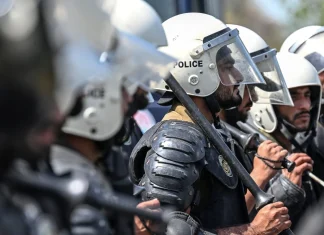
Police have kept vigil where laureates normally stay; journalists and curious tourists trace the predictable choreography of a Nobel week. Yet there is an undercurrent of something less ceremonial: a militarized Caribbean in the background, operations by the United States targeting suspected drug-running vessels, and a regime in Caracas insisting such moves are pretexts for regime change and seizure of oil resources. The signals are of a region on edge.
“It’s easy to write this as a story about one woman,” said a Venezuelan activist in Europe, “but it’s really about millions who cannot return, about families split across borders, about a democracy in slow motion. The prize is a spotlight, but the crisis doesn’t end when the cameras turn off.”
What does a Nobel mean in the age of exile?
Let me ask you, reader: what is the meaning of recognition when safety remains the price of attendance? The Nobel Peace Prize is a global megaphone, a moral argument applied to a person as much as a cause. Yet in this case, the accolade also exposes a paradox of modern dissidence: the international applause can both protect and endanger.
If Machado does not travel to Oslo, the prize will sit with her absent name and an empty chair. If she travels and cannot return, the opposition will face yet another rift — between those who stay and those who must find new ways to influence events from abroad. Either path will test the durability of the movement she has galvanized.
Looking beyond the ceremony
The story is larger than any single day in Oslo. It is about how nations reckon with authoritarian drift, how international institutions confer legitimacy, and how personal sacrifice intersects with strategic necessity. It is about the millions of Venezuelans whose lives were reshaped by economic collapse — more than 7 million people on the move — and about a region grappling with migration, security concerns, and geopolitical postures.
“A prize can inspire,” a human rights lawyer I spoke to said. “But it does not replace red lines or realistic strategies. The next steps — negotiations, international pressure, civic organizing — will determine whether this moment becomes a turning point or a footnote.”
On Wednesday the ceremony will proceed at Oslo City Hall. The world will watch the ritual of laureates: speeches, applause, the exchange of medals and diplomas. But for those who follow Venezuela closely, the real drama is quieter, happening in hidden rooms, border crossings, encrypted messages and the long, hard work of rebuilding public life. The question remains: can recognition from afar translate into change at home, or will the laureate’s absence mark yet another cost of dissent?