Smoke on the Horizon: Another Morning Interrupted by Missiles from the North
It began like a scene from a coastal postcard: grey water, gulls wheeling, fishermen resetting nets. Then, in the hush of early morning, a thin silver arc cut the sky and stitched a new tension into the air.
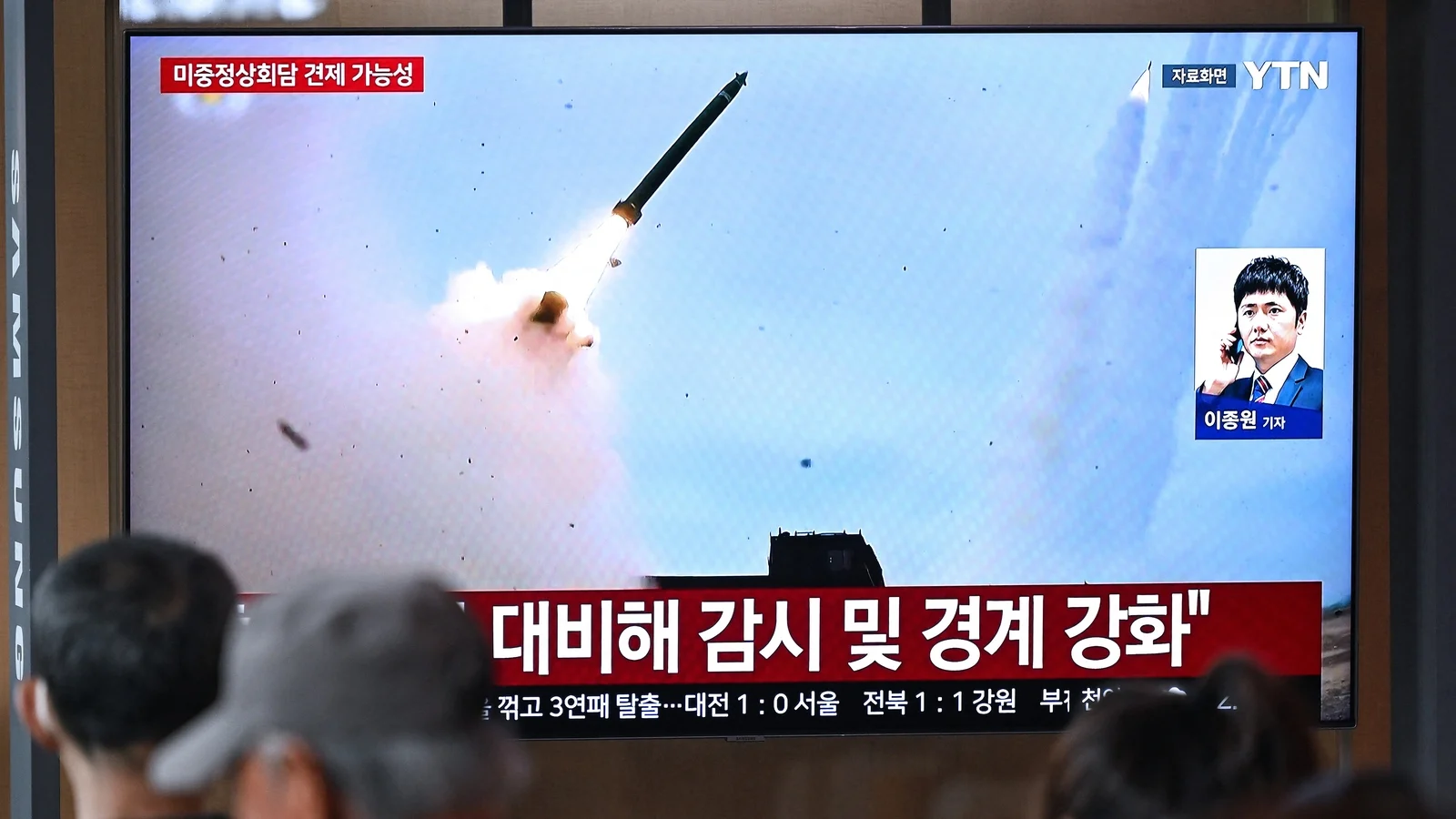
South Korea’s military announced shortly after that multiple projectiles had been launched from North Korea’s eastern shipbuilding region. Tracking data showed the weapons flew roughly 140 kilometres before splashing down in the water often named two ways—East Sea to Koreans, Sea of Japan to others. The timestamp, military officials said, was about 06:10 local time. For neighbors who have learned to count flashes and keep score of trajectories, the numbers were stark, familiar, and unsettling.
What Happened — and Why It Matters
These were not isolated fireworks. Over the last few weeks Pyongyang has conducted a string of weapons demonstrations: short-range ballistic projectiles, anti-ship cruise missiles, and even tests involving cluster-type ordnance. At times, the displays have been almost theatrical—leader-level inspections, official photographs, and elaborate captions meant to send signals not just across the Korean Peninsula but across the globe.
“We detected multiple short-range launches,” a South Korean military spokesperson told reporters, adding that specialists from Seoul and Washington were combing through telemetry and imagery to determine exactly what was fired. The alliance’s posture remains firm: combined military readiness with roughly 28,500 U.S. troops stationed on the Peninsula.
Locals in coastal towns felt the disturbance in more mundane ways. “We were putting kimchi in jars when my son shouted there were bright streaks over the sea,” said Ms. Park, 62, who runs a small seafood stall in Gangneung. “You get used to hearing about tests on the news, but when the sky does this—your body remembers an old, anxious feeling.”
Responses and Repercussions
Seoul convened an emergency security meeting at the presidential Blue House. Statements from the defense ministry urged Pyongyang to stop what they called “successive provocations” that raise tensions across the region. The language was firm but measured—deliberately avoiding steps that could escalate matters beyond what both Koreas and their allies can manage.
“We will respond overwhelmingly to any provocation,” a senior South Korean official said, invoking the alliance’s deterrent posture with the United States. That posture is not just rhetoric. The U.S.–ROK military exercises, missile defense systems, and the continued rotation of strategic assets in the region are part of a layered defensive architecture designed to dissuade aggression.
Signals and Counter-Signals: The Diplomacy That Was—and Wasn’t
Only a few months ago, there were faint, cautious reaches toward reconciliation: Seoul publicly expressed regret over civilian drone incursions into the North, and Pyongyang’s first reaction seemed open, even appreciative. But warmth dissipated quickly. In recent statements, a North Korean official described South Korea as “the most hostile enemy state”—a phrase heavy with old resentments and new political calculations.
“These tests are symbolic as much as technical,” explained Dr. Min-jin Koh, a defence analyst at a Seoul think-tank. “Pyongyang wants to show it can field a defensive and offensive maritime capability while signaling that it is not interested in the gentle diplomatic nudges that have come from the South.”
For ordinary South Koreans, the back-and-forth is exhausting. “We want peace,” said Jung-hoon, a 34-year-old schoolteacher in Busan. “But it feels like every attempt to lower the volume is met with more noise. Who wouldn’t be cynical?”
Naval Ambitions and External Backing
One of the more striking features of recent months has been the North’s focus on naval capability. Kim Jong-un has been pictured inspecting launches from the Choe Hyon, one of the North’s newly revealed 5,000-ton destroyer-class vessels. State media paraded images of the leader flanked by uniformed officers as strategic cruise missiles were streaked toward the sea.
Satellite imagery analysts and opposition politicians in the South have flagged shipbuilding activity at the western port city of Nampo, suggesting that Pyongyang is accelerating the construction of more large destroyers. A U.S.-based commercial imagery firm observed scaffolding and hull assembly lines consistent with heavy naval construction.
There is another, darker thread woven through these developments: evidence of military exchange between Pyongyang and Moscow. Analysts point to reports that North Korean troops and artillery were sent to support Russia’s war in Ukraine, and that in return Pyongyang may be receiving technical assistance—though the exact nature and extent of such support remain murky.
“Geopolitics Is a Marketplace”
“In many ways geopolitics functions like a marketplace of capabilities,” said Dr. Elena Markova, an arms-control researcher. “States offer what they can—some sell commodities, others sell expertise. When a sanctioned regime needs hardware or know-how, it will look for patrons who are willing to provide it, overtly or covertly.”
U.N. Security Council resolutions have long attempted to curb North Korea’s nuclear and ballistic programs. Sanctions packages, travel bans, and export controls seek to choke off avenues for weaponization. Yet Pyongyang’s pattern of tests shows an ability to adapt, improvise, and persist—raising questions about how sanctions translate into outcomes on the ground.
Local Color: Between Markets and Missiles
Walk a few blocks from the coast and you encounter the small, human details that the headlines can obscure: the old man who sells warm rice cakes in a paper cone, the schoolchildren who study maps and recite peace slogans in neat lines. These are the people whose lives are punctuated—sometimes violently—by statecraft and saber-rattling.
“My granddaughter asks why the sky is angry,” laughed Mrs. Kim, a pensioner who sells dried squid outside a bus terminal. “I tell her it’s the adults arguing with loud toys. She doesn’t like it.”
What Comes Next?
When a state tests weapons publicly, it’s rarely a neutral act. It is a message, a rehearsal, and a bargaining chip. It is also a mirror, reflecting back the limits of diplomacy, the stubborn persistence of insecurity, and the complicated loyalties of regional powers.
So what should the international community do? Double down on sanctions? Open a new track of dialogue? Build higher, smarter missile defenses? None of these options is simple or risk-free. They all require political will, coordination among allies, and, crucially, an appetite for patience.
“This is not just about missiles,” Dr. Koh reminded me. “It’s about the kind of future the people of the peninsula want to live in: one where fishing boats can return safely, children can go to school without drills, and politicians can choose diplomacy over drama.”
As the sun sets on another day of uneasy endurance, the question returns to the reader: in a world crowded with headlines, what are we willing to do to keep the sky quiet for our children? The answer, like most durable ones, will come in small, persistent acts—policy, pressure, and perhaps, eventually, trust.