With the Pacific increasingly cast as climate change’s ground zero, UN “pre-COP” talks opened this week in Nadi, Fiji, as island leaders pressed the world to confront what they say is already unfolding on their shores.
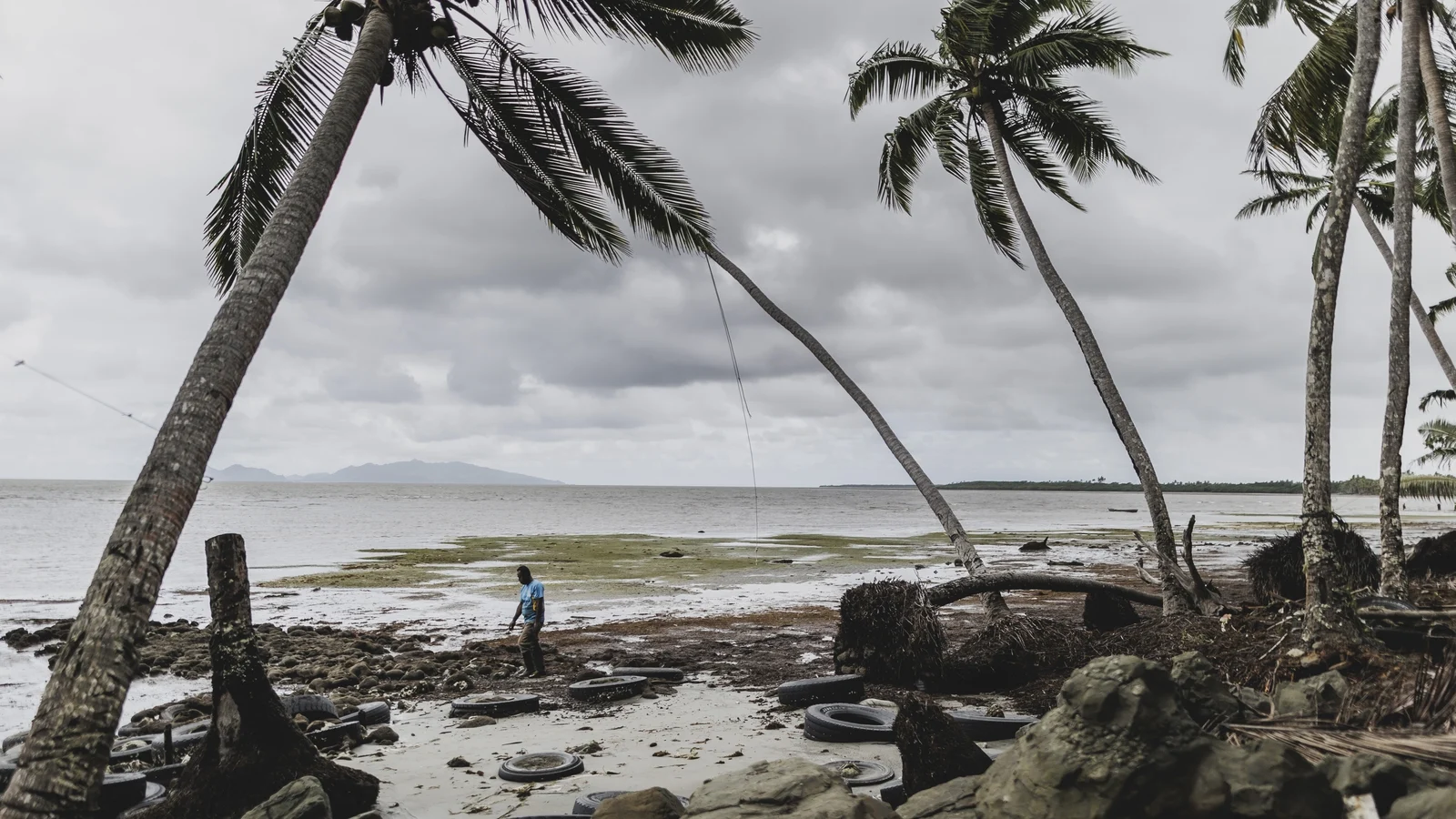
The South Pacific ranks among the regions most exposed to global warming, facing threats that range from encroaching seas that imperil homes to rising temperatures that trigger coral bleaching.
Meetings in Nadi, along with a separate leg on the atoll nation of Tuvalu, are intended to set the tone ahead of the larger UN-backed climate summit COP31, scheduled for next month in Turkey.
Pacific leaders arrived with a clear agenda: keep the 1.5C warming limit within reach, widen access to climate finance and elevate ocean impacts within global climate negotiations.
“Our prime minister will carry three clear messages to the leaders this week: keep 1.5 degrees within reach, make finance reach the communities that need it and give the ocean its rightful place in the climate regime,” Fiji’s Climate Minister Lynda Tabuya told the opening ceremony.
Lynda Tabuya addresses the Pacific Pre-COP31 Summit
A UN report says sea levels are climbing at a record rate, driven by warmer oceans and melting glaciers.
As many as 1.2 billion people could be displaced by 2050, the report released in August said, noting that Pacific Island countries are experiencing sea level rise at twice the global average.
The report also pointed to a stark shortfall in funding: developing countries need $310-$365 billion to adapt, yet only $26bn (€23bn) in adaptation finance was available in 2023.
“Today in Fiji, we are again calling on the world to match ambition with delivery,” said Australia’s Climate Minister Chris Bowen, who is also president of negotiations for COP31.
Chris Bowen said pre-COP would focus on “capturing, capitalising on, and putting to work the knowledge of those who’ve been dealing with climate change here at its forefront”
Regional leaders have promoted the pre-COP as an opportunity to bring global attention — and decision-makers — directly to the Pacific.
Limited guest list
Yet organisers acknowledge turnout will fall short of early hopes, with officials conceding the guest list will be smaller than anticipated.
Fewer than a dozen world leaders have publicly confirmed they will attend.
Australia said last month that 4,000 people from 60 nations would participate, though it did not provide a complete breakdown.
Among those expected is Nepal’s Foreign Minister Shisir Khanal, as his country continues to recover from August’s Himalayan flood disaster that killed nearly 1,500 people and left 5,800 missing in Nepal and China.
Senior delegates will also travel for a one-day retreat in low-lying Tuvalu, where authorities are already planning to relocate the population because of rising sea levels.
In the capital, Funafuti, the highest point is only two metres above sea level, and two of the country’s nine coral atolls are already largely swamped by rising waters.
‘Act now decisively’
“Sea-level rise is not a future threat, it is a present reality,” Tuvalu Prime Minister Feleti Teo told the UN General Assembly ahead of the climate talks.
“Tuvalu’s message is clear: the world must act now decisively, collectively, and with urgency to protect the future for generations to come.”
Only a handful of leaders are expected to join the Tuvalu leg of the trip
For some scientists working in the region, the limited list of high-level attendees underscores a deeper frustration about global attention.
“It does make you think nobody cares,” said marine scientist Rajneel Singh, part of a team that reported large-scale coral death around Tuvalu.
“It’s very, very sad.”
Extreme heat putting pregnant women & newborns at risk
UN Climate Chief Simon Stiell is expected to use the summit to warn that extreme heat is increasingly endangering pregnant women and their newborns.
He will cite a new survey in which more than two-thirds of health professionals across five continents reported seeing heat-related complications over the past five years.
“Rising temperatures mean rising danger in pregnancy.
“Climate-driven extreme heat during pregnancy is increasingly linked to premature birth, still birth, low birth weight, and maternal complications.
“The picture is clear and very disturbing: as extreme heat worsens, pregnancy and birth are now a new faultline in the global climate crisis and one which is potentially fatal,” Mr Stiell said in a pre-speech statement.
The poll — commissioned by charitable foundation Wellcome — surveyed 1,000 midwives and doctors in the United Kingdom, Australia, India, Brazil and Zimbabwe.
In a statement, Wellcome chairwoman and former Australian Prime Minister Julia Gillard said climate change is placing mothers and babies at growing risk.
“Extreme heat is an invisible killer, but pregnant women must not be invisible. Leaders have the evidence and solutions they need – now they must act,” Gillard said.
According to the survey, nearly all midwives and doctors had treated mothers or babies affected by extreme heat.
Roughly a third said they had seen low birth weight or restricted growth, feeding difficulties and dehydration or heat-related illness — impacts they believed were linked to extreme heat.