Home Blog Page 11

Missing sailboats loaded with humanitarian aid finally reach Cuban shores

Sailboats carrying aid reach Cuba after going missing
The boats had been reported missing, then found, then missing again

They Came Back: Sailboats, Solidarity, and a Sunlit Havana Reunion

When the two small sailboats eased into Havana’s harbor yesterday, the crowd that had gathered at the Malecón felt like it had been holding its breath for days—and then let out a collective exhale. The Friend Ship and Tiger Moth, their white hulls bright against a late-afternoon sky, tied up under cheers and the looping strains of a street musician’s trumpet. Flags fluttered. People shouted slogans, some joyful, some angry—“¡Viva la revolución!” and “Down with imperialism!”—a chorus that folded into the ocean breeze.

On board, nine people smiled, waved, and offered thumbs-up signs as if they had returned from a long, ordinary trip. Among them were citizens of the United States, France and Germany, and a single, unabashedly proud four-year-old who, by all accounts, took to life on deck as if he’d been born with salt on his lips.

“We’re relieved, of course,” said Adnaan Stumo, the 33-year-old American who coordinated the sailing convoy. “But relief doesn’t erase how many people we met who are exhausted. Bringing these supplies felt like bringing oxygen to a room that’s been held under water.”

How a Humanitarian Mission Became a Mini-Sea Drama

The boats set off from the Yucatán Peninsula on March 20. Their voyage was not supposed to be enigmatic: organizers planned a small, symbolic flotilla to deliver the final leg of what they call the Our America Convoy—an international, grassroots effort to supply Cuba with food, medical supplies and solar panels amid mounting shortages.

Instead, a routine crossing turned into a national talking point when communications with the vessels went dark and the Mexican Navy launched a search-and-rescue operation. A navy aircraft later spotted the sailboats roughly 80 nautical miles northwest of Havana and directed a ship to provide support.

“We’re very sorry to make people worry,” Stumo told a cluster of reporters, his jacket damp with sea spray. “But really: we were never in any real danger. We ran into strong easterly winds and chose a more northerly route. Small boats, small satellite link—sometimes the pieces don’t all cooperate.”

A Mexican Navy spokesperson said the Navy’s plane located the boats late Friday and that the sailors were in good health. “Our priority is always the safety of mariners,” the spokesperson added in a brief statement.

What happened at sea

The technical problem, Stumo explained, was simple and human: the small satellite uplink used by the boats “was on the fritz.” Without constant contact, neighbors and relatives on both sides of the Gulf wondered if the worst had happened. Organizers reported the good news early Saturday: the boats were found, the crews were safe, and the mission continued.

“We were not worried at all,” Stumo said, with a kind of sailor’s shrug. “That’s not the same as saying others weren’t. We’re very thankful the Mexican Navy came out and looked for us.”

The Cargo: Practical Help, Symbolic Weight

The two yachts carried a modest but meaningful haul: around 50 tonnes of supplies in total arrived with the wider convoy, including medical kits, food, hygiene products and solar panels. Hospitals, clinics and local communities were among the recipients. A fishing boat retrofitted for the mission had arrived earlier this week, escorted part of the way by Mexican authorities.

  • 50 tonnes of combined aid delivered by the convoy
  • Medical supplies, food, water, hygiene kits
  • Solar panels intended for community clinics and local grids

“A box of antibiotics can be the difference between a clinic keeping its doors open and shutting for a week,” said a nurse at a Havana hospital who asked not to be named. “These are small things, but they mean life.”

Voices on the Wharf: Hope, Critique, and Politics

The welcome was not uniform. Among the crowd was Gerardo Hernández, a former Cuban intelligence officer who is well-known in the island’s modern lore. “They scared us a little because we kept wondering, ‘When will they get here?’” he told the assembled crowd, speaking with a smile and a seriousness that quieted a portion of the cheers.

Elsewhere, Cuban exiles in cities like Miami and critics in the U.S. contend that shipments touching Cuban ports can end up reinforcing the government more than helping ordinary families. That argument underscored much of the debate surrounding the convoy: is the act of aid neutral, or inevitably political?

“We aren’t naive about politics,” said Lucia Alvarez, a Havana community organizer who helps coordinate local food distribution. “But when a clinic runs out of sterile dressings, people don’t ask about ideology. They ask if the bandage will stop the bleeding.”

The geopolitical backdrop

This mission unfolds against a backdrop of tightened restrictions on energy and trade that have left Cuba’s electricity system under intense strain. The island of roughly 11.3 million people has experienced frequent power outages; residents and officials alike have spoken about rolling blackouts that have affected hospitals, refrigeration and daily life.

Internationally, governments and activists are arguing over how best to support civilians while navigating complex diplomatic pressure—and that debate has only sharpened in recent months.

Why This Voyage Matters Beyond the Harbor

At first blush, two sailboats with a handful of volunteers may feel like a splash. But think about the metaphor: a small crew fighting wind and bureaucracy to bring light—literal solar panels, metaphorical goodwill—into neighborhoods where both have been in short supply. In an era where supply chains are global but attention spans short, these small acts can ripple.

“This is about more than boxes,” said an independent energy analyst in Mexico City. “It’s about civil society stepping in when systems falter—whether because of economic mismanagement, sanctions, or the simple cruelty of weather and wear. The panels are a long-term investment in resilience.”

Resilience. Solidarity. Politics. All of it threaded together under a Caribbean sun. The convoy’s organizers say they will keep working, and some Cubans on the quay say they want more such gestures—organized, transparent, and aimed directly at neighborhoods and clinics.

What do you think—are volunteer missions like this a meaningful tool of solidarity, or a political lightning rod that risks helping the wrong hands? Is there a way to ensure aid reaches those who need it most without feeding conflict? These are the questions that linger as the tide slides back out and the harbor returns to its usual rhythm.

After the Cheers

By nightfall, the harbor had settled. The sails were furled, the drums of celebration dwindled, and the volunteers moved quietly among crates and small children, passing out toothbrushes and tiny packets of soap. Long-term solutions—the kind that require policy shifts, infrastructure investment, and diplomatic conversation—were not solved by a weekend of heroic seamanship. But for a clinic that got new solar panels or a family that opened a tin of food, the temporary relief felt indelible.

“We came because people were hurting,” Stumo said as he watched the boy who had been on board run along the promenade. “We came because small things matter. We’ll be back if we’re needed. Maybe next time we’ll bring a larger crew, maybe a bigger boat. For now, we’ve brought what we could.”

And as the city lights blinked into being—some powered by fragile grids and some now, perhaps, empowered by a few more solar cells—the people on the quay dispersed into a Havana night that, for a few hours, felt a little less dark.
Madaxweyne Deni oo kulan xaaaasi ah la yeeshay Qunsulka Itoobiya iyo saraakiil ciidan

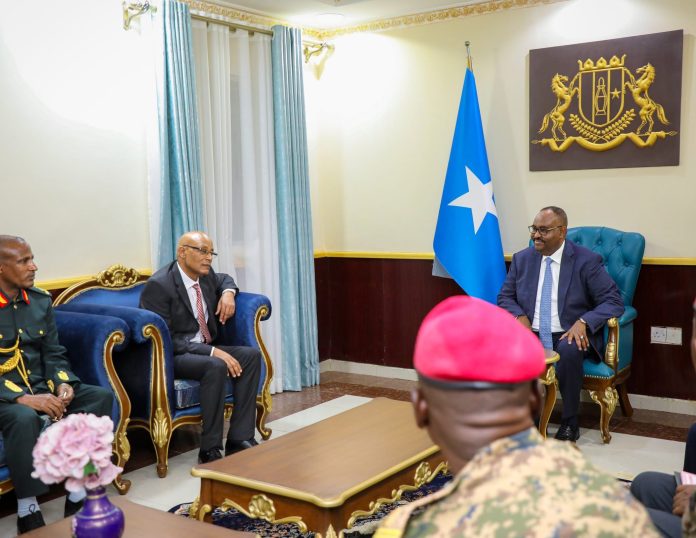
Mar 29(Jowhar)-Madaxweynaha Puntland Saciid Cabdullaahi Deni ayaa maanta Qasriga Madaxtooyada ee magaalada Garoowe ku qaabilay Qunsulka Dowladda Itoobiya u fadhiya Puntland, Major General Tagesse Lambamo Dimbore, iyo saraakiil sarsare oo ka tirsan ciidamada dalka Itoobiya.

Russia Says Fire Erupts After Fresh Strike on Key Baltic Port

Russia reports fire in new strike on major Baltic port
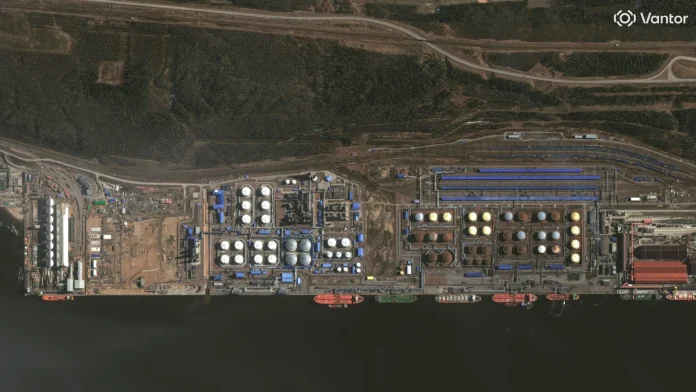
Aerial view of Ust-Luga terminal

A blaze on the Baltic: Ust-Luga wakes to smoke and sirens

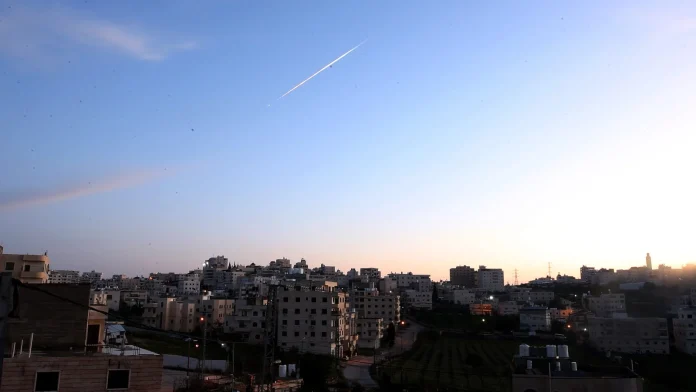
Just before dawn, a ribbon of smoke carved a dark seam across the Baltic sky above Ust-Luga — a place usually known for the low, steady clatter of cranes and the salt-sweet smell of seawater and diesel. Then came the red and blue flashing lights, the distant boom of emergency engines and, in the mouths of port workers and fishermen, a stunned quiet that has a way of speaking louder than words.

Regional officials said a drone strike set a fire at the sprawling port complex. “There is damage to the port. There were no casualties,” governor Alexander Drozdenko posted on social media, and emergency crews were reported to be working to cut the blaze. In the same update, he said 36 drones were destroyed overnight in the wider region — a stark marker of the intensity and persistence of these nightly attacks.

Ust-Luga is no sleepy seaside town; it is a major export hub for fertilizers, oil and coal. Towering silos and conveyor belts feed tankers that slip out along the Gulf of Finland. When operations there are interrupted, the ripple reaches far beyond the immediate shoreline: ships diverted, contracts renegotiated, markets jittery. For workers who rely on the port’s rhythm, the fire is not only an abstract geopolitical headline — it is a threat to everyday livelihoods.

Ports in the crosshairs: a strategic pattern

This strike is the latest episode in a pattern that has intensified in recent weeks: drones, often low-flying and hard to detect against coastal backdrops, have been used to target infrastructure that underpins economic and military power. Ukrainian forces have said they view refineries, oil depots and ports as legitimate targets in efforts to reduce revenue streams that help fund Russia’s offensive. Moscow, for its part, describes the strikes as attacks on its sovereign territory.

Earlier this week, the Baltic port of Primorsk — one of Russia’s key oil export terminals — was also struck. Satellite images captured a column of black smoke, a stark visual that circulated globally and underscored how local fires become international signals. In another incident, a drone strike in the Belgorod region killed a civilian in the border town of Grayvoron, according to local authorities — a grim reminder that these operations do not exist in a vacuum and that the human cost can be immediate and tragic.

Numbers that complicate the picture

Military statisticians and air defense briefings offer a mix of figures: in its latest overnight offensive, Russian forces reportedly launched 442 drones and one missile, Kyiv’s air force said, adding that 380 UAVs were shot down or intercepted. Whether one reads those numbers as proof of an overmatched defense system or as evidence of exhausting attritional warfare, the underlying reality is that both sides are deploying unmanned systems at an unprecedented scale.

From the quay: voices that carry salt and sorrow

“You get used to the horn of the tugs and the cranes at night,” said Yuri, a tugboat captain who has worked Ust-Luga’s docks for three decades, his hands stained from engine grease and his eyes rimmed with sleep and worry. “But you never get used to the boom of something falling from the sky. We are not soldiers. We pull ships in and out. Now everyone asks each other whether we’ll work tomorrow.”

A young port crane operator named Anya, who lives in an apartment block overlooking the terminals, described the surreal choreography of a community under partial blackout. “The cranes keep moving during the day. At night, you notice how quickly everything goes quiet. You stand on the balcony with a mug of tea and watch the red dots moving. They don’t look like much on a screen, but they make the whole place shake.”

From the other side of the border, residents of Grayvoron speak of a different fear. “We went out to see what happened,” said Lena, a schoolteacher, voice tight. “There was broken glass, a man on a stretcher. People were crying. It’s so close to where we send our kids to kindergarten. This is not a front line for us, but it feels like one.”

Why these ports matter — locally and globally

It’s worth asking: why target ports? The answer is both practical and strategic. Ports like Ust-Luga and Primorsk are nodes in a global supply network. They handle chemicals and bulk commodities that ripple through price indices, farmer balance sheets and heating bills in Europe and beyond. When these arteries are constricted, the effects are not immediate only for the belligerents; they are felt at grocery stores, at fertilizer depots feeding seasonal crops, and in energy markets that price in risk as much as supply.

Energy revenue has been a central source of export earnings for Russia in recent years. Analysts warn that sustained disruption to key export hubs could translate into lower hard-currency inflows, complicating military procurement or foreign payments. But the calculus is complex: attacks that affect civilian supply chains or kill civilians risk international sympathy and have legal and ethical implications. “Targeting economic infrastructure is a blunt instrument,” said Dr. Marta Ivanova, an analyst who studies conflict economics. “It can pressure a state, but it also risks civilian suffering and wider instability in commodity markets.”

Escalation, defence and the age of drones

The recent spate of attacks is part of a broader trend: drones and other unmanned systems have lowered the bar for cross-border strikes, enabling actors to strike with a degree of deniability and with comparatively low cost. Air defenses, designed during an era of missiles and aircraft, are adapting — often imperfectly — to a barrage of small, hard-to-detect targets.

“We are seeing the democratization of strike capability,” said a military technology specialist who asked not to be named. “For hundreds of thousands of dollars, states and even non-state actors can field systems that in previous wars would have required millions invested in aircraft or missiles. That changes the dynamic on both tactical and strategic levels.”

Local authorities and emergency services, meanwhile, are left to deal with the aftermath: fires to extinguish, export schedules to rearrange, and people to reassure. The psychological toll — the hours of sleep lost, the constant checking of phone alerts, the parents who double-lock the windows — is harder to quantify but no less real.

What does this mean for the reader, for the world?

From afar, these are lines on a map and numbers in a briefing: ports hit, drones downed, one civilian killed. Up close, they are the lives of Yuri and Anya, the potash and the crude that feed and heat homes thousands of miles away, and the fragile infrastructure of international trade. When a port like Ust-Luga smolders, it prompts a series of reflections about how modern warfare reaches into markets and kitchens as well as front lines.

So I ask you: when infrastructure becomes a tool of war, where do we draw the line between pressure and punishment? How should international law reckon with strikes that aim at revenue streams but also imperil civilian livelihoods? And as drone technology proliferates, what responsibilities fall on exporter nations, port authorities and insurers to protect the movement of goods that sustain millions?

For now, the cranes at Ust-Luga will swing again. The tugboats will nudge tankers into the gray water, and men and women who know how to read the weather and the waves will return to work. But the memory of this night — the smoke, the sirens, the text alerts flashing across phones — will remain. It will shape decisions at the local quay and also in capital rooms where strategy is made. Nothing about this is contained to a shoreline; it radiates outward, into economies and into the daily lives of people who thought a port was just a place to send and receive goods, not a battlefield.

Q.Midoobe: 45 kun oo qof ayaa ku barakacday xiisadaha Baydhabo

Mar 29(Jowhar)-Qaramada Midoobay ayaa sheegtay in ku dhawaad 45,000 oo qof oo rayid ah ay ku barakaceen xiisadaha colaadeed ee ka taagan magaalada Baydhabo ee dowlad goboleedka Koonfur Galbeed.

Multiple blasts shake Tehran as explosions heard across the capital

Series of explosions heard in Iranian capital

Night of Rattled Windows: Explosions in Tehran and the City That Refused to Sleep

Tehran at dusk is a city of layered sounds: the distant toot of a bus, vendors calling from beneath the awnings of the Grand Bazaar, the rhythmic clatter of traffic along Valiasr Street. Tonight another sound threaded itself into that tapestry — a series of sharp booms that rolled across apartment blocks, bounced off the concrete shoulders of the capital’s high-rises and sent people tumbling onto their balconies to stare into the bruise-colored sky.

“It felt like someone dropped a giant pot on the roof,” said a shopkeeper standing outside a noodle stall near Tajrish Square, rubbing his temples. “My grandmother thought it was an earthquake. We all ran into the street.”

Moments that stretch

The first reports came in as the lights in living rooms flicked on. For some it was a single, thunderous crack; for others, a rhythmic volley, as if a distant drumline had been unleashed. Neighbors banged on doors, children whimpered. Cars slowed and then stopped. Within minutes, the usual chatter on local messaging apps had been reshaped into a chorus of eyewitness audio clips, shaky videos of smoke columns, and questions: What was it? Where did it come from? Are we safe?

“I heard three explosions. Then the power flickered,” said a university student who lives in northern Tehran. “Windows shook. We stepped outside and saw lights in the sky — uneasy, like a row of warning lanterns.”

Uncertainty and official silence

By its nature, the first hour after an unexpected blast is a fog of rumours. In such moments, state briefings, independent verification, and international monitoring systems play pivotal roles — and their absence is palpable. Official channels were slow to provide a clear account, and when they did, details were thin. Hospitals in several districts reported receiving people with minor injuries — shock, cuts from shattered glass — but there has been no immediate confirmation of large-scale casualties.

“We are still gathering information,” said a man who identified himself as a municipal emergency coordinator, speaking from a crowded command room. “Ambulances are on their way to several locations. We ask residents to follow instructions on official channels and avoid spreading unverified content.”

Where the mind goes — and why

For many residents, the instinctive leap is to geopolitics. Tehran is, after all, the nerve center of a country that has been at the intersection of regional tensions for decades. A single blast can summon memories of past attacks on military sites, on nuclear facilities, or of drone strikes that once made headlines around the world. Analysts, too, weigh in quickly, offering plausible scenarios: a domestic accident, an industrial mishap, an air defense interception, or an external strike — each carrying different implications.

“Explosions in capitals rarely occur in a vacuum,” said a security analyst who monitors Middle Eastern hotspots. “They change the calculus for both local security and international diplomacy. But premature attribution is dangerous; it can escalate rhetoric and make containment harder.”

Voices from the street

To stand in Tehran after an unexpected event is to observe a city that refuses to be defined solely by fear. Neighbors checked on one another. A tea vendor offered hot cups to policemen standing at an intersection. A woman in her seventies recited a few quiet lines of poetry from behind a scarf, as if a familiar cadence could soothe the shock.

“We’re used to waking up in the middle of the night to sirens,” said a teacher who lives on a third-floor flat near the azadi Tower, its silhouette a constant against the skyline. “But this felt different — closer. We’re careful, but we’re not going anywhere.”

At a small clinic nearby, nurses and volunteers prepared bandages and bottled water. “Mostly cuts and shock,” said one nurse, tying a gauze pad. “People are frightened. They just want to know if it’s over.”

Information, misinformation, and social media

In the moments after the blasts, social platforms were alight: threads, voice notes, and images racing ahead of verifiable facts. Some posts claimed to show drones; others suggested sabotage at an industrial site. A handful of photos circulated of a smoky blur above an industrial-looking compound — but context was lacking.

“In crises like this, the platform is both lifeline and hazard,” said a digital media researcher at a university in the region. “People need to share to feel connected and to seek help. But unverified content can spread fear as fast as any blast wave.”

Context — a city and a region on edge

Tehran is home to roughly nine million people within the city proper and more than 15 million across the wider metropolitan area — a human tide that fills its streets, schools and markets. It sits at the crossroads of history, culture and contemporary politics. Over recent years, isolated attacks, domestic protests, and regional skirmishes have blurred the line between everyday life and the geopolitical pulse.

Against that backdrop, an event like tonight’s explosions becomes more than a local incident. It is a reminder of how urban centers function as both living places and strategic centers. It raises questions about the resilience of civil infrastructure, the efficiency of emergency response, and the transparency of public information systems.

What comes next?

Authorities will, in time, release formal findings: whether the blasts were accidental, the result of a targeted strike, or the consequence of something else entirely. International observers and independent media will sift through open-source footage, radar data, and satellite imagery. For residents, the immediate concerns are simpler and more human — broken glass, shaken nerves, children’s sense of safety.

“We want to go back to homework and tea and the small things that make a life,” the shopkeeper near Tajrish said, his voice catching. “Tonight the city felt older, but I hope tomorrow it will feel like itself again.”

Questions to carry with you

When the headlines settle and the explanations arrive, what will we remember? The blast itself, or the way strangers stood together on their balconies, sharing light and water and stories? Will this become another line in a ledger of incidents, or a catalyst for broader discussions about security and civil resilience?

  • How do cities balance secrecy and transparency in crises?
  • What role do social platforms play in shaping public perception during emergencies?
  • And how do ordinary citizens rebuild a sense of safety after a night like this?

For now, Tehran breathes and waits. Windows are being swept, bandages applied, and children coaxed back to sleep. The city’s sounds — the kettle whistling, the soft rumble of the metro in the distance, the hum of generators — return, tentative and steady. In the days ahead, pieces will be assembled: official reports, satellite scans, expert analyses. Tonight, though, the story belongs to the people on those balconies, to the vendors handing out tea, and to the quiet courage of a city that, time and again, shows it can absorb shocks and keep its pulse going.

If you’re watching from afar, consider this: beyond the headlines, there are human stories — neighbors helping neighbors, doctors working through the night, and every person wondering what morning will bring. What would you do if the sound that broke your evening was a series of booms? How would you comfort your neighbor? How would you keep a city calm?

Iiraan oo burburisay diyaarad ay leeyihiin ciidanka cirka Mareykanka oo taalay Sucuudiga

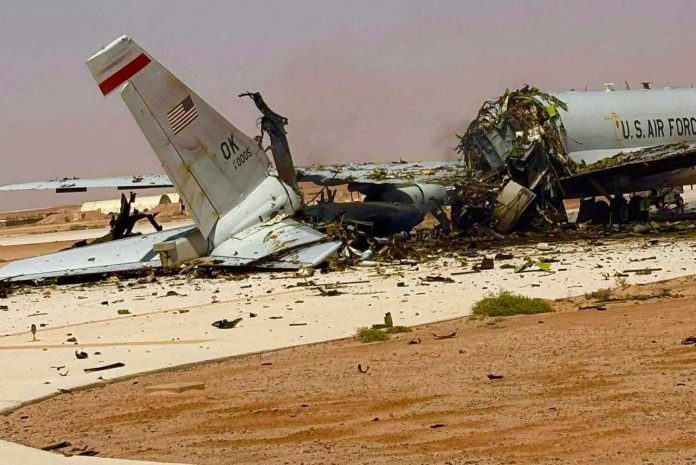
Mar 29(Jowhar)-Sida ay muujinayaan sawiro lahelay mid kamid ah diyaaradaha Milateriga Mareykanka ay leeyihiin, gaar ahaana ciidanka Cirka ayaa si buuxda ugu burburtay kadib weerar ay Iran ku qaaday saldhigga Prince Sultan ee ku yaalla Saudi Arabia, Gantaalada Tehrana ay si xoogan uhalakeeyeen.

Anti-Trump Protests Sweep US on ‘No Kings’ Day

Anti-Trump protests taking place on 'No Kings' day in US
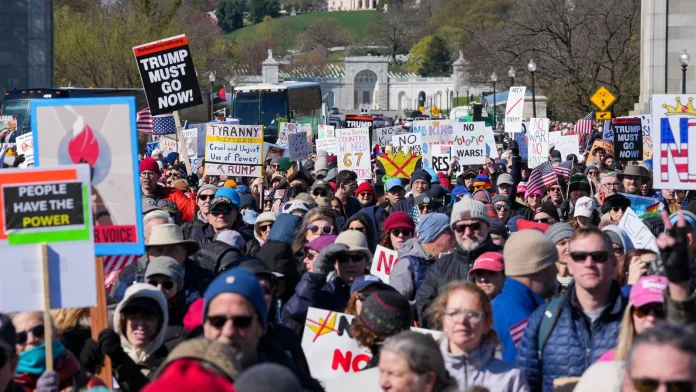
US nationals residing in Portugal hold placards while gathering in Praça do Comercio

The Day the Streets Remembered: A Nation—and the World—Speaks Back

Just after dawn, a wind off the Potomac smelled faintly of exhaust and frying oil, the familiar tang of a city that never entirely shuts itself off. By midmorning, the bridge into the National Mall was a river of jackets, handmade signs and patient chants. Somewhere above them, the Lincoln Memorial—stone and stubborn—watched another chapter of public grief and defiance being written.

It is hard to describe the sound of a protest until you stand inside it: not just a chorus but a layered score of different lives insisting on being heard. A woman with a wool cap and a cardboard sign that read “We Are Losing Our Democracy” hugged a friend and said, “I came because I kept hoping the next election would fix it. It didn’t. Now I’m here, and I want my neighbors who stayed home to know they have to come out, too.” Nearby, a young man hoisted a banner that said “Trump Must Go Now!” and laughed nervously. “It feels like the country is on a hinge,” he said. “Either we swing forward or it breaks.”

No Kings, No Quiet

Three separate mass days of action in less than a year have done more than puncture the usual headline cycle. They have created a rhythm: No Kings, the grassroots coalition organizing the demonstrations, has turned public anger into choreography. The first nationwide day of protest last June—coinciding with President Donald Trump’s 79th birthday and a military parade in Washington—drew several million people from city sidewalks to small-town squares, according to organizers.

In October, organizers estimated turnout reached seven million. This latest round was billed as an attempt to surpass even those figures: more than 3,000 rallies were planned in cities and towns across the United States, and solidarity demonstrations appeared in Europe—from Amsterdam and Madrid to Rome—and as far afield as Portugal, where US nationals gathered in Lisbon’s Praça do Comércio to hold placards and exchange stories of exile and alarm.

What is at stake, according to the thousands who came out

  • Concerns about an increasingly authoritarian style of governance, critics say, including ruling by executive order.
  • Allegations that the Justice Department is being used to target opponents.
  • Policy shifts on climate, racial and gender equity programs that activists call a rollback of basic rights.
  • And, most urgently now, a controversial war with Iran conducted alongside Israel, with shifting goals and no clear endgame.

“This isn’t hobby politics,” said Jamal Rivers, a high school teacher from Detroit who traveled to the Lincoln Memorial. “It’s the accumulation of all the little things that add up to a different country. We used to assume institutions would hold. Now people are asking whether they still will.”

Across the Map: From Minneapolis to Kotzebue

In Atlanta, thousands gathered in a park, layering voices into a steady hum that made the trees tremble. In West Bloomfield, Michigan—near Detroit—protesters braved below-freezing temperatures, wrapped in donated blankets, holding homemade signs and trading thermoses of coffee. In St. Paul, Minnesota, the concert stage was set for a different kind of protest music: organizers had enlisted Bruce Springsteen, a longtime critic of the president, to play “Streets of Minneapolis,” a ballad reportedly written in memory of two citizens killed during demonstrations earlier this year. The song—raw and immediate—was meant to stitch mourning into resistance.

There was even a planned action above the Arctic Circle in Kotzebue, Alaska—a reminder that the political weather here extends to places where daylight can be scarce and supply boats infrequent. “If democracy is worth defending,” a Kotzebue organizer said by satellite phone, “then we’re part of that defense—even where the roads end.”

Why the World Listens

One striking detail: the movement no longer looks purely domestic. Rallies in European capitals, as well as gatherings in capitals of countries with sizable American expatriate communities, underlined how U.S. policy—especially when it involves military action—radiates outward. Protest signs in Lisbon blended English and Portuguese; a woman from Portugal who married an American veteran told me, “What happens in Washington becomes our news, our fear.”

Analysts say the current momentum matters far beyond the next ballot box. “When approval ratings dip below 40 percent, as they have for this administration in several polls, that is not just a number,” said a political scientist at a Midwestern university. “It reflects a breakdown in the tacit social contract. Large, sustained protests can either channel that energy into institutional change, or push the country further into polarization and legislative gridlock.”

Faces, Stories, and the Questions They Ask

Protesters came with different language, but a similar cadence of worry. There were grandparents who remembered the civil rights marches that passed through the same marble corridors decades ago. There were students who said the world their parents promised them—prosperity, security, a reasonable future—felt up for sale. “My mother marched for Roe,” said Ana Torres, twenty-four, showing a faded picture of her family at a demonstration three decades ago. “I never thought I’d be doing the same thing for everything else.”

Officials, too, were visible: some counseled restraint, others urged the crowds to vote rather than only shout. An elected city council member in Minneapolis told me, “Protest is essential. It operates like a diagnostic for democracy—revealing the wound. But protests need follow-through: policy proposals, candidates, civic infrastructure.”

The Long View: Democracy, Media, and Mobilization

What these gatherings illuminate is not merely opposition to a single leader. They expose fault lines in how people relate to power, truth and belonging. In a time of algorithmic news feeds and partisan lenses, mass street action becomes a counterweight: an insistence on shared public space where voices must be negotiated in person, not only in isolated columns of like-minded followers.

Are protests effective? The answer depends on what you measure. They force stories into the public square, sway undecided voters, and sometimes reshape policy. But they can also harden the other side, inflame rhetoric and distract from the patient work of coalition-building. Those who come out to the streets know both truths—why they chant, and why the real work continues at kitchen tables and in voter registration drives afterward.

After the Chants: What Comes Next

With midterm elections looming in November, political operatives are watching turnout models and polling margins as if the nation were a vast, fragile experiment. Organizers hope to parlay energy into ballots and candidate support; opponents hope to use the demonstrations as evidence of extremism. In the weeks to come, expect more marches, more speeches, and more music beneath the same stone faces and under the same gray skies.

So I leave you with this: when counted not in sound bites but in footsteps, what does democracy feel like? Is it the roar on a bridge, the hush outside a living room as a family debates whether to vote, the stubborn resilience of a small Alaskan town dialing in to a national conversation? The protests answer: all of it, at once. And if democracy is a practice, then these are the days when many are still learning to practice loudly.

Houthis Join Conflict With Iran as US Marines Deploy to Region

Houthis enter Iran war while US Marines arrive in region
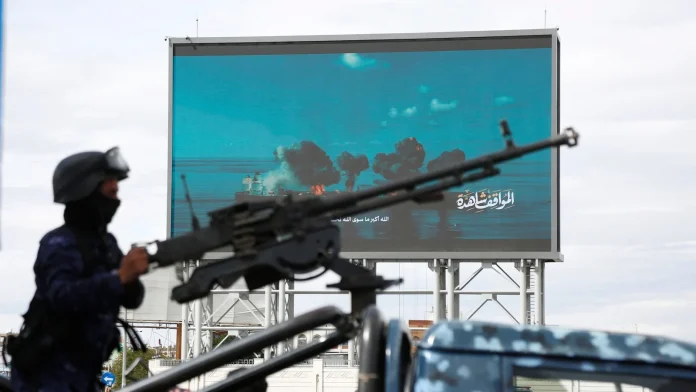
The Houthis can threaten the waters around the Arabian Peninsula and the Red Sea

When a Region Holds Its Breath: The Middle East on the Precipice

There are nights when the air feels different — thicker, charged with a static worry. I felt that charge this week as I talked to people whose lives have been caught in an expanding conflict that began, as many wars do, with a move nobody wanted to see. What began as strikes in late February has, in the space of a month, spilled across borders, pulled in fleets and thousands of troops, and reached new fault lines: from the narrow lanes of Beirut to the tanker lanes of the Strait of Hormuz, and even to towns near Jerusalem.

“We hear the drones at night. We count the blasts like beats of a drum,” said Amal, a café owner in southern Beirut, pouring me a small cup of cardamom coffee as sirens grew in the distance. “People here have little left to lose but their fear.”

The American build‑up: Marines, the 82nd, and an uncertain plan

In Washington, officials are talking about options so broad they seem to rearrange the chessboard. In recent days, thousands of US Marines arrived aboard amphibious assault ships, another rotation among dozens of vessels now shadowing the eastern Mediterranean and Gulf waters. Reports say elements of the 82nd Airborne Division are expected to follow.

“We’re positioning forces to give policymakers flexibility,” said a senior uniformed official on background. “That’s what forward presence is about.” The line reads like a reassurance. But on the ground, in a region where every move is read for meaning, “flexibility” can be a tinderbox.

The Washington Post and other outlets have written that the Pentagon has been drawing up plans that could include raids inside Iran — operations that would blend Special Operations and conventional infantry. Whether those plans would receive presidential approval remains a question, and one that carries consequences far beyond military corridors.

New battlefronts: from Yemen to Lebanon to Israel

Yesterday, Yemen’s Houthi rebels — aligned with Iran — carried out their first strikes against Israel since the latest conflict erupted, launching missiles that crossed a sealed border of airspace and rhetoric. No casualties were reported, but the symbolism cut deep. These were not isolated flashpoints but threads in a widening tapestry.

In Lebanon, the conflict’s toll has been painfully human. A strike on a media vehicle killed three Lebanese journalists; a follow-up hit rescuers who had rushed to the scene. “They were calm, professional — they were our eyes,” said Nadim, a regional photographer who worked with one of the slain reporters. “We do not target journalists in war zones. We try to survive them.”

Israel has returned the fire, targeting what it called Iranian infrastructure in Tehran and resuming strikes against Hezbollah positions in Lebanon. Iran issued stern warnings: its president warned of strong retaliation if the country’s infrastructure or economic centers were hit. On the civilian front, hospitals treated dozens for blast injuries, including seven hospitalized after a strike near Jerusalem.

What this means for shipping and global energy

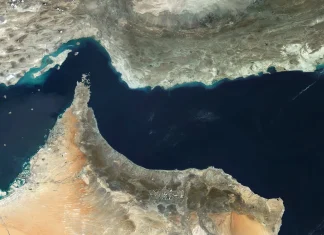
The strategic and commercial arteries of the world have felt the tremors. The Strait of Hormuz — long a chokepoint that historically carried roughly one-fifth of the world’s seaborne oil and large quantities of liquefied natural gas — has become a zone of avoidance. Insurance rates for tankers have jumped, rerouting is expensive, and analysts say the result is an immediate squeeze on supply chains already strained by post-pandemic adjustments.

“When tankers stop using the Hormuz, the cost is felt in cities and factories worldwide within weeks,” said a maritime risk analyst in Dubai. “We’re watching rerouting through longer passages and the nervousness that drives up prices at the pump.”

  • Roughly 20% of global seaborne oil has historically transited Hormuz
  • Insurers and shippers are increasingly diverting vessels around Africa rather than through the Red Sea/Hormuz corridors
  • Market volatility has pushed crude prices upward, adding pressure to national budgets and consumers

Escalation and the nuclear shadow

At the heart of the region’s fear is the specter of higher-stakes targets. Israel’s strikes reportedly hit Iran’s nuclear infrastructure, and Russia’s state nuclear corporation said it had evacuated staff from Iran’s Bushehr power plant, citing safety concerns. The idea of strikes hitting nuclear facilities — even if unintended — sends shivers through capitals and emergency rooms alike.

“Nuclear safety isn’t just a technical concern; it’s about people’s ability to live and work near their homes,” said an independent nuclear safety expert. “Strikes near these sites create risks that can long outlast any military engagement.”

Politics at home and the global ripple

Back in the United States, the war’s unpopularity has started to produce a domestic countercurrent. Demonstrations erupted in cities across the country with organizers calling for an end to what they describe as an unnecessary escalation. With midterm elections looming, political leaders in Washington face mounting pressure from both critics demanding restraint and hawks urging decisive action.

“We need clear objectives and a clear exit strategy,” said Marco Rubio, echoing a sentiment from several voices within the administration who say that deploying ground troops is not inevitable but that options should remain open. “The president should have maximum flexibility.”

Flexibility, again, but to what end? What cost in lives, money, and the long arc of regional stability?

Faces in the crowd: daily life under threat

Walking through market streets in cities like Erbil or the narrow quarters of southern Beirut, you see ordinary rhythms contending with extraordinary danger. Shopkeepers tape windows against blasts; bakers who have carried on for decades talk of the fragility of bread lines and supply chains. “My son used to fly kites here. Now he asks if it’s safe to leave the house,” said Layla, a schoolteacher in a northern suburb. “How do you teach children about a life that might be broken tomorrow?”

Such anecdotes are the human ledger of geopolitical choices. They remind us that decisions made in capitals ripple out to touch the most basic acts of life: going to school, getting to work, tending to a sick parent.

Where do we go from here?

There are no easy answers. Diplomacy is being quietly tested — Pakistan, Turkey, and Saudi Arabia have signalled engagement on regional talks — even as missiles and drones redraw lines on the map. The path forward will be carved by a tangle of military calculations, domestic politics, the calculus of allies, and the stubborn human impulse to protect one’s family and homeland.

So I ask you, reader: when decisions about war are debated in faraway halls, whose faces do you see? Whose stories do you count when weighing the costs? In a world where local conflicts cascade into global disruption, perhaps the more meaningful question is how we build channels that prevent sparks from becoming infernos.

For now, in cities and villages, people sleep with radios by their bedside. They text their loved ones. They make coffee. They keep the lights on as long as they can. That is how life continues — resilient, fragile, and overwhelmingly human.

Has Russia launched a spring offensive in eastern Ukraine?

Has a Russian spring offensive begun in eastern Ukraine?
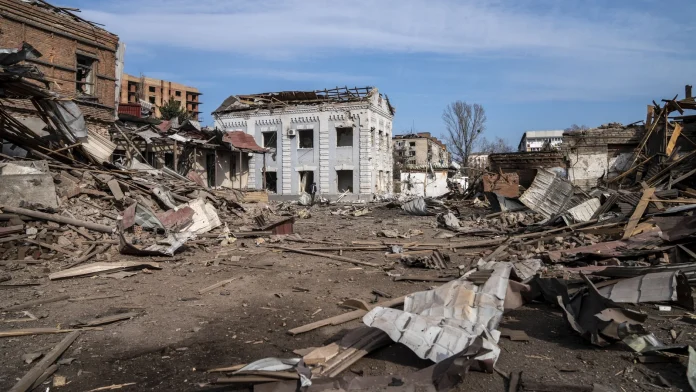
Damage after after Russian airstrikes on Sloviansk, Ukraine last week

Inside the “Meat Grinder”: When Frontlines Become Factories of Loss

On a rain-gray morning in mid-March, the war looked less like a battle and more like a grim, grinding machine. Oleksandr Syrskyi, Ukraine’s top general, used a single blunt phrase that yearns to be forgotten: “meat grinder.” It was his way of naming a tactic — wave after wave of assaults stretching along a 1,200-kilometre front — and of laying bare the toll those pushes extract from flesh and morale.

Between 17 and 20 March, Ukrainian accounts say Russian forces launched more than 600 separate assault operations. Ukrainian commanders put Russian casualties in that four-day burst at more than 6,000; they tallied some 8,710 killed or seriously wounded over the whole week. Western and Ukrainian military agencies place Russia’s weekly combat losses at roughly 7,000 on average — a number that sounds abstract until you meet the people who live inside it.

“We saw them come in columns like rain,” said a platoon leader who asked not to be named for security reasons. “Not all of them were veterans. Some looked like boys who had never seen sandstorms or trenches. The drones saw them first. Then everything else followed.”

The Kill Zone: How Drones Rewrote the Rules

What turns a battlefield into a grinder is not always sheer numbers. Over the last two years, the battlefield has become a litmus test for a different instrument: the drone. Both sides now police a “kill zone” that can reach up to 20 kilometres from the contact line. In that zone, surveillance and attack drones — cheap, ubiquitous, and lethal — make concealment almost obsolete.

Multiple Ukrainian and Western sources estimate that around 70% of Russian combat losses along the line have been inflicted by Ukrainian drones. The same devices hunt Ukrainian positions in turn. That mutual visibility reshapes tactics: small infantry probes are no longer harmless reconnaissance; once spotted, they become targets.

“A battlefield where the sky is an enemy is a battlefield with no dark corners,” said Marta Koval, a Kyiv-based analyst who studies unmanned systems. “The drone doesn’t care about the politics of the fight. It counts signatures, heat, and movement. It is impartial, precise, and unforgiving.”

Last week’s torrent of assaults — and the unusually high casualty figures — suggested, to many analysts, that Russian commanders briefly reverted to massed infantry tactics despite the drone revolution. The result, in this instance, looked all too predictable: heavy losses for precious little ground.

Probes, Mechanised Pushes, and the Shape of a Future Offensive

The U.S.-based Institute for the Study of War (ISW) noted in its reporting that some late-February and March activity looked like “reconnaissance-in-force” — mechanised probes smaller than the usual company formations, testing Ukrainian lines and preparing for a broader campaign. ISW also flagged shelling near Kramatorsk and strikes on dams near Kostyantynivka and toward Pokrovsk as part of an apparent strategy to disrupt logistics and, perhaps, drown approaches to defensive belts.

“These are classic preparatory moves — probing defences, finding weaknesses, and, crucially, degrading the opponent’s ability to sustain front-line troops,” said Dr. Alan Richter, a retired military planner who now consults for several European defence think-tanks. “But the presence of drones shifts the calculus. You can probe, but if your probes are erased by overwatch, you don’t just lose information — you lose men.”

Last year, Russia’s advances were minimal. Throughout 2025, Moscow captured less than 1% of Ukrainian territory, a sobering metric that underscores how attrition, air power, and precise long-range strikes have combined to make large territorial gains costly and rare.

What the Numbers Mask

Statistics offer a frame, not the picture. For civilians on the receiving end, the math becomes human. In Lviv, nearly 900 kilometres from the fiercest fighting, a Russian drone strike last Tuesday damaged the 16th-century Bernardine monastery — a tiny, sacred corner of a city that has become a refuge for families fleeing the east.

“We heard this low thud and then the church shuddered like a living thing,” said Olena, 58, a volunteer who helps catalogue damaged heritage sites. “You think cultural sites are safe because they are old. Then you learn the war chooses whatever it wants to frighten you.”

Across the country, almost 1,000 drones were reported launched at once across eleven regions that day — a volume of strikes so large some analysts called it a new form of offensive. Whether aimed at infrastructure, logistics, or psychological shock, the raids underscore the war’s diffuse geography.

Trenches, Towns, and the Taxonomy of Loss

On the ground, the war remains a study in contrasts. In Odesa, a charred main battle tank sits as a macabre exhibit — a relic in a port city famous for its black bread and seaside promenades. In the east, the 18th Sloviansk Brigade trains on muddy ridgelines, its soldiers learning to move small units under constant aerial scrutiny.

“We train to be invisible,” said Captain Roman, as the squad worked through a night drill. “But invisibility is expensive. You wear it like armor and sometimes it’s not enough.”

Families keep counts at kitchen tables. Mothers stitch balaclavas at sewing machines to send to sons in the field. Volunteers haul generators into bombed-out apartment blocks and light up rooms so children can finish algebra homework by lamplight.

Why It Matters Beyond Ukraine

Ask yourself: what happens when warfare becomes easier, cheaper, and more distributed? Drones democratize killing in a way artillery and tanks never did. They allow states — and non-state actors — to reach into cities, sanctuaries, and cultural sites with lower risk to their own operators. The result blurs the front line into the home front.

That has consequences for global norms around conflict. It alters how militaries prepare, how societies fortify, and how international law will try — often unsuccessfully — to keep pace.

  • Proliferation: Small, effective drones are now widely available.
  • Attribution: Denying or deflecting blame becomes easier in the fog of swarm attacks.
  • Psychology: Striking cultural sites aims to erode a population’s sense of identity and safety.

Endings and Open Questions

Ukraine’s forces say they repulsed the mid-March push. Whether that was a one-off costly probe, an early curtain-raiser for a larger 2026 campaign, or simply the continuation of attritional warfare, the human cost is immediate and unanswerable in numbers alone.

“We will bury our dead,” said a volunteer grave-digger in Donetsk region, voice flat with a professional sorrow. “And we will teach our children how to bury properly.” It is a small, bitter ritual of resilience.

So what should we watch for now? Look at drone production lines as much as tank battalions. Watch logistics hubs and dam strikes as much as trenches. And listen — to the soldiers, to the mothers, to the cathedral caretakers — because their stories are the ledger no general can fully reconcile.

Where does this leave the rest of the world? With hard questions about how to deter not just invasions, but attrition by technology; how to protect heritage and civilians when the sky itself has turned into an instrument of war; and how to keep the humanity of war visible in a world that increasingly battles through screens and sensors.

We continue to watch and to ask: in the age of drones and “meat grinders,” what is the cost we are prepared to accept — and what is the price we refuse to pay?

Paris police thwart suspected bomb plot targeting U.S. bank branch

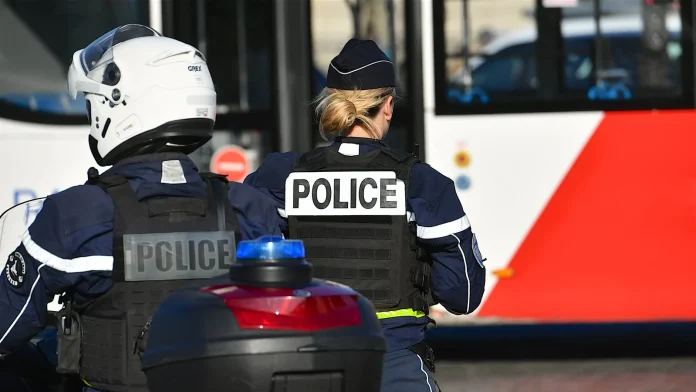
Paris police foil apparent bomb attack at US bank
Sources said police grabbed the man just after he placed a device, made of five litres of liquid, believed to be fuel

Predawn in the 8th: How a Quiet Paris Street Nearly Became a Headline

It was a thin, silver hour when Paris nearly woke to a darker alarm. At roughly 3:30 a.m. local time, a man was stopped on a flinty stretch of the 8th arrondissement — a few streets from the Champs-Élysées, where shopfronts wear the hush of shutters and the city’s luxury pulse slows to a whisper.

Police sources say the man had placed a homemade device near the façade of a Bank of America building, a scene that would have felt jarringly incongruous in one of the world’s most photographed neighborhoods. The device reportedly contained about five litres of liquid — believed to be fuel — and an ignition system. Rather than the flash of terror we fear, what followed was the careful choreography of prevention: officers arrived, made the arrest and began disentangling the why and the how.

A city of contrasts: beauty, commerce and vulnerability

The 8th arrondissement is a study in contrasts. By day, it blooms with tourists, diplomats, and shoppers who saunter between flagship stores and the sweeping vistas that run from Place de la Concorde to the Arc de Triomphe. By night, it keeps secrets: closed cafés with chairs stacked on tables, the hush of haute couture houses, and lamplight that gilds historic facades.

“It’s a place of glitter and routine,” said Marie Dubois, who has run a tiny boulangerie near the scene for two decades. “You don’t expect danger here. People come for the light, the beauty. This morning, I heard sirens and thought, ‘Not here.'”

For a city that hosts millions of visitors every year and serves as a financial hub for Europe, the episode is an unwelcome reminder of how public spaces, and by extension public safety, can suddenly be tested.

What authorities have said — and what remains unknown

Officials say the man was apprehended immediately after placing the device, preventing any explosion or injuries. Paris law enforcement moved quickly: uniformed officers secured the perimeter; more discreetly, detectives and bomb disposal experts examined the materials. Items recovered — the canister of liquid and an ignition mechanism — are now evidence in an ongoing inquiry.

“Our first priority was the safety of residents and everyone in the area,” a Paris police source told reporters. “We detained an individual and rendered the device inert. The investigation is active and we cannot rule out any lines of inquiry.”

Who the man is, and whether he acted alone or was part of a broader network, are questions investigators are still parsing. Questions about motive — whether political, ideological, personal, or criminal — remain open. For now, prosecutors and counterterror units are sifting through CCTV footage, phone records, and forensic traces.

The wider security backdrop

France has a long memory when it comes to urban violence: from the 2015 attacks that shook Paris to other incidents across the country, security services have been adapting and evolving for years. The nation’s counterterrorism architecture includes the national anti-terror prosecutor’s office and intelligence branches tasked with detecting threats before they materialize.

“The challenge for any democratic city is to remain open and vibrant while also being vigilant,” said Dr. Amina Benali, a security studies lecturer in Lyon. “What we saw tonight — swift interdiction — reflects better coordination among police, intelligence and emergency services. But it also raises questions about prevention: community engagement, online radicalization, and the social fractures that can push someone toward violence.”

On the ground: witnesses, workers and the city that refuses to stop

At dawn, the cordon remained in place, but life in the 8th continued its slow reanimation. A florist on the avenue told me she watched the scene from her shop doorway, clutching an oversized mug.

“We are used to protests, to noise, to something every now and then,” she said, asking to be identified only as Sophie. “But this was different. There was that terrible silence before the lights — like the city held its breath.”

A security guard at a neighboring bank described the professionalism of the teams that arrived: “Bomb techs in white suits, police in dark — they worked like a machine. Calm, efficient. That’s what stopped it from being a nightmare.”

Why a financial institution? Why the 8th?

Attacks on symbols of finance are not new in modern political violence. Global banks represent more than money; they can be stand-ins for complex grievances about globalization, inequality, foreign policy, or simply convenient, high-profile targets in dense urban centers.

But motives can be many and mixed. “It would be irresponsible to leap to conclusions without evidence,” said Inspector Laurent Martin, a veteran of Parisian investigations. “We investigate facts. We trace movements, communications, purchases. Only then can we begin to understand intent.”

Local color: the human details that matter

It is easy to reduce events like this to headlines and statistics; harder, and more important, to notice the human particulars. The boulangerie that opened on schedule and offered croissants with extra sympathy. The doorman who counts the rhythm of the neighborhood — the night owls, the early birds, the tourists who never quite sleep. The custodian who swept debris from the pavement after police lifted the tape.

“Paris has been through a lot,” said Ahmed, a taxi driver who ferries late-shift workers through the 8th. “But it is a city that goes on. People are careful, yes. But they also come out. We don’t live afraid.”

Bigger questions: balancing freedom, surveillance and resilience

Every time an incident like this happens, larger debates re-emerge. How much surveillance is acceptable to keep streets safe? How do democracies hold onto open public life while investing in counterterrorism? What social policies might reduce the pool of people who turn to violence?

These questions have practical impacts: governments look at funding for police and intelligence, at community programs, at mental health services and deradicalization initiatives. Citizens argue about rights, visibility and prevention. And communities work, quietly, to stitch the social fabric tighter.

What do you think? When safety measures infringe on privacy, do they still serve the public good? When a city becomes a fortress, what is lost — and what is gained?

What comes next

As daylight fully arrived, investigators continued to comb the scene, and the life of the 8th arrondissement resumed its layered, human tempo. The man taken into custody will be questioned and charged if the evidence warrants. For now, authorities have prevented what could have been a dangerous event and turned to the long work of asking why.

In a world where the flash of danger can be as small as a canister and as symbolic as a bank façade, tonight was a reminder of resilience: the quiet competence of responders, the everyday courage of shopkeepers and residents, and the way cities — battered, bright, stubborn — continue to be the stages where our shared stories of risk and recovery unfold.

Artemis astronauts take photo of Earth en route to Moon

Artemis crew snaps stunning photo of Earth while traveling to the Moon

0
Moonbound: Riding the Quiet, Thunderous Pulse of Artemis II There are moments when a single sentence can feel like a rope thrown across centuries. "The...
Can Europe remain on the sidelines in a long Iran war?

Can Europe stay sidelined during an extended Iran conflict?

0
When the pumps hiss: Europe feels the Strait of Hormuz in its veins On a wet morning in Mulhouse, a man in a fluorescent jacket...
Pope Leo marks first Easter as pontiff under cloud of war

Pope Leo’s First Easter as Pontiff Overshadowed by War

0
When Bells Sound in a Time of War: Easter Under a Shadow On a crisp spring morning, St Peter’s Square should have felt like an...
Second Turkish-owned ship crosses Hormuz strait

Second Turkish-owned vessel passes through the Strait of Hormuz

0
Another Turkish-owned vessel has successfully passed through the strategically significant Strait of Hormuz, marking the second such passage in recent weeks. The vessel, carrying...
Israeli occupation of south Lebanon 'very dire', says MP

MP warns Israeli occupation in southern Lebanon has become ‘very dire’

0
In Southern Lebanon, Homes Become Frontlines — Voices from a Region Holding Its Breath The sky over southern Lebanon has settled into a kind of...