


Apr 30(Jowhar) Qaar kamid ah Isimadda dhaqanka ee Beelaha Soomaalida ayaa maanta bilaabaya isku day ay ku dhexgalayaan dhinacyada siyaasadda ee isku haya hanaanka doorashooyinka dalka, waxaana kulamada u horeeya oo ay dhexdooda yeelayaan ay ku faaqi doonaan sida ay suuragal u tahay in dhexdhexadin ay sameyn karaan.
Trump Weighs Cutting U.S. Troop Presence in Germany
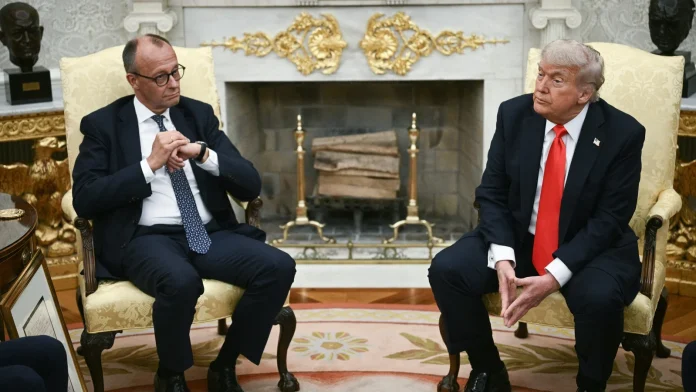
When the Map Shifts: What a Possible US Drawdown from Germany Means — and Who’s Watching
On a rain-soft morning in a Berlin neighborhood where the scent of fresh bread mixes with the metallic tang of tram lines, conversation turns quickly to one topic: the American military footprint. At a small table in a café near the Tiergarten, a retired technician from a nearby NATO logistics depot stirs his coffee and says, “We woke up to a message, not a telegram.”
It’s an apt way to describe the way policy now travels: quick, loud, and sometimes only a few lines long. President Donald Trump posted on Truth Social that “The United States is studying and reviewing the possible reduction of Troops in Germany, with a determination to be made over the next short period of time.” That sentence — terse, public, immediate — rippled through diplomatic corridors from Washington to Berlin to Brussels.
Numbers that Tell a Story
Numbers have a way of grounding political theater. According to the US Defense Manpower Data Center, the United States had just over 68,000 active-duty troops permanently stationed across Europe in December 2025. Of those, roughly 36,400 were based in Germany — a figure that echoes a different era, but in a quieter key.
Where those figures sit against history is stark: in 1985, at the height of the Cold War, the US had about 250,000 troops in West Germany. The scale of America’s presence then was monumental, almost a physical line in the sand against the Soviet Union. Today’s presence is smaller, but no less symbolic.
What’s at stake in plain terms
- US troops in Europe (Dec 2025): ~68,000
- US troops in Germany (Dec 2025): ~36,400
- US troops in Germany (1985): ~250,000
Pulling those forces, even partly, would not be an abstract budgetary decision. It would reverberate from family bases in Kaiserslautern, to military logistics hubs like Ramstein Air Base, to alliance politics in Brussels. It would tilt the map of American reach.
Diplomacy, Disagreement, and a New German Posture
The announcement didn’t arrive in isolation. Over the past weeks, a public spat has surfaced between Mr. Trump and German Chancellor Friedrich Merz over the hostilities in Iran — a reminder that alliances are not immune to personal and policy frictions. Mr. Trump dismissed Mr. Merz’s comments about Iran, saying the chancellor “didn’t know what he was talking about,” while Mr. Merz later insisted relations were fine despite the row.
Against that background, Germany has been quietly, deliberately rewriting its military script. Last week Berlin published a defense document signaling its intent to become Europe’s leading conventional force — the most significant German strategic pivot outside NATO since World War Two. General Carsten Breuer, Germany’s top general, traveled to Washington to brief US officials on those plans. He told reporters that Defence Undersecretary Elbridge Colby showed “great appreciation” for the document and Germany’s financial commitments.
Mr. Colby, posting on X, framed it bluntly: “President Trump has rightly laid out that Europe must step up, and NATO must no longer be a paper tiger. Germany is now taking the leading role in this. After years of disarmament, Berlin is stepping up.”
Voices at Ground Level
Not all reactions have been measured or strategic; many are human and immediate. “My grandson sleeps under a poster of a C-130,” says Anna Müller, whose family rents out rooms near a US base. “If the Americans leave, it’s not just shops that will close — it’s a network of friendships.”
At a mess hall on a base in southern Germany, a sergeant — speaking on condition of anonymity — shrugged and said, “We’re service members first. Politics comes and goes. But you can’t separate the mission from the people who do the mission.”
Observers in Washington offer another layer. Jeff Rathke, a former US diplomat and now president of the American-German Institute at Johns Hopkins University, put the matter bluntly: “US forces in Europe are not a charitable contribution to ungrateful Europeans – they are an instrument of America’s global military reach.”
Why this matters beyond flags and parades
Think about logistics and rapid response. Bases in Germany are key nodes for American operations in Africa, the Middle East, and eastern Europe. A reduction would alter timelines for reinforcements, complicate NATO exercises, and force allies to fill gaps not only with money but with doctrine and readiness.
And there’s the optics: when a superpower scales back a permanent presence, it gives rise to narratives — about retreat, realignment, or retrenchment. Those narratives then shape policy choices in capitals hundreds or thousands of miles away.
Who Gains, Who Decides?
If Washington decides to pull back, the immediate question is whether Europe — and Germany in particular — can absorb the strategic and economic cost. Berlin’s new defense strategy signals willingness. Yet rearmament is expensive and politically fraught in a country that has, for decades, viewed military power with caution.
“We want to be a pillar, not a shadow,” said a senior German defense official in Brussels, declining to be named because talks were ongoing. “But pillars must be built, and that takes time.”
Economically, communities around bases would face job losses and shrinking local economies. Strategically, NATO would be forced to reckon with a more distributed and less American-centric defense posture. For allies in Eastern Europe, worried about Russia’s ambitions, a smaller US footprint in Germany could mean heightened anxiety.
Big Questions for a Small World
What does sovereignty mean in an era when security is both local and global? Can Europe sustain a credible conventional force without decades of US basing? How do human stories — families, workers, enlisted personnel — factor into decisions often framed as geopolitical chess?
These aren’t hypothetical. They are real choices with real consequences for people who live and work around bases, for families whose breadwinners deploy, and for allied capitals balancing defense budgets and public sentiment.
Three quick realities to keep in mind
- Any withdrawal would require logistical planning measured in months or years, not days.
- Germany’s defense ambitions are growing, but they are being built against a backdrop of domestic debate and fiscal constraints.
- US forward presence in Europe serves both defensive and expeditionary purposes — removing it shifts those strategic calculations.
Closing: The Human Geometry of Strategy
Back at the café, the retired depot technician scans the news and laughs softly. “We have coffee from the same place since 1989,” he says. “Things change. Friends leave and new friends come. But we learn to find the constants — good bread, good conversation.”
Policy is often written in capitals and posted online in blunt sentences. But at its core, it ripples through lived lives: through kids going to school on base, through shopkeepers whose livelihoods depend on steady paychecks, through soldiers and diplomats who build the scaffolding of alliances. When a map shifts — even a little — we should ask not only where the lines move, but who the movement leaves in its wake.
So here’s the question for you, the reader: if a great power redraws its military footprint, how should communities, allies, and leaders respond — with caution, courage, or something in between? The answer will be shaped as much by budgets and battalions as by the quiet decisions people make over coffee in city squares and living rooms across the Atlantic.
Washington shooting suspect snapped selfie moments before the attack
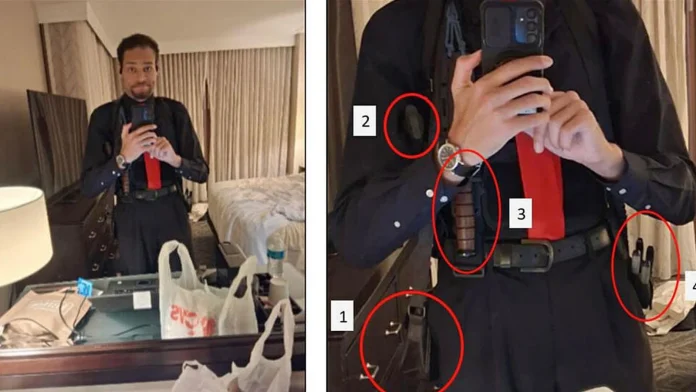
Midnight at the Washington Hilton: A Selfie, a Shot, and a Country on Edge
The noise at the Washington Hilton on that late spring evening was the kind of polite hum you expect at a political gala — clinking glasses, the rustle of cocktail dresses, laughter threaded with small talk. A ballroom downstairs hosted a media dinner attended by former president Donald Trump and other senior figures. Upstairs, behind a closed door on one of the hotel’s quiet corridors, a man dressed in black took a photograph of himself in the mirror.
That image — a cellphone selfie of a 31-year-old identified by prosecutors as Cole Allen, in a dark shirt, red tie, with a shoulder holster and a knife visible at his side — would become one of the most chilling details in the federal court filings that followed. In the minutes after that photo, according to investigators, he descended from his room, burst through a line of hotel security and fired a pump-action shotgun toward the staircase leading down to the ballroom. Chaos erupted. Shots were exchanged. No one was killed.
A surreal sequence of events
The moment feels cinematic and yet utterly real. One hotel staffer who asked not to be named remembers the night differently: “I heard a boom and then people screaming. For a second I thought it was a kitchen accident or a dropped tray. Then we saw the security guards wrestling a man on the carpet.”
Prosecutors say Mr. Allen traveled to Washington by train — a scenic itinerary that took him through Chicago and the amber hills of Pennsylvania. On his phone, he is said to have paused to admire the landscape, writing that the woods looked like “vast fairy lands” with trickling creeks. That small line in a court filing complicates the caricature of a one-note villain; it is domestic, almost pastoral, and yet it sits alongside documentation of carefully planned violence.
“The courthouse papers show a person who was methodical about preparation,” said Dr. Lina Estrada, a criminologist who studies politically motivated violence. “He appears to have researched locations and security, assembled weapons, and even prepared explanations for why he was doing it. That combination — planning plus political grievance — is the dangerous mix.”
How it unfolded: a brief timeline
- Shortly before 8:30pm, Mr. Allen left his room at the Washington Hilton, carrying a shotgun, a handgun, knives and ammunition, according to prosecutors.
- He passed through a set of metal detectors and moved toward the ballroom entrance, where Mr. Trump and guests were gathered.
- Shots were fired in the stairwell area; Secret Service agents returned fire. Mr. Allen fell and was restrained after a chaotic scuffle with security guards.
- No guests, staff, or senior officials were killed. Mr. Allen sustained a minor knee injury and was taken into custody.
From manifestos to mirror selfies
According to the government’s detention filing, Mr. Allen scheduled emails to friends and family before he left his room, messages that included a manifesto listing members of the Trump administration as targets. The filing described his intent as an attack of “unfathomable malice” and urged the court to keep him detained pending trial.
“The political nature of the defendant’s crimes,” the prosecutors wrote, “counsels in favor of detention because the defendant’s motivation exists so long as he disagrees with the government.”
Mr. Allen’s story resists easy labels. Friends from his California town described him as highly educated and thoughtful — a community college teacher with an interest in literature and long-distance travel. Neighbors said he loved rail journeys and would often come home with folded maps and stories about the places he’d seen. “He would tell you about a sunrise over the plains like he was reading poetry,” said Maya Johnson, who grew up two streets away. “It makes all of this harder to understand.”
The broader pattern of political violence
Attempts on political leaders are not a new chapter in American history. Since the 19th century, the country has seen presidents assassinated, others critically wounded, and several plots foiled. What is shifting is an accelerating tempo of threats that move from online grievance to real-world action.
Experts point to a mix of factors: easy access to firearms, radicalized online communities, and a political climate in which personal animosity is often framed as moral duty. “We’re seeing the friction between grievance narratives and real-world violence become more combustible,” said Prof. Martin Kline, an expert in political radicalization. “When someone believes their actions are justified by a political cause, they effectively erase the boundary that keeps most people from committing violence.”
At a national level, gun deaths have hovered in the tens of thousands annually in recent years, with homicides and suicides comprising the bulk. Meanwhile, law enforcement agencies report a rise in ideologically driven threats; the calculus of risk has shifted for those responsible for protecting public figures.
Security at a crossroads
Hotel staff and guests now grapple with the unsettling realization that a bustling downtown hotel — a place meant for conferences and reunions — can become ground zero for national security concerns. “We’re trained to handle tricky guests and spilled drink situations, not a shooter on the stairs,” a long-time bellman said. “Everything changed that night.”
Secret Service protocols are under intense scrutiny. How did an armed man make it so far inside a hotel during a high-profile event? How do you balance hospitality with protection? The agency has yet to release a detailed after-action report, but officials noted quickly that the response prevented a bloodier outcome.
What do we do with this unease?
Take a moment to imagine being inside that ballroom — a roomful of people laughing hours earlier now thinking about life’s fragility. The spectacle of politics has real human consequences when rhetoric crosses a threshold into action.
What should we ask of our leaders, our tech platforms, our communities? How do we cultivate a public square that allows fierce disagreement without inviting violence? And how do we care for the individuals — the hotel workers, the guests, the first responders — who carry the aftermath of these moments?
“We can’t only respond after the fact,” Dr. Estrada said. “Prevention means addressing the social and psychological pathways that lead someone from grievance to attack. That’s community support, mental health resources, and, yes, better interventions at the crossroads where people radicalize.”
Closing the distance
The image of a man in a hotel mirror, adjusting his tie, is now part of a larger, troubling mosaic: a country that must reckon with the ways political fury travels, the fragility of public spaces, and the human stories tangled in headline fodder. For the staff at the Washington Hilton, for the diners who walked away stunned, for the teachers and farmers and commuters who followed the story on their phones — the episode is a reminder that safety is not an abstract policy debate but a fragile daily reality.
We will hear more details as prosecutions move forward. For now, the question that remains is less about the image of a man who aimed a gun and more about the social conditions that made it possible. How do we rebuild a civic culture in which the mirror reflects not plans for violence but the possibility of conversation?
Video: Trump vows U.S. will declassify UFO files soon
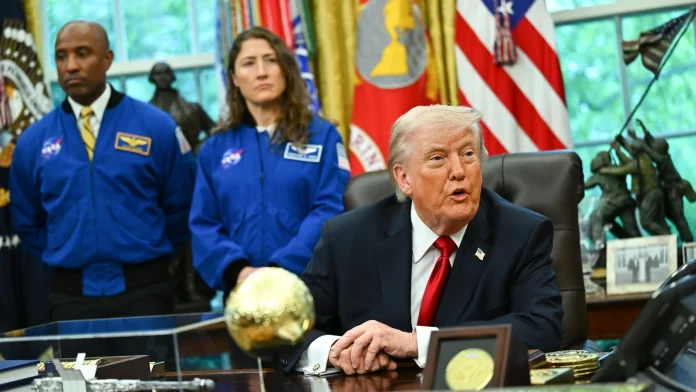
Behind the Curtain: The White House, Artemis II, and a New Push to Unveil the Unknown
Under the cavernous portraits and chandeliers of the East Room, a scene unfolded that felt part ceremonial, part confession. Four astronauts—Victor Glover, Reid Wiseman, Christina Koch and Canada’s Jeremy Hansen—stood in their flight-blue suits, the tired, triumphant faces of people who had just shepherded humanity farther into the dark than any had before. Across from them, the President spoke in clipped, eager sentences about two things Americans have long watched with equal parts curiosity and skepticism: the Moon and what might be in the sky between here and there.
“We’re going to be releasing as much as we can in the near future,” he said, promising to open government files on unidentified aerial phenomena. “We’re going to be releasing a lot of things… that we haven’t,” he added, voice rising with the sort of theatrical certainty that makes headlines and late-night jokes in equal measure.
What was said—and why it matters
On its face, it was another installment in a larger drama. But the comments matter precisely because of context: they came after a presidential directive in February asking federal agencies to begin freeing up records related to UFOs—now commonly labeled UAPs (unidentified aerial phenomena)—and after an internal review that, the President said, had turned up “interesting” documents. In a country where secrecy and spectacle meet at the crossroads of national security and public curiosity, an administration signaling a move toward disclosure is news that ripples far beyond a single press room.
“Transparency here isn’t just theatrics,” said Dr. Elena Moreno, a former DoD analyst who now researches UAP policy at a Washington think tank. “It’s a test of institutional confidence. When governments choose to share, they’re asking citizens to trust the way they weigh risk and explanation.”
Artemis II: A human milestone with cosmic symbolism
The timing of the Oval Office conversation wasn’t accidental. The Artemis II crew had just completed a mission that read like the prologue to a new space age: a 1,117,515-kilometer journey—two orbits around Earth and a trajectory that carried their capsule around the Moon’s far side, coming within roughly 6,400 kilometers of the lunar surface. It was, officials stressed, a test flight. Yet to millions watching worldwide it felt like a promise—the opening chords of a program that aims to touch lunar regolith again by about 2028.
“We showed what humans can do when we blend audacity with engineering,” Reid Wiseman told reporters, still carrying the mild fatigue that follows long-duration missions. “But with the spotlight comes questions—about what’s up there that we thought we knew, and what we still don’t.”
The public hunger for answers
Ask almost anyone on the street corner—near the National Mall or along Florida’s Space Coast—and you’ll hear a similar sentiment: curiosity tempered by impatience. Tourists in Cape Canaveral, where families still flock for rocket launches like pilgrimages to a modern cathedral, speak of kids who demand to know whether we are alone. In a D.C. coffee shop, a barista with a sleeve of NASA patches told me she’d seen an uptick in customers wanting to discuss UAPs since the Artemis splashdown.
Polls back up the anecdotal evidence: across multiple surveys in recent years, roughly half of Americans say they are at least open to the idea that we have been visited by unexplained phenomena, and a majority want fuller government disclosure. Whether that means leaked alien artifacts or long-dormant aviation reports, the public’s appetite for clarity is clear.
Not just spectacle: the policy and security dimensions
UAPs aren’t merely fodder for conspiracy forums and late-night TV. For the Defense Department and intelligence community, unexplained aerial incidents have direct implications for sovereignty and safety. In 2021, the Office of the Director of National Intelligence reported 144 UAP incidents from 2004 to 2021 that defied conventional explanation—most of them observed in restricted flight spaces and by trained observers.
“Whether these are technological artifacts from other nations, sensor errors, or something else entirely, they could represent operational risks,” said Maj. Gen. Angela Bates, retired, who advises on airspace security. “For military planners, unknown equals threat—there is no such thing as a benign unknown when you’re responsible for an aircraft carrier strike group at sea.”
Since 2022 the Pentagon formed the All-domain Anomaly Resolution Office (AARO) to investigate UAPs across air, sea, space and cyber domains. The office has gathered thousands of reports—from pilots, sensors and satellites—though many remain unresolved. Officials say declassifying records is a process fraught with competing mandates: protecting sources and methods, safeguarding national security, and honoring transparency obligations to the public and Congress.
Culture, myth and the space-age imagination
Whether you grew up watching The X-Files or listening to late-night radio tales of Roswell, the stories we tell about the skies reveal as much about ourselves as about the cosmos. In an increasingly globalized, data-saturated world, UFOs function as a Rorschach test for trust. Do you believe your institutions? Do you want to believe in something beyond the banalities of daily life? Do you mistrust the slow creep of bureaucratic explanations?
“These narratives have always filled cultural voids,” said Mira Okafor, a cultural historian at Columbia University. “During times of rapid technological change—like now, as private companies routinize spaceflight—the urge to translate complex phenomena into story is only intensified.”
What might be released—and what to watch for
Officials have promised an initial tranche of records soon. What could that include? Flight logs, radar tracks, declassified video footage and test reports; perhaps even testimony from pilots and air-traffic controllers. Some documents will likely confirm mundane explanations—misidentified weather balloons, sensor artifacts, or foreign aircraft—while others could remain stubbornly ambiguous.
Here’s what to look for:
- Declassified incident reports with radar and sensor corroboration
- Contextual analysis from agencies like NASA, DoD, or intelligence partners
- Policy memos indicating how findings will influence air and space safety measures
We’re still asking the big questions
What does disclosure mean in a world where information is both weapon and balm? Does the slow trickle of declassified files satisfy a public primeval longing for certainty—or will it simply seed new stories? The questions are both scientific and civic.
“If the government opens the file cabinet, we will learn more about our sensors—and about our limits,” Dr. Moreno said. “But the outcome may not be neat. Transparency can lead to more questions than answers, and that’s a healthy place to be in science.”
As Artemis II’s crew head back into their lives—schools, family dinners, the small rituals that keep people human—the country watches. The Moon mission offered evidence: we can push farther. The promise of disclosure offers something else: a chance to test whether institutions can move from secrecy to dialogue. Which would you prefer—mystery kept in basements, or a slow, sometimes messy, unveiling in the light?
One thing seems certain: whether you’re looking up at the Moon or at a blurry dot on a radar screen, these are not just stories about craft and cosmic questions. They’re stories about who gets to know, who decides what the public can see, and what we imagine together as we reach into the dark.
Former Jimi Hendrix band members lose High Court bid for rights
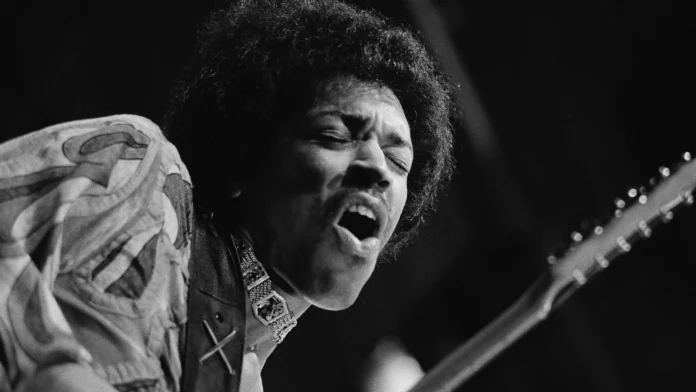
A High Court Ruling and the Long Echo of a 1960s Guitar Riff
On a grey morning in London’s legal quarter, where the hum of traffic mixes with the rustle of legal briefs, the soundscape of the city was briefly reclaimed by something else: the memory of a guitar that changed rock & roll. That memory, powerful as a Hendrix solo, was at the heart of a High Court dispute that has now closed its final chapter. Judges, lawyers and the relatives of musicians stood where law and legacy collided—and the court has sided with Sony.
What the dispute was about
At the center of the case were about 40 studio recordings made by The Jimi Hendrix Experience in the late 1960s, a brief but incandescent period in popular music. Companies representing the estates of the band’s bassist, Noel Redding, and drummer, Mitch Mitchell, argued they were owed a stake in the copyrights and performers’ rights for those recordings. Redding and Mitchell, who joined Jimi Hendrix in 1966 to form a trio that would change the sound of rock, both died decades ago—Redding in 2003 and Mitchell in 2008—and their estates contend the men were excluded from the financial benefits that followed.
This was not simply a claim for unpaid royalties. The estates sought a legal declaration of ownership shares in the rights to the recordings and an inquiry into what payments might have been due. It’s a story of music industry paperwork, old agreements, and the brave new world of streaming where songs keep earning long after the original players are gone.
The court’s decision
Mr Justice Edwin Johnson dismissed the estates’ claims in a detailed judgment running some 140 pages. The judge found the recording agreement struck in the 1960s between producers and the band to be “clear and unequivocal” in assigning worldwide copyright in the recordings to the producers. He also concluded that earlier releases signed by Redding and Mitchell—documents in which they acknowledged settlement of claims—prevented the estates from bringing their case now.
In short: the court refused to rewrite a contract made at a different moment in history. As the judge acknowledged in his ruling, the digital future of music—downloads and streaming—was not on anyone’s radar when that 1966 agreement was signed. Yet the legal obligation, he said, is to construe the contract the way it was written, not the way modern sensibilities might wish it to have been.
Why this matters today
Ask a teenager today how they hear music, and they’ll likely say “streaming.” The economics of recorded music have shifted dramatically: streaming now accounts for roughly two-thirds of global recorded music revenue, and the ways income is distributed have become a hot political and cultural issue. Catalogues from the 1960s still earn money—often substantial amounts—decades after the last amp was turned off in a studio.
So when estates argue they were deprived of fair reward for performances captured in the studio, it taps into broader debates about artist rights, archival revenue and how to treat work created before the internet remade the industry. The Hendrix case raises a question: should contracts made in an analog era be reinterpreted to reflect a digital world?
Voices from the fringes: fans, lawyers, and insiders
Outside the Rolls Building, a small knot of fans and observers watched the procession of barristers and court staff. “It feels like the record company won’t let anything go,” said Marco, a retired session musician who’d come to have a look. “But contracts were the law then. You have to wonder whether those who performed were told the whole story.”
For music industry experts, the ruling was less sensational than it was predictable. “Courts respect the sanctity of written agreements,” said Harriet Cole, a UK-based music lawyer who was not involved in the case. “If the contract assigns rights to the producer and the artists signed releases, it’s very difficult to unwind that now. What may be unjust is not necessarily unlawful.”
And for the estates’ side, there were real human narratives at stake. “Noel and Mitch were young, in the whirlwind. They made cultural history but didn’t benefit proportionally from the afterlife of those recordings,” said a spokesperson for the Redding and Mitchell estates during the trial. “They were excluded early on and died in relative poverty while the catalogue remained lucrative.”
Chains of title, legacy, and the music business
The corporate defendant, Sony Music Entertainment UK, told the court it had operated within its rights and denied any infringement. Representatives of Experience Hendrix, the company that manages Jimi Hendrix’s estate, welcomed the judgment, saying it clarified the “chain of title” for the recordings and allowed them to continue making the music available worldwide.
“While technological developments have reshaped the industry, clear agreements must be honoured,” a spokesperson for the label said in a statement after the judgment—words that echo through record company boardrooms and estates alike. Janie Hendrix, who oversees Experience Hendrix, offered warm memories of Redding and Mitchell and stressed a commitment to “honouring and supporting the musicians who were part of Jimi Hendrix’s history.”
How common is this kind of dispute?
Not rare. From Bob Dylan to Paul McCartney to modern stars re-recording their catalogues, disputes over rights and ownership are a throughline in music business history. The 1960s were a wild time for contracts: artists often signed away long-term rights for a shot at stardom. In the digital era, those bargains are being examined under new light—but courts have been cautious about altering clear contractual terms retroactively.
A final chord: law, justice, and the afterlife of art
There’s a melancholy to this decision that goes beyond legal precedent. It raises uncomfortable questions about how we value creativity and who benefits from it over time. Should the terms struck in an era of vinyl and reel-to-reel be allowed to determine how wealth from streaming is allocated decades later? Or does changing the law risk creating uncertainty about commercial agreements?
If you listen closely to a Hendrix track, you hear more than a guitar riff—there’s the sound of collaborators, of friendships and tensions, of young artists making choices in a tumultuous era. The High Court has turned a page on one chapter of that story. But the broader questions remain: about fairness, about legacy, about how we as a society share the rewards of art across generations.
What do you think? Should the law protect historical contracts at all costs, or is there room for reinterpretation when the world around those contracts has changed beyond recognition?
Sweden moves to fine social media platforms over ‘murder’ ads

A childhood curtained by phones: Sweden’s bid to force social media to rip down ‘murder adverts’
On a luminous summer evening in Södermalm, a man carrying a paper bag of cinnamon buns might stop and ask the usual questions—about work, weather, football. He will not expect to be told that a teenager three suburbs over has been offered money to kill a stranger and posted about it on TikTok.
Yet that is the blunt reality Swedish politicians say they are confronting: short, transactional recruitment pitches—“jobs” for hire—appearing on social platforms and aimed at children who cannot be prosecuted under Sweden’s current criminal-responsibility rules.
What the government is proposing
The administration in Stockholm has drafted a law that would require social media companies to remove posts that solicit murder or other violent acts within an hour of being reported, or face fines up to five million kronor (roughly €460,000).
Here’s what the plan would do, in plain language:
- Mandate that platforms remove “murder adverts”—public offers to buy violence—rapidly, setting a one-hour removal window after notice.
- Set financial penalties for non-compliance, creating a direct economic incentive for tech firms to monitor and moderate dangerous content.
- Complement earlier proposals to lower the age of criminal responsibility from 15 to 13 for the most serious offences—aimed at curbing the growing practice of recruiting minors.
From whisper networks to public marketplaces of violence
There’s a new language to organized crime in Sweden: short clips, disappearing messages, encrypted group chats and open feeds. “What used to be a whispered arrangement at the back of a bar has moved into the palm of a child,” said Lena Holmberg, a youth social worker who has spent a decade in the suburbs of Malmö. “They’re not just watching crime—they’re being offered it like a gig.”
Police and prosecutors here have for years reported a growing number of shootings and bombings linked to gang conflicts over drugs and territory. In recent years those clashes have become more public and, painfully, more youth-staffed. Young people—sometimes as young as 13 or 14—are being recruited for roles that expose them to harm while insulating older organisers from prosecution.
“The economics of it are straightforward,” explained Dr. Martin Ek, a criminologist at Lund University. “If you can hire a minor who cannot be prosecuted, you reduce the legal risk. It’s a market adaptation—an ugly example of ‘crime as a service.’”
Why the age of responsibility matters
Sweden has long been known for a progressive social model—social support, strong child welfare systems and a criminal justice philosophy that postpones full culpability until 15. That principle has been a bedrock of Swedish policy for decades. But the argument that it creates a legal loophole for organised crime has gained political traction.
“We will be the first in the European Union to target organised crime’s recruitment of children and youths with this kind of legislation,” a government official told reporters, framing the move as both protective and pioneering.
Critics counter that lowering the age or harshly penalising platforms won’t fix underlying social fractures: exclusion, concentrated poverty, poor educational outcomes and a lack of meaningful youth employment. “You can fine a social network, but if a 14‑year‑old has no job, no safe place to be in the afternoon, and sees money on a screen, a fine won’t change that calculus,” said Ingrid Sjöberg, director of a Stockholm-based NGO working with at-risk youths.
Platforms under the spotlight
Social media companies argue that they already remove violent content under their community standards and that policing every platform globally is a monumental technical and legal challenge. Yet platforms are increasingly the battleground of public safety debates worldwide: from disinformation to extremist recruitment, the responsibility of tech firms is no longer only about speech, but about lives.
“There is a difference between a spontaneous post and a call to commit murder for money,” said Tomas Berg, a policy analyst who has advised European regulators on platform governance. “The problem with an hourly takedown rule is operational: platforms will need faster detection, better human review, and in many cases a different legal framework to act prospectively rather than only reactively.”
Sweden’s one-hour threshold is not symbolic. It forces platforms to build or buy systems that can triage reports in real time—which, proponents hope, will snuff out offers before they translate into violence.
Real people, urgent dilemmas
At a playground in Rosengård, where children race scooters under a canopy of chestnut trees, Fatima, a mother of three, keeps one eye on her youngest and another on her phone. “My eldest started getting messages from someone who didn’t live near us,” she said. “They offered him money to ‘do a job.’ He was scared, then he was curious. He’s just a boy. What can a mother do?”
Her voice caught on the last question. In communities where trust in authorities is low, social services thin, and the economy is tight, recruitment is both a criminal tactic and a grotesque exploitation of vulnerability.
Wider questions: policy, technology and social justice
The Swedish proposal is a flashpoint in larger global debates. How much should governments lean on private companies to manage public safety? When does protecting children cross into criminalising them? Can law enforcement, schools and social services coordinate to offer meaningful alternatives to the alluring but deadly “gigs” offered by gangs?
Those questions are not unique to Sweden. Across Europe and beyond, policymakers grapple with platforms that can be used to organise everything from concerts to assassination plots. The blunt instrument of fines and quick takedowns may be necessary, but alone it is unlikely to be sufficient.
“We need a layered response,” Dr. Ek said. “Better moderation on platforms is essential. But so is outreach: youth centres open after school, job programs, mentoring. Otherwise we just move the problem from an online advert to an offline reality.”
What happens next
The proposed law will face parliamentary debate, legal scrutiny, and fierce lobbying from tech companies as well as civil society. It is also unfolding against a charged political backdrop: the current government is a minority coalition supported by a far-right party that has pushed hard on crime and immigration in the run-up to a general election on 13 September.
Supporters call the plan decisive and protective. Opponents warn of unintended harms—driving recruitment deeper underground, or nudging social media companies toward overly broad censorship to avoid fines. Meanwhile, families in the suburbs watch, weigh their options, and try to keep children safe in a world where danger glows on a screen.
Will laws change the streets?
Here is the question every parent, policymaker and platform executive should ask: do we want a bandage or a cure? One-hour takedowns and multi-million-krona fines may put pressure on global tech firms. A lower age of responsibility might remove a legal loophole. But without community investment—schools, jobs, safe public spaces—those legal measures risk being a palliative rather than a remedy.
As the Swedish summer slides into an early evening, the laughter of children in playgrounds reminds us of what’s at stake. Can we imagine a future where those same children grow up offered apprenticeships instead of assassination contracts? Where phones are for friendship and learning, not the marketplace of violence?
That possibility rests not only on law, but on whether communities, companies and governments are willing to invest in a young generation who deserve more than a dark gig economy of crime. What do you think—are swift takedowns and fines the right lever, or do we need something deeper? Share your thoughts; the answers will shape more than policy, they will shape lives.
Taliyayaasha sirdoonka dalalka bulshada bariga afrika oo muqdisho ku kulmay

Apr 29(Jowhar)-Taliyaha Ciidanka Xoogga Dalka Soomaaliyeed S/Guuto Ibraahim Maxamed Maxamuud ayaa si rasmi ah u daahfuray shirka Taliyayaasha Talisyada Sirdoonka ee wadamada ku mideysan Ururka Bulshada Bariga Afrika (EAC), kaas oo socon doona 29–30 Abriil 2026.
Purdue Pharma Sentenced as Bankruptcy Proceedings Grow Imminent

Justice in the Courtroom, Reckoning in the Streets: The Day Purdue Pharma Was Held to Account
The courtroom smelled of coffee and old wood and the kind of quiet that gathers before a storm. For more than six hours, people who had lost sons, daughters, brothers, neighbors, friends — people who had watched lives hollow out in slow, painful increments — rose and spoke into a microphone while cameras and lawyers listened. Their stories were not case numbers. They arrived as worn photographs, as trembling hands, as names read out loud until the sound of them filled the room.
“These people are not statistics in an epidemiological study,” U.S. Judge Madeline Cox Arleo told the gallery after reading the names of more than 200 victims who submitted written statements. “These testimonies were heartbreaking.” She then did something unusual: she apologized, not only to the victims on behalf of a company, but on behalf of the government itself, admitting that officials had “failed” to shield the public from practices she described as “driven by greed” and likened to a criminal enterprise.
What happened — in plain terms
Purdue Pharma, the maker of OxyContin, stood at the center of a decades-long chorus of litigation and grief. Last year, several U.S. states reached a settlement with Purdue and members of the Sackler family — the private owners for many years — that funnels money to communities and individuals harmed by the opioid epidemic. The total penalties, including fines and forfeitures, top $8 billion.
As part of that settlement and the winding down of the company, Purdue is set to be dissolved and reconstituted as Knoa Pharma, a public benefit company tasked with producing treatments for opioid use disorder and medications to reverse overdoses like naloxone. The dissolution is scheduled for May 1.
A court order with teeth — and a sting
Judge Arleo delivered a criminal sentence to the company, listened to testimony, and asked Steve Miller — Purdue’s board chair — to step forward and apologize to the families who had been left to pick up the pieces. Many who spoke in the courtroom urged the judge to reject the settlement entirely, on the grounds that it shields members of the Sackler family from criminal prosecution. Arleo acknowledged that concern, but called this settlement “the best route I see among the options before me,” urging the bankruptcy lawyers to honor their promises to compensate victims and communities.
The human ledger: what was lost
Walk into a small-town diner and ask about OxyContin and you’ll hear the same cadence: a prescription for pain, a neighbor who didn’t come home, a funeral where “accidental overdose” was printed in the obituary as if it were the end of a sentence, not a story. “My son was an honor student,” said Linda H., wiping a paper napkin across her face. “One doctor’s prescription turned into a lifetime of chasing a high he never wanted. I don’t want money — not really. I want the truth and for this never to happen to someone else.”
From 1999 through 2023, roughly 806,000 people in the U.S. died from opioid overdoses, according to the Centers for Disease Control and Prevention — a figure that reads like a national trauma. For many families, addiction begins with prescribed pain pills like OxyContin, then escalates as tolerance builds and access to illicit opioids such as fentanyl becomes more common. The ripple effects include children in foster care, communities stretched thin by public-health burdens, and a wave of small businesses and municipal budgets drained by the cost of emergency responses and treatment programs.
Voices from the front lines
“This wasn’t fate or bad luck,” said Dr. Aisha Rahman, an addiction specialist who runs a clinic in Ohio. “It was a predictable public-health disaster enabled by corporate marketing and careless prescribing practices. We’ve pivoted to treat a flood of patients whose illnesses were, in many cases, seeded by pharmaceutical promotion.”
Marcus Lee, who now works as a peer counselor in an Indianapolis recovery center, remembers the first pill he took after a car accident. “They told me it was safe if I followed the script,” he said. “Two months later, I couldn’t stop. The things I sold, the places I went — it nearly killed me. No one warned my mom that a bottle of 30 pills could steal a life.”
Pharmacists who sat in the hearing testified too. “You could see it in the shifts,” said Ellen Torres, who runs a family pharmacy in rural Pennsylvania. “In 2000, bottles of OxyContin flew off the shelves. We had scripts coming in every day. Patients were scared to ask questions because they trusted the prescribers. When the addiction showed, folks looked to us for answers we didn’t always have.”
What the settlement will and won’t do
The agreement aims to redirect funds — the reported $8 billion-plus — into trauma-laden communities: addiction treatment, overdose-reversal medication, recovery programs, and local health initiatives. But the contours of justice are complicated. Critics say that financial remediation cannot fully substitute for criminal accountability when families seek both truth and responsibility from the people and institutions that profited.
- What the settlement includes: multi-billion-dollar payments, dissolution and reformation of the entity into a public benefit company (Knoa Pharma), and obligations to fund treatment and prevention programs.
- What remains contested: legal protections for members of the Sackler family, and whether civil penalties can answer for lives lost.
Beyond a single courtroom: wider lessons
What happened at Purdue is a case study in how modern medicine, corporate strategy, and consumer trust can collide with devastating force. It raises questions about regulation, the ethics of direct-to-physician marketing, and the long tail of addiction. It asks us to wonder whether our systems of accountability — civil suits, bankruptcy settlements, criminal prosecutions — are fit for the consequences they purport to repair.
“This is about policy as much as punishment,” said Maya Singh, a public-health researcher. “We need stronger oversight on the approval and marketing of pain medications, better training for prescribers, and accessible, high-quality addiction treatment. Otherwise, history will keep repeating itself in new forms.”
Local color: pockets of resilience
Despite the pain, many communities are building new fabrics of resilience. Churches and community centers host naloxone training sessions. Recovery cafés give former users work and dignity. High schools run early-education programs about pain, medication safety, and the social pressures that can lead to substance misuse.
“We learned how to watch for each other,” said Pastor Luis Martel of a small church in West Virginia. “If someone stopped coming to pick up their grandchild from school, neighbors called. If someone was trembling, people offered naloxone. That’s how you stitch back a community — with small acts.”
Questions for the reader — and for our institutions
As we close this chapter, what do we expect from accountability? Is monetary compensation enough? How do we restructure a healthcare system where profit motives can clash with patient safety? And, finally, how do we ensure that the next generation has the tools and protections to avoid repeating these mistakes?
There is no tidy ending here. The court’s decision is a major waypoint — a moment when law, suffering, and policy intersect. But the work that follows will be quieter and harder: transforming money into services, remorse into prevention, and apology into change. The families who testified did not come for a headline. They came for recognition. For many, the greatest hope now is that recognition leads to action.
“We want them to remember the names,” Linda H. said, clutching a photograph. “Not as numbers, but as people who mattered.” Will the system listen? That remains to be seen. Will we, as a society, do better? The answer is in our hands.
U.S. president presses Iran to wise up and accept deal
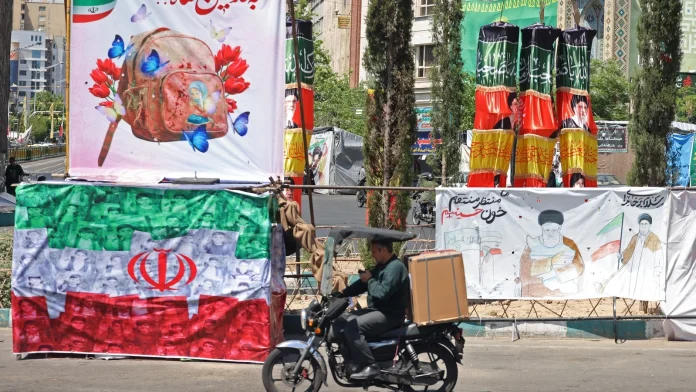
Where the World’s Fleet Holds Its Breath: A Strait, a Standoff, and the Human Cost
On a bright spring night in a crystal chandelier room at the White House, a grin and a vow cut across to the other side of the world: “They better get smart soon.” The words, delivered by a sitting U.S. president and amplified across social feeds and airwaves, landed like a threat wrapped in theater. Behind it, steel and sailors were already at sea—naval patrols tightening like a glove around Iran’s ports and one of the world’s most consequential waterways, the Strait of Hormuz.
If you’re picturing maps and capitals, pause and picture instead a single lane of ocean where about one-fifth of the world’s seaborne oil moves; a narrow throat that, when choked, sends a shock through gas pumps in Singapore, factories in Germany, kitchens in Ghana. The strait is small in width but enormous in consequence.
Not just geopolitics—this is daily life
Two months into hostilities between the United States and Israel and the Iranian response, the ripple effects are washing up far beyond the capitals. The Iranian government has wielded the strait as leverage, reducing traffic through what is usually one of the planet’s busiest maritime arteries.
“We thought the negotiations were supposed to help ordinary people,” said an architect in his fifties, speaking from the Iranian diaspora community in Paris. “Instead, every round of talks seems to come back with new sanctions, a weaker currency, more uncertainty.” He asked that his name not be used. His voice carried the weary cadence of someone who has watched livelihoods shrink while the loudest noises of power are binary—threats and denials.
The rial has tumbled to levels described by Iranians and economists alike as historic lows. Retail prices are up, imports are squeezed, and the hum of everyday commerce—shopkeepers haggling over fruit, buses arriving late—now bears the weight of geopolitics. In the markets of Tehran’s suburbs, a loaf of bread, the price of a bus ticket, and the cost of a long-distance phone call are measures of strain as real as any missile trajectory.
From social posts to war rooms
Politics in the 21st century looks like a blur of strategy and spectacle. Photographs, memes, and taunting posts sit beside classified briefings and congressional testimony. A president’s social post, showing a caricature of martial bravado, collided headlong with deliberate, quiet bureaucratic maneuvering: defense officials were preparing to present options, and diplomats were still shuttling proposals—some carried by third parties like Pakistan and whispered through the region’s back channels.
One proposed compromise, according to sources briefed by mediators, would have seen Iran ease its chokehold on Hormuz while the United States softened its blockade—effectively a step back from the brink in exchange for formal negotiations over nuclear limits. But in the polarized atmosphere these overtures ran into a wall of suspicion.
“We have many cards we have not yet used,” said an Iranian army spokesman in a broadcast, adding that Tehran would not trust promises without concrete guarantees. “New tools and methods” were being held in reserve, he warned—a line meant to signal readiness without promising escalation.
The economics of fear
Financial markets provide the immediate scoreboard. Brent crude hovered around $113 a barrel while West Texas Intermediate pushed through $100—benchmarks that translate into higher bills at the pump and harder math for countries that import energy. Shipping insurers raise premiums. Commodities traders watch weather, war, and tweets with equal care.
And as oil prices rise, so does domestic pressure on leaders. For the U.S. president, the calculus is blunt: rising energy bills and an unhappy electorate ahead of midterm elections increase the political cost of an open-ended confrontation. For Iran, the collapse of the rial and the sting of sanctions tighten the internal pressure cooker.
Neighbors fret and diplomats juggle
Regional actors are not passive bystanders. Qatar, a mediator that found itself struck despite its neutrality, warned of a “frozen conflict” if no clear settlement is reached. Israel continues operations across its northern borders even as a fragile ceasefire shivers between it and Hezbollah in Lebanon—an uneasy mosaic of explosions and quiet that can snap at any moment.
“This is the kind of crisis that metastasizes,” said Dr. Leila Mansour, an Iran analyst at a London university think-tank. “You can have a naval skirmish, an accident with a tanker, a misidentified radar blip—and suddenly you have kinetic escalation. The economic pressure will keep rising even if leaders don’t fire the first shot. People feel that in their pockets.”
Voices from the ground
On the docks of Bandar Abbas, where fishing boats bob and refrigerated containers wait for clearance that may never come, a port worker named Reza talks in a voice tempered with pragmatism and fatigue.
“We do our work whether they negotiate or not,” he said, wiping salt from his hands. “But families eat based on what moves through here. When the ships stop, so does the wage.”
Across the sea in a quiet suburb of a European capital, an Iranian mother describes a different toll: worried children, dwindling remittances, the quiet lowering of hope. “My sister had to delay my nephew’s university application,” she said. “No one talks about freedom when you can’t afford the bus fare.”
What happens next?
Diplomatically, the map is cluttered with options and few guarantees. The administration in Washington has signaled it would keep pressure on until a more stringent solution to Iran’s nuclear ambitions is in place. Tehran, meanwhile, insists that it will not accede to “illegal and irrational” demands. Both sides, in different ways, speak a language of ultimatum.
But ask yourself: what is victory when infrastructure fails, markets wobble, and homes tighten? The human ledger—jobs lost, families displaced, children missing opportunities—doesn’t tally neatly in policy memos or victory parades. It shows up in lines at bakeries and anguished phone calls home.
Beyond the diplomacy—bigger themes at play
This crisis is not just an isolated collision between two states. It’s a symptom of a global era in which local disputes can instantly become global supply shocks; where social media frames statecraft and where domestic politics in distant capitals shape the flow of energy in your neighborhood.
It raises questions we all must confront: how should the international community manage choke points that affect everyone? How do we protect civilians who bear the brunt of policy? And how do leaders balance the theater of power with the quiet, urgent duty of keeping markets and lives steady?
Whatever the next move—blockade, concession, compromise, or the slow bleed of a frozen conflict—the strait will remain a barometer of global fragility. Watch it. Listen to the people whose lives ride the waves there. And ask, in the quiet moments between headlines, whether our response puts human dignity at the center or leaves it to weather the storm.
- Strait of Hormuz: carries roughly 20% of global seaborne oil
- Brent crude: around $113 per barrel at recent trading
- West Texas Intermediate: trading above $100 per barrel
- Human impacts: currency collapse, rising prices, disrupted trade and wages
So where do we go from here? The questions are simple; the answers, agonizingly complex. But one thing is clear: when a narrow waterway is choked, the shockwaves reach every harbor and every household. Whose hand will reach to loosen it—and at what cost?
Ed Sheeran opens up about shingles struggle, says he’s on the mend

Ed Sheeran’s Quiet Reinvention: Shingles, a Shorn Head, and the Pull of New Beginnings
There’s a curious intimacy to watching a global star reset his life in public. One morning, your social feed unfurls a carousel of photos: a close-up of a newly shorn head, a snapshot of a guitar cradled in sunlight, a Netflix thumbnail paused on a final-season episode. For many, it’s the kind of small reveal you exchange with friends over coffee; for Ed Sheeran, it lands like a headline—because he has 48.7 million people waiting to see what he does next.
“I wanted to shave it to signify a fresh start,” he wrote, blunt and human. “A lot of new beginnings in my life (at the moment). I love it, thinking of keeping it this way.” The words landed between images of him mid-strum and a candid shot of a TV screen where Stranger Things beckoned, a sign that rest and ordinary pleasures have been part of the pause.
Health, Hush, and the Unwanted Familiarity of Viral Relapse
Alongside the vanity of a hair change came a more sobering revelation: the singer has spent the last month contending with shingles. Short, plain, and unvarnished—“I’ve had shingles for the last month, wouldn’t recommend it, but on the mend now”—the update was as human as any backstage anecdote.
Shingles is a viral relapse, a reawakening of the varicella-zoster virus that lives quietly in the body after chickenpox. It’s not uncommon—public health authorities estimate that roughly one in three people will experience shingles in their lifetime—yet it carries a reputation for pain that can linger far longer than the rash itself. A London-based dermatologist I spoke with framed it simply: “Shingles can feel like your skin is buzzing from the inside out. It’s often brought on by stress, fatigue, or anything that knocks your immune system off balance.”
For a touring musician, these are not abstract risks. Long-haul flights, irregular sleep, and the adrenaline toll of performance are nearly a recipe for reactivation. “When you live life from airport to arena, your body gives you a memo,” said a tour nurse who asked to remain unnamed. “Sometimes the memo is a painful one.”
More Than a Haircut: Ritual and Reinvention
There’s a ritual quality to cutting one’s hair that dates back to rite and refuge. In Sheeran’s case, the shaved scalp felt like a punctuation mark—a public chapter close and a promise of ink not yet written. Fans reacted the way online communities do: gentle teasing, affection, and a flurry of memes. One commenter joked, “Need a skin fade bruv,” while another offered a more earnest note: “Glad you’re feeling better. New hair, new energy.”
Beyond the jokes, the haircut reads like a statement about control: when life tugs in unpredictable directions—illness, travel disruptions, shifting relationships—sometimes you assert authorship with something as simple as the hair on your head. It’s grounding, visible, immediate.
Touring and the Long Conversation with South America
Sheeran also used the post to look forward: South America, he said, is calling. Dates are penciled in across Brazil, Argentina, Paraguay, Mexico and Chile—countries that have collectively welcomed millions to stadium shows in the last decade alone and where the intimacy of a singer-songwriter’s catalog becomes communal catharsis.
- Brazil: rhythmic crowds used to celebrating music as life’s backbone
- Argentina: where ballads are sung back in perfect Spanish-translated cadence
- Paraguay: a smaller stage but with fierce, loyal fans
- Mexico: where arenas feel like carnival and confessions
- Chile: a mix of seaside breezes and stadium fervor
There is a reason artists treasure these stops. “We get treated like family down there,” said Ana, a street vendor outside a Buenos Aires venue in 2019, remembering the encore chants and the way crowds morph a setlist into a shared history. “It’s loud and warm and somehow more honest.”
Small Joys: Books, Vinyl, and Binge-Watching
During enforced downtime Sheeran has been doing things many of us can recognize: collecting vinyl, catching up on a cultural phenomenon (yes, he “finally” watched the final series of Stranger Things), and recommending a novel he loved—Barbara Kingsolver’s Demon Copperhead, a Pulitzer Prize–winning work that rewires a classic tale for contemporary America.
These are human-scale pleasures that anchor someone whose life often lives on a much larger-than-human scale. Vinyl’s resurgence has become a story of its own: once declared near-dead, physical records now represent a meaningful portion of music’s physical revenue in many markets, and collecting has become both hobby and ritual for artists who want the tangible trace of sound.
What This Small Window Reveals
There’s a tenderness in seeing a celebrity let their guard down and offer the sort of update you might share with neighbors: health hiccup, haircut, books, gig schedule. It reminds us that fame compresses the private and the public until even a common ailment becomes headline news.
But the lesson stretches beyond one artist. In a world where travel, stress, and constant connectivity reshape our bodies and moods, Sheeran’s brief confession is a prompt: when was the last time you took pause because your body forced it? When did you let a small change declare a new beginning?
He’s “on the mend,” he said—a phrase that sounds modest, hopeful, and unfinished. It fits. The road ahead for him is literal and metaphorical: arenas to fill, songs to test, and perhaps a quieter life to shape in the interstices. For everyone reading this, it’s worth noticing how public figures navigate the fragile human things we all share: health, change, and the stubborn, stubborn joy of a new record spinning on a turntable.
Final Notes from the Road
Maybe the most striking detail is how ordinary the update is. A superstar admits illness, shares a haircut, recommends a book, and signs off with tour dates. The world takes notice, then carries on.
So tell me: what small ritual have you used to mark a fresh start? Is it a haircut, a book, a new city, or simply the resolve to breathe differently? Sometimes the beginning is not a headline at all, but the quiet choice to feel better, to step back into the world, and to do it with your hair gone and your heart a little wiser.
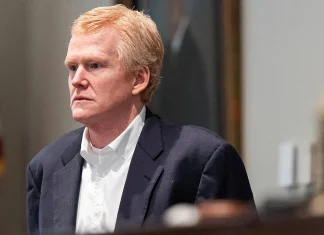
Retrial Set for U.S. Lawyer Convicted in Wife and Son Murders
When the Scales Waver: The Overturning of the Murdaugh Murder Conviction
There are moments when a courtroom ruling sounds less like a verdict and more...
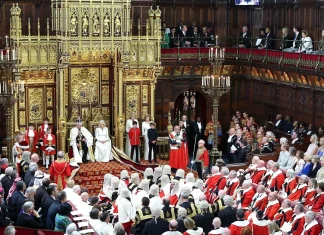
Corbyn says Starmer is unlikely to survive as prime minister
A Party at Sea: Why Corbyn Thinks Starmer’s Premiership May Not Last
There are moments in politics that feel less like a slow boil and...
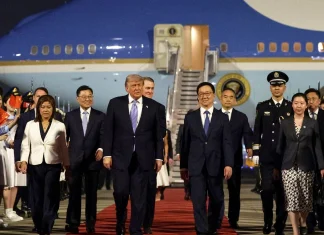
Trump declares he can end Iran conflict without Beijing’s assistance
Air Force One, a Red Carpet and the Long Shadow of Two Giants
The engines had hardly cooled when the cameras began to hunt for...

Lebanon reports Israeli vehicle strikes kill 12 civilians
In the shadow of Washington: strikes, funerals and fragile diplomacy on Lebanon’s southern shore
On a coastline where lemon trees meet the Mediterranean and cars...

WHO chief: Efforts continue after the hantavirus evacuation
At Sea, Between Fear and Protocol: The MV Hondius and the Quiet Threat of Hantavirus
The image is cinematic: a sleek expedition ship, the MV...