Wednesday, January 21, 2026
Home Blog Page 20

Denmark’s prime minister urges United States to cease threats against Greenland

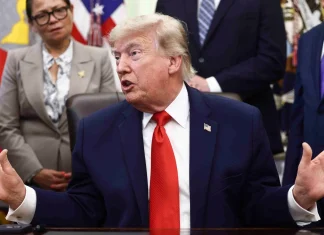
'We have to have it' - Trump says US needs Greenland
US President Donald Trump has advocated for Greenland to become part of the United States

Greenland on the Line: Between Ice, Independence and Global Geopolitics

On a bright, cold morning in Nuuk, the capital’s painted houses look like jewels scattered against a vast white palette. Steam rises from a fishing trawler tied to the quay. Children weave between parked cars, their laughter drifting over the fjord. For the 56,000 or so people who call this place home, Greenland is not a chess piece to be traded between distant capitals — it is a homeland, a place of memory and weather and stubborn pride.

And yet, in recent weeks, headlines have placed Greenland at the centre of a geopolitical tug-of-war, reviving old questions about sovereignty, security and the value of the Arctic in a warming world. In Copenhagen, Prime Minister Mette Frederiksen responded sharply to suggestions from Washington that the United States might “need” Greenland for defence reasons — calling the idea absurd and insisting that the territory and its people are not for sale.

Why Greenland matters

To understand why a far-flung island of fjords and ice sheets suddenly commands global attention, you have to look past the clichés about polar bears and endless ice.

  • Size and location: Greenland is the world’s largest island, more than 2.1 million square kilometres, located squarely between Europe and North America.
  • Population: Roughly 56,000 residents, concentrated largely along the west coast.
  • Ice and climate: About 80% of the land is covered by the ice sheet, whose future is central to global sea-level projections.
  • Strategic footprint: The island hosts Greenlandic settlements, Danish administration and long-standing US military facilities such as Thule Air Base, established during the Cold War.

“Think of Greenland as a gateway,” said an Arctic security analyst I spoke to, tracing a finger over a map. “Control of Greenland touches transatlantic lines of communication, early-warning systems and the routes a new era of Arctic shipping might create. That is why big powers watch it.”

Voices from the fjords

Back in Nuuk, opinions are nuanced. “We grew up here,” said Anja, a 28-year-old nurse, as she sipped strong coffee outside a clinic. “This is not a commodity. People speak about mineral wealth and strategic value, but they don’t talk about our language, our music, our food. You can’t put a price on that.”

On the docks, Nuka — a captain who has spent his life hauling halibut and shrimp through the winter months — was more blunt. “We’ve been told what’s best for us before,” he said, eyes narrowed against the wind. “Independence is a hope for many, but money is real. The subsidy from Denmark keeps hospitals open, kids in school. We have to balance pride with survival.”

That Danish subsidy — a regular transfer that helps sustain Greenland’s public services — is often cited as a key factor in the island’s gradual, cautious path toward greater autonomy. The Self-Government Act of 2009 confirmed the right of Greenlanders to declare independence in the future, but also left a practical dependency: tens of thousands of jobs, essential public services and an economy still tethered to fishing and state funds.

Minerals, melting ice and the economics of influence

The Arctic’s mineral bounty — rare earth elements, potential oil and gas, and other strategic resources — has spurred outside interest. Global demand for rare earths, for example, drives a scramble by nations to diversify supply chains away from single-source dependencies. For Greenland’s small towns, mining projects promise jobs and infrastructure. But the memory of previous resource booms, and the environmental fragility of the Arctic, make the debate deeply contested.

“We must ask ourselves what kind of development we want,” said a Greenlandic community leader I met in a town hall meeting. “Will mining build schools and clinics or foreign megaprojects and empty promises? Will it poison water and change our way of life?”

Diplomacy, dignity and the dangers of language

When foreign officials publicly debate whether a territory should belong to another state, it is not merely diplomatic posturing. It touches the dignity of the people who live there. Prime Minister Frederiksen’s statement — that it would be “absurd” for another country to seek to take control of Greenland — was as much an appeal to principle as it was to geopolitics.

“Warm words are not enough,” said the Danish prime minister in a formal statement. “We must respect our allies and recognise the rights of the people who live on the island.”

That plea resonated in Nuuk’s cafes and municipal chambers. “We are not for sale,” repeated a community activist, who asked to remain anonymous because she feared reprisals from more powerful actors. “It’s painful to hear countries talk as if places like ours are empty containers to be filled with bases and mines.”

What comes next — and what it means globally

There are no simple answers. Greenland’s future will be shaped by internal debates about independence, external pressures from great powers seeking strategic advantage, and the relentless realities of climate change.

Here are some of the questions that matter globally, not just locally:

  1. Who decides what constitutes legitimate security interest versus coercive influence?
  2. How can resource development be done in ways that respect local rights and protect fragile ecosystems?
  3. What obligations do historical powers have toward dependent territories seeking self-determination?

“Greenland is a mirror,” suggested an international law scholar. “How the world responds to the island’s choices will say a lot about our commitment to sovereignty, indigenous rights and cooperative security in the 21st century.”

Closing thoughts

Walking away from the harbour that afternoon, the fjord spread out like an old map — white, blue, a smear of dark water where the current ran fast. Greenland will not be decided by a single speech or headline. Its people will move forward, sometimes slowly, sometimes with urgency, balancing the practicalities of life with the deep, human desire to determine their own fate.

So what do you think, reader? When a small community sits at the intersection of global strategy and indigenous identity, whose voice should carry the most weight, and how should the international community respond? The answer will shape not only Greenland’s future, but the contours of global diplomacy in a warming world.

Switzerland Identifies All Victims of New Year’s Ski Resort Blaze

Swiss identify all victims of New Year fire at ski resort
A makeshift memorial near the Constellation bar, on January 4, 2026, in Crans-Montana

When Celebration Turned to Mourning: The Night the Alps Stood Still

There are certain images that steal your breath: the sharp line of the Alps under a winter moon, the glow of a resort alive with New Year’s cheer, and then a sudden, bewildering darkness where laughter used to be. That is the image the small Swiss resort of Crans-Montana will not easily forget after the fire that swept through a packed bar in the early hours of New Year’s Day, leaving 40 people dead and a community searching for answers.

The numbers are stark and relentless: 40 people killed, including 20 minors. One hundred and nineteen injured, many with severe burns. Victims ranged in age from 14 to 39 and included citizens from at least a dozen countries — roughly 21 Swiss, nine French, six Italians, and others from Belgium, Portugal, Romania, Turkey and beyond — the variety of passports reflecting the resort’s international pull.

The scene

It was 1:30am when revellers in Le Constellation, a basement bar owned by a French couple, suddenly found a celebration turned to catastrophe. Videos posted on social media show a low wooden ceiling, laced with soundproofing foam, catching light. What began as sparks — reportedly from celebratory sparklers affixed to champagne bottles — became a wall of flame that spread with terrifying speed.

“People were shouting, throwing chairs, smashing windows. We thought it was a prank at first,” said Marcella, a local waitress who rushed to help after fleeing the bar. “Then the smoke hit. It was like being in an oven.”

Fire and rescue teams arrived within minutes, but not quickly enough to stop a flashover — a near-instantaneous ignition of everything in an enclosed space — that experts say is consistent with the way the flames behaved. The foam covering the ceiling, designed to deaden sound, is under scrutiny for being highly flammable.

Grief in the streets

Within days, the town’s rhythm changed. At a packed memorial service held in a chapel just 300 meters from the bar, people stood in the cold — temperatures around -9°C — clinging to bouquets or a single red rose. A giant screen outside relayed the service for those who could not fit inside. Hundreds walked in silent procession to a nearby chapel of rest. Switzerland has declared a national day of mourning on January 9, with church bells nationwide set to toll at 14:00.

“We are here to say that in the face of the unspeakable, we refuse to look away,” Pastor Gilles Cavin told the assembled crowd. “We are here for the apprentices, the high-school students, the young people who came from many places to celebrate life and were met with death.”

Bishop Jean-Marie Lovey, speaking after the service, appealed for privacy and compassion. “The world’s media have descended upon our valley,” he said. “Please seek the grieving with mercy, not spectacle.”

Names, nationalities, and the human tally

Police in Valais canton have worked to identify the victims, a painstaking and heartbreaking process. Among those named: young apprentices, university students, and school pupils. Authorities released a list of nationalities to help families connect — a chilling reminder of the resort’s international character and of how quickly tragedy can cross borders.

  • 40 killed, including 20 under 18
  • 119 injured, many with severe burns
  • Victims aged between 14 and 39
  • Nationalities represented include Swiss (21 among the deceased), French (9), Italian (6), plus citizens of Belgium, Portugal, Romania, Turkey and others

“My son was only nineteen,” said Anna, a parent of a victim who asked that her surname not be used. “He loved the mountains. He loved life. There are no words.”

Accountability and the court of law

The bar’s owners, Jacques and Jessica Moretti, have been placed under criminal investigation and are charged with negligent manslaughter, negligent bodily harm and negligent arson. Jacques Moretti has maintained to local press that safety norms were followed and that the venue’s official capacity — listed online as 300 inside plus 40 on the terrace — was not exceeded.

Mayor Nicolas Feraud told Swiss broadcaster RTS that the municipality was cooperating with investigators and that the town had not been negligent. “Our priority is finding the truth,” he said. “We will ask all the hard questions about oversight and compliance.”

Experts weigh in

Fire safety specialists point to patterns that have already become painfully familiar. “Enclosed spaces with combustible acoustic foam and an ignition source like pyrotechnics are a recipe for a flashover,” said Dr. Elise Morel, a fire dynamics specialist at the Federal Institute for Fire Prevention. “The Station nightclub fire in Rhode Island in 2003 taught us that lesson the hard way — pyrotechnics and foam do not mix.”

Global statistics underline the risk: in night-time entertainment venues around the world, fires caused by pyrotechnics and overloaded exits have repeatedly led to mass casualties. Codes exist to prevent these scenarios, but enforcement varies. Where oversight lapses, the consequences can be catastrophic.

Culture, tourism and the cost of a night out

Crans-Montana is a ski resort known for its lively après-ski and international clientele. This tragedy raises difficult questions about the cost of fun, the culture of late-night partying, and the responsibility shared by venue owners, local authorities, tour operators and revelers themselves.

Who shoulders the blame when joy becomes danger? Is it the owners who lit sparklers? The suppliers who sold combustible foam? The regulators who enforce capacity and fire-code compliance? Or the broader social appetite for ever-more sensational nightlife experiences?

“We must mourn, of course,” said Dr. Morel. “But we must also learn and implement. Regulations are only as good as the willingness to enforce them and the cultural determination to value safety over spectacle.”

How a town moves forward

For now, Crans-Montana is holding tight to rituals of remembrance. Bells will toll. Names will be read. Families, many from other countries, will grappling with loss far from home, relying on consular services and the generosity of local volunteers. Hospitals in the region are caring for the wounded, and burn units elsewhere in Switzerland have taken patients as needed.

A crisis helpline has been set up; crisis counselors are on site. Volunteers bring food and blankets. Younger people hang candles and notes on fences. The scene is at once intimate and global: a fjord-side slogan in Norwegian could be replaced by a French postcard, a Swiss flag next to an Italian one, as strangers become the bedrock for families in shock.

As you read this, perhaps you’re thinking of a night out — a memory, a friend, a child. How do we celebrate without courting danger? How do communities keep their doors open and their people safe? These are painful, necessary conversations.

There will be investigations. There will be trials. And there will be funerals. But beyond legal outcomes, the lasting test will be whether this valley — and the wider world of nightlife and leisure — chooses to carry forward lessons so these names do not become another footnote in a long catalogue of preventable tragedies.

For the families, the question is simpler and unbearably immediate: how do you continue after losing a child, a sibling, a friend? For the rest of us, the question is this: what will we change?

Health charity urges government to match UK’s junk-food ad ban

Charity calls on Govt to match UK ban on junk food ads
It will impact ads airing before the 9pm watershed and anytime online

When the Screen Becomes the Snack Counter: A New Chapter in the Fight Against Childhood Obesity

On a rainy Wednesday afternoon in Cork, a six-year-old presses his nose to the television while his mother prepares dinner in the kitchen. Between the cartoon and the weather forecast, a stream of bright, jingly adverts floods the screen—milkshakes with cartoon mascots, crisps that promise “fun,” and fizzy drinks with colours more vivid than the childhoods they aim to colour. The boy points. “Can I have that?” he asks.

This tiny exchange is part of the scene that drove the UK government to roll out a sweeping ban on daytime television and paid online advertising for foods high in fat, salt or sugar. Officials hailed the move as “world-leading” and say it could remove up to 7.2 billion calories from children’s diets each year, reduce the number of children living with obesity by about 20,000, and deliver roughly £2 billion (€2.2bn) in health benefits. For public health advocates, it’s a gesture toward a future where childhood cravings aren’t manufactured before kids can read.

What the UK ban does — and what it doesn’t

The gist of the regulation is simple on paper: junk-food adverts will not be shown on TV before the 9pm watershed and paid ads for these products will no longer appear online. Local councils have also been empowered to restrict fast-food outlets setting up shop outside schools, while an extended sugar tax now includes items such as milkshakes, ready-to-go coffees and sweetened yogurt drinks.

  • Banned: Paid TV ads for HFSS (high fat, salt or sugar) foods before 9pm; paid online ads for the same products.
  • Allowed, in some form: Brand advertising remains permissible, which critics say keeps brand recognition alive long before children develop meaningful consumer choice.
  • Not fully addressed: Influencer marketing and some forms of product placement, which are rapidly evolving and can be hard to police.

“By restricting adverts for junk food before 9pm and banning paid adverts online, we can remove excessive exposure to unhealthy foods,” Health Minister Ashley Dalton said as part of the policy launch, adding that the move fits into a broader strategy to shift the National Health Service’s emphasis toward prevention as well as treatment.

The human toll behind the statistics

Numbers make headlines. They also make futures. The UK government points to sobering childhood health statistics: around 22% of children starting primary school in England are overweight or obese, and by the time those children reach secondary school, the figure climbs to more than a third. Tooth decay—largely preventable—is the leading cause of hospital admissions among children aged five to nine in the UK.

For parents and teachers on the ground these are not abstractions. “You see kids trading lunchbox snacks for branded pots and pouches,” says Margaret O’Neill, a primary school teacher in Limerick. “They’re learning to link feeling good with a brand logo. That sticks.”

Public health organisations welcomed the UK’s move. Katharine Jenner, executive director of the Obesity Health Alliance, called the ban “a welcome and long-awaited step towards better protecting children from unhealthy food and drink advertising that can harm their health and wellbeing.” Diabetes UK echoed the sentiment, warning that rising rates of type 2 diabetes in young people are linked to obesity—today’s sugar habit can be tomorrow’s chronic disease.

Across the Water: Ireland Watches and Asks Why Not Us?

In Dublin, the Irish Heart Foundation listened to the announcement and issued an immediate call to action: the Government in Ireland should adopt similar restrictions. “Children in Northern Ireland will now have greater protection than their counterparts here from unscrupulous online targeting tactics by junk brands that we know are rampant,” said Chris Macey, director of advocacy at the Irish Heart Foundation. “They result in overconsumption, which in turn causes high rates of overweight and obesity that are damaging children’s long-term health.”

That observation stings because Ireland has previously been warned of the same dangers. Several policy recommendations—most notably from the Oireachtas Committee on Children and Youth Affairs—have suggested tough marketing curbs to shield kids, but many suggested measures remain unimplemented. “The implementation paralysis of successive governments, which have been well aware of the need for tough restrictions on junk food marketing, has to end. The futures of tens of thousands of today’s children depend on it,” Macey said.

Local voices: parents, shopkeepers, and the pacing of policy

Across neighbourhoods in Ireland, the issue feels both immediate and personal. Aoife Murphy, a mother of two in Galway, described the omnipresence of junk-brand imagery. “My toddler knows the mascots on cereal boxes before she can say ‘banana.’ It’s everywhere—on TV, in supermarket aisles, even in gaming apps,” she says. “A ban like this would give us a fighting chance.”

Shopkeepers argue with nuance. “We sell what people buy,” says Declan Byrne, who owns a convenience store near a secondary school in Waterford. “If demand shifts, we will too. But education and economic realities matter. Some families buy cheaper, ultra-processed food because it stretches the budget. You can’t solve this with a single law.”

Advertising, Algorithms and the Invisible Persuader

The digital dimension complicates matters. Algorithms track and learn from children’s viewing habits; influencer marketing cloaks promotion in familiarity; and brand-building campaigns aim to make recognition habitual as early as 18 months—research shows infants can identify brand logos astonishingly early in life.

Dr. Sinead O’Leary, a behavioural scientist focused on childhood nutrition, points out that “advertising doesn’t just inform; it creates a context for desire. The more exposure, the more normalised those choices become.” She warns that while the UK ban is meaningful, it is not a panacea. “Brand marketing and influencer content are the next battlegrounds.”

What else could be done?

Tackling a complex public health challenge calls for multi-pronged action. Measures experts suggest include:

  • Expanding restrictions to cover brand advertising and influencer promotions aimed at children.
  • Strengthening school food policies and restricting fast-food outlets near schools.
  • Investing in community-based nutrition education and subsidies for healthy foods.
  • Monitoring and enforcing online ad rules with clearer penalties for breaches.

Why this matters to a global audience

Childhood obesity is not a British or Irish problem alone. The World Health Organization reported that in 2020 tens of millions of children under five were overweight or obese worldwide, and rates of excess weight among school-age children have been rising in many countries. This is a global conversation about corporate influence, children’s rights, health equity, and the ethics of selling to those who can’t yet fully understand the persuasion.

As you scroll through your own feed tonight, ask yourself: who is talking to your child? Who is shaping their tastes before they learn to read nutrition labels? And what kind of world do we want them to inherit—a world where craving is manufactured and convenience rules, or one where healthy defaults are the easy and visible choice?

The UK’s ban is not the final word. It is, however, a clarion call—and a reminder that policy can change the odds in which children grow up. Whether Ireland, and indeed the wider world, will match that ambition remains to be seen. For parents like Aoife, teachers like Margaret, and doctors like Dr O’Leary, urgency is part of the daily rhythm.

“This isn’t about taking treats away,” Aoife tells me. “It’s about making sure treats stay occasional, and that our kids don’t grow up in a world where every screen is trying to sell them a shortcut to happiness.”

Will your government, community, or family step in to redraw the line between childhood and commercial persuasion? The choices we make now will shape not only calories on a plate but the contours of children’s lives for decades to come.

Calls grow for accountability after Swiss ski resort blaze

Pressure mounts for answers over Swiss ski resort fire
All 40 victims of the fire have been identified, with most of them teenagers

Crans-Montana in Mourning: A New Year’s Night That Echoes Through the Alps

On New Year’s morning, the celebratory clang of glasses and the breathless cheers that normally greet the first sunrise of the year were replaced by an ache so large a mountain town could feel it. In Crans-Montana — that beloved, picture-postcard ski resort in Switzerland’s Valais canton, where chalets slope into pine forests and luxury hotels face the glaciers — 40 lives were extinguished in a single, merciless instant.

The blaze, which tore through a basement bar in the early hours of 1 January, left more than 100 people injured and a community stunned. Most of the victims were teenagers; the youngest was only 14. Families from across Europe — France, Italy and beyond — are now counting names rather than celebrating the year ahead.

What Happened

Prosecutors say investigators believe “fountain” sparklers — the small, decorative candles that spout glittering jets and are often used on celebratory cakes — ignited the bar’s low ceiling. In a cramped, soundproofed basement crowded with revelers, flames found a ready home and moved with terrible speed.

Two people who ran the bar are under criminal investigation on suspicions that include negligent homicide. Authorities told reporters the pair are not currently being held in custody and do not appear to be a flight risk, while probes continue into inspections, safety systems and compliance with local rules.

Numbers That Won’t Fit in a Headline

Statistics alone feel thin against personal loss, but they matter. Forty dead. More than 100 injured. Teenagers among the dead. These are the hard facts the town must reconcile with the human stories behind them.

The Town Responds: Silence, Candles, Questions

Crans-Montana has always thrummed with a particular mix of Alpine luxury and youthful abandon — après-ski in one hour, classical concerts the next. But yesterday the main street hosted a silent procession. Residents wrapped scarves tight against the chill, faces flushed from cold and grief, while small groups left flowers and handwritten notes outside the bar’s shuttered façade.

“I came because we must remember,” said Marie-Claire, a local schoolteacher who joined the march. “We owe it to the young ones who went out to celebrate to make sure their laughter isn’t turned into silence for future generations.”

Across town, a makeshift memorial grew with each hour: wool hats, little ski gloves, Polaroids, and teddy bears placed against the chew of neutral stone. The sight of teenage sneakers lined up like offerings is the sort of image that lingers.

Rising Questions: Rules, Inspections, and Responsibility

Beyond grief sits an urgent, unglamorous set of questions: Had annual inspections been performed? Were ceiling materials and soundproofing compliant with fire codes? Were age checks and capacity limits enforced on a night when the crowd skewed very young?

One of the bar’s operators told local media that the venue had been inspected three times in the last decade and “everything was in order.” Canton authorities say they are reviewing whether the bar had undergone mandatory annual building inspections and whether any complaints had been lodged to the town.

Not everyone is satisfied with answers that may take weeks to arrive. “This isn’t just about one sparkler,” said Luca, a parent whose daughter was injured but survived. “It’s about whether we expect bars to be safe or whether we accept risks when there are young people in crowded spaces.”

Key Areas Investigators Are Scrutinizing

  • Fire-safety compliance: materials, exits, fire suppression systems
  • Inspection records and the frequency of official checks
  • Use and regulation of pyrotechnics in indoor venues
  • Age verification and crowd-control procedures on high-risk nights

Voices: Anger, Grief, Demand for Change

Political speech quickly followed the tragedy. Some leaders called for accountability; others urged restraint until investigators complete their work. A high-profile political figure in Italy argued publically that those responsible must face prison if negligence is found — a sentiment mirrored by many who feel justice should be swift.

“We need to know whether rules were skirted for profit,” said an emergency-room doctor in Sion who treated dozens of burn victims. “When young bodies come in with severe burns or smoke inhalation, it tests both the hospital and the community.”

A local youth worker, who preferred not to give his name, spoke of a different loss: “These kids weren’t just clients in a bar. They were our neighbors, our students. We don’t want to ban joy — but we do want to guard it better.”

Local Color and the Wider Frame

Crans-Montana is multilingual and cosmopolitan — French is dominant, but German and Italian voices are never far. In winter, the town is a collage of ski suits, fur-lined hoods, and the smell of melted cheese at every corner. That very tourism economy — the bars, the late-night venues, the event-driven calendar — is being reassessed now in light of the disaster.

This asks a broader question: how do mountain resorts balance the pulse of nightlife with the rigors of safety? Switzerland, like many European countries, has strict building codes and a layered municipal-canton regulatory structure. Yet when an establishment serves intoxicated crowds of mixed ages, enforcement gaps and the informal tolerance of youthful revelry can create dangerous seams.

Global Lessons: Nightlife, Regulation, and Youth Safety

Accidents like this reverberate far beyond the Alps. In recent years, incidents in nightclubs, festivals and public celebrations elsewhere have exposed similar fault lines: poorly maintained venues, unchecked pyrotechnics, and a mismatch between safety regulations and the reality of crowded, late-night spaces.

What does a responsible nightlife look like? It includes better training for staff, routine and transparent inspections, strict limits on indoor pyrotechnics, and clear enforcement of age and capacity rules. It also demands that locals and visitors alike recognize the human cost when corners are cut.

How You Can Reflect or Act

What should travelers consider when they go out in resort towns? How should communities protect young people who are exploring nightlife? These are not easy questions.

But when you next raise a glass in a foreign town, maybe ask: who checked the exits here? How many people could leave this room in a minute? These small, awkward questions can be the beginning of a culture that prizes safety over spectacle.

After the Smoke Clears

For now, Crans-Montana mourns. Investigations will attempt to stitch together timelines, to find a legal arc of responsibility, to name failures and recommend reforms. Families will try to bury their dead. Survivors will carry scars — seen and unseen.

And somewhere between grief and accountability, a town and a tourism industry must decide how to honor those lost: in stricter rules, better enforcement, and in a shared vow that a joyful night shouldn’t become a final one.

How do we build nightlife cultures that celebrate without endangering those who come to them? The answer will shape not just one Alpine town, but communities everywhere that gather to mark life’s milestones under low ceilings and bright sparks.

Guddigii Farsamo ee Golaha Mustaqbalka oo maanta shir xasaasi ah uga furmayo Garoowe

Jan 05(Jowhar)-Xubnaha guddiga Farsamada golaha mustaqbalka Soomaaliya ayaa wada hadalo uga furmeen magaalada Garoowe, waxayna ka doodayaan sidii ficil loogu bedeli lahaa qodobadii kasoo baxay shirkii Kismaayo, gaar ahaana qodobada 6-7aad.

Erdogan iyo Maxamed bin Salmaan oo ka wada hadlay arrimo ka dhan ah Imaaraatka

Jan 05(Jowhar)-Madaxweynaha Turkiga, Recep Tayyip Erdoğan, iyo Dhaxal-sugaha Sacuudi Carabiya, Maxamed bin Salmaan, ayaa yeeshay wadahadal dhanka telefoonka ah oo ay kaga hadleen xiriirka labada dal iyo arrimaha gobolka.

Fresh clashes erupt across Iran as protests move into second week

New clashes in Iran as protests enter second week
A protester flashes victory signs as traffic slows during demonstrations in Hamedan, Iran

Across a Winter of Discontent: Iran’s Latest Uprising and the Voices from Its Streets

On a cold night in the west of Iran, a funeral march lit up like a constellation of low flames—candles held by hands wrapped in scarves, faces lit by grief and fury. The slogans were sharp, the cadence familiar to anyone who has watched Iran’s recent cycles of protest: defiance braided with sorrow. “Enough,” a woman cried, her voice cutting through the winter air. “They have taken too much.”

What began as a shopkeepers’ strike in Tehran on December 28 has rippled into a larger movement, rolling through towns and provincial centers and returning, for many, to the memory of the mass mobilizations of 2022–23. Officials and rights groups now say at least 12 people—including members of the security forces—have died since the unrest began. Local monitors report hundreds of arrests. And while the scale has not yet eclipsed the last nationwide upheaval, the geography of this new anger is striking: it burns brightest in western provinces with large Kurdish and Lor populations.

From a Shopkeeper’s Strike to a Patchwork of Protests

The flashpoint was deceptively small: shopkeepers in Tehran closed their shutters to protest rising costs and what they said were suffocating economic policies. The strike tapped into a deeper vein of frustration. Within days, protesters were chanting not only about wages and prices but about leadership and accountability. “It started over bread and ended up asking for dignity,” said Arman, a 28-year-old teacher who travelled from Kermanshah to take part in a demonstration.

Human Rights Activists News Agency (HRANA), based in the United States, tallied that protests have occurred in 23 out of Iran’s 31 provinces and have touched at least 40 cities, most of them small and medium-sized. Rights groups headquartered in Norway—Hengaw and Iran Human Rights—reported deadly clashes in the western Ilam province. Hengaw said Revolutionary Guards opened fire in Malekshahi county, killing four Kurdish residents and wounding dozens. Iran Human Rights gave a similar toll: four dead and around 30 injured.

Authorities say that some members of the security forces also lost their lives during attempts to storm police buildings. Both sides show footage and count bodies; both sides grieve and accuse the other of violence.

Where Minority Grievances Meet Economic Pain

Western Iran has long been a complex tapestry of languages, cultures and historic grievances. Kurdish and Lor communities there often feel marginalized in national politics and economic planning. That sense of exclusion can turn ordinary protests—about food, fuel, or salaries—into something more combustible.

“We are not asking for independence,” said Rana, a 44-year-old shopkeeper in Ilam whose son attended a funeral over the weekend. “We are asking to be treated like human beings. To have our children go to school and for my husband to come home at night.” Her voice was raw, part anger and part exhaustion.

Human rights organizations also allege that authorities raided hospitals to seize bodies, a practice families say is meant to prevent public mourning from crystallizing into larger demonstrations. Funerals in the region have become both a ritual of mourning and a political act; mourners chant the names of the dead and the slogans against Tehran’s leadership, a rhythm that echoes recent history.

Tehran and the Cities: Quiet Streets, Loud Tension

In the capital, streets were oddly subdued. Most shops remained open, but major intersections were glutted with riot police and security forces. What was notable was not mass crowds in central squares—though there were pockets of defiance—but the scattered nature of demonstrations across districts in the east, west and south.

“You could see that something had shifted,” said Mina, a student in Tehran who spoke to me over the phone. “People are more careful, but they are also more ready. They whisper the same slogans we used in 2022. Everyone knows the risks, but they also know the stakes.”

Video verified by independent observers showed security forces using tear gas to disperse groups in central Tehran during the daytime. HRANA reported that at least 582 people were detained across the country during the first week of unrest.

Voices from the Ground

“They took my brother away at dawn,” said Hassan, a young man from a small town outside Shiraz. “I don’t know where he is. We just want him to come back.” His fear was contagious—later, his neighbors gathered at the municipal square, murmuring about bail, lawyers, and the price of silence.

“What you see now is the result of years of cumulative pressure,” said Dr. Sara Nouri, a sociologist who studies social movements in Iran. “Economic hardship can be an accelerant, but it’s the social fractures—the sense of exclusion and the memory of recent crackdowns—that determine how protests become sustained.”

International Echoes and Political Calculations

The unrest has not gone unnoticed abroad. U.S. political figures and leaders in the region have voiced support for the demonstrators; comments from high-profile politicians have ranged from vocal backing to ominous threats. Former U.S. President Donald Trump was quoted as saying America was “locked and loaded” should Tehran harm its protesters, while Israeli Prime Minister Benjamin Netanyahu publicly expressed solidarity with the demonstrators, suggesting they might be “taking their destiny into their own hands.”

Iran’s leadership faces a compounded challenge. Supreme Leader Ayatollah Ali Khamenei, now in his late eighties and at the helm since 1989, presides over a polity that is still recovering from a summer conflict with Israel. The June confrontation—brief but intense—reportedly damaged nuclear infrastructure and cost the lives of some security figures, shaking the aura of invulnerability that often surrounds Iran’s security elite.

Counting Costs and Asking Hard Questions

The government has offered a modest concession: a monthly allowance equivalent to roughly $7 for the next four months, intended to ease immediate pain. For many protesters and analysts, that is not enough. “Seven dollars is an insult,” said Fatemeh, a nurse from a provincial city. “It is like handing a bandage to someone who needs surgery.”

What will end this wave? Will it plateau, like past cycles have, or will it gather momentum, drawing in students, public servants and the urban poor? History suggests both outcomes are possible. The 2022–23 movement, ignited by the death of Mahsa Amini in custody, demonstrated the potency of a unifying symbol. This current wave lacks a single galvanizing image, but it has a more diffuse power: chronic economic pain, minority grievances, and a younger generation less willing to bear both.

So where does that leave the reader—watching from afar or reading on a phone in a quiet living room? Consider the human faces behind each statistic: the shopkeeper who closed early to keep bread on the table, the mother who wrapped her child’s feet to keep out the cold, the student who murmured a slogan and felt the weight of a state looking back. These are not just numbers; they are pulses.

As the world watches, the ambiguous calculus of repression and concession will play out in city squares and hospital corridors. For now, the streets of Iran hold both grief and a brittle hope. And amid the smoke and the chanting, the question that will test the political order is simple: how much will people endure before they insist on more than mere allowances?

If you are reading this, ask yourself: what does it take for a society to bend—not break—under pressure? And when it bends, who decides how it straightens again?

North Korea conducts first ballistic missile test of 2026

N Korea fires ballistic missiles in first test of 2026
North Korean leader Kim Jong Un visited major munitions industry enterprises in North Korea (credit: AFP photo/KCNA via KNS)

Dawn over the Yellow Sea: A Message Launched from Pyongyang

The sun barely had time to warm the morning when radar operators along South Korea’s eastern shoreline recorded streaks across the sky. At 07:50 local time, South Korean defence officials said, “several projectiles, presumed to be ballistic missiles” were launched from near Pyongyang and arced out over the East Sea — the waters that stitch the Korean Peninsula together with Japan and the wider Pacific.

It was a short, sharp punctuation to a tense political calendar. Hours later, South Korea’s president, Lee Jae-myung, was due to board a plane for Beijing to meet Xi Jinping. For many in Seoul and beyond, the timing felt deliberate — a reminder that Pyongyang can, and will, use missile tests as a way to influence diplomacy from a distance.

What happened — and why it matters

South Korea’s defence ministry said its forces were on full alert, reinforcing surveillance and preparing for the possibility of further launches. Japan’s defence ministry also reported detecting what it called a “possible ballistic missile” that landed in an unspecified area. Global observers registered the launches as North Korea’s first ballistic missile test since November — a period of relative quiet that now seems brittle.

“This is a calibrated signal,” said Dr. Jae‑Hyun Park, a professor of strategic studies at Seoul National University. “Not an all-out provocation, but enough to remind regional capitals that Pyongyang remains a chess player rather than a bystander. It’s about deterrence, about domestic politics, and about negotiating leverage.”

Those three threads — deterrence, domestic politics, diplomatic leverage — weave through every North Korean test. For decades, Pyongyang has insisted its nuclear and missile programs are defensive, a bulwark against alleged plans to topple the regime. Washington has repeatedly denied harbouring such intentions. Yet the rhetoric rarely quiets the rumour mill or the missile technicians.

Numbers and nuance: how big is the threat?

Hard figures on North Korea’s arsenal are estimates, not certainties. Analysts broadly place the number of nuclear warheads in Pyongyang’s possession in the low dozens; many Western assessments put the figure roughly between 40 and 60 warheads, with delivery systems — short-, medium- and long‑range ballistic missiles — increasing in both variety and technical sophistication.

“We’re not talking about a static threat,” said Maria Gutierrez, a policy analyst who follows proliferation risks. “Over the last decade, missile tests have allowed North Korea to improve guidance systems and diversify the means of delivery. Even if the headline number of warheads seems modest compared with the great powers, the combination of mobile launchers, underground facilities and solid-fuel missile research complicates any rapid military response.”

Recent years have seen Pyongyang shift from occasional big displays to more frequent, targeted tests designed to refine specific capabilities: precision strikes, solid-fuel efficiency, and multiple launch systems. Analysts also note the possible economic incentives: missiles and missile technology are export commodities in clandestine arms markets, and North Korea has signalled interest in entangled military-industrial ties with states like Russia.

Inside Pyongyang’s calculus

State media in Pyongyang had its own version of the story. KCNA reported that Kim Jong Un visited a facility producing tactical guided weapons and ordered a 250% expansion of output. The detail — and the number — was deliberate, meant to be both boast and bet: if the factories expand capacity, Pyongyang can produce more missiles, train more technicians, and, if pressed, flood the region with more hard-to-track launches.

“For them, it’s about survival and prestige,” said Hong Min, an analyst at the Korea Institute for National Unification. “The message to their own people is clear: the leadership is expanding defenses and ensuring national dignity. The message to outsiders is also clear: attacking North Korea would not be as straightforward as some might assume.”

Local voices: fishermen, commuters, and quiet worry

On the docks of Pohang, where the sea smells of iron and diesel, fishermen shrugged as if the sky’s new streaks were part of the day’s weather. “We worry about our nets, not politics,” said Mr. Choi, a 58‑year‑old who has spent decades at sea. “But every time these things fly, you feel it — like a stone dropped into your lives.”

In a cramped coffee shop near Seoul Station, a young office worker named Minji tapped her cup and said quietly, “I’m going to China next week for work. I’m not scared, but I think about kids, about what would happen if there was a panic. We’ve learned to live with this strange rhythm of tension.”

Such reactions capture the odd normalcy of the situation: people carrying on, while the strategic temperature fluctuates above them. It is a kind of frozen anxiety, always present but predictable enough to fit into routines.

Diplomatic ripples: Lee heads to Beijing

President Lee Jae‑myung’s trip to Beijing now carries new weight. South Korea hopes to harness China’s influence over Pyongyang to nudge the North toward restraint. China remains North Korea’s largest trading partner and a crucial lifeline — but Beijing is also wary of instability on its northeastern border.

“China doesn’t want a collapsed Korea on its doorstep,” an unnamed diplomatic source in Seoul told me. “But Beijing values stability first. Pressure that could crack the regime is not their preferred route. This is exactly why Seoul keeps reaching out to China, even when tensions spike.”

The summit will likely revolve around economic cooperation and regional security calculus. For Lee, the challenge is to persuade Xi that Beijing can and should play a constructive role in deterring Pyongyang’s most dangerous impulses without coercion that might lead to unpredictable outcomes.

Looking out: what comes next?

There are no easy answers. A missile arc in the sky is an expression of capability; the policy response must be an exercise in patience, deterrence, and diplomacy. Would more sanctions, more military exercises, or more diplomatic isolation change Pyongyang’s behaviour? History says not necessarily. Engagement without naiveté — that is the hard sell.

We have to ask ourselves: how do we prevent escalation when provocations arrive in the hours before diplomatic exchanges? How do communities live normal lives under the shadow of these strategic messages? And how do democratic societies balance vigilance with the fatigue of perpetual crisis?

“We need a dual track: credible defence and creative diplomacy,” said Dr. Park. “The first keeps people safe today; the second creates the conditions for safety tomorrow.”

Quick facts

  • Launch detected: 07:50 local time near Pyongyang.
  • First ballistic missile test since November, according to regional ministries.
  • Estimated North Korean nuclear warheads: widely assessed by analysts to be in the range of roughly 40–60; delivery systems expanding in capability.
  • North Korean state media (KCNA) reported Kim Jong Un ordered a 250% expansion in tactical guided weapon production.

At the end of the day, these tests are more than metal and propulsion. They are language — crude, loud, and often frightening — in which a closed regime speaks to the world. How the world replies will shape not only the Korean Peninsula, but the rules and rhythms of 21st‑century diplomacy. Will we respond with escalation, or with a steadier hand aimed at reducing risk and opening avenues for dialogue? That choice will define the years to come.

Venezuela’s interim government insists it stands united behind Maduro

Venezuela's interim govt says it is united behind Maduro
Images released by US authorities showed Nicolas Maduro being led down a ‍hallway at the offices of the US Drug Enforcement Administration

When a President Was Taken: Caracas Breathes, the World Holds Its Breath

There are moments when time stretches thin, when a city pauses mid-breath and the simplest acts—buying bread, spinning a bike wheel, a child sprinting across a plaza—feel like acts of defiance against a larger, roiling uncertainty. That was Caracas this morning: muted, watchful, alive with the uneasy hum of people trying to move forward while history rearranges itself around them.

Late yesterday, word broke that Venezuelan President Nicolás Maduro had been taken into custody and transported to the United States. The image—of a 63-year-old man, blindfolded and handcuffed, entering a U.S. detention facility—landed like a thunderclap. For millions of Venezuelans, it was both surreal and painfully familiar, the latest chapter in a decade-long story of political turbulence, mass migration and economic collapse.

The quick, sharp facts

Here’s what matters, at a glance: Mr. Maduro was placed in a New York detention center to face drug-related charges and is awaiting court proceedings. The U.S. president signaled a willingness to “run” parts of Venezuela, including its oil sector, a line that has set off alarm bells across Latin America and beyond. In Caracas, the vice president—Delcy Rodríguez—has been endorsed by the country’s top court to act as interim leader, even as she insists Mr. Maduro remains the legitimate president.

Numbers give this moment context. Venezuela, once a regional powerhouse whose oil fields were the envy of the world, today counts more than 7 million people displaced abroad since the start of its crisis, according to UNHCR and IOM estimates. Its oil reserves are among the world’s largest—measured in the hundreds of billions of barrels—yet production has collapsed to a fraction of its former self, weighed down by sanctions, mismanagement and years of underinvestment.

Unity, defiance, and a chorus of alarm

Inside the ruling party, there is a determined refrain: unity. A recording released by party channels quoted a senior figure declaring that the revolution was unbroken and that there was “only one president: Nicolás Maduro.” Elsewhere, defence officials said forces had been mobilised to “guarantee sovereignty” and alleged that the U.S. operation had killed members of Maduro’s security detail.

“This cannot be framed as a simple arrest,” said a senior PSUV official speaking on condition of anonymity. “To us, this is aggression. It is a violation of our people’s dignity. But we are not defeated. We never will be.”

In Washington, the rhetoric was blunt. U.S. officials said the operation was a law enforcement mission rooted in longstanding indictments related to narcotrafficking. A State Department spokesperson emphasised the need to keep Venezuela’s oil out of the hands of hostile powers and to end the flow of illicit drugs. “There are legitimate national security interests at stake,” the spokesperson said.

Regional fury and a fragile consensus

Across Latin America and in Madrid, leaders reacted with alarm. Brazil, Chile, Colombia, Mexico, Uruguay and Spain issued a joint statement rejecting outside attempts to seize control of Venezuela or its resources. “We reject any attempt at foreign administration or appropriation,” the statement read—language that speaks to a deep, historical sensitivity about interventions on the continent.

“For countries that remember painful military interventions, what happened here is a red line,” said Mariana López, a political analyst in Bogotá. “Even if one dislikes Maduro, the appearance of foreign boots—or foreign hands—on national resources mobilises very raw memories.”

On the ground: muted streets, loud fears

Walk the streets of central Caracas and you’ll notice small acts that reveal a city grappling with fear and the ordinary necessities of life. A corner bakery in El Paraíso kept its ovens busy; an elderly man ordered two empanadas and discussed the news in clipped, weary tones. A mother in Maracaibo filled a plastic bag with rice and tuna, saying she had been too afraid to go out the previous day.

“Yesterday I stayed inside; I was terrified,” said Ana Rosa, a single mother who travelled to town to buy groceries. “Today, I had to come. We have children. People are used to fear here—but being used to something isn’t the same as accepting it.”

Supporters of the government still marched at a state-organised rally, waving red flags and chanting slogans about sovereignty and resistance. “This country will not be a colony,” declared one marcher, his voice hoarse from shouting. “Our oil is ours. Our dignity is ours.”

What about the opposition?

Across the political spectrum, cooler heads have been wary. The U.S. president dismissed the leading opposition figure—Maria Corina Machado—as lacking the support to lead, limiting the immediate prospect of a clean transfer to an opposition government. Many opponents, while relieved at the prospect of change, are reluctant to celebrate an arrest that smacks of foreign intervention.

“We want democracy,” said an opposition activist who asked not to be named. “But we also want sovereignty. There is no easy path from a seized president to a functioning, legitimate government.”

Oil, geopolitics and the long shadow of history

Venezuela’s oil is the axis around which much of the international debate spins. Economically, politically and symbolically, crude is not simply a commodity here—it is identity, leverage, and livelihood. U.S. officials have openly discussed keeping Venezuelan oil out of the hands of rivals, while Venezuelan leaders frame those comments as proof of imperial designs.

OPEC+, the grouping that influences much of global oil policy, recently opted to keep production steady amid a market that has seen significant swings. The group includes heavyweights like Saudi Arabia and Russia and collectively accounts for roughly half of the world’s oil output. None of its recent statements mentioned Venezuela directly, but the capture of a president from one member state sent ripples through global energy markets.

“If outside powers try to administer Caracas or control its resources, the consequences will be felt in markets and in geopolitics,” said Elena Vázquez, an energy economist. “But more importantly, the risks are human—we have to ask who will pay the price on the streets, in hospitals, in the pockets of ordinary people.”

So what’s next?

In the short term, the immediate questions are painfully practical: how long will a U.S. presence be asserted, if at all? How will Venezuela’s military, fragmented and influential for years, react to orders from Caracas? How will ordinary Venezuelans—already drained by years of scarcity and migration—cope with another geopolitical shock?

There are broader questions too: What does the world owe a nation whose internal collapse has spilled refugees across borders and whose resources are coveted on the global stage?

History, it seems, is not content to repeat itself neatly. It is messy, loud, and stubbornly human. For the people living through it, the abstract language of “sovereignty,” “law enforcement” and “energy security” is measured against empty supermarket shelves, the ache of families split across borders, and the daily choreography of survival.

Will Venezuela find a path that respects its people’s will without inviting new wounds? Can the region, scarred by past interventions, forge a principled response that protects citizens above geopolitics? And for those watching from afar—what responsibility does the global community shoulder when a nation’s fate is intertwined with the appetites and anxieties of powerful states?

There are no simple answers. There are only the slow-making of decisions, the cough of engines on city streets, and the resilience of people who, after more than a decade of upheaval, still wake up and go to market. Watch them now—they are the ones who will live with the consequences.

More than 30 killed, several people kidnapped in Nigeria attack

Over 30 killed, several kidnapped in Nigeria
President Bola Tinubu's office said the attackers may have been 'terrorists' fleeing from parts of northwestern Nigeria (File image)

Night of Fire in Kasuwan Daji: A Market Turned Graveyard

They tell you markets are the heartbeat of a village. In Kasuwan Daji — literally “the bush market” in Hausa — that heartbeat still echoes tonight, but broken. Stalls that at dawn would have brimmed with tomatoes and millet now lie smouldering under a sky smeared with smoke and the bitter scent of burned palm oil. The road into the Kabe district of Niger State is quiet in a way that feels unnatural, as if the land itself is holding its breath.

“We saw them coming from the bush,” said Wasiu Abiodun, the Niger State police spokesman. “They set the market on fire, looted shops and — over 30 victims lost their lives during the attack. Some persons were also kidnapped.” His voice, relayed through terse official channels, is the first of many attempts to contain the human scale of the night.

Locals put the toll higher. The Catholic Church in Kontagora, whose parishioners still whisper of the atrocity on social media and at candlelit vigils, said more than 40 people were killed. Images circulated online — some graphic, some grainy — showed victims whose hands were tied behind their backs. The pictures have settled on the minds of anyone who scrolls past them: women, men, the unmistakable bent shoulders of old age.

The Raid

Witnesses describe a calculated sweep. The gunmen arrived on motorcycles, a common mode for Nigeria’s so-called “bandits,” a catchall term for heavily armed criminal gangs that operate across the north and central belt. They moved through the market in the late afternoon, firing into the air and into the crowd. They took food, livestock and, according to several sources, young men and women who could be marched back into the bush and held for ransom.

“They were not in a hurry,” said Aminu, a corn farmer who lives ten minutes’ walk from the burned stalls. “They took what they wanted. I ran into the cornfield and stayed there until sunrise. When I came out, the market was gone.”

A Long-Running Crisis

Niger State has experienced waves of violence for years. In November, armed gangs abducted more than 250 students and staff from a Catholic boarding school in the same region — a nightmare that captured global headlines and briefly focused international attention on the scale of kidnappings across Nigeria.

The attacks in Kasuwan Daji occurred less than 20 kilometres from Papiri village, the site of that school abduction. For residents here, proximity is not just geographic; it is a cruel reminder that safety in this part of the country is fragile and easily torn.

Nigeria is Africa’s most populous country, home to over 200 million people. But population size offers no shield from the myriad conflicts that now chew at its edges: a long-running jihadist insurgency in the northeast, inter-communal and farmer-herder clashes that flare with alarming frequency, organized criminal networks in the northwest that specialize in large-scale kidnappings for ransom, and separatist violence in the southeast.

“We are dealing with multiple, overlapping security threats,” said Fatima Ibrahim, a security analyst based in Abuja. “These are not siloed problems. When the state’s capacity is stretched thin, criminals exploit the gaps. They can operate for hours — as reports suggest they did in Kasuwan Daji — because there simply aren’t enough patrols, personnel or trust between communities and security forces.”

Why now? A regional ripple effect

Officials in Abuja say a recent uptick in violence across parts of northwestern Nigeria may be connected to militants displaced by international military pressure. President Bola Tinubu’s office suggested the attackers in Kasuwan Daji could include fighters fleeing areas hit by US airstrikes on Christmas Day that targeted militants linked to the Islamic State group. “They will be caught and brought to justice,” the president vowed through his media adviser, Bayo Onanuga.

Whether these particular attackers were “terrorists,” bandits, or a mixture of the two matters — not for semantics, but for how security operations are planned and how civilians are protected. The labels shift how resources are mobilized, what intelligence is shared internationally, and how victims are spoken about in public.

Voices from the Ground

On a concrete veranda near the ruined market, I met Hana, who sells second-hand clothes piled in plastic bundles. She had wrapped her head with a scarf that smelled faintly of smoke. “My customers are gone,” she said. “When the market is closed, there is no school money, no food. We sleep with one ear open now.” Her eyes brimmed with a weary clarity that needs no statistics to prove its truth.

Religious leaders have also weighed in. The local Catholic community described the ease with which the gunmen operated — “reports indicate the bandits operated for hours with no security presence,” their statement read — and called for prayer and urgent government action.

“This is not just about security,” said Pastor Joseph Eze, who runs a small outreach program in Kontagora. “It is about the erosion of daily life. Markets are social spaces, not just economic ones. When they burn, community trust burns with them.”

What Comes Next

In the short term, survival is priority one: counting the dead, tending the wounded, comforting those left behind. Then comes the fraught question of whether ransoms will be paid, as they often are when schools and villages are seized — a grim, unofficial market that funds more violence.

Longer term, the story points to systemic failures. President Tinubu has promised a national security revamp and increased defense spending in the 2026 budget; he has also shuffled senior defence personnel. But money and personnel alone will not rebuild trust between communities and the state. That takes sustained political will, accountable governance, and local policing structures that include the people they serve.

  • Key facts: authorities reported “over 30” dead; local church leaders reported more than 40.
  • Context: November abduction of more than 250 students in Niger State amplified fears and highlighted vulnerabilities.
  • Broader picture: Nigeria grapples with insurgency, organized banditry, localized communal violence, and rising displacement.

Global resonances

This is not only a Nigerian story. It reflects global patterns: the way fragmented violence fills power vacuums, how displacement generates humanitarian crises, and how external military actions — including cross-border strikes — can ripple unpredictably into local dynamics. Aid agencies and international partners are watching closely, and the images from Kasuwan Daji will likely feed into debates about how to balance counterterrorism operations with the protection of civilians.

Questions to Carry Home

As you read this, ask yourself: what does safety look like in a place where a market can be struck down without warning? How do communities rebuild trust with institutions that feel impotent or absent? And how do global actors — from foreign militaries to international aid agencies — help without making the deeper problems worse?

The people of Kasuwan Daji will spend months — perhaps years — sifting through the rubble, reconstructing stalls and lives, and retelling the story of a night when their market became a graveyard. But these are not only their questions to answer. They are ours, too: about governance, global engagement, and the moral urgency of protecting civilian life in an era when conflict is ever more diffuse and devastating.

“We want to live,” said Hana, handing me a small plastic bag of wilted greens she had saved from the ruins. “Is that too much to ask?”

It is a question that hangs in the smoke-soaked air of Kasuwan Daji and should hang in the halls of power, in the inboxes of donors, and in the conscience of anyone who believes in a world where markets bustle and children can go to school without fear.

Trump to address leaders in Davos amid Greenland tensions

Trump to Address Global Leaders in Davos as Greenland Tensions Rise

0
Dark Cabin Lights, Bright Headlines: A President’s Interrupted Flight and an Arctic Obsession The engines had barely settled into a steady rumble when the cabin...
What is Trump's 'Board of Peace' and how will it work?

What Trump’s ‘Board of Peace’ Is and How It Will Operate

0
A Billion-Dollar Seat at the Table: Inside Trump’s “Board of Peace” and the Price of Peacekeeping Imagine being handed an invitation to join a new...
Trump to address leaders in Davos amid Greenland tensions

Trump to Address Global Leaders in Davos Amid Rising Greenland Tensions

0
Snow, Power and the Price of Place: Davos, Greenland and a Fraying Alliance The cable cars hummed and the snow-silenced pines glittered as the world's...
UK approves plan for new China embassy despite spy fears

UK greenlights new China embassy plan amid spying concerns

0
At the Foot of the Tower: A City Decides Whether to Open Its Gates On a chilly morning beside the Thames, where tourists slow their...
Israel demolishes UNRWA buildings in east Jerusalem

Israel tears down UNRWA compounds in East Jerusalem

0
Bulldozers at Dawn: What the Demolition of a UN Compound in East Jerusalem Really Means At first light, the rumble was not just of metal...