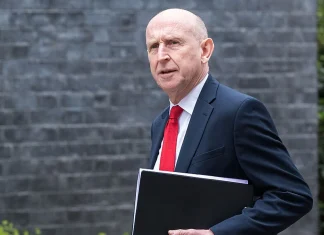
Jan 06(Jowhar)-Agaasimihii hore ee hay’adda Nabad Sugida iyo Sirdoonka Qaranka ee NISA Fahad Yaasiin Xaaji Daahir ayaa saaka lagu soo dhaweeyay garoonka diyaaradaha Aden Cadde, iyadoo ayq wehlinayeen labo kamid ah aasaasayaasha Midowga Haybqd Qaran.
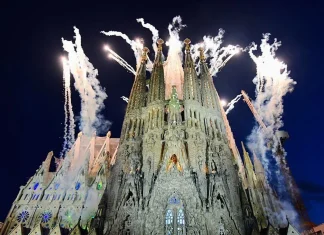
Two popes attend Catholic Jubilee, drawing 33 million pilgrims to Rome
The Last Pilgrim: Rain, Bronze and the Quiet Closing of a Jubilee
The rain came like an insistence—a steady, silver curtain that turned cobblestones into mirrors and umbrellas into a moving constellation outside St Peter’s Basilica.
Inside, the air smelled of wax and wet wool. Voices rose and fell in a dozen languages. Some carried the tired, triumphant hush of people who had walked for an intention; others laughed with the lightness of those who had simply wanted to bear witness. And at the center of it all stood the Holy Door—an ornate bronze portal usually bricked up, now open for the final time in a year that drew millions.
“We waited ten years to make this pilgrimage,” said Marta Kovács, a nurse from Budapest, wiping rain from her forehead. “When I crossed that threshold, I felt like something heavy inside me eased. You cannot explain it. You have to walk it.”
Numbers that Stir: 33 Million, 185 Countries, One Year of Passage
The Vatican announced that more than 33 million people visited Rome during the 2025 Jubilee, coming from 185 countries to take part in 35 flagship events that marked a once-in-a-generation Holy Year. The statistics read like a map of faith in motion: roughly 60% of those pilgrims came from Europe, 16% from North America, and the rest from across Africa, Asia, and Latin America.
For Catholics—and for curious onlookers around the world—the Jubilee was more than an itinerary. It was a ritual of repair. By tradition, passing through the Holy Door grants the faithful a “plenary indulgence,” a symbolic form of pardon that is meant to encourage reflection and renewal. Tomorrow, the basilica’s bronze door will be ceremonially closed, ending a chapter that began when Pope Francis first opened it a year ago.
A Rare Two-Pope Jubilee
This Jubilee will be remembered for other historic reasons. It unfolded across the waning leaves of one pontificate and the opening pages of another. Pope Francis, who opened the Year, died in April, and the papacy passed to Pope Leo XIV, the Church’s first pope to come from the United States.
“This year has been, in a way, a ‘middle world,’” observed Andrea Gagliarducci, a Vatican analyst. “There was continuity, but also the inevitable sense that a new chapter was being prepared.” The overlap of two pontificates during a Holy Year is extraordinarily rare—the last time a pope died during a Holy Year was in 1700.
Faces of the Jubilee: Youth, Canonisations and a Global Pilgrimage
Amid processions and prayer vigils, the Jubilee staged moments both intimate and spectacular. A festival for young Catholics filled parks with music and conversation; a canonisation heralded the Church’s first saint born in the millennium; parishes around Rome opened their doors and their hearts.
“We tried to make room for every story,” said Archbishop Rino Fisichella at a press briefing that summarized the year. “From the young person who came with a backpack and a dream, to the elderly pilgrim who arrived to give thanks—Rome welcomed them all.” His words echoed in halls still warm from gatherings, and in neighborhoods where parish volunteers offered directions, coffee, and kindness to strangers.
What the Numbers Hide—and Reveal
Large figures can flatten the human texture of an event. But look closely and the Jubilee’s data become intimate: 33 million footsteps, 35 major ceremonies, countless conversations held under octagonal loggias and against the backdrop of a city that has been a theater of faith for two millennia.
- 33 million pilgrims touched the city in 2025.
- Pilgrims came from 185 countries to attend 35 headline events.
- About 60% of visitors were European; 16% came from North America.
Rome—Spruced Up, Strained, Reimagined
Streets that normally hum with local life were swept into procession routes; monuments like the Trevi Fountain received careful attention and cleaning as part of a civic effort to welcome visitors. Mayor Roberto Gualtieri called it “a boom year” for the capital, saying the Jubilee offered a chance to prove Rome could host the world.
But not everyone shared that celebratory view. Local shopkeeper Gianluca Moretti, whose family has run a tabaccheria near Piazza Navona for three generations, said the influx brought strains as well as sales. “We love the pilgrims,” he said. “They bring life. But when buses line up and the tram is packed, people who live here get squeezed. The question is: who benefits, and who pays the cost?”
Critics warned that a city already grappling with overtourism would be pushed to its limits. Public transport—beautiful in its antiquity but patchy in peak hours—sometimes groaned under the load. Yet other Romans found new reasons for optimism: sticky notes of gratitude on neighborhood noticeboards, volunteer groups springing up to offer language help and first aid, and streets buzzing into the night with small concerts and impromptu prayer circles.
Transitions of Power—and of Purpose
Pope Leo XIV, Chicago-born and relatively new to the Vatican’s highest role, is now tasked with translating the momentum of the Jubilee into a clear direction for the future. Since his election, he has published documents that had been prepared under his predecessor and kept promises to continue certain diplomatic trips, like journeys to Lebanon and Turkey that were in Pope Francis’ plans.
“The Jubilee’s end is not an end to renewal,” a theologian at the Gregorian University told me. “It’s the point where ritual has to meet governance—where gestures of welcome become policies and structures that either sustain or squander the goodwill generated this year.”
What Comes Next?
As the Holy Door is sealed, questions remain. Will the influx of faith and curiosity translate into lasting changes for the Church? Will Rome, refreshed in places and frayed in others, capitalize on new attention to tackle long-standing urban problems?
And for you, the reader: what does it mean when millions gather—across borders, languages, generations—to seek renewal? Can a ritual year tilt the balance of a sprawling institution toward empathy and structural reform?
Closing, and an Open Invitation
Tomorrow, at the appointed hour—5.30pm local time—the last pilgrim will step through the Holy Door, sealing a year that felt for many like a pilgrimage of the world itself. The bronze will close. The candlelight will drift down to the cobbles. And in the quiet that follows, Rome will keep its scars and its new polish, its questions and its small, stubborn miracles.
“We came to be seen and to be healed,” said Sister Amara, a volunteer from Lagos, as she folded wet vestments after a wet procession. “I do not know what the next day holds. But I know I will carry what I learned here home. That, perhaps, is the Jubilee’s truest work.”
Government backed a peaceful transfer of power in Venezuela, Martin says
When Diplomacy Meets a Raid: Ireland, Venezuela and the New Geography of Uncertainty
From an ornate conference room in Beijing to the sun-baked avenues of Caracas, one event has rippled across hemispheres: the dramatic capture, during a military raid, of Venezuela’s president. It is the sort of headline that bends the world’s attention toward questions that don’t admit easy answers—about sovereignty, about justice, and about how small and medium states navigate a crisis when great powers move.
On a four‑day official visit to China, Ireland’s Taoiseach found himself answering those questions in real time. He did not mince words about the Venezuelan leadership, calling it oppressive and a source of regional instability. At the same time, he stressed that Ireland’s preference had long been for a peaceful handover decided by Venezuelans themselves. Those twin notes—moral clarity and pragmatic restraint—have become the leitmotif of many European capitals as they reconcile human rights concerns with the realities of global trade and diplomacy.
Beijing, Diplomacy, and the View from Dublin
It is an odd image: a leader from a small Atlantic nation, framed against Beijing’s winter sky, offering commentary on an incident that unfolded thousands of miles away. “We never recognized the legitimacy of that government,” he said, sketching the contours of a long-standing Irish stance. “But our aim has been to see a democratic transition fuelled by the Venezuelan people, not by foreign boots or quick, disorderly change.”
He also pushed back on any notion that Ireland might retreat from ties with the United States. “Dialogue is key,” he said. “We export roughly 90% of what we produce to global markets. We cannot turn inward. Engagement—consistent, values-driven engagement—has to be our approach.”
That balancing act—between standing up for international norms and maintaining the economic relationships that sustain livelihoods back home—is a familiar one for small open economies like Ireland. It is also a reminder that geopolitics no longer plays out only among superpowers; the reverberations touch factory floors in Cork, universities in Limerick, and ports in Rosslare.
Caracas: A City Between Fear and Hope
Back in Venezuela, the raid has deepened an already pervasive uncertainty. For many who remained in Caracas after years of economic collapse and mass migration, the sight of troop movements revived old fears. “We’ve lived through blackouts, empty shelves, and the constant worry for our children,” said María, a teacher who has taught in the same barrio for a decade. “If this brings change, we’ll welcome it—but not if it becomes another wound.”
Across town, a taxi driver who asked to be called José laughed bitterly when asked what he thought the raid might change. “They always tell us there will be a better tomorrow,” he said, “but tomorrow keeps taking from us. I want security for my family, not another political story on the evening news.”
Venezuela is, by many metrics, a nation in crisis: its economy has shrunk dramatically over the past decade, millions have left—UN agencies estimate more than seven million Venezuelans have sought refuge abroad in recent years—and everyday life has been upended by hyperinflation, shortages, and a collapsing public health system. Yet the country also sits atop one of the world’s largest proven oil reserves, a paradox that has made it both geopolitically significant and tragically vulnerable to exploitation and mismanagement.
Washington’s Response and Caracas’ Offer
Following the raid, the U.S. administration signalled a pivot: officials suggested they would work with whatever authority remained in place in Caracas to tackle narcotics trafficking and to reopen the country’s oil sector. That posture—less about immediate elections and more about stabilisation and economic access—reflects a broader, often transactional approach to foreign policy.
In turn, Venezuelan acting leadership sought to recast the episode as an opportunity. In a social media statement, the acting president called for respectful relations with the United States and invited collaboration on development projects framed within international law. “Our people deserve peace and dialogue, not war,” the statement read—an evocation of weary populations across the region who yearn for stability but fear external interference.
Voices from the Ground and the Diaspora
Beyond official statements, the human chorus is messy and diverse. A Venezuelan nurse working in Madrid spoke of relief tinged with skepticism: “If this helps us send medicine back home and get family members the care they need, I’ll be grateful. But history has taught us to question quick fixes.”
Meanwhile, an Irish export-manager in Dublin, whose company ships medical devices worldwide, said the episode underlines the economic tightrope his sector walks. “We depend on predictable trade lanes,” he said. “When geopolitics becomes volatile, supply chains and small jobs are the first to feel the shock.”
What This Means for International Order
There are larger, structural questions here. When a powerful nation intervenes—overtly or covertly—in another country’s leadership, it prompts debate about the validity of state sovereignty, the role of international law, and the limits of moral authority. Do harsh regimes forfeit sovereignty? Who gets to draw that line? And can a return to normalcy be built on cooperation with actors who themselves may be tainted by human rights abuses?
Experts caution against simplistic narratives. “We have to be careful not to romanticize transitions imposed from the outside,” says Dr. Elena Ruiz, a scholar of Latin American politics. “Sustainable peace usually requires internal buy-in, institutional reform, and economic rebuilding. External actions can catalyse change, but they can also entrench divisions if not paired with robust, multilateral strategies.”
Paths Forward: Practical Steps and Moral Choices
So where do we go from here? There are no easy recipes, but several pillars emerge as essential:
- Protect civilians and ensure humanitarian access to medicines, food, and basic services.
- Prioritise multilateral approaches—through the UN, regional bodies, and neutral mediators—to legitimise transition processes.
- Stabilise the economy in ways that address corruption and uplift ordinary citizens, not just corporate interests.
- Keep channels open for dialogue between nations, even when disagreement is profound.
These may sound like platitudes when headlines scream with drama. But the slow, often unglamorous work of rebuilding institutions and trust is what determines whether a country emerges on the other side with the rule of law intact or fragmented and resentful.
Closing Questions
As citizens of an interconnected world, what responsibility do we bear when a crisis plays out continents away? How do we weigh the instinct to act against the wisdom of restraint? And how do we ensure that the people most affected—the teachers, nurses, small-business owners—are the ones whose futures are prioritized?
The capture in Caracas has raised those questions again. It has also offered a reminder: geopolitics is not a chess game of capitals; it is a lived reality for millions. For Ireland, for China, for the United States, and for the people of Venezuela, the choices in the coming days will reveal whether diplomacy can be more than rhetoric—whether it can become the steady hand that guides a nation toward a future its citizens choose for themselves.
Two Killed in Wave of Russian Strikes Across Ukraine
Dawn Sirens and a City That Keeps Breathing
Just after midnight, when most of Kyiv’s lights were already stamped out and the cold had a bite to it — the mercury hovering around -8°C — the air raid sirens began their long, wailing announcement: stay down, take cover, wait. For hours, the sound folded through apartment blocks, over the Dnipro, and into the bones of people who have learned the rhythms of war better than any calendar.
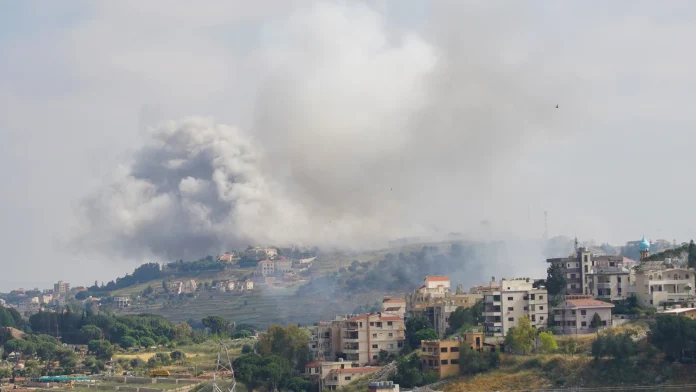
By morning, images circulated of a private medical clinic reduced to a blackened shell. Rescuers eased patients onto stretchers and carried them past scorched walls. Authorities reported two fatalities in the wider Kyiv region — one person who died in the clinic and another man in his 70s, killed in pre-dawn strikes on the nearby city of Fastiv. Three others were wounded at the clinic, firefighters said.
“We heard the blast and at first thought it was thunder,” said Kateryna, a nurse who rushed to the scene. “Then we smelled smoke and saw the ceiling falling. People were coughing and shaking. I kept thinking: I have to help. There were babies. There were old people. You cannot explain that feeling.”
Power Outages, Cold Homes, and the Human Chain
Beyond the immediate casualties, the strikes introduced another slow cruelty: the lights went out. Local officials reported power cuts in several districts; backup generators and emergency systems were pressed into service to keep water and heating running. For a city already accustomed to improvisation, it became another test of endurance.
“You know what it is to boil frozen pipes at midnight? To wrap a child in every blanket in the house?” said Mykola, a resident of a Kyiv suburb. “We keep the kettles hot, we keep the radios close. But this is fatigue for the soul. How long can people live like this?”
Kharkiv in Darkness: An Assault on Daily Life
Several hundred kilometres east, Kharkiv — Ukraine’s second-largest city with more than a million residents — endured its own night of terror. Mayor Ihor Terekhov reported that five missiles had struck, inflicting “very serious damage” on energy infrastructure. He framed the attack bluntly: it was not merely a military strike, he said, but an attempt to “break us with fear and darkness.”
Damage to substations and distribution lines does something that shelling cannot: it takes away the comfort of everyday life. Heating goes, water pressure drops, and hospitals must reroute patients and surgeries. In winter, that cascade becomes life-threatening.
An energy analyst based in Lviv, who asked not to be named for security reasons, said the targeting of utilities has been a grim calculus of war. “Disrupting energy is strategic. It undermines morale, halts logistics, and forces a population to lobby leaders to seek immediate ceasefires. But humanitarian pressure does not replace sovereignty,” they said.
Diplomacy Under Fire: Paris, Preparations, and a Fragile Momentum
Perhaps the most bitter note of the morning was the timing. These strikes came on the eve of a diplomatic summit in Paris where European leaders hoped to push for a breakthrough on a peace framework Kyiv says is 90% ready. Security advisers from at least 15 countries — including Britain, France, and Germany, alongside NATO and EU representatives — had gathered in Kyiv in recent days to lay groundwork for talks.
“We are trying to iron out the final details,” said one Western security official involved in the preparatory talks. “But every missile fired makes a negotiated settlement harder. It hardens positions on both sides.”
Negotiators face an elemental impasse: Russia insists on territorial concessions, seeking control over the eastern Donbas and other occupied areas — roughly 20% of Ukrainian territory today — while Kyiv refuses terms that would leave it vulnerable to future aggression. The diplomatic tightrope is thin; each explosion tips it a degree further from compromise.
What’s at Stake in Paris
- The territorial question: whether Ukraine would cede control of occupied regions.
- Security guarantees: how to ensure any deal prevents a repeat invasion.
- Reconstruction and reparations: how to rebuild cities and infrastructure.
- Verification and enforcement: who polices the accord and how.
Drones, Denials, and the Fog of War
The conflict’s sky has its own language now: drones. Kyiv has stepped up strikes targeting energy infrastructure inside Russia — a move Ukraine frames as striking at the financial arteries that sustain Moscow’s war machine. Moscow has fired back with daily reports of downed drones, even releasing footage of wreckage near a residence it said belonged to President Vladimir Putin; Kyiv and Western officials have been skeptical of that specific claim.
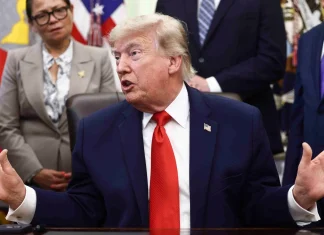
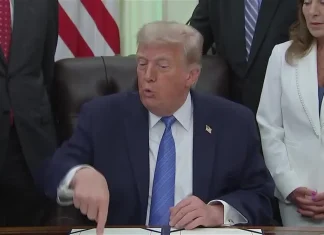
And then there was another headline-grabbing moment. When reporters asked US President Donald Trump about the reported strike near the Russian leader’s residence, he told them, “I don’t believe that strike happened.” The statement added another layer to an already confused narrative where each side broadcasts its version of events and reality becomes a patchwork quilt of claims, videos, and denials.
“In conflicts like this, disinformation is a weapon as powerful as ordinance,” said Dr. Marta Ivanenko, a scholar of information warfare at a European university. “Narratives shift loyalties, justify actions, and sometimes, tragically, they obscure accountability.”
Behind the Scenes: Leadership Moves and a War That Evolves
Amidst the explosions and the diplomacy, Kyiv is also reshaping its security apparatus. President Volodymyr Zelensky announced plans to replace the head of the SBU, Vasyl Maliuk, moving him to a role focused on combat operations. The change follows a string of high-profile SBU operations — from audacious drone strikes on Russian airfields to reported attacks on a Russian submarine and the Kerch bridge, which links Russia to occupied Crimea.
“We need results that degrade the occupier’s capacity, not just signals,” a Ukrainian official said. “The president is reorganising so that intelligence and asymmetric operations deliver concrete outcomes on the battlefield.”
What This Means for Ordinary People
For the people who live through these nights, politics and strategy are layered on top of simpler fears: staying warm, keeping family together, making sure the elderly neighbour has fuel, feeling safe enough to sleep. The war has carved new routines from old lives.
So what should the outside world take away from another morning of air raid sirens? Perhaps this: wars are not just statistics or frontlines, they are the daily arithmetic of survival. They test institutions — health, energy, diplomacy — and they force ordinary citizens into extraordinary resilience.
As the diplomats board planes to Paris and advisers shuttle between Kyiv and capitals across Europe, ask yourself: what does a just peace look like when the very infrastructure of normal life — heating, water, hospitals — can be weaponised? And who pays for the repair not just of buildings and bridges, but of trust?
Tonight, the sirens might wail again. Tomorrow, a summit will sit under the weight of what happened before dawn. Between those beats, people will carry on: boiling water, wrapping children in blankets, and hoping someone in a room full of leaders remembers what it feels like to be cold and scared and alive.
Maxaa kasoo baxay shirkii aan caadiga eheyn ee Golaha Wasiirada Soomaaliya?
Jan 05(Jowhar)-Golaha Wasiirrada Xukuumadda Jamhuuriyadda Federaalka Soomaaliya, oo maanta yeeshay kulan aan caadi ahayn, ayaa looga hadlay xaaladda guud ee amniga dalka iyo howlgalladii ugu dambeeyay ee ay fuliyeen ciidanka xoogga dalka oo guulo waaweyn kasoo hooyey dagaalka lagu ciribtirayo kooxaha Khawaarijta ah, iyo doorashooyinkii goleyaasha deegaanka Gobolka Banaadir, ee dhowaan sida guusha ah uga qabsoomay caasimadda.
Maduro;”Waxaan ahay Madaxweynaha dalkeyga mana gelin wax dambi ah”
Jan 05(Jowhar)Madaxweynihii xilka laga tuuray ee Venezuela Nicolas Maduro ayaa iska fogeeyay dambiga lagu soo oogay ee ah ka ganacsi muqaadaraad iyo haysasho hub kadib markii uu ka soo muuqday maxkamad ku taal magaalada New York ee dalka Maraykanka.
Madaxweyne Xasan Sheekh oo guddoomiyey shirka golaha wasiirada
Jan 05(Jowhar)-Golaha Wasiirrada Xukuumadda Jamhuuriyadda Federaalka Soomaaliya, oo maanta yeeshay kulan aan caadi ahayn, ayaa looga hadlay xaaladda guud ee amniga dalka iyo howlgalladii ugu dambeeyay ee ay fuliyeen ciidanka xoogga dalka oo guulo waaweyn kasoo hooyey dagaalka lagu ciribtirayo kooxaha Khawaarijta ah,
True, the U.S. seeks Venezuela’s oil — but motives run deeper
When Morning Broke Over Caracas: The Day a Strongman Became a Detainee
The airport lights were still low, the air thick with the diesel and dust that hangs over Caracas in the dry season, when the news began to spread like oil on water: the man who had ruled Venezuela for years, a figure of fear and devotion in equal measure, had been taken into custody and flown into American custody.
There is a particular hush when something seismic happens in a city that has become used to seismic shifts. Street vendors paused with arepas half-formed, church bells and radio DJs faltered mid-sentence, and a bus driver on Avenida Urdaneta stared at his phone until the screen grew bright enough to betray the worry on his face.
“I remembered my mother saying, ‘No one rules forever,’ ” said Mariela Rojas, who runs a tiny bakery in Catia, wiping flour from her hands. “But never did I think it would be like this — nighttime helicopters, whispered rumors, then the airport news. We live with fear like weather. Now the weather might change.”
Not Just One Man: A Landscape of Autocrats and Interests
This is not, on its face, a story simply about one man’s fall from prominence. It is a story about systems, about resources, about history that refuses to let its old frames go quietly into the archive. It is about a hemisphere where the ghosts of 19th-century doctrines still orbit today’s policy debates, but now with new actors and new tools.
Venezuela sits on one of the largest oil endowments on the planet — estimates commonly put its proven reserves near the 300-billion-barrel mark, a staggering figure that has driven both its fortune and its misfortune. Oil shaped its politics long before the current drama: patronage networks built on petro-rents, security forces supplied with foreign weapons, and economies of dependency that few administrations have managed to disentangle.
“Energy is a lever,” said Dr. Alejandro Cortés, a Latin American geopolitics scholar in Bogotá. “Whoever can command supply chains, refineries, shipping routes, gains not only revenue but strategic advantage. The United States, China, Russia — they all see Venezuela through that lens.”
Why This Moment Reels Beyond Borders
If the capture is indeed true — and the details remain contested and unfolding — it is the kind of moment that forces questions about precedence and principle. When a global superpower moves in against a sitting leader in another sovereign nation, the ripple effects are immediate and global.
Washington’s stated rationale, according to briefings and press remarks, ranged from criminal accountability to securing critical assets. “We’re going to have our very large US oil companies… go in, spend billions of dollars, fix the badly broken infrastructure,” a senior official told reporters, adding bluntly that American dominance in the hemisphere “will never be questioned again.”
That rhetoric pulled the 19th-century Monroe Doctrine into the present with a new nickname: the “Donroe Doctrine,” as it has been called in newsrooms and on social feeds — a refashioning that mixes old hubris with modern, transactional geopolitics.
Reactions: Fear, Defiance, and Geopolitical Alarm
Across Latin America’s capitals, reactions ranged from sober caution to blistering condemnation. Beijing called the operation “deeply shocking,” denouncing acts it described as violations of international law. Moscow warned that unilateral actions in the hemisphere would heighten tensions. Havana — where Cuban flags flutter beside Venezuelan ones in solidarity rallies — framed the event as an assault on sovereignty.
“These are not just words,” said Rosa Miguel, a Cuban-Venezuelan nurse in Havana, smoothing the edges of a small Venezuelan flag at a public gathering. “When they take a leader in the night, they take a whole people’s story. We felt it like a slap.”
Back in Washington, voices in the administration framed the action as a defense of hemispheric security and supply chain integrity. Earlier policy documents had emphasized the need to block “hostile foreign incursion” and to protect access to strategic resources — language that, critics say, echoes a long tradition of privileging power over principle.
Why Russia and China Mattered
Both Moscow and Beijing have been lifelines of a sort for Caracas in recent years: oil purchases, political support at the United Nations, military ties. In the weeks before the operation, diplomatic choreography included visits by high-level envoys and confirmations of strategic relationships described, by one Venezuelan official, as “multipolar cooperation for peace and development.”
“You have to understand the layered stakes here,” explained Dr. Cortés. “It’s not just a bilateral quarrel. It’s contestation over influence — who secures supply chains, who wields soft power, who gets ports and pipelines.”
On the Ground: Stories of Loss, Resilience, and Uncertainty
Walk the neighborhoods of Caracas and you will see a collage of resilience: murals of disappeared relatives, hand-painted signs for community clinics, kids in soccer cleats chasing a ragged ball past shuttered buildings. For many people, politics is measured in immediate terms: will there be light this month, will the clinic have medicine, will my child eat?
“We are tired,” said Carlos Medina, a mechanic who used to fix buses for a state-run transport cooperative. “Tired of being told there’s a solution just around the corner. If the big players are fighting over oil and influence, what do we get? More fines, more checkpoints, more long lines.”
Yet not everyone welcomed the supposed capture. Demonstrations sprang up in neighborhoods where support for the former leader remains strong. Placards read “Sovereignty, not Intervention,” and old songs — corridos and boleros — mixed with the chants, reminding everyone that identity and memory do not dissolve with headlines.
What This Means for the Hemisphere — and for You
Think of this not just as a Venezuelan drama but as a mirror. Around the world, democratic backsliding, illicit networks, and resurgent great-power competition are reweaving the map of influence. According to multiple democracy indices, the last decade has seen a slump in democratic norms and a rise in personalized power. Whether the remedy is international prosecution or regional dialogue matters less than the question of legitimacy: who decides, and by what rules?
Ask yourself: when great powers move in the name of security or resources, whose law governs the action? And when local people bear the direct cost — shortages, displacement, a spike in militarization — where is justice? These are not abstract queries; they are the kinds of moral arithmetic that determine whether a city gets electricity or a child gets to go to school.
Possible Consequences
- Short-term instability in Venezuela, including disruptions to oil production and trade.
- Heightened tensions between the U.S., China, and Russia, with potential diplomatic fallout in the UN and regional bodies.
- Ripple effects across Latin America, where governments will reassess alliances and domestic security strategies.
- A renewed debate about sovereignty, intervention, and the ethics of resource-driven foreign policy.
Closing: A Hemisphere at a Crossroads
Outside, the city hums on. Someone bangs a pot in protest; someone else lights a candle for the missing. A taxi driver turns off the radio and says, simply, “We will talk about this for years.” He is right. This episode — whether a decisive correction or a dangerous precedent — will be picked apart in living rooms, on parliaments’ floors, and in courtrooms.
Moments like this compel us to look beyond the personalities into the systems that make such dramas possible. Power does not evaporate when a leader falls; it reallocates. The question for citizens across the hemisphere — and for observers around the world — is whether that reallocation will yield more freedom, more accountability, and more dignity for ordinary people, or whether it will simply swap one set of hands for another.
So I ask you: if geopolitics is a game of chess, what happens to the pawns? And are we ready, as a global community, to defend the small things that make life worth living — clinics that stay open, ballots that count, and the quiet, stubborn rituals of daily life that endure even in times of upheaval?
Denmark’s prime minister urges United States to cease threats against Greenland
Greenland on the Line: Between Ice, Independence and Global Geopolitics
On a bright, cold morning in Nuuk, the capital’s painted houses look like jewels scattered against a vast white palette. Steam rises from a fishing trawler tied to the quay. Children weave between parked cars, their laughter drifting over the fjord. For the 56,000 or so people who call this place home, Greenland is not a chess piece to be traded between distant capitals — it is a homeland, a place of memory and weather and stubborn pride.
And yet, in recent weeks, headlines have placed Greenland at the centre of a geopolitical tug-of-war, reviving old questions about sovereignty, security and the value of the Arctic in a warming world. In Copenhagen, Prime Minister Mette Frederiksen responded sharply to suggestions from Washington that the United States might “need” Greenland for defence reasons — calling the idea absurd and insisting that the territory and its people are not for sale.
Why Greenland matters
To understand why a far-flung island of fjords and ice sheets suddenly commands global attention, you have to look past the clichés about polar bears and endless ice.
- Size and location: Greenland is the world’s largest island, more than 2.1 million square kilometres, located squarely between Europe and North America.
- Population: Roughly 56,000 residents, concentrated largely along the west coast.
- Ice and climate: About 80% of the land is covered by the ice sheet, whose future is central to global sea-level projections.
- Strategic footprint: The island hosts Greenlandic settlements, Danish administration and long-standing US military facilities such as Thule Air Base, established during the Cold War.
“Think of Greenland as a gateway,” said an Arctic security analyst I spoke to, tracing a finger over a map. “Control of Greenland touches transatlantic lines of communication, early-warning systems and the routes a new era of Arctic shipping might create. That is why big powers watch it.”
Voices from the fjords
Back in Nuuk, opinions are nuanced. “We grew up here,” said Anja, a 28-year-old nurse, as she sipped strong coffee outside a clinic. “This is not a commodity. People speak about mineral wealth and strategic value, but they don’t talk about our language, our music, our food. You can’t put a price on that.”
On the docks, Nuka — a captain who has spent his life hauling halibut and shrimp through the winter months — was more blunt. “We’ve been told what’s best for us before,” he said, eyes narrowed against the wind. “Independence is a hope for many, but money is real. The subsidy from Denmark keeps hospitals open, kids in school. We have to balance pride with survival.”
That Danish subsidy — a regular transfer that helps sustain Greenland’s public services — is often cited as a key factor in the island’s gradual, cautious path toward greater autonomy. The Self-Government Act of 2009 confirmed the right of Greenlanders to declare independence in the future, but also left a practical dependency: tens of thousands of jobs, essential public services and an economy still tethered to fishing and state funds.
Minerals, melting ice and the economics of influence
The Arctic’s mineral bounty — rare earth elements, potential oil and gas, and other strategic resources — has spurred outside interest. Global demand for rare earths, for example, drives a scramble by nations to diversify supply chains away from single-source dependencies. For Greenland’s small towns, mining projects promise jobs and infrastructure. But the memory of previous resource booms, and the environmental fragility of the Arctic, make the debate deeply contested.
“We must ask ourselves what kind of development we want,” said a Greenlandic community leader I met in a town hall meeting. “Will mining build schools and clinics or foreign megaprojects and empty promises? Will it poison water and change our way of life?”
Diplomacy, dignity and the dangers of language
When foreign officials publicly debate whether a territory should belong to another state, it is not merely diplomatic posturing. It touches the dignity of the people who live there. Prime Minister Frederiksen’s statement — that it would be “absurd” for another country to seek to take control of Greenland — was as much an appeal to principle as it was to geopolitics.
“Warm words are not enough,” said the Danish prime minister in a formal statement. “We must respect our allies and recognise the rights of the people who live on the island.”
That plea resonated in Nuuk’s cafes and municipal chambers. “We are not for sale,” repeated a community activist, who asked to remain anonymous because she feared reprisals from more powerful actors. “It’s painful to hear countries talk as if places like ours are empty containers to be filled with bases and mines.”
What comes next — and what it means globally
There are no simple answers. Greenland’s future will be shaped by internal debates about independence, external pressures from great powers seeking strategic advantage, and the relentless realities of climate change.
Here are some of the questions that matter globally, not just locally:
- Who decides what constitutes legitimate security interest versus coercive influence?
- How can resource development be done in ways that respect local rights and protect fragile ecosystems?
- What obligations do historical powers have toward dependent territories seeking self-determination?
“Greenland is a mirror,” suggested an international law scholar. “How the world responds to the island’s choices will say a lot about our commitment to sovereignty, indigenous rights and cooperative security in the 21st century.”
Closing thoughts
Walking away from the harbour that afternoon, the fjord spread out like an old map — white, blue, a smear of dark water where the current ran fast. Greenland will not be decided by a single speech or headline. Its people will move forward, sometimes slowly, sometimes with urgency, balancing the practicalities of life with the deep, human desire to determine their own fate.
So what do you think, reader? When a small community sits at the intersection of global strategy and indigenous identity, whose voice should carry the most weight, and how should the international community respond? The answer will shape not only Greenland’s future, but the contours of global diplomacy in a warming world.
Switzerland Identifies All Victims of New Year’s Ski Resort Blaze
When Celebration Turned to Mourning: The Night the Alps Stood Still
There are certain images that steal your breath: the sharp line of the Alps under a winter moon, the glow of a resort alive with New Year’s cheer, and then a sudden, bewildering darkness where laughter used to be. That is the image the small Swiss resort of Crans-Montana will not easily forget after the fire that swept through a packed bar in the early hours of New Year’s Day, leaving 40 people dead and a community searching for answers.
The numbers are stark and relentless: 40 people killed, including 20 minors. One hundred and nineteen injured, many with severe burns. Victims ranged in age from 14 to 39 and included citizens from at least a dozen countries — roughly 21 Swiss, nine French, six Italians, and others from Belgium, Portugal, Romania, Turkey and beyond — the variety of passports reflecting the resort’s international pull.
The scene
It was 1:30am when revellers in Le Constellation, a basement bar owned by a French couple, suddenly found a celebration turned to catastrophe. Videos posted on social media show a low wooden ceiling, laced with soundproofing foam, catching light. What began as sparks — reportedly from celebratory sparklers affixed to champagne bottles — became a wall of flame that spread with terrifying speed.
“People were shouting, throwing chairs, smashing windows. We thought it was a prank at first,” said Marcella, a local waitress who rushed to help after fleeing the bar. “Then the smoke hit. It was like being in an oven.”
Fire and rescue teams arrived within minutes, but not quickly enough to stop a flashover — a near-instantaneous ignition of everything in an enclosed space — that experts say is consistent with the way the flames behaved. The foam covering the ceiling, designed to deaden sound, is under scrutiny for being highly flammable.
Grief in the streets
Within days, the town’s rhythm changed. At a packed memorial service held in a chapel just 300 meters from the bar, people stood in the cold — temperatures around -9°C — clinging to bouquets or a single red rose. A giant screen outside relayed the service for those who could not fit inside. Hundreds walked in silent procession to a nearby chapel of rest. Switzerland has declared a national day of mourning on January 9, with church bells nationwide set to toll at 14:00.
“We are here to say that in the face of the unspeakable, we refuse to look away,” Pastor Gilles Cavin told the assembled crowd. “We are here for the apprentices, the high-school students, the young people who came from many places to celebrate life and were met with death.”
Bishop Jean-Marie Lovey, speaking after the service, appealed for privacy and compassion. “The world’s media have descended upon our valley,” he said. “Please seek the grieving with mercy, not spectacle.”
Names, nationalities, and the human tally
Police in Valais canton have worked to identify the victims, a painstaking and heartbreaking process. Among those named: young apprentices, university students, and school pupils. Authorities released a list of nationalities to help families connect — a chilling reminder of the resort’s international character and of how quickly tragedy can cross borders.
- 40 killed, including 20 under 18
- 119 injured, many with severe burns
- Victims aged between 14 and 39
- Nationalities represented include Swiss (21 among the deceased), French (9), Italian (6), plus citizens of Belgium, Portugal, Romania, Turkey and others
“My son was only nineteen,” said Anna, a parent of a victim who asked that her surname not be used. “He loved the mountains. He loved life. There are no words.”
Accountability and the court of law
The bar’s owners, Jacques and Jessica Moretti, have been placed under criminal investigation and are charged with negligent manslaughter, negligent bodily harm and negligent arson. Jacques Moretti has maintained to local press that safety norms were followed and that the venue’s official capacity — listed online as 300 inside plus 40 on the terrace — was not exceeded.
Mayor Nicolas Feraud told Swiss broadcaster RTS that the municipality was cooperating with investigators and that the town had not been negligent. “Our priority is finding the truth,” he said. “We will ask all the hard questions about oversight and compliance.”
Experts weigh in
Fire safety specialists point to patterns that have already become painfully familiar. “Enclosed spaces with combustible acoustic foam and an ignition source like pyrotechnics are a recipe for a flashover,” said Dr. Elise Morel, a fire dynamics specialist at the Federal Institute for Fire Prevention. “The Station nightclub fire in Rhode Island in 2003 taught us that lesson the hard way — pyrotechnics and foam do not mix.”
Global statistics underline the risk: in night-time entertainment venues around the world, fires caused by pyrotechnics and overloaded exits have repeatedly led to mass casualties. Codes exist to prevent these scenarios, but enforcement varies. Where oversight lapses, the consequences can be catastrophic.
Culture, tourism and the cost of a night out
Crans-Montana is a ski resort known for its lively après-ski and international clientele. This tragedy raises difficult questions about the cost of fun, the culture of late-night partying, and the responsibility shared by venue owners, local authorities, tour operators and revelers themselves.
Who shoulders the blame when joy becomes danger? Is it the owners who lit sparklers? The suppliers who sold combustible foam? The regulators who enforce capacity and fire-code compliance? Or the broader social appetite for ever-more sensational nightlife experiences?
“We must mourn, of course,” said Dr. Morel. “But we must also learn and implement. Regulations are only as good as the willingness to enforce them and the cultural determination to value safety over spectacle.”
How a town moves forward
For now, Crans-Montana is holding tight to rituals of remembrance. Bells will toll. Names will be read. Families, many from other countries, will grappling with loss far from home, relying on consular services and the generosity of local volunteers. Hospitals in the region are caring for the wounded, and burn units elsewhere in Switzerland have taken patients as needed.
A crisis helpline has been set up; crisis counselors are on site. Volunteers bring food and blankets. Younger people hang candles and notes on fences. The scene is at once intimate and global: a fjord-side slogan in Norwegian could be replaced by a French postcard, a Swiss flag next to an Italian one, as strangers become the bedrock for families in shock.
As you read this, perhaps you’re thinking of a night out — a memory, a friend, a child. How do we celebrate without courting danger? How do communities keep their doors open and their people safe? These are painful, necessary conversations.
There will be investigations. There will be trials. And there will be funerals. But beyond legal outcomes, the lasting test will be whether this valley — and the wider world of nightlife and leisure — chooses to carry forward lessons so these names do not become another footnote in a long catalogue of preventable tragedies.
For the families, the question is simpler and unbearably immediate: how do you continue after losing a child, a sibling, a friend? For the rest of us, the question is this: what will we change?