

May 23(Jowhar)-Qarax gaas ah oo ka dhacay goodka macdanta dhuxusha ee waqooyiga Shiinaha ayaa dilay ugu yaraan 90 qof, sida ay sheegtay warbaahinta dawladdu, taasoo ka dhigaysa dhacdadii ugu dhimashada badnayd ee dalka ka dhacda tan iyo 2009.
Could Ebola jeopardize DR Congo’s World Cup participation?
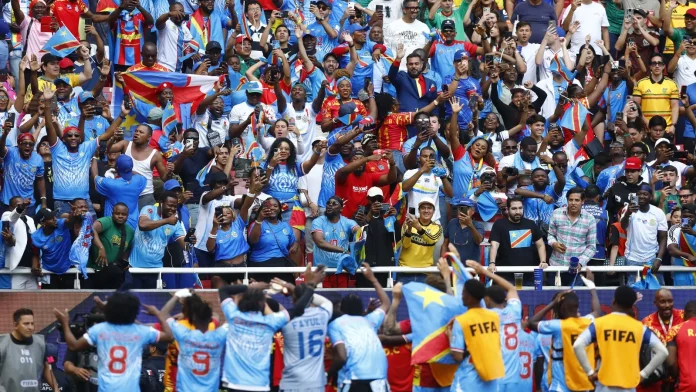
When the Beautiful Game Meets a Dangerous Virus: Houston’s World Cup Buzz Under a Shadow
The tiki-taka of anticipation is playing out on Houston’s streets—cafés buzzing with predictions, murals sprouting national flags, vendors rehearsing their chants—yet a low, insistent note of caution threads through the city’s summer soundtrack.
In three weeks, Houston will host seven World Cup matches, a sporting tidal wave that promises to baptize stadiums and sidewalks in color. One of those nights—17 June—has been circled in calendars around the globe: Portugal versus the Democratic Republic of Congo (DRC), a match that carries more than tactical intrigue. For the DRC, this is their first World Cup appearance since 1974, when they marched onto the global stage as Zaire. For Houston, it’s a test of hospitality and public-health resolve all at once.
The outbreak at the center of the storm
Across the Atlantic and deep in central Africa, a Bundibugyo strain Ebola outbreak has alarmed global health authorities. The World Health Organization formally declared the situation a “public health emergency of international concern,” citing the strain’s rarity and the lack of approved vaccines or therapeutics specific to Bundibugyo.
Official tallies released by health teams put suspected cases at nearly 750, with at least 177 suspected deaths. “I am deeply concerned by the scale and speed of this epidemic,” WHO Director-General Tedros Adhanom Ghebreyesus told delegates in Geneva, his voice carrying the kind of gravity that makes governments sit up.
For a sporting spectacle that draws hundreds of thousands of people into airports, hotels and stadiums, those numbers aren’t abstract. They are a call to action—and to difficult decisions.
Houston: excitement with a steady heartbeat
Walk into a sports bar in Midtown and you will find a different beat. “It’s excitement tempered by common sense,” says Ethan Bratton, a local journalist who’s been tracing the city’s preparations. “People here know how to throw big events. We’ve got world-class medical centers and experts. The vibe is: don’t panic, but do pay attention.”
That “common-sense” posture is visible in practical ways. Hospitals in Houston—home to the Texas Medical Center, the world’s largest concentration of medical institutions—have briefings scheduled with event organizers. The Houston Host Committee says it’s in constant contact with FIFA and public health agencies, and will follow guidance “as preparations for the tournament move forward.”
Yet the city’s optimism carries an undercurrent of contingency. “If it comes to disruption, I’d expect delay or relocation, not outright cancellation,” Bratton adds. “Safety always trumps spectacle.”
Teams, travel and the 21-day bubble
Logistics have become the battleground where sport, science and diplomacy intersect. The US government’s World Cup task force has told the Congolese delegation—who are training in Belgium—that they must maintain a strict “bubble” and isolate for 21 days prior to arrival or risk being denied entry.
“We’ve been very clear to Congo that they should maintain the integrity of their bubble for 21 days,” Andrew Giuliani, Executive Director of the White House Task Force for the World Cup, said bluntly. “We cannot be any clearer.”
The Centers for Disease Control and Prevention (CDC) has also imposed temporary travel restrictions: non-US passport holders who have been in the DRC, South Sudan or Uganda within 21 days may be barred from entry. Those rules, issued 18 May, were set as 30-day exemptions—scheduled to lapse 17 June in the current guidance—adding a narrow window for teams, staff and supporters to align their movements with public-health rules.
From Kinshasa to Liege: a team on the move
The DRC squad has already reshaped its itinerary. A planned training camp in Kinshasa was cancelled; the team decamped to Belgium. They have friendlies lined up—against Denmark in Liège and Chile in southern Spain—part of an itinerant build-up that echoes the modern athlete’s peripatetic life.
“Our priority is keeping our players safe,” said an anonymous official within the Congolese federation. “Everyone is cooperating with health authorities. We are a footballing nation stepping onto the world stage—we will do it responsibly.”
Names to watch include former Manchester United defender Axel Tuanzebe—who scored the decisive extra-time goal in Mexico to beat Jamaica at the play-off—and Premier League standouts Aaron Wan-Bissaka and Yoane Wissa. They are part of a roster tasked with carrying a nation’s hopes while navigating quarantines, testing regimes and the logistic puzzle of international travel during an outbreak.
Voices from the ground: fear, fairness and responsibility
Not all perspectives fit neatly into “calm” or “panic.” In Kinshasa’s markets, vendors who sell jerseys and scarves worry about livelihoods if fans can’t travel. “If people cannot come, that’s my bread gone for the month,” said Marie, a scarf seller near Stade des Martyrs. “We want our boys to shine on TV—money is good then—but health comes first.”
Public-health experts warn that the game plan must be bigger than movement restrictions. Professor Anne Moore of University College Cork points out the logistical and ethical questions: “We must ensure the team has not been exposed, that support staff and fans can be tracked, and that resources are poured into outbreak control where it’s needed most. Emergencies need ready-to-go surge capacity.”
She notes a hard truth: global sporting events are porous membranes in a connected world. “When masses of people gather, any infectious agent can find new pathways. This is not about alarmism; it’s about preparedness.”
History as a teacher
Sporting calendars have been rewritten before. The COVID-19 pandemic pushed the Tokyo Olympics and Euro 2020 back a year; the specter of Zika in 2016 prompted debates about Rio. Those precedents are instructive, not deterministic.
“We learned tough lessons about public health readiness and the social costs of postponing events,” says Dr. Lina Sousa, an epidemiologist who advises major-event planners. “The right response balances the immediate public-health imperative with the wider harms of isolation and cancelled livelihoods. That balance is difficult but necessary.”
What should fans and citizens take from this?
For the casual observer, the moment poses simple but urgent questions: When cheering from a stadium seat, how much do you trust the systems that screen your health? If you’re a fan abroad, are you prepared for sudden travel curbs? If you are a policymaker, what are you willing to sacrifice to keep both public health and global sport intact?
The answers won’t come from a single press release. They will be forged in coordination rooms and hotel corridors, in laboratories and locker rooms, and in the practical judgment calls of ordinary people: the vendor who sells scarves in Kinshasa, the volunteer steward in Houston, the medic on call in Belgium.
For now, the refrain is measured: the DRC are expected to travel and play, provided their pre-trip isolation is airtight. FIFA says it is monitoring the situation and working with health authorities across host countries. Local officials in Houston are keeping their fingers on the pulse.
And as the world prepares to watch players run, pass, feint and score, perhaps the larger game is this: can humanity stage a global celebration while acting as a responsible global community? It is a question the next 21 days will help answer—one whistle at a time.
SpaceX’s Starship test flight largely succeeds despite minor setbacks

Starship’s Fiery Ocean Waltz: A Night on the Texas Coast and a Giant Rocket’s Biggest Test Yet
The sky above South Padre Island burned like a studio light as the Starship rose into the late afternoon, a silver needle slicing the heat shimmer. People craned their necks along the shoreline, phones held high, some with the same silent hope you feel when watching a child take its first steps. At 5:30pm local time—11:30pm in Ireland—the latest iteration of SpaceX’s behemoth left its launch mount and the air thudded with the sound of a machine determined to defy the familiar rules of gravity.
This was not a quiet experiment. This was spectacle: a 124‑metre stack of steel and ambition, the third-generation Starship and its Super Heavy booster, designed to fling payloads and, someday, people toward the Moon and beyond. It was mission number twelve for Starship, the first flight in seven months. And while the company did not plan to recover every piece, the drama that unfolded was textbook human—flawed, brave, and strangely lyrical.
The flight in plain language: a controlled mess
SpaceX’s livestream commentators kept a steady, professional cadence—until they didn’t. Cheers erupted in their control room when the upper stage performed one of the more cinematic bits of the flight: flipping upright in space and relighting its engines to regain control. That maneuver was crucial, especially given that one engine had failed during an earlier burn and the vehicle was not in a textbook orbit afterward.
“I wouldn’t call it nominal orbital insertion,” company spokesperson Dan Huot said on the feed, a phrase that felt half technical, half admiring. He added, however, that the trajectory remained “within bounds” of what engineers had modelled. And then came the moment the cameras couldn’t quite capture: the splashdown. The upper stage returned to the Indian Ocean in a fiery but controlled descent—a finish SpaceX had planned, signed off on, and celebrated. On X, the company wrote simply: “Splashdown confirmed!”
Not everything landed in the script. After separation, the Super Heavy booster failed to execute its boost-back burn. It fell uncontrolled into the Gulf of Mexico. SpaceX had not intended to recover that booster, but engineers had hoped for a more precise return. “We wanted a precision return,” one engineer watching from the control room told me, rubbing his temples. “Still, you learn as you go.”
Small satellites, big lessons
The third‑gen Starship was carrying 22 mock satellites—little test payloads meant to simulate what the rocket might haul on future commercial missions. Two of those tiny cubesats even attempted to photograph the spacecraft’s heat shield as it passed, an effort to gather engineers’ most intimate forensic data: how does the skin of Starship stand up to real re‑entry heat?
Data like that matters. Spaceflight is not just spectacle; it is a long arithmetic of failures turned into knowledge. “Every failure that looks dramatic from the beach is just another data point for the engineers,” said Dr. Amina Rahman, an aerospace systems specialist I spoke with after the launch. “You don’t get to the Moon by only doing the things that can’t possibly go wrong.”
Voices from the sand and the control room
On South Padre Island, people watched from fishing piers and beach blankets. “I’ve seen launches before, but tonight felt different,” said Maria Gonzalez, who runs a beachfront taco stand. “You could feel everyone holding their breath together.” A charter boat captain, his face still flaking with salt spray, told me: “You know when a big wave hits the bow and the whole boat shudders? The air did that tonight.”
In the control room, reaction toggled between celebration and meticulous note‑taking. SpaceX employees on the live stream cheered when engineers confirmed key checkboxes had been met; later on X, Elon Musk praised the team: “Epic,” he wrote. “You scored a goal for humanity.” It’s a flattering line—and one that captures the way SpaceX has fused athletic metaphors with rocket science.
What worked, what didn’t—and why it matters
Put simply: the flight demonstrated important redesigns and novel behaviours. The upper stage’s flip-and-relight, the deployment of mock satellites, and the integrity of the heat shield photos were wins. The engine malfunction and the booster’s uncontrolled re‑entry were reminders of how savage the environment of spaceflight remains.
“The upgraded version of Starship did most of what SpaceX hoped it would do during the launch,” Clayton Swope, an aerospace expert at the Center for Strategic and International Studies, said in commentary shared with media. “But there is a long way to go and many more test flights before Starship is ready for the next Artemis mission.”
Those “next steps” are enormous in consequence. SpaceX is contracted by NASA to produce a modified Starship as a lunar landing system. NASA has scheduled a 2027 test of an in‑orbit rendezvous that would be a rehearsal for landing humans on the Moon—an essential part of the Artemis programme. Meanwhile, other nations are pushing their own timelines. China, for example, has publicised ambitions to mount crewed lunar missions in the 2030s, setting up a new era of competitive exploration.
Money, regulators, and a public fascinated by risk
The timing of the test is hardly accidental. SpaceX filed with US financial regulators earlier this week to go public—an initial public offering that analysts expect could be among the largest in history if it moves forward. The company is girding both for the scrutiny that comes with an IPO and for the technical scrutiny that comes with landing humans back on the Moon.
All of that raises questions: how do we balance transparency and secrecy in a private company with public mission goals? How do investors weigh the science of risk alongside the romance of possibility? And what does it mean when a private enterprise becomes a central actor in national space policy?
Why we should pay attention
Beyond contracts and IPO filings, Starship’s progress is a test of a broader idea: that space travel can be industrialised, commercialised, and scaled. If successful, Starship could change the cost structure of access to orbit and open new markets for satellites, interplanetary cargo, and, eventually, people. That matters for climate monitoring, telecommunications, national security, and perhaps most poetically, our collective imagination.
But progress is not linear. It staggers and rebounds. It learns more from smoke and fire than from applause. “We’ll celebrate the wins and we’ll catalogue the losses with equal attention,” a senior SpaceX flight director said after the splashdown. “That’s how you turn a risky business into routine capability.”
Looking forward: what’s next?
SpaceX now has more data and a clearer map for the next flight. NASA, investors, competitors, and curious beachgoers will be watching. More tests will come; engineers will iterate. The booster that fell into the Gulf won’t be returned, but the lessons it taught will be.
So I’ll end with a question for you, the reader: when you look up and see a trail of smoke beaming into the horizon, what do you feel—pride, unease, fascination? And can a handful of engineers and a giant rocket alter not just what we can do, but how we imagine our future? Tonight’s splashdown suggests the answer is yes—but it will take many more nights like this to know for sure.
New York City records 70% spike in federal immigration arrests
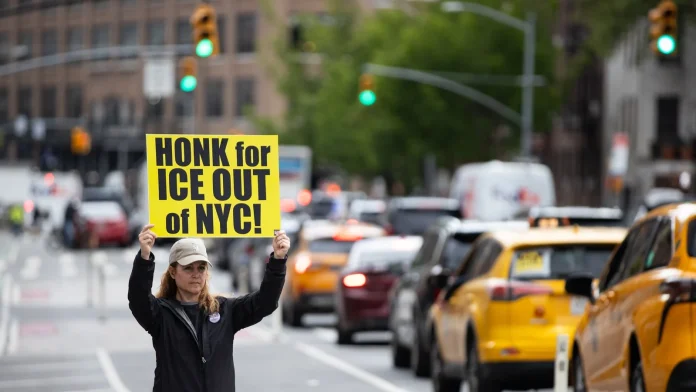
When the Quiet of Court Corridors Is Broken: New York’s Surge in ICE Arrests and What It Means for a City of Immigrants
On a cold morning in lower Manhattan, the marble atrium of 26 Federal Plaza hums with a different kind of tension—a thrum that started to change the rhythm of the city this past year. A city audit, ordered by Mayor Zohran Mamdani shortly after he took office, has lifted the veil on a dramatic rise in federal immigration arrests in New York City: 5,567 people detained by US Immigration and Customs Enforcement (ICE) between January 20, 2025 and March 10, 2026. More than half of those arrests, the report finds, unfolded inside or around the immigration court at 26 Federal Plaza.
That tally represents a 71 percent jump in arrests compared with the same span at the end of the previous administration—a spike that has left neighborhoods anxious, lawyers stretched thin, and immigrant-rights groups scrambling to respond.
The numbers and the places they touch
Numbers, in this context, are not abstract. Each is a person with a job, a family, a place at the kitchen table. The audit’s headline figures are stark; the finer print is equally urgent. Over 5,500 arrests in just over a year mean weekly, even daily, disruptions at precincts, courthouse waiting rooms, and jails. The audit also notes that more than two dozen recommendations are needed to shore up the city’s safeguards—among them, a forensic review of communications between the Department of Corrections and ICE and an immediate halt to daily reporting to federal authorities of the national origin of non-citizens admitted into custody who have qualifying “violent and serious convictions.”
“New York City is home to immigrants from every corner of the world, and no one should live in fear because of their status,” Mayor Mamdani said in a statement accompanying the audit. The mayor’s directive reflects a long-running tension: the collision between federal immigration enforcement and a city that, by any measure, is defined by migration. Roughly a third to nearly 40 percent of New Yorkers are foreign-born depending on the dataset—an immigrant presence sewn into every neighborhood, market, school, and subway car.
Voices from the street
“My mother went to pray at the mosque and never came home for dinner that night,” said Aisha Rahman, a community member from Jackson Heights whose voice trembles when she speaks of her cousin’s sudden arrest at the courthouse. “You expect to be able to go to court, to plea, to check in—with a lawyer, with a social worker—and not be grabbed on the way out. That was the point of ‘safe’ spaces.”
At a bodega on the corner of Elm Street, the owner—who asked to be identified only as Carlos—spoke of customers who now check the news on their phones before leaving the house. “They call to ask if they should come at all,” he said. “If people are afraid to report crimes, to testify, to seek help, the whole city is less safe.”
Amid the fear are stories of resilience. “We set up an emergency hotline and a rota of volunteers to accompany anyone who has to go to court,” explained Jorge Delgado, an organizer with a local immigrant-rights collective. “People show up with thermoses, with prayer mats, with muscle—because they’ve seen what happens when someone goes alone.”
What the audit recommends
The document is not only a tally of arrests; it is a roadmap of fixes. Key recommendations include:
- Auditing emails and communications between the Department of Corrections and ICE to identify improper coordination or information-sharing.
- Stopping daily submissions to ICE about the national origin of detained non-citizens with qualifying convictions—information the audit says is not required by law.
- Strengthening legal representation, community alert systems, and in-custody protections so people can exercise legal rights without fear of immediate deportation.
“Transparency is the first step toward accountability,” said a city oversight official who requested anonymity to speak candidly about sensitive negotiations with federal authorities. “If improper channels existed, we have to close them. If data was being shared beyond what the law requires, that stops now.”
Federal silence, local alarm
The Department of Homeland Security, which oversees ICE, did not immediately respond to the audit’s release. In the quiet left by that non-response, the city’s immigrant-serving networks have had to provide answers and solace.
“When the federal government escalates enforcement, it shifts the burden onto cities,” said an immigration attorney who has been working pro bono on dozens of cases since the start of 2025. “It’s not just about detention numbers; it’s about the chilling effect. Witnesses stop coming forward. Kids in school begin to see a parent’s absence. Employers lose workers. Churches and mosques become makeshift legal clinics.”
Sanctuary, safety, and the limits of local power
New York is among several jurisdictions that have enacted laws and policies to limit local cooperation with federal immigration enforcement. The argument of municipal leaders and activists is simple: local resources should prioritize public safety, not federal immigration priorities, and communities flourish when residents feel safe to engage with police and city services without fear of deportation.
But sanctuary policies are not impermeable shields. Federal agents still have wide-reaching powers, and courtrooms—by their nature—remain a flashpoint. The audit’s finding that more than half of arrests occurred at an immigration court underscores the legal paradox: even when cities attempt to carve out protective space, the processes of adjudication can expose people to federal enforcement.
Looking outward: what this means for cities across America
New York’s experience is a cautionary tale for other major metropolitan areas. Cities from Los Angeles to Chicago to Miami host large immigrant communities, and their own local policies are being tested against shifting federal priorities. The question is not merely legal—it is moral and practical.
Are sanctuary policies enough when federal enforcement intensifies? How should cities balance a duty to uphold federal law with their mandate to keep all residents safe? When the courthouse itself becomes a site of apprehension, who is there to catch the falling pieces?
Next steps and a city holding its breath
The audit lays out steps, and the city says it will implement them. But implementation is work that requires time, staff, and political will—commodities that are in short supply when the headlines keep moving. Meanwhile, community groups are doubling down on legal clinics, rapid-response networks, and public education campaigns to help people navigate a fraught system.
“We can track numbers and make policies,” said Delgado, “but the real measure will be whether people wake up tomorrow and feel a little less afraid to go to the courthouse, to call 911, to go to work. That’s what we’re fighting for.”
So ask yourself: What kind of city do we want to be when the law and the lives of our neighbors collide? Will we build systems that prioritize dignity and due process, or will we allow fear to reshape the contours of public space?
In the coming months, New York will test the limits of local safeguards against federal enforcement, and the auditors’ recommendations—if followed—could become a blueprint for other cities. For now, the marble corridors of 26 Federal Plaza stand as a reminder: in a city built on arrival and reinvention, policy decisions ripple into kitchens and classrooms, prayer rooms and bodegas. Those ripples, it turns out, are not abstract. They are very human.
China-Russia visit signals shift from Trump toward Putin partnership
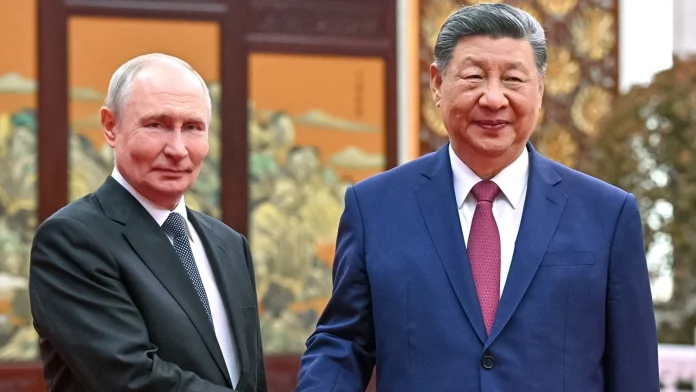
Beijing’s Double Act: Power, Pageantry and the Art of Playing Both Sides
They came in a heartbeat, two men who have shaped headlines and history: one departed, the other arrived. One was greeted with a cautionary note; the other with an embrace that seemed to belong to another era.
In the span of a week, Beijing staged a geopolitical tableau—an arena where steel drums, marching guards and children clutching flags created a familiar script. Yet behind the choreography there was a subtler, far more consequential drama: a nation rehearsing the role of indispensable mediator while quietly hedging its bets.
Not Just Optics: What Those Parades Really Mean
To step into Tiananmen Square during a state visit is to enter a living portrait of modern China: synchronized, meticulous, deeply symbolic. Vendors selling jianbing and paper lanterns stand shoulder to shoulder with uniformed honor guards. A brass band blares, the crowd swells, and cameras frame faces—some radiant, some calculating.
“Beijing wants the world to see that decisions are made here—whether Moscow or Washington likes it or not,” said Dr. Aaron Glasserman, a scholar who studies Sino-global relations. “That doesn’t mean China wants to be the world’s firestarter. It wants to be the thermostat.”
Ask a teacher waving a small flag outside the Great Hall what she thinks and you get something warmer and more human. “I brought my students so they could see history up close,” Li Na, a primary-school teacher, told me. “They cheered, they sang. For them, it is about being proud of where they live.”
Two Guests, Two Messages
On the surface, both visits featured ritual—the pomp one expects when states stage power. But the tone shifted in the details.
When the American kept his distance, the subtext was clear: a firm reminder on Taiwan and a calibrated cordiality that left no illusions about sovereignty or rivalry. When the Russian arrived, the atmosphere softened to a warmer intimacy—old comrade, old jokes. Yet warmth did not translate into carte blanche.
“Xi wants space to strengthen China without inviting a showdown with Washington,” said Sunita Rao, a geopolitics analyst based in Singapore. “That means being friendly with Moscow, but not so entangled that Beijing’s options are constrained.”
Deals Danced Around, Not Signed
Among the missing headlines was the absence of the long-discussed Power of Siberia II pipeline—a proposed 2,600-kilometre artery intended to carry Arctic gas to China’s eastern coast. For Moscow, the pipeline represented both a lifeline and leverage; for Beijing, it was an expensive insurance policy.
“Russia needs markets; China needs supply diversity,” said Ivan Sokolov, who advises energy firms in Moscow. “But Beijing has spent the past decade widening its energy portfolio—LNG imports, renewables, cross-border links—so it can afford to be choosy.”
Complicating matters, tankers from the United States reportedly set sail for Chinese ports not long after the American visit—a sign that energy ties to Washington, riven by tariffs and disputes in recent years, were thawing in practical terms. The message was not lost: Beijing can tap multiple suppliers, and Russia is no longer the only game in town.
Quick facts
- Power of Siberia II: proposed pipeline roughly 2,600 km in length.
- Russia turned to alternative markets after sanctions imposed following its 2022 invasion of Ukraine.
- China is the world’s largest energy importer and has aggressively diversified suppliers over the past decade.
High North Ambitions and the Arctic Chessboard
Another strand woven into the summit’s tapestry was the Arctic. As polar ice recedes, new maritime routes and untapped energy reserves have transformed the High North into a geopolitical prize.
Beijing and Moscow signed on to deepen cooperation there, using language like “territory of peace” and lamenting what they called “militarisation” of high latitudes. But this diplomatic prose sits atop practical ambitions: ports, research stations, and access to resources.
“The Arctic isn’t a sentimental project,” explained Dr. Helen Carter, a former diplomat now teaching international security. “It’s a strategic equation: who controls the routes, who builds the infrastructure, who gets the resources when the ice recedes.”
Friends, Foes, and the Shape of Alliances
Out front, China and Russia reaffirmed a “comprehensive strategic partnership,” a phrase both performative and substantive. Behind the prose, the alliance resembles a marriage of convenience: mutual interests, mutual distrust of Western pressure, but not necessarily shared goals across every domain.
Analysts in Seoul and Washington use a number of acronyms—CRINK among them, for China, Russia, Iran and North Korea—to describe budding coalitions that seek alternatives to a Western-dominated order. Yet the cohesion of such coalitions is debated.
“They are aligned more by what they oppose than what they propose,” said Glasserman. “That’s a fragile glue.”
Still, make no mistake: for Moscow, Beijing’s goodwill is a lifeline amid sanctions. For Beijing, Moscow is a geopolitical partner whose value varies by the day’s calculus.
Local Voices: Pride, Pragmatism, Unease
Walking the hutongs near the city center the morning after the Kremlin delegation left, I heard a chorus of reactions. An old man sipping tea by a chessboard said he liked the spectacle—“It’s beautiful to see the country respected.”
A taxi driver, who asked to be called Zhang, was more pragmatic. “We want peace, jobs, and the lights to stay on. Leaders can hug and sign papers all they want—what matters is whether the economy keeps humming.”
At a street stall, a young student shrugged. “People here aren’t pro or anti; we just want the chance to study abroad, get work, travel.”
So What Does This Mean for the Rest of Us?
These visits are not merely photo ops. They are signals to markets, to allies, and to adversaries. China is projecting itself as the pivot in a more multipolar world while carefully calibrating its ties so that it doesn’t lose the very breathing space that lets it grow.
Consider the choices Beijing faces: deepen economic ties with Washington and risk alienating Moscow, or lean into a bloc of like-minded states and risk economic friction with the West. The decision is less binary than a chessboard square; it’s a negotiation of posture and policy.
What does this mean for you—reader in Lagos, London, Lagos, or Lahore? It means your energy prices, trade opportunities, and even diplomatic choices may increasingly be shaped by conversations that play out in grand halls and on ceremonial red carpets several time zones away.
Closing Thoughts: Power, Patience and the Long Game
China’s diplomatic dance in Beijing last week was eloquent in its silence. It was as if the country whispered: we will be friends where it suits us, rivals where necessary, and indispensable always.
“China is buying time,” said Sunita Rao. “Time to settle its economy, time to diversify its energy, time to make itself the hub of a new set of international arrangements.”
And time, perhaps, is the most valuable currency of all. In an era of quick headlines and impatient politics, Beijing appears to be playing the long game—patient, pragmatic, and palpably powerful. Are the rest of the world’s capitals prepared to respond?
China coal mine explosion kills at least 90, dozens still missing
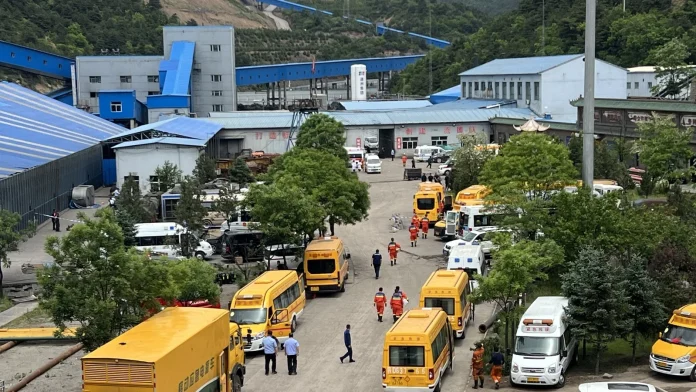
Night of Black Smoke: Inside the Deadly Mine Blast That Shook Shanxi
When the lights went out at 7:29pm on a cold Friday evening in late spring, the earth seemed to swallow a piece of a town. A thunderous boom, then pungent, invisible gas weaving through dark tunnels—then silence, broken only by the frantic crackle of rescue radios. By morning, the state news agency Xinhua would report at least 90 dead and dozens more scarred by smoke and shock. By then the scene at Liushenyu coal mine in Shanxi had become, quietly and irrevocably, a page in China’s long ledger of industrial tragedy.
This is not just a story of numbers. It is the story of bodies underground, of families who gather in hospital corridors under fluorescent lights, and of a province whose identity is braided with coal dust and the grind of industry.
The Immediate Toll: Facts from the Shaft
According to official accounts, 247 workers were underground when the explosion occurred at the Liushenyu mine. Rescuers managed to bring most miners to the surface; 345 emergency personnel were dispatched in the early hours, and teams searched “intensively” for nine people still unaccounted for, Xinhua said.
State broadcaster CCTV released footage of helmeted rescuers carrying stretchers across the site, ambulances idling nearby. Medics rushed the injured into emergency rooms; some were described as being in “critical condition.” A person linked to the company’s management has been detained, and President Xi Jinping called for “all-out efforts” to treat the wounded and a thorough investigation into the causes.
From Carbon Monoxide to Policy Questions
Early reports suggested that carbon monoxide levels in the mine had “exceeded limits”—a chilling detail because carbon monoxide is colorless, odorless and lethal. It has been the specter in many past underground disasters.
“When carbon monoxide spikes, the clock starts ticking,” said Dr. Li Mei, a mine-safety specialist at a university in Beijing. “Ventilation systems must be redundant, monitoring continuous, and drills routine. Failure usually isn’t a single point—it’s a chain of poor decisions and omissions.”
Shanxi: Heartland of Coal, Heartache of Workers
Shanxi province sits at the center of China’s coal map. Its rolling hills hide an industrial choreography: conveyor belts, slag heaps like small moons, villages whose rhythms are dictated by shifts underground. The province’s economy has been built on coal for generations—so much so that “black gold” is both a source of livelihood and a constant hazard.
“My husband has worked in the mines for 17 years,” said a woman who gave her name as Zhang Xia, who waited outside the hospital with a thermos of tea and a plastic-wrapped sandwich. “We have always been told the company will look after safety. When things like this happen, you are left with questions, and no one who can answer them.”
Mine safety in China has improved over the past decades—official statistics show a steady decline in fatal accidents per unit of coal produced compared with the early 2000s—but disasters still erupt with deadly regularity. Last year, for example, a collapse at an open-pit mine in Inner Mongolia killed 53 people; in 2009, a blast in Heilongjiang province claimed 108 lives. Each headline reminds a public that progress has limits.
Beyond the Immediate: What This Means Nationally and Globally
China remains the world’s largest consumer of coal and the planet’s single biggest emitter of greenhouse gases. It accounts for roughly 30% of global CO2 emissions while also installing renewable energy capacity at record speeds. This dual reality—rapid green deployment alongside persistent fossil-fuel dependency—creates pressure to squeeze more output from mines, sometimes at the expense of safety.
“There is a brutal arithmetic in energy transitions,” said Thomas Adler, an energy economist who has studied mining communities. “China needs enormous, reliable power for industry and households. In the near term, that means coal plays an outsized role. But that reliance creates incentives—economic, political—to keep mines operating, sometimes stretching oversight thin.”
Human Costs, Institutional Questions
The human cost of that calculus often lands squarely on the shoulders of miners, many of whom are migrant workers from rural areas. They work long hours in cramped conditions, often for wages that are modest relative to the risk.
“We are told to be brave, to be grateful for any job,” said a former miner from a nearby town. “But bravery does not fix broken ventilation shafts or accounts that favor profit over inspection.”
Regulatory frameworks exist; the Ministry of Emergency Management and provincial safety bureaus conduct inspections. Yet enforcement can be uneven. Local governments, especially in regions that rely on coal revenues, face the uncomfortable balance of economic growth versus strict oversight.
What Comes Next: Investigation, Reform, Remembrance
As investigators move into the mine and forensic teams comb through equipment, two parallel processes will matter: accountability and prevention. Will those responsible be held to account? Will the inquiry produce reforms that prevent another night like this one?
“An investigation is only as meaningful as the changes it leads to,” said Li Mei. “We need transparent reporting of findings and a commitment to systemic change—better training, better technology, and corporate governance that prioritizes lives.”
At the same time, communities must be tended. Grief counseling, compensation for families, and long-term economic plans for towns dependent on coal will shape whether this tragedy leaves scars that fester or spur necessary healing.
Questions for Us All
As you read this from your city, your country, your corner of the world, ask: What is the true cost of the energy that powers your life? How much risk are societies willing to accept to keep factories running and lights on? Behind the abstractions of policy and GDP are workers whose lives are measured in shifts and paychecks.
This disaster in Shanxi is not merely regional—it is a mirror. It reflects the human toll at the intersection of energy, labor, and governance. It should prod citizens, companies, and governments to demand safer practices and clearer accountability.
Remembering the Fallen
Names have yet to be released for many of the dead. The families, the coworkers, the medics—each carries an individual story. In the days to come, small rituals will emerge: bowls of noodles shared at midnight, incense at a roadside shrine, the slow paperwork of compensation and funerals. These are the intimate, stubborn acts by which communities process horror and honor those who did not return.
For now, the mine is cordoned off and investigators move like a slow, deliberate tide. Rescue lights cut through smoke and the cold, and people gather not only to demand answers but to remind the world that every statistic is a life. Let that be the measure we use as we look at energy policy, corporate responsibility, and the fragile dignity of labor.
What changes would you demand if this were your town? How do we weigh our modern comforts against the everyday hazards faced by workers who make them possible? The questions are difficult. The answers must begin with truth, and they must end with action.
Lebanon reports Israeli strike kills six, including a child
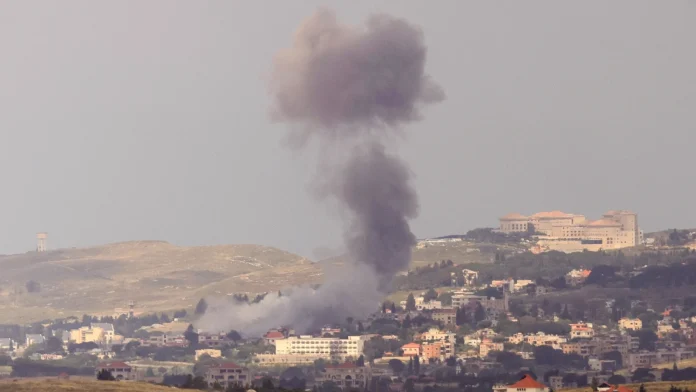
Smoke over the orchards: rescuers killed in southern Lebanon as politics and war collide
The morning air in Deir Qanun al-Nahr tasted of dust and metal. By the time the sun climbed above the low, olive-dusted hills, neighbors were counting the dead.
Six people were killed in what the Lebanese health ministry described as an Israeli strike on the village — among them two volunteer rescuers from the Risala Scouts association and a Syrian child. Earlier, another strike in the southern town of Hanaway had slain four more rescuers from the Islamic Health Committee. The casualties punctured a fragile lull along the border, leaving communities stunned and aid workers shaken.
“We come when our neighbors call for help,” said Nabil, a rescue volunteer who asked that his last name not be published. “We don’t carry flags when we run to pull someone from a collapsed house. We carry stretchers and flashlights. Today, the stretchers came back empty.”
Who were the rescuers?
The Risala Scouts is a grassroots rescue and relief association with ties to the Amal movement; the Islamic Health Committee operates in the south with links to Hezbollah’s support networks. Both groups are made up of local volunteers—drivers, paramedics, photographers—people who have long filled gaps in Lebanon’s overstretched emergency services.
They are also part of the complicated tapestry that makes the south of Lebanon different from Beirut: a place where clan and party ties, municipal services, and volunteer networks overlap in ways that can be both lifeline and liability.
- Six victims in Deir Qanun al-Nahr, including two rescuers and a Syrian girl.
- Four rescuers killed in Hanaway in an earlier strike, according to the health ministry.
Between duty and suspicion: the Lebanese army responds to US sanctions
Just as families were burying the dead, the Lebanese army issued a carefully worded statement defending its integrity. The message was simple and formal: officers and soldiers are devoted to the nation, bound by duty, and not informed in advance about the US sanctions that had just been announced.
The sanctions — imposed by Washington on nine people it described as linked to Hezbollah — included, for the first time, a serving Lebanese army colonel, identified as Samir Hamadi, and Khattar Nasser Eldin, an officer in another state security service. The US Treasury said the men had shared “important intelligence” with Hezbollah over the past year.
“This is unprecedented,” said Leila Haddad, a Beirut-based analyst who has worked on civil-military relations in Lebanon for over a decade. “Sanctioning serving officers sends a jolt not only to the armed forces’ institution, but to the fragile equilibrium that allows the army to operate amid militias and political factions.”
Tension in a delicate ecosystem
Lebanon’s army has long tried to sit at the center of a polarized country: an institution that must preserve national cohesion while operating in a landscape where non-state actors command deep loyalty among segments of the population. That balancing act has grown harder as regional tensions spilled over from Gaza, and as sanctions and counter-accusations ratchet up pressure.
“Our loyalty is to the people and the uniform,” said Captain Hani Fawaz, a staff officer in an army unit who spoke on condition of anonymity. “But when international actors point fingers at individuals, it complicates our work. We don’t want to be seen as a tool for one side or another.”
Hezbollah, for its part, condemned the US move as intimidation. “This is a political act designed to bolster the aggression against our country,” a spokesperson for the group said in a statement. The remarks reflect the broader narrative that many in Lebanon hear: foreign intervention, whether by sanctions or military strikes, often lands amid civilians more than it does among strategists in distant capitals.
What this means for civilians and humanitarian work
Rescue organizations and medical teams rely on assumptions of neutrality to reach the wounded. When volunteer rescuers are targeted or killed, those assumptions fray. The immediate loss is human and local: a brother, a neighbor, a mother. The long-term cost is systemic: fewer volunteers willing to run into danger, less trust between communities and organisations, and a shrinking space for humanitarian action.
“When rescuers are afraid to respond, the entire community pays the price,” said Miriam Kassis, who coordinates medical training in southern villages. “We teach first aid and how to stabilize someone for transport. But courage can only go so far when there is no guarantee you won’t be attacked in the act of helping.”
For Syrian refugees, too, the stakes are raw. The Syrian girl killed in Deir Qanun al-Nahr is one among many civilians who live in liminal spaces along the border — neither fully integrated in their host communities nor able to return home. Their vulnerability underscores how wars ripple outward into populations already living on the margins.
Local color: the towns behind the headlines
Drive through this part of southern Lebanon and you will pass citrus groves, knobby fig trees, and small concrete houses painted in bright pastels. Men gather at tea shops beneath awnings, discussing crop prices and the latest radio bulletin. On market days, women walk home with bin bags of fresh herbs and tins of olive oil. It is an ordinary life made precarious by extraordinary politics.
“We are farmers, teachers, shopkeepers,” said Fatima, a teacher whose school in a nearby town has been hosting displaced families. “We are not looking for a fight. But when the noise comes, it takes the children away from their classrooms and the elders to the basements. We keep living because that’s what we do, but every day is a question: will it be safe tomorrow?”
Wider implications: a microcosm of regional friction
This episode in southern Lebanon reflects broader dynamics in the Middle East. Proxy lines — where state actors engage through aligned militias rather than direct confrontation — make it difficult to isolate military objectives from civilian life. Sanctions that target individuals thought to be conduit points for militant groups are a tool in Washington’s box, but they also risk undermining trust in local institutions if their application appears blunt or politically selective.
Moreover, the deaths of rescue workers highlight a universal dilemma: in modern conflicts, the helpers are often exposed to the same violence that afflicts civilians. When those helpers are part of partisan networks, even if they provide essential services, the line between neutral humanitarian worker and political actor can blur in the eyes of external powers.
How should the international community protect civilians and maintain humanitarian space when wars are fought amid irregular forces and overlapping loyalties? And how do local institutions preserve legitimacy under the twin pressures of foreign sanctions and armed groups?
What to watch next
Expect intensified scrutiny: of the individuals sanctioned, of how the Lebanese army navigates internal cohesion, and of whether aid organizations can continue to operate in southern Lebanon without greater protection.
- Monitoring whether further strikes erode the ceasefire.
- Watching for additional sanctions or diplomatic moves that could alter local allegiances.
- Assessing humanitarian capacity as volunteer networks are weakened.
Closing: faces, not footnotes
In Deir Qanun al-Nahr, a mother wrapped her daughter’s small body in a blanket and walked slowly to the cemetery. She walked past houses where tea still evaporated in the afternoon heat, where a radio hummed with the day’s news. These are the scenes that statistics cannot fully capture: the interrupted stories, the interrupted breakfasts, the quiet of a village that has to be both resilient and afraid.
The politics of sanctions and counter-strikes will be debated in far-off meeting rooms. But the consequences land here, in the cracked concrete of rural courtyards and the hands of volunteers who run toward danger because someone has to. If we are to understand the conflict’s reach, we must attend to those hands.
What would you do if your neighbor needed help and the only way to reach them might be to risk your life? It is a question at once intimate and universal — one that the people of southern Lebanon are answering, moment by poignant moment.
Irish flotilla member: “They treated us like we were less than human”
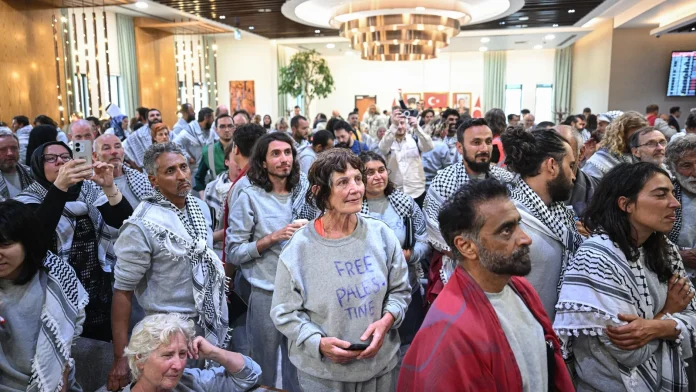
On a Cold Deck in the Mediterranean: What It Felt Like to Be Seized at Sea
The morning the sea turned against them was bright and ordinary in the way that mornings always are before history bends. Small vessels bobbed along a slate ribbon of water, tents and tarpaulins flapping, volunteers sipping tea and comparing manifests. They were bound for Gaza: a flotilla of people carrying blankets, medical supplies and a blunt, old-fashioned idea—that international waters and human dignity still matter.
What followed, according to those who lived it, was a lesson in how fast ordinary people can become evidence in a global story. Four hundred and thirty activists from more than a dozen countries were detained this week when Israeli forces intercepted the Global Sumud Flotilla. Among them were 14 Irish citizens, including Dr Margaret Connolly from Sligo, a physician whose calm voice on Irish radio cracked when she recounted what she and her comrades endured.
“Like a Horror of a Concentration Camp,” an Irish Doctor Says
“We were taken like cattle,” Dr Connolly told listeners, describing hours spent bent double on a metal deck, hands bound, cold and wet, with no access to basic first aid. Her description—sparse, clinical, and then explosive with detail—painted a picture of people in pain and without reprieve. “People screamed through the night. There was no pain relief. No dignity,” she said.
Her account included shocking allegations: multiple fractures, head injuries, burns from laser strikes, and what she described as sexual assaults. She said medical needs went unmet: no sanitary products for women, scant water, and bread tossed toward those held below deck as if sustenance were an afterthought. “They treated us like we were not human,” she said. “If this happens to Europeans in international waters, what happens to others who have nowhere?”
Voices from the Deck
Tom Deasy, another Irish activist who was on the first boat intercepted, described a scene of escalating aggression. “They came aboard fast and hard,” he said. “A rifle was shoved into my back. What began as force became a cascade of violence.” He spoke of being stripped of clothes, bundled into metal containers where he says beatings echoed. “You could hear it everywhere. It’s a sound you don’t forget.”
Not everyone returned with bruises that tell the story in visible ways—trauma lingers. “There’s a hollow quiet among us,” said Louise McCormack, a volunteer on the flotilla. “We feel relief to be home, yes. But there’s guilt. We went to be in solidarity and now we know, viscerally, what so many face every day.”
Numbers, Context, and a Longer History
The Global Sumud Flotilla is the latest chapter in a long, fraught history of attempts to breach the blockade around Gaza, enforced by Israel and Egypt since 2007. The most infamous earlier episode—the 2010 raid on the Mavi Marmara—left 10 activists dead and set international law and human rights debates alight. Since then, flotillas have repeatedly sought to draw attention to Gaza’s humanitarian plight.
This year’s interception resulted in 430 activists detained, with those who were deported arriving in Turkey before many were flown home. The precise scale of injuries and allegations is still being documented; activists say dozens suffered fractures and serious injuries. On a broader level, humanitarian agencies have long warned of Gaza’s precarious situation: dense population, damaged infrastructure, and a civilian population heavily reliant on aid. For millions watching, the flotilla was both a symbolic gesture and a practical attempt to deliver relief.
What Officials Are Saying
Within hours of footage and testimony circulating online—showing restrained activists kneeling in tight rows—Irish political figures and EU representatives voiced outrage. “We demand explanations,” one Irish opposition politician said. “This cannot be left unaddressed.” An EU spokesperson, speaking on condition of anonymity, told reporters that the bloc had taken note and would seek clarification from Israeli authorities.
Activists filed formal complaints in Turkey, documenting medical injuries and what they labeled as torture. “There must be accountability,” Tom Deasy said. “Not only for us, but for the thousands who face these conditions daily in the Occupied Territories.”
Local Color: Sligo to Istanbul—Small Towns, Big Hearts
Back in Sligo, Dr Connolly’s hometown, neighbors describe her as the sort of GP who keeps cookies in the clinic and remembers the birthdays of elderly patients. “Margaret’s the kind of person who goes where help is needed,” said a local teacher. “She’s a needle of compassion in a very prickly world.”
In Istanbul, where many of those seized landed after deportation, volunteers and lawyers gathered at a modest community center to catalogue injuries and statements. A Turkish activist who spoke over tea in a courtyard near the Bosphorus said, “We are a bridge. People come here because this is where aid meets law.”
Questions We Must Ask
What does it mean when people who sail in international waters to bear witness are met with force? When governments vote against sanctions while their citizens are detained abroad, what signal does that send about the limits of diplomatic protection? “There’s a moral calculus here that governments seem unwilling to engage,” said an international human rights lawyer who has monitored past flotillas. “You can’t separate immediate treatment of protesters from the wider matrix of occupation, blockade, and displacement.”
Readers might wonder: is civil protest on the high seas an effective tool, or a provocation doomed to end badly? Is international law keeping pace with the politics of the sea? These are not abstract queries. For the activists who returned—cold, bruised, and exhausted—answers matter not just in principle but in the shape of policies that could protect or imperil lives.
What Comes Next
The immediate next steps are painfully practical. The Irish activists are due to return home and undergo full medical evaluations; their testimonies will likely fuel calls in Dublin for investigations and for a re-examination of diplomatic posture. Legal teams in Turkey are preparing complaints. NGOs will sift through footage, extracting evidence. Politically, this is a spark—one that could be dampened, or fanned, depending on how governments respond.
For the global public, the episode is a reminder: conflicts filmed on a phone are not less real because they are widely watched. They become part of a living archive of how people on the margins—and those who stand with them—are treated. “We went to do a simple thing,” Dr Connolly said quietly. “To bring help and to witness. We came back with stories that we cannot simply put in a file. We must make sure they are heard.”
How will the international community answer that call? Will empathy translate into policy, and will accountability follow the footage? The sea, it seems, continues to be a mirror: it shows us who we are, reflected back in salt and motion. What do we want to see?
Russia reports Ukrainian drone strike on college dormitory kills six
Under the Shrapnel of Night: A Dormitory, a Town and the Quiet Geometry of War
It was a small town that most foreign maps ignore until violence knocks on its door: Starobilsk, a modest settlement in Lugansk, now for months and years a place of occupation and quiet dread. In the early hours, when most of its young residents should have been sleeping, an attack tore through the night. Windows blew out. A five-storey dormitory groaned and collapsed inward. By morning, officials in Moscow were counting names, and families were counting seconds that had stretched into aching uncertainty.
Russian officials say six people were killed, 39 wounded and 15 unaccounted for after what they described as a drone strike on a college dormitory. President Vladimir Putin—speaking on television—called the assault a “terrorist” act and ordered the defence ministry to prepare a response. Leonid Pasechnik, the region’s Moscow-installed governor, posted that 86 children aged 14 to 18 had been inside the building at the time.
The scene: flames, broken glass and a city of waiting
Images shared by local authorities show a college with gaping windows and a blaze licking at an upper floor—photographs that look like a déjà vu of so many other nights during this war. The town lies about 65km from the active frontline, captured by Russian forces in the early months of the 2022 invasion. In a landscape littered with competing narratives, these images became the immediate story: a civilian facility struck, students in their beds, a community jolted awake.
There was, notably, no immediate comment from Kyiv. Ukraine has repeatedly denied deliberately targeting civilians; it says its drone strikes are aimed at military positions or infrastructure used for war. Moscow, by contrast, accused Ukrainian forces of launching multiple drones at the academic building. Russia’s Investigative Committee described the five-storey structure as having collapsed down to the second floor.
Voices from Starobilsk
“I heard an explosion like the sky had fallen,” said a teacher who rushed to the site, her voice tight with exhaustion. “We pulled out people who were still breathing. The dust smelled like plaster and smoke; the kids were coughing and shaking.”
A mother, clutching a small pink scarf, stood near the cordon and said between sobs, “My daughter slept in a different dorm tonight. If she’d been there—” Her sentence broke. Nearby, an elderly man lit a cigarette—brief, solitary defiance—and said, “We are used to fearing the front, but not the school. Not the children.”
Not everyone speaks freely in occupied towns. A local volunteer who asked for anonymity described frantic searches through the rubble: “We scraped and called. You don’t stop until you either find someone or the rescuers tell you to leave. You cannot explain the feeling—every sound is a small monstrous hope.”
Why a college dormitory matters
Beyond the human toll, the attack highlights the fragile reality of occupied territories where civilian life and military logic collide. Dormitories and schools are not merely targets on a map; they are where teenagers rehearse adulthood, where teachers try to keep study alive in a climate of fear and where parents pin their hopes for normalcy.
The wider truth is stark: the conflict’s geometric grinding does not respect the boundaries between combatants and civilians. The United Nations Human Rights Monitoring Mission in Ukraine has recorded more than 60,000 civilian casualties since 2022—an arresting number that underlines how entire societies have paid a daily price. Nearly 90% of those casualties were documented in areas controlled by Ukraine, reflecting both the intensity of fighting there and the challenges of documenting events in occupied zones.
Drone warfare and the new frontlines
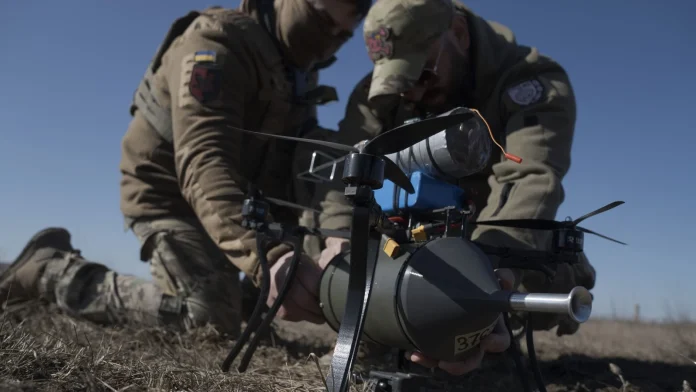
We are living through a proliferation of drones—cheap, adaptable, and increasingly lethal. Both sides have used unmanned aerial vehicles for strikes, surveillance and psychological warfare. Ukraine, unable to match Russia’s air and missile capacities conventionally, has leaned heavily on drones to harass logistics, bases and rear areas. Russia, meanwhile, launches waves of drones and missiles that have struck cities, energy infrastructure and neighborhoods deep inside Ukraine.
“Drones compress the battlefield,” said a military analyst in Kyiv. “They make the rear camp a frontline. That’s why a dormitory in an occupied town ends up within the calculus of attack.”
The Ukrainian air force reported that Russia had fired more than 100 drones in a recent salvo between late yesterday and this morning—an accusation framed by Kyiv as part of relentless strategic pressure. For civilians, these numbers become the rhythm of sleepless nights and evacuated classrooms.
Law, blame, and the slow architecture of proof
Every such incident is swiftly politicized. Moscow’s foreign ministry promised “inevitable and severe punishment,” and Putin vowed there would be “no leniency.” Kyiv, tightly focused on its own survival and defence strategy, has said nothing publicly about the Starobilsk strike at the time of reporting. In the middle lies a tangle of forensic difficulty: who fired the drones, from where, and with what intent?
“We need an impartial, independent investigation,” urged a human rights lawyer who has tracked violations in eastern Ukraine. “Evidence can be destroyed or staged. Witnesses can be intimidated. International bodies must be able to get access, and that is not easy in occupied territory.”
What the story of a single night tells us
Think of Starobilsk not as an isolated tragedy but as a prism reflecting broader patterns: the weaponization of the ordinary, the displacement of education and childhood, and the global spread of relatively inexpensive technologies that make distant strikes possible and accountability harder to secure.
What do we ask of the international community? How do we protect schools and dormitories in contested landscapes—especially when traditional doctrines of warfare are being rewritten by small, autonomous systems? How do grieving families—those who lost a teenager, or those who still wait by the rubble—get justice beyond a press release and a televised condemnation?
As you read this from whatever time zone you occupy, remember that Starobilsk is not alone. Across Ukraine, towns and suburbs keep tally of losses the way some families keep holiday calendars: dates marked by memory, by silence, by visits to memorials. This is an era when civilians live in the shadow of devices once thought toys; the consequences are measurements of humanity’s collective failure to keep war contained.
So we circle back to the faces: the teacher, the exhausted volunteer, the parent with the pink scarf. Their grief is immediate. Their questions are universal: will anyone be held to account? Will children again be able to sleep without fear? And what does it say about our world when a college dorm is as vulnerable as any frontline bunker?
We will keep watching, asking, and reporting. What do you think should change—on the battlefield, in halls of power, and in the rules that try to shape human conduct in war? Your answer is part of the conversation the world can no longer afford to ignore.
Irish medic warns Ebola outbreak is escalating rapidly
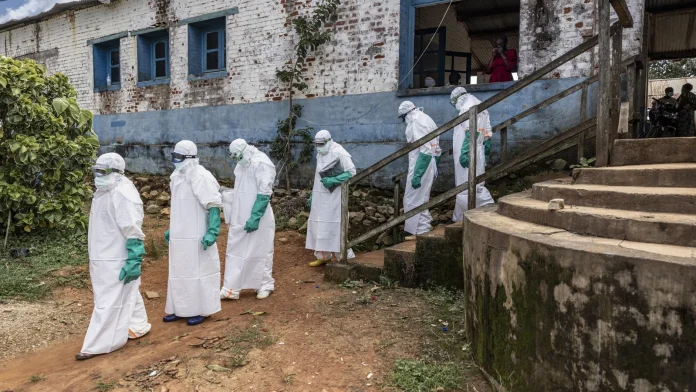
On the Front Lines: How Ebola Is Unearthing Old Wounds in Eastern Congo
The sky over Goma has the color of ash and the feel of something waiting to happen. Markets hum in the daytime, but at night the city’s hills hold a silence that belongs to places expecting bad news. Here, a new chapter of an old catastrophe is unfolding: a Bundibugyo strain Ebola outbreak in the Democratic Republic of the Congo is colliding with years of conflict, mistrust, and frayed public services — and the result is a public health emergency with human faces.
“When people are already scared of militias, when they have lost faith in institutions, a disease can spread faster than the virus itself,” says Dr. Eve Robinson, an epidemiologist with Médecins Sans Frontières who has been working in eastern DRC. “We’re seeing that now.”
Numbers that Tell a Story
Official tallies are stark: roughly 600 suspected cases and more than 140 deaths have been reported so far, figures that prompted the World Health Organization to declare a public health emergency of international concern. Those numbers, however, are likely the visible tip of an iceberg. “Surveillance here is patchy,” Dr. Robinson adds. “What we count is almost certainly an underestimate of the true situation.”
What makes this outbreak particularly unnerving for epidemiologists is the culprit: Bundibugyo ebolavirus, a strain less familiar to global response teams than the Zaire strain that made headlines in 2014–2016. Unlike Ebola-Zaire, for which there are licensed vaccines and some therapeutic options, Bundibugyo has few — if any — specific medicines or validated vaccines ready to deploy. That scientific gap turns every confirmed case into a wider alarm bell.
From Ituri to the Borderlands
The outbreak is believed to have started in Ituri province and in a matter of weeks has threaded into neighboring North Kivu, the province that hugs the Rwandan border. Goma, a bustling cross-border trade hub, now feels like the calm before a storm: one confirmed case within the city’s reach; many more likely to follow.
“Trade routes are veins,” says Jean-Baptiste, a taxi driver who ferries traders between towns and across the border. “They feed the city. But when something sick travels those veins, it moves fast. And people who need to work don’t have a choice — they keep moving.”
Why Communities Matter More Than Sterile Wards
It’s tempting to imagine outbreaks are solved inside glossy treatment centers, with IV bags and white coats. In the reality on the ground, control happens where people live, mourn, and make decisions about their dead.
“You don’t control Ebola in the treatment centres alone,” Dr. Robinson says. “You control it by working in and with the communities.”
That truth surfaced painfully when an Ebola treatment centre in eastern Congo was set on fire after locals were denied access to retrieve the body of a man who had died. News footage and witness reports described a burned structure, crowds in anger, and a collapse of the fragile trust that emergency responders rely on.
“They took my uncle away and told us he must be buried ‘their way’,” a resident of the town, who asked not to be named, told a visiting nurse. “We have our ways. They won’t listen, so we acted.”
Safe and dignified burials are not just logistical boxes to tick. They are cultural processes packed with meaning. If communities are excluded or treated as obstacles rather than partners, people hide deaths and funerals — precisely the conditions in which Ebola spreads fastest.
- Community engagement and trust-building
- Early case finding and contact tracing
- Safe and dignified burials
- Clinical care with infection prevention
These pillars are simple to name and horribly complex to practice in regions where conflict and fear are part of daily life.
On the Clinic Floors and Behind the Glass
MSF has established a treatment centre in the hardest-hit areas, and staff report it is operating at full capacity. “Our tents are full, and we are shifting patients around like a person shuffling a deck,” said an MSF logistician, who requested anonymity. “We need more staff, more supplies, and, honestly, more time to build trust.”
At the same time, the international movement of people has pulled the outbreak into global headlines. Charité university hospital in Berlin confirmed that a US citizen who contracted Ebola in the DRC has been admitted to their high-security isolation unit. The patient, identified by an aid organization as Dr. Peter Stafford, is reportedly not critically ill. His wife and four children tested negative on initial PCR tests and are quarantined in a separate part of the unit.
“Because the course of the illness can change, he remains under close observation and is receiving treatment,” Charité said in a statement. Hospital staff have made the family area as child-friendly as possible: the children can see their father through a glass partition and communicate via an intercom. The White House has said the family were brought to Germany because it is roughly 12 hours closer than the United States for medical evacuation purposes.
Science, Patience, and the Global Response
Developing a vaccine or therapeutic targeted specifically at Bundibugyo will not be instantaneous. “Even with modern platforms, creating, testing and rolling out a new vaccine takes months,” Dr. Robinson warns. “We can repurpose some tools, but a specific, proven solution for this strain is not in our pocket yet.”
That reality forces responders back to the basics: surveillance, rapid isolation, contact tracing, and the painstaking work of conversation. Health promoters walk the streets, explain symptoms, and teach families how to isolate a sick relative. They build burial teams who can conduct culturally sensitive funerals that reduce the risk of transmission.
“It starts with listening,” says Amina, a local health promoter who has worked in Ituri for eight years. “If you come and tell people what to do without understanding their lives, they will close their doors. If you sit, drink tea, hear their stories — then sometimes, slowly, they open their gates.”
Why This Matters to the World
When outbreaks happen in conflict zones, they expose deeper global inequities: neglected health systems, underfunded surveillance, and scientific attention that gravitates toward problems affecting wealthy nations. Every surging case in the DRC is a reminder that pathogens do not respect borders — and that global solidarity is not a moral luxury but a practical necessity.
As you read this, consider the people living through the outbreak — not as statistics, but as neighbors: market sellers, drivers, mothers, medics. The decisions we make as a global community — to fund R&D for neglected strains, to resource rapid-response teams, to invest in community health workers — will shape whether this becomes a contained chapter or a long, sorrowful book.
So I’ll ask you: when news from faraway places collides with your life, what do you feel compelled to do? Donate to trusted relief groups? Call your representative about global health funding? Or simply carry the memory of a family buried in a village far away and let that memory reshape how you think about public health and solidarity?
For now, in Goma and Ituri, people wait. Treatment tents swell. Burial teams walk at dawn. And the oldest prescriptions of epidemic control — listening, partnership, dignity — are proving, once again, to be the ones that truly save lives.
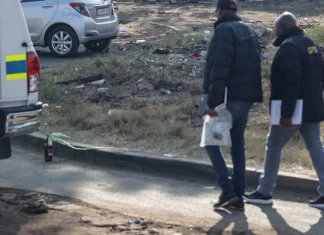
Johannesburg Shooting Leaves 12 Dead and 9 Wounded, Police Say
In a chilling overnight raid on the edge of Johannesburg, gunmen swept through an informal settlement and killed 12 people, South African police said.
Police...

Chinese sub uncovers the world’s biggest whale graveyard on ocean floor
A vast “necropolis” of whales—packed with both fresh remains and fossils millions of years old—has been found on the floor of the Indian Ocean,...
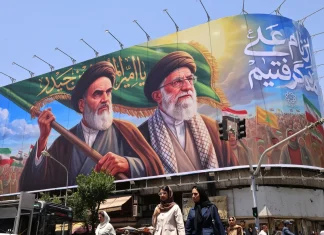
US Launches Strikes on Iran as Tehran Threatens Retaliation for Attacks
Fresh explosions rattled southern Iran overnight as the United States launched a new round of strikes, a move that came just hours after President...
460 European leaders urge EU to take a tougher stance on Israel
With war raging in Gaza and tensions rising across the West Bank, a large coalition of veteran European political leaders is urging the European...
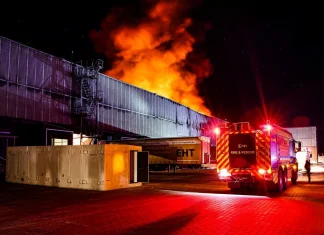
Russian strikes hit Kharkiv, killing four and injuring 20 people
A fresh wave of missiles and drones slammed into Ukraine overnight, killing four people in the Kharkiv region and injuring more than 20 others,...