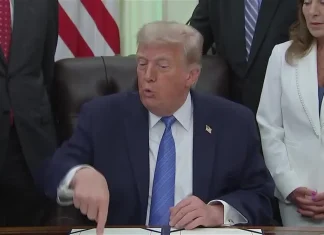
Mar 23(Jowhar)-Horumar ayaa laga gaaray wad-hadalo u socday Mareykan iyo Iran iyadoo Trump uu amray ciidankiisa iney weerar danbe qaadin.
Trump oo ugu danbeyn wada-hadal ka dalbaday Iran

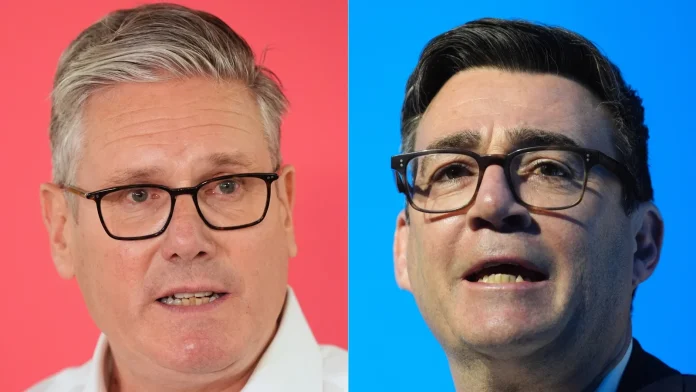
Starmer denounces anti-Semitic arson attack that targeted ambulance vehicles

Smoke Over Golders Green: When Ambulances — and Trust — Were Set Alight
Before dawn on a cool London morning, the hush of Golders Green was ruptured by orange tongues of flame licking at the sides of four ambulances. The vehicles belonged to Hatzola, the volunteer Jewish ambulance service whose sirens have threaded through North London’s streets for decades—answering calls in the darkest hours, regardless of faith or background.
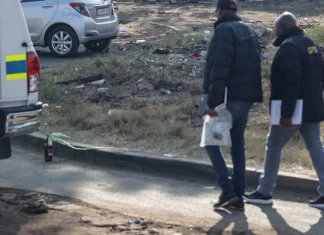
By 1:45am the quiet residential road had become cordoned off, windows steamed from the heat, and a charred bouquet of metal and melted plastic lay where lifesaving vehicles had stood the night before. Neighbours were evacuated, roads closed, and the usual late-night hum of this diverse community paused beneath the acrid smell of smoke.
What Happened
Police say CCTV footage captures three people setting fire to the ambulances. Officers also reported hearing explosions consistent with gas canisters stored on board the vehicles. Miraculously, no people were hurt—no volunteers, no passers-by—but the symbolic damage was immediate and raw.
The Metropolitan Police have opened a hate crime investigation, saying the attack is being treated as an anti‑Semitic incident. “We are in the process of examining CCTV and online footage,” said the local superintendent, adding they are looking for three suspects and urging witnesses to come forward. At the time of writing, there have been no arrests.
Voices from the Ground
The shock was felt across a community accustomed to being both visible and visible for the right reasons: charity, care, and mutual aid. “They come when anyone needs them,” said Damon Hoff, president of Machzike Hadath synagogue, which houses the ambulances. “This isn’t only about Jewish people—it’s about people who are there to save lives.”
One Hatzola volunteer I spoke with, who asked to remain anonymous, wiped soot from his jacket and said softly, “We train to run into danger for strangers. Tonight, someone chose to turn that back on us.” His voice trembled between anger and exhaustion.
Outside a nearby kosher bakery, Miriam, a shop owner who’s lived in Golders Green for 22 years, summed it up with weary clarity: “This place is my home. We hear all kinds of stories here—weddings, funerals, babies crying—now we hear sirens in a different way. People are frightened.”
Political and Communal Response
From Downing Street to the streets of Golders Green, words of condemnation came fast. The Prime Minister urged communities to “stand together,” calling the episode a “horrific anti‑Semitic attack.” London’s mayor described it as a “cowardly attack on the Jewish community,” promising that “Londoners will never be cowed by this kind of hatred and intimidation.”
The UK’s Chief Rabbi framed the assault as an attack on shared values, saying Hatzola’s volunteers “protect life, Jewish and non‑Jewish alike,” and that the targeting of such a service is “particularly sickening.” The Archbishop of Canterbury, community leaders, and medical bodies also condemned the assault; the British Medical Association highlighted how deliberate attacks on healthcare services are “reprehensible.”
Why This Cuts So Deep
It’s not just that ambulances were torched. It’s the symbolism of attacking emergency responders—the people who stand as a society’s last, neutral line against chaos. It’s an assault on an institution that, by its very mission, refuses to pick sides.
Hatzola, founded in 1979, operates as a volunteer emergency response and transport service in North London. It has long been a point of civic pride: trained volunteers from within the community who step forward when someone’s life hangs in the balance. To target them is to target a social fabric stitched together by care.
Context: A Rise in Fear
Across Britain and much of Europe, Jewish communities have reported heightened anxiety in recent years. Charities and community groups track thousands of antisemitic incidents annually, noting spikes often linked to geopolitical tensions overseas. That pattern leaves neighbourhoods on edge: when global headlines flare, local streets feel the heat.
“You can’t separate local safety from global politics entirely,” says Dr. Naomi Feldman, an expert in community security. “But it’s crucial to remember that hate crimes are acts of choice by individuals or small groups. They are not inevitable. They are preventable with vigilant policing, community solidarity, and political leadership.”
What Comes Next
Investigators are piecing together a timeline from CCTV and digital leads. Patrols around synagogues and community centres have been increased. Hatzola’s London base—though shaken—remains operational, Shomrim confirmed, as volunteers re-route resources and reassure those who call for help.
Local councillors expressed a mix of shock and sorrow. “My first reaction was horror,” said Peter Zinkin of Barnet Council. “Then profound sadness.” Councillor Dean Cohen called it “a new low” to attack ambulances—vehicles dedicated to saving lives 24/7.
Questions for the Reader
What does it say about a society when those who come to help are themselves targeted? How do communities rebuild trust after an act designed both to destroy property and to intimidate people into silence?
These are not rhetorical questions for Golders Green alone. They echo in neighbourhoods where emergency workers, teachers, and volunteers operate under the shadow of targeted violence. How a city responds—through policing, outreach, and leadership—says as much about its values as any statement from a podium.
Beyond the Flames: A Call to Action
There are concrete steps neighbours and officials can take: bolster CCTV and lighting in vulnerable spots; fund rapid-response patrols that work in partnership with community organisations; expand hate‑crime education in schools and faith institutions; and ensure that victims and volunteers have psychological support.
- Encourage anonymous tip lines and community reporting mechanisms.
- Increase dialogue between law enforcement and community charities like Hatzola.
- Support local initiatives that build cross‑community resilience—shared meals, emergency drills, educational events.
As one long-time resident put it, “We need to show up for each other—not just talk about it.” It’s a modest prescription for something far greater: preserving the basic decency that makes a mosaic city liveable.
Final Thought
Golders Green woke to a scene that would be unsettling in any city: the grotesque tableau of ambulances set ablaze. But beyond the photographs and the police tape, this moment exposes a deeper test, one that asks how communities react to fear: by retreating into joyless isolation, or by stepping forward, together, into the light.
In the weeks ahead—when inquiries move on and the press cycle turns—what will remain is the choice each neighbour, leader, and passer-by must make. Will we let this be a wedge, or will we let it be a reason to stand closer? The answer will be written not in statements alone, but in small, everyday acts: volunteers returning to their posts, shopkeepers opening their doors, and people in a diverse city deciding—again—to care for one another.
Cuban crews race to restore power following fresh nationwide blackout
When the Lights Go Out: Cuba’s Grid, Daily Life, and a Nation Holding Its Breath
Night fell over Havana like a held breath, and the city exhaled in the dark.
Streetlamps that usually mark the sidewalks with a honeyed wash sputtered into silence. A restaurant on Galiano Street closed early, the fryers cooling, the rhythmic clack of dominoes stopping at an outdoor table as neighbors lit candles. A woman selling yucca near the Malecón wrapped her wares in a plastic bag and muttered, “We’re back to candlelight, like my abuela used to say.”
It sounds cinematic, but it is also painfully ordinary in Cuba right now: a power system stretched past its seams, households improvising, and a country watching its fragile supply chain and political alliances with mounting concern.
What happened — and what officials say
Earlier this week, Cuba’s energy ministry reported a nationwide disconnection of its electrical system. Technicians have slowly restored service in pockets — a gas-fired plant near Havana clicked back into life, a hydroelectric station in the center of the island began feeding the grid, and a unit at a thermoelectric facility returned to operation. But whole neighborhoods remain in darkness, and officials warn of continued instability.
“We are working around the clock to stabilize generation and to protect critical services,” Energy and Mining Minister Vicente de la O Levy told state media, explaining that an outage in one of the island’s thermoelectric units triggered a cascade across the grid.
For the average Cuban, that technical description is less urgent than the immediate problems: spoiled food, disrupted medical care, hot hours without fans in stifling heat, businesses that cannot function and a tourism sector — one of the country’s main foreign-exchange earners — that sees flights trimmed and visitors unsettled.
Why the grid is brittle
Cuba’s energy system is built on shaky foundations. Decades of deferred maintenance have left plants and transmission lines old and vulnerable. The country depends heavily on oil-fired thermoelectric stations — infrastructure that works when fuel is available but falters when shipments slow or stop.
“This is a system strained by age and by geopolitics,” said Dr. Ana Rodríguez, a Havana-born energy analyst now based in Madrid. “When you have a small island economy reliant on imported fuel, any interruption becomes a national emergency.”
Data from recent years paints the picture: a large majority of Cuba’s electricity historically came from fossil fuels, with hydropower, biomass, and emerging solar projects supplying the rest. The government has talked about a transition to renewables for years, and there are visible signs of progress — rooftop solar installations have proliferated in neighborhoods and state projects to build larger arrays are underway — but the scale of change required to replace oil-burning plants is enormous.
Fuel, friends, and the geopolitics of energy
Fuel availability is not only a technical problem but a geopolitical one. For decades, Venezuela provided discounted oil to Havana under bilateral agreements that helped power the island’s economy. In recent years, Venezuela’s own production shortfalls and political turbulence have reduced its capacity to export energy reliably.
“We’ve had interruptions in oil deliveries that have forced rationing,” said Joaquín, a taxi driver who hauled passengers along the Prado. “When the tanks don’t come in, the lights follow.”
Outside pressure compounds the strain. Cuba’s economy sits under a U.S. embargo that affects trade and finance, and occasional threats of secondary measures by Washington have had chilling effects on third-party suppliers. Cuban authorities and many residents point to these external pressures as part of the explanation — but there are also clear domestic management and maintenance challenges that have to be addressed.
The human cost: beyond the flash of a headline
Statistics can be dry. The human stories are not.
- Food insecurity intensifies when refrigerators fail. “We lost two boxes of medicine and the milk for my baby,” said María, a mother of two in Matanzas. “Everything rots fast in this heat.”
- Hospitals run on backup systems, but those are not designed for long-term continuous use. “Critical care units are protected, but routine clinics and diagnostic services suffer,” an emergency doctor in Cienfuegos told me.
- Small businesses — hair salons, bodegas, cafés — operate on thin margins. Each hour without power is lost income and sometimes a permanent loss of clientele.
These interruptions also carry social consequences. After months of shortages of basics like cooking fuel, medicine, and as bread-and-butter goods disappear from store shelves, frustration has spilled into the streets. In a rare episode of anger, demonstrators vandalized a provincial office of the ruling Communist Party last weekend — a symbol, for many, of pent-up grievances about governance and daily hardship.
Aid, improvisation, and the promise of solar
International relief convoys have begun arriving with food, water, medical supplies — and solar panels. The image of an NGO volunteer lifting a photovoltaic module onto a rooftop in a Havana barrio has become an emblem of adaptation: where oil cannot be guaranteed, decentralised renewables can provide lifelines for clinics, water pumps and refrigeration.
“Microgrids and solar-battery systems are not a miracle, but they are practical,” said Elena Vargas, who manages a renewable-energy NGO working in the Caribbean. “They can power essentials and reduce the vulnerability of small communities to central failures.”
Already, local inventiveness is on display. In neighborhoods with intermittent supply, residents rig battery banks from refurbished vehicle batteries, rigging lights and fans to keep households functional during blackouts. These solutions are stopgaps, though, and they won’t substitute for a systemic overhaul.
What does this mean beyond Cuba?
Consider the wider implications. Islands and small economies are bellwethers for the energy transition: they are most exposed to import shocks, most vulnerable to the impacts of climate change, and often have the greatest incentive to leapfrog into renewables. But they also need capital, technology and political space to do it.
So ask yourself: how do geopolitical rifts ripple into kitchen tables in Havana, or split-second decisions in an ICU? How does the international community balance geopolitical pressure with humanitarian needs? And how does a country prioritize short-term fixes with long-term transformation?
What’s next
For now, technicians continue repairs, aid convoys unload shelter and medicine, and families re-learn habits long since thought of as relics: preparing food that doesn’t need refrigeration, staying close to neighbor networks, preserving battery power for nights when fans are the only reprieve from the heat.
“We are resilient, yes,” said Rosa, an elderly woman who runs a corner store in Old Havana. “But resilience is not the same as indifference. We want solutions that last.”
Cuba’s struggle is an intimate reminder that energy is more than kilowatts and blackouts — it’s the hum of daily life, the turning of a city’s wheels, the quiet dignity of people keeping their families fed and cool. The question now is whether the next months will bring only temporary fixes, or the kind of investment and cooperation that can rebuild an aging grid and spare ordinary people the recurring terror of the lights going out.
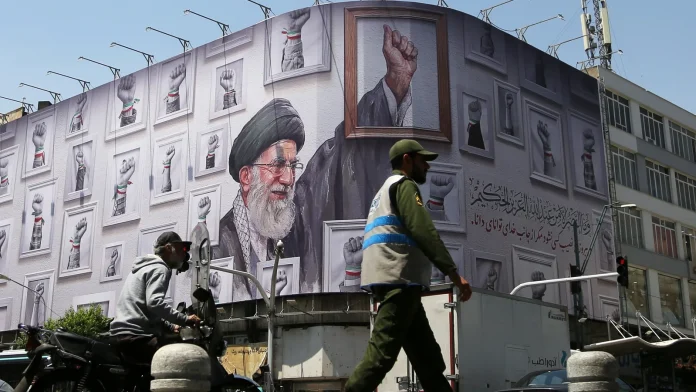
Israel Strikes Tehran as Iran Targets Strategic Gulf Sites

Night of Blazes: Tehran and a Region on Edge
It was not the ordinary glow of a city at dusk. On the fourth week of a conflict that has ripped through capitals and oil fields, Tehran’s skyline flickered with the harsh, staccato light of explosions. Smoke rose over residential blocks. Ambulances threaded through snarled streets. Farther south and to the east, sirens cut into the night in Tel Aviv and the occupied West Bank, where people pressed into stairwells and bomb shelters, wondering if the next blast would be closer than the last.
“I woke up to the windows rattling,” said Mansour, who runs a small bakery on the outskirts of Tehran. “You learn to breathe through fear, but tonight the fear was a different kind—louder, hotter.”
From Targeted Strikes to Threats on Lifelines
What began as a military campaign between states has edged toward something far darker: the deliberate targeting, or threatened targeting, of civilian infrastructure that keeps cities alive. Electricity grids, desalination plants, and pipelines have been named as potential targets in a tit-for-tat escalation that could ripple far beyond the combatants.
International monitors say at least 40 energy assets across the oil- and gas-exporting region have been “severely or very severely damaged,” signaling an unprecedented hit to facilities that underpin global supply. At the same time, one of the world’s most vital shipping lanes—the Strait of Hormuz—has been effectively throttled at moments by actions in the conflict. About one-fifth of global crude normally flows through that narrow stretch of water; when it hiccups, markets and ordinary lives feel it.
“This is not just an attack on tanks and bunkers. This is an attack on the things that make modern life possible for millions,” an energy analyst in London told me. “When power, water and fuel start to be seen as military objectives, the humanitarian stakes skyrocket.”
Why the Gulf’s Water and Electricity Are So Fragile
Walk along any waterfront avenue in the Gulf and you will see glass towers shimmering like ships in the desert—cities that, without energy, would be uninhabitable. In Bahrain and Qatar, desalination furnaces supply virtually all drinking water. In the United Arab Emirates, desalination plants meet more than 80% of potable water needs; Saudi Arabia relies on the process for roughly half its water.
Those plants are voracious consumers of power—electricity that keeps pumps turning and salt left on the shoreline instead of in our glass. Gulf states consume roughly five times as much power per person as many other countries, driven by cooling needs and water production. Cut the power, and you don’t just dim a skyline. You shut down hospitals’ refrigerators, halt water taps, and turn air-conditioned lives into an unbearable furnace.
“You can repair a wall. You cannot stitch together a water supply overnight,” said Reza, a search-and-rescue volunteer with the Iranian Red Crescent. “People are already standing in queues to fill buckets. If the desalination stops, we will have more than broken glass to fear.”
Markets and the Mathematics of Fear
Markets are not clairvoyant, but they are very sensitive to risk. Oil has hovered above $100 a barrel at times during the crisis, traders watching every report of an intercepted missile or a damaged pipeline. With energy facilities hit and the Hormuz bottleneck threatened, the prospect of prolonged supply disruptions tightened futures and raised the specter of a global energy squeeze.
Fatih Birol, head of a major international energy watchdog, warned that the damage tally to energy facilities was already significant—at least 40 assets severely affected—and that the ripple effects could be felt from refineries in Asia to petrol pumps in Europe. Inflation worries, already persistent in many economies, grew overnight as transport and manufacturing expenses ballooned.
Why this matters to you
- Higher oil prices filter down into more expensive transport, heating, and food.
- Shipping delays on key routes can raise costs for manufacturers and consumers globally.
- Escalation that hits civilian infrastructure risks a humanitarian crisis that transcends borders.
On the Ground: People, Places, and Fractured Routines
In Khorramabad, west Iran, families woke to the sight of their neighborhood half-shrouded in dust. Hospitals filled with the injured; a child was among those reported killed. In Urmia, wrecked windows and toppled signs told a similar story of ordinary lives interrupted by extraordinary violence.
In Riyadh, morning prayers were followed by a half-hour of unnerving silence, then news: two ballistic missiles had been launched toward the capital; one intercepted, one fell in an uninhabited area. “We are used to drills, not to real rockets,” said Fatima al-Harbi, who runs a grocery store near the city center. “You stack canned goods not for convenience but because you don’t know when the road will be safe to go to the supermarket.”
Across the Gulf, ports adjusted watchfulness and shipping firms rerouted vessels or paused sailings. Insurance premiums rose, and charter rates spiked for tankers tasked with carrying crude around or away from the Strait of Hormuz. The shipping industry sent a clear message: volatility breeds cost.
Questions for the Wider World
What is the acceptable cost of deterrence when whole cities can be pushed to the brink of losing electricity and water? How long can global supply chains tolerate operating on the edge of such geopolitical risk? And for those who live furthest from the conflict, how do you weigh solidarity with strategic partners against the immediate economic pain felt at your local petrol pump?
These are not abstract queries. They are choices for policymakers and citizens alike, and their answers will shape months—perhaps years—of geopolitics and economics.
Where We Go From Here
Diplomacy must be the instrument that reins in this spiral, yet diplomacy is a fragile thing—easily eroded when politicians and generals play for advantage. Leaders talk of “obliterating” power plants and “closing” straits; such rhetoric can be calming for home audiences but combustible in practice.
For now, people like Mansour, Reza, Fatima and thousands of others return to a day that is both routine and unimaginable: children to school where classes may be interrupted by alarms, shopkeepers stocking goods that might become scarce, medics preparing for the next surge of patients. They live at the sharp end of decisions made in distant rooms.
Read this and ask yourself: how much of your daily comfort is the product of fragile systems working quietly in the background? And what responsibilities do we bear, collectively, when those systems become targets?
In the end, this is not just a story about missiles and markets. It is about the fragile scaffolding of modern life and how easily it can be rocked—not only by bombs, but by the political choices that make those bombs a strategy. The next chapter depends on restraint, repair, and the stubborn human work of rebuilding trust—on both sides of the conflict and far beyond the shorelines of the Gulf.
Dowladda Soomaaliya oo ciidamo dheeraad ah geysay Baraawe iyo Buurhakaba
Mar 23(Jowhar)-Dawladda Soomaaliya ayaa maanta ciidan dheeraad ah u daabuleysay magaalooyinka Baraawe & Buurhakaba, halkaas oo ay kudiyaarinayso ciidamo loogu talogalay in ay duulaan ku qaadan magaalada Baydhabo.
Mareykanka iyo Israel oo duqeymo culus maanta ka wada magaalooyinka Iran
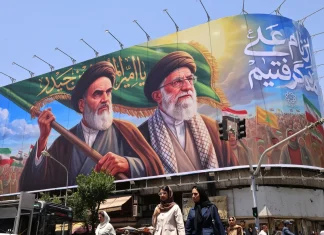
Mar 23(Jowhar)-Diyaaradaha Mareykanka & Israa`iil ayaa duqeymo saf-mar ah ka geysanaya saaka gudaha magaalooyinka waa weyn ee Iran, gaar ahaana magaalada caasumada ah, iyadoo uu dagaalku galay marxalad cusub oo dunida saameyn abidi ah ku yeelanaysa.
Record highs shattered as U.S. heatwave sweeps eastward
A March That Forgot Its Place: How Spring Turned Scorcher Across America’s Heartland
Walk outside in Kansas City and you could swear the calendar page had been snatched and replaced with July. The air felt thick and a little guilty—too warm for March, too unapologetic for a season that is supposed to be thawing, not blazing.
Across a sweep of the western and central United States, a heatwave more commonly seen in high summer surged eastward, baking landscapes that had been frozen the week before. Dozens of monitoring stations recorded their warmest March readings on record, according to the National Weather Service Weather Prediction Center, and the numbers read like a geography lesson gone rogue: Kansas City and North Platte, Nebraska, both touched 33.3°C (about 92°F); Chanute, Kansas, flipped from a record low of −10.5°C (13°F) on March 16 to a record high of 32.8°C (91°F) just four days later.
From Frost to Furnace: The Speed of the Shift
It’s one thing to wake to a late frost and another to watch a landscape pivot from ice to bloom in the span of a long weekend. Trees that still carried the sugar-crisp skeleton of winter leafed out, and lawns—fed by unusually heavy rains last winter—grew with surprising aggression. In Phoenix, a city that boasts some of the nation’s hottest summers, last night’s low was 21.1°C (70°F), the earliest date the overnight temperature had stayed that warm in the year on record.
Then there was the extreme outlier along the southern California–Arizona border, where readings climbed to 44.4°C (112°F)—a national record for March. The same desert counties where creosote and mesquite tend to talk in heat-scorched whispers were under extreme heat warnings from the NWS, while much of the central Plains—Nebraska, Kansas, Oklahoma—was slapped with red flag warnings signaling a heightened wildfire threat.
Why the numbers matter
Numbers are not just digits on an instrument; they are a map of consequences. Heat spikes push electricity demand, strain hospitals, and dry out soils at a critical time for farmers and ranchers. Cities feel it differently: paved surfaces hold and reradiate heat, and the overnight temperatures — the “low” that never gets low enough — dictate how much respite people, plants, and animals receive.
Voices from the Ground: People, Plants, and Animals React
“I went from shoveling frost off my truck to turning on the A/C in three days,” laughed Maria DeLuca, a barista in Kansas City, who watched patio seating fill up under a sun that felt indecent for the month. “People were in sandals. We joked that March was having an identity crisis.”
At a small ranch outside North Platte, cattleman Tom Herrera sounded less amused. “Calving season’s set by the weather. When it jumps around like this, it messes with feed, with parasites—everything comes earlier or later than you’re ready for,” he said, his voice threaded with fatigue. “We had green grass that looked too good to be true. Problem is, it might flame out in a week if it gets hot and dry again.”
Wildlife, too, seemed disoriented. Migrating birds arrived earlier than expected in some corridors, and in the scrublands near the border, crepuscular mammals were forced to adjust their patterns. “These biological cues—blooming, migration—are in lockstep with temperature. When that dance is disrupted, the whole orchestra can fall out of tune,” said Dr. Laila Musa, an ecologist who studies phenology, the timing of natural events.
Scientific Reality: Not a Coincidence
There is a growing chorus among climate scientists that says these extreme heat events are not anomalies but expected outcomes of a warming world. “The evidence is overwhelming,” said Dr. Aaron Kim, a climate scientist at a university climate center. “Since pre-industrial times, the planet has warmed by about 1.1°C on average. That doesn’t sound like much in a single sentence, but it translates into far more frequent and intense heatwaves. Warmer air holds more moisture, shifts jet streams, and amplifies extremes.”
Peer-reviewed studies and climate models repeatedly point to a fingerprint: human-driven warming—chiefly from burning fossil fuels—makes heatwaves hotter, longer, and more likely. And because the baseline temperature has shifted upward, what used to be an exceptional event becomes, over time, the new normal.
Immediate risks and long-term stakes
Short-term, communities face increased risks of heat-related illness, heightened wildfire danger, agricultural disruption, and strain on power grids. Long-term, these events feed into broader patterns: earlier springs can lead to mismatches in food webs, water-demand changes, and the destabilization of ecosystems that underpin local economies and cultural practices.
Local Color: How Regions Felt the Heat
In Phoenix, late-night walks along the Salt River shifted from comfortable to tropical; people lingered under mesquite trees, watching heat rise like a mirage above asphalt. In the Midwest, prairie grasses that had been dreaming of spring were suddenly outpacing the calendar, painting cattle pastures a lush green that had ranchers both relieved and wary. And in Southern California’s borderlands, the desert exhaled a dry, hot breath that made the roadside air shimmer.
“The jacarandas are early this year,” said Rosa Martinez, a retired schoolteacher in San Diego County, pointing to purple clouds of blossoms. “They’re beautiful, but when everything blooms too soon, it feels like the world is speeding up and we’re not sure why.”
What Can Be Done—and What You Can Ask Your Leaders
Heatwaves like this are a wake-up call and a test. They reveal vulnerabilities in infrastructure, public health systems, and land management. Response includes immediate measures—cooling centers, targeted advisories for vulnerable populations, and fire preparedness—and longer-term shifts: electrifying buildings, expanding tree canopy in cities, and transitioning energy systems away from fossil fuels.
- Immediate actions: expand public cooling centers, conserve water, implement targeted advisories for at-risk groups.
- Short-to-medium term: retrofit buildings for cooling efficiency, harden power grids, update land management to reduce wildfire risk.
- Long-term: accelerate decarbonization, invest in community resilience, protect and restore natural ecosystems that buffer climate extremes.
So I ask you, reader: when a March day feels like a July afternoon, do we shrug and adjust our calendars, or do we ask why? How will we protect communities who already shoulder the most burden—the elderly, outdoor workers, and marginalized neighborhoods with fewer trees and less access to cooling?
Concluding Thoughts: A Season That Demands Our Attention
This heatwave was not just about headline temperatures or new records. It was a vivid, tactile lesson in how a changing climate reaches into daily life: into the timing of a farmer’s work, the schedule of a migratory bird, the comfort of an evening on a city patio. It pressed on the pause button between seasons and forced a reckoning with the reality that weather once considered seasonal is becoming more volatile.
There will be cooler days again—there always are—but the question is what we learn from the feverish ones. Will we treat them as curiosities or as clues? The choice we make now will shape the calendars, livelihoods, and ecosystems of decades to come.
Lafta-gareen oo magacaabay guddiga doorashooyinka Koofur Galbeed
Mar 22(Jowhar)-Madaxweyna maamulka Koofur Gakbeed ayaa gorodhow Magacyada Guddiga Madaxa Bannaan re Xuduudaha iyo Doorashooyinka Dowlad Goboleedka Koonfr Galbeed Soomaaliya.
Saudi Arabia calls Israeli attacks on Syria an act of aggression
Under the Same Sky: Shells, Sovereignty, and the Quiet Lives of Sweida
When the first booms split the pre-dawn silence over Sweida, residents thought a pipe had burst, or a truck had overturned on a narrow mountain road. By mid-morning, they were counting broken windows and friends who hadn’t answered their phones. By late afternoon, the sound of fighter jets had threaded through the town’s olive trees and vineyards — and a reluctant region once again found itself on edge.
The strikes, which Israel says were aimed at military positions in southern Syria, quickly ballooned into a wider diplomatic row. Riyadh called the attacks “a blatant violation” of Syrian sovereignty. Ankara warned of a dangerous escalation. Damascus called the strikes an “outrageous assault.” And beyond the official statements, there were those who live here — Druze elders, farmers, shopkeepers — trying to make sense of why their lives keep intersecting with the geopolitics of others.
What happened — the short version
According to Israeli military briefings, the operation targeted sites in southern Syria in apparent retaliation for attacks against the Druze community in Sweida province. The Syrian Observatory for Human Rights (SOHR) later reported clashes with government forces that left at least four Druze fighters dead, and said that Israeli shelling hit residential neighborhoods in Sweida city.
For context, this flare-up comes amid a broader, more dangerous chapter in the region. After US and Israeli strikes on Iran on 28 February — an escalation that has rippled across borders — much of the Middle East has felt the tremors. Syria, which has so far largely avoided direct entanglement in that confrontation, was nonetheless not immune to the violence and the politics that follow.
Voices from the ground
“You learn the rhythm here,” said Nadir, a 46-year-old olive farmer whose family has tended terraces on the slopes outside Sweida for three generations. “Sundown is prayer and soup. Now it is the sound of planes. How do you teach your children that the sky belongs to them when it keeps being taken away?”
Inside Sweida’s narrow market lanes, a seamstress named Laila sat amid bolts of fabric and made a small, bitter joke: “The new fashion is to wear your heart like armor.” Her hands trembled as she measured cloth; her mother, a veteran of old conflicts, kept recalculating the number of chronic illnesses they could afford to treat should access be cut.
An unnamed Syrian foreign ministry official, responding to reports of the strikes, called the Israeli pretexts “flimsy” and said Damascus would not accept attacks that violated its territorial integrity. A Saudi foreign ministry statement condemned the strikes as aggression and urged the international community to intervene. Turkey’s foreign ministry called the operation “a dangerous escalation.”
“We are caught between airstrikes and diplomacy,” said Dr. Miriam Haddad, a Beirut-based analyst who studies minority communities in the Levant. “The Druze have long navigated precarious relationships with the states that surround them. But being a minority does not grant immunity from state and non-state violence — it often increases your vulnerability.”
Local color: Sweida’s heartbeat
Sweida province — part of the lava-scoured hills known locally as Jabal al-Druze — is a place of sharp basalt ridges, verdant terraces, and a community that prizes secrecy and solidarity. Weddings are loud and joyous; funerals are long and communal. The local souk sells roasted chickpeas, sumac, embroidered sashes and, tucked between stalls, whispers about which cousin is leaving for Europe.
The Druze community, with its distinct religious traditions and a strong sense of local autonomy, has historically been both a protector and a pariah in Syrian politics. That complex identity makes the signals from outside more fraught: protections announced by foreign militaries, however well-intended, can be read as invitations for further intervention.
Why regional reactions matter
Reactions from Saudi Arabia and Turkey are more than statements for the record. Riyadh’s condemnation frames the strikes within the language of international law — sovereignty, territorial integrity — and signals concern about precedent. Ankara’s warning about escalation is a reminder that neighboring states are watching for any sparks that could set the entire region alight.
“When states invoke international law selectively, it erodes norms rather than reinforcing them,” said Professor Elias Matar, an international relations scholar in Beirut. “If the international community is serious about upholding sovereign boundaries, then such incidents need coordinated responses — not only words.”
And somewhere between declarations and diplomacy, there are practical consequences. In 2019–2023, international monitoring showed a steady rise in cross-border strikes and air incursions into Syria by multiple parties — a pattern that has hollowed out any clean distinctions between battlefronts and civilian life. The post-2024 landscape, after the ousting of President Bashar al-Assad, has seen Israeli forces occupy areas of the demilitarized zone along the Golan Heights and carry out repeated operations inside Syria, according to regional reporting.
What this means for the bigger picture
At its core, this is about three connected dynamics: the protection of minorities, the limits of power projection, and the erosion of legal norms that once kept interstate conflict partially in check. Who protects a minority group when the protector is also a regional power with strategic interests? When does “defense” become domination? And when do interventions intended to deter violence end up amplifying it?
Consider the numbers: while precise counts shift with the fog of conflict, the Syrian civil war displaced millions and created humanitarian needs across the Levant. The Golan Heights — seized by Israel in 1967 and internationally regarded as occupied Syrian territory after its annexation by Israel in 1981 — remains a flashpoint. Every strike that crosses that line is another test of the international order that emerged in the aftermath of World War II.
It’s easy to read the headlines and assume this is just another military skirmish. But for people like Nadir and Laila, for children who swap schoolbags for gas masks, it is the daily calculus of survival. For diplomats, each exchange raises the question of proportionality and legality. For analysts, it is another data point in a pattern of regional realignment — one in which local communities become proxies, bargaining chips, and collateral.
What comes next?
Will the international community move beyond statements? Will humanitarian corridors be established, or will political posturing take precedence? The answers are not written in the sky over Sweida, but in the backrooms of capitals and in the courage of local leaders who can still keep people fed and medicine arriving.
“We ask for nothing but to be left in peace,” Laila said, folding a length of blue cloth. “Is that too much?”
As you read this, consider the fragility of peace in a world where borders can be punctured by a single decision and where the lives of ordinary people hinge on the choices of faraway capitals. What responsibility do distant nations have when their actions ripple into the lives of strangers? And what responsibility do we — readers, citizens, watchers — have to hold power to account?