

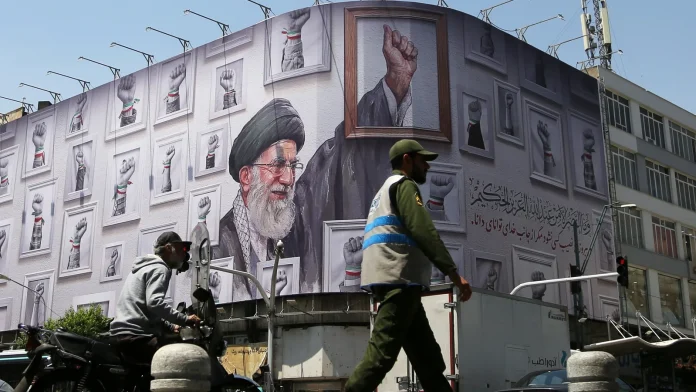
As tensions continue to escalate between the United States and Iran, the Iranian government is closely monitoring the reactions coming from the U.S. in response to recent events. President Trump’s administration has been sending mixed signals, leaving Iran uncertain about what to expect next.
Iran Reassesses U.S. Reaction Amid Trump’s Search for the ‘Right’ Answer
Airbus and Air France convicted of manslaughter in 2009 crash

Seventeen Years, One Verdict: A Quiet Courtroom, a Tremor Felt Across Oceans
The courtroom smelled of old wood and rain-slick Parisian stone as people shuffled in and took their seats beneath tall windows that have seen a century of French dramas. Outside, a small group of relatives clutched umbrellas and photographs. Inside, the judge’s voice cut through the hush: Airbus and Air France were found guilty of corporate manslaughter over the 2009 flight that plunged into the mid-Atlantic, killing all 228 people aboard.
For families who have lived inside this tragedy for nearly two decades, the ruling was not a sudden clap of lightning but a slow, long-coming light. “Justice has absolutely been done,” said Daniele Lamy, president of the AF447 victims’ association and a mother who lost her son in that black hole of ocean on 1 June 2009. Her words — firm, hoarse, spent — echoed against the high ceiling. Around her, other relatives stood in a fragile, dignified silence.
The ruling and its reach
The appeals court upheld corporate manslaughter charges and imposed the maximum fine under French law: €225,000 on each company. To the companies involved — global giants with annual revenues measured in the billions — the fines may appear token. To the families, the verdict was about something larger than euros: recognition, responsibility, and a public naming of systemic failures.
Air France and Airbus both said they would take the case to France’s Court of Cassation, the country’s highest court, promising yet more legal wrangling. “We intend to exercise all legal remedies available to us,” an Air France spokesman told reporters, speaking with the measured caution of an organization that has weathered crises before. Airbus, in a terse statement, reiterated its longstanding position that the technical causes of the crash were understood and that it would seek to contest the judgment.
What happened in the dark
On the night of 1 June 2009, Air France Flight 447 disappeared from radar during a violent equatorial storm. The Airbus A330, carrying 228 passengers and crew — including three Irish doctors returning home from vacation — plunged into the Atlantic. The black boxes were not recovered until 2011, after a two-year, painstaking search at depths that taxed remotely operated vehicles and human patience alike.
The French civil aviation safety authority (BEA) ultimately concluded that the immediate cause was pilot error: the aircraft stalled after the crew reacted to conflicting airspeed indications caused by iced-over pitot probes. But the BEA’s technical focus did not settle the families’ questions about the broader chain of decisions, safety cultures, and corporate choices that set the stage for that night.
From pilots to processes: why prosecutors looked higher
Prosecutors pursued a different narrative. They argued that lapses inside both Airbus and Air France — failures to follow up on known sensor problems, insufficient training, and weaknesses in procedural oversight — formed a chain of negligence that reached beyond two pilots in a cockpit. “Our case has always been about systems, not scapegoats,” one prosecutor said in court. “When warning signs are ignored, accidents can become tragedies.”
To secure a manslaughter conviction, prosecutors had to demonstrate not only negligence but causation — that the corporate failings materially contributed to the disaster. That was a heavier lift and explains why a lower court acquitted both companies in 2023. This appeals court, however, read the threads differently and concluded that a corporate responsibility did indeed exist.
Faces behind the statistics
Numbers can numb. Two hundred and twenty-eight souls is a figure that can sit flat on a page. But in the courtroom that number unfurled into stories: parents, honeymooners, young doctors from County Dublin, County Down, and County Tipperary — Jane Deasy, Eithne Walls, Aisling Butler — whose names were read aloud, one after the other, like beads on a rosary.
“They weren’t just passengers,” said Mirella Santos, who lost a cousin on the flight and traveled from Recife to attend the proceedings. “They were teachers, parents, people coming home from work or a trip. Each name is a family left in pieces.” Her voice caught like a thread in a draft.
Across Brazil, memorials remain. In Rio, fishermen still point to the stretch of ocean where the plane went down; in small Irish towns, candlelit vigils are an annual ritual. These cultural touchstones — quiet crosses on a coastal bluff, a photograph pinned to a café noticeboard, a yearly Requiem at a parish church — form the human geography of a tragedy that moved across borders.
Legal marathon, emotional sprint
The courtroom drama is part of a longer legal marathon that has watched evidence revisited, expert analyses wrestled between technical and moral frames, and grief replayed in depositions and documentary evidence. Families’ lawyer Alain Jakubowicz warned that further appeals — perhaps even a retrial — could drag the matter on for years. “This is not over,” he said. “Procedural routes remain open, and we must be prepared.”
Some relatives begged the companies to stop. “There is no human, moral or legal justification in continuing this procedure,” Ms Lamy implored, pleading for an end to what she called “procedural harassment.” But corporate appeals are standard; the fight for legal closure rarely matches the families’ need for emotional resolution.
A fine line between symbolism and safety
How do you weigh a €225,000 fine against the toll of 228 lives and the multinational corporations involved? Critics say fines of that scale are hardly deterrents. “It’s a token gesture in monetary terms,” said Dr. Emiliano Rossi, an aviation safety analyst. “But convictions carry reputational weight. For regulators and engineers, this case signals that legal accountability can extend into design, training, and corporate culture.”
The ruling may not reshape regulatory views overnight. The BEA’s technical findings remain influential, and the aviation industry has moved forward with incremental safety changes since 2009. Still, the court’s focus on systemic responsibility adds a new layer to how courts may approach disasters in the era of complex supply chains and automated systems.
What does this mean for the future?
As you read this, you might ask: When something goes wrong in a complex system, who answers for it? Is it the engineer who designed a sensor, the airline that sets training standards, the regulator who certifies a plane, or the pilot in the cockpit making a split-second decision? The AF447 saga resists easy answers.
It does, however, push a broader conversation into the open — about corporate accountability, about how societies value human lives relative to corporate balance sheets, and about the moral duties of companies whose technologies and procedures touch millions of lives. We are in an era where automated systems and human operators must coexist. When they fail together, the law is being asked to follow.
What to watch next
- Whether Airbus and Air France will succeed at the Court of Cassation — and how long appeals will last.
- How regulators and the aviation industry respond publicly to a legal finding that emphasizes systemic corporate failings.
- Whether this case inspires policy changes in corporate liability law across Europe and beyond.
Seventeen years after that night, the ocean keeps its secrets. But in courtrooms, memorials, and quiet living rooms, families keep pressing for a truth larger than technical reports — a moral truth. The verdict is one step along a long road. For those who lost someone on Flight 447, it represents a fragile, hard-won recognition that their loved ones’ deaths were not simply a tragedy of fate but the outcome of choices made on land and in the boardrooms of industry.
What do you think? When accidents ripple through global systems, how should justice account for those ripples? This ruling won’t answer everything, but it demands we keep asking.
International outrage grows over treatment of Gaza flotilla activists
At sea with a flotilla: a video, a taunt, and a global outcry
The wind off the eastern Mediterranean smelled of diesel and damp cardboard, the kind of salt air that presses against your teeth and leaves you feeling raw-eyed. On the deck of a small vessel leaving southern Turkey this week, volunteers stacked boxes of powdered milk, tins of legumes and blankets—tiny, tangible promises to people in Gaza who have known scarcity for far too long.
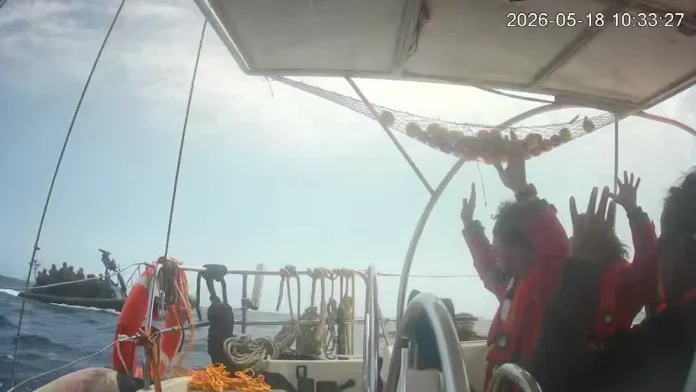
Then the navy arrived. The interception happened in international waters, as has happened before. Men and women who had sailed together, some for the first time and others hardened by prior flotillas, found themselves forced to the deck, hands bound, knees scuffed and dignity frayed. A handheld camera captured it all: a government minister walking past rows of detainees, a woman chanting “Free, free Palestine” shoved downward, the flag of a nation fluttering in the background like a performed triumph.
When that clip was posted online by the minister in question—Itamar Ben-Gvir, a far-right member of Israel’s government—the footage became the spark that set off a diplomatic firestorm. Within hours, capitals from Dublin to Rome summoned envoys, human rights groups demanded investigations, and ordinary people lined up at social feeds to denounce what they saw as humiliation on parade.
What the video showed—and why it matters
In the footage, detainees are seen kneeling in rows, their hands zip-tied behind their backs. Guards patrol from the gunwales of a military ship. A woman’s voice rises above the hum of engines: “Free, free Palestine.” She is immediately brought to the deck and forced down. The minister strolls by, an Israeli flag slung over his shoulder, and quips to the camera about their diminished “heroism.”
“This is not a staging for security; it’s a spectacle,” said Miriam Haddad, a human-rights lawyer who has documented arrests at sea. “The line between law enforcement and political theater blurs when an elected official films himself gloating.”
The United Nations’ human-rights office said the arrests appeared unlawful and called for a full, impartial inquiry—pointing to a pattern of concern. Amnesty groups and veteran flotilla organizers recalled 2010’s deadly raid on the Mavi Marmara, when clashes left nine Turkish activists dead and seeded years of diplomatic bitterness. For many international observers, the recent clip stirred echoes of that fraught chapter.
Voices from ashore and at sea
Alessandro Mantovani, an Italian journalist who was repatriated after the interception, told reporters when he landed in Rome that he had been beaten while in detention. “They kicked me in the legs, punched me in the face,” he said. “They’d hit you and then say, ‘Welcome to Israel.’ It was a place of terror.” Another Italian activist, a politician named Dario Carotenuto, said he had been punched and kicked while detained.
“We came with boxes of food and small medical kits,” said Leyla Öz, a Turkish nurse who helped load the boats in Iskenderun. “People think we are naive. We are not. We are trying to do the simplest human thing—deliver aid.”
From European halls of power came sharp rebukes. Foreign ministries in several capitals described the footage as appalling, unacceptable, or in violation of basic human dignity. An EU official said bluntly: “This is a line that should never be crossed.” In some countries, ambassadors were summoned and strong-worded notes were handed over. Poland’s foreign ministry even suggested travel curbs for the minister featured in the video.
The broader context: blockade, aid shortages, and the politics of spectacle
The flotilla’s stated aim was to break—or at least publicly challenge—Israel’s blockade of Gaza, in place since 2007. Humanitarian organizations say that despite agreements and intermittent ceasefires, Gaza remains precarious: electricity, clean water and medical supplies are in short supply for large swaths of the 2.4 million residents. A US-brokered ceasefire last October promised increased assistance, but logistics, security concerns and bureaucratic hurdles have meant deliveries are often delayed or limited.
“There’s a global trend where domestic politics is staged for global consumption,” said Dr. Rachel Levine, a political scientist who studies performative governance. “When leaders or ministers turn enforcement into content, they are speaking to a particular audience: their base. But they also risk inflaming international norms and diplomatic ties.”
Indeed, Israel’s prime minister issued a rebuke, saying the minister’s conduct “is not in line with Israel’s values and norms.” Yet the minister in question draws support from a constituency that prizes uncompromising security and nationalist rhetoric. With snap elections on the horizon—a political clock ticking closer to the country’s polls—some analysts see the video as both provocation and political theater.
Numbers, names and the human tally
Organizers estimated roughly 430 activists had been detained and later released from a prison facility in southern Israel. Two Italians allege they were physically assaulted. Turkey moved quickly to arrange flights to repatriate its citizens and third-country participants, with officials saying they would “continue to uphold the rights of our citizens and fulfill our humanitarian responsibility.”
Past flotillas have had mixed results: previous missions were intercepted, participants deported, and once, as in 2010, deaths and deep diplomatic ruptures ensued. The legal questions—who has the right to interdict ships in international waters, what constitutes lawful detention, and where humanitarian impulses meet state security—are thorny and unresolved.
Local color: chants, coffee, and the bitter taste of bureaucracy
On board these vessels you will find cooks who have never cooked in Gaza, musicians who learned new protest songs on the voyage, and retired schoolteachers who carry thermoses of Turkish coffee. They share songs and stories; they swap recipes for lentil soup and talk about children’s birthdays postponed for lack of fuel. These small human rituals are a kind of resistance—insistent proof that even amid politics, ordinary lives beat on.
“I made a playlist of lullabies kids in Gaza might like,” said Hannah, a volunteer from Berlin who requested her last name be withheld. “This is not just about headline-grabbing. It’s about saying, ‘We see you.’”
So what now? Questions to sit with
Will there be an independent investigation into the alleged mistreatment? Will states willing to impose sanctions follow through, or will political expediency blunt diplomatic pressure? And perhaps more fundamentally: in an era where a single posted clip can redraw international fault lines overnight, how do we balance security concerns with the dignity of civilians and activists?
These are not hypothetical queries. They are urgent ethical choices for policymakers and citizens alike. When a minister films himself parading detainees, it is an image that travels faster than any press release. It demands a response—not just a diplomatic note or a viral hashtag, but a reckoning about the limits of power and the responsibilities of states toward human beings, even—and especially—those who oppose them.
So I’ll ask you directly: what should be the line between enforcing law and performing force for political gain? And when you see a video like this, what do you feel compelled to do—share, protest, demand accountability, or turn away because it’s too much? The answer matters. It shapes who is believed, who is protected, and who is allowed to remain human in the face of state power.
A record number of climbers summit Everest from Nepal
A Day When Everest Felt Smaller: 274 Climbers, One Mountain, Many Stories
The morning air at Everest Base Camp tasted of yak butter tea and diesel, of nerves and nylon. Prayer flags snapped in the wind, their faded colours a map of countless pilgrimages and ambitions. Above them, the white slab of the world’s tallest peak loomed — 8,849 metres of ice, rock and history — and on one extraordinary day this spring, 274 people planted their boots on its shoulder.
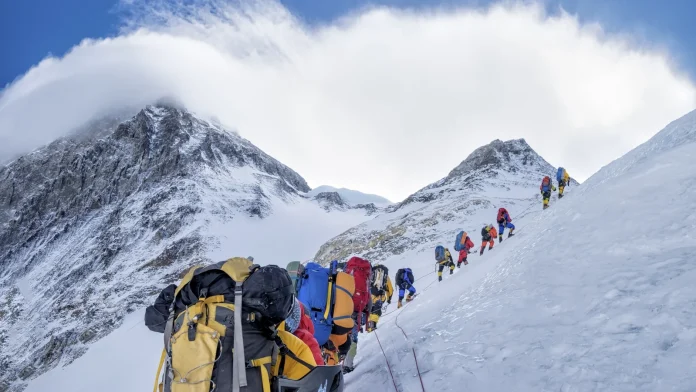
It was a figure that read like a headline and felt like a crowd: 274 summits from the Nepalese side in a single day, more than ever recorded before from that approach. The Nepali climbing community, expedition leaders and coffee-shop pundits are still unpacking what it means when so many people try to take the same thin ribbon of slope and sky at once.
The Numbers Behind the Rush
This season Nepal issued 494 permits to attempt Everest, each permit carrying a price tag roughly around €13,000. That math — half a billion euros? Not quite. Forty-nine-four permits at €13,000 brings in about €6.4 million for the Nepali treasury, a significant slice of local income via tourism and services that sustain villages across the Khumbu.
“We have seen busy seasons before, but this is the highest number in a single day on the Nepal side,” said Rishi Bhandari, secretary general of the Expedition Operators Association of Nepal. “It is possible the total could still rise. Some teams only tell us when they return with photos or certificates.”
The previous high-water mark was 223 climbers in one day back in May 2019. This year’s total was also swollen by the absence of teams from the Tibetan (Chinese) side — Beijing did not issue permits — which historically contributes about a hundred summits in a regular season. That absence funnelled almost all attempts through the South Col route from Nepal.
On the Ridge: Tight Lines and Thin Air
At 8,000 metres and above is the so-called “death zone,” where bodily systems begin to fail and the air simply does not have what a human needs to function. That’s where logistics become life and a single bottle of supplemental oxygen can be the difference between joy and tragedy.
“The bottlenecks are real,” said Sangay Lama, a veteran Sherpa team leader who has guided dozens of expeditions. “When thirty or forty people try to pass through the same fixed rope in a few hours, stress rises. You hear people breathing harder, ropes creak, and you pray nothing goes wrong.”
For one small Irish team — Pádraig O’Hora, a former Mayo footballer, alongside Éanna McGowan of Dublin and Adam Sweeney from Waterford — the summit came after a 47-day campaign of acclimatisation, patience and cold nights in teahouses and tents. “When you stand on the top, it’s quiet in a way that stills you,” O’Hora told me over a grainy satellite call. “But getting there, you are sharing the final steps with dozens of strangers. It feels almost communal — strangers helping each other breathe.”
What a Summit Day Looks Like
Imagine dozens of headlamps moving like slow constellations across a dark face. Each team is tethered to ropes, to oxygen cylinders, to Sherpas who set the lines and check anchors. The climb is equal parts mountaineering and choreography. One misstep, one tangled line, and the flow breaks.
- Summit elevation: about 8,849 metres.
- Permits issued by Nepal this year: 494.
- Cost per permit: roughly €13,000.
- Recorded summits from Nepali side on the busiest day: 274.
Economics, Ethics and the Human Cost
Nepal’s economy benefits heavily from high-altitude tourism: permits, guides, porters, accommodation, helicopter rescues and oxygen bottles. Mountain seasons are lifelines for many families in the Khumbu Valley. Yet with profit comes scrutiny. Critics argue that the commercialization of Everest encourages inexperienced climbers to pay their way up, relying on guides and support rather than skills. The result can be long queues in dangerous terrain and increased risk for everyone on the slope.
“We have introduced tighter controls and revised fees because we cannot compromise safety,” said Himal Gautam from Nepal’s Department of Tourism. “We still need to verify claims. Climbers return with photos and evidence, and only then do we issue certificates and final numbers.”
For local communities, the mountain is not just a cash machine; it is sacred ground — Sagarmatha to Nepalis, Chomolungma to Tibetans. Tea-house owners in Lukla will tell you the mountain shows no favourites. “We have cycles of boom and worry,” said Mira Tamang, who runs a small lodge on the trail. “Last year was quiet. This year people came in a rush. The money helps to fix a roof, pay a school fee. But we worry when crowds grow too much on the glacier.”
Voices from the Trail
Not all stories are about revenue and queues. There are quiet, human portraits threaded through the statistics. Adam Sweeney sent a message from back in Kathmandu: “We carried our own fears up there. Seeing the sun come up just a few metres beyond the Hillary Step — it’s something none of us can fully explain. You feel very small, and very alive.”
A Sherpa who preferred to be called Lhakpa spoke of fatigue and resolve. “We climb with clients, we fix ropes, we do rescues sometimes,” she said. “People think we are used to the mountain. We are, but it still asks for respect. Congestion makes our job harder and more dangerous.”
What This Means Beyond the Summit
Everest’s packed slopes are a mirror for larger debates: how do we balance livelihoods with safety; tradition with modern tourism; reverence with commerce? Around the world, iconic places — from coral reefs to urban parks — face the same pressure when access becomes a commodity.
Climate change complicates everything. Retreating glaciers alter routes and expose new hazards. Warmer winters can make bergschrunds unstable. The mountain that drew generations of explorers now requires policy, patience and perhaps a reimagining of who should go and under what conditions.
So what do you think? Should mountains be managed like national parks with strict quotas? Or does the chance to stand above the clouds belong to any person with the means and will to try? There are no easy answers, only trade-offs that ripple across economies, ecosystems and hearts.
After the Celebration
Photos will circulate — grinning faces, triumphant flags, muddy boots — and certificates will be issued. Teams will count profits and plan routes for next season. For the Sherpas and the villagers down the valley, the work continues: packing gear, mending ropes, serving another cup of tea.
For a day, at least, Everest carried more people than ever before on its Nepali flank. The record is more than a number. It is a story about risk and reward, about community and crowding, about the fragile thread that keeps mountaineering magical and dangerous at once. Standing at Base Camp, listening to old climbers swap tales and new climbers stir with excitement, you sense the question that will keep coming back: how do we honour the mountain while letting people reach for its summit?
Elon Musk Targets Wall Street Debut Record with SpaceX IPO
When a Rocket Company Files to Go Public, the Whole Sky Feels Smaller
Something seismic landed on Wall Street this week, and it wasn’t a meteorite — it was paperwork. SpaceX, the rocket-and-satellite company that has rewritten the rulebook for private spaceflight, quietly filed an S-1 prospectus aiming to raise up to $75 billion in what could become the largest initial public offering in history.
Read that again. Seventy-five billion dollars. A single float that, if it hits its targets, could eclipse every blockbuster listing we’ve ever seen. The filing lifts a rare veil on 24 years of near-mythic secrecy, giving investors and curious citizens their first clear look at the company’s finances, ambitions, and risks.
Numbers You Can’t Pretend Not to See
The headline figures are striking and contradictory — the kind that make analysts sharpen their pencils and neighbors on launch day glance skyward. SpaceX reported roughly $18.7 billion in revenue for 2025, yet an operating loss of $2.6 billion as it plowed capital into next-generation rockets and sprawling AI infrastructure.
Starlink, SpaceX’s global broadband constellation, emerged as the firm’s engine: $11.4 billion in revenue last year, nearly a 50 percent jump from the previous year. It’s the cash cow keeping engineers awake at night and investors salivating.
But the AI side tells another story. The combined businesses that include xAI and the social-platform arm generated $3.2 billion in 2025, while posting an operating loss of $6.4 billion. Capital expenditures in that segment alone hit $12.7 billion in 2025 and a dizzying $7.7 billion in the first quarter of 2026 — money poured into racks, cooling systems, and the holy grail of training data centers.
“We’re building capacity that rivals entire national compute footprints,” said a senior infrastructure engineer who asked not to be named. “You don’t just buy this stuff off the shelf. You build it like a city.”
Money Talks — and Contracts Whisper
The filing also revealed a startling commercial arrangement: SpaceX has agreed to lease spare capacity in two of its COLOSSUS data centers to Anthropic, another AI company, at a rate said to be $1.25 billion per month through May 2029. Corporate America writing checks like the sums are round numbers. Investors will be watching whether these partnerships are short-term lifelines or the new normal.
Control, Governance, and the Man in the Middle
One thing the paperwork makes plain is that this won’t be a typical public company. The IPO unfolds under a dual-class share structure that concentrates voting control. Elon Musk — already the world’s richest person and the public face of the enterprise — would retain roughly 85 percent of voting power while owning around 42 percent of the equity. In human terms: he keeps the keys to the car even if others own some of the seats.
“That sort of control is a double-edged sword,” said Helena Park, a corporate governance scholar at a university business school. “It allows a visionary to steer long-term bets without short-term market pressure. It also raises questions about checks, balances, and accountability.”
SpaceX itself acknowledged the risk in the filing, noting that Musk “will have the power to control the outcome of matters requiring shareholder approval, including election of all our directors.” That frankness will hardly pacify those who fret about executive power in the age of hyper-scale tech.
From Earth to Orbit: A New Kind of Infrastructure
Beyond the listing is a bigger, bolder thesis: compute in orbit. SpaceX’s prospectus sketches a future where solar collectors and AI servers float above clouds and geopolitics, offering what the company calls the only truly scalable energy solution for skyrocketing AI power demands.
The plan is audacious. The company says it could begin launching AI-compute satellites as early as 2028, with a long-term target of delivering 100 gigawatts of compute capacity into orbit each year. To get there would require thousands of launches annually and roughly one million metric tons of payload lofted into space — numbers that make “ambitious” sound quaint.
“We’re talking about building a whole new class of infrastructure,” said an industry analyst. “If anyone can imagine doing it, they have to be able to launch at scale. That’s SpaceX’s core competency.”
Regulators Are Watching
Not everyone is ready to sign off. The Federal Aviation Administration has made clear that reliability needs to be demonstrably higher before it would greenlight such a ramp-up. FAA officials noted that in 2025 SpaceX completed about 170 launches and deployed roughly 2,500 satellites — huge numbers by any measure, but still a step away from the tens of thousands of flights per year being discussed internally.
“We need to see a lot more reliability,” said one FAA source who spoke after a recent forum. “Scaling to the numbers they’re talking about increases complexity and risk exponentially.”
On the Ground: People, Places, and Launch-Day Rituals
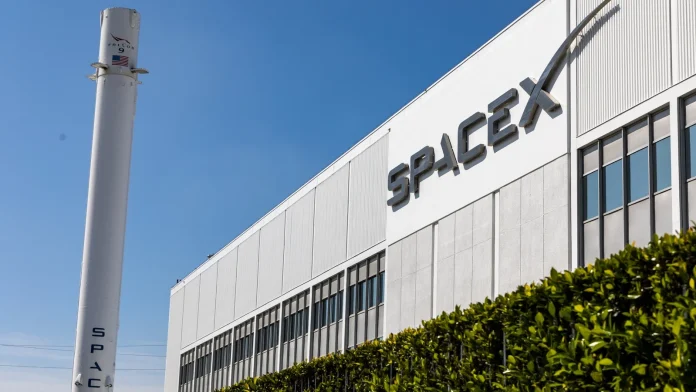
This isn’t an abstract corporate exercise. In Hawthorne, California, when a Falcon 9 lights up the sky, traffic slows, shopkeepers step outside, and conversation turns to trajectory and telemetry.
“You can smell the rocket fuel sometimes, like summer bonfires,” said Lina Ortega, who runs a tiny café near SpaceX headquarters. “People come by with phones, with kids, with binoculars. It’s part of our life now.”
Further south at Boca Chica, Texas — where techno-tourism and small-town life brush up against launch pads — Maria Hernandez, who runs a taco stand, says launches have been a roller-coaster of income and disruption. “We get busier on launch days, sure,” she laughed. “But there’s also road closures and worries. People here love the spectacle, but they also want safety.”
Why This Matters Beyond the Ticker Symbol
What should the global reader take from this? First, the SpaceX filing isn’t just a financing event; it’s a manifesto for the next decade of industry — one that stitches together broadband, space logistics, and AI compute into an interdependent ecosystem.
Second, it raises urgent policy questions. Who regulates data centers in orbit? How do nations weigh national security, commercial opportunity, and the commons of low Earth orbit? Can private firms be trusted to balance profit with planetary stewardship?
Third, the IPO spotlights the broader economic frontier: the insatiable appetite for compute power, driven by AI, is reshaping capital flows and geopolitical strategy alike. SpaceX’s own market estimate — a total addressable market of $28.5 trillion across its businesses (excluding China and Russia) — underlines the scale of ambition.
Parting Thoughts: A Sky of Promise and Uncertainty
There will be drama, courtroom headlines, and more filings to come. The S-1 arrives on the heels of a legal loss for Musk in a dispute with OpenAI and as competitors like Anthropic eye public markets of their own. Market watchers are already speculating about a Nasdaq listing under the ticker SPCX and whispering about potential mergers and alliances that could reshape entire industries.
But beyond the spreadsheets and ticker symbols, the filing asks a deeper question: how do we, as a global society, want our shared skies to be used? Do we set guardrails before the highway is paved, or do we let innovators build and figure out the rules later?
Whatever happens next, launches will continue to illuminate the horizon — literal and figurative — and the conversation about who gets to own and govern our future off-planet is only getting started. Are you ready to watch it unfold?
Ukrainian drone strike kills two people on Russian soil
Smoke over the Volga: A Drone Strike Brings War to Syzran
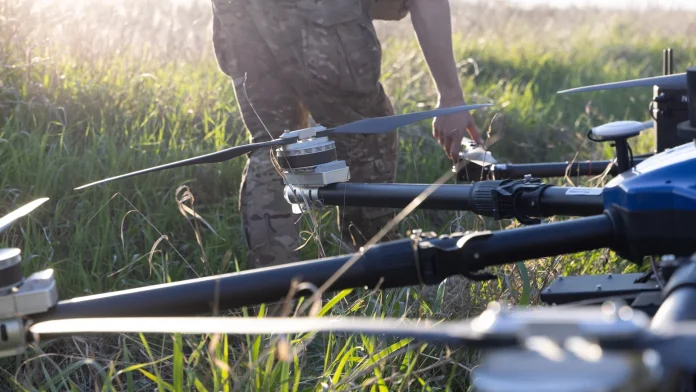
There is a strange intimacy to the way conflict arrives in towns like Syzran — not with a thunderous invasion, but with the mechanical whir of a drone, an explosion that rattles teacups, and the slow, unbearable counting of the dead. On a cool morning in Russia’s Samara region, that quiet horror unfolded: two people killed, several wounded, and an oil refinery — a low, humming presence on the city’s edge — startled into the harsh light of a battlefield reality.
“The Ukrainian armed forces are attacking the city of Syzran with drones,” Governor Vyacheslav Fedorishchev wrote on Telegram, the official tally concise, clinical: two dead. Yet a tally is only numbers. Behind them are lives interrupted — a fishmonger who lost a son, a bus driver with shrapnel wounds, a neighborhood that will now watch the western skies with a new, permanent suspicion.
On the Ground
Walk through Syzran and you feel the town’s history underfoot: riverside promenades overlooking the Volga, Soviet-era apartment blocks, the occasional onion dome catching morning light. The oil refinery, a massive hulk of pipes and chimneys, is both lifeline and target. “We’ve always worked with that refinery in the background,” said Marina, a local nurse who asked that I use only her first name. “Now it feels like a target and a threat. You never expect to duck cover in your backyard.”
Outside a corner shop, Konstantin, a retired teacher, tapped his cigarette and watched a TV mounted on the wall play distorted footage of the strike. “This war was supposed to be over there,” he said. “I thought it would not reach us. But we can see that for both sides, geography has loosened like a map that no longer makes sense.”
From Tactical Drone Strikes to Nuclear Drills: The Escalation Thread
Syzran’s strike is not an isolated incident but a filament in a much larger weave of reciprocal attacks. Ukrainian strikes inside Russia have increased in frequency amid what Kyiv calls necessary retaliation for near-daily Russian bombardments of Ukrainian cities since the invasion that began on 24 February 2022. Kyiv says its operations target military infrastructure and energy installations — aiming to erode the finances Moscow draws from oil and gas to sustain its offensive.
Yet while drones can puncture a refinery’s veneer, other moves in this conflict recalibrate the global stakes. In recent days, Moscow announced that nuclear munitions were delivered to field storage facilities in Belarus as part of a three-day exercise. Footage from the Russian Defence Ministry showed trucks threading through forest tracks, cargoes unloaded under the cover of lightning-like searchlights. The specifics were shadowed in official language — but the message was stark.
The exercises involve the Iskander-M missile system, a mobile platform NATO calls “SS-26 Stone.” Its guided missiles boast a range of up to 500km and can carry conventional or nuclear warheads. For many analysts, the choreography — moving munitions to storage, loading onto mobile launchers, practicing clandestine redeployments — is a deliberate show of capability. “This is strategic signaling,” said Dr. Emilija Novak, a security analyst in Vilnius. “It’s meant to reassure domestic audiences while warning external ones: our reach persists.”
Kaliningrad, Lithuania and the Geography of Fear
Geography matters. The Russian exclave of Kaliningrad, wedged between Poland and Lithuania on the Baltic coast and home to roughly one million people, has been transformed into a militarized outpost. When Lithuania’s foreign minister suggested NATO should demonstrate the ability to penetrate Kaliningrad’s defenses, the Kremlin responded with fury, calling the remarks “verging on insanity.” Few things harden resolve like threats to what a country perceives as its defensive perimeter.
“Everyone here knows someone in the military or someone whose job relates to the region’s defenses,” said Liudmila, who runs a small café in a Samara suburb. “You feel the world squeezing — like pieces on a chessboard that keep moving and no one knows who will be taken next.”
Diplomacy on Hold, Risks on the Rise
On the diplomatic front, the path to de-escalation looks rocky. Washington — long the principal broker of assistance and pressure — has been pulled in multiple directions, including a separate crisis involving Iran. Ukrainian President Volodymyr Zelensky has said there were promising contacts with the United States and urged a return to “meaningful trilateral communication” that would include European partners and pressure Moscow to engage openly. “For our part, we are ready for such steps,” he said, urging transparency and accountability.
Yet political attention is a finite resource. With the United States and its allies juggling multiple global hot spots, the dedicated diplomatic energy required to resolve or de-escalate the conflict in Ukraine is harder to marshal. Without a clear channel for negotiation, military signaling — from drone raids to nuclear drills — fills the vacuum.
What This Means for Everyday People
For residents of Syzran and towns like it, the arc of the conflict has shifted from distant headline to lived experience. Local economies, already sensitive to global oil prices and supply chains, now face new uncertainties. Schools make contingency plans; hospitals stock emergency supplies. The collective mood hardens in ways that statistics cannot capture.
Consider these realities:
- Since the invasion in 2022, millions of Ukrainians have been displaced, reshaping families and communities across Europe.
- Energy infrastructure has become a strategic lever: attacks on refineries or pipelines reverberate far beyond local borders, affecting markets and heating bills across the continent.
- Nuclear rhetoric — whether signaling exercises in Belarus or strategic posturing over Kaliningrad — raises the temperature of international discourse and forces policymakers to weigh risks in new ways.
Questions Worth Asking
As you read this, ask yourself: what does endurance look like in a modern, protracted conflict? Is the normalization of strikes on infrastructure a quiet acceptance of a new wartime logic? And how should the international community balance deterrence with diplomacy so that the next provocation does not become the last?
These are not only geopolitical questions; they are the kinds that ripple through a bakery in Syzran, a hospital corridor in Kyiv, and a NATO briefing room in Brussels.
Looking Ahead
The scene in Syzran — smoke lifting off the river, men and women whispering about evacuation routes — might feel isolated. But it is emblematic of a broader truth: modern conflict blurs the line between front and home. As states deploy new tactics, from clouded drone strikes to nuclear drills shared across borders, the human cost grows in ways that cannot be fully compensated by strategy papers or press releases.
“We want peace,” said Marina, the nurse, returning to her cup of tea as if it could anchor her to a calmer world. “Not slogans. Not calculations. Just the chance to wake up without sirens.”
Perhaps that simple wish — ordinary, urgent, universal — is the clearest compass we have. If policymakers, neighbors, and readers can hold it in mind, maybe the next chapter of this war will be written with fewer explosions and more negotiation. The alternative is a future where normality is defined by readiness for the next strike, and where towns along the Volga learn to live under a sky that never feels entirely safe again.
Midowga Yurub oo xayiraadii ka qaaday Baasaboorka dalka Itoobiya
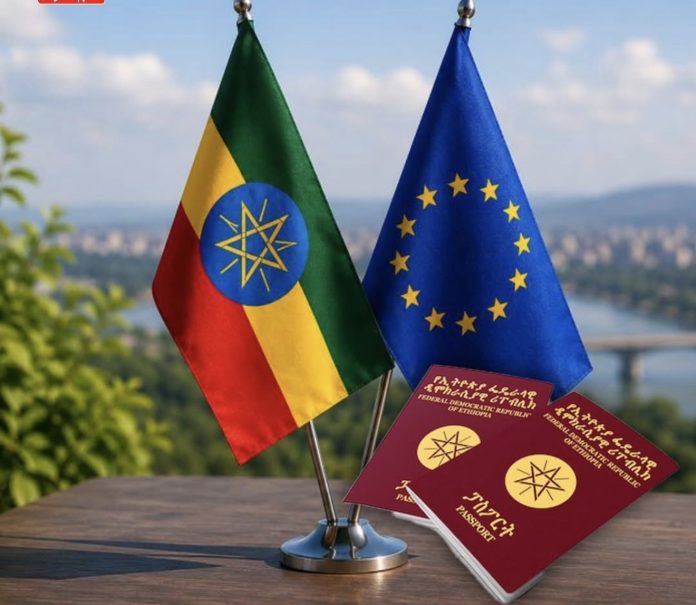
May 21(Jowhar) Midowga Yurub ayaa xayiraaddii ka qaaday Passport-ka dalka Ethiopia taas oo lagu soo rogay laba sano ka hor ka dib markiii Midowga Yurub iyo Ethiopia isku fahmi waayeen soo celinta dadka tahriibeyaasha ah ee dalkaas u dhashay.
Approximately 350 Meta jobs in Ireland reportedly under threat

Dublin at Dawn: The Quiet After the Email
It was the sort of morning you only notice when something snaps the rhythm of the ordinary. Commuters on the Luas, baristas wiping steam from an espresso machine, a mother locking her bicycle outside a creche — then the notification tones rolled across Dublin’s tech hubs.
For around 350 people who work for Meta in Ireland, those tones were the opening of a day none of them had planned for. The company, which employs roughly 1,800 people in the country, began notifying staff that they could be affected by a global reduction of some 8,000 roles — about 10% of Meta’s workforce worldwide. The ripple from that single corporate decision was immediate, intimate, and very Irish.
Numbers on a Page, Lives in Motion
Consider the facts for a moment: 8,000 job cuts globally. Around 350 potential redundancies based in Ireland. A historic presence in Dublin that has already weathered cuts in recent years — Meta trimmed some 840 roles in Ireland across rounds in late 2022 and mid‑2023. These are not abstract figures. They are software engineers, data scientists, product managers, facilities staff, cafeteria teams, and the people who make the office hum.
Meta has filed a collective redundancy notification with Ireland’s Department of Enterprise, which triggers formal consultation procedures under Irish law. Company spokespeople have said the timelines and specific processes will be governed by local regulations and that they will comply with legal obligations. Beyond that, the company has been tight-lipped about exact numbers and who will go.
A company reshaping itself around AI
The layoffs are not happening in a vacuum. Executives at Meta have been clear about their strategy: invest heavily in artificial intelligence and reorganise teams around new workflows. Internal memos — some shared with staff this week — say the company plans to move roughly 7,000 workers into AI-related initiatives while eliminating a swathe of managerial roles. CEO Mark Zuckerberg has signalled that 2026 is poised to be a pivotal year for AI in the company’s evolution, noting that certain projects that once required “big teams” can now be delivered by “a single very talented person.”
That in itself is a provocation: efficiency through AI, but also large-scale displacement. It raises the question our parents didn’t have to ask: how do we prepare people whose skills were built for yesterday’s systems to thrive in tomorrow’s?
Voices from the ground
“I felt my hands go cold when I opened the message,” said an engineer at Meta’s Dublin office who asked not to be named. “You try to process it while someone in the next desk keeps typing as if nothing’s happened. It’s surreal. You’ve spent years building something, then in a paragraph it can be at risk.”
At a small café near the Grand Canal, the owner — who has served Meta staff since the company first opened local offices — described the changes in quieter terms. “We notice their routines. A cut like this isn’t just a desk emptying, it’s less brunch, fewer coffees, fewer people filling the streets at lunchtime,” she said. “It will ripple through the area.”
Government ministers were swift to respond. Minister for Enterprise Peter Burke told employees the State will support anyone impacted. “My message is very clear to employees in Meta: the Government will have your back,” he said, promising access to retraining and active engagement from IDA Ireland to protect the country’s long-term engineering and AI capacity.
Opposition voices were more sceptical. Labour’s enterprise spokesperson George Lawlor called for a comprehensive state strategy to shield workers and the communities that rely on tech sector incomes. “This is a deeply worrying and stressful time,” he said. “We need a plan to protect jobs and worker incomes if an employer’s business model changes.”
Unions call for a seat at the table
Trade unions, too, have intensified their warnings. The Financial Services Union argued that the pace of AI deployment is outrunning the dialog around workplace safeguards. “Full and transparent stakeholder involvement is required,” an FSU spokesperson said. “Without collaboration, we will continue to see announcements of job losses like today.”
Seán McDonagh, General Secretary of the Communications Workers’ Union, told members the time for monitoring is over and the time for action has arrived. “We’ve seen a spike in new union membership overnight,” he said. “People are looking for practical support and collective bargaining power as their livelihoods are questioned.”
Beyond the inbox: why this matters
When a multinational restructures, the consequences are rarely confined to its payroll. In Ireland, where tech jobs have underpinned a buoyant labour market — the country reports around 2.83 million people employed — the loss of high-skilled positions matters in many ways. House prices, rental markets, local services, and the hospitality sector can all feel the aftershock. Moreover, each role in a data centre or a software team often supports informal networks of contractors, cafés, cleaners, and coaches.
There’s also the broader, more existential debate about AI’s place in the economy. Are we witnessing a leap toward more creative, high-value work for those who can pivot? Or a wave of disruption that will widen inequality for those left behind? The answer will depend far more on public policy and corporate responsibility than on technology itself.
What’s next — for the workers, for policy?
For workers, the immediate horizon is practical: consultations, potential redundancy packages, access to government retraining, and a hunt for new roles in a market that — according to the Minister — still has demand for many of the same skills. For policymakers, the task is thornier: designing safety nets, reshaping education and retraining programmes, and negotiating how to regulate AI so that innovation does not erode livelihoods.
And for companies, the lesson is reputational as well as operational. “Cutting people while investing billions in new tech carries a moral obligation,” said Dr. Aisling Keenan, a labour economist based at Trinity College Dublin. “Investments in people must match investments in machines — otherwise you hollow out trust.”
Questions to sit with
As you read this, ask yourself: what do we value more — relentless efficiency or the social fabric that supports talented people and their communities? How should democracies balance the speed of innovation against the slower, human pace of reskilling? And finally: if AI can do more with fewer people, who decides how the gains are shared?
These aren’t easy questions. They are the kind that will define how the next decade of work looks — in Dublin, in Silicon Valley, and across cities that have built futures around digital firms. Today’s emails were a small, sharp shock. The bigger test is what comes next, and whether governments, unions, and companies can shape that arrival with compassion, foresight, and a sense of shared responsibility.
Whether you work in tech, run a café, or follow these shifts from afar, these changes matter. They are about the kind of society we choose to build when machines can do more — and humans must do something different.
Calls grow for debate on suspending EU-Israel deal
When a Flotilla Becomes a Test for Europe: Ireland, the EU and a Moment of Conscience
There are images that refuse to be forgotten. In one grainy clip, a man in a leather jacket strides between rows of people kneeling on a sun-baked deck, their hands behind their backs. He waves a flag. He laughs. He calls for them to be kept behind bars for a long time. The video has ricocheted around social feeds, newsrooms and the halls of power in Brussels — and now it has landed on the desk of Europe’s leaders as an urgent moral and diplomatic puzzle.
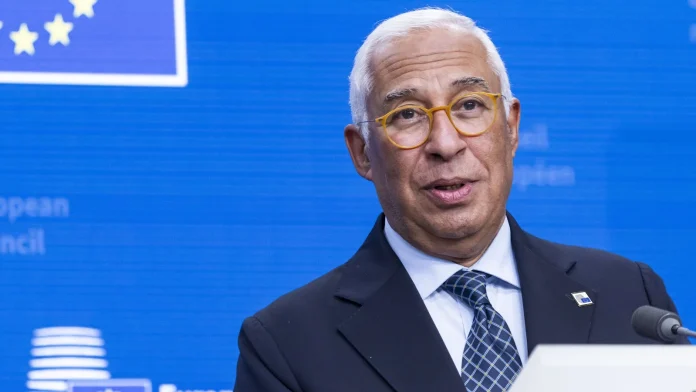
On behalf of Ireland, Prime Minister Micheál Martin has formally asked António Costa, President of the European Council, to place the treatment of EU citizens aboard the Global Sumud Flotilla on the agenda at the upcoming EU summit on 18–19 June.
“We can no longer treat this as business as usual,” Martin wrote, according to a draft seen by reporters. He argued the images and the reported detention of EU nationals in international waters amount to “illegal detention” and are part of a worrying pattern of behaviour that, in his words, shows “a growing disregard by Israel for international norms.”
What happened at sea — and why Europe is watching
The Global Sumud Flotilla, a civilian convoy of boats carrying activists from across Europe and beyond, set out with an explicitly peaceful mission: to draw attention to the humanitarian crisis in Gaza and to assert the right to movement and protest. Organisers say at least 12 Irish citizens were detained; hundreds more from other EU countries and beyond were also taken into custody.
Itamar Ben-Gvir, Israel’s national security minister, appears in footage that circulated widely — a moment that many diplomats called chilling. Standing among detainees, visibly agitated, he can be heard taunting the captives and brandishing an Israeli flag. “Let them face justice here,” an off-camera voice reads in one version; in another, Ben-Gvir is quoted as saying they should “remain in prison for a long time.”
A spokesperson in Dublin described the footage as “shocking and unacceptable,” and called for answers. “These are citizens of the European Union,” said one official. “When EU citizens are detained in international waters, it raises questions of law, of jurisdiction, and of basic decency.”
Why the EU-Israel Association Agreement now hangs in the balance
Martin’s letter didn’t stop at condemnation. He urged European leaders to consider suspending all or parts of the EU-Israel Association Agreement — a cornerstone framework that governs trade, political cooperation, and privileged access between Israel and the European Union. Suspending such an agreement would be a rare and serious diplomatic step, one that would escalate tensions between Brussels and Jerusalem.
Why would leaders even contemplate such a move? Because, Martin and others argue, the flotilla incident sits atop a pile of grievances: seven months after a declared ceasefire, Gaza’s humanitarian situation remains dire; settlement expansion in the West Bank continues; settlers’ attacks on Palestinian communities have increased; Israeli plans to introduce the death penalty for Palestinians tried in military courts have been floated; and UNIFIL peacekeepers in southern Lebanon have themselves been targeted.
“We are watching a concatenation of events that undermine the very basis of a peace process,” said Dr. Samir Haddad, an international human rights lawyer based in Amman. “When trade is decoupled from respect for human rights and international law, it weakens the moral authority of institutions that purport to uphold them.”
Voices from the boat, the street and the capital
“I was on the deck when they boxed us in,” said Aoife Byrne, an Irish teacher who volunteers with pro-peace groups. “We sang, we prayed, and then they came. We were handcuffed, put on the floor. I kept thinking of my parents back home. Do they know I’m alive?”
Across Dublin, the flotilla’s detentions stirred a quiet fury. “I want our leaders to act — not just issue statements,” said Eamon Lynch, a community organiser in Cork. “If we bellied up to trade deals without strings, we must be ready to pull them if our values are being trampled.”
From Jerusalem, reactions were predictably different. “Security forces acted to prevent illegal attempts to breach a blockade,” said Yossi Harari, a spokesman for an Israeli ministry. “Those detained are subject to our legal processes.” The Israeli government has framed the operation as a necessary security measure; critics say the response was heavy-handed and provocative.
“The optics matter,” noted Eva Müller, a senior EU diplomat who asked to speak off the record. “European publics are watching. Governments must balance geopolitical ties, economic interests, and the expectations of their voters who demand human rights be taken seriously.”
What the EU has already done — and what it could do next
The flotilla episode is not an isolated diplomatic skirmish. Last week, EU foreign ministers unanimously agreed to sanction a number of violent settlers in the West Bank, and the European Commission has proposed measures to restrict trade in goods originating from settlements. Those are concrete steps, but they fall short for some campaigners.
- At least 12 Irish citizens detained, organisers say.
- Hundreds of non-Irish participants detained, according to flotilla organisers.
- EU summit: scheduled for 18–19 June, where leaders can add the flotilla to the agenda.
- EU: 27 members represented by the European Council President.
“Targeted sanctions and labeling rules are a start,” said Dr. Anna Rossi, who studies EU foreign policy. “But there is a limit to what piecemeal measures achieve. Suspending an association agreement would be a major diplomatic signal — it would say the EU is willing to put values before convenience.”
What’s at stake for ordinary people
Beyond the legal texts and summit manoeuvrings, the story touches human lives. Families who cannot travel, fishermen whose livelihoods are curtailed, activists who risk arrest to bear witness, and communities in Gaza that remain in the grip of a humanitarian emergency.
“We are not numbers,” said Fatima al-Masri, a shopkeeper from Gaza who lost relatives in the conflict. “When people cross a sea to show solidarity, it is because we are drowning and someone reached out a hand. How many hands must be cut off before the world feels the pain?”
Questions to carry home
What happens when trade policy collides with human rights? Should commercial agreements be conditional on compliance with international law? And who gets to decide when the scale tips from cooperation to complicity?
These are not abstract queries. They are decisions that will be debated in Brussels, whispered in capital corridors, and argued over kitchen tables from Galway to Gaza. They will test whether the European Union can move beyond statements to meaningful acts that align its economic partnerships with its proclaimed values.
As the EU summit approaches, the flotilla footage remains stubborn in the mind. It asks of leaders something that images always demand: not merely explanation, but action. Will the bloc meet that demand? Or will the waves that carried the Sumud boats be reduced to a ripple in the tide of geopolitics?
For anyone watching, the question is personal as well as political: if you believe in the sanctity of human rights, what price are you willing to pay to defend them?
Hungary’s PM Péter Magyar Visits Poland to Revive Bilateral Ties
A New Chapter in Central Europe: A Warsaw Welcome and the Quiet Work of Rebuilding Trust
On a bright spring morning in Warsaw, a small convoy rolled through the city’s baroque streets as if the calendar had turned a page. Cameras flashed. Flags unfurled. It was not a ceremonial visit for its own sake; it felt like the first deep breath after a long and bruising political hold-your-breath.
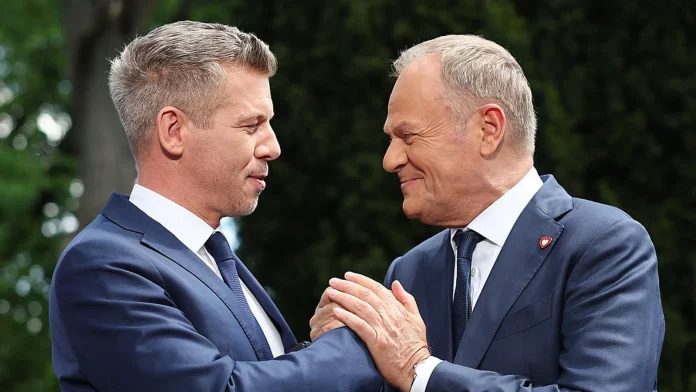
Péter Magyar, Hungary’s newly sworn-in prime minister, chose Poland as his first stop abroad. The symbolism was deliberate. This two-day visit—talks in Kraków, meetings in the capital and a scheduled evening in Gdańsk—was less about pomp and more about the practical work of stitching two neighbors back together after years of strain.
Why Warsaw?
The story of Hungary and Poland in the last decade reads like a study in parallelism and occasional divergence. For 16 years Viktor Orbán’s Fidesz dominated Budapest and often found common cause with conservative forces in Warsaw. Yet in the last years of Orbán’s rule ties frayed. A diplomatic rift over asylum for a former Poland justice minister, disputes over EU norms and a growing disconnect on Europe policy cooled what had been a close rapport.
Now a different Hungarian government—center-right Tisza—has swept into power, and with it a readiness to reset. “We arrived to talk, not to posture,” Péter Magyar said at a joint press moment with Poland’s prime minister. “Our region merits clarity, cooperation and common purpose.”
Donald Tusk, who has reasserted Poland’s pro-EU path since his return to government, responded in kind: “We share geography, history and many strategic interests. It’s time to turn those shared conditions into joint policies.”
A pragmatic agenda
Where the ribbon-cutting could have been symbolic, the agenda was pragmatic. Energy security, transport links, defence coordination, and the sticky issue of Ukraine’s push toward EU membership were all on the table. Hungary’s ministers for defence, economy, energy and transport accompanied Mr Magyar, underscoring that this was an intergovernmental push, not just a bilateral handshake.
“Energy is the easiest place to start,” observed Wojciech Przybylski, editor-in-chief of Visegrad Insight. “Poland has infrastructure potentials; Hungary has an urgent need to diversify. Cooperation here is low-hanging fruit, with real, immediate returns.”
Gas, ports and plans to sever a dependence
At the heart of many of the talks was the practical problem that has terrified policymakers across Europe since 2022: how to reinvent energy systems built on Russian gas. Hungary’s new government has set 2035 as the target year to eliminate reliance on Russian energy—an ambitious timeline that will require new supply routes, storage and political will.
Poland hopes to help. The government in Warsaw has been building a liquefied natural gas terminal in Gdańsk, slated to begin operations in 2028, which it is offering as a supply route for neighbors. For Hungarians, the prospect of tapping a northern corridor—moving away from pipelines dictated by past geopolitics—seems to be both practical and symbolic.
“We want to stand on our own feet when it comes to energy,” said Hungary’s energy minister, who joined the trip. “That’s security, plain and simple.”
Money, the EU and the art of unlocking funding
Then there is the arithmetic of Brussels. Hungary currently has roughly €18 billion in EU cohesion funds frozen because of concerns over rule-of-law backsliding under the previous government. Tisza’s victory in April put a new team in position to negotiate their release. Poland, which recently saw funds unfrozen after its own confrontation with the EU, has an obvious interest in seeing a fellow Central European economy reconnected to Brussels’ financial lifelines.
“This is not just about cash,” said Anna Kowalczyk, a Warsaw-based EU policy analyst. “It is about reintegrating Hungary into the common rules and norms of the Union. That makes the political stakes higher than any cheque.”
Ukraine, language rights and the narrow corridor to acceptance
Perhaps the most delicate thread in the talks concerns Ukraine. Kyiv’s EU ambitions ran into resistance from Budapest under Fidesz, which insisted that the language rights of Hungary’s minority in western Ukraine be protected. The new Hungarian government has signalled it would like to see those rights safeguarded—a move that could remove a key block to backing Ukraine’s accession path.
Still, domestic politics complicate matters: Tisza campaigned on holding a referendum about aspects of EU enlargement and minority protections. “We must give our people a voice,” an adviser to the Hungarian prime minister told me, “but we also must be responsible on the international stage.”
Mr Magyar hinted at a possible meeting with Ukraine’s Volodymyr Zelensky next month and floated plans to convene the Visegrad 4—Poland, Hungary, Czechia and Slovakia—in Budapest. The Visegrad group has been less active in recent years, but a resurgent, pragmatic iteration could help coordinate regional policy on energy, infrastructure and the EU’s eastern flank.
On the ground: Kraków’s cafes, Gdańsk’s shipyards
The trip was also threaded with cultural touchpoints. In Kraków, Mr Magyar met Cardinal Grzegorz Ryś in a city where the smell of espresso mixes with centuries of history. “When leaders come here, they come to speak to history, too,” said Magdalena, a café owner in the Old Town, watching a small bus of officials pass by. “But what we notice most are jobs, prices and whether the trains run on time.”
In Gdańsk, the shadow of Solidarity and the memory of Lech Wałęsa still resonate. Meeting Wałęsa—a figure whose activism helped topple communism in 1989—was a deliberate nod to democratic symbolism. “We’re not just trading gas and roads,” a Polish historian remarked. “We’re reminding each other of the values that underpin our cooperation.”
What does this mean for Europe?
Ask yourself: what does it take for neighbors to rebuild trust? Is it contracts and pipelines, or something deeper—a willingness to accept shared rules, to listen to minority concerns, to be accountable to supranational institutions? The Poland-Hungary reset points to all of the above.
If the first foreign visit is a test case, Hungary’s choice of Poland suggests that Budapest wants to be recognized as a partner, not a pariah. It wants money unstuck, energy alternatives activated, and a seat at the table on Ukraine without appearing to leave its electorate behind.
For the EU, the stakes are clear: cohesion across Central Europe matters. If Brussels can find a path to reintegrate Budapest—through conditional funding, measured dialogue and practical projects—the Union stands to gain a more united internal front at a time of external pressure.
What to watch next
- Will the €18 billion in frozen funds be unlocked, and under what conditions?
- Can plans for LNG access from Gdańsk be operationalized and linked to Hungary’s 2035 decarbonization goal?
- Will a Visegrad summit in Budapest restore the group’s relevance for regional security and infrastructure projects?
- Most stringently: will Hungary’s approach to Ukraine’s minority language rights satisfy Kyiv and Brussels?
Poland and Hungary share a long and tangled history. Their leaders are now trying to turn a new page—one written in contracts, not just rhetoric. Whether this will withstand the test of domestic politics, EU conditionalities and the grinding realities of energy markets is a story that will unfold over months, not days.
So as the convoy left Warsaw and the politicians returned to their capitals, a different kind of work began: the slow, often unglamorous labor of policy, compromise and the making of trust. That is the story worth following—and one that will tell us much about the future of Central Europe and the resilience of the European project itself.
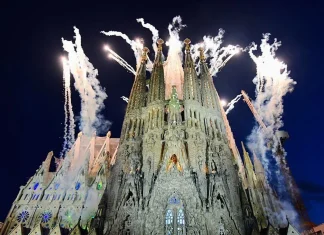
Fireworks and dazzling lights mark pope’s blessing of Barcelona’s new tower
With fireworks bursting over Barcelona and light rippling across stone spires, Pope Leo XIV on Sunday blessed a monumental new tower at the Sagrada...
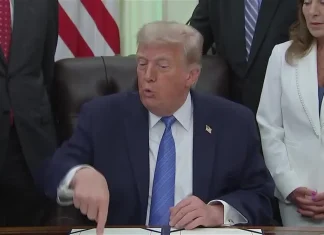
Video: Trump Tells Reporters He “Loves” Inflation in Blunt Remark
With inflation flashing its hottest warning signal in three years, US President Donald Trump delivered a surprising take on the latest government numbers, telling...
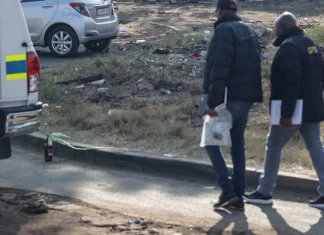
Johannesburg Shooting Leaves 12 Dead and 9 Wounded, Police Say
In a chilling overnight raid on the edge of Johannesburg, gunmen swept through an informal settlement and killed 12 people, South African police said.
Police...

Chinese sub uncovers the world’s biggest whale graveyard on ocean floor
A vast “necropolis” of whales—packed with both fresh remains and fossils millions of years old—has been found on the floor of the Indian Ocean,...
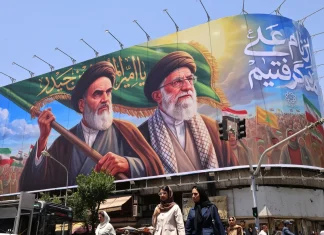
US Launches Strikes on Iran as Tehran Threatens Retaliation for Attacks
Fresh explosions rattled southern Iran overnight as the United States launched a new round of strikes, a move that came just hours after President...