Home Blog Page 253

Trump says suspect arrested and in custody over Charlie Kirk’s murder

Suspect in custody in murder of Charlie Kirk, Trump says
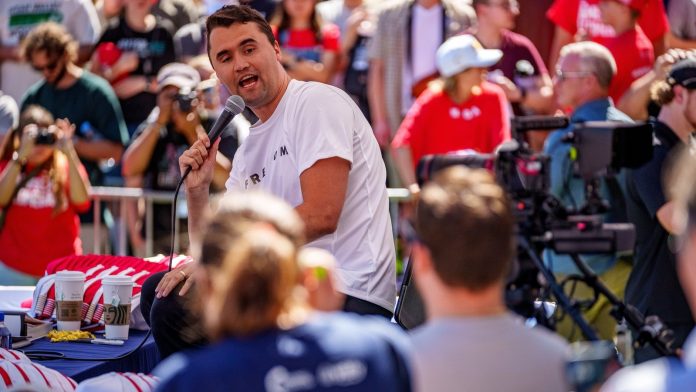
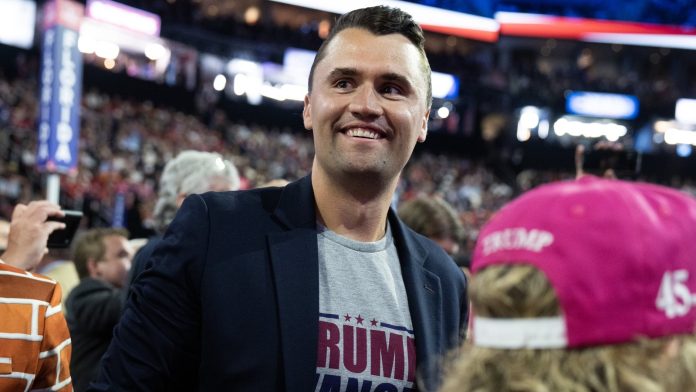
Charlie Kirk was shot at a speaking event in Utah Valley University on Wednesday

A Campus Shudders: The Shooting That Shook Utah Valley

When a routine spring evening at Utah Valley University turned into a scene of raw grief and confusion, the campus—usually a hum of students, scooters and late-night study lamps—fell silent in a way that feels impossible to recover from instantly.

On Wednesday night, Charlie Kirk, a polarizing conservative activist and the charismatic co-founder of Turning Point USA, was struck by a single, fatal bullet while answering an audience question at a debate-style event attended by roughly 3,000 people. Within hours, law enforcement declared a manhunt. By the next day, President Donald Trump told a national audience he believed a suspect had been taken into custody, bringing a temporary close to a frantic 24-hour search.

Moments that froze a campus

Attendees remember the moment as if time splintered. “He was mid-sentence,” one student said, voice still shaking, “and then people just started running. The chairs tipped, phones were everywhere, and nobody could believe what happened.”

Security footage later released by federal investigators shows a figure moving through stairwells and onto a roof minutes before the event’s start. The person—dressed in black, wearing sunglasses and a dark cap—was captured on camera wearing a long-sleeved top bearing a bald eagle over an American flag.

“It wasn’t fireworks or a malfunction,” an FBI official told reporters at a press briefing. “This was a single, high-powered rifle round fired from an elevated position.” A bolt-action rifle was later found discarded in nearby woods, investigators said, and forensic teams combed the roof, stairwells and surrounding trees for prints and other traces.

From roof to neighborhood: a chase and a hush

Witnesses described the moment the shooter left the scene: a swift descent from the roof and a sprint into an adjoining neighborhood. “He just vanished into the trees,” a neighbor recounted. “For a while we didn’t know whether to help or hide.” Schools canceled classes the following day as yellow tape cordoned off the roof and investigators worked through the evidence.

Authorities said the shooter blended in “well” with the college crowd and appeared to be of college age. That detail has chilled students across the United States: the idea that the person who opened fire may have walked past the same posters, used the same vending machines, sat through the same lectures.

A community and a nation reacting

Outside Timpanogos Regional Hospital, where family members and local officials gathered, a memorial of candles and handwritten notes has formed. “He was a father,” a tearful friend said. “A son. Someone who argued for his beliefs, and now we’re left with a hole.”

Political leaders across the spectrum denounced the violence. “There is no place for this in our civic life,” Governor’s office representatives said. President Trump described the shooting as a “heinous assassination” and said he planned to award Mr. Kirk the Presidential Medal of Freedom. “He fought for young people,” one Trump ally told reporters. “He raised a voice for millions.”

Numbers, patterns and a larger conversation

Incidents like this do not exist in isolation. The United States records tens of thousands of firearm-related deaths annually; CDC figures in recent years have shown roughly 45,000–50,000 such deaths per year, a combination of homicides, suicides and accidental shootings. Active-shooter incidents and mass shootings have become a grim thread in national life, prompting debates about mental health, violent rhetoric, the availability of high-powered firearms and the security of public gatherings.

“If we’re honest, this is a symptom,” said Dr. Lina Morales, a sociologist who studies political violence. “We have polarized political spaces, we have online radicalization accelerants, and we have firearms that make a single moment lethal in a way it wouldn’t be otherwise. Campus events are microcosms of a larger breakdown in trust.”

Experts point to a complex mix of factors: increasing politicization of youth culture, the amplification of grievance on social media, and the availability of weapons. “This isn’t about politics alone,” a security analyst noted. “It’s about how our political fights get weaponized—literally.”

Faces in the crowd: voices from Orem

On the streets of Orem, a city about 65 kilometers south of Salt Lake City, residents expressed a mix of sorrow and bewilderment. “I went to UVU,” said an older woman placing flowers by the makeshift memorial. “There’s never been anything like this here. You walk those sidewalks every day and you don’t expect to be part of a headline.”

A campus security worker, who asked to remain unnamed, remembered the practical details that now seem surreal. “We train for chaos, we run drills, but nothing prepares you to actually carry a body out in a coffin,” they said softly. “You see everyone’s life—students laughing one minute, then running the next. It stays with you.”

How communities mourn, how politics react

Mourning has taken both private and political forms. For some, it’s a pilgrimage to the hospital steps; for others, a flood of social media posts and livestream reactions. For politicians, the event is a narrative moment. “Political violence begets condemnation and immediate pledges; then a debate follows about weapons and responsibility,” one local lawmaker said. “But the grief remains, and it’s not partisan.”

What comes next?

With reports that a suspect has been taken into custody—a development President Trump mentioned during an interview—the immediate hunt may have ended. But the questions that follow a shooting like this do not: How did this person get the rifle? What motivated them? Could it have been prevented?

For students and families left behind, the answers are less about prosecution and more about consolation: how to comfort a widow and two young children, how to explain the inexplicable to classmates, how to step back onto a campus that now feels smaller, more fragile.

“You can lock doors or add cameras,” said a campus counselor, “but you can’t lock the ache. We have to talk about why this happened—about anger, about radicalization, about the ways we dehumanize each other—and try to stitch back some sense of common life.”

Looking outward: a moment for reflection

As national conversations resume about gun laws, campus security and political rhetoric, this moment asks each reader to look inward. What kind of political culture do we want to nurture? How do we balance free debate with safety? And how do communities grieve when public tragedy becomes private loss?

We will learn more as investigations proceed. Fingerprints, footprints and ballistic reports will tell part of the technical story. But the harder work—rebuilding trust, holding meaningful conversations about violence, and supporting the bereaved—will take much longer.

When the campus quiet returns, for a night or a week, the question will remain: how will we choose to respond—not only in policy and prosecution, but in how we live together? Will we let fear harden us, or will we use grief to re-forge a public life that resists violence and cherishes debate?
Albania names AI-created minister hailed as ‘corruption-free’ innovation

Albania appoints 'corruption-free' AI-generated minister
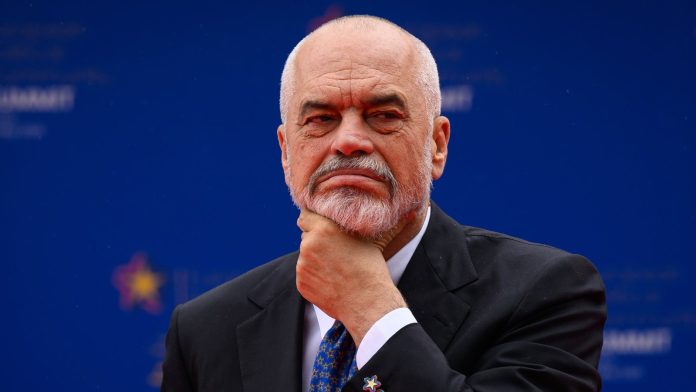
Edi Rama, who secured a fourth term in office in the elections, is due to present his new cabinet to politicians in the coming days

Diella, the AI Minister: Albania’s Bold, Beautiful Gamble with Technology and Trust

On a warm spring evening in Tirana, under the glassy gaze of the modernist National Library and the watchful bronze of Skanderbeg, Prime Minister Edi Rama unveiled something that felt part political theater, part technological dare: a member of his cabinet who does not eat, sleep, or speak in a room full of human voices.

“Diella is the first member who is not physically present, but virtually created by artificial intelligence,” Mr. Rama declared, a smile cutting across his face. The name—Diella, Albanian for “sun”—was chosen with intention. “She will oversee public tenders and make them 100% corruption-free,” he added, promising a transparency that in a country long shadowed by graft would be revolutionary.

At face value it is a striking image: a virtual assistant, clad in traditional Albanian costume, assigned to guard the public purse. Launched in January to help citizens navigate e-Albania, the government’s digital services portal, Diella has already processed 36,600 digital documents and supported nearly 1,000 services, officials say. Now she has been elevated from helpful guide to symbol—and to a function once jealously guarded by ministers and procurement officials.

From folklore costume to code: what Diella looks like—and what she’s meant to do

The avatar presented at the party meeting was deliberately local: embroidered vest, intricate patterns, the kind of dress you might find in Gjirokastër or Berat, where stone houses and UNESCO-tagged authenticity meet a long, oral tradition. It is a careful gesture, a way of saying that the future here will wear yesterday’s clothes.

“There is a poetry in dressing a machine in our own heritage,” said Anila, who runs a small café near the central boulevard and watched the announcement on television. “It makes it feel less foreign, like a neighbor rather than a threat.”

But the symbolism is only the start. The role Rama has assigned to Diella is concrete: she will make decisions on public tenders—who gets contracts, how bids are evaluated, where public money flows. In short, a function that in many countries is a magnet for rent-seeking and opaque deals.

Why a virtual minister? The promise and the politics

Rama’s message is clear: harnessing code can counter human fallibility. “Every public fund submitted to the tender procedure will be perfectly transparent,” he told his Socialist Party after securing a fourth consecutive term in May. For a prime minister with EU ambitions, it also serves as a political signal. Albania, a country of about 2.8 million people, has long placed anti-corruption reforms near the top of its list of European commitments.

“We need to show our partners in Brussels that we are experimenting with new tools,” a senior government adviser, speaking on condition of anonymity, told me. “If an algorithm can reduce discretion, then it reduces the opportunities for corrupt behavior.”

But not everyone is convinced. “You cannot simply download accountability,” said Besart, a procurement analyst who has followed government tenders for a decade. “Technology can help. But it can also conceal. It depends on the design, the audit trails, who controls the code, and whether the system itself is open to scrutiny.”

How does Diella work—and who watches the watcher?

Officials describe Diella as an AI-driven decision-support system integrated into the e-Albania platform. In theory, it applies standardized criteria to evaluate bids, flags irregularities, and publishes outcomes publicly. Data generated by each procurement—timelines, evaluation scores, and contract awards—can be stored and displayed, creating a digital breadcrumb trail.

That breadcrumb trail is critical. “Sunlight is the best disinfectant,” says Marta, a transparency advocate in Tirana. “If Diella’s decisions are fully documented and auditable, it could create a level of public oversight we’ve only dreamed about. But if it’s a black box, we will have traded one kind of opacity for another.”

Across Europe and beyond, governments are experimenting with AI in public services. Estonia’s decades-long e-government experiment is often cited as a model for secure digital identity and transparency. Meanwhile, cities from Seoul to Barcelona are piloting algorithms to allocate services. Each example shows promise—and pitfalls: biased data, proprietary code that resists inspection, and the risk that bad governance becomes faster and more efficient rather than fairer.

Local reactions: hope, skepticism, curiosity

Conversations in Tirana’s markets and perched sidewalk cafés reflected the spectrum. An older woman selling raki at a corner stall shrugged. “If this Diella keeps the right hands out of my pension, I don’t care what she looks like,” she said.

A young civil engineer looked intrigued. “Automating tender criteria could mean faster projects, less delay. We need better roads and hospitals. If the machine can help, fine.”

Yet, in the shadow of the Ministry of Public Works, a municipal clerk who had once overseen tender documents looked grave. “You must ask: who programmed the rules? Who decides the criteria? A system reflects the biases of its creators,” she warned.

Questions that must be asked

The announcement raises practical and philosophical questions. Will Diella’s code be open-source? Will independent auditors, civil society groups, and the EU be allowed to inspect algorithms and data? What safeguards will protect against manipulation, and how will citizens appeal decisions?

These matters are not hypothetical. Public procurement often involves large sums of money and can be fertile ground for corruption. International institutions repeatedly stress procurement reform as central to strengthening the rule of law. Whether routed through human hands or silicon, the risks remain.

  • Potential benefits: reduced discretionary decisions, faster processing, easily archived records.
  • Potential risks: opaque algorithms, biased decision-making, centralization of control.
  • Key safeguards needed: auditability, transparency of code, independent oversight, accessible appeal mechanisms.

Beyond Albania: what Diella signals to the world

What happens here matters beyond Tirana’s grid of boulevards. Around the globe, governments are tempted by the promise of algorithmic fairness: impartial systems replacing fallible humans. The appeal is understandable—especially in countries where public trust is fragile. But technology cannot be a substitute for strong institutions, free media, and active civic engagement.

Rama says he wants Albania inside the European Union by 2030. The EU will not judge Albania on avatars and slogans alone. It will look at courts, media freedom, anti-corruption prosecutions, and whether the public personally experiences fairer, more accessible government. Diella could be a tool in that portfolio—but only if the sun illuminates rather than eclipses.

So here is my question to you, reader: would you trust a digital minister with the keys to the public vault? Would you demand to see the code that decides who builds your hospital or paves your road? Or do you see AI as a sidekick that, properly supervised, can help a nation move past old patterns of patronage?

In the days ahead, Albania will present its new cabinet to parliament, and Diella will enter a world where political pressure and human ambition test every system. Whether she becomes a beacon of accountability or a shiny new instrument of the same old games depends on choices that are less technological than civic: openness, accountability, and the willingness to let the public in.

For now, the avatar smiles in a traditional skirt. The real work will be less photogenic—and far more consequential. Keep watching; this experiment will teach us as much about human governance as it will about machine intelligence.

Golaha Ammaanka ee QM ayaa cambaareeyay weerarrada ka dhanka ah Qatar, isagoo ka gaabsaday inuu magacaabo Israa’iil

Sep 12 (Jowhar)- Masaajidku waxa uu ahaa mid ay ka buuxaan maryo cadcad iyo kuwo aay ku qoran yahiin duco Naxashadaha mid lagu dahaadhay calanka Qatar, shanna ku duudduubnaa calanka falastiiniyiin ah.

UN Security Council denounces strikes on Qatar, stops short of naming Israel

Smoke over Doha: funerals, fury and the fragile thread of mediation

The mosque was a hush of white robes and camo, of prayer and politics braided together. Coffins — one draped in Qatar’s flag, five wrapped in Palestinian cloth — were carried through the courtyard of Sheikh Mohammed bin Abdul Wahhab Mosque under tight security. The emir, Sheikh Tamim bin Hamad Al Thani, stood among the mourners, head bowed, as the city watched and the region reeled.

“We came to pray for the dead and to warn the living,” said Hamad al-Kuwari, a shopkeeper in the Souq Waqif who attended the funeral with trembling hands. “Doha has been a place for talk and truce. Today it feels like that shelter has been pierced.”

What happened and why it matters

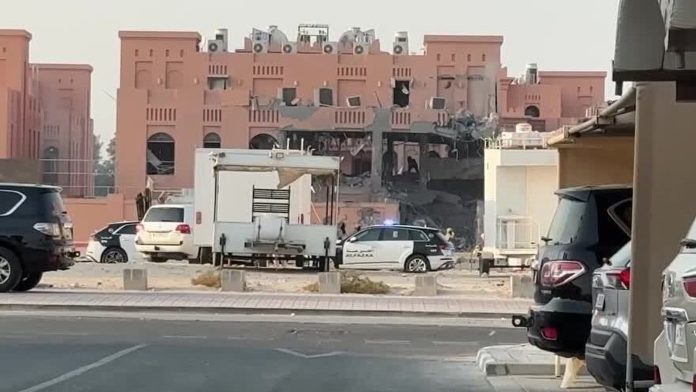
Earlier this week, an airstrike in Doha struck a site tied to Hamas political figures, killing six people — five Palestinians connected to the group and a Qatari national identified by authorities as Lance Corporal Badr Saad Mohammed al-Humaidi al-Dosari. Hamas said its top negotiators survived, but the attack has been described by Hamas officials as an attempt to destroy ceasefire negotiations and to intimidate mediators.

The UN Security Council, in a rare unified move, condemned the strikes and called for “de-escalation,” while expressing solidarity with Qatar. That statement required the agreement of all 15 council members — including allies of Israel — and notably did not name Israel as the attacker. The omission has become another point of contention.

Israel’s prime minister, Benjamin Netanyahu, had issued a blistering warning only days before: expel Hamas officials from Qatari soil or “bring them to justice, because if you don’t, we will.” The United Arab Emirates publicly rebuked those comments, saying any strike on a Gulf state amounts to an attack on the region’s collective security. “The Gulf’s security is a shared shield,” UAE official Afra Al Hameli said in a statement this week. “Undermining it sets a dangerous precedent.”

Funerals under guard

The funerary procession in Doha was as much a political message as a religious rite. Checkpoints ringed the roads to the Mesaimeer Cemetery, and live footage showed mourners in traditional white next to uniformed guards. A small crowd pressed forward to catch a glimpse of the coffins, their faces a mixture of grief and hard resolve.

“We buried their bodies, but the wounds are not only ours,” said Mariam Hasan, a teacher who stood among the mourners. “This was an attack on negotiations, on any chance of returning the hostages alive, on the possibility of stopping the killing.”

Diplomacy in ruins — or merely regrouping?

For years, Doha has occupied a fraught but crucial role in the Middle East’s back-channels. Since 2012, Qatar has hosted a political office linked to Hamas — a controversial but pragmatic move tacitly tolerated by Washington, which has sought to keep lines of communication open. Qatar’s capital has hosted rounds of indirect talks aimed at securing ceasefires and negotiating hostage releases.

“You can either mourn the collapse of a fragile process or try to rebuild it,” said Professor Laila Mansour, an expert in conflict mediation at the American University in Beirut. “What the strike does is reduce the space for discreet, difficult diplomacy. When hosts are no longer safe, intermediaries lose their power — and the region loses a valve for pressure release.”

Qatar’s prime minister, Sheikh Mohammed bin Abdulrahman Al Thani, said the strike had shattered hopes for rescuing Israeli hostages and that Doha was “reevaluating everything” about its role as mediator. He also hinted at a unified regional response and an Arab-Islamic summit planned in Doha to map out next steps.

Voices from the street and the strategy room

Across the city, conversations moved from grief to wider questions about sovereignty and escalation. “We are small but sovereign,” said Saif Al-Majed, a taxi driver who brought relatives to the mosque. “If foreign powers hit us here, who’s safe? Today it was a political office. Tomorrow it could be a hospital, a school.”

An Israeli analyst, speaking on condition of anonymity, argued that the strike reflected a broader strategy to deny Hamas political leadership the freedom to maneuver. “When you cut off the head of negotiations, you pressure the other side,” the analyst said. “It’s blunt instrument politics — morally fraught, strategically risky.”

And in Washington, a senior diplomat said the US backed the Security Council statement and urged calm, while stressing that de-escalation required all parties to avoid rhetoric that could inflame tensions. “The focus needs to be on protecting civilians and preserving channels for hostage negotiations,” the diplomat said. “Destroying those channels will make matters worse, not better.”

International law and the perilous precedent

Targeted strikes on foreign soil raise thorny legal and ethical questions. “States don’t get to unilaterally extend their battlefield into the territory of other sovereign nations without grave consequences,” said Amal Sherein, a human-rights lawyer in Doha. “Such acts can be construed as violations of sovereignty and may constitute aggression under international law.”

Yet for those who have lost loved ones in Gaza or taken in the staggering human cost of the conflict, legal arguments can feel abstract. “My brother was taken hostage months ago,” said Aisha al-Qassem, a relative who has campaigned for the return of captives. “We were pinning our hopes on talks. Now everything is darker.”

What comes next?

Doha has called for an Arab-Islamic summit to chart a collective response. Whether that will produce sanctions, diplomatic pressure, or a renewed push for mediation is uncertain. What is certain is that the strike on Qatari soil has widened a fault line: the idea that Gulf sanctuaries are off-limits has been shattered.

Ask yourself: when a city built on trade, transit and talk is pierced by force, who pays the price? Diplomats, mourners and shopkeepers will all tell you the same answer — it’s the fragile architecture of negotiation, and the civilians caught beneath it.

In a region where every word, every movement, can be read as signal or provocation, the challenge now is whether pragmatists can hold fast to the difficult work of dialogue. Or whether the temptation for striking, visible action will sweep away the less glamorous, slower work that once offered a sliver of hope.

Final thoughts

The funerals in Doha were not merely an act of mourning. They were a public, defiant reminder that war can spill into places meant for diplomacy, that the zones of sanctuary are not guaranteed, and that the human stakes are immediate and intimate. For the families carrying those coffins, for the mediators recalibrating their roles, and for the diplomats trying to stitch back a fraying process, the question is urgent: can conversation survive in a landscape where conversation itself has become a target?

UK removes Mandelson as ambassador to US amid Epstein ties

UK sacks Mandelson as US ambassador over Epstein links
Jeffrey Epstein died in 2019

The End of an Embassy: How Peter Mandelson’s Ties to Jeffrey Epstein Undid a High-Profile Appointment

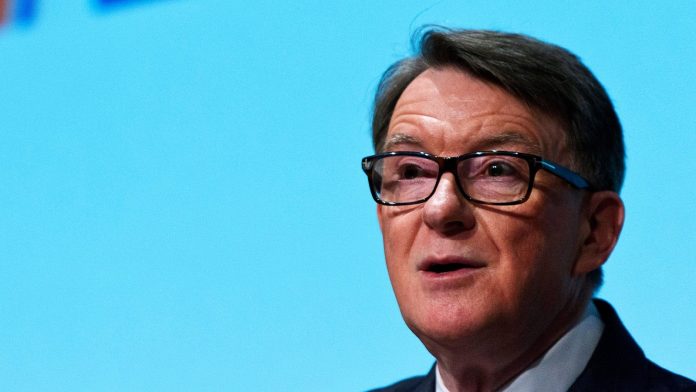
There are moments in politics that feel like the slow unfurling of a rope: taut, inevitable, and finally snapping. On a wet Wednesday in Westminster, Britain’s foreign ministry announced what many in the capital had been bracing for: Peter Mandelson, one of Labour’s most enduring figures, will not take up the ambassadorial post in Washington. The stated reason was stark and simple—the depth of his relationship with the late financier Jeffrey Epstein was substantially different from what was known when he was appointed.

For anyone who has followed Mandelson’s long career, the news lands with a peculiar mixture of surprise and grim recognition. A key architect of New Labour’s rise under Tony Blair, a cabinet minister who helped steer Britain through the turn of the millennium, Mandelson’s name has always carried weight. Yet it is the company he kept—words written and preserved in emails and a birthday book—that finally tilted the scales.

The documents that changed the game

The material that spurred the withdrawal included a birthday message in which Mandelson described Epstein as “my best pal.” Journalists also reported on emails in which Mandelson reassured Epstein he was “following you closely and here whenever you need,” urged him to “remember the Art of War” when dealing with prosecutors, and advised him to “fight for early release” as Epstein faced criminal sentencing.

These are not casual notes. Taken together, they paint a portrait of a relationship that extended past polite acquaintance. The foreign ministry said the emails revealed “new information,” including Mandelson’s suggestion that Epstein’s first conviction was wrongful and should be challenged—an assertion that altered the calculus of his suitability for a senior diplomatic role.

Jeffrey Epstein, a financier who cultivated relationships with the powerful, pleaded guilty in Florida in 2008 to soliciting prostitution from a minor and received an eighteen-month sentence in what many critics later decried as a lenient plea deal. He was arrested again in 2019 on federal charges alleging sex trafficking of minors and died in custody that August; his death was ruled a suicide. The Epstein case has become a wider reckoning about how wealth and connections can blur accountability for horrific crimes.

From PMQs to the firing line

Just a day before the withdrawal, Prime Minister Keir Starmer had publicly defended Mandelson at Prime Minister’s Questions, saying he retained “confidence” in him and that “due process was followed” during the vetting. But the revelation of more detailed correspondence shifted the political weather quickly.

Conservative leader Kemi Badenoch called the disclosures “sickening,” declaring Mandelson’s position “untenable” and accusing the prime minister of appearing weak for having backed him. “This is a weak Prime Minister, leading a Government mired in scandal,” she said, adding, “The public deserves better. Peter Mandelson needs to be fired now.”

Within Labour’s ranks, backbenchers Richard Burgon and Nadia Whittome joined the chorus demanding immediate dismissal. Whittome’s words were blunt: “We either stand with victims or we don’t.” The pressure, from cross-party critics to activists and the tabloid press, became politically untenable.

Voices in the aftermath

On the pavement outside the Foreign Office, the mood was a mixture of anger and weary resignation. “You can’t cherry-pick justice just because someone is useful,” said Emma Reid, a campaigner with a survivors’ advocacy group, who asked that her surname be used. “This isn’t just a political scandal—it’s a moral test.”

A former diplomatic staffer, speaking on condition of anonymity, told me: “The ambassador to Washington needs unquestionable standing. Once trust is eroded—especially over something as serious as this—it’s impossible to be effective.”

And then there was Mandelson himself. In an apology that was as much about tone as it was about content, he told a national tabloid he regretted “very, very deeply indeed carrying on” his association with Epstein “for far longer than I should have done.” Asked whether the relationship continued after Epstein had been charged, he said, “It was not a business relationship,” adding he had never seen wrongdoing or evidence of criminal activity.

What this means for vetting and accountability

This episode exposes a raw nerve in modern governance: how do you vet the powerful, and who decides when past relationships disqualify a person from representing a country abroad? The UK’s diplomatic service conducts rigorous checks on prospective envoys, but critics ask whether those checks adequately probe social and informal networks—particularly when the networks include people who have been accused, and later convicted, of sexually exploiting minors.

“The Epstein case was always going to be a litmus test for anyone associated with him,” said Dr. Anna Patel, a researcher in corruption and accountability at the London School of Economics. “Even if contacts were social rather than transactional, the optics are damaging. Diplomacy relies on moral authority as much as technical skill.”

Accountability is also now a brand management issue for parties. Starmer’s initial defense and the subsequent reversal underline how quickly political calculations can change. A decision that once seemed defensible can become a liability when fresh facts arrive and public patience runs thin.

Beyond Westminster: the larger reckoning

This is not just a British story. Across the globe, high-profile cases have forced institutions to confront how power protects predators and preserves reputations. From universities to corporations to political parties, the question is the same: whom do we allow back into positions of trust, and on what grounds?

The Mandelson affair forces us to ask uncomfortable questions: Do we measure people only by their past achievements, or also by whom they stood beside when it mattered? Can public service be separated from private associations?

As a society, we are gradually developing a less forgiving lens for the networks that once smoothed the way for problematic figures. That’s progress, but it is also disruptive. It disrupts careers, reputations—and in some cases—long-standing institutions that relied on the implicit immunity of elite connections.

What comes next

For now, the foreign ministry has asked the prime minister’s representative to step back. Parliamentary questions are being tabled. The Foreign Affairs Committee may request testimony. And for Mandelson, a figure who has known both power and scandal, this is another pivot point.

As readers, we should ask ourselves: should a single thread of correspondence undo a lifetime of service? Or should it prompt a harder, more honest accounting of how public roles are earned and defended? That is the debate that will continue in the coming days—less about one man’s fate and more about how democracies police the boundaries between private loyalties and public responsibility.

In the end, the Mandelson episode is a reminder that in the age of instant archives—emails, birthday books, messages preserved in print—the past is never past. It waits. And sometimes, it calls us to account.

US official: People praising the killing of Kirk unwelcome in America

Those praising Kirk killing not welcome in US - official
Charlie Kirk was shot at a speaking event in Utah Valley University on Wednesday

A Campus, a Coffin, and the Country That Fractured Around Them

On a clear Utah afternoon, where the air usually tastes of pine and possibility, a single bullet cut through a lecture hall and through the brittle peace of a nation already riven by politics. Charlie Kirk, 31, a lightning rod for conservative youth activism, collapsed on a stage at Utah Valley University. Within hours the scene—flowers, candles, and stunned students whispering his name—had become a mirror held up to America: jagged, reflective, and impossible to ignore.

Students gathered under the Rockies’ long shadow the next day, some with hands trembling, others with phones livid with feeds, grappling with grief and the surreal overlap of spectacle and blood. “It felt like one of our own,” said Dave Sanchez, a 26-year-old student. “We watch him all the time online. Seeing this happen here—on campus—made it personal. It made it real.”

Washington’s Warning: Foreign Voices Won’t Be Welcome If They Cheer Violence

In Washington, the response was swift and unequivocal. Deputy Secretary of State Christopher Landau, writing on the social platform X, warned that foreigners who “praise, rationalize, or make light” of the assassination would face consequences when seeking entry to the United States. He said he had instructed consular officials to take “appropriate action.”

The words landed like a formal edict across the chaotic landscape of comment threads and viral clips. “We will not open our doors to those who celebrate violence against Americans,” an unnamed State Department official told reporters when pressed for details. But the official—careful and deliberately vague—declined to define what “appropriate action” would mean for an individual flagged in a reply thread of more than 2,000 messages.

What is clear is that the Biden and now Trump administrations in recent years have increasingly used visa policy as a tool of national-security signaling—revoking student visas, tightening social-media vetting, and publicly linking entry privileges to behavior online. But critics worry that the line between legitimate security concerns and political policing could become dangerously blurred.

“We’re watching what people write”

“Consular officers already review social media during visa adjudication in many cases,” said Lena Morales, an immigration attorney who has worked on cases involving online speech. “Expanding that to post-entry revocation, or to revoking visas for people expressing abhorrent views abroad, raises legal and ethical questions. Who decides the threshold? And what safeguards exist against political weaponization?”

The Manhunt and the Mechanics of a Targeted Attack

As mourners made small altars near Timpanogos Regional Hospital and a coffin was flown home to Phoenix—on an aircraft reportedly associated with Ohio Senator JD Vance—law enforcement chased threads of surveillance footage and tips that pointed to a young man on a rooftop.

The FBI released images of a potential suspect: a figure in a black baseball cap and sunglasses, a long-sleeved shirt bearing a design that included an American flag. Authorities said the gunman fired a single round from a rooftop at a distance of up to 180 meters, striking Kirk in the neck. A high-powered bolt-action rifle was recovered in a wooded area, and federal officials posted a reward of up to $100,000 for information leading to the suspect’s capture.

“This appears to have been targeted,” an FBI special agent said on the condition of anonymity, echoing the agency’s public statement. “We are following multiple leads. No arrests yet.”

Between Grief and Fury: How the Right and Left Reacted

Grief on the right quickly collided with calls for retribution and pleas for calm. President Donald Trump, addressing the nation with the ritual gravity of a president addressing a tragic wound, called the killing a “heinous assassination” and urged supporters to respond peacefully. “That’s the way I’d like to see people respond,” he said, repeating that Kirk advocated nonviolence.

But the media ecosystem that amplified Kirk’s career also amplified a different tenor—one of righteous rage. Some commentators asked bluntly what the political right would do next. “Whether we want to accept it or not, they are at war with us,” a Fox News host intoned, a line that ricocheted through partisan subchannels, sparking both hashtags and howls.

On social media, reactions ranged from solemn memorial posts to lurid conspiracy threads. Some users posted screenshots of accounts they said celebrated the killing, and Mr Landau replied that consular officials would monitor the flagged posts. Whether any of those accounts belonged to visa holders was, at last report, unclear.

At the heart of the spectacle

To many on campus, the politics felt secondary for the moment—overwhelmed by the human images that refused to be reduced to talking points. “We lit candles by the sculpture outside the lecture hall,” said Maya Ortega, a sophomore who studies political science. “Someone brought a guitar and started playing. Somebody else read a passage from a book. In that moment, politics fell away. We were just people who hurt.”

Bigger Questions: Violence, Social Media, and a Fractured Public Square

Charlie Kirk’s rise—founder of Turning Point USA at age 18, a magnetic presence on TikTok, Instagram, and campus stages—was also a textbook case of how modern politics breeds celebrities and how celebrity amplifies grievance. He built large audiences by fusing cultural swagger with blunt policy positions: pro-gun, vocal in his Christianity, anti-immigration. His supporters see him as a martyr; his critics see him as an accelerant to the polarization that produced this violence.

What does it mean when a public figure becomes both a target and a brand? How do we police praise for political violence when speech itself is increasingly theatrical—and global? How do democracies respond to acts that feel both criminal and symbolic?

Experts warn that this incident is part of a broader pattern. “We are increasingly seeing violence on a political axis: targeted attacks, assassination attempts, threats against elected officials and public figures,” said Dr. Riya Kapoor, a political violence researcher. “It’s not just crime. It’s performative, and social media accelerates the feedback loop. That creates incentives for extremism of all stripes.”

After the Coffin Leaves: What Comes Next?

For now, the body has been flown home; the investigation continues; a reward sits on a suspect’s head; a deputy secretary of state has promised that foreigners who celebrate the killing will face visa troubles. But the wider wounds—trust in institutions, the filigree of civility, the place where online vitriol meets real-world harm—are not so easily remedied.

Families will grieve. A movement will interpret loss as martyrdom. A nation will ask itself again whether the norms that undergird civic life can withstand the shock of spectacle and blood. And somewhere between the prayer vigils and the late-night pundit monologues, ordinary people will return to classrooms and kitchens, trying to make sense of a day that felt like the end of an era—or the beginning of a more dangerous one.

What would you do if the rhetoric of your feed became the reality at your doorstep? How do we hold both the need for public safety and the protections of civil liberties without sacrificing one for the other? These are the questions this country now faces—one cup of coffee and one candle at a time.

WHO’s Ryan ‘Disillusioned’ by Global Community’s Response to Gaza Crisis

WHO's Ryan 'disillusioned' with world over Gaza crisis
The World Health Organization's Deputy Director General, Dr Mike Ryan said 'children are being intentionally starved as a weapon of war'

A World That Turns Away: A Dispatch on Hunger, Children, and Our Collective Conscience

There are moments when the vocabulary of outrage fails: when the images on the screen are so intimate and the need so immediate that formal sentences feel like furniture moved around the edges of a burning room. I found myself in one of those moments listening to a senior World Health Organization official describe Gaza as “a tiny, easily accessible area” where the supplies that could keep children alive are simply not getting through.

“I am almost entirely disillusioned with the world,” he said, voice tight with a kind of grief that radiates past policy papers and press releases. When such words come from someone who has spent decades shepherding responses to epidemics, disasters and war, they land like pebbles in a still pond—small gestures that ripple outward and reveal how shallow our commitments sometimes are.

Faces Amid the Statistics

Consider the numbers that anchor this story: Gaza is home to roughly 2.3 million people crammed into an area of about 365 square kilometres. The United Nations estimates that food insecurity has reached catastrophic levels in many parts of the territory. Meanwhile, at home in Ireland, a recent Economic and Social Research Institute (ESRI) report found that one in five children—20 percent—are living below the poverty line once housing costs are taken into account. That statistic hangs heavy when you remember that poverty is not only about money; it is about quiet hunger, cramped rooms, stretched mental health services, and futures narrowed before a child has had a chance to spread their wings.

“You cannot measure a child’s future by the euros in their pocket,” said an Irish community worker I spoke with in Dublin. “You measure it by the playgrounds that are safe to use, by the clinics that answer the phone, by the dignity in their home.”

On the Ground in Gaza

Outside the sterile confines of a conference room, the story takes on texture: a woman markets tomatoes behind a tarpaulin, children chase one another down a rubble-strewn alley, and an exhausted aid worker counts the days since the last reliable delivery of medical supplies. “We’ve never seen logistics this politicised,” said the aid worker, hands stained with dust. “There are trucks waiting at the border while children grow thinner. That is not an accident—it’s a choice.”

Health agencies have long warned that intentional starvation as a weapon of war is not just a moral atrocity; it is a public-health emergency with long, intergenerational consequences. Severe malnutrition in early life shows up later as impaired cognitive development, greater susceptibility to disease, and lost potential that compounds across a lifetime.

What We Are Failing to Invest In

The WHO official’s frustration broadens into a critique many of us feel but rarely name: we fail to invest in children systematically. “We leave a lot of children behind,” he said, pointing to a global pattern in which education, health and social protection are trimmed when budgets are tight. It is worth pausing over the word invest. Investments yield returns. Societies that invested in universal education and public health in the mid-20th century starved out diseases, built economies, and created stronger democracies.

“I had free access to medicine and education when I was young,” he acknowledged, remembering the social ladder that service provision helped construct. “We’ve done this before. We can do it again.”

Beyond Money: The Dimensions of Poverty

Poverty, he reminds us, is not a single tally. It is a braided set of deficits—food and shelter, yes; but also enrichment, safety, mental health, and belonging. The ESRI’s child-poverty figures are a sobering prompt: how many promising lives are being written off as collateral in political calculations? How many futures will be diminished because the scaffolding of society was withdrawn at a crucial time?

“The pandemic exposed the scaffolding that was already fragile,” says a child psychologist in Cork. “When schools closed, services tightened, and families lost income, children’s emotional and developmental needs magnified. Recovery isn’t just about catching up academically; it’s about repairing trust and restoring routines that make children feel seen.”

Lockdowns, Vaccines, and the Cost of Mistrust

The conversation inevitably turns to Covid—another crucible in which public trust was tested. The WHO official clarified that the organization did not prescribe lockdowns as a universal remedy; countries generally developed and implemented those policies themselves. Yet the pandemic did another, more subtle thing: it amplified distrust.

Anti-vaccination movements are not new, but they gained momentum during Covid, buoyed by social media and misinformation. “People have a right to ask questions,” the WHO official said. “But questioning must not be weaponised to spread falsehoods. When the data shows that vaccines save lives, we must lean into that science.”

And the evidence is stark. Vaccination programmes are among the most effective public-health interventions in history—measles deaths have fallen by more than 80 percent since the introduction of widespread immunisation in many countries, and smallpox has been eliminated. Globally, vaccines have saved hundreds of millions of lives and prevented untold suffering.

Local Voices, Global Questions

Back in a small Irish town, I sat with an elderly man who had worked in public health for four decades. He folded his hands and said, “We are tested not by what we achieve in good times but by what we refuse to let happen in bad times. If the world cannot keep children alive, then what are our principles worth?”

Across the sea in Gaza, a mother whispered, “If the world can watch water trucks and medicine convoys waiting at borders and not move, then my children do not exist to them.” That is the human line you cannot argue with: the particular grief of parents, neighbours, and aid workers staring down a crisis that is preventable.

After the Front Lines: Retirement, Reflection, and the Call to Action

The WHO official spoke of his own mortality in unvarnished terms: the passing of colleagues, the shattering of illusions that even the most committed among us are invulnerable. He is retiring, he said, and the loss of colleagues—people who felt invincible—has recalibrated his sense of time. “I’m not immortal,” he admitted. “I need time to recover and then to think about what comes next.”

There is tenderness in that confession: even those who have dedicated their lives to global health are human, carrying grief and fatigue. Their moral clarity is not a superpower; it is a discipline, learned through exposure to sorrow and chosen again each morning.

What Can You Do?

Ask yourself: when images of a distant crisis flash on your screen, what do you do next? Sign a petition? Share an article? Call your representative? Donate? The answers matter. Global problems demand both empathy and strategy—supporting NGOs, urging diplomatic solutions, and insisting on the humanitarian corridors that allow life-saving aid to pass.

  • Advocate for ceasefires and the release of hostages where political will is required to protect civilians.
  • Support organisations providing food, water and medical care on the ground—logistics win lives.
  • Vote and lobby for policies that invest in children: universal health, quality early education, and social safety nets.

We can pretend compassion is a private emotion, or we can make it a public policy. The choice is ours. If you, like me, find the WHO official’s disenchantment hard to swallow, let it be a spur. Disillusionment is a call to action disguised as sorrow; it demands a response not from one nation, but from all of us. Will we answer?

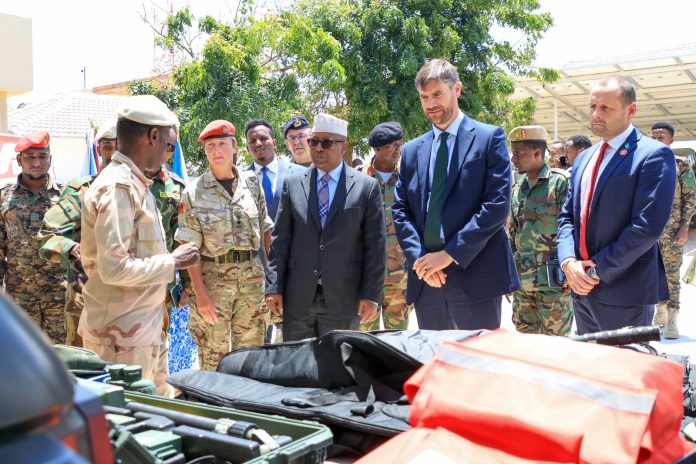
Dowlada Ingiriiska oo qalab Milatari ugu deeqday Soomaaliya

Sep 11(Jowhar)-Wasiirka Gaashaandhigga XFS, Mudane Axmed Macallin Fiqi, oo ay weheliyeen Taliyaha Ciidanka Xoogga Dalka, Sarreeye Gaas Odowaa Yuusuf Raage.

Israeli military reports missile launched from Yemen was intercepted

Israeli army says a missile fired from Yemen intercepted
Houthi rebels have repeatedly launched missiles and drones at Israel since October 2023 (file image)

Smoke Over Sanaa: A City Caught Between Missiles, Media and Mourning

When the sirens began blaring across Israel late on a humid evening, they carried with them the faint, distant echo of a conflict that has stretched to the edges of the Arabian Peninsula. Israel’s military announced that a missile launched from Yemen had been intercepted — a terse line on Telegram that landed like a second shockwave on a region already wound tight with grief and fury.

In Yemen, the impact was immediate and visceral. Officials in Sanaa, the capital held by the Iran-backed Houthi movement, reported that airstrikes had struck the Houthi armed forces’ media offices and a complex in Jawf province, killing 35 people and wounding at least 131. “The toll includes 28 dead and 113 wounded in Sanaa, and seven dead and 18 wounded in Jawf,” Anees Alasbahi, a spokesman for the Houthi health ministry, wrote on X, warning that the numbers were not final.

Where the headlines meet people

Walk through Sanaa and you feel the layers of history and daily life: the ornate gingerbread-like facades of multi-century homes; the city’s market stalls where vendors sell silver coffee pots and qat leaves alongside stacks of rubber tires; the minarets calling the faithful to prayer. Now, the air carries another scent: burnt plastic and diesel, and the metallic tang of uncertainty.

“We lived through bombing before,” said one shopkeeper who asked to be identified only as Ahmed. “But today the school nearby is closed, and we don’t know when we can go back.” His hands trembled around a small wooden box of incense. “People are afraid to gather. Mothers worry the most.”

Across the city, funerals are happening in spare lots and mosque courtyards. Neighbors who once traded jokes and tea stand shoulder to shoulder in silence. “This is not just numbers on a screen,” said Leila, a teacher in Sanaa. “These were our teachers, our neighbors, our sons. You can see the grief in every home.”

What happened — and the murky chain of reprisals

The strikes in Sanaa and Jawf came amid a spiral of tit-for-tat actions since October 2023, when Hamas’s assault unleashed a wider confrontation involving multiple state and non-state actors. The Houthis, aligned with Iran and now a vocal—and active—ally of Gaza, have repeatedly launched missiles and drones toward Israel. Israel has responded with targeted strikes in Yemen, aiming at military infrastructure, ports, power stations and the international airport in Sanaa.

This recent wave of violence followed another deadly episode: last month, Houthi leaders say, a government cabinet meeting was struck, killing the movement’s prime minister Ahmed Ghaleb Nasser al-Rahawi, nine ministers and two cabinet officials. Those assassinations were described by Houthi sources as among the most high-profile of nearly two years of hostilities tied to the Gaza war.

Yahya Saree, the Houthi military spokesman, has pointed to casualties among journalists, saying reporters from the 26 September and al-Yaman newspapers were among those killed at what the Houthis call the “Moral Guidance Headquarters” in Sanaa. The Israeli military made its own claim: that it targeted “military camps in which operatives of the terrorist regime were identified, the Houthis’ military public relations headquarters and a fuel storage facility that was used by the terrorist regime.”

A global ripple: why this matters beyond the battlefield

At first glance, Yemen may seem remote from Tel Aviv’s streets or Jerusalem’s cafes. But the modern battlefield is threaded through trade routes, satellite signals and international law. The Gulf of Aden and the Red Sea — lifelines for global shipping — sit within eyeshot of Yemen. Attacks on ports, power grids, and airports can disrupt supply chains, raise insurance costs, and push up prices from consumer goods to fuel.

Consider this: even a short closure of a major Suez-Red Sea lane can reroute billions of dollars in commerce, adding days to delivery times and millions to costs. Add to that the human cost: hospitals with intermittent power, children missing school, economies already frayed by years of civil war, cholera outbreaks and famine-like conditions.

  • 35 people killed and 131 wounded in recent strikes, according to Houthi health officials.
  • Repeated cross-border drone and missile fire since October 2023.
  • Infrastructure damage — ports, power stations and airports — threatens regional stability and global trade.

Voices from the ground and the world

“Every strike multiplies the number of displaced families,” said Fatima al-Kibsi, a coordinator with an international NGO working in northern Yemen. “Our teams report more children with trauma, and clinics struggling to get medicines through checkpoints and damaged roads.”

An Israeli military analyst, speaking on condition of anonymity, told me, “The calculus is harsh: allowing the Houthis to use southern Yemen as a staging ground would invite greater hostility closer to our civilian centers. But every strike increases the chance of wider escalation.”

And there are those who worry about the narratives being shaped online. “Striking media offices is not just a tactical move — it is symbolic,” said Dr. Miriam Haddad, a researcher on media in conflict zones. “Attacks on press operations can silence voices, skew reporting, and fuel cycles of propaganda and revenge.”

Questions to sit with

What responsibility do foreign powers have when interventions deepen local suffering? Can surgical military responses avoid the wider spiral of civilian harm, or do they merely change the geography of grief? And for the rest of the world: how much instability are global markets, humanitarian agencies and diplomatic channels prepared to absorb before the costs become intolerable?

There are no tidy answers. Yemen is a palimpsest of competing claims: tribal loyalties, regional power plays, a fractured state and an exhausted population. Each strike redraws those lines, and each reprisal echoes beyond national borders.

What comes next — and why you should care

For the people of Sanaa and towns in Jawf, the next days will be about tending the wounded, burying the dead, and protecting what little is left of normal life. For policymakers, the calculus is different — a mix of deterrence, diplomacy, and political pressure. For the rest of the world, there is a quieter but no less urgent task: to remember that every headline obscures a human life.

So ask yourself: when distant conflicts catch fire in markets and airports halfway across the globe, how do we measure our stake? When the smoke clears, who will be left to tell the story? And will the world listen, or simply scroll on to the next crisis?

Authorities release images of person of interest tied to Kirk shooting

Images released of 'person of interest' in Kirk shooting
FBI officials in Salt Lake City did not say the person was the suspected shooter (Images: FBI/X)

On a Bright Utah Afternoon, Politics Turned Deadly

The afternoon sun sat low and warm over Utah Valley University when the sound that would reshape lives and headlines split the air.

People came for debate, for spectacle, for an argument staged in public: a charismatic, young conservative voice—Charlie Kirk—speaking to a campus crowd of roughly 3,000 at an event billed “Prove Me Wrong.” They expected jeers, applause, maybe a shouted question or two. They did not expect a bolt of violence to turn the quad into chaos.

Surveillance video later showed a figure in a baseball cap and dark sunglasses moving through the crowd and up stairwells before mounting a nearby roof. Moments later, a single shot rang out. Students scattered; chairs toppled; phones were raised and trembling hands recorded the aftershock in streams that would circle the globe.

Who Was the Stranger on the Roof?

By the next morning, the FBI’s Salt Lake City office had published two photos of a “person of interest”—a person in casual clothing who seemed to blend in, university officials said. The bureau stopped short of naming that person a suspect, asking instead for the public’s help in identification.

“We will let the evidence speak,” said FBI Special Agent Robert Bohls at a press briefing, as he described investigators’ discovery of a high-powered bolt-action rifle in a nearby wooded area and the painstaking search for palm prints and footprints. “This weapon, recovered close to the scene, is being analyzed forensically.”

Officials believe the shooter was young—”college age,” according to Utah Public Safety Commissioner Beau Mason—and skilled at moving unnoticed through a crowded campus. From the roof, they say, the gunman fired a single round that would prove fatal.

What Happened to Charlie Kirk

Charlie Kirk, 31, a conservative activist known for founding Turning Point USA and a prominent voice to younger Republican voters, was struck and later pronounced dead at a Salt Lake area hospital. He was married and had two young children.

This was not a quiet, private act. It took place on a public stage, in front of students and cameras—during a moment when Kirk, an outspoken defender of gun rights and polarizing commentator on issues of race, gender, and immigration, was being questioned about gun violence by an audience member.

“When someone takes the life of a person because of their ideas or their ideals, that undermines the very aspiration of open debate that our universities are supposed to embody,” Utah Governor Spencer Cox said. “It is a political assassination, plain and simple.”

Scenes from the Quad: Voices from the Crowd

There are a hundred ways to describe panic; the students and residents who witnessed the shooting offer details that make the moment feel personal and immediate.

“It sounded like a firework, but then people started screaming and running,” said Anna Martinez, a sophomore who had come for the debate. “You could hear phones everywhere—someone was yelling ‘lockdown’—and you could see confusion and fear on everyone’s faces. I thought we were safe on campus.”

A resident who lives in the neighborhood adjacent to the university, who asked not to be named, described the aftermath: “We saw someone jump down from a rooftop. He ran into the trees like it was pre-planned. It felt like a movie—until you remember this is real life.”

Local chaplains and volunteers arrived as the evening turned to night, setting up a triage of blankets and quiet spaces for grieving students. A university police officer, shaken, told a reporter, “We do active-shooter drills, but living through this is something else. The sound, the faces—it’s etched in us.”

Investigations, Speculation, and the Hunt for Answers

Investigators moved quickly but cautiously. Two people were detained near the scene and questioned, then released, officials said. Authorities emphasized that those detentions were part of the inquiry, not an indication of guilt.

Meanwhile, the recovered rifle was being processed, and forensic teams were mapping an escape route into the adjoining neighborhood. “We’re running down every lead, canvassing witnesses, and combing digital evidence,” an FBI official said. “This investigation spans local, state, and federal jurisdictions.”

Across the country, the killing sparked immediate outrage from many leaders. Vice President J.D. Vance postponed a scheduled event and flew to Utah to be with the Kirk family. Former President Donald Trump called the killing “a dark day for America” and blamed incendiary rhetoric from the political left, decrying violent language and urging restraint.

Why This Resonates: The Broader Strain of Political Violence

To understand why this shooting seizes national attention, it’s useful to look at the pattern. Since the January 6, 2021, attack on the U.S. Capitol, researchers have documented a striking number of ideologically motivated violent incidents. A Reuters tally cited more than 300 politically motivated violent acts across the ideological spectrum.

“We are witnessing a worrying normalization of political violence,” said Dr. Lena Patel, a scholar of political extremism. “When rhetoric dehumanizes opposing views and public discourse abandons restraint, violent acts can move from the margins into tragic reality.”

The U.S. has seen attempts on high-profile political figures in recent years; President Trump survived two separate assassination attempts in 2024, one of which left him with a grazed ear, illustrating an elevated and dangerous context in which political disagreement increasingly bleeds into acts of violence.

Universities as Battlegrounds

College campuses have become prime stages for this conflict. Events featuring controversial speakers draw large crowds and sometimes hostile encounters. Organizers argue such events test free speech; critics argue they deliberately provoke. Either way, the campus becomes a microcosm of national polarization.

“Universities are meant to be laboratories of ideas,” Governor Cox told reporters. “When violence invades that space, we’re not just losing one life—we’re losing faith in our ability to disagree without killing.”

Questions We Have to Ask

What responsibility do speakers, organizers, and spectators share for the climates they help foster? Do heated exchanges and confrontational formats invite escalation? And if rhetoric matters, what policy steps can meaningfully reduce the chances of such violence without choking off legitimate protest and debate?

These are hard questions, and they cut across free-speech law, campus safety protocols, gun policy, and the social media ecosystems that amplify outrage.

Small Rituals, Large Grief

In the days after the shooting, flags flew at half-mast in public places. Vigils were held; candles were lit in student centers and town squares. Some wore buttons in memory of a man whose life had a profound influence on young conservative politics—others simply sought a way to name their loss.

“This could have been any of us,” said Fatima Khan, a senior majoring in political science. “We argue and we shout, but at the end of the day, there are people tied to this person—children, a spouse. The political map doesn’t map their grief.”

Where Do We Go From Here?

Investigators continue to piece together the who, the how, and the why. The images released by the FBI are a plea not just for a name, but for closure. The nation watches and waits—grappling with questions about safety, democracy, and the costs of a politics that has become lethal for far too many.

As you read this, consider: how do communities heal after violence that is both deeply personal and unmistakably political? What changes would you want to see in public dialogue, campus security, or national politics to make such tragedies less likely?

We will update the story as investigators release more details. For now, the image of a crowd dispersing under a bright Utah sky remains a stark reminder: debate need not—and must not—end in bloodshed. If we value the marketplace of ideas, we have to protect the people who step into it.

Peace talks 'unreasonable' after Israeli strikes - Iran

Iran brands peace talks ‘unrealistic’ after Israel’s recent strikes

0
When the sky over Beirut lit up: a fragile ceasefire, a region holding its breath The night air pulsed with a sound that residents in...
Shippers seek clarity on Hormuz passage

Maritime Shippers Seek Clear Guidance on Transit Through Strait of Hormuz

0
At the edge of the world’s oil highway: waiting for permission to breathe The morning fog over the Strait of Hormuz smelled of diesel and...
Man pleads guilty over Gilgo Beach killings

Defendant Pleads Guilty in High-Profile Gilgo Beach Killings

0
When the Shore Holds Secrets: The Guilty Plea that Reopened Gilgo Beach The wind off the Atlantic carries salt and the persistent hush of dunes,...
US-Iran ceasefire leaves Israeli war objectives unmet

US-Iran ceasefire largely leaves Israel’s military objectives unmet

0
Ceasefire, Not Closure: What Two Weeks of Quiet Revealed About a Region Still on Edge When the guns finally paused, the silence felt both fragile...
TikTok to comply with 'upsetting' Australian under-16 ban

Greece to bar under-15s from social media starting in 2027

0
Greece’s bold move: a country tries to reclaim childhood from the screen On a late spring afternoon in Athens, parents clustered outside a primary school...