

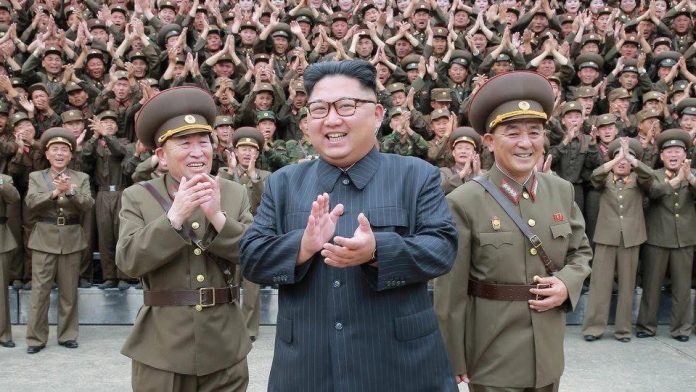
Mar 11(Jowhar)-Wasaaradda Arrimaha Dibadda ee Kuuriyada Waqooyi ayaa si kulul u cambaareysay hawlgallada militari ee ay Maraykanka iyo Israa’iil ka fuliyeen gudaha Iran. Wasaaraddu waxay sheegtay in weerarradaasi ay yihiin “dagaal gardarro ah oo aan la aqbali karin”, isla markaana ay ka tarjumayaan waxa ay ku tilmaantay siyaasad awood sheegasho ah oo Washington ay ku dhaqmeyso.
Bus blaze in Switzerland kills at least six, police confirm
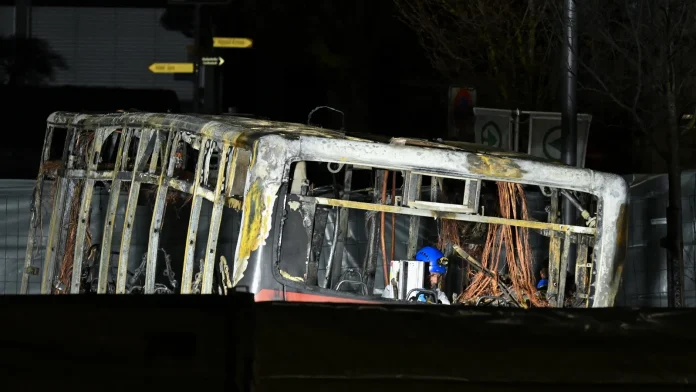
A small Swiss town wakes to smoke and sorrow
On an otherwise ordinary morning in Kerzers, a town of quiet streets and neat façades in the canton of Fribourg, the day began with an unsettling roar: sirens, the crackle of radio chatter and a column of black smoke rising against a pale alpine sky.
What followed was both stark and painful in its simplicity. A bus, once a vessel of routine journeys and commuter conversations, became a scene of tragedy. At least six people died when the vehicle was engulfed in flames on a road through the town, police say; three others were taken to hospital with injuries. Local authorities have opened a criminal investigation.
The scene: chaos, courage and questions
Emergency crews arrived to a tableau that could have been lifted from a disaster drill: charred metal, scorched seats, flattened glass and the hasty, brave work of first responders and bystanders. Footage recorded by onlookers—shaky, immediate—shows passengers escaping, some limping, some helping others, some in shock.
“People were running. There was smoke everywhere. I could hear people crying and trying to call family,” said Anaïs, who lives a few blocks from the scene and watched from across the street. “I tried to give a bottle of water to a woman. She kept repeating a name. It’s something you never expect to see here.”
Frederic Papaux, a spokesperson for the Fribourg city police, said the evidence gathered so far points to an intentional act by someone on board the bus. “At this stage, we have elements suggesting a deliberate act by a person who was inside the bus,” he said. Papaux also confirmed that no other vehicle was involved.
Authorities have been cautious in describing the exact mechanism of the blaze. Social media users were quick to post speculation—some claiming, unverified, that gasoline had been involved. Papaux declined to confirm that detail, saying investigators were still piecing together how the fire started.
First responders and solidarity
In the initial hour, firefighters worked to bring the flames under control while paramedics treated wounded passengers. Local residents gathered at a community centre that quickly became a hub for anxious relatives and volunteers offering blankets, coffee and phone chargers.
“We’re a small town and when something happens, everyone pitches in,” said Marcel, a volunteer who helped relay information to families. “There was a woman trembling with her child; she’d missed the bus. She kept thanking us even though she was in shock.”
Voices from Kerzers: grief and disbelief
Kerzers sits about 20 kilometres from Bern, a town where church towers mark the skyline and the rhythm of life is punctuated by market days and cycling commuters. In places like this, an event like a bus fire lands with special force—every loss feels intimate.
“You don’t imagine this here. You don’t think of flames, of panic on the morning route,” said Philippe, a shopkeeper whose bakery sits near the road where the bus burned. “We will remember who helped. We will remember those lost.”
Others reflected on how quickly a normal Tuesday can be rewritten. “I saw a grandmother hugging a photo of a child—just holding it like a talisman,” one resident told me. “That image will stay with me.”
What investigators are focusing on
The police have framed their work as a criminal investigation. That means tracking witness testimony, reviewing video evidence from dashcams and phones, and conducting forensic analysis of the vehicle and its contents. Forensic teams will be looking for accelerants, the point of ignition and whether mechanical failure played any role.
Experts caution that even with a wealth of footage, establishing motive and sequence can take time.
“When an incident is suspected to be deliberate, investigators have to move carefully to build a chain of evidence that will stand up in court,” said Dr. Simone Keller, a Swiss criminologist who has advised on high-profile cases. “And there’s also the human element—interviewing survivors, who are often dealing with trauma and shock.”
A country in mourning—again
Swiss President Guy Parmelin expressed sorrow, issuing condolences to those affected while noting that the incident was under investigation. “It shocks and saddens me that once again people have lost their lives in a serious fire in Switzerland,” he wrote on social media.
The comment echoed a national sense of vulnerability. Switzerland is not immune to public tragedies, and memories are still fresh of the January bar fire in Crans-Montana, which killed 41 people and injured 115. That catastrophe prompted painful questions about safety, regulation and emergency response across the country.
Switzerland’s population is roughly 8.7 million, and its public transport system—buses, trams and trains—remains a backbone of daily life. Incidents like this expose not only individual grief but broader anxieties about public safety in spaces we assume to be secure.
Wider themes: safety, mental health and community resilience
There are larger threads running through this tragedy. If investigators confirm a deliberate act, the question of motive will surface: Was it personal, political, ideological—or something else? And what does such a step say about the unseen stresses people face?
Experts increasingly point to the intersection between violent incidents and mental health, social isolation or ideological radicalization. “There’s no single narrative,” Dr. Keller said. “But there is a pattern in many societies where private despair, political signals or easy access to means can precipitate public acts of violence.”
At the same time, Kerzers’ response—neighbours offering shelter, strangers serving coffee, volunteer networks mobilizing—shows another side: community resilience. How communities recover, how they remember and how they press institutions for answers will shape the months ahead.
What comes next—and what you can do
Investigations will likely take weeks. For the families and friends of the victims, the timeline of grief has no calendar. For the rest of us, there are immediate, simple acts that matter: supporting local relief funds, listening to survivors’ accounts rather than amplifying speculation, and pressing for transparent, accountable inquiries.
If you live in Switzerland or travel its roads regularly, you may find yourself asking: how safe are our public spaces, really? What systems are in place to prevent, detect and respond to such acts? And, more personally, how do communities cushion trauma when the unthinkable happens?
Remembering the human names behind the headlines
News cycles move quickly, but the faces of those who died or were injured will remain in Kerzers’ memory. A candle at the church square, a bouquet left by the road, whispered names at the market—these are the ways towns stitch grief into their fabric.
“We will keep cooking for the families, we will open our doors,” Marcel said. “That’s what people do here. We don’t let them stand alone.”
As the investigation unfolds, as forensic teams comb through evidence and witnesses recount their versions of a terrible morning, one simple truth remains: a community is counting its losses and trying to make sense of a life interrupted. What else can we offer but attention, compassion and the resolve to learn why this happened—so it might never happen again?
Heaviest strikes on Iran yet as markets forecast conflict’s end
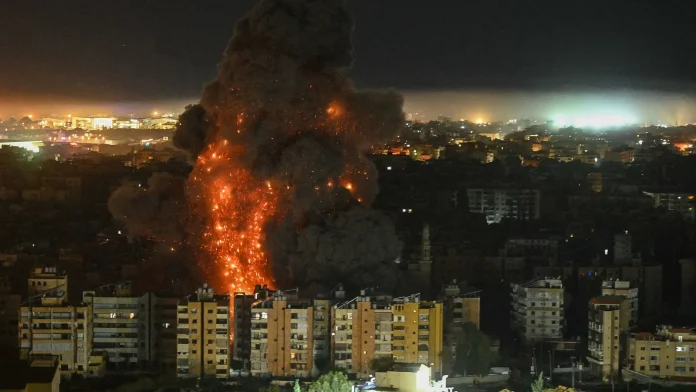
A Night That Felt Like the End of the World
Before dawn, the sky over Tehran sounded like a drumbeat from some terrible, unstoppable machine.
“It was like hell,” a woman who only gave her name as Roya told me, her voice trembling with a mix of anger and exhaustion. “They were bombing everywhere—our children woke up screaming. There’s nowhere to hide that feels safe.”
That description—simple, raw—captures the rhythm of a conflict that has spilled across borders and into the lives of ordinary people, while trillions in worldly value have flickered on trading screens. In the space of hours, the United States and Israel launched what military spokespeople described as the most intense wave of airstrikes of this war. Iran answered with missiles, drones and vows to choke the flow of energy through the Gulf.
Waves of Fire, Waves of Fear
The Israeli military, speaking in terse posts on Telegram, announced “an additional wave of strikes” on targets in Tehran. The Pentagon said U.S. forces were participating in a concentrated campaign of fighters and bombers. Iran’s Islamic Revolutionary Guard Corps warned it would prevent any oil shipments from transiting the Persian Gulf while attacks continued—an ominous threat when the Strait of Hormuz still carries roughly one-fifth of the world’s crude oil and liquefied natural gas.
Explosions rocked capital cities. Residents of Tehran reported air raid sirens, muffled sounds as air defenses intercepted incoming rockets, and whole neighborhoods plunged into fear. In the Gulf, officials reported missile and drone strikes against bases in Qatar and Iraq and attacks on American troops gathered at Al Dhafra (UAE) and Juffair (Bahrain). Iranian state media later reported strikes on U.S. installations in Bahrain as well.
Across the border, Beirut bristled with its own campaign: Israeli strikes aimed at Hezbollah positions, a group that Tehran says it supports and which has fired rockets into northern Israel in recent days. A conflict once focused on targeted reprisal has become a regional cascade.
The Human Toll—A Growing, Grim Ledger
No matter how precise the military language, the numbers tell a threadbare tale of civilian suffering. Iran’s U.N. ambassador said more than 1,300 Iranian civilians have died since the air campaign began on 28 February. He reported nearly 8,000 homes destroyed and 1,600 commercial and service centers damaged, along with strikes on schools, clinics and energy infrastructure.
On the Israeli side, Iranian strikes have killed at least 12 civilians. Dozens have died in Lebanon amid Israeli bombardments. In the opening days of the war, six U.S. soldiers were killed; the Pentagon now estimates about 140 American troops have been wounded, several seriously.
“When numbers become headlines, we forget that each is a story,” said Dr. Leila Madani, an emergency physician who has worked in field hospitals in the region. “A destroyed home means a child who has lost toys, a parent who has no medicines, hospitals stretched beyond capacity. That’s the invisible, lasting damage.”
Markets on a Tightrope
Financial markets, sensitive to supply shocks and political risk, reacted in waves. Oil futures spiked—one historic run saw crude climb toward $120 a barrel—only to recoil, with Brent settling back below $90 as traders swung between panic and hope. Asian and European stock indices staged partial recoveries, and Wall Street bobbed around pre-war levels, perhaps driven by investor faith that a swift political fix could end the conflict.
“Markets hate uncertainty, but they also price in the belief that leadership will contain this,” said Samir Patel, a commodities strategist in London. “If the Strait of Hormuz is threatened longer-term, we’re looking at sustained structural inflation in energy prices. Short bursts, markets can absorb—prolonged disruption is what breaks supply chains.”
The White House, echoing that calculus, assured Americans that once the objectives of the strikes were achieved, fuel prices would fall. President Donald Trump, writing later on his social platform, claimed that U.S. forces had “hit, and completely destroyed” ten of Iran’s mine-laying vessels—an assertion he did not detail further.
Postures and Perceptions: Calculations on All Sides
Politically, the tempo of attacks left analysts convinced both sides were acting under tight assumptions. A source familiar with Israeli planning suggested commanders were aiming to inflict maximum damage quickly, under the belief the window for broader operations might close if U.S. political winds shifted.
“There’s a shared understanding: this campaign will either escalate or end fast,” noted Professor Miriam Alavi, a Middle East analyst at a university in Istanbul. “When leaders perceive an imminent chance to stop, they often press harder in the short term to lock in gains.”
Iran’s leadership, meanwhile, struck a defiant tone. Parliament speaker Mohammad Baqer Qalibaf posted on social media that Tehran would not accept a ceasefire and must “strike the aggressor in the mouth.” A Revolutionary Guards spokesperson said Iran would not permit “one litre” of Middle Eastern oil to reach the U.S. and its allies while attacks continued.
On the Streets: Order and Fear
Despite simmering anger toward political elites, the protest movement that months earlier convulsed Iran is largely absent from the public square. Security forces warned against street demonstrations, with police chief Ahmadreza Radan vowing harsh force against anyone seen as acting “at the enemy’s request.”
“People are listening to their radios and wondering if the phone calls from their loved ones will come through tomorrow,” said Amir Hossein, a shopkeeper near Tehran’s Grand Bazaar. “The old fear returned very quickly.”
In Manama and other Gulf cities, images of damaged buildings, burned-out cars, and closed airports circulated across social feeds. A hotel manager in the UAE, speaking on condition of anonymity, said the hospitality sector is bracing for cancellations that could devastate small businesses already reeling from pandemic downturns.
What Now? Questions That Demand Answers
Every escalation asks a set of urgent questions: How long can global supply chains absorb continuing blows to energy infrastructure? Can the humanitarian needs inside Iran and Lebanon be met if strikes continue? And most profoundly—what does “victory” look like in a conflict where the costs are measured in children buried, schools bombed, and neighborhoods erased?
“Wars used to be about land,” Dr. Madani said. “This one is about deterrence, prestige, and control of supply routes. Those are abstract goals until you count the bodies. That’s the part leaders can’t bargain away.”
As you read this, consider the threads that bind distant consumers of oil and distant families seeking shelter under a kitchen table: a global economy dependent on fragile corridors, a political class willing to test red lines, and people who simply want morning without the sound of sirens. How do we build systems that protect civilians and energy flows simultaneously? How do we force diplomacy to move faster than munitions?
After the Smoke Clears
History suggests that when wars like this pause, the underlying grievances remain. Political settlements without rebuilding and accountability often produce only temporary calm. For families in Tehran, Beirut, and towns across the Gulf, a ceasefire might mean less immediate danger—but it may not mean justice, reconstruction, or the end of fear.
“All we ask is a return to ordinary life,” Roya said. “To the smell of fresh bread on the street, to children going to school without checking the sky.”
For now, the world watches the horizon: diplomats, markets, aid agencies, and worried parents, all waiting to see whether the next day brings quieter skies—or new echoes of the night that felt like the end of the world. What role will you play in the conversations that follow? How will global citizens weigh security against humanitarian need? The answers will shape not just the region, but a fragile, interconnected world.
Coco’s Law mother urges EU to overhaul cybercrime legislation
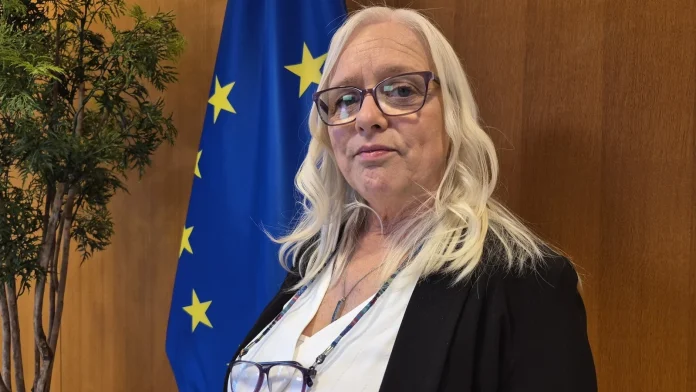
Strasbourg, a mother’s plea, and the quiet revolution she carried with her grief
When Jackie Fox stepped into the European Parliament chamber in Strasbourg on International Women’s Day, she did not come with statistics or slick policy briefs. She came with a photograph of her daughter, Nicole — known to friends as Coco — and with a sorrow so raw it made the room hush.
“She was a vibrant, funny, bubbly young woman… But she was targeted by relentless physical and online abuse for three and a half years,” Jackie told MEPs, her voice steady with the kind of clarity that grief sometimes brings.
I listened to that testimony and watched a modern institution pause. Members of the Parliament rose to their feet. Some wiped their eyes. Roberta Metsola, President of the European Parliament, called Jackie “one of Europe’s heroines” — a title that feels both right and painfully inadequate.
Coco’s story: small details that become unbearable
Nicole’s story is intimate in the worst sense — the circulation of images, whispers turned torrent, the endless humiliation that migrated from playgrounds to private messages to public humiliation online. Jackie described nights when she could not breathe from sorrow. “I couldn’t even breathe, I was crying that much,” she said.
This is the architecture of modern harm: a single post, a doctored image, or a coordinated campaign can magnify cruelty beyond the reach of traditional protections. For Jackie, that harm ended in the unthinkable. For others, it is an ongoing nightmare.
How grief became policy in Ireland
Out of Jackie’s campaigning came a law now widely known as Coco’s Law: the Harassment, Harmful Communications and Related Offences Act 2020. It criminalises serious online harassment and the sharing of intimate images without consent — an explicit recognition that virtual violations can have deadly, real-world effects.
Since the law’s passage, Ireland has seen at least 240 prosecutions under the act. Those numbers do not convey the full texture of change — a parent who once felt powerless now watches courts take action; victims who feared silence see their abusers held to account. But they do illustrate that when legal frameworks adapt, behavior can shift.
Why Jackie asked Europe to listen
Standing in Strasbourg, Jackie did not stop at Ireland. “Coco’s Law is bigger than one country,” she told MEPs. “Protect every adult and child before it’s too late. Please let Nicole’s story be the reason we change the future.”
Her plea is simple and urgent: patchwork protections across 27 member states leave gaps. A survivor in Dublin might have options a week earlier than one in another capital. Jurisdictional barriers, inconsistent criminal laws, and platform policies that vary wildly across borders mean perpetrators can find safe harbors.
There are signs Brussels is listening. The Digital Services Act, which came into force in 2023, tightened responsibilities for online platforms to address illegal content and dangerous misinformation. But laws like the DSA are about platform responsibility; they do not universally criminalise the spectrum of harassment Jackie described. That is why a legal baseline across the EU matters.
Voices from the room
“We can legislate, but we also have to educate,” a mental health counselor who works with cyberbullying survivors told me after Jackie’s speech. “Nothing replaces a community response: schools, parents, platforms, and lawmakers all must play their part.”
“What’s different now is the weaponisation of technology — the way algorithms amplify cruelty,” said an EU policy adviser who asked to remain unnamed. “We can tighten laws, but we must also pressure platforms to change their incentives.”
The new frontier: AI-manipulated intimate images
Jackie also warned of a dark new turn: AI-altered intimate images. The same tools that can generate art and assist medicine are being misused to place people’s faces onto bodies, to strip clothing from photographs, to create hyper-realistic fakes that humiliate and erase consent.
“There needs to be a law to prosecute people who think it’s okay to share an intimate image of someone or to change someone’s face or remove their clothes,” Jackie said. She welcomed Ireland’s intention to amend Coco’s Law to include AI images — but she urged the rest of Europe to follow.
Experts warn the problem is expanding. A growing body of research shows that deepfake images and videos are increasingly being used for revenge porn, political manipulation, and extortion. The technical barriers to creating these images are falling every day; what used to require skill and resources is now available in a few clicks.
Concrete steps Europe could take
Jackie’s call for a European response raises practical questions: what would effective, proportionate, and enforceable EU-wide protections look like?
- Establish a common criminal definition across the EU that covers non-consensual intimate imagery, AI-manipulated images, and sustained online harassment.
- Create cross-border investigative mechanisms so victims can seek redress even when content or perpetrators are located in different member states.
- Mandate rapid takedown and victim-support pathways on major platforms, with independent audits of compliance.
- Fund prevention and education campaigns in schools that teach digital consent and ethical technology use.
“Legislation must be coupled with resources,” noted a digital rights advocate. “We need funding for hotlines, counselling, and legal aid. Laws without support services are paper promises.”
The human dimension: wakes, cups of tea, and memory
In Ireland, grief is often expressed in ritual — a wake, stories told over cups of tea, the gentle stubbornness of memory. Jackie has taken that local language of mourning and translated it into civic action that resonates across Europe.
“I so struggle with the word ‘pride’ because I shouldn’t have to do any of this,” she told RTÉ News after her Strasbourg address. “But seeing the standing ovation, tears in their eyes — it just means that they’re empathetic. They see what I’ve done and most of all, every single person that walked out of that room knows who my little girl is.”
That public recognition matters. It transforms Nicole from a statistic into a presence in the minds of lawmakers, a moral compass guiding legislation away from abstractions and towards people’s lives.
A question for the reader
What would you want lawmakers to know about the online world you live in? How would you balance free expression with the urgent need to protect vulnerable people from coordinated abuse and technological exploitation?
These are not easy questions. They demand nuance: laws that deter harm without smothering dissent, platforms that respond fast but respect due process, societies that focus on prevention as much as punishment.
From grief to momentum
Jackie Fox walked into the European Parliament as a bereaved mother and left as a catalyst. The standing ovation was not an endpoint; it was an acknowledgement that one family’s loss had become a claim on the conscience of an entire continent.
“She’s in their heart or she’s in their head, and that’s so important to me,” Jackie said. Those words linger as an invitation: to remember, to act, and to build protections that ensure fewer families ever have to stand where she stood.
That, perhaps, is the clearest test of a humane digital age — whether we will make the tools we invent safe for the people who use them, and whether, when tragedy strikes, we choose to turn sorrow into lasting change.
Belgium pledges tougher action against anti-Semitism after synagogue blast
A pre-dawn rupture in Liège
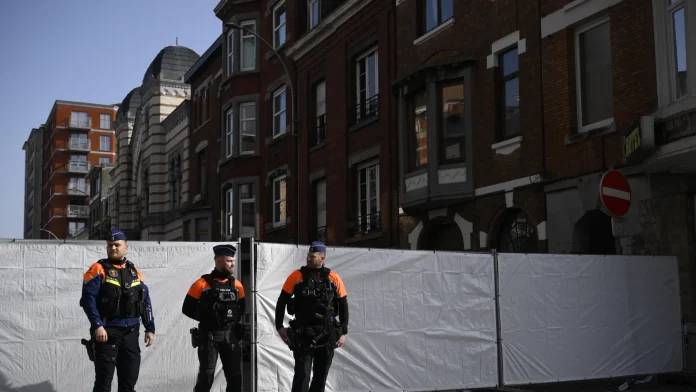
Before the city had fully woken, a sound tore through the fog that rolls off the Meuse: a single, sharp explosion that blew out windows across a quiet street and left a synagogue scarred at its threshold. It was 4 a.m. local time. No one was hurt. The damage, officials said, was material—but for a community that has carried both ancient memory and modern vigilance, the blow landed deep.
By dawn, police tape framed the scene, officers stood in small, tense knots, and a few early risers peered from behind curtains. The synagogue—an elegant building dating from 1899 that also houses a museum of Liège’s Jewish life—was marked by a scorched doorway and shattered glass. Volunteers from the community arrived with tea, blankets and a quiet, stubborn presence that felt like an answer as much as a vigil.
What happened, and who is investigating
The federal prosecutor’s office, which handles cases involving organised crime and terrorism, has taken the lead. A spokeswoman said investigators will be working through the day and that more information will be released when available. For now, police describe the incident as an explosion that caused “material damage” to nearby buildings but no physical injuries.
Bart De Wever, Belgium’s prime minister, spoke sharply online: “Anti‑Semitism is an attack on our values and our society, and we must fight it unequivocally. We stand in solidarity with the Jewish community in Liège and across the country.” Interior Minister Bernard Quintin called the blast “a despicable antisemitic act that directly targeted Belgium’s Jewish community,” and pledged stepped-up security around similar sites.
Voices on the street
“It felt like winter had suddenly stepped into our courtyard,” said Miriam Cohen, a retiree who has attended services at the Liège synagogue for decades. “We are shaken, but we will not be erased. This building holds the stories of so many families—our grandparents, our festivals, our prayers.”
Willy Demeyer, the mayor of Liège, was blunt: “We cannot allow foreign conflicts to be imported into our city.” He was referencing the wider tensions feeding into European streets—conflicts in the Middle East, and the angry echo they can create in local communities.
A bakery owner on the corner, whose windows were also dusted with debris, wiped glass from a display and said, “We heard the blast and thought about the worst. The shop will open today. People need to eat; people need to work. But we also need to stand with the neighbours.” His hands were floury. His voice was steady. The smell of warm bread cut through the faint tang of smoke nearby.
History, memory and a community’s footprint
The Liège synagogue was built at the close of the 19th century and doubles as a small museum chronicling the Jewish presence in the city. Belgium’s Jewish population is estimated at around 50,000 people, concentrated primarily in Antwerp and Brussels. Over the last decade, Jewish institutions have lived under varying degrees of heightened security—synagogues, schools and community centres sometimes ringed with police or guarded discreetly by private security personnel.
After the Hamas attack on Israel on 7 October 2023 and the subsequent wider regional conflict, Belgian authorities reported a rise in antisemitic incidents and took measures to protect sites considered at heightened risk. The memory of those months—full of protests, counter-protests and painful polarization—still hangs in the corridors of community centres and the halls of government.
Beyond the headlines: how local acts mirror global tensions
We live in an age when a conflict thousands of kilometres away can ignite anger in a neighbourhood café, on a social media feed, and, sometimes, at the door of a place of worship. That is one of the harder lessons of this morning’s blast: the world’s geopolitical fault lines do not stay distant. They seep into daily life, shaping who feels safe and who feels targeted.
“Violence blossoms where narratives are allowed to go unchecked,” said Dr. Anya Verhulst, a researcher who studies radicalisation and communal violence in Europe. “We’re seeing a dangerous mix: online echo chambers, rapid mobilization around foreign events, and an undercurrent of old prejudices. When those combine, public spaces become vulnerable.”
Facts and figures to consider
- Belgium’s Jewish population: ~50,000, primarily in Antwerp and Brussels.
- Synagogue in Liège: built in 1899; also serves as a museum of local Jewish history.
- Authorities had increased security at Jewish sites after October 2023 due to a rise in reported anti‑Semitic acts linked to the Gaza war’s fallout.
Resilience, solidarity and the work ahead
Within hours of the blast, messages of support spread across the region. Neighbouring mosque leaders called the synagogue to offer assistance. A group of high‑school students arrived with flowers and a card: “Not in our city,” it read in neat handwriting. The gestures were small but charged with meaning.
“Security makes a space for prayer to continue,” said Rabbi Samuel Levy of the nearby community. “But so does the solidarity of our neighbours. Both are necessary. We will repair the windows. We will reopen the museum. And we will keep telling our story.”
As investigators work, two urgent questions hang in the air: how to prevent these violent spillovers from happening again, and how to heal a sense of rupture within a plural city. Solutions will not be simple. They will require law enforcement and intelligence work, yes, but also education, dialogue and relentless community engagement to undercut the myths and resentments that lead to attacks.
- Practical security measures: better lighting, coordinated patrols, fast incident reporting systems.
- Community investment: more interfaith events, youth programs aimed at dialogue and mutual understanding.
- Digital accountability: platforms working with civil society to stem the spread of hateful, inciting content.
Questions for the reader
When violence touches a local shrine of memory, how should a city respond—by fortifying every door, or by opening more conversation? Which costs are we willing to accept to protect freedom of worship and speech? And what collective work can bridge the growing gap between global conflicts and neighborhood safety?
These are not rhetorical quandaries for politicians alone. They are questions communities everywhere must wrestle with as the world grows more interconnected and more combustible.
Closing scene: an ordinary morning rewritten
By mid‑morning the first forensic vans had left. The synagogue’s custodians swept up rubble and set up a temporary notice: “Services continue as usual. All are welcome.” A small knot of neighbours stood outside, exchanging coffee and tired smiles. Someone unfolded a folding chair and sat, as if to remind the city that life—prayer, commerce, conversation—goes on in public, even after a shock.
In the days to come, investigators will follow leads and authorities will make announcements. But the deeper work—repairing trust, teaching young people to separate distant conflicts from neighbours in their own street, and making space for the vulnerable to feel protected—rests with all of us.
As you read this, ask yourself: what would you do if your city were shaken? And how would you answer the call to stand, quietly or loudly, with those who are under threat? Because solidarity, like safety, begins in small acts—and sometimes with a cup of tea offered across a threshold that has just been broken.
EU poised to bolster maritime operations to safeguard commercial shipping lanes

Smoke on the Horizon: Europe Races to Guard the Sea Lanes as a Middle East War Ripples Across the Globe
There is a new kind of unease in Brussels this week — not the bureaucratic irritant of late-night dealmaking, but a visceral, maritime anxiety. Leaders from across the European Union gathered in hurried conversations after strikes and counterstrikes in the Middle East sent shockwaves through the world’s shipping lanes. What began as a regional spiral now reads like a global emergency drill: ports on standby, tankers rerouting, and markets wrestling with the prospect of a long, costly disruption.
“We can no longer treat these waters as remote,” one senior EU diplomat told me, looking past a bank of monitors showing freight routes. “The Red Sea and the Gulf are the arteries of modern trade. If you squeeze them, you squeeze our economies.”
From the Strait of Hormuz to the Port of Rotterdam
The Strait of Hormuz — a slim ribbon of sea through which roughly one-fifth of the world’s oil flows — has always been geopolitically sensitive. This month, it has grown into a choke point. Shipping through the strait has all but paused as commercial captains weigh the risk of traversing one of the planet’s most vital conduits. Insurance premiums on some routes have ballooned, and a handful of carriers have rerouted around the Cape of Good Hope, adding days and millions in fuel costs to voyages.
“We used to joke about taking the ‘scenic’ route,” said Captain Luis Moreno, who runs a refrigerated cargo line that links the Mediterranean with East Africa. “Now ‘scenic’ means ten extra days at sea and a crew more tired than they were three weeks ago.”
The immediate economic shock is visible: oil prices surged close to $120 a barrel during fresh strikes, and European gas markers spiked by as much as 30% in intraday trading. These are not abstract numbers. They turn into higher heating bills in Lithuania, pricier jet fuel for Spanish airlines, and a heavier hand on small businesses already bruised by past crises.
Where Brussels Steps In
European Commission President Ursula von der Leyen told EU ambassadors that citizens are “caught in the crossfire,” pointing to an Iranian-made drone strike that struck a British base on Cyprus and to the broader displacement and trade disruption unfolding across the region.
In response, senior EU figures — including Portugal’s Prime Minister António Costa and Commission leaders — have signaled openness to reinforce the bloc’s maritime operations in the Red Sea and nearby waters. “We are ready to tailor and enhance operations to better respond to the situation,” a Commission statement said. Behind the formal phrasing, military planners are quietly mapping out options for stronger patrols, convoy escorts, and enhanced surveillance.
Anna-Kaisa Itkonen, a Commission spokeswoman, emphasized a practical reassurance: “There is no imminent oil supply shortage for Europe. Our rules require member states to maintain the equivalent of 90 days of emergency stocks.” It is a technical buffer, but one that matters when debates on rationing and energy conservation begin to surface.
On the Ground — and at Sea
Walk the docks of Limassol in Cyprus and you feel the tension differently. Fishermen who once woke to the gulls and the measure of the sea now speak of patrol boats and ship radio chatter. “We are not used to seeing the navy so often,” said Myrto Demetriou, who has sold fish there for three decades. “People worry about export permits, about supplies, about our sons who sail.”
In Rotterdam, cranes keep moving but conversations among terminal workers have an edge. “Containers are arriving late or not at all,” said a logistics manager who asked not to be named. “Some clients are asking us to pause shipments because their warehouses are full. Others need alternative routes; none of it is cheap.”
Economics, Politics, and the Risk of a Long Conflict
Valdis Dombrovskis, the EU economy commissioner, put the stakes plainly: a quick, contained flare-up might be manageable. “If the conflict stays short, the economic fallout will be limited,” he told reporters. But, he warned, a protracted war — with ongoing disruption of maritime traffic and attacks on Gulf energy infrastructure — could become a substantial inflationary shock for Europe and the world.
Imagine months of higher energy bills, delayed parts for factories, and a steady climb in the price of staples. Those are not far-fetched scenarios. The memory of the 2022 energy shock — when Russia’s invasion of Ukraine sent gas prices skyward — remains fresh in policy circles. Today’s problems arrive on top of that vulnerability: supply chain fragility, stretched reserves, and political fatigue in capitals that have been governing through crisis for years.
- About 20% of global oil passes through the Strait of Hormuz.
- EU rules require member states to hold 90 days’ worth of emergency oil stocks.
- Oil briefly neared $120 per barrel during recent retaliatory strikes.
Diplomacy in Overdrive
Behind the military manoeuvres, there is frantic diplomacy. Calls between Brussels and regional capitals, emergency meetings with NATO partners, and appeals to international shipping bodies are happening around the clock. “This is not just about ships,” said Dr. Leila Haddad, a Middle East analyst at an international think tank. “It’s about whether the rules that govern international behavior still mean anything when proxies, drones, and asymmetric strikes muddy every response.”
Von der Leyen framed the crisis as more than a regional war. “The longer-term impact poses existential questions about the future of an international rules-based system and the EU’s place in the world,” she told diplomats. “Retrenching is a fallacy.” The sentiment is clear: Europe feels pulled into a global responsibility, whether it likes it or not.
The Wider Political Landscape
At home, the EU also faces thorny politics. An ongoing €90bn support package for Ukraine has been held up in the European Parliament and faced resistance from certain member states, complicating the bloc’s ability to act in a coherent, decisive way. “Our credibility and security are at stake,” von der Leyen said, stressing that commitments must be honored even as new crises demand attention.
The tug-of-war between short-term emergency measures and long-term strategic planning plays out in dull committee rooms and on the immediate decks of the world’s ships. Both matter.
Questions for the Reader — and for Ourselves
What does it mean for a world whose commerce depends on narrow choke points when those points become battlefields? How should democracies balance the urge to protect citizens’ pockets with the need to uphold international norms? And perhaps more personally: do we, as consumers, grasp how a late delivery or a jump in the heating bill connects to geopolitics thousands of miles away?
As the EU prepares to beef up maritime patrols and as leaders talk of “tailoring” operations, the scene is one of adaptation under pressure. The real test will come not in press releases but in whether governments can turn strategic intent into practical protection — for shipping, for energy supplies, and for the civilians who find themselves, increasingly, “caught in the crossfire.”
For now, the sea keeps moving, but more cautiously. And the rest of us watch its tide lines for signs of a return to calm — or a longer journey into uncertainty.
Trump: “Haddii aan tallaabo deg deg ah laga qaadin Iiraan, Israa’iil waa la tirtiri”
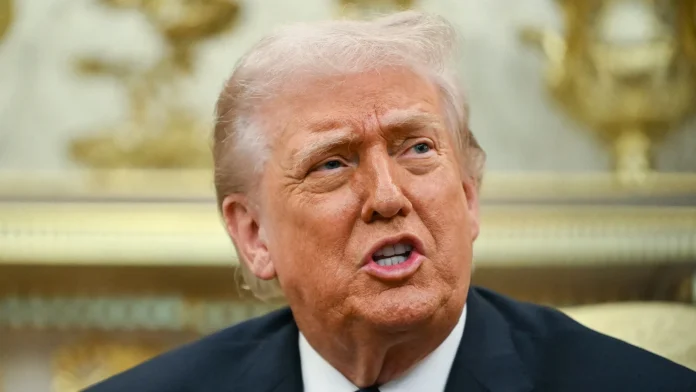
Mar 10(Jowhar)-Madaxweynaha Mareykanka Donald Trump ayaa sheegay in Israa’iil ay wajaheyso khatar weyn haddii aan tallaabo militari oo deg deg ah laga qaadin Iiraan bisha June ee sanadkan.
UAE Says Drone Struck Its Consulate, Live Coverage Underway
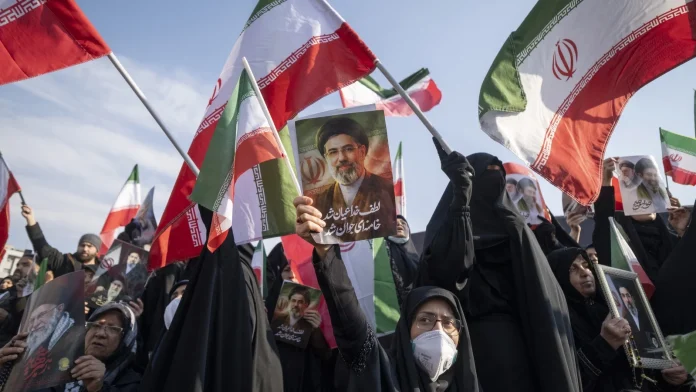
The United Arab Emirates (UAE) consulate in Erbil, Iraq, was struck by a drone on Thursday, causing minor damage to the building. The incident has sparked live coverage and intense scrutiny as authorities investigate the attack.
Roar Returns to Cheltenham as Festival Struggles with Declining Attendance
The Roar, the Rivers of People, and the Price of a Pint: Cheltenham’s Festival in 2026
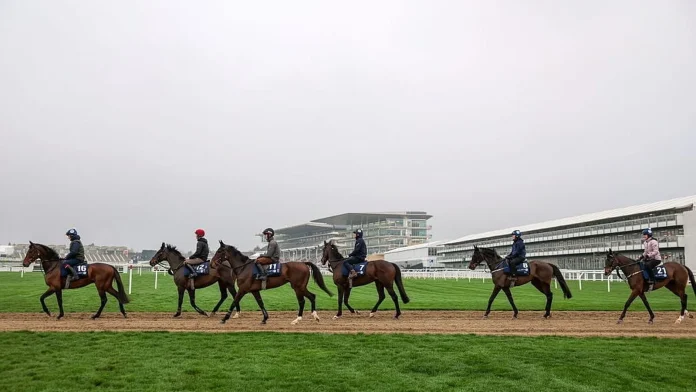
There is a sound that arrives with the first pale wash of March sunlight over the Cotswolds — a human tide letting out a collective breath that has a name and a history: the Cheltenham roar. It cracks across Prestbury Park like a starting gun, sends pigeons from the grandstand roof into the sky, and tells you in one instant that this is not merely a horse meeting, but a four-day ritual that stitches together families, bookies, trainers and townsfolk.
Ask any regular and they’ll tell you the roar feels the same every year — loud, warm, tribal. Yet under the noise, the numbers are talking back. Attendance that once shot to a post-pandemic high of roughly 280,000 in 2022 has tightened into a new rhythm. Organisers capped daily entry at 68,500 the next year to make room for comfort; for 2026 that cap has been nudged again to 66,000, a small retreat that signals a bigger question: how do you preserve the atmosphere when the economics of getting here are changing fast?
Counting the Crowd — Why 219,000 Matters
When the festival drew around 219,000 people last year, pundits noticed. It was the smallest turnout in about a decade and day-two footfall dropped by more than a third compared with earlier years, with only some 42,000 on course. For a festival estimated to inject roughly €300 million into the local economy, that decline is not an academic curiosity — it is a pulse reading for pubs, B&Bs, taxi drivers and the bakeries that racegoers line up at before the first race.
“You can feel it in the town,” says a Cheltenham pub owner, wiping down a bar scarred by decades of shouting bookies and jubilation. “Thursday used to be pandemonium. People would stay the week and fill every corner. Now it’s a shorter, sharper weekend for many. That changes what the town needs from us.”
Small Fixes, Big Hopes
Organisers have not stood idly by. In the autumn they rolled out a package of measures designed to make the week more inviting for repeat visitors and new faces alike: a reduced daily cap for comfort, extended “early bird” windows for cheaper tickets, and a rollback of drink prices to 2022 benchmarks — meaning a pint of Guinness will retail at about £7.50 (€8.67) during the meeting. There’s also a special four-day package for those travelling from outside Britain, offered to early bookers at around £299 (€346).
To ease the accommodation pinch — a perennial headache in a town that swells drastically for the week — the racecourse’s “Room to Race” initiative expanded this year. The scheme pairs visitors with more than 500 discounted rooms and alternative lodgings beyond Cheltenham’s town centre, an olive branch to any traveller gobsmacked at last-minute hotel invoices pushing €500 a night for a single room.
- Daily cap in 2026: 66,000
- Post-Covid peak attendance (2022): ~280,000
- Attendance last year: ~219,000
- Estimated local economic impact: ~€300 million
- Price of a pint during the festival (2026): ~£7.50 / €8.67
“We’re trying to protect the feel of the place while making it more affordable,” says a festival organiser, who adds that comfort and atmosphere are not luxuries but essentials that keep people coming back. “People remember how they felt at Cheltenham more clearly than the winners they saw.”
The Irish Connection: Horses, Habit, and Tradition
Walk the parade ring and you’ll see tricolours as frequently as Union flags; roughly one-third of festival goers make the crossing from Ireland. The Irish presence is not just demographic, it is competitive. In recent festivals, Irish trainers have dominated the big races and the Prestbury Cup — the tally of Irish versus British winners — has not been prised back to Britain since 2015. Last season Ireland registered a commanding 20 to 8 victory, a margin driven in part by prolific yards whose names have become shorthand for excellence.
That sporting imbalance feeds into broader strategies. British trainers and owners have been shifting their buying and recruitment policies, eager to reverse the tide. At the same time, Ireland’s powerhouse yards — and a new generation of trainers — mean the festival is still widely expected to tilt green.
“We travel for the horses,” says a woman from County Carlow who has booked through a long-established Irish tour operator for two decades. “Two days of racing, two nights away — that’s the sweet spot for us now. We still get the same crack, but we don’t have to be exhausted by Sunday.”
Tully’s Travel, one of the specialist Irish operators, reports steady bookings despite the changing habits: two-day packages — flights, transfers and rooms — can be had for around €500, a sum many consider reasonable given the costs of travel. But other options have sprouted. The phenomenon known as “Costa del Cheltenham” has British fans flying south to Spain or the Canaries to watch the livestreams in sunshine, swapping muddy boots for flip-flops and a TV screen that shows Rachael Blackmore as brightly as it shows the Atlantic.
Who Comes, and Why It’s Changing
The contours of the crowd are shifting. Long-standing four-day devotees are aging out or choosing to condense their pilgrimage into two days. Younger fans, or those more price-sensitive, are finding creative ways to be present without breaking the bank: coach trips, morning commutes for day tickets, or the increasingly popular practice of staying in neighbouring towns and villages.
“Cheltenham used to be the week where you didn’t sleep,” laughs a young punter from Gloucester. “Now we plan, we pick two big days and we go hard. It’s more efficient — and our liver agrees.”
Beyond the Ropes: What Cheltenham Says About Sport and Society
There is a deeper story here than attendance figures and ticket caps. Cheltenham is a microcosm of how tradition adapts in a world of rising costs and shifting leisure patterns. It raises the question: how do cultural moments survive when the economics that sustain them are under pressure? And who gets priced out of rituals that were once the province of middle-class weekenders and racing obsessives alike?
Local businesses talk about the festival like family: the baker who sells out of sausage rolls by 11 a.m., the taxi driver who memorises the faces of regulars, the bar staff who can predict the order of pints on a foggy Friday. For them, the festival is lifeblood. For visitors, it is respite, sport, superstition, and sometimes, community. For trainers and owners, it is an advertising billboard measured in stud value and reputational capital.
And for the rest of us — the spectators of these stories — Cheltenham asks us to reflect. Do we preserve a beloved festival by making it more exclusive, or by bending everything slightly to meet modern needs? Can the roar remain, even as the crowd reshapes itself?
When the first tape snaps at 1.20pm for the Supreme Novices’ Hurdle, the questions will wait at the rails and be answered, for a moment at least, by the shapes of horses and the rhythms of the crowd. Until then, the town hums with anticipation, with last-minute suitcases being jammed shut and voices comparing form lines as if they were family stories. The roar will come — as it always does — and with it the delicious, complicated certainty that for four days, Cheltenham matters.
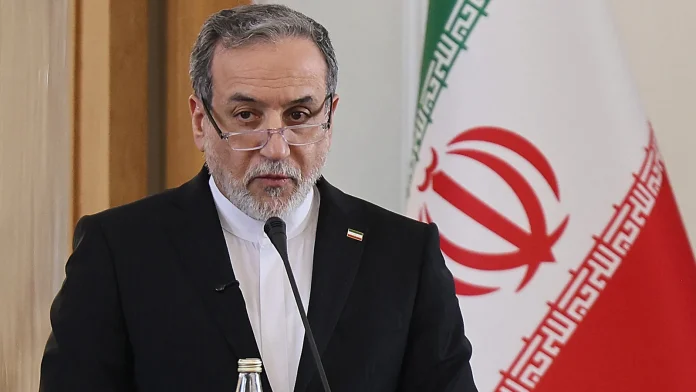
Iran’s foreign minister says negotiations with US are off the table
Smoke over the Gulf: When a Waterway Became the World’s Pressure Point
There are images that lodge in the mind: black smoke curling from storage tanks outside Tehran, folk huddled in doorways as air raid sirens wail, an oil tanker idling in the pale dawn, its crew staring at a churning horizon. These images are not only postcards from one region in crisis; they are signposts for a global economy learning — again — how fragile its circulatory system can be.
In the space of days, the Strait of Hormuz, a narrow throat of water no wider than a long bridge and through which roughly 20% of the world’s crude oil normally transits, stopped being an abstract strategic term. It became a chokepoint, a bargaining chip, and, for many, a very present danger.
Echoes of Conflict: Sirens, Missiles and Markets
Bombs and missiles do more than rearrange buildings; they reshape markets and moods. After a renewed barrage of missile and drone strikes from Iran toward neighbouring states — and a volley that briefly set off alarms in Tel Aviv — energy benchmarks and global equities swung wildly.
Oil, which had already been flirting with triple digits since the shocks of 2022, spiked past $100 a barrel before retreating as traders took solace in short-term signals that a broader confrontation might be limited. Wall Street, which opened lower, rebounded into positive territory when political leaders suggested the fighting would be brief — a reminder that even amid devastation, the markets are trying to price certainty into chaos.
But certainty is thin. Shipping lines announced suspensions and diversions. One global carrier formally halted certain Gulf exports; port authorities reported dozens of vessels sheltering or rerouting. Maritime insurers raised premiums. An industry contact in Dubai, a veteran shipbroker, told me quietly: “We used to follow charts. Now we follow the headlines.”
Voices from the Ground
Walk through the neighborhoods brushing Tehran’s industrial outskirts and you feel the heat from oil depot fires even before you see the smoke. “My neighbor lost his shop to the blast,” said Laleh, a teacher watching children play under the murky sky. “We are not trained for this; we are just trying to be human.”
In Bahrain, where a fire at an oil facility led the national energy company to declare force majeure, a refinery engineer asked to remain unnamed: “You design systems for leaks and storms, not for being in the middle of a political game. We’re running on emergency procedures and prayers.”
At a small port café in Muscat, a Harland & Wolff-decommissioned sailor turned barista explained the mood among seafarers: “The crew calls their families every night. They say the sea is calm, but everything else isn’t. We feel like chess pieces on a board where no one tells us which move is the right one.”
Officials and Analysts Speak
Diplomats talk in cautious cadences. A European official, asking not to be named, described an unfolding plan to escort commercial vessels once direct hostilities subside. “Think of it as a temporary shield,” they said. “But every shield invites a strike.”
Meanwhile, an academic who has studied Iran’s political currents for decades leaned on his cane and said bluntly: “A new generation of leadership sees deterrence through action, not negotiation. They measure power not in treaties but in the maps they redraw nightly.”
Statistics that Matter
Numbers give shape to alarm. Consider these facts now circulating among analysts:
- About 20% of global crude typically passes through the Strait of Hormuz.
- Since the waterway was effectively blocked, shipping firms reported around ten vessels coming under attack in or near the strait.
- A single day’s spike in benchmark crude pushed prices above $100 per barrel — levels not seen consistently since the shock of Russia’s 2022 invasion of Ukraine.
- On the ground in Lebanon, cross-border exchanges of fire since early March have been devastating: reported casualties run into the hundreds, with more than 1,000 wounded.
Those figures are not sterile; they translate into higher pump prices, strained supply chains, and families counting the cost of lost livelihoods.
From Capitals to Corners: The Political Chessboard
Diplomacy is moving at two speeds. On the one hand are the public statements: denials, ultimatums, vows of further strikes. On the other hand are quiet conversations about escort missions for tankers, contingency plans for energy rationing, and emergency economic measures.
One European foreign minister told me, “We are preparing for the defensive — for now. But any escort mission across that stretch of water carries obvious risk. You sail in, you become a target for someone’s strategic calculus.”
The calculus is not abstract. Iranian-backed groups across the region — from Yemen’s Houthis to Lebanese militias — have publicly pledged solidarity. Allies from other states have offered rhetorical backing. What was once a contained regional contest now has the look of a proxy-laden arena where every move reverberates globally.
Human Costs and the Cold Rituals of War
Not all losses make headlines. The dignified transfers at Dover Air Force Base — solemn ceremonies where the fallen are returned to American soil — have become recurring reminders of the human toll. Families grieve in slow-motion, while policy-makers parse the strategic logic that led soldiers to distant airfields and bases.
“When they bring him home, there will be empty boots at the table,” a friend of a fallen marine told me. “That is the part that doesn’t fit into briefings.”
What Comes Next? Questions to Sit With
So where do we go from here? If the strait remains blocked, expect ripples: higher fuel costs, longer shipping routes around Africa, and tougher choices for central banks balancing inflation and growth. If the corridor reopens too quickly, it may only paper over deeper grievances that sparked the conflict.
And while officials trade bravado — who will determine the war’s end? — families and shopkeepers will judge the outcome by one measure: can they return to sleep without the siren’s wail?
Ask yourself: when a single waterway can sway the global economy, what does that say about our interconnectedness? Whose lives do we count when we talk about sanctions, blockades, and strategic deterrence?
Closing Notes: The Texture of a Troubled World
There is nothing inevitable about the course of events. Battles are fought in rooms and on maps, but their consequences are lived in kitchens, on hospital stretchers, and in the cramped bunks of seafarers. The smoke over Tehran, the smouldering fields of refinery towns, and the quiet halls at Dover are different verses of the same song: a world where local grief becomes global policy in an afternoon.
For now, the Strait of Hormuz is a question mark. The answer will be written in policy papers, on sailors’ manifestos, and in the slow arithmetic of grief. Until then, we watch, we listen, and we remember that the distance between a missile and a marketplace is shorter than we think.
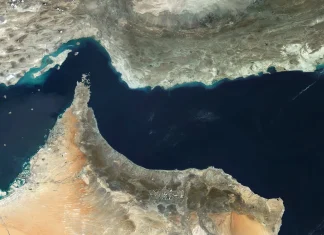
Second Turkish-owned vessel passes through the Strait of Hormuz
Another Turkish-owned vessel has successfully passed through the strategically significant Strait of Hormuz, marking the second such passage in recent weeks. The vessel, carrying...
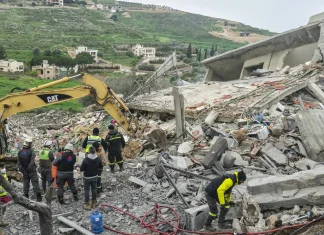
MP warns Israeli occupation in southern Lebanon has become ‘very dire’
In Southern Lebanon, Homes Become Frontlines — Voices from a Region Holding Its Breath
The sky over southern Lebanon has settled into a kind of...
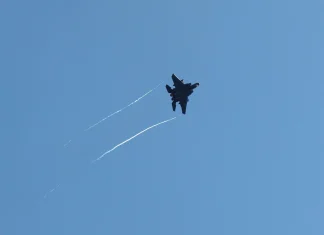
U.S. and Iran hunt for missing American pilot after warplane shot down
Skyfall: When the Night Became a Hunt — Two US Jets Downed, a Pilot Missing, and a Region Holding Its Breath
The Gulf night stank...
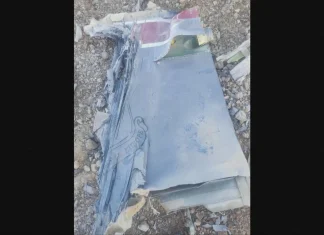
Live: US fighter jet shot down over Iranian airspace
When the Sky Broke: A Jet Falls and an Old Rivalry Reignites
The sun had not yet finished its climb when the news came in:...
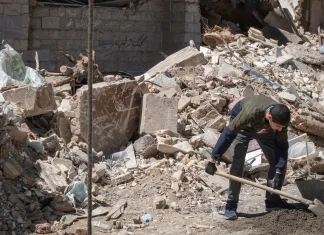
US fighter jet downed by Iran; pilot reportedly rescued
Smoke over the desert: an American warplane falls, and a region holds its breath
There are moments when the desert seems to inhale, as if...