

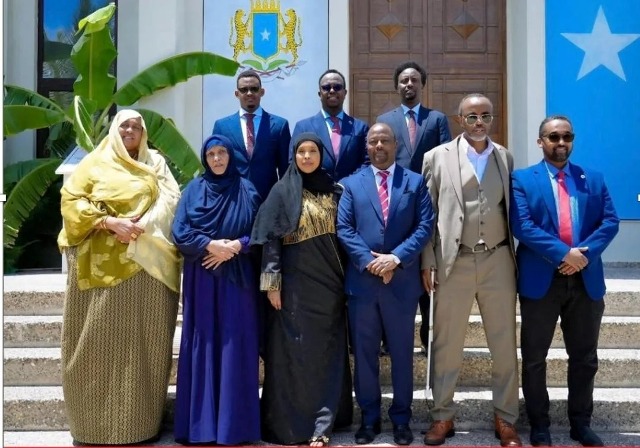
Mogadishu – Somalia’s Independent Human Rights Commission (NIHRC) is facing internal divisions following a dispute linked to the 28 March 2026 election in the South West State.
Turkey to Conduct Funeral Services for School Shooting Victims
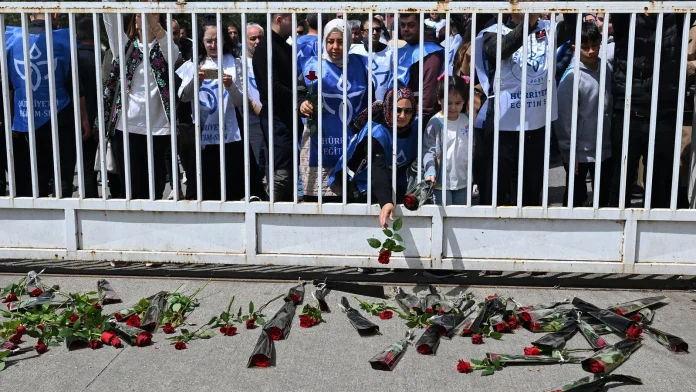
Grief in Kahramanmaraş: A City That Won’t Forget
On a cool morning in Kahramanmaraş, where vendors still fry the thick, stretchy Maraş ice cream that gives the city its sweet, stubborn reputation, flowers were being laid in a different kind of place: a school corridor that will now be remembered for a single, terrible day.
Families are preparing to bury nine people — eight children, mostly 10 and 11 years old, and a 55‑year‑old teacher — after a 14‑year‑old entered two classrooms and opened fire. The boy, authorities say, carried five weapons. He died at the scene; the exact circumstances of his death remain under investigation.
“I woke up to calls and then to the names of boys I had seen running to football practice yesterday,” said Fatma Demir, a neighbor of one of the victims. “You don’t expect laughter like that to stop so abruptly.”
What Happened — The Facts, As Known
Local authorities say the attack took place in the southern province of Kahramanmaraş. Police have said the perpetrator’s WhatsApp profile included an image referencing Elliot Rodger, the 22‑year‑old who carried out a 2014 killing spree in Isla Vista, California. Rodger killed six people before taking his own life; he left behind a manifesto and videos that have, over time, become part of an online mythology among some violent extremists.
Investigators seized digital media from the suspect’s home and from a vehicle belonging to his father, a former police inspector who has been detained. Authorities insist preliminary findings show no proven terrorist link and that this appears to be an isolated act, though they continue to probe all angles.
In the immediate aftermath, schools across Kahramanmaraş were closed for two days. Grief has been matched by anger and fear. Teachers’ unions rallied in Ankara, holding banners declaring, “We will not surrender our schools to violence,” and calling for broad strikes to demand accountability and protection.
Another Shock This Week
This massacre came on the heels of a separate shooting in the southeast, in the Siverek district, where a student opened fire at his former high school, wounding 16 people before taking his own life. Together, the two incidents have shattered a national sense of safety: Turkey, like much of Europe and Asia, has not seen the same pattern of school shootings that has so tragically become more common in the United States. That makes these back‑to‑back events all the more jarring.
How the State Responded
Police announced sweeping action on social media and online platforms following the shootings. Arrest orders were issued for 83 people accused of posting content that praised the crimes or criminals or otherwise disrupted public order. Authorities also reported blocking access to 940 social media accounts and shutting down 93 Telegram groups linked to provocative or inflammatory posts.
“We will investigate every thread that may have enabled this violence,” said a senior police official in Ankara. “This is not only a criminal inquiry but a societal one — how ideas spread, how young minds are shaped online.”
Voices from the Ground
In the market square near the schools, people spoke with a mix of bewilderment and anger. “My son begged me to let him play outside this morning,” a father named Mehmet Yıldız told me, voice breaking. “Now I won’t let him out of my sight.”
A local imam officiating a small prayer gathering said, “We teach forgiveness here. But parents must also ask why a child was able to bring weapons into a school. We must face that question together.”
Union leaders were blunt. “Teachers are tired,” said Leyla Özkan, a representative of one of the major education unions. “We are not simply clerks of curriculum; we are caretakers of society’s children. Where were the safeguards? We demand immediate measures to make schools secure, and policies that tackle the online radicalization of our youth.”
Digital Echoes: The Shadow of Copycat Violence
Investigators flagged the suspect’s online imagery as a potential link to a troubling global pattern: the way violent acts and their perpetrators can be amplified and glamorized on social networks, creating a contagion effect.
“We know from behavioral research that adolescents are particularly vulnerable to social identity influences,” said Dr. Leyla Kaya, a child psychologist based in Istanbul. “Imagery, memes, and online groups can validate destructive feelings and give a young person a narrative that explains, even glorifies, their pain. It is an ugly shorthand: rejection, resentment, violent retribution.”
Dr. Kaya urged caution in media coverage, warning against sensational detail while advocating for transparency and mental health resources. “We must resist turning perpetrators into anti‑heroes. Instead, let’s name the failures: social isolation, access to weapons, online ecosystems that feed grievance.”
Questions the Country Is Asking
As funerals are arranged and classrooms sit empty, Turkey faces hard questions. How did a child obtain multiple firearms? What role did online channels play? Are schools — and the adults who run them — equipped to spot warning signs and intervene before private pain becomes public tragedy?
President Recep Tayyip Erdoğan expressed sorrow and vowed a full investigation, saying the attack would be “shed light in all its aspects.” But many on the streets want concrete change, not promises.
“Words are not enough,” said a woman who works at the school and asked to be identified as Aysel. “We need counsellors in every school, safe reporting mechanisms, and a serious dialogue about violence and the internet.”
Beyond Kahramanmaraş: A Global Moment
What happened in Kahramanmaraş is local, raw, and specific. But it also intersects with global questions about youth mental health, social media governance, and the diffusion of violent narratives across borders. In an era when images travel faster than borders, tiny online subcultures can have outsized real‑world consequences.
Are we doing enough to protect children in digital and physical spaces? How do societies balance civil liberties with aggressive efforts to remove harmful content? And perhaps most urgently: how do we prevent our schools — places of learning and play — from becoming scenes of mourning?
Small Steps That Could Matter
- Immediate: increased school security and on‑site mental health support; rapid audits of how weapons enter communities.
- Medium term: tougher oversight of channels known to foster violent content; hotlines and reporting mechanisms for students and parents.
- Long term: community investment, poverty alleviation, and youth services to address isolation and despair before they become despair turned outward.
A City in Mourning — and a Country Searching for Answers
As the city prepares to say goodbye to the children and the teacher, the cadence of everyday life continues in small, poignant ways: the cafe owner down the street keeps a radio on low, the school’s courtyard flowers are being watered by volunteers, and teachers are drafting lists of demands and proposals to bring to the ministry.
“We lost our children,” said Fatma Demir, her hands tightening around a cup of tea. “But we cannot lose our courage. We must keep asking questions until the answers change things.”
What will Turkey — and the world — learn from this week? That is a question whose answer will be written not in statements from officials but in the policies enacted, the supports funded, and the small acts of care that follow. For now, a city grieves. For now, parents hold their children a little closer and wonder how to keep them safe in a world where violence can be both local and global, immediate and amplified.
Guddiga Madax-Bannaan ee Xuquuqul Insaanka oo ku kala jabay doorashadii K/Galbeed (Bayaan)
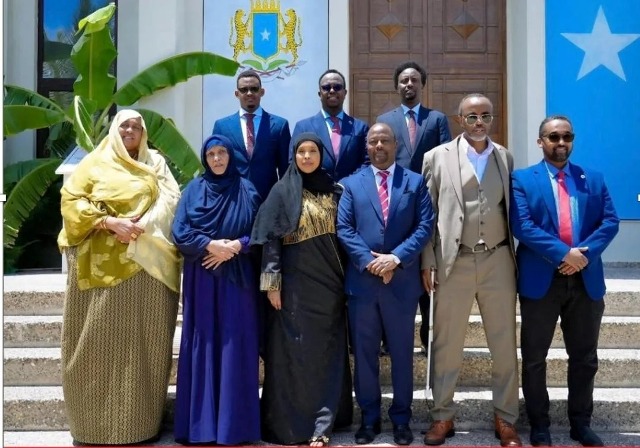
Apr 16(Jowhar) Guddiga Madax-Bannaan ee Xuquuqul Insaanka (GMXIQ) ee dhowaan la dhisay ayaa wajahaya kala qeybsanaan gudaha ah kadib muran ka dhashay doorashadii 28 Maarso 2026 ka dhacday Dowlad Goboleedka Koonfur Galbeed.
Madaxweyne Xasan Sheekh oo la kulmay Madaxweyne Erdogan
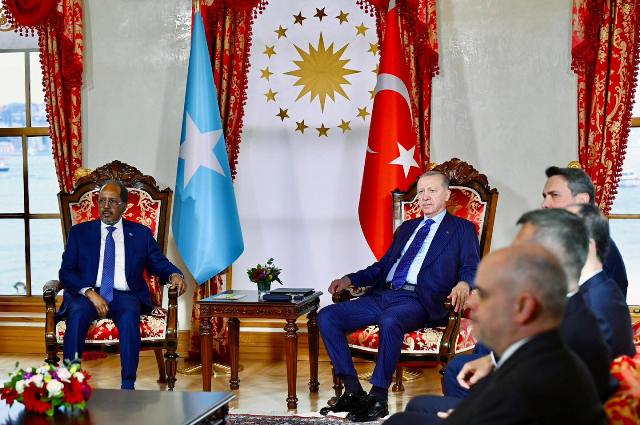
Apr 16(Jowhar) Madaxweynaha Jamhuuriyadda Federaalka Soomaaliya Mudane Xasan Sheekh Maxamuud ayaa Madaxtooyada Dolmabahçe ee magaalada Istanbul waxa uu kulan kula yeeshay Madaxweynaha Jamhuuriyadda aan walaalaha nahay ee Turkiga Mudane Recep Tayyip Erdoğan.
Pope Leo condemns small group of tyrants wreaking havoc across the globe
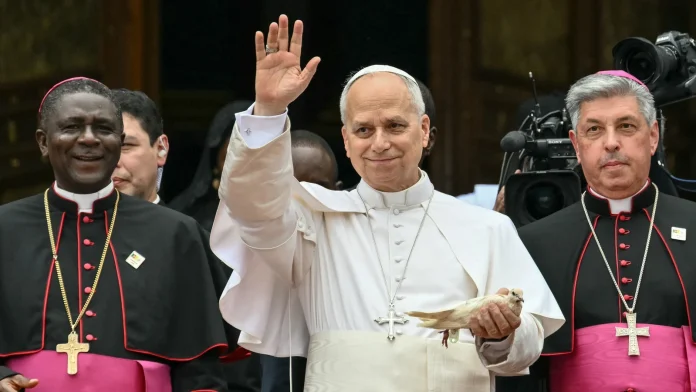
Under Bamenda’s Sky: A Pope’s Rebuke That Echoed Beyond the Pulpit
The airport runway in Bamenda today felt less like an arrival zone and more like a crossroads of history: prayer flags rubbing shoulders with dust, cell phones lifted like votive candles, and the steady hum of a city that has learned to hold its breath between gunshots.
Pope Leo, a figure who has kept a low public profile for much of his brief papacy, stepped from the plane and into an atmosphere charged with expectation. He did not come with platitudes. Instead, he came with words that sounded more like an indictment than a benediction—aimed not only at local actors in Cameroon’s long-simmering anglophone crisis but at leaders everywhere who prioritize bombs over bread.
“The masters of war act as if destruction is effortless,” he told a crowd of roughly 20,000 at the Bamenda airport Mass. “They spend fortunes on instruments of death, and then feign surprise when hospitals, schools and lives cannot be rebuilt.”
His language was sharp. His message, raw: a plea that the resources drained by conflict should be redirected to healing and restoration, to education and to the slow, stubborn alchemy of rebuilding trust.
A Clash of Voices: From Bamenda to a U.S. Social Feed
The visit took place against an oddly American backdrop. Just days earlier, and again during the pontiff’s African tour, former U.S. President Donald Trump had turned to his social media megaphone to call the pope “weak” on crime and foreign policy, a rhetorical shove that landed awkwardly in a region where more than one in five of the world’s Catholics live—roughly 280 million people on a continent reshaping the future of global Christianity.
In Bamenda, the pope declined to retaliate directly. But his sermons were unmistakable rejoinders to anyone who wraps geopolitics in scripture. “Woe to those who manipulate religion and the very name of God for their own military, economic and political gain,” he said, voice ringing over a sea of faces. “Dragging the sacred into darkness must be denounced by every honest conscience.”
Archbishop Sarah Mullally of Canterbury, whose Anglican flock numbers some 85 million worldwide, issued a warm public nod of solidarity: “The pope’s call for a kingdom of peace is courageous and necessary. Faith must bind, never divide.”
Scars on the Ground: Bamenda and the Anglophone Crisis
Bamenda is a city of narrow streets, bustling markets and a patient, wry sense of humor. It is also the epicenter of ten years of unrest between separatist groups in the English-speaking Northwest and Southwest regions and Cameroon’s central government—a conflict born of colonial aftershocks and today fuelled by economic inequality, corruption and identity politics.
International Crisis Group figures place the human toll of this conflict at more than 6,500 killed and over half a million displaced. Churches and mosques, schools and clinics—places meant for refuge—have sometimes become targets. Priests have been kidnapped; in one harrowing account, Sister Carine Tangiri Mangu described being held for three days last November. “They blindfolded me and asked questions about souls,” she told an assembly gathered to hear the pope. “When I prayed, I felt both fear and a strange, fierce hope.”
Imam Mohamad Abubakar recalled the invasion of a mosque during Friday prayers that same month, when three worshippers were killed. “We come to pray, to be seen and heard by God,” he said softly. “When a place of peace is violated, the wounds go deep.”
Three Days of Quiet
For the duration of the pope’s visit, a loose coalition of separatist groups declared a three-day ceasefire—an act some locals called a gesture of respect, others suspiciously tactical. “For once, cars could move. Markets were less jittery,” said Regina, a market vendor whose stall sells roasted plantains and palm oil. “We could breathe and bargain without counting the seconds between noises.”
- Estimated deaths in the anglophone crisis: 6,500+
- People displaced: more than 500,000 (International Crisis Group)
- Cameroon population: approximately 27–28 million
Colonial Ghosts and the Currency of Corruption
Cameroon’s present is haunted by its past. Once a German colony, the territory was partitioned after World War One between Britain and France. The larger French-administered sector gained independence in 1960, and the smaller English-speaking region joined a year later. That partition, and the patchwork governance that followed, is a thread that still runs through grievances today.
Pope Leo’s sermons also addressed what he called the “whims of the rich and powerful”—a clear nod to the foreign and domestic actors whose interests have sapped Africa’s wealth. “Too often, outside hands take what was meant for the common good,” he said, drawing sustained applause. “This is theft as an economic model.”
At 93, President Paul Biya remains a symbol of continuity and stasis—Cameroon’s head of state for decades, a tenure that critics say has fostered entrenchment and corruption. “The pope’s words are blunt but necessary,” said Dr. Emmanuel Ngassa, a political scientist in Yaounde. “They call out the comfortable silence of leaders who prefer the status quo to the discomfort of reform.”
Religion, Politics, and the Global Ledger of Priorities
What does it mean when prayers and missiles meet on the same page? The pope’s critique cuts to an unsettling global trend: the sacralization of power. Around the world, leaders have increasingly used religious language to justify military action. At the same time, global military spending continues to climb—reaching roughly $2.2 trillion in 2023, according to Stockholm-based analysts—while funding for education, primary health care and climate adaptation often struggles for the crumbs left at the table.
“When faith becomes a banner rather than a bridge, it gives permission to break what we should be building,” said Dr. Amina Nyong’o, a scholar of religion and conflict resolution. “Religious language can sanctify compassion—or it can sanctify violence.”
Ceasefires Are Not Peace. But They Are Not Nothing.
The three-day lull in violence was a fragile thing—a reminder that pauses can be political, performative, or precious. For ordinary people, it was an opportunity to visit relatives, to make repairs, to let children sleep without the sound of cords hammering the sky.
“I lit a candle in the church and I prayed for my son,” said Alphonse, a farmer from a village outside Bamenda whose teenage son fled months ago. “I don’t know if he’ll come home. But these days, with the pope here, I imagine a different ending.”
Diplomats will watch whether the papal visit translates into sustained mediation, whether Christian and Muslim leaders can be shepherds of dialogue rather than fodder for factionalism. The pope himself offered a cautious optimism: that the crisis “has not degenerated into a religious war” and that shared faith might yet be a language for peace.
What Will We Do With Our Outrage?
So what do we do with the images of a world burned and a pope pleading for repentance? Do we let it be another story that warms timelines for a day and cools into the feed? Or do we allow those words—about money spent on killing while hospitals crumble—to change how we think about security, about charity, about investment?
As readers, as citizens, as people of faith or none at all, perhaps the question is not whether leaders like Pope Leo should speak out, but what we will do after we hear him. Will we demand that the “masters of war” be held to account? Will we insist that money is measured not only by the weapons it can buy, but by the schools and clinics it could build?
In Bamenda, a market vendor folded her umbrella and smiled, the kind of small, stubborn smile that has kept this city going through the worst of times. “We are tired,” she said. “But tired people still have hands. We will keep working, and we will keep praying. If the world listens, maybe the work will get easier.”
Will the world listen? That, perhaps, is the most urgent question the pontiff left behind.
Trump says Israel and Lebanon have agreed to a 10-day ceasefire
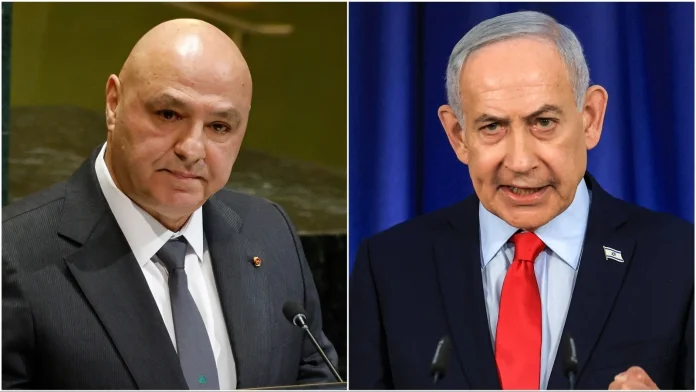
A Fragile Pause: Ten Days That Could Change a Border’s Rhythm
There is an odd stillness at dusk in the towns that fringe the Israel-Lebanon line — a hush that feels less like relief and more like someone holding their breath, waiting to see if the next exhale brings fire or just the ordinary clatter of life.
On a brisk evening when the horizon over the Mediterranean was a sheet of bruised blue and pink, an announcement crackled through social feeds and state broadcasters alike: a 10‑day ceasefire between Israel and Lebanon. It was delivered not in a dimly lit chamber in Geneva but on Truth Social by US President Donald Trump, who said he had spoken with Israeli Prime Minister Benjamin Netanyahu and Lebanon’s leader Joseph Aoun and that both had agreed to the pause to “achieve PEACE.” The ceasefire, he said, would begin at 5pm EST — 10pm Irish time — and be followed by talks at the White House.
The rhythm of a border on pause
For residents in towns like Metula, Marjayoun and the fishing ports of southern Lebanon, the news landed as if from two worlds: the diplomatic promises of faraway capitals and the immediate, stubborn reality of soldiered checkpoints, shattered roads and families who have learned to measure life in intermittent power cuts and the frequency of sirens.
“We’ve had many false dawns,” said Amal Haddad, a shopkeeper in Tyre who has lived through waves of escalation. “A day without shelling is not peace — it’s a chance to bury the children we lost, to fetch water, to try to sleep. Ten days could be everything or nothing. It depends who keeps their hands quiet.”
On the Israeli side, an elderly kibbutz resident, Yael Cohen, brewed tea and watched the hills with binoculars. “Hope is stubborn here,” she said. “We try to trust words because we have no choice. But every ceasefire has had footnotes, and those footnotes are usually bullets.”
What the announcement actually said — and what it left unsaid
President Trump said he would invite both leaders to Washington for what he termed the “first meaningful talks between Israel and Lebanon since 1983” and that he would task a small US team — Vice‑President JD Vance, Secretary of State Marco Rubio and Chairman of the Joint Chiefs of Staff Dan Caine — to help turn a temporary pause into something more permanent.
Notably, his post did not mention Hezbollah by name, even though the Iran‑backed group has been the principal actor on the Lebanese front. Hassan Fadlallah, a senior Hezbollah lawmaker, said the organisation had been briefed on the prospect of a short pause by Iran’s ambassador to Beirut and that adherence would hinge on Israel halting “all forms of hostilities.”
“Everything depends on whether there is a real halt,” Mr Fadlallah told a local television reporter. “We will not enter into a truce that is only on paper.”
On the ground: a fragile reality
Despite the diplomatic flurry, violence did not instantly evaporate. Senior Lebanese security sources reported that an Israeli strike severed the last bridge linking southern Lebanon to the rest of the country, a blow that isolates communities and complicates humanitarian access.
State media reported one civilian killed by an Israeli strike on a car traveling a road that connects to Syria; the Israeli military did not immediately comment. Such incidents underscore the razor‑thin line between a tactical ceasefire and the continuation of hostilities in other forms.
Across the region, people are using the pause to check on the practicalities. Farmers are repairing irrigation lines. Fishermen are mending nets that were pushed aside when launches and landings became too dangerous. In small cafés on Beirut’s corniche, conversations turned from anxiety to bargaining: who will get fuel first, how will displaced families be sheltered, can aid convoys get through?
Voices from aid workers and analysts
“Ten days is enough to move a lot of food, medicine and medical evacuations,” said Leila Mansour, a logistics coordinator for an international NGO operating in southern Lebanon. “But it’s not long enough to rebuild trust. For that, you need months — and guarantees backed by institutions.”
Market reactions reflected cautious relief. Global stock indices rallied on the expectation that a de-escalation could keep trade routes and energy supplies more stable — pushing equities past recent highs — while oil prices ticked up modestly as traders weighed the durability of the ceasefire and potential disruptions to the wider region.
“Markets are pricing in a short breathing space,” said Omar Khaled, a Middle East analyst at a London hedge fund. “Risk appetite is returning, but with a premium. If the pause holds, you see calm; if it collapses, prices spike again.”
Bigger diplomatic threads: Tehran, Islamabad and a cautious optimism
Beyond the Israel‑Lebanon front, the announcement sits within a wider tapestry of negotiations and back‑channel diplomacy. Iran’s ambassador to the United Nations, Amir Saeid Iravani, told delegates at the UN General Assembly that Tehran was “cautiously optimistic” about talks with the United States aimed at ending broader hostilities. Those talks, mediated by Pakistan, are slated to have a second round after an initial meeting in Islamabad.
“Despite our deep mistrust of the United States, born of repeated disappointments, we entered these talks in good faith,” Ambassador Iravani said, adding that a “rational and constructive approach” by Washington could yield meaningful results.
Whether that cautious optimism translates into concrete changes on the ground depends on numerous variables: the speed and scale of humanitarian relief; the willingness of all armed actors to refrain from provocations; and international guarantees that any pause will be watched and enforced.
What happens if the ceasefire holds — and if it doesn’t?
If ten days of quiet can be transformed into two months, and two months into durable arrangements, the human dividend would be enormous: hospitals could be re‑supplied, schools repaired, and the routines of daily life — which sustain mental health and livelihoods — could begin to be restored.
But if the pause collapses, even after a few days, the social cost will be punishing. The memory of temporary respites that end in fresh violence compounds trauma and makes political settlements harder to forge.
“People are asking, can we plan a wedding, can we reopen a shop, can a child return to school?” said Dr. Rana Salim, a psychologist working with displaced families. “Those small acts are what peace looks like. The rest is diplomacy.”
Questions to sit with as the world watches
As the clock ticks down on this initial window, ask yourself: What does a ceasefire mean to someone whose roof is a tarp? Whose voice will be in the room in Washington if those talks begin? And how do distant markets and diplomatic backchannels translate into the everyday safety of a fisherman returning to shore?
This is not just a bilateral pause between two states. It is a brief, brittle opportunity — for diplomats, for international organisations, for local leaders and for ordinary people — to convert cessation of fire into the hard, slow work of lasting peace. The question now is whether the world is ready to use that ten days wisely, or whether history will mark it as yet another intermission in a long and costly conflict.
- Ceasefire announced to begin at 5pm EST (10pm Irish time).
- US invites leaders to White House for talks; small US delegation named to facilitate discussions.
- Fighting continued in southern Lebanon; bridge severed and one civilian killed in reported strikes.
- Iran expresses cautious optimism about parallel negotiations with the US, mediated by Pakistan.
Keep watching the skies and the streets. Keep listening to the people who live here. Sometimes news is a headline; sometimes it is the slow, painstaking labor of rebuilding trust — one conversation, one repaired bridge, one safe return at a time. Which will this be?
LIV Golf to forge ahead at full speed despite mounting doubts
In the Shadow of Chapultepec: LIV Golf’s Gritty Push Forward
The fairways of Club de Golf Chapultepec slope like a sleeping giant beneath the cramped skyline of Mexico City—an emerald lung in a city that breathes a thousand lives at once. Players arrive at dawn, their breaths fogging in the bowl of the valley, while vendors line the pedestrian bridges selling coffee and tamales to anyone with a tournament credential and a hunger for warmth.
There’s a charged hum in the air this week that feels less like pre-tournament nerves and more like a moment caught between history and a rewrite. LIV Golf has landed in Mexico City, and while rumours swirl across news desks from London to Riyadh, the league insists the show will go on—full throttle.
A League Born to Disrupt
LIV’s emergence shattered conventions when it burst onto the scene with deep-pocketed backing from Saudi Arabia’s Public Investment Fund (PIF), upending a sport that had long moved at the pace of tradition. It tempted some of golf’s marquee names—Phil Mickelson, Dustin Johnson, Brooks Koepka at points—into a new orbit built on large purses, team formats, and a promise to reimagine the modern pro game.
“We built something that isn’t just another tournament series,” one league executive told me before the Mexico City press conference. “It was supposed to make players and fans think differently about what professional golf looks like.”
That ambition brought money, spectacle, and controversy in equal measure. The PIF, one of the world’s largest sovereign wealth funds that manages hundreds of billions of dollars, has been at the center of conversations about sport and geopolitics for several years—investments that range from football clubs to entertainment companies and, yes, golf.
Whispers, Wire Reports, and a Firm Reply
Last week, a wave of reports suggested the PIF might step back from its support of LIV. The Financial Times and other outlets carried claims that the fund was close to reducing or withdrawing its backing, while whispers of an emergency board meeting in New York leaked out of executive circles like steam through a sieve.
Inside LIV’s ranks, the response was swift and pointed. According to media outlets that obtained an internal message, CEO Scott O’Neill wrote to staff: “I want to be crystal clear: Our season continues exactly as planned, uninterrupted and at full throttle. While the media landscape is often filled with speculation, our reality is defined by the work we do on the grass.”
“We are heading into the heart of our 2026 schedule with the full energy of an organization that is bigger, louder, and more influential than ever before,” the message read, sending a signal that, at least for now, daily operations would not be derailed.
On the Ground in Mexico City
On the practice range, the rhetoric felt secondary to the tedium of preparation—the grind of the swing, the careful alignment of driver and ball, the tiny conversations between player and caddie. Sergio García, one of the league’s high-profile European faces, stood at a microphone and rolled his eyes at the rumor mill.
“Honestly, we haven’t heard anything other than what Yasir told us at the beginning of the year—that he’s behind us, that they have a long-term project,” García said. “You know how these rumours are. There are always a lot of them.”
Nearby, a local caddie—Miguel, who has walked the greens in and out of Chapultepec for three decades—shrugged when asked whether he’d sensed panic among the players. “They keep coming early. They still want to hit their lines,” he said, a small grin creasing his weathered face. “If the money goes quiet tomorrow, we’ll still pack lunches and walk. Golf is stubborn like that.”
From Recruits to Returnees: The Player Exodus and Its Echoes
LIV’s story has been as much about talent as it has been about tension. Several big names signed on when the league first offered large guarantees and purses. But the last year has seen churn: Brooks Koepka left LIV to return to the PGA Tour; Patrick Reed decamped for the DP World Tour as he seeks his route back to Golf’s most established circuit.
The division went beyond player movement. For some, joining LIV meant the end of traditions—European stalwarts such as Ian Poulter and Lee Westwood effectively ended their Ryder Cup participation when sanctions from the PGA and DP World Tour hit defectors. That rift has become, for many fans, the enduring image of golf’s turbulent reordering: camaraderie strained by contracts and governance.
Jon Rahm and Tyrrell Hatton represent different chapters of the story. Both eventually played at the Ryder Cup in New York after appeals and legal wrangling, but their futures at the biennial event have been anything but assured. Hatton settled disputes earlier this year; Rahm’s status remains unresolved, leaving him ineligible for next year’s contest at Adare Manor under current conditions.
More Than a Golf Story
This isn’t just a tale about where a ball lands or which cheque gets cashed. It intersects with a global conversation about money in sport—about the ethics of investment, the meaning of national soft power, and whether winning on the course can be separated from the hands writing the checks.
“Sport has become one of the most visible arenas for global capital,” said Dr. Lina Rodríguez, a sports economist I spoke to in the press tent. “When sovereign funds step into elite competitions, the questions aren’t only about prize pools—they’re about legitimacy, reputation, and influence.”
For everyday fans standing behind the ropes, the calculus is simpler and more immediate. “I love watching the shots. I love the format,” said Ana Torres, a teacher who drove in from Puebla with two friends. “I don’t care who pays for the trophy if the golf is exciting.”
What Comes Next?
The next few days at Chapultepec will matter. If LIV walks into them with the cadence of a well-oiled tour, it will demonstrate resilience. If the headlines escalate into boardroom tremors, this week may mark a turning point.
But beyond the immediate drama, the bigger questions linger: can modern sport navigate the collision between principled governance and global capital without losing its soul? Can players chart careers in ways that respect both their livelihoods and the competitions fans cherish?
Ask yourself as you read this: when investment buys novelty, what does it cost us in return? The answer might be found in a birdie, in a handshake on the 18th green, or in a press box where reporters chase the next rumor as if it were the final putt.
For now, the league has declared its intent—uninterrupted, full throttle. In a game that prizes precision, only time will tell whether that declaration holds, and what kind of golf world will emerge from the green smoke of controversy.
Spielberg Says New Alien Movie Blurs Reality, ‘More Truth Than Fiction’
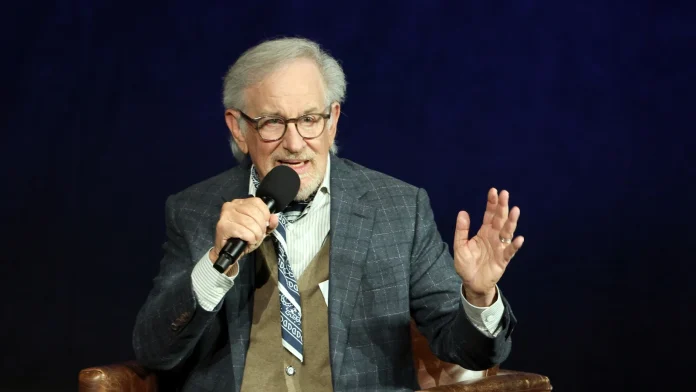
Under the Neon: Spielberg, Spaceships and the Fight for the Big Screen
Caesars Palace glittered like a passing comet the night Steven Spielberg stepped onto the stage at CinemaCon, Las Vegas’ yearly congregation of movie house owners, distributors and anyone who worships at the altar of the big picture. The carpet smelled of perfume and stale espresso; slot machines hummed a few blocks over as if the city itself were providing a soundtrack. For a few charged minutes, the room wasn’t a trade show—it was a nervy, collective inhale.
Spielberg didn’t just show a clip. He delivered a promise. He framed his new film, Disclosure Day, not as another CGI spectacle but as a provocation: “There is more truth than fiction here,” he told the crowd, eyes bright in that familiar mix of mischief and surety.
Footage, Faces and a Seatbelt
Disclosure Day is due in cinemas this summer, and Spielberg described what viewers will find as “an experience”—the kind that insists you buckle in. He joked that you’d need nothing from the concession stand but your seatbelt, and meant it: this is big-screen storytelling built for an audience that wants to feel, not just watch.
The cast is a map of contemporary British and American acting talent. Emily Blunt anchors, Josh O’Connor brings his sharp intensity, Eve Hewson offers a quietly luminous presence, Colman Domingo supplies moral heft, and Colin Firth adds the kind of dignity that still surprises. Together, they’re meant to populate a film that looks backward—toward Spielberg’s own Close Encounters of the Third Kind—and forward, nudging at the edges of a real public conversation about what might be happening above us.
What the Footage Shows
Spielberg screened new scenes that traded on atmosphere over spectacle: late-night skywatching, the hush of rural communities, the bureaucratic inertia that greets extraordinary claims. There were moments of awe and shards of doubt—faces lit by LED screens, the slow pivot of government officials who find the ground shifting beneath them. The feel was less blockbuster adrenaline, more a moral thriller that asks questions instead of offering easy answers.
A Half-Century Orbit
Nearly 50 years after Close Encounters first startled audiences and reconfigured the public’s imagination around UFO narratives, Spielberg is back in that cosmos. He’s no stranger to the night sky—he once admitted to being “haunted” by what goes on above—and Disclosure Day looks like a kind of reckoning. What happens when a storyteller who shaped the cultural lexicon of extraterrestrial contact tries to reframe the conversation for a streaming-and-skeptic era?
“If cinema is a communal dream,” an old friend of Spielberg’s (here presented as a longtime collaborator) might say, “then Disclosure Day is a dream that insists we wake up together.” That insistence—on shared experience in a fragmented media landscape—feels almost like a thesis statement for the film.
More Than a Movie: The Business of Windows
Spielberg’s appearance at CinemaCon was not only about storytelling; it was a call to defend a way of watching. Honored by the Motion Picture Association, he used that spotlight to advocate for longer exclusive theatrical windows—the span of time between a movie’s theatrical opening and when it becomes available on digital platforms.
Universal’s current policy of a 45-day theatrical window for wide releases is what he praised; he even teased about hearing talk of stretching that to 60 days. The joke landed like a dropped coin, but the issue behind it is no laughing matter. Since 2020, the pandemic accelerated a tectonic shift in distribution models. Studios rushed films to streaming, viewers got used to the comfort of their couches, and movie theaters watched revenues wobble.
Industry executives, theater owners and filmmakers are debating how to protect box office revenue while adapting to new audience habits. Theater chains argue that longer theatrical exclusivity helps preserve the communal, immersive value of cinema. Streaming platforms point to wider accessibility and the global reach of their models. Both sides make fair points; both are navigating uncharted territory.
Voices from the Floor
- “A 45-day window gives us a fighting chance,” said Maria Alvarez, manager at the Historic Orpheum Cinema outside Philadelphia. “People need a reason to come out. If everything drops online the same week, why leave the house?”
- “I love the idea of a long theatrical window,” said Jamal Thompson, a college student and a self-described cinephile who traveled to CinemaCon. “Cinema is about being with strangers and being moved together.”
- “Streaming isn’t the enemy; it’s how stories find new lives,” offered Dr. Priya Nair, a media studies professor. “But we must remember that some films are architected for darkness, surround sound and a shared gasp.”
Why It Matters Beyond Box Office
This conversation isn’t just about revenue splits. It’s about cultural rhythms. When a film like Disclosure Day is designed to be communal—when its themes are about public revelation, secrecy, and the search for shared truth—the form matters. Watching a moment of supposed disclosure alone on a laptop is not the same as hearing an entire theater hold its breath.
On another level, the film taps into a global fascination: our perennial urge to know whether we are alone, and what it would mean if we weren’t. The past few years have seen heightened public interest in unidentified aerial phenomena, official reports and dialogues about transparency. Disclosure Day arrives at that charged intersection of curiosity, conspiracy and the science of wonder.
Local Color: Las Vegas and the Ritual of Reveal
There’s an irony to unveiling a film about seeing clearly beneath a skyline in Las Vegas. The city is a place of artifice and spectacle—neon gods, late-night diners and performers who make the extraordinary everyday. Walking out of Caesars Palace after the screening, a vendor selling miniature plastic Oscars laughed: “If Spielberg can convince people to look up, I’ll sell more hats.” The comment was half-joke, half-forecast. CinemaCon is very much about reinvention, and Vegas is its amplifier.
Questions for the Reader
Will you wait for Disclosure Day on your couch, or will you head back to the darkened theater for the collective moment? Do you think movies require the cinema to fulfill their promise? How do you weigh the comforts of streaming against the ethical argument that some stories are owed a communal viewing?
These are not idle questions. They shape how we finance films, how we tell big stories and how we reckon with the unknown—whether that unknown is a new technology, a new distribution model, or a light in the sky that refuses explanation.
Closing: The Long Take
Spielberg’s footage at CinemaCon did its work. It made people talk. It reminded us that, even in a fractured media era, there are filmmakers who aim for something beyond clicks and immediate metrics: a lasting cinematic moment you remember years later. Whether Disclosure Day delivers revelation, mystery, or just a good old-fashioned goosebump is something we’ll find out this summer.
For now, there is the image of an audience at Caesars Palace—an entire room leaning forward—and a director who, after half a century of asking us to look up, still believes the sky has things to teach us.
Trump shares photo posing with Jesus amid Pope’s criticism
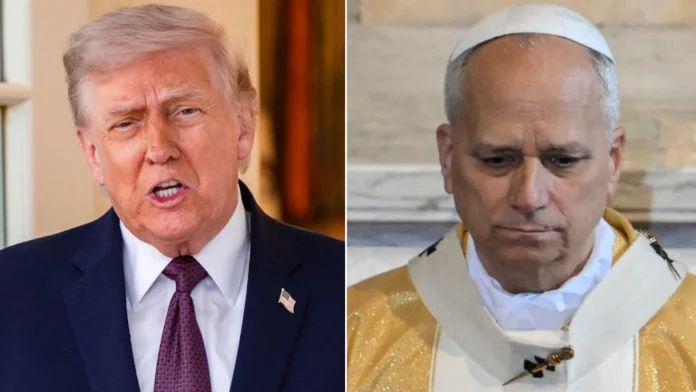
The Image, the Pope, and the Politics of a Moment
There are images that land like thunderclaps. Two days after deleting a post that many read as an implicit comparison of himself to a messianic figure, former US President Donald Trump returned to his echo chamber with a different kind of roar: an apparently AI-generated picture of himself and Jesus, temple-to-temple, eyes closed, an American flag folding behind them like a curtain.
The photo — shared on Truth Social and accompanied by a triumphant caption — feels engineered to do more than provoke. It asks a question about identity, faith, and power, and it refuses to let you look away. “The Radical Left Lunatics might not like this, but I think it is quite nice!!!” the post read. Two days earlier, Mr. Trump had written, in a post that he later removed, “I was never a very religious man .. but doesn’t it seem, with all these satanic, demonic, child sacrificing monsters being exposed … that God might be playing his Trump card!”
Ask yourself: what happens to faith when the language of salvation is traded for campaign theater? What happens when sacred imagery is churned out by algorithms and then weaponized inside a culture war?
Ripples Across Rome and the World
The image came at a complicated moment for another figure who has been trying to speak of unity and peace: Pope Leo — the first US-born pontiff in the history of the Catholic Church, now shepherding some 1.4 billion Catholics worldwide. He is midway through an arduous 10-day African tour that will take him across nearly 18,000 kilometres and through 11 cities on 18 flights — an itinerary ambitious in reach and remarkably heavy with symbolism.
“We need a message of peace,” the pope said recently while speaking from the plane on the way from Algeria to Cameroon. “Although we have different beliefs, we have different ways of worshipping, we can live together in peace.” His words, delivered between air pockets and press briefings, were meant to remind an anxious world that coexistence is not merely abstract idealism but a practical necessity.
The pope’s African stops are not ceremonial alone. In Algeria — a country where Catholics are a tiny minority in a predominantly Muslim society — he listened more than he preached, meeting with imams and community leaders and invoking the teachings of St Augustine of Hippo on unity. In Cameroon, where he is due to meet President Paul Biya and address national leaders, his schedule includes a massive Mass in Douala expected to draw some 600,000 people, according to Vatican estimates.
Tensions Escalate: Israel, Iran, and a Papal Rebuke
What has inflamed matters even further is the pope’s increasingly outspoken criticism of the violent spiral between the US-Israeli alliance and Iran — statements that have not gone unanswered. Mr. Trump, who has been vocally supportive of Israel and hawkish on Iran, took to Truth Social to press his own narrative, accusing Tehran of brutality against protesters and declaring, “for Iran to have a Nuclear Bomb is absolutely unacceptable.” He also urged that “someone please tell Pope Leo” about recent killings of demonstrators by Iranian security forces.
From Rome, the pope has been explicit about his plans to keep raising his voice. “I will speak about peace as long as there are bombs falling and lives being ruined,” he told reporters, per Vatican communiqués. “To promote that kind of image is something which the world needs to hear today.” He did not engage directly with Mr. Trump’s social media post while in transit.
Back in Washington, reactions were predictably polarized. Vice President JD Vance cautioned the pope to be careful when blending theology with commentary on geopolitical conflict — a reminder that even spiritual leaders can be drawn into the crossfire of modern politics.
Local Voices, Global Echoes
On the streets of Yaoundé, a 27-year-old market vendor named Amina sat beneath a canopy of tarpaulins and shook her head. “We hear the pope speak of peace and then we read about bombs far away,” she said. “It gives hope. But we also see leaders who shout and post pictures. Words are easy on a screen.” Her hands, stained faintly from drying cassava, made the point in gestures the pope himself has come to respect: ordinary people want to live without being conscripted into someone else’s drama.
In Algiers, a local imam, Sheikh Omar Benali, told me over sweet mint tea that the pope’s approach felt respectful. “He listened more than he lectured, and that is why people welcomed him,” he said. “When a leader shows curiosity about another’s faith, trust can begin.” Such moments of interfaith engagement are small oxygen tanks in a world that sometimes seems designed to inflame difference.
Why an AI Image Matters
There is an entire industry now building the pixels of persuasion. Deepfakes and generative images are no longer the provenance of late-night pranksters; they land inside political ecosystems and are amplified by networks built to reward outrage. If an image like the one Mr. Trump shared would have been extraordinary a decade ago, today it is painfully ordinary — and dangerous in new ways.
“We are in a moment when visual culture is easily weaponised,” explained Dr. Naomi Hsu, a digital ethics scholar. “The true harm isn’t only that an image is fake. The real danger is how such images can reshape narratives and moral imagination. People fold these pictures into their worldview, and then those views harden.” Her research points to a broader trend: trust in institutions — the press, the church, the academy — has been declining, and in that vacuum, images proliferate to fill meaning-making gaps.
Where Do We Go From Here?
There are practical questions to answer. How do faith leaders speak truth into a polarized media landscape without being co-opted? How do politicians use — or abuse — religion? And how do ordinary people find a way to live together when images and messages are engineered to split them apart?
Here are a few things to watch:
- How the Vatican frames its response if the photo debate continues to escalate.
- Whether social platforms establish clearer norms about AI-generated religious imagery.
- How communities on the ground in Algeria and Cameroon interpret the pope’s message of coexistence in concrete terms — in schools, markets, and interfaith councils.
What feels clear is that the clash between a former American president and the head of the Catholic Church is not merely about personalities. It is a meeting of powerful narratives: the modern spectacle and the ancient summons to humility; the momentum of algorithmic persuasion against the slower work of building mutual respect.
We can choose to treat the moment as entertainment — another primetime scandal to scroll past — or as a reminder that images, words, and leaders shape the world we inherit. Which will we choose to believe? Which will we choose to build?
As the pope prepares to step before hundreds of thousands in Douala, and as digital artists (and their critics) continue to redraw the lines of what is real, the question remains: can the languages of faith and politics be disentangled, or are they forever braided together in the loom of public life? Sit with that for a moment before you tap refresh.
Lebanon unaware of proposed talks with Israel, source says
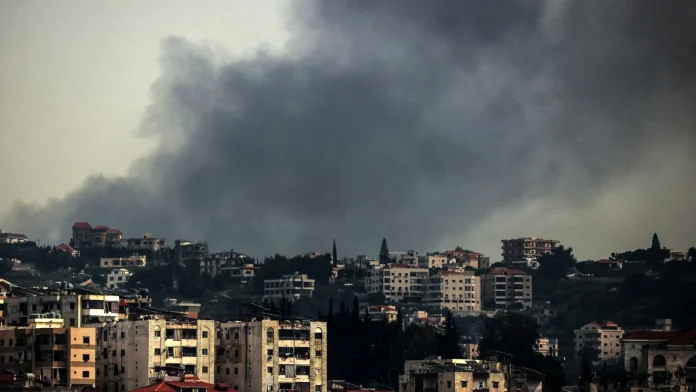
Between Breath and Bombardment: A Day That Could Break—or Build—A Fragile Calm
The phone lines between capitals have not been quiet, but they have not yet rung with the sound of agreement. For a second straight morning, officials in Beirut shrugged when asked whether Damascus or Tel Aviv had picked up the phone. “We were not informed of any official contact,” a Lebanese government source told me, voice threaded with the weary caution that has become routine in the past six weeks.
It is a strange moment: a swirl of diplomacy, tweets and troop movements happening against the thump of sirens and the hush of neighborhoods that have learned to move through a war they did not choose. In Washington, mediators and aides speak in guarded optimism. In the markets, investors are pricing in relief. On the shores of the Strait of Hormuz, captains peer into a narrower corridor for tankers. And in between, families in southern Lebanon count bodies and madrassas convert into makeshift clinics.
What the leaders say—and what they do not
There has been talk from some corners that Israeli and Lebanese leaders might finally exchange words, perhaps by phone, perhaps beyond. Yet in Beirut the official line remains: no formal notice, no scheduled call. “If there were to be a conversation, we expect it to come through proper diplomatic channels,” a ministry official told me, flicking ash from a cigarette into an empty coffee cup.
From the Israeli side, deliberations are ongoing. Cabinet members met recently to discuss a possible ceasefire after more than six weeks of fighting with Hezbollah. More than 2,000 people have been reported killed in Lebanon since the latest escalation, and health officials recorded a staggering toll of over 350 fatalities in one single day last week—a number that still leaves Beirut’s hospitals reeling and morgues overflowing.
Pakistan’s Field Marshal: An unlikely go-between
One of the most unexpected cast members in this regional drama is Field Marshal Asim Munir, Pakistan’s army chief. He flew to Tehran this week, a mediator in a series of shuttle talks that have stitched together quiet channels between Tehran and Washington. “He is here to try to narrow the gaps,” a senior Iranian aide told reporters, noting Munir’s role in facilitating past parleys.
In Tehran, the foreign ministry greeted Munir with measured warmth. “We are committed to promoting peace and stability in the region,” an Iranian diplomat said, welcoming him and insisting that Tehran would pursue “constructive options” to prevent a wider conflagration. The truth, however, is far messier: nuclear suspicions, missiles that cross borders, and a general atmosphere of distrust that has hardened over decades.
The human geography of an outbreak
Walk through the south of Lebanon and you will see the arithmetic of war etched on faces and buildings. A grocer in Tyre who used to open at dawn now keeps his shutters closed most days. “We live on hope and rice,” he told me, naming the two commodities he fears losing most. Church bells and the call to prayer mix with the metallic ring of ambulances. In one displacement centre, a woman held a picture of her son and said, “He was 19, he liked football and hummus.” It is a line you will hear again and again, because grief is its own refrain.
Lebanon’s health ministry has been sending daily tallies to international agencies: the dead, the wounded, the nameless bodies identified later by a frayed wristband. Aid agencies warn that the casualty figures likely undercount those trapped beneath rubble or those who cannot make it to a clinic because checkpoints or bombardments block the way.
Markets, oil and the calculus of pressure
On Friday, traders breathed a little easier. U.S. stock indices climbed and crude prices steadied, riding on hopes that the diplomatic hustle might yield a ceasefire. For markets, the big fear is the Strait of Hormuz—a vital artery through which around a fifth of the world’s seaborne oil usually passes.
Over the past months, Iran has dramatically narrowed the strait’s lanes, permitting mostly its own flagged vessels to transit freely and creating a choke point that has sent importers scrambling. China, which once bought over 80% of Iran’s shipped oil before the current standoff intensified, is watching closely as Washington issues warnings about secondary sanctions. “If we lose that route, the ripple effects will be felt in grocery carts as much as in energy desks,” an energy analyst in London told me.
The U.S. military reported that, in the first 48 hours of an enforcement action near Iranian ports, no foreign vessels passed the cordon; nine vessels turned away after being hailed by American forces. Tehran’s media countered with images of a supertanker steaming toward an Iranian terminal, underscoring how murky the reality on the water has become.
The nuclear shadow—and the tricky arithmetic of concessions
Underpinning the military fighting and the diplomatic ping-pong is the spectral question of Iran’s nuclear programme. Talks in recent days have grappled with how long Iran would be asked to keep a halt on enrichment: U.S. negotiators reportedly floated a suspension of up to 20 years, while Tehran proposed a much shorter pause of three to five years. Both sides also sparred over the fate of enriched material and the pace of sanctions relief.
“Neither side wants to look like it is capitulating,” said an arms-control expert based in Geneva. “The U.S. needs to show it can prevent a nuclear rush; Iran needs to show it can preserve dignity and economic breathing room. Somewhere in the middle, if diplomats can find it, lies a practical compromise—and a lot of political courage.”
What the public fears—and what it hopes
For ordinary people, geopolitics is not an abstract debate. It is the price they pay at the petrol pump, the missed weddings and funerals, the empty schoolrooms. “We want our children to study, not to memorize sirens,” an NGO worker in Beirut said, her hands restless as she organized donations.
And yet, amid sorrow, there is an appetite for peace. In Tehran, a café owner who had turned off the television during the day remarked, “People want safety. They want work. We tire of men on television promising things with big gestures. Real peace starts at the shop, at the school, at the table.”
Where might this go next?
Diplomats are talking about a return to Pakistan for another round of face-to-face negotiations; mediators call the conversations “productive and ongoing.” But the gap between “talks” and “truce” can be vast. Will a new set of agreements include clear mechanisms to prevent renewed fighting? Will the oil choke points be opened in a way that eases global energy shocks? Can trust—scarce as it is—be rebuilt?
- More than 2,000 people reported dead in Lebanon since hostilities flared.
- Over 350 deaths recorded in a single day last week, according to Lebanese health authorities.
- The strait of Hormuz remains a bottleneck for roughly 20% of seaborne oil flows.
Ask yourself: what would you trade to avoid another coffee-fueled diplomatic summit that leads to no ceasefire? How do you measure the cost of an hour of silence in a city that has learned to count missile strikes?
In the end, the shape of the coming days will be decided in bland conference rooms and in the quiet, stubborn acts of those who keep hospitals running and buses moving. Diplomacy can be sudden—an unexpected phone call—or it can be slow, a patient stitching together of steps that keep the worst at bay.
For now, the region balances on the narrow ledge between escalation and agreement. Somewhere in that stretch, beyond the rhetoric and headlines, are the ordinary lives that will determine whether a call will be a lifeline or a final missed chance.
Seven killed, 45 injured after Russian strikes batter Kyiv
Night Lights and Broken Glass: Kyiv After the Heaviest Wave of Drones
Kyiv woke today not to birdsong but to the metallic rattle of air-raid...
Lebanon and Israel resume US-hosted talks amid ongoing strikes
A Frayed Quiet: Washington Talks as Bombs Still Fall
There is a strange hush to diplomacy when the sound of airstrikes still hangs in the...
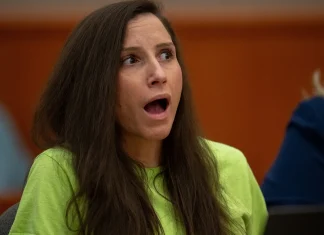
American children’s book author sentenced to prison for poisoning her husband
Behind the Headlines: A Quiet Suburb, a Loud Verdict
There are neighborhoods in Salt Lake County where snow-capped mountains frame tidy lawns and the scent...
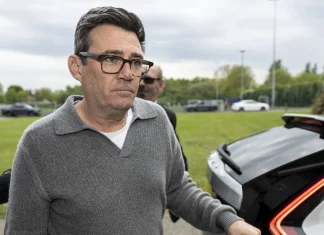
Burnham seeks parliamentary comeback, opening door to challenge Starmer
A northern town holds its breath
On a damp morning in Makerfield, where the terraced houses sit shoulder to shoulder and the chip shops open...
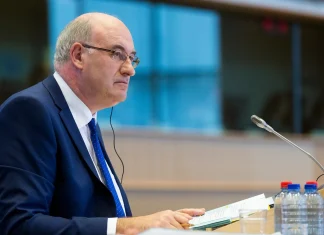
No EU nominee has yet agreed to run for UN food agency head
The race for the next head of the United Nations' food agency, the Food and Agriculture Organization (FAO), is heating up as candidates from...