Friday, December 26, 2025
Home Blog Page 44

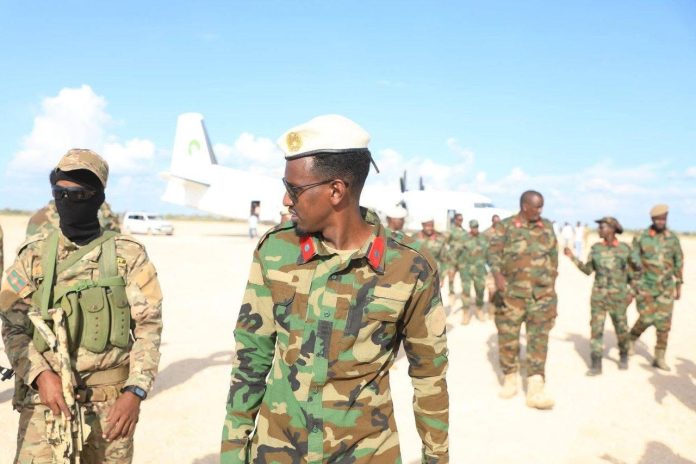
Madaxweynaha South Sudan oo shaqada ka eryay 4 wasiir iyo taliyaha booliska

Nov 19(Jowhar)-Madaxweynaha Koonfurta Suudaan, Salva Kiir ayaa xilka ka qaaday afar wasiir, guddoomiye gobol, iyo taliyaha booliska, isaga oo sidoo kale magacaabay madaxweyne ku xigeen.

13 killed in Israeli strike on Palestinian refugee camp in Lebanon

13 dead in Israeli strike on Palestinian camp - Lebanon
Civil defence members gather at the entrance of Ain al-Hilweh Palestinian refugee camp following the strike

Nightfall over Ain al-Helweh: smoke, sirens and a question that will not leave the air

When the sky over Sidon went dark, the sounds that broke the night were not the usual call to prayer or the rhythmic lapping of Mediterranean waves. They were the siren wails of ambulances, the staccato commands of men trying to clear a path, the dull boom of a strike, and then, a silence so heavy you could hear the shuffle of feet through the dust.

That silence was broken by the news: Lebanon’s health ministry said at least 13 people were killed when an Israeli strike hit Ain al-Helweh, the largest Palestinian refugee camp in the country, on a crowded evening. More were wounded, the ministry added, as ambulances ferried the injured to nearby hospitals and firefighters wrestled with flames licking the lower floors of a damaged building.

“We ran out into the street. We saw smoke, we heard the shots to clear the ambulances,” said a woman who has lived in the camp for decades. “My neighbor’s son—he was in the field, with the young boys—now he’s gone. We are hundreds of families like this.” Her voice trembled; the sound carried the weary resignation of a community that has known displacement as a constant companion.

The competing narratives: claims, denials, and a video

Within hours, familiar lines of assertion and rebuttal were drawn. The Israeli military announced it had struck what it called a Hamas training compound in Ain al-Helweh, saying it had “struck terrorists who operated in a Hamas training compound in the Ain al-Helweh area in southern Lebanon” and that it was “operating against Hamas’s establishment in Lebanon.”

Hamas pushed back forcefully. “There are no military installations in the Palestinian camps in Lebanon,” the movement said, calling Israel’s account “pure fabrications and lies.” In its own claim, Hamas said those hit were “a group of young boys” on an open sports field frequented by camp youth.

The Israeli military released footage it said showed the strike; observers in the area reported a building on fire and firefighters working to control the blaze. But an AFP correspondent who reached the scene said they did not immediately see damage to the Khalid bin al-Walid mosque reportedly near the strike, even as state-run media said a car in a parking lot near the mosque was hit and the mosque and a centre bearing the same name were also struck.

“When the rockets fall, we do not have time to decide who is who,” an aid worker in Sidon told me. “We only have time to pull people out and get them to the hospital.” Her voice was pragmatic, tired. “We are triage, but we need protection to do our work.”

Inside Ain al-Helweh: a densely woven life

Ain al-Helweh is not a stat on a map. It is a dense tapestry of narrow lanes, market stalls, and homes that have folded generations into a handful of streets. It is also a place where youth play football on concrete lots, where mosques mark the rhythm of the day, where neighbors share bread and burdens.

Ask anyone who has lived there and they’ll tell you the same thing: camps are cramped and porous. Tents and low-rise concrete blocks press into each other. Water lines and power cables snake along, often patched together by the residents themselves. The social networks are tight; news travels faster than any headline.

“We hear everything. We see everything,” said a teacher whose classroom sits above a small shop that sells mint tea and cigarettes. “When a strike happens you feel it in your bones. You think: is this the beginning of something worse? Will the children sleep tonight?”

Ceasefires and the fragility of calm

This strike occurred against the backdrop of a fragile regional calm. A ceasefire agreed last November sought to stem more than a year of hostilities between Israel and Hezbollah—an escalation that at one point included two months of open war. But despite that truce, strikes attributed to Israel have continued inside Lebanon, targeting what Tel Aviv describes as Hezbollah or, at times, Hamas operatives.

For many residents, these periodic strikes underscore a simple truth: ceasefires can pause large-scale warfare, but they do not erase the flashpoints that can ignite violence. “A day without shells is not peace,” an older man in the camp said, folding himself around a cigarette. “It is a postponement.”

What the numbers tell—and what they don’t

The immediate tally is stark: at least 13 dead and “a number of others wounded,” according to the Lebanese health ministry. Ambulances were still transporting wounded to hospitals as reports came in. Numbers tell part of the story but give no sense of the depth of loss—of a father who will not come home, of a classroom with fewer voices, of parents who must explain the unexplainable to small children.

Beyond the night’s toll, there are other figures to keep in mind: camps like Ain al-Helweh shelter tens of thousands of Palestinians who have lived in Lebanon for generations, often without full citizenship and with limited access to services. Humanitarian agencies have long warned that a blow to such densely populated areas can produce outsized humanitarian consequences.

Voices from the margins—what people said

“We hear claims from every side,” said a local doctor, rubbing her eyes after hours in a crowded emergency room. “We don’t ask the names when they come through the door. We patch them up. But every time the rhetoric grows louder, the line between a military target and a schoolyard gets blurred.”

A municipal official in Sidon, speaking on condition of anonymity for safety, said: “Nobody in the city wants to see escalation. But the strikes here are reminders of how precarious the whole situation is. When you have non-state actors and refugees packed into camps, even a single strike can send shockwaves.”

Wider ripples: what this means for the region

Beyond the immediate tragedy is a larger, gnawing question: how do protracted conflicts and the presence of armed groups within or near civilian areas change the calculus of safety? The debate over whether militant groups use refugee camps as bases has been a long-standing and bitter one; for residents, the cost is borne by families and neighborhoods, not by strategic analysts.

And what of international law and humanitarian protections? The targeting of crowded civilian spaces raises questions about proportionality and precautions—questions that, in the aftermath of strikes, find their way to statements and inquiries, but too rarely to swift, preventative action.

What can readers take away?

What do these nightly headlines ask of us, as afar citizens of a connected world? They ask for attention beyond outrage cycles. They ask us to notice how displacement compounds vulnerability, how ceasefires can paper over simmering conflicts, and how fragmentation—political as much as physical—makes finding long-term solutions harder.

They also ask us to imagine the human scale: a child who will remember the night not for the politics but for the smell of smoke and the ache of loss. Would you want your city to be a place where children can play without fear? Do you believe there’s a political path that secures both safety and dignity for people who have spent generations in limbo?

A familiar night, an uncertain morning

By dawn, the ash had settled into the cracked alleys of Ain al-Helweh. People swept soot from doorways. The mosque’s prayer schedule continued, because ritual is a kind of defiance against shock. The injured were listed, transferred, counted; the bereaved began their slow, private reckonings.

And the questions remained, lingering like the smoke: who was targeted, who was hit, and what will be the next flashpoint? For the people of Ain al-Helweh, and for the wider region that watches and waits, answers matter. But so does another truth: beyond claims and counterclaims are lives that demand protection—not as collateral in a geopolitical argument, but as human beings whose nights and mornings are worth more than headlines.

Wasiirka Arrimaha Dibadda Soomaaliya oo shir caalami ah uga qeyb galay Rome

Nov 19(Jowhar)-Wasiirka Arrimaha Dibadda iyo Iskaashiga Caalamiga, Mudane Cabdisalaan Cabdi Cali, ayaa maanta ka qeybgalay shirkii ugu horeeyay ee heer caalami ah ee ” Italophony” oo lagu qabtay Villa Madama ee magaalada Rome.

U.S. delegation visits Kyiv to revive stalled peace talks

US officials visit Kyiv to revive peace talks - reports
People taking shelter in the underground during a Russian drone attach Kyiv last week

A Quiet Arrival, A Loud War: Two U.S. Army Leaders Touch Down in Kyiv

The dawn was still soft over Kyiv, the city stitched together by trams and fountains and a stubborn sense of routine, when two figures stepped off a plane and into a story that will not leave them: Army Secretary Dan Driscoll and Army Chief of Staff General Randy George. Their arrival — unannounced, low-key, purposeful — felt like a secret chapter dropped into a public book.

“We heard helicopters before we saw the convoy,” said Olena Mykolaivna, who runs a small bakery near the presidential quarter. “People here have been waiting for signposts — any sign that something might change, one way or another.” Her voice carried that mixture of hope and weariness you hear in Kyiv now: a city that keeps making soup even as air-raid sirens sometimes intrude on the rhythm.

Why They Came: Military Channels, Diplomatic Hopes

The two senior U.S. Army officers are reported to have met President Volodymyr Zelensky, top commanders and lawmakers, according to people familiar with the planning. The purpose — as much a practical military check as a diplomatic probe — was to map battlefield needs and, quietly, to explore ways to breathe life back into stalled negotiations with Moscow.

Sources close to planning told several media outlets that the visit is part of a broader push by the Trump administration to test ceasefire concepts and diplomatic ideas directly with both Kyiv and, later, Moscow. The Wall Street Journal has reported that Secretary Driscoll may later meet Russian officials — an unusual pivot that underscores a willingness to use military actors as interlocutors where traditional diplomacy has faltered.

“Sometimes the language of generals lands differently,” said Dr. Hana Korolenko, a Kyiv-based analyst who has watched the conflict since 2022. “There’s a certain bluntness in military-to-military talks, and in a conflict that now approaches its fourth year, activists of every stripe are trying new grammar to end the bloodshed.”

Politics at Home, Consequences Abroad

Since Mr. Trump took office in January, trips by senior U.S. figures to Kyiv have become rarer, with many contacts shifted to third countries or held by video. That makes this in-person visit all the more striking — a signal that, at least for now, Washington is willing to mix its diplomatic formula.

“We need to explore every channel,” a U.S. official, speaking on condition of anonymity, told reporters. “The President has tasked his team to think creatively and to test ideas with Kyiv and Moscow. Military officials can sometimes move in spaces of credibility that civilian envoys cannot.”

But those explorations carry risks. Trust is frayed. Many in Europe and in Kyiv worry that any speedy settlement could cement Russian control over territory seized since 2014. “You cannot build lasting peace by freezing injustice,” warned Professor Marta Sosnovska, an international law scholar. “Any ceasefire that leaves occupation in place will sow future wars.”

On the Ground in Kharkiv: Nightfall and Aftermath

While generals discussed strategy in Kyiv, in Kharkiv — Ukraine’s second-largest city and an industrial heartland close to the Russian border — the war’s human toll was less abstract. Overnight missile strikes wounded at least 32 people, including children, officials said. Eleven drones struck urban districts, sparking fires in a nine-storey residential building, damaging cars, garages and a supermarket.

“We were asleep. The ceiling shook,” recounted 34-year-old Viktor, whose apartment window was shattered by blast waves. “My daughter woke up screaming. We ran downstairs with a blanket. That’s what people do now — run, check, help.”

Emergency services reported evacuating 48 people from smoke-filled entrances — three of them children. Regional authorities named two of the wounded girls as 9 and 13 years old. Images from the scene showed neighbors forming human chains to carry mattresses, and volunteers at makeshift stations handing out hot tea and bandages.

Moscow’s intensified missile and drone campaign has been particularly focused on energy infrastructure this autumn; in October, analysts and Ukrainian officials described the heaviest bombardment of gas facilities since the February 2022 invasion. The aim is clear and chilling: to complicate life through winter, when heating and electricity become existential concerns.

Poland Scrambles Jets — and Nearby Worries Rise

The strikes also reverberated beyond Ukraine’s borders. Polish and allied aircraft were deployed early in the morning to safeguard Polish airspace after Russian strikes came close to the border near Poland. For a NATO nation that shares both a long border and a history with Ukraine, such incidents revive old anxieties about how a regional war can draw in neighbors.

“We are watching with deep concern,” said an Eastern European diplomat in Warsaw. “A war that keeps spreading missiles and drones near NATO territory cannot be contained by silence.”

Between Hope and Unease: What Will a ‘Ceasefire’ Mean?

President Trump has repeatedly promised to bring the war to a rapid close and has instructed advisers to test ceasefire ideas with Kyiv and Moscow. That determination to seek a quick settlement appeals to those exhausted by years of attrition and to global markets uneasy about sustained disruption.

Yet there are tensions: Ukrainian leaders have repeatedly signaled they will not accept deals that leave Russian forces in control of occupied land. Western capitals worry that a hurried deal could enshrine a new status quo that hardens into permanent loss.

“Can a ceasefire be negotiated without asking the people who live under occupation what they want?” asked Lina Petrenko, a volunteer coordinator in a small town near the front. “Peace cannot be a tidy paragraph if it means someone stays in your home.”

What This Moment Tells Us — And What We Must Ask

There is an old saying in journalism: report the event; tell the story. The Driscoll-George visit is both: a discrete action in a wider diplomatic push, and a narrative knot that ties frontline suffering to high-stakes decision-making. It asks us to consider uncomfortable questions about how wars end, who gets to negotiate, and how communities survive the wait.

Will military intermediaries unlock compromise where diplomats failed? Or will secrecy breed suspicion, making any deal harder to implement? As Kyiv prepares for a presidential trip to Turkey to revive talks with Russia, those questions will only sharpen.

One thing seems certain: the human ledger continues to increase. The war that began in February 2022 has stretched into its fourth year; every raid on infrastructure chills more homes, every attack on cities like Kharkiv adds names to lists of the wounded. Behind the headlines are bakeries, tram lines, volunteer kitchens, and children whose lives will be shaped by decisions taken in rooms far from the rubble.

“We are tired, but not finished,” said a frontline medic in a voice that folded anger and resolve into one. “We want peace. We want it to be fair.”

What would you want to see in that peace? Justice? A ceasefire that limits bloodshed now? Or a longer road toward a settlement that restores territory and rights? As the diplomats, soldiers and leaders plot their next moves, the rest of the world must ask: what kind of peace are we willing to pay for — and what are we willing to accept?

Trump backs Saudi crown prince amid Khashoggi murder controversy

Trump defends Saudi prince over Khashoggi murder
President Donald Trump and Saudi Crown Prince Mohammed bin Salman held a meeting in the White House

A Red Carpet, a Flyover — and a Ghost at the Banquet

On a crisp Washington afternoon, the South Lawn of the White House looked like a scene from statecraft: mounted cavalry, a cannon salute, fighter jets carving white lines across a pale sky. Photographers clicked, flags snapped, and for a few choreographed moments the world was invited to admire the pageantry.

But next to that spectacle sat a darker story that refuses to be dressed in ceremonial regalia: the unresolved killing of Jamal Khashoggi in Istanbul in October 2018. It cast long, stern shadows across the manicured grass.

“They rolled out the red carpet for a man haunted by questions that have never truly been answered,” said Michael O’Connor, a former State Department human-rights officer who watched the arrival from the sidewalk. “Power has a way of rewriting the margins of accountability.”

One Man’s Defense, Another’s Verdict

Inside the Oval Office, the scene grew even more surreal. President Donald Trump sat side-by-side with Mohammed bin Salman, the Saudi crown prince who has been central to the Khashoggi scandal. In a blunt departure from previously public U.S. intelligence assessments, the president declared the crown prince “didn’t know” about the killing — a line delivered with the finality of a closing bracket.

“Things happened, but he knew nothing about it, and we can leave it at that,” Mr. Trump told reporters, while the crown prince, his expression measured, called Khashoggi’s death “painful” and insisted the kingdom had conducted the right investigations.

That exchange stitched together two competing stories: a presidential defense spoken with decisive immediacy, and a more complicated institutional record. U.S. intelligence agencies concluded after the 2018 killing that Saudi operatives acted on orders that could be traced back to the highest levels of the Saudi government. The CIA’s 2018 assessment — and subsequent reporting by multiple outlets — attributed the operation to Saudi command structures, findings that have been seized on by human-rights groups and foreign governments alike.

Voices on the Lawn

Outside the gates, reactions were as varied as the crowd. “I’m not surprised,” said Laila Ahmed, a Saudi student who’s been studying in Washington for three years. “There’s a sense that money and strategic partnerships make everything negotiable. But that doesn’t make injustice any less visible.”

At the edge of the demonstration a veteran who served in the Middle East, Dale Winters, shook his head. “We can’t ignore strategic alliances. But we also can’t pretend to be a moral beacon if accountability becomes optional,” he said.

The Price of Power: Deals, Defense, and Diplomacy

What played out in public was more than ceremony and cross-purposes. Economic and security threads ran through the encounter: the crown prince pledged — once again — to increase Saudi investment in the United States, raising a figure that President Trump touted as reaching $1 trillion, up from earlier promises. Concrete timetables and verifiable pipelines were absent, as they often are with headline-grabbing commitments.

The two leaders also discussed a defense agreement and the possibility of Saudi acquisition of advanced U.S. fighter jets — including references to the F-35 — though no sale was finalized in the room and Congress often scrutinizes such transfers with deep skepticism.

“These conversations are never just about planes or purchase orders,” explained Dr. Sara Mahmoud, a Middle East analyst at an international policy institute. “They’re about influence: energy markets, counterterrorism cooperation, regional balances of power, and the optics of partnerships. When leaders choose to move past a human-rights crisis toward commerce, that choice has reverberations.”

Numbers Behind the Headlines

  • Jamal Khashoggi was killed at the Saudi consulate in Istanbul on 2 October 2018.
  • In 2018, U.S. intelligence agencies produced assessments linking the killing to Saudi operatives and raising questions about senior-level knowledge.
  • Saudi Arabia remains one of the world’s top oil exporters and a central player in global energy markets — the geopolitics of oil still shape diplomatic relations.
  • Saudi government pledges to invest in international projects have periodically featured headline figures—$600 billion, $1 trillion—though exact accounts and delivery schedules are often opaque.

Public Relations, Reformation, and the Reality of Reform

Mohammed bin Salman has sold himself abroad as a reformer. On the home front he has championed an economic blueprint known as Vision 2030, aimed at diversifying Saudi Arabia’s oil-dependent economy, lifting restrictions on women’s social freedoms, and attracting investment. Those changes have been real in many respects, reshaping cinemas, concerts, and the social calendar.

Yet alongside those welcome reforms, critics point to an expanded crackdown on dissent — arrests of activists, journalists, and perceived dissidents — that calls into question the extent and cost of the crown prince’s modernization project. Human-rights organizations have described the Khashoggi case as emblematic of a broader pattern of repression.

“There’s an inherent contradiction in packaging social liberalization with political repression,” said Noor Al-Harith, a human-rights lawyer who has represented Saudi activists in exile. “If you lift the social curtain but seal the mouths of those who would critique your policies, what you’ve built is not reform: it’s a façade.”

What Are We Willing to Trade for Stability?

As the last of the formalities wound down — a lunch in the Cabinet Room, a black-tie dinner under chandeliers — the questions the day posed remained stubbornly unanswered. Are economic promises sufficient recompense for unresolved questions about a journalist’s death? Will strategic alignments outweigh calls for accountability when national interests collide with moral imperatives?

Readers might ask themselves: when a government that exports oil and buys arms is also accused of silencing critics, how should democracies respond? Is isolation a useful tool, or does engagement offer a better path to change?

“No country is a single story,” Dr. Mahmoud told me. “Saudi Arabia is both a partner and a state under scrutiny. The dilemma for democracies is balancing pragmatic interests with the values they purport to champion.”

Looking Ahead

Whether this visit marks a new normal — where strategic and economic ties trump public censure — or a temporary pause in the long arc of scrutiny, depends on forthcoming actions: investigations that satisfy international standards, transparent accounting of commitments, and an earnest reckoning with how dissent is treated.

In Washington, beneath the jet roar and the polite clinking of cutlery, the question hung in the air: can a state truly reform while its critics are silenced? Can partnerships survive the tension between realpolitik and accountability?

Maybe you have an answer. Maybe you don’t. But as the presidential portraits in the hallway watched, the world was reminded that democracy and diplomacy are messy, human endeavors — full of ceremonies, compromises, and ghosts that will not, and should not, be politely escorted away.

Asbestos scare forces school closures across Australia and New Zealand

Asbestos scare shuts schools in Australia, New Zealand
A number of day care centres were closed in New Zealand and Australia (Stock image)

A handful of sand, a community shaken: what the asbestos scare in school sandpits tells us about safety, global trade and childhood

On a bright autumn morning, the sandpits that usually echo with the muffled clatter of plastic buckets and the high, concentrated silence of kids building imaginary worlds sat cordoned off. In towns from Wellington to suburbs outside Sydney, teachers taped yellow warning signs across wooden frames and parents hovered like uneasy sentinels. The culprit? Decorative play sand—sold in tubs, imported from China—now suspected of containing chrysotile asbestos.

It sounds almost too small to matter: grains of sand meant for crafts and sandboxes. Yet within days the ripple became a wave. New Zealand authorities reported some 40 schools and daycare centres temporarily closed as staff tracked down potentially contaminated batches. Across the Tasman, more than 70 schools shut their doors while checks were carried out.

Close up: what officials found, and why it matters

WorkSafe New Zealand announced laboratory tests that identified chrysotile asbestos in batches of the decorative sand. Chrysotile—often called white asbestos—has been widely used historically for its heat-resistant properties but is now linked to serious lung disease when fibres are inhaled over time. The presence of asbestos in a product marketed to children sent alarm bells through classrooms, kindergarten play areas and dining-room tables.

“The fear here isn’t theoretical,” said Dr. Aroha Te Rangi, a Christchurch-based occupational health specialist. “Even though short, incidental exposure is unlikely to cause immediate illness, asbestos exposure accumulates. The worry is that fibres could be present in environments where children play, parents craft, and people are less likely to wear masks or take precautions.”

Australia’s product safety regulator has been more measured, noting that current tests have not detected breathable, or respirable, asbestos fibres in quantities that would immediately endanger health. “The release of respirable fibres is unlikely unless the sand is crushed or pulverised,” a regulator spokesperson said, explaining the science of how asbestos becomes airborne and dangerous.

Voices from the sandpit

For parents, the abstract becomes personal quickly. “My daughter comes home with sand behind her ears every single day,” said Naomi Patel, a mother at one Auckland pre-school now closed for deep cleaning. “You picture the worst. You feel betrayed that something labeled safe was in the hands of our children.”

Teachers, too, have spoken about the logistical and emotional challenges. “It’s not just about closing a room or replacing a bag of sand,” said Tom Ngatai, a primary school deputy principal in Dunedin. “We had lesson plans around sensory play, social learning in the sandpit—those routines are part of how children learn to share, to problem-solve. Pulling that rug away affects more than play.”

At a weekend markets in suburban Melbourne, stallholder Mei Li, who sells craft kits, described the supply chain tensions. “Suppliers in China are small manufacturers,” she said. “We buy in bulk to keep prices low. Now shops are checking barcodes, chasing batch numbers—people are panicked because the supply chain is so opaque.”

Supply chains under the microscope

This incident is as much about global trade as it is health. The decorative sand in question is a manufactured, packaged product that entered a web of distributors and small retailers across Australia and New Zealand. Cheap, colorful, and marketed to parents and craft-lovers, such products have boomed with the rise of online marketplaces and a DIY culture that prizes quick, aesthetic solutions.

“This is a snapshot of a broader modern dilemma,” observed Dr. Lena Hofmann, a supply-chain analyst. “As consumption fragments and sourcing becomes global, regulatory oversight struggles to keep pace. A small failure at one manufacturing site can ripple through hundreds of shops and thousands of households.”

Beijing’s foreign ministry, asked about the matter, said it had “noted the relevant reports”. Australian regulators said local businesses were communicating with their suppliers to resolve issues—a reminder that certification and traceability matter more than ever.

Practical steps for parents and schools

For now, health and education authorities recommend caution rather than panic. If you suspect your school or child-care centre has used the implicated sand, isolate it, do not crush or sweep it, and contact your local education authority or workplace safety regulator for testing and guidance.

  • Do not attempt to vacuum or dry-sweep contaminated sand—this can send fibres airborne.
  • Wear a high-quality mask (P2/N95) and use wet-cleaning methods if advised to handle small amounts.
  • Follow local recall notices and check batch numbers or product codes if you have tubs of decorative sand at home.

Health professionals caution that short-term, incidental exposure is unlikely to produce immediate illness. Still, asbestos is a long-game toxin: mesothelioma and other asbestos-related diseases often show up decades after exposure. Globally, asbestos exposure is estimated to contribute to tens of thousands of deaths annually, a sobering reminder that dangerous industrial materials can have a slow, devastating footprint.

Why this matters beyond a closed classroom

There’s something elemental about sand—childhood, beaches, the primal joy of shaping a mound into a castle. That makes this contamination feel especially invasive. When items intended for play become potential hazards, it triggers broader public questions about consent, safety and responsibility in a globalised market.

Policy matters, too. Governments and regulators will be pushed to up the ante on testing, import controls and supply-chain transparency. Consumers may demand clearer labeling and easier access to batch information. Retailers will need to show due diligence, and small businesses will face pressure to verify suppliers’ claims.

But there’s another, quieter toll: trust. “When a place that’s supposed to be safe is suddenly uncertain, that’s a wound to the fabric of daily life,” said community organiser Mariam Khatri. “It’s not just about replacing sand; it’s about repairing confidence.”

Questions to take home

As you read this, consider: how much confidence do we want to place in global supply chains for the objects we entrust to children? What balance should regulators strike between facilitating trade and enforcing safety? And how do communities heal after a disruption that, at first glance, seems so small?

For parents, teachers and school administrators, the immediate work is clear: follow official guidance, replace suspect products, communicate transparently with families, and use this scare as a lesson in vigilance. For policymakers and consumers, the challenge is systemic: building a marketplace where safety goes hand in hand with convenience, where a tub of sand isn’t a roll of the dice.

In the meantime, playgrounds will reopen, sandboxes will be refilled, and children—resilient as ever—will return to their castles. The test will be whether the adults around them have learned anything from the dust.

BBC World Service announces more journalism to come from Africa as part of global changes

BBC World Service announces more journalism to come from Africa as part of global changes

Nov 18 (Jowhar)-BBC World Service has announced a series of programme changes as part of a commitment to move more programmes and services closer to the audiences and communities they serve.

Zelensky to visit Turkey aiming to revive peace negotiations

Zelensky to visit Turkey to 'reinvigorate' peace talks
Ukrainian President Volodymyr Zelensky pictured speaking after meeting with Turkish President Recep Tayyip Erdoğan in May

On the Edge of Negotiation: A Visit to Turkey, the Human Calculus of Prisoner Swaps, and the Growing Cold of War

There is a kind of exhausted hope that accompanies any announcement of peace talks in this war—a brittle, tentative thing that flares up in living rooms and hospital wards and fades when shells fall. When President Volodymyr Zelensky said he would travel to Turkey “tomorrow” to try to reinvigorate negotiations and restore prisoner-of-war exchanges, the words landed like a bell in rooms both near and far: an invitation to believe and a reminder of how easily belief can be broken.

Imagine Istanbul’s Bosphorus breeze carrying the smell of roasted chestnuts and the distant murmur of traffic—this is the city that hosted earlier direct talks between Russian and Ukrainian delegations earlier this year, talks that produced few concrete breakthroughs beyond the deeply human work of releasing prisoners and returning bodies. The memory of those corridors of diplomacy now collides with the front lines: a teenager killed in Kharkiv, power stations damaged in Donetsk, and people waking up to fewer lights and more fear.

A mission with familiar echoes

“We are preparing to reinvigorate negotiations, and we have developed solutions that we will propose to our partners,” Mr. Zelensky posted on social media, with a tone that mixed urgency and weary determination. He added the mission was also about “restoring POW exchanges and bringing our prisoners of war home”—a phrase that sounds simple and is anything but.

Prisoner swaps, more than ceasefires or troop movements, have been where this conflict’s fragile humanity has been visible. Between May and July, the Istanbul talks produced primarily swaps and repatriations of the fallen. The last documented exchange took place in early October, when Russia and Ukraine each handed over 185 prisoners. Behind that number are families who wait, seasons of birthdays missed, and the slow, bureaucratic work of identifying bodies.

“Those exchanges are not a diplomatic side-show,” said a Kyiv negotiator who asked not to be named. “They are lifelines. They are the only points our people can hang onto as being clearly human in a situation that otherwise treats everyone as strategic chess pieces.”

The battlefield—that daily counterpoint

No talk of diplomacy is complete without its counterpoint: the explosions, the bodies, the flickering lights in winter. In the Kharkiv region this month, a 17-year-old girl wounded in a missile strike on Berestyn died in hospital, Kharkiv governor Oleg Synegubov said on Telegram. He added that the attack wounded at least nine others, including a 16-year-old boy, and that emergency crews were on the scene.

Elsewhere, drone strikes have ignited fires in Dnipro and battered residential areas and public services. Just yesterday, aerial strikes killed five people and destroyed a kindergarten in eastern Ukraine. Frontline towns like Balakliya have seen residential neighborhoods shattered. And in the Russian-controlled parts of Donetsk, local officials reported that Ukrainian drone strikes had damaged thermal power stations, leaving hundreds of thousands without electricity.

“We wake up to the sound of drones and the sound of generators,” said Hanna, a schoolteacher in Kharkiv who delivered classes over a patched-together internet connection. “My students ask if the lights will work for their evening homework. How do you answer a child that question and make them feel safe?”

Winter, infrastructure and a strategy of attrition

There is a deliberate logic to targeting energy and water infrastructure as temperatures drop. Cold weather attributes urgency to repair, impacts civilian life directly, and chips away at morale and logistics. Ukraine has responded by stepping up long-range strikes against Russian-controlled infrastructure, a tit-for-tat campaign meant to erode Moscow’s ability to sustain front-line operations.

Russia’s Kremlin spokesman Dmitry Peskov has said Moscow is “open to negotiation processes” to resolve the war, blaming Kyiv and Europe for what he called a freeze in talks. Kyiv, on the other hand, argues that Russian demands—pressuring Kyiv to cede territory—are tantamount to capitulation and therefore unacceptable.

“For a negotiation to be real,” a retired diplomat in Ankara told me over strong Turkish tea, “both sides must come with parameters that allow for political compromise. You cannot begin from maximalist positions and call it talks.”

Why Turkey? Why now?

Turkey has carved a role for itself as an intermediary in this conflict—balancing Ankara’s own strategic relations with Moscow and Kyiv while presenting itself as a venue where talks can feel neutral. President Recep Tayyip Erdoğan has hosted delegations before; his government’s ability to convene parties who otherwise refuse to sit together has become a quiet foreign policy asset.

For Zelensky, the trip is also a stage in a larger European tour aimed at shoring up military supplies and international backing for Ukraine’s battered energy grid and its armed forces, which have been depleted after months of intense fighting. He was due to meet Spanish Prime Minister Pedro Sánchez and had earlier signed an accord with France that, according to Kyiv, would allow Ukraine access to up to 100 fighter jets and other hardware, including drones—a deal that signals how Western military support is evolving.

What’s at stake—and what the public rarely sees

Beyond diplomats and soldiers there are the everyday stakes: children who go to school in shifts because classrooms are damaged; farmers who cannot sow or harvest because of restricted access to fields; hospitals running on generators. Millions of people have been displaced since the full-scale invasion began in 2022; UN agencies have estimated that millions more are living with the daily insecurity of disrupted services and energy shortages.

Prisoner exchanges, then, take on added weight. They are the human punctuation points in a war otherwise written in artillery and spreadsheets—evidence that even amid strategic stalemates, humanitarian bridges can be built.

“We measure progress not by headlines about tanks,” said Dr. Leila Markovic, a humanitarian specialist who has worked in Ukraine. “We measure progress by whether an elderly man can get his medication on time, whether a mother can bring her child to school without fear. Exchanges, the return of bodies, these are the things that restore dignity.”

Questions for the reader—and a reminder of the stakes

So where does this leave us? Can talks convened in a city that straddles continents change the tide of a conflict that has remade maps, lives, and economies? Will prisoner swaps open the door to broader concessions? Or are they, as some fear, merely a human balm for a much larger and continuing violence?

What role do neutral venues and intermediary states play in a world where alliances are shifting? And how should ordinary citizens—those of us reading far from the front—hold our leaders to account when diplomacy is touted, but the artillery keeps speaking?

When Zelensky lands in Turkey, he brings with him not only proposals but an urgent plea: to keep human exchanges alive, to use diplomacy to reduce suffering, and to remind the world that in the calculus of war the human line always matters. Whether the partners across the table will respond in kind is the question that will shape the coming winter—for prisoners, for families, and for the fragile hope that a conversation can still, slowly, change the course of a war.

Israel Praises Trump’s Gaza Plan After U.N. Security Council Vote

Israel hails Trump Gaza plan after UNSC vote
Gaza has been largely reduced to rubble after two years of war

After the Vote: Gaza’s Quiet Hope and a World Holding Its Breath

The sun slides down over a landscape of concrete bones and dust. In Zeitun, a neighborhood of Gaza City that used to echo with children’s laughter and merchant calls, the silence now feels like an accusation. A line of people waits for water, their bags and coupons clutched as if they were talismans.

It was in that brittle quiet that the United Nations Security Council voted to back a U.S.-sponsored plan aimed at remaking the fragile order in Gaza. Thirteen countries voted in favour, while Russia and China abstained. The measure endorses an international stabilization presence, new Palestinian policing, and a transitional governing board — a framework that promises an end to open hostilities but raises questions about sovereignty, enforcement, and what justice looks like in a place that has seen so much loss.

On the ground: a fragile ceasefire and a cautious welcome

“We will take whatever stops the killing,” says Ayman, 39, who sleeps in a school converted into a shelter in central Gaza. He speaks softly, the kind of soft that comes after many sleepless nights. “If foreigners come and bring food, water, and a bit of safety, that is enough — for now.”

That “for now” is everything. Gaza’s population, roughly 2.3 million before the war, has been battered by two years of fighting since the Hamas-led attacks of 7 October 2023 and Israel’s subsequent military campaign. The ceasefire that took hold on 10 October has held like a fragile glass island amid a sea of rubble; aid convoys have resumed in limited fashion, but the needs remain vast.

Rawia Abbas, whose family occupies a partially destroyed home in Zeitun, sketches the daily grind: “My children stand for hours for a gallon of water. We queue for coupons for food. Winter is coming — the nights are cold, the roofs leak. We feel abandoned and hopeful in the same breath.”

What the resolution actually says

At its heart, the Security Council text does a few significant things. It:

  • Authorizes an International Stabilisation Force tasked with helping demilitarize Gaza and protecting civilians;
  • Calls for the training and deployment of a Palestinian police force to maintain order;
  • Envisions a transitional governing body — a “Board of Peace” — with a mandate into 2027; in the text, an unusual and symbolic role for the U.S. is proposed as chair;
  • Affirms the need for large-scale, unhindered humanitarian aid delivered through the UN system and neutral agencies like the Red Cross and Red Crescent;
  • Mentions, in conditional language, a possible future pathway to Palestinian self-determination if conditions on the ground — security, governance, reconstruction — are satisfactorily met.

The idea of an international force overseeing the gradual removal of weapons from armed groups is controversial. For many Gazans, the notion of foreign boots on the ground has echoes of trusteeships and long histories of external control. For Israel and some of its partners, the force is a necessary buffer — a way to ensure that any lull in fighting becomes a durable peace.

Voices from across the divide

In Jerusalem, the tone is triumphant. “This resolution is more than paper — it is a pathway,” an aide to Israeli Prime Minister Benjamin Netanyahu said. “It insists on full demilitarization and will lead to greater integration with our neighbours.” On X, Mr. Netanyahu’s office framed the vote as a building block for expanding ties first nurtured under the Abraham Accords.

From Washington, former President Donald Trump — whose administration proposed the framework — celebrated the vote as “a step toward wider peace” and urged world leaders to implement the measures quickly. “History will remember those who choose stability over chaos,” a spokesperson for his team wrote in a post.

But not everyone is buying into the optimism. Hamas denounced the resolution, calling it an imposition that ignores Palestinian rights to political self-determination. “We reject any international trusteeship over Gaza,” a movement spokesman declared, adding that the group would not accept measures that leave Palestinians without real agency.

The Palestinian foreign ministry, by contrast, hailed aspects of the decision while pressing for immediate implementation. “The vote affirms our rights and the urgent need for aid corridors and reconstruction,” a ministry official told reporters. “But resolutions are only as strong as the will to enforce them.”

“International forces sound good on paper,” says Dr. Leila Haddad, a conflict-resolution scholar who has worked with local NGOs in the region. “But the success of such missions depends on political clarity, rules of engagement, and the consent — explicit or de facto — of the key parties. Without credible enforcement mechanisms, you risk creating another layer of bureaucracy without security.”

Winter, reconstruction, and the “day after”

The immediate, human question is simple: who will fix the pipes, restore electricity, and keep children warm when the cold sets in?

Rebuilding Gaza will be an immense undertaking. Even before the latest rounds of destruction, people lived with strained infrastructure and high unemployment. Today, hospitals have been overwhelmed, water systems are fractured, and the housing deficit is immense. International aid can provide temporary relief, but reconstruction depends on predictable funding, access, and on-the-ground security.

“My sister lost her home, her shop,” says Fatima, a market vendor who used to weave embroidery for tourists. “We do not know who will rebuild or how we will pay rent. We just want a life where our children do not have to taste smoke and fear every morning.”

What could go wrong?

There are several hazards to a plan that mixes diplomacy with on-the-ground enforcement:

  1. Non-cooperation: If Israel or armed groups refuse to comply, the international force could be stuck in a stalemate;
  2. Legitimacy gaps: If Palestinians feel excluded from governance decisions, resentment could fuel new tensions;
  3. Funding and mandate drift: International missions often face resource shortfalls and competing priorities that weaken their impact;
  4. Regional ripple effects: Neighboring states, with their own political calculations, may resist aspects of the plan or use it to advance other agendas.

Beyond Gaza: questions for a global audience

This is not just a local or regional test. It is a moment for the international community to ask what it means to deliver security while respecting peoples’ right to self-rule. When does stabilization become occupation? When does emergency governance become permanent? Those are the questions diplomats will pretend to dodge but which ordinary people in Gaza cannot. They wake up to cold, to hunger, to the smell of diesel and dust — and they want answers that translate into warm homes and safe streets.

So, reader: what do you imagine peace looks like for Gaza? Is it an international presence that gradually hands power back to local leaders with clear guarantees? Is it a rapid transfer to a reformed Palestinian Authority? Or something else entirely — a new regional compact that binds reconstruction to normalization across the Middle East?

For now, a pause — and a heavy responsibility

The vote has given people in Gaza something fragile but profound: the possibility that the guns will stay silent and that aid can flow more freely. It has also placed the burden of implementation on a cast of actors with deeply divergent aims. The resolution is a map with many missing roads.

“We’ve had promises before,” says Omar, an aid worker who has distributed food in Gaza for years. “What matters is not the ink on this page, but the boots on the ground, the trucks carrying bread, and the political will in capitals to make this more than a headline.”

As winter approaches and the world watches, the choice confronting international leaders is elemental: will this be the moment where compassion is turned into measured, accountable action — or will it become another chapter of deferred hope? The people standing in line for a jug of water already know the answer they need. The rest of us will have to decide whether we do more than watch.

Podcast: How the Kennedy family’s political legacy continues to shape American politics

Podcast: The Kennedy political dynasty lives on
Jack Schlossberg (second left) visiting Áras an Uachtaráin with his family in 2013

Manhattan’s Latest Political Page-Turner: A Kennedy Returns to the Spotlight

On an overcast morning in Midtown, a line of tourists snakes past the plaza at Grand Central while diplomats in neat coats hurry toward the United Nations. A group of construction workers pause for coffee outside a brownstone, eyeing a flier tacked to a lamppost: a tasteful photo, a familiar name — Schlossberg — and the same old promise that politics can still mean something more.

Jack Schlossberg, 32, steps into a long American story: the son of a mother who once sat across from emperors and prime ministers as the U.S. ambassador to Japan, and the only grandson of John F. Kennedy and Jacqueline Kennedy Onassis. Now he is not content to watch from the sidelines. He has launched a campaign for New York’s congressional seat that covers Midtown Manhattan — the stretch where the United Nations’ flags flutter, where the neon of Times Square never sleeps, and where Central Park offers a leafy counterpoint to glass and steel.

To many, the name carries weight. To others, it raises a simple question: what happens when a political inheritance meets a changing electorate?

More Than a Name: Legacy as a Launchpad

In politics, names can open doors. They can also put a candidate under a microscope. “A Kennedy name is a key that opens curiosity,” says Elena Morales, a campaign strategist who has worked Democratic races in New York for more than a decade. “But curiosity quickly turns to judgment. Voters want to know whether you’re here because of a last name, or because you have something to offer their lives.”

Schlossberg’s candidacy makes these questions urgent. He is young in a district that is young in parts — home to finance executives, international diplomats, artists, graduate students, retirees, and multigenerational immigrant families. His challenge is to stitch those threads into a campaign that feels both contemporary and consequential.

“If he’s going to win over this district, it will have to be about substance,” says Dr. Priya Anand, a political scientist at Columbia University. “Name recognition helps in introductions, not in delivering results. The real test will be whether his platform tackles housing affordability, public transit, the climate, and the global issues that play out every day when you’re representing a district that hosts the UN.”

What Voters Say on the Corner

On the corner of Lexington and 47th, outside a Jewish bakery that smells of sesame and challah, locals weigh in. “I liked what JFK stood for — hope, civic duty,” says Miriam Katz, 68, who has lived in the neighborhood since the 1970s. “But today I want someone who understands my rent is going up, my subway is delayed, and my doctor bills don’t make sense.”

Across the street, a 24-year-old barista named Jamal folds a paper cup and looks up. “I don’t care about the name. I care about the issues. If he can talk student debt and climate without sounding like a campaign ad, I’ll listen.”

These voices matter: a single U.S. House district is home to roughly 700,000 people — roughly the population every congressional seat represents after reapportionment. In cities like New York, the electorate is diverse, heavily mobile, and increasingly issue-driven. For Democrats, energizing young voters remains critical; for Republicans, flipping such a dense urban seat has always been steeper terrain. The contest will likely test the potency of generational appeal versus ground-level organizing.

Campaign Realities: Strategy, Substance, and the Media

Campaign insiders note the advantages and pitfalls. “He begins with a few built-in assets,” says Aaron Weiss, a former press director for a mayoral campaign. “Name recognition, wealth of access, and media interest. The flip side: heightened expectations, a spotlight on missteps, and opponents who will cast him as a legacy candidate in an era suspicious of dynasties.”

That suspicion cuts both ways. Across the country, voters have oscillated between welcoming political families — seeing in them stewardship and continuity — and rejecting them as symbols of entrenched power. This is not an abstract debate. It intersects with larger global conversations about meritocracy, representation, and political renewal. Can inheritance coexist with a politics that prizes novelty and grassroots authenticity?

Some Democrats see opportunity in Schlossberg’s youth. “Getting younger voters engaged is not just a nice-to-have, it’s survival,” says Anika Patel, a youth organizer in Manhattan. “If he can mobilize students and young professionals, that could reshape turnout patterns. But he has to meet us where we are — online, in our neighborhoods, on the issues that keep us up at night.”

Policy Priorities — What Might Define the Race

  • Housing affordability and tenant protections — an existential issue in Manhattan.
  • Public transit investments and MTA reform — commuters’ daily reality.
  • Climate resilience for a low-lying borough with coastal risks.
  • Global diplomacy and international engagement — a district with diplomatic corridors.

The district’s proximity to the United Nations makes international affairs more than a talking point; it’s part of everyday life. “You get foreign policy on your doorstep here,” says Dr. Anand. “That can be an asset for a candidate who wants to bridge local and global agendas.”

Beyond the Campaign Trail: What This Race Signals

We’re watching more than a single primary or election. We’re watching how a political system absorbs legacy while inviting new voices. We’re watching how a generation raised on instant information reconciles reverence for historical figures with impatience for old solutions.

“Names open doors, but ideas move people,” says Morales. “If Jack Schlossberg wants to be more than a footnote in a storied saga, he’ll need to translate nostalgia into policy that people feel in their lives.”

So what do you think? Does a familiar name inspire confidence, or does it feel like yesterday’s politics trying to stage a comeback? As New Yorkers and watchers around the world tune in, this race will be a test not just of one candidate’s ambitions, but of how modern democracy negotiates legacy, youth, and a fiercely local set of demands.

Walk past the United Nations and listen: flags snap, food carts sell halal and hot dogs in the same breath, and conversations about a future that is global and immediate are happening right now. Whatever happens next in this race, it will speak to how we imagine leadership in the decades to come — and whether history’s echoes can be made to sing in a new key.

Zelensky has 'very good' talks with US on deal to end war

Zelensky Says ‘Very Good’ U.S. Talks Advance Deal to End War

0
When Diplomacy and Destruction Meet: A Night of Missiles, Meetings and Fragile Hope There are moments when the world feels split in two: one half...
Condemnation of new West Bank settlements wrong - Israel

Israel says criticism of new West Bank settlements is unjustified

0
On the Edge of an Olive Grove: How a Cabinet Decision Reopened a Wound There is a kind of silence that arrives before the first...
US strikes Islamic State militants in northwest Nigeria

United States launches strikes on ISIS militants in northwest Nigeria

0
Under the Same Night Sky: A Strike, a State, and the Quiet Work of War It was not thunder that rolled over Sokoto that night...
Discovery of a million more potential Epstein documents

Authorities uncover over one million additional potential Jeffrey Epstein documents

0
A Million Papers, One Pause: Inside the New Pause in the Epstein File Releases On a gray December morning in Manhattan, the courthouse steps felt...
Jubilee year sees death of pope, election of successor

Pope Dies During Jubilee Year; Cardinals Elect New Pontiff

0
A Year That Began with Hope and Ended with an Empty Chair On a cold, star-scraped Christmas Eve in 2024, a hush fell over St...