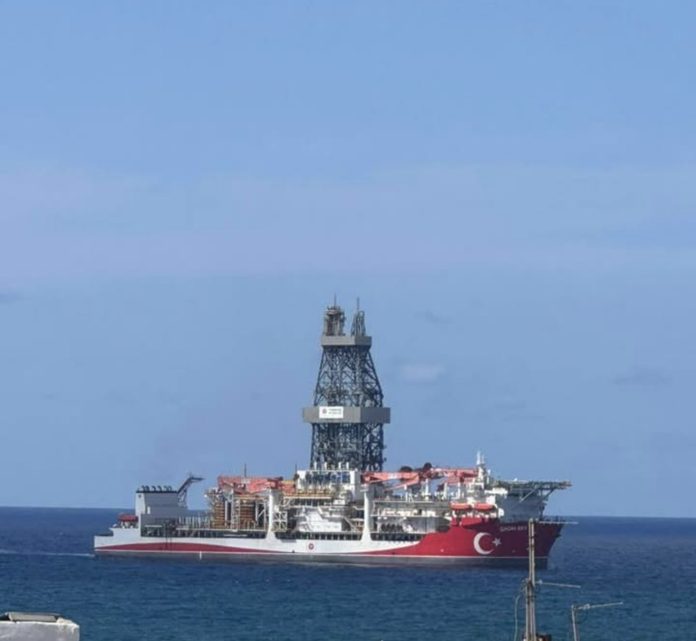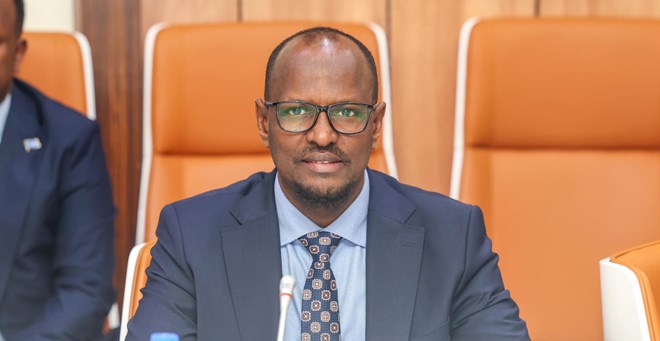
Nov 18(Jowhar)-Qorshaha nabadda ee Trump ee Gaza ayaa hadda galay wajigii labaad ka dib markii uu ansixiyay Golaha Ammaanka ee Qaramada Midoobay iyadoo uusan jirin waddan ka horyimid.
COP30 negotiators work overnight seeking breakthrough climate agreement
Nightfall in Belém: A City of Rivers, Rain, and Relentless Negotiation
They told us the Amazon would be the backdrop for drama, but standing under the damp, humming canopy of Belém’s evening sky you sense the negotiations are as much a human story as a political one.
Delegates shuffle in and out of conference halls, their faces lit by the glow of laptops and the hum of air conditioning. Outside, vendors pack up from the Ver-o-Peso market — a riot of açaí, dried fish, and carved wooden bowls — while the river slips black and inexorable a few blocks away. This is not a postcard of the climate crisis; it is one of its front lines, and the tension is almost tactile: a sense that what happens in the rooms tonight could change lives across the planet.
Stretching the Hours: A Deadline Looms
COP30’s presidency has asked negotiators to keep going through the night. “We can’t pretend these are easy conversations,” said the summit chair at dusk, voice steady, eyes rimmed with fatigue. “But if we don’t try now, we risk losing the chance to agree on something meaningful before the clock runs out.”
After a bruising first week of talks, the hosts set a near-term deadline — finish a “significant part” of the text tonight for a formal sign-off tomorrow — a move designed to force clarity where ambiguity has thrived. The mood is urgent; not elegant, and not guaranteed.
The Map of Disagreement
In practical terms, the summit has become a mosaic of clashing priorities: trade rules that some countries call protectionist, financial pledges that many developing nations call miserly, and fossil fuel language that divides those whose economies still depend on oil and gas from those for whom the science leaves no room for delay.
Carbon tariffs and commerce
One of the sharpest skirmishes centers on the EU’s Carbon Border Adjustment Mechanism (CBAM) — a policy meant to level the playing field by pricing embedded carbon in imports. It’s a policy scheduled to become fully operational in 2026 and has been piloted since 2023.
“We urge everyone to avoid measures that shelter domestic industries under the guise of climate action,” said a senior negotiator speaking for a bloc of manufacturing-heavy countries. “If you erect new barriers, you risk turning climate policy into geopolitical football.”
Responding from across the table, an EU delegate defended the approach: “Pricing carbon — whether at home or at the border — is about aligning economies with the reality of the climate crisis. We’re not seeking trade wars; we’re trying to stop runaway warming.”
Money, always money
Finance has returned as the beating heart of the talks, the familiar sore point in global climate diplomacy.
For decades, developing countries have pressed wealthy governments to deliver predictable funding for both emissions cuts and adaptation. There remains an unresolved promise — the long-discussed $100 billion per year target from developed to developing countries — and many in the Global South say it has never materialized in full. That enduring shortfall, more than any technical detail, fuels distrust.
“We are not asking for charity,” said an African climate minister at a small press gathering, voice low but fierce. “This is compensation for a crisis we did not create. Without reliable finance for adaptation, millions will be uprooted.”
Small Islands, Big Voices
Among the most vocal are representatives of small island states and low-lying nations. To them, the debate is not academic. For many communities, a half-degree of warming is the difference between survival and displacement.
“For our people, 1.5°C is not a line in a report. It is a threshold between life and death,” said a minister from a Pacific island coalition. “We know the science. We live the consequences.”
Those pleas collide with a more defensive posture from some major emerging economies and fossil fuel exporters. Any language that feels like finger-pointing is met with caution; nobody wants a text that could be read as singling out their national development model.
The Fossil Fuel Question
One of the most emotionally charged debates is whether the summit will call explicitly for a phase-out of fossil fuels. Supporters argue that science — and the latest climate models — leave little room for compromise: to have a decent chance of limiting warming to 1.5°C, global greenhouse gas emissions need to fall roughly 40–50% by 2030 relative to recent levels, according to the Intergovernmental Panel on Climate Change (IPCC) assessments.
“Phasing out fossil fuels isn’t ideology; it’s arithmetic,” said a European delegate between meetings. “We can have a just transition or mass displacement, but we cannot have both.”
Brazil, the host, has signaled it wants a strong signal on fossil fuels. Walk the streets of Belém and you’ll hear mixed sentiments: a vendor who depends on diesel for his refrigerated truck, an indigenous leader whose forest is threatened by illegal clearing, a young researcher who speaks with optimism about renewables. “You cannot eat a slogan,” said one local fisherman. “But I also don’t want my home drowned by a tide in twenty years.”
At the Edge of the Forest, a Larger Story
Belém itself gives the summit a texture that’s hard to ignore. This is a city where riverboats carry both goods and stories; where the scent of grilled fish competes with diesel; where indigenous leaders have come with carved ceremonial objects and scientists with satellite data. The Amazon looms not only as a backdrop, but as a moral accumulator — a place where promises will be checked against real land and real livelihoods.
“The forest is not a prop for a photo-op,” said an indigenous activist during a late-night panel. “It is our home, our pharmacy, and our climate buffer. We are tired of being spoken for.”
What’s Really at Stake — For Everyone
These talks may seem arcane — paragraphs and brackets, clauses and footnotes — but the implications are visceral. Here are some of the stakes negotiators are wrestling with:
- How money moves from rich countries to vulnerable ones to fund adaptation, mitigation, and loss and damage.
- Whether international trade rules will become a tool to accelerate decarbonization or a way to shield incumbents.
- Whether the global community will acknowledge the scale of change needed to keep 1.5°C within reach, and who bears responsibility for easing the transition.
Night Work, Morning Consequences
As midnight runs toward dawn in Belém, the mood is a strange mix of hope and exhaustion. Deals are possible; so are stalemates. “If we wait to solve the hardest issues, everyone loses,” said a representative of a UN climate body earlier in the day. “But solving them requires trust, and trust is built on money, fairness, and willingness to make hard choices.”
So, reader: what do you think? Should trade tools like CBAM be embraced as necessary instruments to cut emissions, even if they ruffle commerce? Or do they risk deepening divides and slowing cooperation? And when powerful economies balk at stronger language on fossil fuels, who should make the first move?
Tonight, negotiators will keep at it beneath fluorescent lights and the low forest sounds beyond the city. They will argue, cajole, and compromise. And somewhere between the Ver-o-Peso stalls and the polished halls, the fate of communities — and perhaps the planet’s — will be decided in language as delicate as any ecological balance.
Follow an Irish climate scientist’s candid COP30 video diary
Belém at the Brink: The Amazon, Diplomacy, and the Final Week of COP30
Belém wakes before dawn. Mango crates clatter in the tide of the Ver‑o‑Peso market, boats return from the river with sacks of tucupi and smoked fish, and a humidity so thick it feels like a prayer hangs over the city’s colonial facades.
It is into this humid theatre that the world has descended. More than 50,000 delegates — negotiators, scientists, indigenous leaders, campaigners, and journalists — have come to the mouth of the Amazon for COP30, the climate summit that must do more than talk. It must produce a plan that reaffirms the 2015 Paris Agreement and gives the planet a credible pathway forward.
“Everything, everything. It’s very complicated,” COP30 President André Aranha Corrêa do Lago said when asked if any single issue dominated the talks in Belém. The plainness of that sentence has the gravity of a weathered map: every route forward is entangled with others.
The stakes leak into the air
The Amazon is not a backdrop; it is part of the agenda. The rainforest spans roughly 5.5 million square kilometers and holds an estimated 100 billion tonnes of carbon in its trees and soils — a living ledger for the world’s climate. Its rivers contribute almost a fifth of the planet’s riverine freshwater. Lose the Amazon, and the world loses a major brake on warming and a bathtub for carbon humanity cannot easily refill.
“Protecting the rainforest is essential if we are to reach net zero emissions targets,” Dr Clare Noone, a climate scientist from the University of Galway who is attending COP30, told RTÉ News from Belém. Her voice—equal parts scientist and citizen—cut through the diplomatic rhetoric: the math is clear; preserving carbon-dense landscapes is not optional.
From the negotiation halls to the riverbank
Inside the summit rooms, the language is technical: nationally determined contributions, adaptation finance, loss and damage, transparency frameworks. Outside, in the shade of the giant kapok trees and on the banks where children kick up mud, the impacts are more immediate. “We used to fish right here under the big tree,” said Ana, a local fisherwoman, wiping her hands on her apron and smiling with an edge of sorrow. “Now the catches are smaller, and the weather, it surprises us more.”
An Indigenous elder, speaking through an interpreter, told me: “The forest has its own voice. When its voice is ignored, the weather answers in storms.” She looked out across the water with a hard, gentle stare. “We did not come to COP to be a photo. We came because the forest is our law.”
These are the people who live the climate’s everyday fluctuations — not in emissions charts, but in failed crops, shifted river seasons, and the slow hollowing of traditions. Their testimony has a way of stripping jargon down to essentials.
Negotiations: where the emotional and the technical collide
Diplomacy is a tug-of-war between urgency and caution. Delegates pore over text line by line, each clause a battlefield. For poorer nations and small island states, “loss and damage” has become the moral fulcrum of this meeting: the recognition and compensation for irreversible harms already being inflicted by climate change.
“You cannot ask communities to adapt when the debt is already stacked against them,” said Laila Mensah, a policy delegate from Ghana. “Finance is not charity; it’s responsibility.”
High-income nations are under pressure to pledge more public finance, to shift flows away from fossil fuels and toward quick, scalable support for adaptation — infrastructure, crop resilience, and early-warning systems. But money alone won’t heal rivers or reforest devastated tracts; it must be paired with land rights, indigenous stewardship, and enforcement that resists illegal logging and land grabs.
Money, the elephant in the room
How much finance is enough? The answer is both technical and moral. The Intergovernmental Panel on Climate Change (IPCC) has repeatedly underscored the need for rapid emissions reductions and large-scale investment in adaptation. Estimates for global adaptation needs run into the hundreds of billions annually, but current global flows fall far short.
“We cannot keep asking the poorest to shoulder the cost of a crisis they did least to create,” said Helena Duarte, an economist with a climate finance NGO. “This summit must sharpen the instruments: clear commitments, transparent delivery mechanisms, and predictable funding.”
Ecology and economy, entwined
Belém itself is a study in contradictions — a city of brilliant markets and pressing poverty, of scientific institutes and neighborhoods feeling the weight of environmental change. The people who live here know what the negotiators sometimes forget: the Amazon is not just carbon or canopy. It is food, medicine, ancestry, and microclimates that sustain agriculture across South America.
Global empires of consumption rely in part on the Amazon’s quiet generosity. Meanwhile, local entrepreneurs are trying to translate biodiversity into sustainable livelihoods — acai cooperatives, rubber-tapping collectives, community-run ecotourism. “We want development that keeps the forest standing,” said Paulo Lima, who manages a cooperative producing sustainably harvested oils. “It is our economy and our identity.”
What success would look like
A successful COP30 would thread together at least three things: credible emission reduction commitments that keep 1.5°C within reach; meaningful, predictable finance for adaptation and loss and damage; and robust international support for protecting and restoring vital ecosystems like the Amazon, paired with respect for indigenous rights and local stewardship.
It would mean clear timelines, enforceable milestones, and mechanisms that translate promises into projects on the ground. It would mean the kind of multilateralism that tolerates compromise but refuses cynicism.
Why you should care
Ask yourself: when a forest burns in Brazil, who pays? When floodwaters reshape a coast in Bangladesh, what account balances will be adjusted? The answers are global. The Amazon is not just Brazil’s; its fate shapes weather, food security, and climate risk around the world.
Climate decisions made in the glass-and-steel halls of COP30 will ripple into the shops, farms, and frontlines of distant communities. If you eat beef or soy from land with unclear provenance, if your pension is invested in fossil fuels, if your city plans for infrastructure without accounting for a changing climate — COP30 matters.
A closing note from the river
Walking along the mangrove-lined estuary at dusk, I watched men mend nets, and children chase the last gulls of the night. The skyline of Belém glows with fluorescent energy and quiet resilience. There is an earnestness to this place — a sense that the world’s negotiators are not acting on an abstract climate, but against a living, breathing landscape.
Whether COP30 will deliver the “clarity” the planet needs is still up in the air. But sitting beside the Amazon, amid the smoke of grilled fish and the murmur of languages, one truth is clear: conservation here is not a niche policy. It is a planetary imperative.
What will we choose — to invest in the systems that hold the climate together, or to keep stealing the world’s safety net until it tears? Belém is asking the question out loud, and the world must answer.
Netanyahu to block Knesset vote on Gaza stabilisation force

At the Edge of a Vote: Netanyahu’s Defiant Promise and a Region Holding Its Breath
On the eve of a United Nations Security Council vote that could reshape the map of the Middle East, Israeli Prime Minister Benjamin Netanyahu stood before his cabinet and issued a line so plain it sounded like a vow: Israel will not accept the creation of a Palestinian state.
“My position has not changed one bit,” he told ministers, his voice measured, his words carrying the weight of decades of policy and political compromise—or the refusal to compromise. “I’ve fought this for years. We will not reward terrorism with statehood.”
The scene was familiar: a leader rallying his base, a coalition of hard-right partners urging firmness and the cameras dutifully capturing the moment. But in the corridors beyond the cabinet room—among diplomats, humanitarian workers and ordinary families—the mood was anything but scripted.
A UN Vote and an Unsettled World
Tomorrow, the Security Council is slated to vote on a US-drafted resolution that seeks a UN mandate for an international stabilisation force in Gaza. It is a compromise document, reworked after months of intense diplomacy and growing pressure from prospective troop-contributing countries.
Crucially, the revised resolution includes language that opens the door—albeit cautiously—to Palestinian self-determination, saying a political process could create a “credible pathway” to statehood. That phrase, for some, is a lifeline. For others, an affront.
Russia and China have signalled reservations. A rival Russian proposal goes even further in favour of Palestinian statehood, underscoring how the dispute is not only regional but global in temperament: different capitals, different priorities, one volatile neighborhood.
Why this matters
Many diplomats and analysts say a two-state solution remains the only realistic long-term way to end the cycle of violence between Israelis and Palestinians. The rationale is simple: without a viable political horizon, grievances calcify into permanent conflict. And yet, the political will—even among longtime allies—is fraying.
“Countries don’t just split territory on a map overnight,” said Miriam Alon, a Middle East specialist at a think-tank in Tel Aviv. “It takes negotiation, security guarantees, and above all, trust. Right now, trust is in extraordinarily short supply.”
Pressure from All Sides—and the Politics at Home
Netanyahu’s posture has been shaped by more than international debate. His governing coalition includes figures who see any move toward Palestinian independence as existentially dangerous. These partners have pushed the prime minister toward a hard line—part political calculation, part ideology.
“If Israel steps back now, it is sending a signal,” said a senior cabinet minister who asked not to be named. “A signal to terrorists, and to those who wish to see this state dismantled.”
Yet the outside world is not quiet. Countries that could contribute troops to a stabilisation mission pressed Washington for clearer language about a future political framework. The result: a compromise that tries to thread a narrow needle—assuaging troop contributors while not fully alienating Netanyahu’s base.
On the Ground: West Bank Tensions and Settler Violence
While diplomats spar over phrasing in New York, violence in the West Bank has surged—feeding the sense that the prospects for peace are slipping. Palestinian health officials reported that a 19-year-old man was killed by Israeli military fire during an operation near Nablus. According to those officials, he was the seventh person killed in the West Bank in two weeks by Israeli forces.
In other incidents over the same fortnight, authorities say six teenagers—aged 15 to 17—were shot and killed in separate clashes. Families and rights groups described scenes of chaos and grief that have become, tragically, all too familiar.
“I lost my son on a Tuesday,” said Fatima, a mother from a village outside Nablus who declined to give her last name. “He was a child. We buried him with my brother’s old blankets. How do you explain that to a father?”
Accompanying the clashes has been an alarming spike in attacks by Jewish settlers. The United Nations human rights office recorded more than 260 attacks by settlers against Palestinians and their property in a single month—October—the highest monthly total since at least 2006, according to the UN spokesperson who released the figures.
“There’s a sense among Palestinians that these attacks are carried out with impunity,” said Lina Haddad, a lawyer with a West Bank human rights organization. “When local leaders who support settlements sit in the government and oversee policing, accountability becomes nearly impossible.”
Official responses and denials
Netanyahu described the settler violence as the act of a “small minority” while acknowledging the rise in incidents. That characterization sits uneasily with the accounts of those who live under its shadow.
“I don’t know what ‘small minority’ means when the olive groves are burning and children cannot walk to school,” said Ahmed Mansour, a teacher in Hebron. “This is our reality—everyday.”
Voices from the Region and Beyond
For diplomats, the stakes extend beyond ballots and press conferences. A senior UN official said privately that a stabilisation force could provide breathing room—humanitarian access, de-escalation, space for political talks. But without concrete steps toward statehood, that breathing room risks becoming a mere pause between waves of violence.
“We must think in decades, not headlines,” said Dr. Sophie Renard, a scholar of conflict resolution. “Temporary solutions without a political horizon become permanent injustices.”
On the streets, voices are raw and immediate. A settlers’ leader interviewed outside an outpost north of Ramallah framed the debate differently: “We are defending our homes,” he said. “You cannot tell a family to leave because someone far away signed a paper.”
And in Gaza, where the stabilisation force is meant to operate, people alternately hope and fear. “We’ve come to expect promises,” said a shopkeeper in Gaza City, wiping dust from his hands. “I want peace not for slogans but so my children can go to school without sirens.”
What comes next—and what it all means
The Security Council vote is not an endpoint; it is a pressure point. Whether the resolution passes, and in what form, will shape diplomatic options and ground realities. The questions it raises are profound: Can global institutions help shepherd a return to political talks? Can communities traumatised by years of conflict imagine coexistence? Will leaders choose risk or reconciliation?
These are not just geopolitical riddles. They are moral and human ones. They ask us to consider what justice means after so much loss, and how societies rebuild trust when the very structures of governance feel fragile.
As you read this, ask yourself: what would a credible pathway to statehood look like to you? Would a decade of international guarantees be enough? Or does peace require more than treaties—a reweaving of everyday life, school by school, neighborhood by neighborhood?
Tomorrow’s vote will not answer these questions. But it may tilt the odds. For those living between checkpoints and parliament buildings, the outcome is not abstract. It is the difference between a future with a door to diplomacy—and a future where that door is bricked shut.
Trump Hints at Potential U.S. Talks with Venezuela’s Maduro
In the shadow of an aircraft carrier: when diplomacy drifts into naval waters
The Caribbean woke up this week to the sound of engines and the low hum of helicopters, but it wasn’t just a weather story. In the blue wash between Venezuela and the United States, warships have taken positions and a diplomatic olive branch — or something that looks like one — has been offered across a very public gulf.
“We may be having some discussions with Maduro, and we’ll see how that turns out,” President Donald Trump told reporters in Florida, in a remark that landed like a pebble thrown into already choppy waters. “They would like to talk,” he added, shrugging into a microphone as though the offer were both casual and consequential. On the other side, Caracas has denounced accusations from Washington that link the president’s inner circle to a criminal network known as the Cartel de los Soles. The two positions now hang in the same air, heavy and unresolved.
A label that reverberates: terror designation and its consequences
On 24 November, the US State Department moved to classify Cartel de los Soles — an alleged network of military and security officials long blamed by critics for trafficking and corruption — as a foreign terrorist organization. The announcement carried the weight of a new era in US policy toward Venezuela: not just sanctions and diplomatic pressure, but a legal framework suited to combatting groups considered threats to national security.
“Cartel de los Soles by and with other designated FTOs including Tren de Aragua and the Sinaloa Cartel are responsible for terrorist violence throughout our hemisphere,” Secretary of State Marco Rubio said, framing the designation as defensive: a means to choke off funding and resources, he argued.
Caracas rejected the accusation. President Nicolás Maduro called the measure an act of aggression and political theater, a predictable retort in a conflict where narratives are trafficable commodities. “They want to criminalize our sovereignty,” a senior Venezuelan official told a local briefing. “This is unilateral coercion dressed up as security policy.”
What does this mean in practice?
Labeling a group as a foreign terrorist organization carries real teeth: it freezes assets, criminalizes assistance, and allows a broader military and law enforcement toolbox to be deployed. For nations and people already inhabiting the faultlines of a regional crisis, that shift can translate into faster operations at sea, tighter financial blockades, and a spike in public rhetoric that risks miscalculation.
Ships, strikes, and the human margin
Since September, the US has launched an anti-trafficking campaign across the Caribbean and the eastern Pacific dubbed “Operation Southern Spear.” The operation has been visible: destroyers and surveillance aircraft, and more recently, the USS Gerald R. Ford — the newest US aircraft carrier — assigned to the region along with guided-missile destroyers and support vessels.
But visibility does not equal clarity. According to an AFP tally of publicly released figures, at least 83 people accused of ferrying drugs in international waters have been killed in strikes since the campaign began. Many of the killed were reportedly on small fishing boats, pirogues and open skiffs — the same craft local seafarers use to make a living.
“We live off the sea,” said Manuel, a fisherman from a coastal village outside Maracaibo, who asked that his surname not be used. “When the patrols come, everyone is afraid. We don’t know who’s trafficker and who’s honest. A shadow from the sky and your whole family is left with questions.”
US officials insist operations are narrowly targeted at criminal networks and that every effort is made to avoid civilian casualties. Yet independent analysts and human rights groups warn that the strikes, often shrouded in limited public evidence, risk becoming extrajudicial. “When lethal force is used without transparent investigation, it undermines the rule of law,” said Dr. Ana Ruiz, a human-rights scholar specialising in Latin America. “Even if some targets are traffickers, the absence of due process matters.”
Local color and the human calculus
Walk through a small port town in eastern Venezuela and the scene is complex: children playing beneath clotheslines heavy with drying fish, street vendors selling arepas and plantains, and the hum of radio chatter from skiffs preparing for a night run. Rumours travel faster than official statements — whispers about which boats were stopped, which captains disappeared, which checkpoints intensified.
“You hear stories,” said Rosa, who runs a small tienda near one of the coastlines. “Sometimes it’s smugglers, sometimes it’s someone trying to get by. But we fear the sea now more than we fear the storm.” These are not just coastal tales; they are the daily arithmetic of survival for a population that has endured years of economic collapse, food shortages and the largest displacement of people in Latin America.
More than seven million Venezuelans have left the country in recent years, UN agencies estimate, seeking refuge in neighboring countries and beyond. The resultant migration has reshaped politics across the region and heightened sensitivities about borders, security and humanitarian obligations.
Questions that refuse easy answers
So where does this leave us? Is the US strategy a necessary application of pressure to choke narco-trafficking networks that have entangled state structures? Or does it risk militarizing a humanitarian catastrophe and heightening the chance of misfires — literal and political?
The diplomatic overture — a suggestion that Mr. Trump might be willing to speak with Mr. Maduro — complicates the picture further. Can substantive dialogue happen under the shadow of an aircraft carrier? Can conversations about corruption, migration and drug trafficking progress while the region watches lethal force being applied from the sea?
“Diplomacy is more credible when it’s backed by transparency,” said Elena Moretti, a regional security analyst. “Conversations are essential, but they must be accompanied by independent investigations and mechanisms that build trust — not deepen suspicion.”
Beyond the headlines: what to watch next
Keep an eye on three things in the weeks to come:
- Whether Washington releases more evidence tying named Venezuelan officials to the alleged cartel activity;
- How regional governments — from the Caribbean island states to Colombia and Brazil — respond to both the security operations and the diplomatic possibility of talks; and
- Any independent investigations into the strikes that have killed dozens at sea, and whether families receive explanations or redress.
These are not abstract items for a policy checklist. They are decisions that shape lives — fishermen’s prospects, migrants’ safety, and the long, slow work of restoring trust between peoples divided by politics and geography.
Final thought: the human tide
When you stand on a shore and watch a ship disappear beyond the horizon, it’s easy to romanticize the vastness of the sea. But for the men and women who ride its waves, danger and livelihood are braided together. The current moment asks a hard question: can a policy of hard security coexist with the kind of inclusive, evidence-based diplomacy that heals, rather than fractures, a region already frayed by displacement and suspicion?
As the sun sets over the Caribbean, the answer remains unresolved. Voices insist: talk, but show your cards. Protect lives, but respect law. And above all, listen to the people who have long lived where the water meets the land — because their stories will determine whether the next chapter is one of escalation or, finally, cautious reconciliation.
BBC vows to battle any Trump legal challenge, staff briefed

The Splice That Sparked a Legal Storm: BBC, Trump and the Question of Truth
On a damp morning in central London, where the rain pries loose the scent of old newspapers from the corners of Broadcasting House, a small edit—mere seconds of video—has ricocheted across oceans and into court-room talk. What began as a technical lapse in a newsroom has become a flashpoint in a larger culture war about media, memory and the limits of accountability.
It started with a package: a BBC television segment that juxtaposed snippets from a 2021 speech by Donald Trump. Critics say the edit created the impression that Mr. Trump was calling for the January 6 Capitol riot; the BBC has apologised and the corporation’s chair, Samir Shah, reportedly sent a personal letter to Mr. Trump. But apologies, it appears, will not necessarily close the door.
“I think I have to do that”
On Friday, Mr. Trump told reporters he planned to sue the BBC, threatening damages in a range he estimated between $1 billion and $5 billion. “I think I have to do that,” he said, adding that the broadcaster had “admitted that they cheated.”
Inside the BBC, Chair Samir Shah has been blunt in his internal communications. “I want to be very clear with you – our position has not changed. There is no basis for a defamation case and we are determined to fight this,” he told staff, mindful of what he described as a duty to protect licence fee payers and to defend the corporation from what he views as an unfounded legal assault.
Why does this matter beyond the newsroom?
Because this is not just about one cut or one apology. It’s about how media outlets—publicly funded institutions, in the case of the BBC—handle editorial mistakes in an era when every slip is ammunition for political theatre.
Consider the stakes: the BBC is financed largely through the UK licence fee, money collected from households that expect impartiality and careful journalism in return. For many in Britain and beyond, the corporation is a cultural bookshelf—an institution that has helped define shared facts across generations. When it falters, the reverberations are not merely reputational; they have budgetary, political, and legal consequences.
Legal high-wire: Defamation law in two worlds
Anyone with a passing knowledge of Anglo-American law can tell you the terrain here is complicated. In the United States, defamation claims by public figures are subject to the “actual malice” standard set by New York Times v. Sullivan: plaintiffs must show that the publisher knew a statement was false or acted with reckless disregard for the truth. That is a high bar—especially for media organisations that can point to editorial intent and complicated sourcing.
In the UK, libel laws have traditionally been more plaintiff-friendly, although reforms in recent decades have narrowed the path for claimants. Where Mr. Trump will file—whether in the US or abroad—matters. If he sues in the US, he faces a steep evidentiary climb. If he sues in the UK, the case would play out under different statutory and precedent-based rules. Either way, the sums mentioned—into the billions—would be extraordinary for a defamation judgement.
Behind the headline: newsroom rhythms and human error
Walk through the BBC’s corridors and you hear a familiar hum: editors arguing over wording, producers back-timing packages to fit schedules, reporters juggling live feeds. Mistakes happen. This was not a blank cheque to bad-faith reporting; it was an editorial lapse magnified by politics.
“We are constantly under pressure to be first and to be right. The margin for error is tiny,” said one former BBC editor, speaking generally about newsroom culture. “When something goes wrong, it travels at the speed of outrage.”
And the optics here matter enormously. Footage of political rallies and the events of January 6, 2021, remains raw and painful for many. To splice a speech in a way that alters perceived intent is to reopen old wounds—and to give opponents a platform for a larger narrative about media bias.
How the public is reacting
Public response has been a blend of disdain, glee, and anxiety. Some see Mr. Trump’s threat as performative—another headline-generating claim in a long catalogue of legal threats. Others warn that even the threat of a lawsuit can chill reporting: legal bills accumulate, editors think twice, and the result can be softer scrutiny where it matters most.
“It’s scary for smaller outlets,” said a media analyst in London. “A giant like the BBC can probably defend itself, but the chilling effect spreads.”
What are the real costs of an escalating fight?
- Financial: high-profile litigations can run into the millions in legal fees, even when a defendant wins.
- Reputational: prolonged disputes invite endless commentary about bias and competence.
- Institutional: public broadcasters rely on trust; each fracture can erode the social contract between media and the citizenry.
Samir Shah’s email to staff showed this awareness plainly. There is an institutional calculus at play: defend the BBC, but also protect the public who fund it. The chair’s words—“we are determined to fight this”—signal readiness for a legal battle, but they also underscore a paradox: institutions that exist to scrutinise power must often marshal their own resources to survive scrutiny.
How should audiences think about this moment?
Ask yourself: when you see a clip online, do you assume it’s whole? How quick are you to forward a fiery fragment? In the age of bite-sized video and algorithmic headlines, context is a casualty.
There is also a larger question about proportionality. If a broadcaster apologises for an error and takes steps to correct it, does the political response match the mistake? Or does litigation become a tool to punish, intimidate, and reshape coverage?
Lessons and moving parts
There are practical takeaways here for media organisations, news consumers, and policymakers alike:
- Editors must double-down on verification, particularly with clips that could alter historical meaning.
- Audiences need to cultivate scepticism: ask for full clips, look for context, check multiple outlets.
- Policymakers should consider legal frameworks that protect reputation without stifling legitimate, robust journalism.
Beyond the lawsuit: what this moment reveals
This little scandal reveals something larger about our global information ecosystem. We live in an era where media mistakes can be weaponised, where an apology can be reframed as an admission, and where the line between editorial oversight and political attack blurs all too easily.
For the BBC, for Mr. Trump, for the public that watches and pays and worries: the coming weeks will be a test of endurance and of norms. Will a settlement hush the noise? Will a court produce a definitive answer? Or will the episode simply be another turn in the endless story of media and power?
One thing is certain: the clip that started this fight is tiny compared with the questions it raises. About truth. About responsibility. About who gets to frame history. And about how fragile our shared facts have become in a world that can re-edit the past at will.
Where do you stand? When does an apology suffice, and when does a wrong demand retribution? Think about the last clip you shared—did you see the whole story?
Trump hints at potential U.S. negotiations with Venezuela’s Maduro
Caribbean Tensions: Warships, Accusations, and a Conversation That Might Happen
The turquoise of the Caribbean can be deceptive. From a distance, it is the kind of blue that postcards are made of — shallow, inviting, almost innocent. Up close, in the waters off Venezuela and the string of islands to its north, the color is flecked with the sheen of oil, the wakes of patrol boats, and, now, the shadow of an unprecedented U.S. military deployment.
In a late-morning press exchange in Florida, U.S. President Donald Trump surprised reporters with a line that sounded almost conciliatory: “We may be having some discussions with Maduro, and we’ll see how that turns out,” he said. “They would like to talk.” When pressed, he added with a shrug: “Venezuela would like to talk. What does it mean? You tell me, I don’t know. I’d talk to anybody.”
The remark landed in a region already electric with suspicion. For months the U.S. has been ratcheting up a campaign it calls the fight against narcotics trafficking — an effort that has now taken the form of a naval and air presence large enough to draw headlines. The aircraft carrier USS Gerald R. Ford and accompanying destroyers are in the Caribbean, part of “Operation Southern Spear,” according to U.S. military announcements. The State Department has moved to classify the so-called Cartel de los Soles — an alleged network that U.S. officials say includes senior Venezuelan military and political figures — as a foreign terrorist organization, effective 24 November.
Allegations, denials, and the language of terror
“Cartel de los Soles by and with other designated FTOs including Tren de Aragua and the Sinaloa Cartel are responsible for terrorist violence throughout our hemisphere as well as for trafficking drugs into the United States and Europe,” read a statement from the U.S. government, which names high-ranking Venezuelan officials as complicit. Venezuelan President Nicolás Maduro has vigorously denied the charge. “I am not the head of any cartel,” Maduro said in televised comments, dismissing the designation as political theater.
These are not small allegations. When a state label — foreign terrorist organization — is applied, it carries legal weight: sanctions, frozen assets, and a suite of diplomatic and financial penalties designed to cripple networks and isolate leaders. The U.S. Treasury, in July, already imposed sanctions that branded elements of Venezuela’s security apparatus as supporting transnational criminal networks. Now the stakes are higher.
On the water: strikes, casualties, and questions
The military buildup has been accompanied by a lethal campaign at sea. Since September, U.S. forces say they have carried out more than 20 strikes in the Caribbean and eastern Pacific aimed at drug-smuggling vessels. According to an AFP tally of public figures, at least 83 people have died in those strikes.
U.S. officials insist these were operations against traffickers. But the government has released few details to substantiate that claim in individual cases. Human rights organizations and some legal scholars worry the strikes amount to extrajudicial killings — a charged accusation that pierces to the heart of what it means to use force in international waters.
“If you’re striking people without transparent evidence, without due process, you’re carving a dangerous precedent,” said Ana Ríos, a human-rights lawyer in Bogotá who has monitored maritime interdictions. “The law of the sea is not a blank check for lethal force.”
In coastal towns across northern Venezuela, fishermen and small traders watch the horizon with a mixture of dread and resignation. “When those big ships come, the fish disappear for days,” said José Mendoza, a 47-year-old fisherman in La Guaira, a port town east of Caracas. “We don’t know what they’re doing. We just know it’s not good for us.”
Local Rhythms amid Geopolitics
Walk through any barrio, market, or port town and you feel the friction between everyday life and these big-power maneuvers. On the pavement outside a corner café, a woman named Carmen sells arepas and coffee and watches the news on a battered television. “We have children who leave because the economy is gone,” she said. “Now the world is fighting here, too. Who will protect my son?”
Venezuelans are no strangers to crisis. Years of hyperinflation, shortages, and migration have already hollowed out neighborhoods and family plans. But the specter of foreign military operations — and the suggestion that Caracas could be linked to drug-trafficking networks — brings a fresh and menacing strain to a complex story.
For countries across the Caribbean, the shift is equally unnerving. Small island states like Barbados, Trinidad and Tobago, and Jamaica are watching the U.S. presence warily, aware that their economies and ecosystems sit downstream from any escalation. “We are concerned about sovereignty and stability,” said a Caribbean diplomat who asked not to be named. “An aircraft carrier doesn’t have beach umbrellas.”
Experts weigh in
Geopolitical analysts point to a confluence of factors: the global opioid epidemic, growing Latin American production of cocaine, and political convulsions inside Venezuela. “This is not just about drugs,” said Dr. Laila Hassan, a security specialist who studies transnational criminal networks. “It’s about how states respond when institutions weaken. The U.S. approach is hard power; others argue for a mix of law enforcement, diplomacy, and regional cooperation.”
Indeed, critics of the U.S. strategy say that militarized interdiction tends to produce short-term headlines but little long-term reduction in flows. Drugs are adaptive; smugglers shift routes, methods, and partnerships. Meanwhile, heavy-handed tactics can fuel local resentment and create propaganda victories for those accused of complicity.
What if they talk?
Trump’s suggestion that Caracas might be open to talks presses us to imagine different endings. What would a negotiation even look like? Would it include amnesty, asset disclosures, or international oversight? Would it aim to dismantle networks or to secure cooperation from Venezuelan security forces?
“Talks are always better than gunfire,” said Isabel Contreras, a schoolteacher in Maracaibo. “But you can’t have a conversation built on humiliation. If they go to the table, it must be serious.”
There is a real hunger for dialogue among people who want order without bloodshed. Migrant communities in Colombia and the United States watch closely. Families who have lost sons to drug-affiliated violence, and families whose breadwinners left to find work abroad, hope for stability. And regional organizations — such as the Organization of American States and the Caribbean Community — have a vested interest in steering any confrontation toward de-escalation.
Broader currents
At a higher level, this episode is a reflection of global patterns: weakening institutions create vacuums that criminal networks and foreign powers can exploit; migration and economic distress feed political crises; and the militarization of problems like drug trafficking raises ethical and legal questions.
How do we balance the urgency of stopping illicit flows with the rule of law? How do we prevent the humanitarian fallout that often follows heavy-handed security campaigns? And how do countries with asymmetric power assert influence without turning neighbors into battlegrounds?
On the horizon
For now, the Caribbean’s blue remains as beautiful as ever — if you stand on the right beach and squint. But the presence of a carrier strike group and the rhetoric of terror designation mean this corner of the world is no longer a passive backdrop. It has become a stage for a contest of narratives: corruption and lawlessness, sovereignty and security, accusation and denial.
Readers across the globe might ask themselves: when a great power chooses force over process, who pays the price? Is the threat of drug trafficking best met with weapons or with renewed regional institutions and investment in communities? And if leaders do sit down to talk, what would you want them to prioritize — justice, truth, or stability?
One thing is certain: the conversation, whether rhetorical or actual, will shape lives not only in Caracas or Miami, but on the docks of small islands, in the barrios where mothers worry, and on vessels plying the turquoise stretch that connects us all. The sea is wide. So are the consequences.
UK to slash refugee protections in sweeping asylum overhaul

At the water’s edge: Britain’s asylum overhaul and the human ripples it will send
On a grey morning in a small seaside town where the Channel and the country’s conscience meet, a group of volunteers fold donated blankets and wait for a van that might never arrive. Outside, fishermen haul in their nets; inside, the conversation turns to a single, headline-grabbing phrase: “the largest overhaul in modern times.”
That phrase — coming from the Labour government as ministers ready a sweeping package of asylum reforms — has already begun to change the tone of civic life. For some it reads like overdue clarity; for others it is a cold, bureaucratic shutter slamming down on people escaping war, persecution and crushing poverty.
“We’re seeing people who have survived hell make the Channel crossing on an inner tube,” said Elena, who has been volunteering on the coast for six years. “Now the government says those people should have fewer protections. That terrifies me. It feels like we’re outsourcing compassion.”
What is being proposed?
The headline measures are stark and familiar: refugee status will be made temporary and subject to regular review, support such as housing and weekly allowances that were once a statutory duty may no longer be guaranteed, and judges could be instructed to weight public safety above claims like family reunion or fears of inhuman treatment if returned.
Officials also plan to tempt would-be arrivals with legal pathways — safer routes to apply for sanctuary in the UK — while introducing tech such as AI-driven facial age-estimation to try to determine whether someone claiming to be a child actually is one.
Ministers point to other European models. “We have watched what Denmark has done,” said a government source. “They have tightened incentives and increased removals. We want a system that works and one that maintains public consent.”
Major elements of the package
- Temporary refugee status, with periodic reviews to determine whether return is possible.
- Revoking the statutory duty to provide asylum-seeker support introduced under EU law in 2005 — potentially ending guaranteed housing and weekly allowances.
- New legal tests requiring judges to prioritise public safety considerations over some human-rights claims.
- Rollout of AI tools to estimate ages of those claiming childhood status.
- Expansion of safe and legal entry routes to discourage dangerous Channel crossings.
Counting crossings, weighing consequences
Numbers sit at the heart of the argument. Home Office figures show that roughly 39,075 people have arrived in the UK via small boats so far this year — surpassing last year’s total of 36,816 and the 2023 total of 29,437, though still slightly below the pace of 2022 at this point (39,929).
“When people see the statistics — boats, numbers, queues — that’s what drives political pressure,” said Dr. Aisha Rahman, a migration expert at a leading university. “But numbers without context are a dangerous form of shorthand. Behind every figure is a child, a parent, someone who has made a calculation under duress.”
That nuance is exactly what the government says it wants to recover. Home Secretary Shabana Mahmood has described the effort as a “moral mission” to prevent illegal migration from tearing Britain apart and eroding public consent for an asylum system altogether. She argues that unless the state can show it is controlling borders and reducing dangerous journeys, the political and social compact that underwrites sanctuary will collapse.
Voices from the ground
Across England’s southern rim, reactions splice along familiar fault lines.
At a hostel repurposed to shelter recent arrivals, a young man who gave his name as Karim cradled a small, damp teddy and said quietly: “We came because it wasn’t safe. If they tell me my protection is temporary, what do I do? How do I rebuild when every plan has an expiry date?”
Local residents, too, are conflicted. “We want compassion,” said Sarah, a schoolteacher in a coastal town. “But we also feel overwhelmed by the speed of change. If the state withdraws support, who fills the gap? Churches, charities — they can’t do it alone.”
Charities warn that cutting statutory support will shift costs and burdens onto overstretched local services. “If housing and allowances are not guaranteed, the fallout will be visible in homelessness services, hospital waiting rooms and school gates,” said Marcus Bello, director of Refugee Aid UK. “It’s a false economy to think this will save money in the long run.”
Technology, judges and the fragile line between order and rights
The plan to deploy AI age-estimation tools has already sparked controversy. Proponents say technology can help identify adults pretending to be minors, a tactic that can skew protections and resources. Skeptics warn of error rates, bias, and the dangers of delegating intimate judgments about identity and vulnerability to algorithmic systems.
“An automated estimate cannot feel trauma,” said Dr. Rahman. “Age-assessment is more than measurements: it is about context, medical histories, psychological indicators and trust. We must be sceptical about quick technical fixes.”
Similarly, judicial guidance to prioritise public safety over certain human-rights claims will likely end up in courtrooms for years to come. Lawyers and rights organisations predict an avalanche of challenges, as claimants contest the balance struck between the state’s duty to protect and individual entitlements under international law.
Why this matters beyond Britain
Look past borders and you see a world remade by displacement. UNHCR reports that by the end of 2023 there were roughly 117 million people forcibly displaced across the globe — the highest number on record. Conflicts, climate pressures, economic collapse and widening inequality mean that migration is not a single-country problem but a global phenomenon.
When wealthy democracies tighten, people on the move find other routes. Smugglers adapt. Neighbouring countries bear strains. The moral and strategic questions are not local; they are systemic. Do we build more fences, or do we invest in the diplomatic, humanitarian and development tools that reduce pressure at the source?
“We need realism,” said Dr. Rahman. “Borders matter. But so does leadership on international burden-sharing. If we think we can simply shrink our obligations and the pressure will vanish, we are deluding ourselves.”
Questions for readers — and policymakers
As you read these words, ask yourself: what kind of society do you want? One that prioritises absolute control of borders at the cost of long-standing protections? Or one that recognises the complexity of displacement and tries, awkwardly and imperfectly, to balance compassion with order?
This is not just about the UK. It is about a global moment when many democracies are wrestling with the same dilemmas: how to be humane at scale, and how to keep public trust without sacrificing rights.
“I don’t envy politicians their task,” Elena, the volunteer, said. “They must navigate fear and hope. But policies change lives. We should demand that those changes are measured, humane, and guided by evidence — not headlines.”
What happens next
The Home Secretary is scheduled to lay out the legislative package in the House of Commons tomorrow. Expect fierce debate, urgent questions, and courtroom skirmishes for months to come. Expect also the slow, less-visible work that follows: councils trying to house people with fewer resources, charities reconfiguring services, and families living under a cloud of temporary protection.
Whether Britain’s experiment becomes a template for others will depend not just on parliamentary arithmetic, but on how these reforms are received by judges, aid organisations, and the people they most directly affect. The challenge is structural, but its consequences are heartbreakingly human.
What would you do if you had to decide where safety ends and sovereignty begins? The answer will say as much about who we are today as any official statement from Westminster.
Xeer ilaalinta Qaranka oo gaartay dacwo ka dhan ah Maareeyaha Turkish Airline Muqdisho
Nov 17(Jowhar)-Xaafiiska Xeer ilaaliyaha guud ee qaranka ayaa sheegay inuu gacanta kuhayo dacwad ka dhan ah nin Turki ah oo lagu magacaabo Turhan kenmen kuna magacaaban Maareeyaha Xaafiiska Turkish Airline ee Soomaliya.
42 qof oo Cumro u joogay Sucuudiga oo ku geeriyooday shil baabuur
Nov 17(Jowhar)-Ugu yaraan 42 qof oo muwaadiniin u badan dumar iyo carruur, kana yimid magaalada Haydarabad ee dalka Hindiya, ayaa ku geeriyooday shil baabuur kaddib markii bas ay saarnaayeen uu ku dhacay gaadhi kale, sida ay xaqiijiyeen ilo ammaanka dalka Sucuudiga.