Home Blog Page 6

Sightseers flock to witness history as Moon launch draws near

Tourists gather to 'witness history' ahead of Moon launch
The lunar mission - the first of its kind in more than 50 years - will see the first person of colour, the first woman and the first non-American embark on a journey to the Moon

A Night at the Beach, Waiting for the Moon

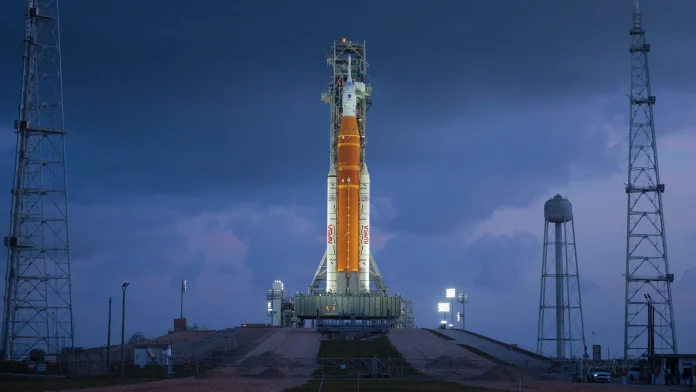
The sun slid low over Cocoa Beach like an orange coin, and the air smelled of salt, sunscreen and the faint tang of hot tar from the waterfront parking lots. Families lounged on towels; teenagers chased the sudden gusts of wind that made their kites skitter. Children pointed at a distant white tower that was, for a few hours at least, the most famous thing on Earth.

For vacationers who’d come to surf and to sleep late, the arrival of a rocket on the horizon was an unexpected punctuation mark in their holiday. For others it was the reason they’d booked a room months ago. Either way, anticipation hummed through the crowd: tonight was launch night for Artemis II, NASA’s long-awaited mission that will carry astronauts farther from Earth than any human has travelled in more than half a century.

Witnessing a Turning Point

“We were supposed to be here for baseball,” said Alyx Coster, a 38-year-old mom from Minnesota, folding up the beach umbrella as the light thinned. “But the kids are beside themselves. They kept saying, ‘Mom, we’re actually going to see history.’ They mean it.”

Jason Heath, a shipbuilder from northeastern Maine who brought his family down for a winter escape, stared at the sea as if trying to spot a trajectory in the waves. “There’s a weird pride in watching humans push a boundary again,” he said. “Whatever happens tonight, you’re part of the moment. You feel it in your bones.”

They’re not alone. Local officials have braced for a crowd that could swell to some 400,000 people across the Space Coast, according to regional newspapers and county estimates. Hotels reported heavy bookings, restaurants extended hours, and small vendors hawked T‑shirts printed with rockets and moon motifs. The economic ripples of a launch—ticketless, free to the public but priceless in effect—are felt up and down the strip.

Not Just a Launch: A Mirror of Our Times

Artemis II is more than a technological spectacle. It’s a statement about who goes to space now. The crew—three Americans and one Canadian—represents a departure from the homogeneity of the Apollo era. For the first time, a woman and a non‑American are slated to travel that far from Earth; the mission may also include the first person of colour to enter lunar distance. For many, that is as momentous as the rocket itself.

“Representation matters,” said Dr. Aisha Mensah, a space policy scholar at a university in Washington. “When kids see themselves in astronauts—girls, children of colour, young people from outside the U.S.—it changes what they imagine possible. That has long-term cultural and economic benefits for the STEM pipeline.”

How Far Are We Going?

Artemis II is expected to eclipse the distance humans reached during the Apollo missions. The farthest recorded human distance from Earth—roughly 400,000 kilometres—was set during the Apollo 13 free-return trajectory. This mission will push that boundary further, following a looping course that will take the crew well beyond low Earth orbit and into cislunar space, a realm where Earth‑Moon gravity plays out like an intricate dance.

“Technologically, it’s a huge step,” said Marcus Alvarez, an aerospace engineer who flew out to watch the launch. “We are testing the Orion capsule’s systems with a crew aboard, and that experience will inform everything from life-support redundancy to navigation in deep space. These are the building blocks for sustained presence at the Moon and, eventually, Mars.”

Between Nostalgia and New Narratives

Not everyone here remembers the Apollo launches, but some do—and their memories are a lens through which they view tonight. Melinda Schuerfranz, 76, who placed a folding lawn chair at the dune line alongside her husband, recalled the first moonshots like a family heirloom.

“Back then you could feel the whole country leaning in. Radios, schoolrooms—everyone watched. There was a hum of national purpose,” she said. “Tonight feels different—more crowded, more informal—but it’s still exciting in its own way.”

Her husband John, a retired mechanic, added, “The space race gave us a cause that felt shared. Now there are more players, more private companies, more countries. That makes it messier, sure, but also richer.”

Why So Few People Know

Despite the scale of the mission and a steady media rollout from NASA, many Americans admitted they’d only learned of the launch by accident. A fragmented information environment—endless streaming choices, a 24/7 news cycle that prioritises some stories over others, and the constant churn of social media—means even headline-making events can slip past large swaths of the population.

“I work nights, I don’t follow the news much,” said Carlos Medina, a lifeguard who spends his days scanning the surf. “I heard someone talking about it and thought, ‘Wow, that’s nearby.’ But it’s not like the old days when you knew the schedule and tuned a radio.”

Local Life, Global Questions

Near Jetty Park and the launch viewing pads, small businesses hum with last-minute sales: coffee shops sell thermoses with astronaut patches, a surf shop posts a launch livestream on a television, and a taco truck offers “moon tacos” with a wink. But the excitement is threaded with practical strain—traffic snarls hours before lift‑off, roads turned into viewing arteries, and volunteers coordinating water stations for the crowd.

The spectacle raises larger questions, too. What does the return to lunar exploration mean for a world facing climate crises, geopolitical tension and unequal access to resources? How do we justify public expense while education, housing and healthcare strain budgets? For many, the answer lies in a balance between inspiration and accountability.

“Spaceflight is expensive,” Dr. Mensah said. “But it’s not just fireworks. Investments in the Artemis program have driven innovations in materials, sensors and medicine. The key is ensuring those benefits reach people who are not at launch sites or in boardrooms.”

Facts to Keep in Mind

  • Launch window: Wednesday at 6:24 p.m. local time (about 10:24 p.m. Irish time).
  • Estimated crowd: Up to 400,000 people across the Space Coast region, per local reporting.
  • Temperature at the beach: Approximately 25°C as evening approached.
  • Distance milestone: Artemis II aims to travel beyond the Apollo-era human distance record of roughly 400,000 km from Earth.
  • Program scale: Artemis is an international and commercial endeavour involving billions of dollars in investment and partnerships across agencies and private companies.

What Will You Tell Your Children?

As the first stars blinked awake and the crowd tightened, a woman near me turned to her partner and said, “When they ask where we were the night humans went farther than before, we’ll tell them we were right here, sand between our toes.” It was a simple, tender thought—but it cut to the heart of why so many of us gather for launches.

Do we come for science, for national pride, for the souvenir T‑shirts and the beachside atmosphere? Yes. But we also come to be reminded that, in the midst of ordinary days, humans still choose to risk and to dream. We come to be part of a story that extends beyond us, one that asks us to imagine a future where more people—of more genders, ethnicities and nationalities—get to look back at Earth and see home with fresh humility.

So as you scroll past the livestream tonight, or find a clip on social media tomorrow, consider pausing. Imagine the hush as the engines ignite, the flash that turns the ocean into a mirror, the way a child clutching a foam rocket might decide that anything is possible. What story will you tell when your grandchildren ask, “Where were you when the new chapter began?”

Qaar ka mid ah Agaasimayaasha Guud oo xilalka loo kala wareejiyay

Apr 01(Jowhar)-Ra’iisul Wasaaraha Xukuumadda JFS Mudane Xamsa Cabdi Barre ayaa magacaabis isweeydaarin ah ku sameeyay agaasimeyaasha Guud ee qaar ka mid ah wasaaradaha xukuumadda Dan Qaran si loo dardargaliyo hawlihii socday.

EU pushes sweeping reforms to carbon emissions trading system

EU proposes changes to carbon emissions trading system
Industries pay for permits to emit greenhouse gases under a cap system

When the Price of Heat Starts to Dictate Climate Policy: Inside the EU’s Carbon Conundrum

There are moments when a policy that once felt abstract — a line on a spreadsheet, a stack of permits traded in the quiet of the markets — becomes painfully, immediately real. This spring, across kitchens in Naples, factories in Poland, and trading floors in Amsterdam, families and businesses have been feeling that shift in their gas bills. And in the marble corridors of Brussels, policymakers are scrambling to respond.

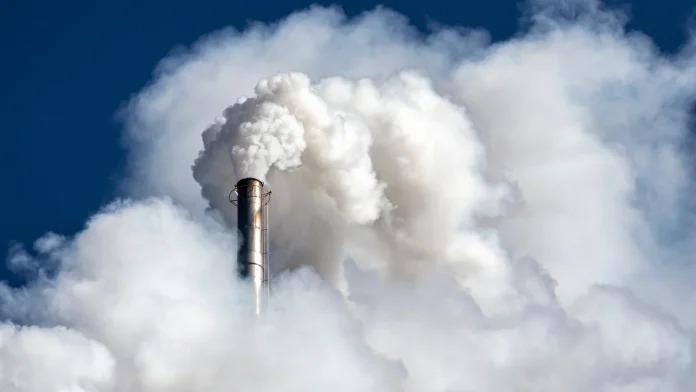
At the centre of this scramble is the European Union’s Emissions Trading System (ETS), the continent’s flagship mechanism for cutting greenhouse gases since 2005. For years it worked like a slow, steady surgeon: cap emissions, sell permits, incentivise cleaner choices. But now, as turmoil in the Gulf has tightened global gas supplies and pushed prices sharply higher, European leaders are debating whether to change the operating theatre on the fly.

What the Commission has proposed

In late proposals that feel part technical fix and part political salve, the European Commission is asking member states and MEPs to approve an adjustment to the ETS. At its heart: an end to the automatic cancellation of surplus carbon permits. Instead of permanently deleting these excess allowances when supply exceeds demand, the Commission wants to park them in a newly beefed-up reserve — a buffer that can be released when carbon prices spike.

“This is about smoothing volatility,” a Commission official told me over coffee in a cramped office near the European quarter. “When a geopolitical shock drives gas prices up, carbon prices can follow. If that spikes energy bills for ordinary people, you need a tool that buys breathing space without scrapping the whole system.”

Today the ETS has a so-called Market Stability Reserve that cancels surplus permits when they exceed 400 million. Under the new plan, those surpluses would be kept in the vault instead — a safety cushion intended to calm the market when panic sets in. Between 2005 and 2024, some 3.2 billion excess permits were cancelled; the proposal would mean fewer coupons thrown away and more ready to be called back into play.

Why the change matters — and why it’s controversial

To many industrial managers and ministers in gas-dependent nations, this feels practical. “When your kilns, your hospital boilers and your homes depend on gas, a runaway carbon price becomes a social and economic emergency,” said an Italian ministry adviser in Rome. “We aren’t asking to ditch climate action. We are asking for prudence.”

Italy and several other governments have publicly urged for at least a temporary suspension or re-tooling of the ETS, arguing that spike-driven carbon costs can double or triple the pain felt by consumers and manufacturers already squeezed by higher gas prices. Analysts estimate those gas costs have risen by as much as 70% in recent months as shipping lines divert and insurance premiums rise after attacks and tensions in the Gulf — including reports of disruptions around the Strait of Hormuz and infrastructure in the region.

Yet for many climate advocates and green economists, blunting the ETS feels like taking a step backward. “The ETS is the core price signal that pushes utilities and factories into cleaner choices,” said Dr. Linnea Sørensen, a climate policy expert at a European university. “If you make it easier to buy your way out of expensive emissions, you risk disincentivising long-term investments in renewables and electrification.”

A balancing act: protecting consumers without derailing decarbonisation

This is where the Commission’s reserve plays the role of a compromise — a mechanism designed to hold the system together while giving policymakers room to manage turbulence. The idea is not to permanently lower ambition, but to manage short-term affordability while remaining on track for long-term emission cuts.

To understand the stakes: more than 10,000 power plants and industrial facilities across the EU buy ETS permits. Since 2013, the scheme has generated over €175 billion that flows back to member states, often earmarked for renewables, energy efficiency upgrades, and climate adaptation projects. According to Commission figures circulated with the proposal, carbon emissions from electricity generation fell 24% in 2023 and a further 11% in 2024 — a trajectory officials say must be preserved.

Local stories, larger implications

Walk through the industrial belts of Lombardy or the wind-sculpted coasts of Galicia and you hear the same refrain: uncertainty. “Last winter we paid more than we planned,” says Giulia, a plant manager at a ceramics factory outside Modena. “We are switching to electric kilns where we can, but the up-front cost is huge. We need time and predictable prices.”

In a market trader’s office beside the Port of Rotterdam, screens throw up flashing numbers. “A little volatility in carbon can cascade,” a gas trader said, not wanting his name used. “If traders see prices spiking, they hedge. Hedging pushes prices further. The reserve is a circuit breaker.”

These ground-level anecdotes matter because the ETS is not just a climate tool; it is a fulcrum where energy security, industrial competitiveness, and social policy intersect. How the EU handles it will ripple beyond its borders. The continent’s Carbon Border Adjustment Mechanism (CBAM), introduced at the start of this year, is designed to prevent companies simply importing carbon-intensive goods from countries with laxer rules — a companion policy intended to protect European industry while pushing global decarbonisation.

  • Key numbers to keep in mind: over €175 billion raised since 2013 through the ETS;
  • Around 10,000 installations across the EU participate in the system;
  • 3.2 billion surplus permits cancelled between 2005 and 2024;
  • Member states have set ambitious targets, including a shared aim to reduce emissions by 90% by 2040 against 1990 levels.

Politics in the corridors

Proposals like this one must clear the twin hurdles of the Council of Member States and the European Parliament. Political horse-trading is inevitable. Countries like Poland, heavily reliant on coal today but under pressure to decarbonise, watch the debate closely. So do Germany and France, balancing industrial exposure with climate ambition.

“This isn’t merely a technical tweak — it’s a test of the EU’s ability to combine resilience with ambition,” said an MEP on the environment committee. “If we go too soft, we lose momentum. If we go too rigid, we risk social backlash.”

Questions for the reader — and the future

So where does that leave us? Is it responsible to protect consumers from price shocks by loosening a carbon market, even temporarily? Can Europe design a safety valve that keeps the long-term incentive to decarbonise intact? And what does this balancing act tell us about the future of climate policy in an age of geopolitical instability?

These aren’t academic questions. They are the kinds of decisions that will shape energy bills, factory floors, and coastal communities for years to come. As you read this, policymakers will be counting permits, economists will be running models, and everyday people will be paying their next bill. The ETS isn’t just a policy instrument — it’s a thermometer for how societies choose to share the burdens and rewards of the energy transition.

In the end, the proposed reserve is an attempt at stewardship: to keep the system functional under stress while preserving the path to cleaner energy. Whether it will succeed depends on the craftsmanship of the proposal and the political courage to match immediate relief with uncompromising long-term planning. The next chapter of this story will be written in Brussels’ committees, in national capitals, and in the choices of companies and households that stand to gain — or lose — from the outcome.

Dutch-Irish dual national arrested on gun charges in the UK

Dual Dutch-Irish national faces gun charges in UK
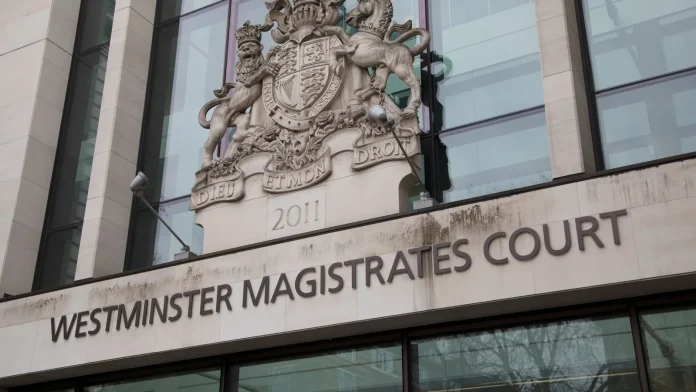
Khalid Ahmed is due to at Westminster Magistrates' Court

At Dover’s Gates: A Quiet Crossing, a Sudden Arrest, and a Bigger Conversation

The white ferry slid into Dover as it always does—familiar, steady, a metal promise across the Channel. Travelers shuffled toward the port, tired commuters, families with suitcases and a handful of drivers who had chosen to take their cars across from Calais for the weekend. For most it was just another crossing. For one 24-year-old man from west London, the journey ended under the flashing blue of counter‑terrorism markings.

On a damp Thursday last week, Khalid Ahmed, a resident of Ealing and a dual Dutch‑Irish national, was stopped by officers as he rolled off the ferry. Police say that when his vehicle was searched, several self‑loading pistols were discovered—enough, the authorities allege, to prompt ten counts of possession of prohibited weapons and an additional charge for prohibited ammunition. He has been formally charged and is due to appear at Westminster Magistrates’ Court.

What Happened at the Border?

Border crossings at Dover are a choreography of routine: lorries, cars, foot passengers, all filtered through passport control, customs, and sometimes, more intrusive checks. In this case it was counter‑terrorism police—an arm of the Metropolitan Police that has responsibility for the capital and for threats that reach beyond everyday criminality.

“We intervene where there is reason to believe that items that could pose a significant risk are being carried into the country,” said Commander Helen Flanagan, head of Counter Terrorism Policing London. “Our priority is to protect the public. At present, while numerous enquiries continue, we have not identified any immediate threat linked to this arrest.”

Her words were measured, a deliberate calm designed to steady public nerves. Yet for residents and commuters who rely on Dover’s ports, the news prickled. How do we square a city famed for its White Cliffs—and the quiet life of its small cafes—with sudden reminders of global flows of people and goods that can also carry danger?

Local Voices: Surprise, Concern, and a Search for Context

In Ealing, a neighborhood of tree‑lined streets, busy markets and a strong sense of community in west London, the name prompted astonishment.

“You don’t expect this here,” said Miriam Patel, who runs a bakery near Ealing Broadway. “We have kids playing in the park, people queueing for curry. To hear someone from our area arrested with guns — it’s worrying. But I’m also trying not to jump to conclusions. He’s charged; the court will decide.”

Another neighbor, Jamal O’Connor, added: “I see a young man with two passports and I think of the decisions people make when life is split between places. There’s a complicated story behind every arrest. We hope for answers.”

A Uniform Response from Authorities

Police messaging focused on reassurance. They emphasized that the arrest was the result of targeted checks and that investigations were ongoing. “Given the criminal proceedings, it’s important to avoid speculation,” Commander Flanagan added, underscoring the legal principle that charges are not convictions.

That call for calm is familiar in Britain, where the memory of past attacks and high‑profile seizures exists alongside statistics that show a very different landscape from many other countries: Britain’s strict firearms laws, sharpened by the 1996 Dunblane school shootings and subsequent bans, mean that gun‑related homicides are relatively rare compared with other nations.

Broader Picture: Guns, Borders, and the Challenge of Smuggling

What this arrest highlights are two enduring realities: first, that ports like Dover are frontline infrastructure in an era of increased cross‑border movement; second, that the illegal movement of weapons—whether to fuel street crime or more sinister plots—remains a persistent challenge.

Experts point out that most illegal firearms in the UK are not manufactured domestically but imported or converted from legal devices. “There’s a market online and in Europe where components can be purchased and assembled,” says Dr. Aisha Khan, a criminologist who studies weapon trafficking. “The problem is transnational. One country’s gap becomes another country’s supply line.”

The presence of dual nationality complicates travel patterns too. “People with multiple passports often move fluidly between jurisdictions, which is perfectly lawful,” Dr. Khan said. “But that mobility can also challenge police checks, requiring coordinated intelligence and effective border cooperation.”

What the Law Says — And What It Means

In the UK, possession of prohibited firearms and ammunition is treated with grave seriousness. The legal framework—centred on the Firearms Acts and a suite of amendments—restricts ownership of handguns and certain semiautomatic weapons. Convictions can lead to significant custodial sentences and long criminal records that alter futures.

  • Possession of prohibited firearms typically leads to serious criminal charges under UK law.
  • Counter‑terrorism units are often involved when there are concerns about the potential use or intent behind weapons being carried into the country.
  • Arrests at ports like Dover follow intelligence‑led operations as well as random and targeted searches.

But legal consequences are only one part of the story. There are social and psychological repercussions—for neighbors, for families, and for communities trying to reconcile local normalcy with headlines that suggest international intrigue.

Questions for the Reader — and for Policy Makers

So what should we take away? Do we double down on stricter border controls? Invest more in intelligence‑sharing across Europe? Focus on community interventions that deter young people from turning to weapons in the first place?

Each option has costs and trade‑offs. More intrusive checks could slow commerce and travel. Better intelligence requires funding and trust between agencies. Community programs require time and long‑term commitment.

Conclusion: Patience, Scrutiny, and the Slow Work of Justice

Khalid Ahmed now faces the slow machinery of the courts, and the public waits for facts to be tested in open court. While authorities continue their investigation, the case is a reminder of how global flows—of people, goods and, at times, illicit items—arrive at our doorsteps with little fanfare.

For those who live near ports, who work in customs, who police the streets or walk them with children, the episode will prompt reflection. How do we maintain openness and mobility while keeping communities safe? What do we owe each other in the face of threats that are both international and intimately local?

These are not questions with quick answers. But they are worth asking, together.

Malaayiin Carab ah oo Gaajo qarka u saaran haduu dagaalka Iran sii socdo

Apr 01(Jowhar)-Weeraraka ay Maraykanka iyo Israa’iil ku qaadeen Iran iyo saameynta uu ku yeeshay Bariga Dhexe ayaa si weyn u dhaawacay dalalka Carabta, iyadoo la saadaalinayo in malaayiin qof ay galaan saboolnimo, sida ay sheegtay Qaramada Midoobay.

29 killed as Russian military aircraft crashes in Crimea

29 dead after Russian military plane crash in Crimea
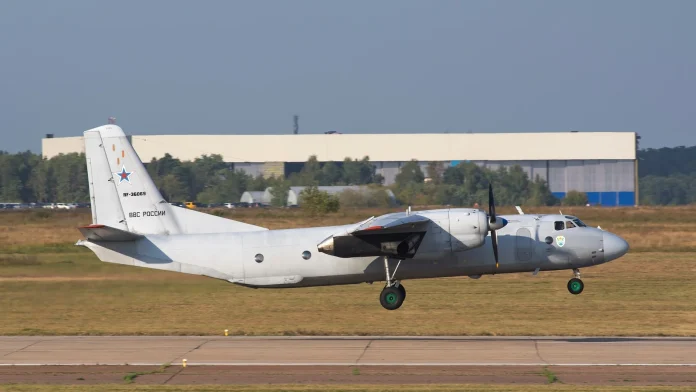
The An-26 has been in service since the late 1960s (file pic)

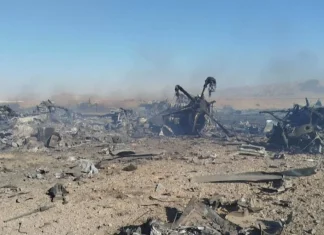
Cliffside silence: 29 lives lost when an An‑26 slammed into Crimea’s rocks

By evening, the peninsula’s mountains had already begun to turn the colour of old brass. Winds off the Black Sea smelled of salt and pine. Then a routine military flight — one of the many that criss-cross this contentious strip of land — simply vanished from the sky.

Russian authorities later said a military An‑26 transport lost communication at about 18:00 local time and was found smashed into a cliff on the Crimean spine. The defence ministry, citing a preliminary technical malfunction, reported 29 dead: six crew and 23 passengers. Local news agencies relayed the bare facts; rescue teams sifted through twisted metal where the aircraft met rock.

“It sounded like thunder but there was no storm,” a woman in a nearby village told me. “We saw smoke, we heard something fall. Then silence. People gathered… we all knew.” Her name is Elena; she asked to be identified only by her first name. Her voice carried that strange mixture of disbelief and resigned familiarity that small communities often carry after a sudden catastrophe.

The An‑26: workhorse with a long shadow

The Antonov An‑26 is no stranger to headlines. Born in the Soviet era, it first flew in 1969 and has been a durable presence in military and civilian fleets across continents for decades. Designed to carry cargo and up to around 40 people over short to medium distances, it’s praised for rugged versatility — and criticised for being, well, old.

“You can’t talk about the An‑26 without talking about age and maintenance,” said Dr. Pavel Sidorov, a European aviation safety analyst. “Many of these airframes have seen decades of service. When you operate a fleet like that in demanding conditions, the margin for error shrinks.”

Indeed, the An‑26’s record includes a string of fatal incidents worldwide over recent years: a Ukrainian An‑26 crashed during a technical flight in Zaporizhzhia in 2022; training and transport flights in 2020 and earlier also ended in tragedy in various countries, including South Sudan and the Ivory Coast. The model’s decades of service have made its failures all the more visible.

Numbers that make you look twice

Official statements are careful with details — they often have to be, and investigations take time. The ministry in Moscow was explicit that nothing had struck the aircraft: no missile, no drone, no bird strike, the report emphasised, suggesting the crash likely stemmed from a mechanical problem rather than hostile action.

But the question on everyone’s lips is why: why does a government that has poured vast resources into military operations still rely on machinery from a previous century? Why are certain fleets allowed to age into fragility while lives continue to depend on them?

On the ground in Crimea: a community grapples

Crimea raises other questions as well. Annexed by Russia in 2014, the peninsula remains a place where geopolitics is not an abstract distant hum but a daily reality — military bases, naval traffic, and the occasional low-flying transport plane are part of the soundscape. Villagers who live near the mountains speak of a landscape that is both beautiful and unforgiving.

“The cliffs are holy to us,” said Rashid Akmet, a Crimean Tatar farmer in his fifties. “We come here in summer to pick herbs and the view is like a painting. Now there is metal and smoke. It hurts.” His community knows loss — a people who remember deportations, who still mark their calendar with both memory and caution.

Rescue crews and military investigators have cordoned off the site. Soldiers and local volunteers moved among the wreckage; a smell of burning rubber lingered in the air while cameras and clipboards multiplied. The military dispatched a commission to sift through flight data recorders, maintenance logs, and the aircraft’s history. These are ritual steps, but they take time.

Beyond the cliff: equipment, politics, and the human ledger

Crashes like this do not live only as headlines. They ripple outward. Every flight that fails is a lesson in logistics, procurement, and priorities. When governments rely on old equipment, the calculus is not merely technical — it is political and budgetary as well.

“Modernising a fleet is expensive,” said Olga Morozova, a defence procurement researcher. “There are political choices at every stage: which projects get funding, which suppliers win contracts, how maintenance is managed. Those decisions ultimately affect real people — pilots, technicians, passengers.”

There is also the international dimension. The peninsula’s political status matters: where international investigators might have stood shoulder to shoulder with local teams elsewhere, here the very question of jurisdiction and access can be fraught. That makes independent verification harder and heightens tensions.

Small facts, large consequences

  • Preliminary official cause: possible technical malfunction (as announced by the defence ministry).
  • Declared fatalities: 29 people (six crew, 23 passengers).
  • Aircraft type: Antonov An‑26 — in service since 1969, used widely across military and civilian operators.

These facts are anchors. They keep the story from drifting into speculation. But they are also thin threads when you try to measure the human cost — a parent’s grief, a village’s memory, a pilot’s empty bunk.

What should we ask next?

When you stand at the edge of a cliff and look down, the immediate question is how to retrieve what can be recovered and comfort those left behind. Then you ask wider questions: Are these tragedies preventable? Who answers for them? What does it mean to keep patching old machines while lives continue to board them?

“It’s not only about machines,” said a retired pilot who spent his career flying cargo in the Black Sea region. “It’s about respect for life and duty. If you are going to fly people, you owe them a plane you trust.” He paused. “We all owe them that.”

As investigators comb the wreckage and the mountain winds pick through the pines, the lives inside the aircraft — their names, stories, and futures — will be what remains. Accountability will be demanded, explanations will be written. But the cliff will not give them back.

What do you think should be done when essential equipment becomes older than the people who depend on it? How do societies decide between cost and risk, between history and safety? These are difficult questions without easy answers — but they are the ones we must ask if the grief that climbs from the ravine is to mean something more than sorrow.

Cabinet to tackle economic uncertainty and fallout stemming from the war

Cabinet to discuss economic uncertainty caused by war

The Cabinet Room, the Map on the Wall, and the Weight of a Distant War

They gathered at dawn with the city still rubbing sleep from its eyes: ministers in dark coats, aides clutching tablets, the long table threaded with cups of bitter coffee and the rustle of briefing papers. On the far wall, an LED map pulsed with the crude vectors of conflict—frontlines, shipping lanes, energy pipelines—an illuminated reminder that wars now reach around the planet in less than the time it takes to finish a meeting.

“This is not just a foreign policy problem,” Finance Minister Aisha Rahman told the room. “It’s on our supermarket shelves, in our factories’ invoices, and in the pocketbooks of millions.”

Her voice, steady but strained, set the agenda for a Cabinet meeting that would run for hours: how to insulate a fragile economy from shocks emanating from the Middle East—shocks of fuel price volatility, disrupted trade routes, financial-market jitter, and a possible new wave of migrants and refugees.

Why a regional war hundreds of miles away lands on this government’s doorstep

Connectivity is a tired phrase until it suddenly feels personal. The Middle East sits at the crossroads of global energy flows and maritime arteries. The Suez Canal, which slices across two continents, transits roughly 12% of global trade by volume; any sustained disruption there can reroute billions of dollars’ worth of goods and add weeks to delivery schedules.

Meanwhile, the region supplies a significant share of the world’s oil and liquefied natural gas. “Even a temporary spike in Brent crude can cascade through freight, fertilizer, and food prices,” explained Dr. Lena Ortiz, an energy economist at the Global Economic Institute. “Household energy bills rise, transport costs climb, and inflation that had been slowing can resurface.”

That’s not hypothetical. In past crises, crude prices jumped by double digits in weeks, squeezing import-dependent economies and nudging central banks toward harder choices: protect the currency, stabilize prices, or support growth. The arithmetic forces trade-offs that ministers in the Cabinet room could feel in their bones.

On the ground: markets, shops, and anxious smiles

Outside the government compound, the city’s markets pulsed with a different rhythm: vendors arranging fruit into pyramids, mechanics pondering delivery delays for spare parts, schoolteachers calculating how budget shifts will affect lunches and transport. “We’ve already had two delayed shipments of fertilizers,” said Omar Haddad, a smallholder who runs a greengrocer near the railway station. “Last year, prices rose before harvest. This year, the fear is that it will be worse.”

In the port, dockworkers spoke of longer turnaround times as cargo lines reroute. “You notice it in the tea and in the nails,” said Salma, a longshore worker. “Everything takes longer and costs more. People worry about pay.”

What the Cabinet can do—and what it cannot

Cabinet decisions tend to fall into three baskets: immediate relief (subsidies, temporary tariffs, emergency stock releases); medium-term resilience (diversifying energy sources, bolstering supply chains); and diplomatic or strategic responses (working with allies to secure shipping lanes, sanctions policy, or humanitarian corridors).

“We can open the grain reserves,” suggested an aide. “We can pause certain tariff increases and target support to the most vulnerable.”

But there are limits. Fiscal rooms have been tightened by years of pandemic spending, and many central banks are still walking a high-wire act between controlling inflation and avoiding recession. “You can’t print away supply constraints,” Dr. Ortiz warned. “Monetary policy is a blunt instrument for a fine-tuned problem.”

Policy choices with human faces

The Cabinet’s debates were livelier when framed by faces and stories. A teacher described parents who skipped meals to pay utility bills. A small-business owner, whose factory relies on imported semiconductors, warned that production pauses would mean layoffs. A physician spoke of medicine supply chains that depended on shipping schedules and affordable fuel.

“Every measure,” Finance Minister Rahman said, “has a trade-off. Subsidizing fuel helps families now but can strain the budget later. Cutting back could stoke unrest. Our job is to thread that needle.”

Numbers that matter

Data gives these conversations teeth. Global trade has been on an uneven recovery since the pandemic; logistics costs remain above pre-2020 norms, and many countries are still experiencing inflation rates well above their long-term averages. The International Energy Agency and other analysts estimate the Middle East accounts for roughly a third to nearly half of the world’s crude oil exports, depending on the measure—meaning supply shocks there ripple worldwide.

Unemployment and public debt also shape how much governments can respond. Nations with high debt-to-GDP ratios and limited reserves often have fewer levers to pull and greater exposure to investor sentiment. If markets smell fiscal weakness, currencies can wobble and interest rates on borrowing can spike.

Local color and cultural threads

In an old café minutes from the Cabinet building, men and women gathered at marble-topped tables, sipping strong coffee and debating aloud. “The news makes us tired,” said Amal, a primary-school teacher trailed by two children. “We teach the kids to look beyond the headlines, but everyone comes home anxious.”

At the fish market near the waterfront, a retired fisherman named Youssef shrugged. “We have always known that the sea is fickle,” he said. “Now the world’s politics are fickle, too. You stock what you can, you hope.”

These small moments give texture to policy choices: about food security, about the dignity of work, about what a unit of aid or a subsidy really does for a family that has to choose between heating and education.

What citizens can expect—and what to watch next

Readers might wonder: will this Cabinet meeting change my life tomorrow? The likely answer is nuanced: some interventions—targeted relief payments, temporary import-tax adjustments, or emergency releases from strategic reserves—can cushion a blow quickly. Structural changes—shifting energy mixes, investing in port infrastructure, building redundancies into supply chains—take years but are decisive.

Keep an eye on four signals over the coming months:

  • Energy price movements, especially Brent and regional gas benchmarks;
  • Shipping insurance rates and port congestion reports;
  • Inflation and central bank commentary; and
  • Humanitarian and refugee flows that pressure local services.

Broader reflections: a small cabinet, a big world

There is an old rule of foreign policy: distant wars make poor neighbors. But in our tightly woven global economy, “distant” is relative. A flare-up in one region can reset markets, change trade routes, and realign political priorities thousands of miles away.

“We are learning the hard lesson that resilience is not optional,” an advisor in the Cabinet said as the meeting closed. “It’s national security.”

As you read this, consider your own threads in that vast web: the coffee you drink, the smartphone in your hand, the food you eat. How much of that journey is routed through fragile corridors—through canals, pipelines, and political arrangements that can, at any point, be upended?

There are no tidy answers, only decisions—fast ones and slow ones—that will determine who bears the cost. In the Cabinet, voices argued and compromises were sketched. Outside, families bartered over prices and dockworkers watched containers roll by. The distant map on the wall glowed, indifferent to who was in the room, an unspoken witness to the fact that in today’s world, policy debates are never truly domestic or foreign; they are both.

Trump says U.S. can wrap up Iran conflict in two to three weeks

US could end the Iran war in two to three weeks - Trump
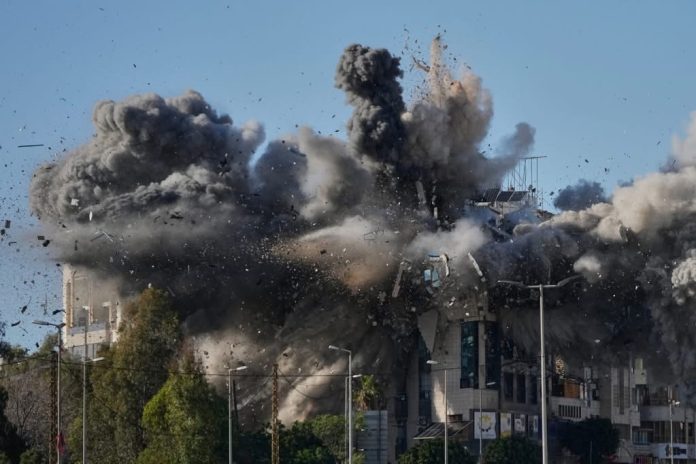
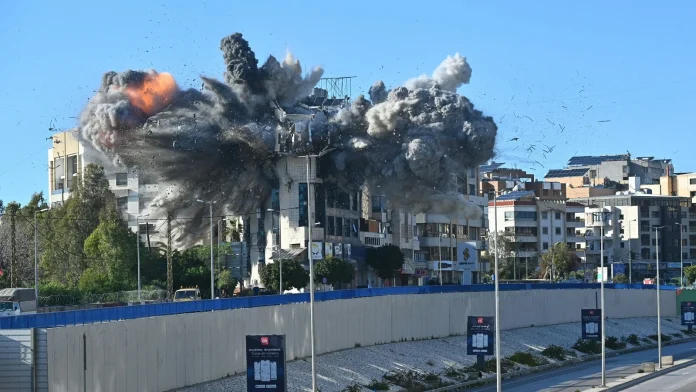
A ball of fire rises from the site of an Israeli strike that targeted a building adjacent to the highway that leads to Beirut's international airport

At the Edge of an Exit: The Fragile Calm and Furious Flames of a War That Could End — Or Not

There are moments in history when the air itself feels charged, waiting for an announcement that could defuse a region or detonate it further. On one of those nights, Washington’s lights flickered with a different kind of urgency: the White House scheduled a late-night address, markets blipped, and in cities from Tehran to Doha, people went to sleep with one ear tuned for the sound of sirens.

“We’re preparing to wind this down,” a senior White House aide told me, off the record but weary in a way that the official briefings did not betray. “The president believes there is a path to stop the shooting. Whether Iran walks through the door is another question.”

How Close Is the Finish Line?

“We’ll be leaving very soon,” the aide said, summing up what has become the rhythm of recent days: bold timelines from Washington, strategic vagueness about the conditions for an end, and a parallel drumbeat of military action across the Gulf. In plain speak, officials are suggesting the U.S. might scale back operations within weeks — with or without a formal diplomatic pact.

That uncertainty is a double-edged sword. On one hand it opens space for direct talks. On the other, it undercuts trust: Iran’s foreign ministry has described recent messages from the United States as “communications, not negotiations,” adding that threats sent through intermediaries cannot replace face-to-face diplomacy.

What World Leaders and Street-Side Vendors Are Saying

“Words are cheap when missiles keep falling,” said Leyla, a tea seller in Tehran’s Enghelab neighbourhood. Her hands, stained with cardamom, trembled as she spoke about air-raid sirens and families who slept in stairwells. “We want peace, but we are tired of promises.”

A maritime-security analyst in Dubai, Samir Haddad, offered a different vantage. “If the U.S. truly wants to reopen the Strait of Hormuz by force, that’s a different war than the one they’ve been fighting,” he said. “This waterway carries roughly one‑fifth of the world’s seaborne oil and a comparable share of LNG — you don’t play with that without inviting global fallout.”

Fighting on Multiple Fronts

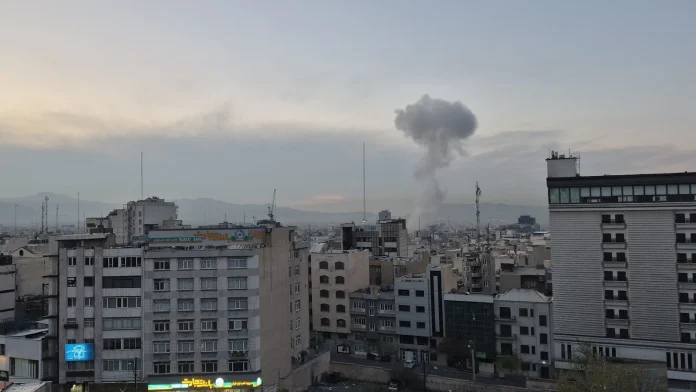
Despite talk of an imminent withdrawal, the conflict’s violence has not abated. Drones struck fuel tanks at Kuwait’s international airport, sparking towering flames. A commercial tanker near Doha was hit by an unidentified projectile; its hull was damaged though the crew escaped injury. Iran reported air-defence activations and explosions in parts of Tehran after air raids, while a major passenger port suffered damage in a strike described by a local deputy governor as a “criminal attack on civilian infrastructure.”

On another front, Yemen’s Houthi rebels — now openly aligned with Tehran’s campaign — launched a missile barrage they called a joint operation with Iran and Hezbollah, striking towards Israel. Missile debris later rained down in central Israel; thankfully, early reports suggested no immediate fatalities, though the psychological toll of debris and intercepted rockets has already left casualties across the region.

Targets and Threats: The Economic Battleground

In a move that blurred military and economic lines, Iran’s Revolutionary Guards published a list of multinational companies — including some household tech and aerospace names — naming them as potential targets in the region. The message was unmistakable: companies are not neutral bystanders in this conflict’s theater.

“Attacking infrastructure or corporations is an attempt to widen the war into global economics,” said Dr. Marianne Koenig, a former diplomat and current fellow at the Global Security Institute. “That’s a dangerous escalation — and it also speaks to Iran’s calculation that economic pressure can pressure others back to the table.”

Politics, Polls and Petrol

It’s not just geopolitics on the line. Fuel prices in the United States have crept higher; the national average retail price of gasoline has crossed the psychologically potent $4-a-gallon mark for the first time in years, squeezing households already stretched by inflation and rent. Global markets reacted, too: Brent crude edged up more than 1% as investors recalculated risk, while Asia-Pacific equities rallied on hopes of de-escalation — MSCI’s broad index of Asia-Pacific shares outside Japan rose by roughly 2.7% in early trade.

Public opinion is clear in the polls: a Reuters/Ipsos survey found nearly two-thirds of Americans think the U.S. should work to exit the war quickly. That pressure leans on policymakers who must juggle military strategy with electoral realities.

NATO, Allies and the Question of Burdens

In Washington, voices in the administration have pointed fingers. “After this conflict is concluded, we are going to have to reexamine alliances and burden-sharing,” a senior adviser said. Critics in Europe bristled at the suggestion, while some Gulf partners quietly discussed proposals to retake control of shipping lanes if a political solution remained elusive. The Wall Street Journal reported that one Gulf state had suggested a UN resolution to authorize the use of force to reopen the Strait of Hormuz — an idea that, if pursued, would rewrite decades of maritime precedent.

Human Costs: Names and Numbers

By the latest estimates circulating among international monitors, thousands have been killed since the outset of the wider regional conflict and tens of thousands displaced. Hospitals in border regions report surges in trauma cases. In southern Lebanon, Israeli strikes in and around Beirut killed at least seven people and wounded more than two dozen; in southern Lebanon, the deaths of three UN peacekeepers prompted Indonesia to demand an independent UN inquiry.

“These are not statistics to be debated over coffee,” said Hassan al-Rashid, a volunteer coordinator in Beirut. “They are fathers, mothers, students — people who had simple plans for their day and whose lives have been upended.”

So What Comes Next?

There are a handful of possible endings to this fraught sequence — a negotiated ceasefire with tangible guarantees, a unilateral U.S. withdrawal, an escalation that draws in more state and non-state actors, or a protracted low‑intensity conflict that spins for months. Which of these proves true depends on decisions made in closed rooms, at secret meeting tables, and amid the clatter of missiles over city streets.

“Diplomacy is not a press release,” Dr. Koenig reminded me. “It’s a long, messy process that requires mutual credibility. Threats on both sides erode that credibility.”

Questions for the Reader

As you read this, what do you think the global community owes civilians caught between geopolitics and geography? Should corporations be held responsible for operating in high-risk zones, and could international law adapt fast enough to protect them — and the people who work for them? If the Strait of Hormuz is the prize of leverage, must the world accept such leverage as a permanent bargaining chip?

These are not theoretical exercises. They are the real-time dilemmas diplomats, soldiers, and ordinary people are wrestling with across a region whose ripple effects reach every continent.

Tonight’s national address from Washington could be a curtain call on an era of open conflict, or the opening salvo of something longer. Either way, the cost will be measured not only in barrels of oil and stock indices, but in the quiet spaces of kitchens and classrooms where people wonder if peace will finally arrive at their door.

Macalin Saalax oo loo wado xilka taliyaha Nabad Sugida Koofur Galbeed

Apr 01(Jowhar)-Taliyaha ciidanka ilaalada Shacabka ee Nabad Sugida goblka Banadir Macalin Saalax ayaa loo wadaa xilka taliyaha Nabad Sugida maamulka Koofur Galbeee, sida xogaha la helayo ay tilmaamayaan.

US prepared to halt Iranian attacks after threats to businesses

US ready to stop Iran attacks after threats to firms
Iran said it will begin targeting US firms in the Middle East region from tomorrow, which the US military said it is ready to defend

Smoke on the horizon: how a regional flare-up is reaching the offices, ports and petrol pumps of the world

On a windswept quay outside Dubai, a burnt-out silhouette of an oil tanker still smells of diesel and burnt rubber. Sailors in grease-streaked overalls point toward a blackened hull as cranes loom behind them like guilty colossi. Far away in Tehran, shopkeepers closed their shutters early and lit samovars of tea in their kitchens as they listened to a barrage of statements that could redraw maps of trade and security.

What began as tit-for-tat strikes and counterstrikes has slid into something broader and stranger: a public threat by Iran’s Revolutionary Guard Corps to target American companies operating in the region, an escalatory gambit that reads less like classic warfare and more like a campaign of economic and technological intimidation.

The threat—and the list

On Tuesday the IRGC issued a terse communique saying that, starting at 8pm Tehran time on April 1, it would “target US companies in the region” in retaliation for attacks inside Iran. The communiqué named a group of household names — including Microsoft, Google, Apple, Intel, IBM, Tesla and Boeing — warning that “the destruction of their respective units” would be the price for further operations inside Iranian territory.

A White House official, speaking on background, pushed back this week: “The United States military is and was prepared to curtail any attacks by Iran, as evidenced by the 90% drop in ballistic missile and drone attacks by the terrorist regime,” the official said. The choice to speak without attribution reflected the hush that often surrounds the more sensitive lines of military signaling.

The immediate practical effect was swift and uneven: the US State Department circulated a blunt travel advisory for Americans in Saudi Arabia, urging citizens to “shelter in place” and advising that hotels, schools and gathering places could be potential targets. The Embassy warned Americans to stay away from windows and remain inside until further notice.

Names on a list, lives on the line

Lists have power. They make abstract geopolitics feel personal. Imagine a Dubai hotel manager, a Microsoft campus cleaner in Abu Dhabi, or a Boeing supplier in Jeddah reading their company’s name on a list that implies direct danger. It is one thing to hear about an exchange of missiles; it is another to see your employer singled out.

  • Companies reportedly named by the IRGC: Microsoft, Google, Apple, Intel, IBM, Tesla, Boeing (among 18 others).
  • Start date cited in the IRGC statement: 8pm, April 1 (Tehran time).
  • US response: travel advisory for Americans in Saudi Arabia; White House reiteration of military readiness.

On the water: tankers, tracks and the smell of smoke

At 3am local time, a fire aboard the Kuwait-flagged tanker Al-Salmi turned a quiet patch of the Gulf into an inferno. Authorities in Dubai later said the blaze — blamed on a drone strike — was brought under control with no crew injuries and no oil spill reported. Satellite monitors and shipping trackers painted a stark picture: the Al-Salmi was carrying roughly two million barrels of crude, a mix of about 1.2 million barrels bound for Qingdao from Saudi sources and 800,000 barrels of Kuwaiti crude, according to tracking service TankerTrackers.com and maritime registries.

The market felt it immediately. Benchmark Brent crude ticked above $114 a barrel in intraday trading, and American drivers watched the national average price of gasoline cross $4.00 per gallon for the first time in more than three years, according to price-tracker GasBuddy. For many households, these aren’t abstract numbers — they are the slow theft of grocery money, the added sting at the pump.

“We feel it at the docks,” said Hassan, a foreman at a shipyard near Jebel Ali who asked that his family name not be printed. “When ships don’t come, when crews are scared — there is a ripple. Men can’t send money home. Food prices go up. It’s the little things that break people.”

Washington’s posture: preparations and warnings

Back in Washington, senior officials have described a posture of readiness and insistence that they can blunt Iranian attacks. US military leaders say they have increased strikes on key Iranian assets and have targeted what they describe as maritime capabilities. “We are continuing to degrade and destroy,” General Dan Caine told reporters, referring to efforts against naval and industrial targets.

Reinforcements have been arriving in the theater: elements of the US Army’s 82nd Airborne Division began to deploy to the region, according to senior US officials. For diplomats and analysts that signals both deterrence and the grim possibility of expanded operations.

“Deploying airborne units isn’t a theatrical gesture — it’s a signal that planners want to keep a full menu of options open,” said Dr. Laila Abbas, a Middle East security analyst at a London-based think tank. “But the more kinetic options you present, the easier escalation becomes.”

Voices from the ground and corridors of power

On the streets of Tehran, reactions were muted and complex. A fruit vendor, wrapping pomegranates in paper, summed up a common sentiment: “We are tired of war. We want guarantees, not threats. We do not want our children to die because of decisions made far above our heads.”

In European capitals, leaders sounded a different, weary chord. Ireland’s leader called for an end to the fighting, warning of the global fallout — from disrupted energy supplies to a spike in fertilizer costs that could deepen hunger in vulnerable regions. “Any disruption to food production has calamitous implications,” he said, tracing the chain from a blocked strait to empty plates halfway across the world.

Even religious leaders have intervened. A senior Vatican official made a rare public plea for de-escalation, urging policymakers to find “an off-ramp” and reduce suffering. “Too many innocent people have already paid the price,” the official said.

Beyond the headlines: why this matters globally

What we are watching is not simply a regional crisis. It is a test of how modern states weaponize not only steel and explosives but also commerce, technology and logistics. An attack on a tanker ripples through financial markets and freight contracts. A threat to a tech company can chill investment flows, complicate supply chains and raise fears among foreign employees who suddenly find their workplace a potential battlefield.

Consider these stakes:

  1. Energy security: Roughly a fifth of the world’s oil transits the Strait of Hormuz at times. Interruptions here hit prices and economies globally.
  2. Food security: Fertilizer shortages push up costs and can reduce harvests in regions that are already food-insecure.
  3. Economic contagion: Disrupted supply chains can slow manufacturing, raise inflation and unsettle markets already reeling from other geopolitical shocks.

What comes next?

There are no certainties. Diplomacy will likely continue alongside strikes and sanctions. Pakistan has offered to mediate, hosting rounds of talks with regional powers and reaching out to China. In the coming days, the tide of action — military moves, economic pressure, public posturing — will shape how deep this conflict becomes.

And for ordinary people everywhere, the question is painfully practical: how do you plan your life when the map of risk is redrawn from one press release to the next? How do nations keep trade moving and people safe when the instruments of trade are weaponized?

We often reduce conflict to headlines and red lines. But look closely and you’ll see a mosaic of small human choices — a port worker skipping a shift because of fear, a shipowner rerouting around the Horn, a student in Riyadh suddenly confined to their dormitory by a travel advisory. These are the textures of modern war.

So I leave you with this: when powerful actors list companies and dates and issue ultimatums, ask yourself what kind of world we are willing to inherit. Will we allow commerce to become a battlefield? Or will we find ways to protect the quiet, everyday transactions that keep families fed, students learning and markets functioning?

In the glow of harbor lights and the quiet of a Tehran tea house, the answers are being written a little at a time — by negotiators, by soldiers and, most of all, by ordinary people who need peace to live their ordinary lives.

Has Iran war heightened terrorism threat in US?

Has the Iran conflict increased terrorism threats in the United States?

0
The Long Shadow of a Black Mercedes Imagine a narrow road outside Beirut on a cold February day in 1992. The engine of a black...
Iran says US aircraft destroyed in pilot rescue mission

Iran Claims U.S. Aircraft Destroyed During Pilot Rescue Operation

0
I’m ready to craft that vivid, human-led feature — but I don’t see the original news content you mentioned. Could you paste the article...
Why regime change in Iran has no clear path forward

Why there’s no viable roadmap to regime change in Iran

0
A plane, a portrait, and a city that would not be the same When Mohammad Reza Pahlavi climbed aboard his jet at Tehran’s Mehrabad Airport...
Five killed, 19 injured in Russian attack on Ukraine

Russian strike in Ukraine kills five, injures 19

0
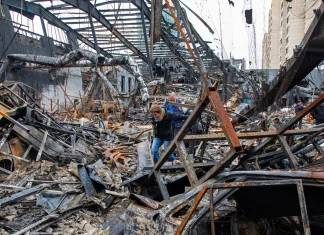
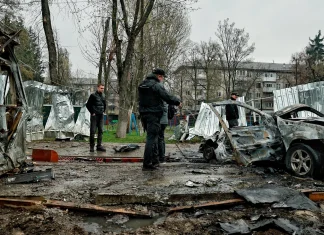
Nikopol at Dawn: A Market Silenced by a Drone The sun was just finding its way across the Dnipro, turning the river into a strip...
5 takeaways from Donald Trump's televised address

Trump confirms second US crew member safe after rescue

0
A Rescue in the Mountains, Smoke Over the Gulf: How a Single Day Unraveled the Calm There are days when history feels less like a...