Home Blog Page 78

European Union and Arab States Urge Israel to Cease Airstrikes, Source Says

EU, Arab states pressure Israel to stop strikes - source
A wave of Israeli strikes on Lebanon left more than 300 people dead

Beirut’s Smoke and Silence: When Diplomacy Scrambles to Hold Back the Rain of Fire

There is a particular kind of quiet that follows an air strike—the kind that is not peaceful but stunned. In Beirut, that silence has been threaded with sirens, the clumped footsteps of volunteers, and the low, persistent hum of generators powering hospitals that have become front-line sanctuaries.

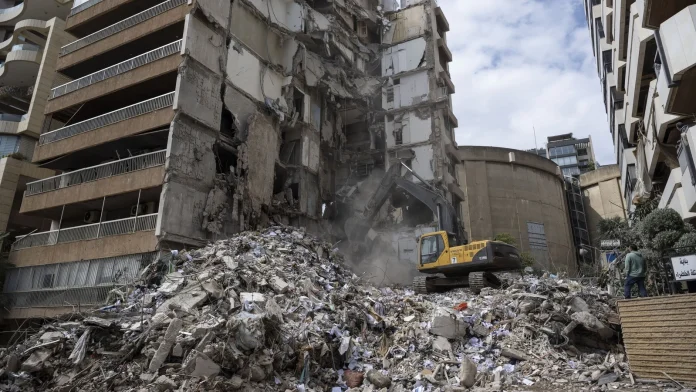
In the days after a devastating wave of strikes that Lebanese authorities say killed more than 300 people, the city feels like a wound being tended in public. Streets that were once full of the clatter of cafes and children’s games now host makeshift triage tents, and a plume of smoke still curls over neighborhoods in the south. “We are exhausted but we are not defeated,” said Samar, a volunteer from the Jnah district, wiping soot from her hair. “We carry the dead like we carry the groceries—one at a time, because there is no other way.”

Pressure from All Sides

Behind the scenes, diplomats from Europe, the Gulf states and Egypt have been quietly—but urgently—pressing Israel to refrain from further strikes on Beirut, according to a Western diplomat involved in the conversations. “It’s not a simple phone call,” the diplomat said. “It’s an intense stream of messages: the hospitals, the civilians, the airport road—everybody keeps repeating the same plea.”

Those pleas follow warnings issued by the Israeli military that large, densely populated southern neighborhoods could face renewed strikes. The threat sent a wave of panic through communities and targeted strategic arteries: the road leading to Beirut’s only international airport, and areas that house major hospitals.

“We have been assured by several foreign missions that access to the airport and the road will be maintained,” said Fayez Rasamny, Lebanon’s public works minister, a note of both relief and caution in his voice. “But assurances do not always keep shells from falling.”

Hospitals on the Edge

Rafic Hariri University Hospital, the country’s largest medical facility, was among the buildings that received explicit assurances it would not be targeted. Mohammad Zaatari, its director, described the scene as controlled chaos. “We have around 450 patients across Rafic Hariri and Al-Zahraa hospitals in the southern districts,” he told aid groups. “Forty of those are in intensive care. Moving them is not simply a matter of carrying a stretcher down a corridor.”

The World Health Organization publicly urged Israeli forces to call off evacuation warnings for the Jnah district, stressing that the district hosts critical medical infrastructure and hundreds of vulnerable patients.

Lebanon’s Southern Front: Fire and Response

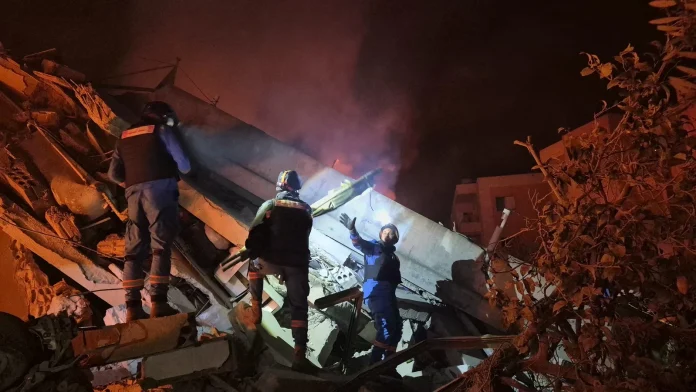
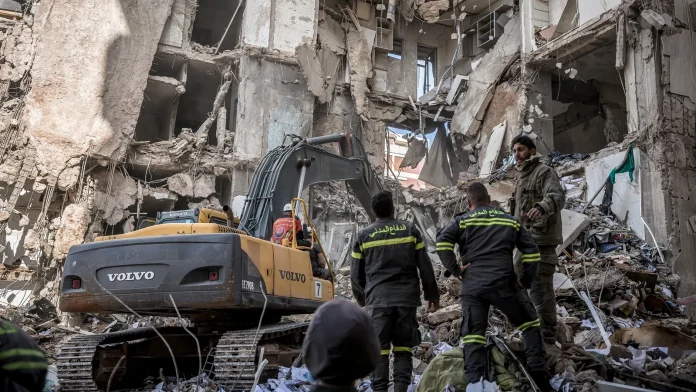
Beyond Beirut, the night has been long for villages in southern Lebanon. Small towns like Habbouch, near Nabatiyeh, showed the physical cost: gutted buildings, scorched facades and firefighters scraping at smoldering rubble. An AFP photographer who visited the site captured scenes of volunteers passing buckets of water and rescuers searching for those still missing under the debris.

On the opposing side, Hezbollah has claimed rocket launches into northern Israel and strikes against advancing forces along the border. “We were forced to react,” said a Hezbollah spokesperson in a terse audio statement. “We will protect our people and our land.”

Displaced and Disoriented

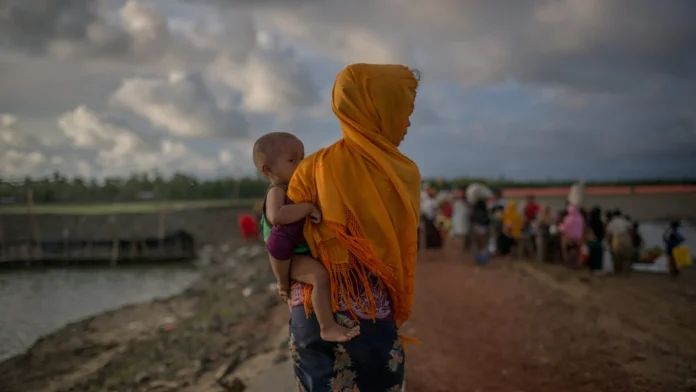
Roughly one in five Lebanese residents in affected areas have fled their homes since the conflict escalated—an abrupt, bitter displacement that has reawakened memories of past wars. Families cram into relative’s apartments, municipal halls, and school gymnasiums made into temporary shelters. “We take what we can carry—our children, the telephone charger, and the old photograph albums,” said Karim, who left a burned-out home in the south. “Everything else is ash or memory.”

The Strait of Hormuz: A Chokehold on Global Energy

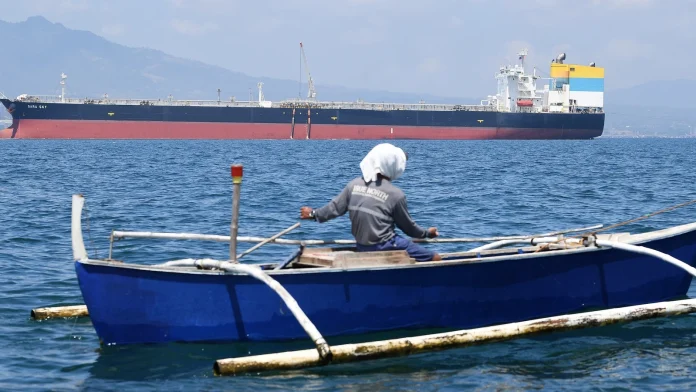
While the bombardment in Lebanon has drawn the world’s eyes, another consequence of the regional conflict is playing out on the high seas. The Strait of Hormuz—through which about one-fifth of the world’s seaborne oil usually passes—remained effectively closed in the immediate aftermath, a chokehold that sent shockwaves through global markets.

Normally, some 140 ships transit the strait each day. In the first 24 hours after a fragile US-Iran ceasefire took hold, only a single oil products tanker and five dry bulk carriers made the passage. That scarcity pushed some refineries, especially in Europe and parts of Asia, to pay spot prices approaching $150 per barrel for immediate crude delivery—levels that reverberate quickly into markets and household pump prices.

U.S. President Donald Trump publicly chided Iran’s handling of the maritime agreement, calling it “not the deal we had,” even as Tehran insisted the truce should apply to Lebanon as well. The competing interpretations of the truce underscore how local battles can scramble international accords, and why crises in the Middle East ripple outward into consumer wallets worldwide.

Diplomacy under Lockdown: Islamabad Hosts Fragile Talks

Against this backdrop, representatives from Washington and Tehran were due in Islamabad for what diplomats called the first direct talks since the conflict began. Pakistan turned its capital into a fortress: a 3km “red zone” around a luxury hotel, a hurried public holiday, and an air force escort planned for the incoming Iranian delegation led by Parliament Speaker Mohammad Baqer Qalibaf.

“This is a test of whether words can actually stop bullets,” said Dr. Leila Mansour, a political analyst based in Beirut. “Both sides come carrying grievances and a litany of demands. Whether the talks can rise above transactional bargaining and tackle root causes remains to be seen.”

What’s at Stake Beyond the Headlines

At issue are not only territorial or military gains. Iran has reportedly demanded the lifting of long-standing economic sanctions and a formal acknowledgement of influence over strategic waterways—moves that would redraw regional power lines. The U.S. insists on limits: forgoing further enrichment of uranium, giving up long-range missile capabilities, and cutting support to proxy groups such as Hezbollah.

Experts note the long shadow of previous negotiations. “These are not new issues,” said Jonathan Keane, a senior fellow at an energy and security think tank. “What’s different is the integration of kinetic warfare with economic warfare—blockades, sanctions, and the use of energy chokepoints as leverage.”

And then there is the most human ledger: lives lost, homes leveled, hospitals strained, children missing school. These are numbers that don’t show up in market reports but will shape politics for years to come.

Why Should You Care?

Because the turmoil of a single region can destabilize markets, create migration waves, and test the capacity of international institutions to keep civilians safe. Because a closed strait means higher prices at the pump in cities half a world away. Because the images from Beirut—soot on hands, a mother’s whisper over a sleeping child in a makeshift bed—are a stark reminder that wars are always lived at the level of street and home.

What would it take, you might ask, for diplomacy to outrun the guns? For now, the answer rests in fragile agreements, hurried meetings, and the weary persistence of people who stay to stitch their communities back together.

“We need more than promises,” Samar the volunteer told me, as she prepared another tray of tea for exhausted medics. “We need corridors, medicine, and a map that shows a future where our children sleep without sirens.”

As the smoke clears and negotiators gather, that simple wish—quiet, safety, and a return to ordinary days—remains the clearest measure of whether diplomacy will heal as war has harmed.

Five key takeaways from US-Iran talks in Islamabad

Five things to know about the US-Iran talks in Islamabad
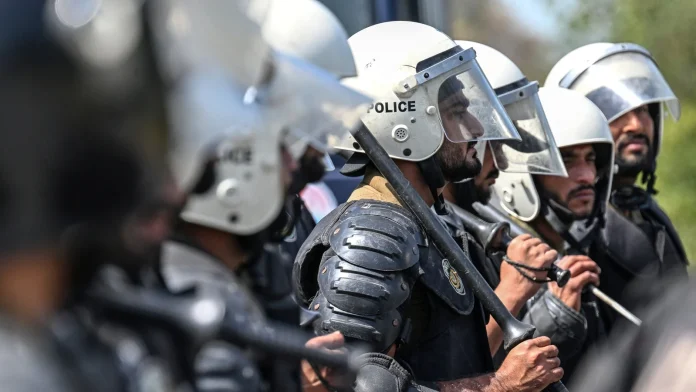
Riot policemen line up along a road near the expected venue of the US-Iran talks in the Red Zone area of Islamabad

Islamabad’s Quiet Storm: Pakistan Hosts the Highest-Level US–Iran Talks in Years

In a city of low hum and careful glances, Islamabad has become, for the moment, the world’s living room for a fraught conversation. Streets that usually spill with office workers and schoolchildren have been thinned to a polite hush. Security checkpoints sit like punctuation marks on every major avenue. The Serena Hotel—its fountains stilled and its lobby lit for a different kind of guest—asked visitors to leave, and the capital moved almost imperceptibly into a state of pause.

This is not a scene anyone expected. Pakistan—better known on global front pages lately for economic strain and internal security challenges—has quietly assumed the role of broker between two adversaries whose conflict has rippled across markets, capitals and coastal chokepoints. The task: turn a brittle two-week ceasefire into something more durable, and with it, steady the world’s oil markets and the nerves of millions.

Why Islamabad?

To outsiders, Pakistan’s emergence as mediator might look improbable. Dig a little deeper and the logic is clearer. Islamabad sits at a rare regional intersection: a Sunni-majority country with deep cultural and historic ties to neighbouring Iran, and longstanding strategic relationships with the United States, Saudi Arabia and China.

“Pakistan has one foot in each room,” said Dr. Farah Ahmed, a Lahore-based analyst who studies South Asian diplomacy. “That gives it a credibility others don’t have—especially right now, when trust is the scarcest currency.”

Iran was one of the first countries to extend recognition to Pakistan after 1947. The two share a border of roughly 900 kilometres, overlapping histories and substantial people-to-people ties. Inside Pakistan live an estimated 20 million Shia Muslims—one of the largest Shia communities outside Iran—adding social and religious links to the political calculus.

At the same time, Islamabad has invested heavily in relations with Beijing and cultivated ties with Washington. Pakistani officials say Chinese diplomacy played a catalytic role in persuading Tehran to accept a temporary halt in hostilities; Chinese Foreign Minister Wang Yi publicly endorsed Islamabad’s mediation. Whether Beijing or Islamabad did the heaviest lifting is a debate diplomats will have over tea for months to come.

The stakes: Strait of Hormuz and a shaken energy market

The immediate urgency is clear and measurable: the Strait of Hormuz. That narrow, glimmering thumb of water is, by some counts, the maritime valve through which roughly one-fifth of the world’s seaborne oil supplies pass. When missiles and diplomacy collide there, the consequences show up quickly at pump and port.

“When traffic through Hormuz was curtailed earlier this month, spot prices jumped and traders started pricing in long-term premiums for risk,” explained Leila Moreno, an energy analyst at the International Petroleum Institute. “Even a short closure can reverberate across markets for weeks.”

What’s at issue is not simply the flow of oil. The negotiators confront divergent, existential demands. Washington’s reported proposal—described in media accounts as a multi-point plan—targets restrictions on uranium enrichment, limits on long-range missile programs, concrete sanctions relief contingent on verifiable steps and guarantees for unobstructed navigation in international waters.

Tehran’s counter, according to sources briefed on the talks, isn’t a mirror image. It includes a demand for greater regional influence—control, or at least security assurances, over strategic waterways—an end to foreign military operations in neighbouring countries, and sweeping sanctions relief. Lebanon’s fate, especially in light of continuing attacks on Hezbollah targets, has become an unexpected and explosive sub-plot.

Who sits at these tables—literally and figuratively?

The two delegations will likely not meet in the same room. Officials say Pakistan will shuttle proposals back and forth, a method familiar from years of Oman-mediated indirect talks. On the American side, reports name Senator J.D. Vance as a senior political lead alongside diplomatic figures; on Iran’s side, parliamentary and foreign ministry heavyweights are said to be present. Pakistani ministers and security officials will be the host interlocutors.

“These are not ordinary conversations,” said retired Ambassador Tariq Hussain, who served in Tehran in the past decade. “They are layered—with public posturing, domestic politics, regional alliances and personal reputations all moving at once. That’s why neutral venues matter.”

Islamabad on the edge: life inside the Red Zone

For residents, the talks are a mix of spectacle and inconvenience. The capital’s Red Zone—home to the foreign ministry and government offices—has been locked down. Soldiers in crisp fatigues patrol with the same composure of men who have done this many times before. Traffic diversions turn commute times into riddles. Small businesses near diplomatic enclaves tape up shopfronts; a tiny chai stall by the Margalla Road hums nonetheless, serving men in uniform and diplomats alike.

“We make the same tea whether there’s a summit or a funeral,” said Aslam, a teahouse owner whose shop has served embassy drivers for years. “People need warmth. They need a place to think.”

Local shopkeepers talk about mixed feelings—pride that Pakistan is being trusted with such delicate work, and anxiety about what might happen if negotiations falter. “We want peace,” said Ayesha Khan, who runs a boutique selling embroidered shawls. “More than anything, we want normalcy—for our markets, our students and our children.”

What to watch for

  • Whether the ceasefire is extended beyond the scheduled expiry—an immediate barometer of progress.
  • Concrete language on the Strait of Hormuz: guarantees, patrol arrangements, or joint monitoring proposals.
  • How Lebanon and Hezbollah are treated in any final document—this could make or break Iranian buy-in.
  • Sanctions relief mechanics: will they be phased and verifiable, or an all-or-nothing demand?

Do you believe a neutral state can broker peace between rivals whose mistrust is older than many modern states? It’s a question diplomats will answer in whispers over days and weeks, and it’s a question citizens around the world already feel in their wallets and on their screens.

The broader picture here is about more than oil and territory. It’s about whether the architecture of regional diplomacy—small, discreet mediations, backed by regional powers and neutral hosts—can still work in an age of public, rapid spectacle. It’s about whether countries can choose negotiation over escalation when national pride and domestic pressures pull them toward brinksmanship.

For now, Islamabad waits. The fountains will begin again, the markets will return to their rhythms, and the city’s tea stalls will keep a pot warm for anyone who needs to talk. What matters most may not be the headlines of the next 48 hours but whether a fragile pause begins to harden into something more lasting—a negotiated order that keeps the lights on and ships moving, and that, in time, brings home those who have lost too much already.

Artemis astronauts ready to conclude historic Moon mission

Artemis astronauts prepare to end Moon mission
On the trip back home, they will reach speeds of up to 38,365km/h as they enter Earth's atmosphere

Riding a Fireball: Four Humans, One Capsule, and the Long Road Back from the Moon

There are moments in exploration when the world seems to hold its breath—when distance is not just a number but a story. This week, four astronauts aboard an Orion capsule became the most distant people in human history, looping around the far side of the Moon and beginning the long, incandescent arc back to Earth. They have a splashdown to make off the coast of Southern California, and a re-entry that will transform their tiny spacecraft into a meteor for minutes at a time.

Imagine, for a moment, sitting in a small cabin with three colleagues, 405,554 kilometres from home, watching nothing but black punctured by a perfect, pale moon. Imagine the silence that distant light brings—and then the weight of what comes next: a plunge toward an atmosphere that will heat the spacecraft to temperatures measured in the thousands as friction turns speed into sheer incandescent noise.

Who They Are — and What They Carried

The quartet inside Orion is an odd and luminous mix: a pilot who has been thinking about re-entry for years, a commander who jokes through the hard parts, a scientist with a steady hand and a smile, and a Canadian astronaut whose quiet courage grew louder as the mission unfolded. Their names—Victor Glover, Reid Wiseman, Christina Koch, and Jeremy Hansen—are now stitched into a new chapter of human exploration.

“I keep flashing back to the day we got assigned,” Glover told a conference call from orbit, his voice threaded with both levity and gravity. “Entry is the part you train for until it lives in your bones. But even with that, none of us have fully unpacked what just happened up here.”

They launched from Florida last week, the rocket’s roar falling away and leaving them under a canopy of stars. They are part of NASA’s Artemis series—a multibillion-dollar sequence of missions designed to bring humans back to the lunar surface within the decade, build sustainable infrastructure, and, if all goes to plan, point the way to Mars.

A Relic and a Relay

To the astronauts, the mission has felt less like a final destination than a handed baton. “We brought physical batons to orbit,” Koch said with a laugh during a transmission recorded for mission control. “It was kind of silly—until we realized every time we move, someone else is going to pick it up.”

This relay metaphor is apt. Artemis II is a bridge—testing systems, rehearsing rendezvous, and returning human eyes to the Moon in an era when most lunar knowledge has been inferred through orbiters and robotic landers. For a brief six-hour window, these humans became mobile observatories, describing textures, shadows, and strange pitted craters in real time to scientists listening over a quarter of a million miles away.

Record-Breaking Distance—and the Numbers That Matter

On Monday, the crew pushed farther out than any human before them, reaching approximately 405,554 km from Earth—a little over 6,400 km farther than the Apollo 13 record that stood for 56 years. Such numbers are not just trivia. At these distances, communications lag, contingencies feel different, and the thinking that shaped Apollo gives way to new engineering and new questions about how humans function in deep space.

When Orion re-enters Earth’s atmosphere, the capsule will be traveling at staggering velocity—up to 38,365 kilometres per hour. That translates to intense heating on the heatshield as kinetic energy becomes thermal energy. Every millimetre of that shield is therefore a small, literal difference between home and oblivion.

Mission Timeline—Milestones to Watch

  • Launch from Cape Canaveral, Florida: last week
  • Farthest distance from Earth: ~405,554 km, breaking a 56-year record
  • Duration in space: nearly ten days
  • Planned splashdown: off San Diego, California, around 8pm ET
  • Peak re-entry speed: up to 38,365 km/h

Voices from the Capsule and the Ground

Inside Orion, laughter and tears have mingled. Wiseman described two brief video calls each crewmember made to their families—”small pockets of oxygen,” he called them—that let them feel the gravity of home while floating farther from it than anyone alive. “Hearing my kids laugh,” he said in one transmission, “felt like a tether back to Earth.”

On the other end, Mission Control in Houston has been a cathedral of concentration. Dozens of lunar scientists, engineers, and students sat in adjacent rooms, scribbling notes and debating interpretations as streams of data and audio came in. “There is a primal quality to watching human perception join remote sensing,” Dr. Elaine Mercer, a planetary geologist, said. “Robots send back pixels; people send back stories.”

And then there are the quieter, human gestures that feel like small lamp posts along a long road. As the capsule peeked near the moon’s surface, Hansen—who grew up watching Northern Lights in Saskatchewan and carries a Canadian flag in his flight suit—offered an idea: name a newly seen crater after Commander Wiseman’s late wife. “Those moments matter,” Wiseman later said, holding back his own emotion. “It’s hard to explain to someone on Earth standing in a crowd. Up there, the universe simplifies what’s important.”

Culture, Context, and the Moon’s Pull

There is a local color to every corner of this mission. In Florida, citrus groves once filled the corridor the rocket rose above; in Texas, barbecue smoke lingers in the parking lots outside mission centers where engineers trade jokes and worry. In San Diego, beachfront watch parties will gather tomorrow night to see the capsule return to sea—families with folding chairs, kids pointing telescopes at the sky, veterans with NASA patches on their jackets.

But beyond spectacle, the Moon carries symbolic freight: it is both a scientific archive and a mirror. “The Moon is a fossil of the early solar system,” Koch said before launch. “It tells us about impacts, early chemistry, and the migration of planets. It helps us understand how Earth itself came to be.” Scientists hope the samples, eyes, and instruments of Artemis missions will refine our models of solar system formation and, perhaps, unlock resources for long-duration human presence.

Why It Matters—Locally and Globally

At first blush, a splashdown off the coast of California might seem like a regional event with a lot of pomp. But the implications ripple globally. The Artemis missions are part technological testbed, part geopolitical statement, and part inquiry into what a human future off-Earth could look like. For countries watching—China, members of the European Space Agency, and emerging space nations—the mission is a signal: the Moon is again a stage where capability, cooperation, and aspiration will be displayed.

Think about the choices we make now: investment in science, in international partnerships, in training a generation that will live with long-duration spaceflight. These decisions will determine whether the Moon becomes a backyard for humanity or a chessboard for competition. Which path do we prefer?

Questions to Carry with You

As the crew prepares to re-enter—knowing the capsule will turn into a blazing streak and that the heatshield must do its job without fanfare—ask yourself: What stories do we want to carry forward? Whose voices are at the table as we sketch out a foothold on another world? And what does it mean, in this year and this decade, to see humans again leave the cradle of Earth?

Tomorrow, at around 8pm ET, the seas off San Diego will take a small, soot-streaked capsule back into the arms of humanity. For a brief moment, those four people will be very far away, then very close. In their hands they hold not just logs of data and samples, but a set of torches, lit for the next crew. How we choose to pass that light matters.

Zelensky urges reimposition of sanctions on Russian oil exports

Zelensky calls for reinstatement of Russia oil sanctions
Oil from Russia arrived in The Philippines for the first time in over five years last week

Easter smoke, oil smoke: A fragile pause and the politics of energy in a world at war

There was a hush in Kyiv on Holy Thursday — the kind that comes when church bells drown out the distant thunder of artillery and people move through the city with candles cupped against the cold. In Lviv, soldiers sat side by side at a long table, fingers stained with wax as they decorated pysanky, those egg-shell canvases of red and black and sunflower yellow that carry prayers as much as color.

It was in that season of ritual and uneasy peace that Ukraine’s president made a stark request: reinstate full oil sanctions on Russia now that a US-brokered ceasefire with Iran has eased immediate pressure on the Strait of Hormuz. “We cannot watch the battlefield be reshaped by petro-dollars,” said a senior adviser in Kyiv. “If the waterway reopens, so will the money flows. That funding buys bullets. It pays for tanks.”

Where the world’s oil meets geopolitics

The Strait of Hormuz is no mere line on a map. Roughly one-fifth of the world’s seaborne crude and condensate threads through its narrow throat every day, binding the markets of Tokyo, Rotterdam and Mumbai. When earlier clashes in the Middle East drove tanker insurance premiums and crude prices skyward, Washington temporarily loosened restrictions that had kept some Russian oil off the market — a limited waiver allowing shipments already at sea to be sold until 11 April.

That reprieve was small in bureaucratic terms but large in consequence. Higher oil prices since the opening of conflict in the Middle East have done what sanctions, blockades and years of war could not: fatten Russia’s treasury. Kyiv contends the cash is ploughing into Moscow’s war machine. “We saw the spike in prices and immediately heard from partners: ‘Can you pause strikes on energy infrastructure?’” a Ukrainian defence official told me. “That request didn’t come out of compassion for Moscow. It came from fear the global market — and poorer countries — couldn’t bear another price shock.”

Partners, pressure and the choice to strike

Ukraine has intensified attacks on Russian logistical nodes over the past weeks, striking refineries, fuel depots and, repeatedly, the Baltic ports of Ust-Luga and Primorsk — arteries for Moscow’s oil exports. The logic is brutal in its simplicity: choke the revenue, diminish the capacity to wage war. But now, with oil prices dovetailing with diplomatic manoeuvres in the Gulf, Kyiv says it received direct requests—from “political to military levels”—to temper its long-range attacks on energy targets.

“We were asked, politely but firmly, to consider the broader effects of our operations,” said a member of Ukraine’s strategic planning team. “We weighed the lives saved by denying revenue to Moscow against the global pain of another energy shock. There are days when every choice looks like a loss.”

From drones to deserts: Ukraine’s quiet export of know-how

Beyond tanks and artillery, one of the war’s stranger by-products is the spread of counter-drone expertise. Ukrainian crews — hardened by years of battling Iranian-made Shahed drones over Kyiv, Kharkiv and the Donbas — have been quietly deployed to the Middle East. Dozens of anti-drone specialists were sent to at least four countries to help shore up defences after tit-for-tat strikes between Israel, the US and Iran sparked a wave of retaliatory drone attacks.

“This was not a parade of trainers; these were rapid-response teams,” said a commander who returned from the region. “We didn’t go to run drills; we went to stop aircraft from raining down on hospitals and markets. Yes, they were shooting down Shaheds. That technology is ugly, cheap, and ubiquitous — and we learned how to fight it very quickly.”

One hospital worker in a coastal city, speaking on condition of anonymity, described the relief when a Ukrainian team helped install detection systems. “It felt like someone had turned the lights back on,” she said. “You stop checking the sky every five minutes. You sleep a little better. That’s invaluable.”

A 32-hour truce — and the human cost that makes it necessary

For 32 hours this Easter, guns fell silent. Russia announced a ceasefire from 16:00 on April 11 until the end of April 12 “in connection with the approaching Orthodox feast of Easter.” Kyiv said it had put a truce proposal via the United States and was ready to reciprocate.

The pauses in fighting have been brief and brittle for the past four years, and both sides are quick to accuse the other of breaches. Still, the scenes under the domes of St Michael’s and other cathedrals were real: families lighting candles, the scent of incense, soldiers leaning without their helmets to sign the names of the fallen in prayer books. “For a few hours, people were not frontline commanders or displaced women,” said a volunteer who ferried food to border shelters. “They were just people who remembered what peace feels like.”

The grinding, costly calculus of four years of war

This is Europe’s deadliest conflict since World War II: hundreds of thousands of lives lost and millions uprooted. Fighting that once surged across wide swathes of territory has settled into a costly stalemate in many sectors of the front. Analysts at the US-based Institute for the Study of War observe a slowing of Russian advances since late 2025, attributing part of that deceleration to disruptions in communications that once helped Moscow coordinate drone attacks. The ban on access to certain satellite services and restrictions on messaging platforms have had unpredictable battlefield effects.

Still, the map is uneven. Russia controls just over 19% of Ukraine’s territory — much of it captured in the opening months of the invasion — and threatens cities such as Kramatorsk and Sloviansk in Donetsk oblast. Negotiations aimed at ending the fighting have repeatedly faltered. “Concessions demanded by Moscow are tantamount, in our view, to surrender,” President Volodymyr Zelensky told EU envoys this week. “We will not trade sovereignty for temporary calm.”

Why this matters to you — and to the global economy

When world leaders bargain over sanctions and ceasefires, ordinary people feel the aftershocks in their wallets, in buses that stop running because diesel is scarce, in families that can’t heat their homes. The tension between blocking a belligerent’s revenue stream and keeping global energy markets stable is raw and political. Developing economies are especially vulnerable when supply routes groan under the weight of geopolitics; richer nations can absorb price shocks more easily.

So ask yourself: if you had to choose between higher fuel bills for a while and potentially prolonging a war, which would you pick? Would your answer change if your neighbour’s child had been killed by a shell funded with oil money?

Lines of continuity — drones, dollars and the slow work of peace

Two images linger. One is simple: an elderly woman in a Kyiv church tying a red thread to a pysanka and whispering a name. The other is strategic: a tanker threading slowly through Hormuz, an invisible artery pumping capital into a conflict thousands of miles away. Between them sit diplomats, generals and people like you and me — all trading in risk and hope.

“Wars don’t end in the headlines,” a peace activist who works with returned soldiers said. “They end in kitchen tables, in rebuilding towns, in the slow return of schools. Ceasefires give us time for that small, monumental labor.”

The ceasefire for Easter might be a 32-hour pause or it might be an inflection point. Reimposing energy sanctions, continuing the fight against drone proliferation, and seeking ways to thread humanitarian corridors into broader peace talks — these are choices that will define the next year. For now, the candles burn. The shells are quiet. For a little while, people reclaim what everyone on a map wants: the ordinary rhythms of life.

US and Iran ceasefire pact frays ahead of crucial negotiations

US-Iran ceasefire deal strained ahead of talks
First responders search under the rubble at the site of an Israeli airstrike in the village of Habbouch, southern Lebanon

The Strait in Shadow: A Fragile Truce, Heavy Skies and the Price of Chokepoints

The sun rose over the Strait of Hormuz with an almost cruel normality — a pale line on the horizon, the slow silhouette of tankers that once threaded this narrow throat like beads on a necklace. From the tiny fishing piers of Bandar Abbas to the coffee stalls of Fujairah, people moved as if the world had not been rearranged overnight. But the silence in the shipping lanes tells a different story.

For decades the Strait of Hormuz has been one of the stagehands of the global economy: a narrow corridor less than 60 miles across at its widest that channels roughly one-fifth of the world’s seaborne oil and liquefied natural gas. Ships that used to pass in droves — some 140 vessels a day in calmer times — are now scarce. In the first 24 hours of the ceasefire, announced by the United States, only a single oil products tanker and five dry bulk carriers transited the waterway. That drop-off is not just a statistic. It is a living, immediate disruption felt at docks, refineries and kitchen tables around the planet.

Promises and Pushback

What began as a tentative two-week pause in hostilities immediately showed signs of strain. Washington accused Tehran of failing to fulfill a central element of the truce: reopening the strait. “That is not the agreement we have!” President Donald Trump wrote on a social media platform, adding later that Iran was doing a “very poor job” of allowing oil to pass through — a bluntness that underscored a mix of impatience and the high stakes involved.

Iran, for its part, pointed to what it called an unaddressed escalation elsewhere: Israel’s strikes inside Lebanon. In Tehran, hardline media and spokespeople insisted the ceasefire could not be separated from events in Lebanon and the wider “axis” of allies that Tehran considers integral to its regional posture. “If you squeeze one end of a rope, the other end tightens,” said a Tehran-based analyst who requested anonymity. “Tehran sees Lebanon as part of the same fabric. To them, peace in one place without peace in another is hollow.”

Closer to the Ground: Voices from the Region

At a tea shop perched above a scruffy Bandar Abbas quay, Mohammad, a fisherman of 28 years, thumbed a cigarette and watched the empty horizon. “My father taught me to read the sea. Empty lanes mean empty nets,” he said. “We were told a truce would let the ships move. But truce for whom and from what? Oil is big talk, but for us it is bread.”

On the Lebanese coast, in areas pockmarked by the recent heaviest strikes of the war, the air smelled of diesel and burnt timber. Laila, 42, who had fled her apartment block with paperwork stuffed in a plastic bag, spoke with an economy of anger and fatigue. “They talk about ceasefires in Islamabad and Washington,” she said. “But what matters to me is that my son can sleep at night.”

Across the border in northern Israel, sirens and intercepted missiles have become daily punctuation marks. The Israeli military said it struck several launch positions in response to rocket fire from Lebanon, and that air defenses had intercepted incoming projectiles. Militants aligned with Iran, including Hezbollah, have staged retaliatory strikes and have said that infrastructure in Haifa and other northern urban centers are legitimate targets.

Disagreements Over the Map of a Truce

The core of the friction is a mapping dispute: does any pause in fighting include Lebanon, where Israel has conducted a parallel campaign against Hezbollah? The United States and Israel have publicly maintained that the latest ceasefire did not extend to Lebanon. Pakistan, which mediated the agreement, together with Iranian officials, asserts that Lebanon and Tehran’s network of allies are part of the deal — a claim that immediately set the parties on divergent tracks.

“In negotiations, the devil lives in the margins,” said Dr. Amina Rahman, a conflict resolution specialist at a university in Islamabad. “If the mediators and the principals have different mental maps of what a ceasefire covers, you get sequential violations — each side sees the other as the violator.”

What Was on the Table — and What Remains

Iran presented a ten-point proposal that, in broad strokes, sought an end to military operations, recognition of Iran’s right to enrich uranium, lifting of sanctions, and maintenance of control over the Strait of Hormuz. American officials, by contrast, had been moving with urgency toward a meeting in Pakistan between U.S. and Iranian delegations, hoping to turn a two-week breathing space into something more durable.

In Tehran, statements threaded together resolve and grievance. Iran’s supreme leader warned of retribution for attacks on Iranian soil, promising accountability “for every single damage inflicted.” In the corridors of power in Washington, talk turned quickly to logistics: how to translate paper promises into safe corridors for vessels, clear rules of engagement, and monitoring mechanisms that both sides could trust.

Why the World Is Watching — and Why It Should Care

It is tempting to see the ordeal of the Strait as a distant game between governments. But energy markets, fragile supply chains, and everyday consumers feel the effects almost instantly. When a chokepoint that carries roughly 17–20 million barrels per day of petroleum is constricted, markets jitter. Insurance rates for tankers spike. Shipping routes elongate as captains detour around the Cape of Good Hope, adding time and expense. For importing nations in Europe, Asia and beyond, disruptions can translate into higher fuel prices and pressure on inflation already strained by other global shocks.

Beyond economics, there is the peril of escalation. A single miscalculated strike, a misfired missile, or a rogue actor could shatter a delicate balance. “These are not abstract risks,” said an American diplomat involved in the talks, speaking on condition of anonymity. “One missile in the wrong place can set off a chain reaction we cannot easily control.”

Small Stories, Big Signals

On the pier, a tea seller named Fatima wrapped her hands around a chipped mug and watched a lone bulk carrier crawl past. “They say the ships will come,” she said. “But we measure peace in cups of tea and in the weight of fish we manage to pull ashore. The politicians measure peace in statements. That is why we do not believe easily.”

Her words echo a broader truth: grand deals and high-level communiqués are only useful when they redeploy into the ordinary lives of people. For now, the truce is a fragile bridge between belligerents, one that must be rebuilt every few hours with diplomacy, transparency and the hard mechanics of verification.

Choices Ahead

As negotiators prepare to meet, as mediators from Pakistan and elsewhere shuffle proposals and red lines, the world faces a question that is both strategic and moral: how do we secure chokepoints without militarizing them, how do we end wars while honoring national security concerns, and how do we refocus attention on rebuilding the lives of people caught in the crossfire?

Will diplomats turn a two-week pause into a roadmap for a longer détente? Or will ambiguity — about Lebanon’s inclusion, about the definition of safe passage, about who enforces what — turn the truce into nothing more than a pause before the next round?

For the sailors who watch for buoys at dawn, for the Beirut mothers tallying the days since their children last slept through the night, and for markets that trade on certainty, the answers cannot come soon enough. The Strait waits, patient and unforgiving. The question is whether the world will accept a brittle calm — or demand, and deliver, something more enduring.

Global development aid drops 25% in 2025, raising alarm

International development aid fell by a quarter in 2025
Three quarters of the decline in aid was from the United States

A Quiet Unravelling: When the World’s Safety Net Comes Apart

On a blistering afternoon in a small clinic on the edge of Lake Malawi, a nurse named Josephine wipes sweat from his brow and counts dwindling vials of antimalarial medicine. “Last year we would send two boxes to the far villages,” she says. “Now we ration one dose at a time.” His voice is small but not surprised; this is the rhythm of life when support frays from afar.

What Josephine feels in her hands has a name in Paris: a historic contraction in international aid. The Organisation for Economic Cooperation and Development’s preliminary figures show a 23.1% real-terms drop in official development assistance (ODA) last year — a decline that the OECD called the largest annual contraction in the history of its Development Assistance Committee.

What the Numbers Reveal

Those numbers are stark and uncompromising. Member countries’ ODA reached $174.3 billion last year, representing just 0.26% of their combined gross national income — a long way from the widely quoted 0.7% target that many nations promised decades ago.

The decline was broad: 26 of 34 DAC members reduced their aid budgets. But the fall was concentrated in a few places. The five biggest donors — France, Germany, Japan, Britain and the United States — accounted for 95.7% of the drop. And the United States alone drove three-quarters of the decline: its ODA fell 56.9%, the single largest reduction by any provider in any year on record. Even Germany, which cut aid by 17.4%, became the largest donor by default because of the scale of the American pullback.

These are not abstractions. When budgets fall, planes stop delivering vaccines, wells go unbuilt, and clinics like the one where Josephine works run out of essential supplies. The nonprofit Oxfam and other analysts warn of grim consequences if the trend continues. The Institute of Global Health in Barcelona, cited by campaigners, estimates that cuts of this magnitude could result in the deaths of hundreds of thousands — and, if sustained, potentially more than nine million people by 2030.

Voices from the Ground

“We’re not asking for charity,” says Amina, a schoolteacher in coastal Senegal whose students’ school lunch program was scaled back after aid funding dropped. “We’re asking for a chance to learn and to be healthy. When the meals stop, children miss class. When they miss class, the whole village misses a generation.”

In a refugee settlement in Lebanon, a UN field officer named Karim speaks bluntly about shifting priorities. “Humanitarian needs are rising — climate shocks, conflict, displacement — yet the money is retreating,” he says. “That mismatch is not an economic footnote. It’s a political choice.”

Back in Europe, a finance ministry official who asked not to be named described the decisions as painful trade-offs: “Budgets are under pressure from inflation, defense commitments and domestic politics. Governments are prioritizing perceived immediate interests.”

Why This Matters Beyond Borders

It’s tempting to view these numbers as the dry arithmetic of distant capitals. But aid is woven into a global ecosystem: health systems, education, food security, climate resilience, and migration pathways. When one strand snaps, the rest strain. Outbreaks of preventable disease can cross borders. Economic shocks can destabilize regions. Human suffering in one place can fuel displacement and insecurity elsewhere.

Ask yourself: what is the moral ledger by which nations count their obligations to strangers who wake up with fewer options? How does a global community reconcile urgent domestic pressures with responsibilities that are boundless by definition?

Local Color and Everyday Realities

In Josephine’s clinic, the walls still carry faded posters about childhood immunizations and mosquito nets. A hand-painted calendar marks international donation days like they are holy festivals. “People used to come from miles for the vaccine caravan,” says Josephine. “Now the van comes less often.”

In urban Accra, market vendors talk about the invisible threads that aid programs once provided — microloans that helped women buy sewing machines, subsidized seedlings for small farmers, community health workers taught through donor-funded training programs. “It’s not charity,” says Esi, a vendor who learned sewing through one program. “It’s the chance to start business and take care of my children.”

Where the Money Could Come From — and Why It Doesn’t

Critics argue that the sums needed to shore up aid are not astronomical in a global economy awash with wealth. Didier Jacobs, a development finance lead at Oxfam, points to staggering levels of private wealth parked in tax havens — an estimate put at $2.84 trillion. “There are other ways to find tens of billions of dollars,” he says. “Tax dodging and secrecy are political choices that cost lives.”

Solutions suggested by experts range from closing tax loopholes and enforcing transparency to innovative financing mechanisms and rethinking spending priorities. Yet every option bumps against political realities: voters’ impatience with foreign spending, rising nationalism, and the ebb and flow of geopolitical conflict.

Possible levers to restore aid and resilience

  • Crack down on tax havens and require public country-by-country reporting for corporations.
  • Recommit to international aid targets and embed long-term funding for health and climate adaptation.
  • Scale up debt relief and restructure loans to free up fiscal space in low-income countries.
  • Mobilize private capital responsibly with safeguards so communities retain control.

What Can Be Done Now: Practical Steps

There is no single fix. But small, strategic moves can blunt the worst effects and buy time for more systemic reforms.

  1. Reinstate emergency funding windows for critical health and humanitarian programs.
  2. Prioritize preventative measures — vaccines, water and sanitation, and climate-resilient agriculture.
  3. Increase transparency and conditionality to ensure aid supports local priorities and builds capacity.

“Aid is not always neat,” says Dr. Maria Alvarez, a global health researcher. “It can be misdirected. But when targeted correctly, it prevents crises that are far costlier than the initial investment.”

Final Reflection: A Choice Between Scarcity and Solidarity

Walking away from investment in other people’s futures is a choice that echoes. It speaks to a shrinking imagination about what we owe one another in an interconnected age. Choices about budgets are choices about lives. They determine whether clinics run, whether children learn, whether communities withstand storms.

So here’s the invitation: look past the headline figure and imagine the faces behind it. Think of Josephine rationing medicine, of Amina’s students missing lunch, of farmers unable to plant for the season. Ask: what kind of world do we want to defend — one that fences wealth behind borders, or one that invests, however imperfectly, in shared resilience?

The statistics are the alarm bell. The response will be political, moral, and — if we hope for better outcomes — collective. Will nations hear it? Will citizens demand their leaders do more than choose the short-term comfort of austerity over the long-term safety of global solidarity? The answer is not just in Paris or Washington; it’s in marketplaces, clinics, and small leadership decisions across the world. And it’s, ultimately, in our hands.

Netanyahu pushes for talks with Lebanon amid fraying ceasefire

Netanyahu seeks Lebanon talks as ceasefire strains
Relief efforts continue after intense Israeli attacks in the Tallet El Khayat area of Beirut, Lebanon

After the Blast: Beirut’s Streets, a Fragile Truce, and the Long Shadow of the Strait

In the gray light of another ruined morning, Rafik Hariri University Hospital looks like a map of a city under glass—corridors jammed with stretchers, the smell of antiseptic mixing with the acrid tang of smoke, and families who walk in as if in a trance, searching for names on lists they hope are not there.

“We bring bodies in pieces,” said a rescue worker who asked to remain anonymous. “Whole families are split across different wards. We used to count survivors. Now we count fragments.” His voice was flat, weary, as if it had been stretched to breaking by a week that felt like a year.

That is the human geometry of the moment: a pause in one place, a blast in another, and the rest of the world watching a geopolitical clock tick toward either wider calm or fresh violence. A US-brokered ceasefire, announced abruptly by President Donald Trump late Tuesday, promised respite. In reality, the first 24 hours looked like a street that had been told to breathe but kept coughing.

The ceasefire and its invisible lines

The declaration in Washington looked simple on paper: a halt to large-scale strikes between the United States and Iran after six weeks of tit-for-tat destruction. But the lines of the truce were drawn in shadow and contradiction.

In practice, the Strait of Hormuz—through which some 20 percent of the world’s oil and liquefied natural gas once flowed—remains nearly sealed. Where 140 vessels a day threaded the narrow waterway before the war, the first day of the truce logged a single oil products tanker and five dry-bulk ships. That figure is not just a statistic; it is an economic heartbeat slowed.

“When the chokepoint closes, everything behind it stutters—power stations, factories, even the gas in your car,” said Dr. Mira Soliman, a maritime economist in London. “This isn’t a localized shutdown. It’s systemic.”

Diplomacy on the move—Islamabad, Washington and whispered corridors

Talks are being convened in unlikely places. Pakistan, its capital under tight security, is preparing to host the first round of US-Iran negotiations. Islamabad’s usually bustling streets felt like a city waiting for a verdict—shops shuttered, checkpoints manned, diplomats moving in guarded convoys.

“We are trying to make a room where both sides can be heard,” a Pakistani official involved in the talks told me. “Safe spaces are the first gestures toward trust.”

Yet even as diplomats gather, there is a gash in the truce: Washington and its regional partners maintain that Lebanon was never part of the ceasefire. Tehran and several mediators insist the opposite. Within that gap lie the rockets and the bodies.

Beirut’s plea and Netanyahu’s volte-face

Lebanon woke to the worst bombardment since the conflict began, and grief swept like a third front through cities and villages. Lebanese officials declared a national day of mourning after deadly strikes in Beirut’s southern suburbs tore through dense residential neighborhoods.

Outside the hospital, people queued in long lines—some for blood donations, many simply to look for relatives whose phones had stopped answering. A volunteer named Samar, 28, with soot-streaked hands and a hoodie flecked with dust, summed up a strange, brittle hope.

“People here want two things,” she said. “We want the bombs to stop. And we want to know who will protect the ones who are left.”

Into that air stepped Israel’s Prime Minister Benjamin Netanyahu. After previously rebuffing offers of direct negotiation, he announced instructions to begin talks with Beirut “as soon as possible” with a clear agenda: disarm the Iran-aligned militant group Hezbollah and secure a formal peace.

“We are ready to talk, and the talks will be about disarming Hezbollah and establishing peaceful relations between Israel and Lebanon,” Netanyahu said in a televised statement. The words landed like a hand offered to the wounded—with equal parts sincerity and strategic calculation.

Lebanese President Joseph Aoun indicated a parallel diplomatic track was in motion and felt cautiously optimistic. “Diplomacy must be exhausted before more blood,” he said. “The international community has a role. We are asking for space to breathe.”

Hezbollah, the army, and the paradox of disarmament

But those breathing spaces are contested. Under a US-mediated 2024 accord, Lebanon agreed that the state alone should carry arms—an agreement that, on paper, implies the full disarmament of Hezbollah. In reality, disarming a political-military movement embedded in communities is like trying to unpick a sweater without tearing the fabric.

“We will not enter talks that ignore the reality on the ground,” said Hezbollah lawmaker Ali Fayyad. “If the Lebanese government comes to the table, there must first be a clear and immediate ceasefire. Anything else is theatre.”

The Lebanese army attempted a disarmament push last year but came up short. For many Lebanese, Hezbollah is both protector and problem—an armed actor that has defended against invasions but also entangled the country in wider regional wars.

Voices from the water and the corridors of power

On state television in Tehran, an attributed statement from Iran’s Supreme Leader declared that Tehran was not seeking a wider war—but that it would “not forfeit its rights” and would take “the management of the Straits of Hormuz into a new phase.” The sentiment was part warning, part claim of victory.

“We are not after civilisation-ending conflict, but neither will we abandon our defensive capabilities,” the read statement said, according to state media. Whether that posture leads to negotiations over commercial navigation or more brinkmanship remains to be seen.

Yet both Tehran and Washington publicly claimed success of different kinds: the Americans pointed to a reduction in immediate attacks, while Iran framed the truce as validation of its regional leverage. Both claims were factious and incomplete; neither side fulfilled the other’s ultimate objectives.

“What we are seeing is a classic pause, not a resolution,” said Professor Hisham al-Karim, a scholar of Middle Eastern security. “If underlying grievances—arms, governance, economic deprivation—aren’t resolved, the pause simply stores up pressures for another explosion.”

Why this matters to you

This is not just a local story. When the Strait of Hormuz constricts, gasoline prices ripple across continents. When Lebanon convulses, a diaspora of millions holds its breath. When ceasefires are ambiguous, markets and families pay the price of that ambiguity.

Ask yourself: how should the international community balance the urgency of immediate protection with the harder business of long-term political solutions? Can diplomacy truly work when its boundaries are disputed and its participants move with such uneven trust?

No one in Beirut, Washington, Tehran, or Islamabad will be satisfied with tidy answers tonight. But the survivors and the wounded—those who count body parts and those who count the ships that don’t come through—will live with the consequences.

Quick facts

  • First 24 hours of the ceasefire: 1 oil products tanker and 5 dry bulk carriers passed through the Strait of Hormuz, versus about 140 ships per day before the conflict.
  • Lebanon’s Health Ministry: death toll since March 2 risen to 1,888 with more than 6,000 wounded.
  • Ceasefire brokered amid talks hosted by Pakistan; Washington and Tehran disagree on whether the agreement covers Lebanon.

In a world that keeps insisting on binary narratives—victory or defeat, war or peace—the truth is usually dustier and more human. For the families in Beirut gathering under tarps and in hallways, there is no elegant diplomacy that replaces a lost child, a shattered home, or a quiet neighborhood turned field hospital. There are only choices to be made now: who will talk, who will listen, and who will finally step forward to help the living rebuild what the guns have taken away.

EU urges Hungary to clarify allegations of Russian information leak

EU demands Hungary explain Russia info leak claims
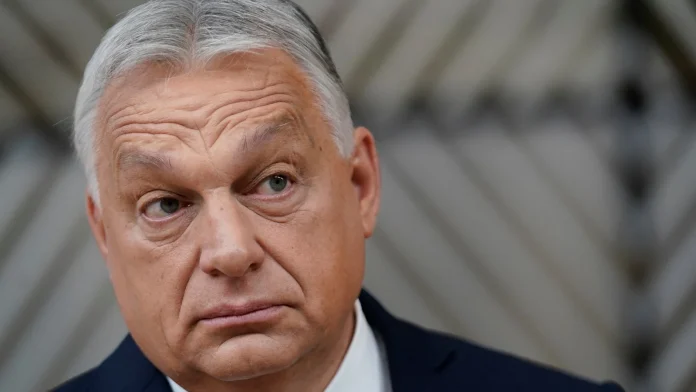
Hungarian Prime Minister Viktor Orban is seeking a fifth term in Sunday's elections (File image)

A whisper that shook Brussels: Hungary, a leaked call, and a continent on edge

On a bright spring morning in central Budapest, the tram bells sounded as usual and vendors hawked langos and hot chimney cake in front of the Great Market Hall. Yet beneath the everyday bustle, an international storm was gathering — one that had little to do with food stalls and everything to do with whispers on the line between two foreign ministries.

At the heart of the storm are new allegations published by a consortium of investigative outlets — The Insider, VSquare and Delfi — suggesting that Hungarian Foreign Minister Péter Szijjártó offered “direct-line” access to EU information to his Russian counterpart. Reporters say recordings and documents indicate Budapest may have offered to pass an EU paper on Ukraine’s accession talks through the Hungarian embassy in Moscow “immediately.” If true, the implications are seismic: a member state possibly sharing strategic internal EU material with an external power.

“This is extremely concerning,” European Commission spokeswoman Paula Pinho told journalists in Brussels, repeating the EU’s demand that Hungary “explain itself as a matter of urgency.” Across the European capitals, the word ‘betrayal’ has been used in public by French Foreign Minister Jean-Noël Barrot, and privately by others — a sign of how raw the trust deficit has grown.

What the leaks allege — and what we still don’t know

Investigative pieces like these are not courtroom verdicts. They are revelations that trigger questions, follow-up probes and, in this case, a diplomatic crisis. The consortium’s claim rests on recordings of calls and exchanges between the Hungarian and Russian foreign ministries. The allegation is specific: that an EU document related to Ukraine’s accession was offered and could be sent from Budapest’s embassy in Moscow.

“Allegations alone don’t equal guilt,” said Dr. Anna Kovács, a political scientist at Central European University who agreed to speak for this piece. “But when there is smoke in the diplomatic house, neighbours get alarmed.”

Brussels’ reaction — sharp and unusually public — reflects the gravity of even the possibility that an EU member state could be assisting a strategic rival of the Union. “It raises the alarming possibility of a member state actively working against the security and interests of the EU and all its citizens,” Pinho said, echoing a broader anxiety: if European unity is hollowed out from within, who can stand firm on the continent’s external challenges?

On the ground in Hungary: a different fight

If the leak has shaken ambassadors and ministers, at home the story collided with another drama: a national election. Prime Minister Viktor Orbán, a polarising figure across Europe, is campaigning for what would be his fifth term in power. For many Hungarians, the election is about bread-and-butter issues — jobs, pensions, energy bills — yet the backdrop of alleged diplomatic back-channeling lends the campaign an unnerving undertone.

“I’m not surprised,” said Ilona Németh, 62, who sells embroidered aprons near the Parliament. “Politics is a game. But I am worried that decisions made in rooms I will never enter could make life harder for my grandchildren.” Her worry is shared by others who feel that Hungary’s foreign policy has sometimes tilted away from the EU in recent years.

Domestic observers describe an uneven playing field. Since Orbán’s return to power in 2010, the ruling Fidesz party and its allies have reshaped institutions, the media landscape and electoral rules — moves critics say have entrenched an advantage. “Electoral engineering has been subtle and comprehensive,” said Márk Szabó, an analyst with the Republikon Institute. “Redrawn constituencies, different thresholds for minority mandates, and state resources used in campaign-like messaging: it all stacks the deck.”

Three ways the system favours the ruling coalition

  • Electoral redesign: The 2011 overhaul of constituencies and vote-counting rules can translate a small popular lead into a large parliamentary majority.
  • Media concentration: Reporters Without Borders has estimated that some 80% of Hungarian media outlets are controlled by oligarchs close to the state, significantly shaping narratives.
  • State resources and outreach: From taxpayer-funded billboards to state mailing lists used for political messaging, critics say government tools have been turned into campaign instruments.

These structural advantages are not abstract. An 11-month study by the Republikon Institute last year found that public television’s main news broadcast portrayed Orbán positively 95% of the time, while coverage of his challenger, Péter Magyar, skewed negative in 96% of segments. Figures like these feed wider anxieties about information control and democratic contestation.

Mail-in ballots, diaspora voters and the tightrope of legitimacy

Another layer to this election is the role of voters outside Hungary. Under a 2010 law, Hungarians living in neighbouring countries — many of whom benefited from simplified naturalisation — can cast ballots by mail. Emigrants who left the country, on the other hand, are generally more critical of Orbán but face different voting channels. NGOs and watchdogs have warned about outdated voter rolls and lax ballot security, especially concerning mail-in ballots that could be manipulated or cast in the name of deceased persons.

“The architecture of the vote matters,” observed Dr. Kovács. “When the rules create predictable advantages, they erode the legitimacy of whatever result follows.”

Why this matters beyond Hungary

At stake is not only the outcome of one election but the character of an EU that has — in theory — close coordination on foreign policy, enlargement and security. If one member state is shown to have been passing strategic internal EU material to a non-EU power, the contagion effects would be felt across the bloc. Could an already-fragile consensus on Ukraine, sanctions or defence be undermined? Could intelligence sharing dry up out of fear?

“European solidarity is not an optional extra,” Jean-Noël Barrot said in an interview, according to press reports. “If one member undermines the others, the Union becomes weaker.”

For ordinary Hungarians, this geopolitical high-wire act is often experienced through the more prosaic filter of utility bills, hospital waits and school queues. The billboard campaigns — some state-funded, some closely aligned with Fidesz messaging — speak to voters in the language of stability and national pride. At the same time, independent voices worry about what it means when a country’s foreign ministry may answer to other capitals.

Questions to sit with — and a moment of reflection

So what should readers make of this complicated knot of domestic politics, alleged diplomatic leaks and European outrage? First, that democracies are fragile things. They require not only rules on paper but a shared culture of transparency, accountability and mutual trust. Second, that the interplay of national elections and international relations is only getting thornier in a multipolar world.

What would you do if your government quietly passed sensitive briefings to a foreign power — would you demand an inquiry, protest on the streets, or wait for legal processes to unfold? And how should regional partners balance the need for a rapid answer with respect for national sovereignty?

For now, Brussels has demanded explanations. Investigative journalists will keep digging. Observers will watch the vote and its aftermath. And in Budapest, the tram bells will keep ringing — at least for a while yet — as a country decides both its domestic future and its place in an ever more contested Europe.

“We need clarity, not conspiracy,” a young university student named Tamás told me, stirring his coffee outside a campus café. “If our leaders act in the dark, that darkness will last for all of us.”

UK says it secretly tracked three Russian submarines for a month

UK 'tracked' three Russian submarines for a month
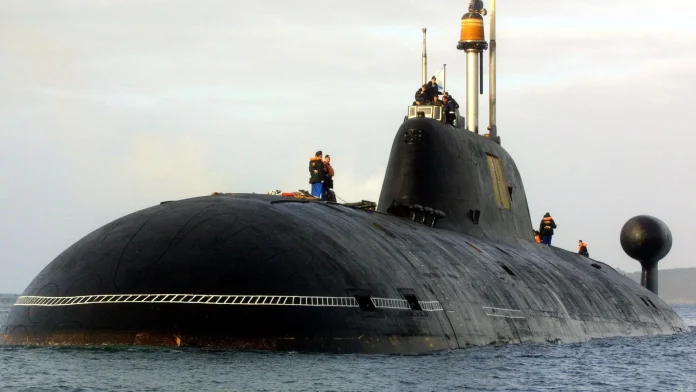
File image of an Akula-class nuclear-powered attack submarine

Beneath the Whitecaps: How a Quiet Month-Long Undersea Game Unfolded off Britain

Imagine standing on a cliff north of Scotland, wind tearing at your coat, watching a gray slice of ocean that looks indifferent to politics. Beneath that indifferent surface, for a month this winter, a tense game of hide-and-seek played out—silent, patient, and dangerously intimate. Not bombs, not dramatic surface clashes, but submarines: a Russian Akula attack boat and two specialist submarines linked to Russia’s enigmatic deep-sea research service prowling the North Atlantic—tracked by British, Norwegian and allied forces until they turned and went home.

“We picked up activity that we could not ignore,” Defence Secretary John Healey told reporters at Downing Street. “Our forces were deployed to track, to deter and to ensure that these movements were not covert.” It was, he said, an operation that ran around the clock for weeks before concluding with the submarines’ withdrawal.

A low-noise ballet in the depths

The scene is not cinematic in the Hollywood sense. There were no periscope shots or gunfire. Instead there was a choreography of sonar pings, long patrol flights, and the slow, infuriating patience of anti-submarine warfare (ASW). A Royal Navy vessel shadowed the contacts on the surface while RAF P‑8 Poseidon maritime patrol aircraft conducted the airborne watch—capable platforms designed to sniff out what the sea is trying to hide.

A Royal Navy officer who asked to speak off the record described the rhythm: “You listen. You correlate. You wait. There are days when all you have are ghosts in the water, and then suddenly signals resolve into something you can follow.”

That follow-through matters because the undersea domain is unusually consequential. Around 95% of intercontinental data—emails, financial flows, streaming video—travels through submarine cables. Shipping, fisheries, and national security pipelines also traverse these waters. Keeping those arteries safe is a silent but essential job.

Who were the shadowy visitors?

The submarines reported were an Akula-class nuclear attack submarine and two vessels associated with the Main Directorate of Deep-Sea Research, commonly known by the Russian acronym GUGI. The Akula series are purpose-built for anti-submarine and anti-surface warfare; their appearance signals a military intent to operate in contested spaces.

GUGI is less well understood by the public but not by observers. “They aren’t just doing academic oceanography,” said Dr. Nina Petrov, a defence analyst who has studied undersea operations. “GUGI assets have been linked to deep-sea work—robotic submersibles, cable approaches, and recovery tasks—that can have both scientific and strategic applications.” Past reporting has tied GUGI to vehicles capable of working at extreme depths, which raises the stakes when such vessels appear near vital seabed infrastructure.

Allies, coordination and the art of deterrence

What made this operation noticeable was not just the hardware—it was the coordination. Britain, Norway and other allies set a watch in waters north of the UK at a time when global attention was intensely focused elsewhere. That matters. Strategic opportunism is a logic of modern conflict: while the world watches one crisis, another actor can probe, test, or try to work in obscurity.

Captain Lars Eriksen of the Royal Norwegian Navy put it plainly: “We were side by side with our British colleagues. In the North Atlantic, proximity breeds cooperation. We track, we share, and we make sure nobody slips through unnoticed.”

Allies reported 24/7 monitoring. Surveillance imposed costs on the intruding vessels and—crucially—exposed their movements. “If you’re going to run a covert operation, the last thing you want is to be visible,” said one defence source. “The message we sent was: you are being seen.”

From the quays to the cabinet table

Onshore, the story rippled through fishing villages and naval towns. “We saw the P‑8s out for days,” said Iain MacLeod, a fisherman from the Orkney Islands. “You get used to noticing things—the planes, the big ships—and there’s a quiet reassurance when they’re around.” For local communities that depend on a healthy sea and safe shipping lanes, undersea security is a practical, everyday concern, not an abstract policy debate.

At the same time, the episode landed back in London’s corridors of power. Defence briefings, diplomatic demarches and allied coordination all played a part. Officials framed the operation as a measured deterrent rather than a provocation—a posture that aims to avoid escalation while making clear that certain behaviors will be observed and countered.

Why the North Atlantic matters now

The timing and place of this patrol are significant. The North Atlantic is a strategic thoroughfare connecting Europe and North America, threaded with underwater infrastructure and transit routes that both economy and security depend upon. Recent years have seen a renewed emphasis on undersea competition: navies have returned to the ocean’s depths with modern submarines, new sensors have improved detection, and the protection of seabed assets has become a diplomatic and military priority.

“We talk about the ‘high seas’ like they’re empty spaces,” Dr. Petrov reflected. “But they are full of critical infrastructure—cables, pipelines, and even scientific installations. That makes the seabed a frontier in strategic competition.”

Questions worth asking

As readers, what should we take from an episode that happened largely out of sight? First, that modern security increasingly depends on domains most people rarely think about: the electromagnetic spectrum, space, and the ocean floor. Second, that deterrence often takes the form of patient observation rather than headlines and explosions. And third, that alliances matter; shared awareness is frequently the first line of defense.

How would you feel knowing the cables that route your video calls or bank transfers pass under waters where foreign submarines might operate? Does visible monitoring comfort you or unsettle you? These are not merely technical concerns—they touch on trust, sovereignty, and what it means to secure an interconnected world.

A quiet end to a noisy risk

After weeks of tracking and shadowing, the Akula reportedly retreated home, and the two GUGI-associated vessels departed northward. For now, the incident ended without overt confrontation. But the episode underscores a broader reality: the instruments of power have grown stealthier, and much of the pressure between states now plays out in quiet, demanding theaters where skill and patience matter more than spectacle.

“We didn’t make a show of it,” said a defence official. “But presence itself is a statement.”

As the ocean returns to its unremarkable rhythms, the silence that follows is not the absence of risk—it’s an invitation to remain watchful. The waves may look the same tomorrow, but beneath them the world’s great powers continue to test boundaries, map vulnerabilities, and write the rules of a new, hidden frontier. Will we notice only when something goes wrong, or will we learn to value the quiet work that keeps our digital and physical lives moving? That is the choice facing democracies—and their seas—today.

Russia repatriates remains of 1,000 soldiers to Ukraine

Russia returns bodies of 1,000 soldiers to Ukraine
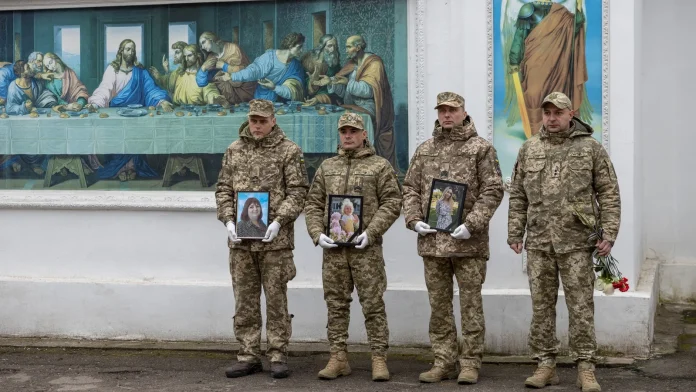
Ukrainian soldiers hold portraits of three victims killed three days ago in a Russian drone attack

The Long, Quiet Trade: Bodies, Boxes, and the Business of Mourning

On a frost-bitten morning somewhere between front lines and border checkpoints, a convoy arrived and men in white overalls and blue gloves lifted white body bags like fragile bundles of history. In grim, efficient choreography they moved them from one truck to another, under the thin, grey gaze of Red Cross observers. Moscow says it handed over 1,000 bodies. Kyiv says it returned 41. Numbers in a war are both blunt instruments and fragile stories—each one representing a name, a family, a life reduced to coordinates on a map.

“You count them not because they are numbers, but because each one is a person,” said a woman who works in the Coordination Headquarters for the Treatment of Prisoners of War in Kyiv, as she thumbed through a list of provisional identifications. “We call families. We try to make sure there is a dignified burial. That dignity matters.”

For more than four years, the exchange of remains has been among the few persistent strands of cooperation between adversaries. The International Committee of the Red Cross has been a regular unseen presence, facilitating repatriations that the world treats as logistical necessities but that, to small towns and grieving mothers, are the difference between silence and a funeral. Last month the Red Cross said it was facilitating exchanges of roughly 1,000 bodies a month and warned that “thousands and thousands” remain unidentified. Those are not abstract figures—they are stacked in morgues, sealed in plastic, waiting for DNA tests, for cross-checks, for the kindness of recognition.

In Kharkiv, where the steady rumble of artillery has become the percussion of daily life, infantrymen practise tactical drills between trenches and sun-baked courtyards. A church bell tolled in the distance the afternoon a new batch of names was released. “We light candles now for people we don’t yet know,” said Oleh, a funeral director who has overseen dozens of burials since 2022. “You bury a man without a face and the village still needs to mourn.” He brought out an embroidered towel, a small loaf of bread, and traced his thumb across Cyrillic letters on a checklist. “There is a ritual for grief even when the identity is missing.”

What the exchanges reveal

These transfers expose a paradox of modern conflict: while bullets, drones, and cyberattacks tear systems apart, very human procedures persist. Families want the remains of their sons, daughters, fathers, and mothers returned for a proper burial. Humanitarian law obliges combatants to account for the dead. Yet there are also shadows: Kyiv has accused Moscow in previous transfers of slipping in bodies of Russian soldiers among those claimed as Ukrainian. Verification is slow, sometimes impossible.

“DNA is our only impartial witness,” said Dr. Marta Ivanenko, a forensic analyst based in Lviv. “But DNA work takes time and money. Resources are strained and the dead cannot speak for themselves.”

Trust on Trial: Budapest, Brussels, and the Leak that Shocked Europe

While embalmers and forensic labs do their patient work, the capitals of Europe have been wrestling with another kind of fallout: a crisis of confidence. Investigative outlets from Eastern Europe published leaked recordings that suggest Hungarian Foreign Minister Péter Szijjártó passed sensitive EU documents to Russian counterparts—some reports even say he offered to transmit an EU file through the Hungarian embassy in Moscow related to Ukraine’s accession talks.

For a union built on shared institutions and mutual security, the allegations felt like rust in the machinery. “If a member state is quietly feeding information to a rival power, that is not just a breach of protocol—it is a breach of solidarity,” said an EU official speaking on condition of anonymity. “We need an explanation, and we need it urgently.”

Hungary heads to an election this week, where Prime Minister Viktor Orbán is seeking a fifth term. That political clockframe adds heat to the accusations; domestic politics and geopolitics have become entangled like winter vines. “This is a betrayal,” said France’s foreign minister in blunt terms. “The foundations of trust in the EU are not negotiable.”

What should trouble global observers is not only the alleged content of private conversations, but what they imply about alliances in an age of disinformation and fractured loyalties. How much of the European project is built on shared benefit, and how much on tacit agreements that can be quietly undermined?

Beneath the Waves: Cables, Submarines, and the New Geography of Vulnerability

Out at sea, another form of silence raises the alarm. This year, British and allied ships shadowed Russian submarines in the High North, tracking their movements around undersea cables and pipelines—the nervous system of global commerce. Britain’s defense minister said vessels were deployed to deter any attempt to damage critical infrastructure. The submarines, according to officials, have now left the area and no damage was found.

Consider this: roughly 95% of intercontinental data traffic traverses submarine cables. A cut, a blind explosion, a precise clamp, and whole sectors of digital life—from banking to healthcare to newsrooms—could flicker off. “It’s not just steel below the waterline,” said Ingrid Möller, a maritime security analyst in Oslo. “It’s a fragile, interdependent lattice that holds modern life together.”

Churchless stretches of ocean suddenly matter for national security. The UK says the Russians were using the distraction of conflicts elsewhere as cover for furtive operations in the Arctic and North Atlantic. Whether the motive was intelligence-gathering, sabotage, or strategic posturing, the message was clear: the undersea domain is a contested frontier.

Quieting the Press: Novaya Gazeta and the Erosion of Dissent

Back on land, in Moscow, masked security officers walked into the editorial offices of Novaya Gazeta. Vans from the Investigative Committee parked outside. Staff were kept from their own records. The publication, once a proud standard-bearer of investigative journalism in Russia and home to a Nobel Peace Prize-winning editor, has been under pressure for years. Reporters from the outlet have been murdered; colleagues still remember Anna Politkovskaya, whose death in 2006 sent a chill through Russia’s journalistic community.

“When you shut a newsroom, you don’t just close a door—you close a mirror,” said a former Novaya journalist, now in exile. “A mirror that used to reflect the abuses of power.”

Independent journalism is not merely an inconvenience to authoritarian rulers; it is part of the connective tissue of free societies. When that tissue frays, the consequences ripple: less accountability, more propaganda, and a sharper tilt toward secrecy in state affairs—exactly the environment that makes accusations of secret diplomacy and covert submarine missions all the more combustible.

Threads That Tie: Why These Stories Matter Globally

What links these seemingly disparate scenes—a truck of body bags, a leaked phone call, a submarine prowling near fiber-optic cables, a quieted newsroom—is the slow erosion of mutual trust. In one corner, families wait for their dead. In another, union partners probe for betrayal. At sea, invisible infrastructure is defended by visible power. And across borders, voices that once scrutinized power are being muzzled.

Ask yourself: how many social contracts are we willing to let be undermined before the cost becomes unbearable? The return of bodies may be the most intimate, human illustration of the war’s human toll. The alleged leaks and undersea contests are the geopolitical reflection: if institutions cannot be relied upon to safeguard secrets and infrastructure, everyday life is the next casualty.

These are not isolated stories. They are chapters of a larger narrative about dignity, sovereignty, and the invisible systems—legal, informational, infrastructural—that underpin the modern world. Each deserves scrutiny. Each demands an answer.

As you read this from wherever you are—on a phone, through a cable, beneath a flag—consider what it means to live connected in an age where the seams are fraying. Whose job is it to sew them back together? And what are we willing to sacrifice in the meantime?

Gates Foundation opens external review of Epstein ties

Bill Gates grilled by Congress over alleged ties to Jeffrey Epstein

0
Bill Gates is heading to Capitol Hill for scrutiny that has shadowed some of the world’s most prominent figures: his past ties to Jeffrey...
Need to get 'facts straight' around Aughinish - Kallas

Kallas urges clear, accurate facts about the Aughinish situation

0
As scrutiny intensifies over claims involving a major Irish refinery and Russia’s war effort, EU foreign policy chief Kaja Kallas says the priority is...
US World Cup chief defends visa ban for Somali referee

U.S. World Cup official backs visa ban blocking Somali referee

0
A visa denial that stopped a decorated Somali referee at a US airport has drawn fresh attention to how the White House says it...
Iran targets US base in Jordan after Trump orders strikes

Iran Strikes U.S. Base in Jordan Following Trump-Ordered Attacks

0
Missiles and drones streaked across the Gulf after Iran’s Revolutionary Guards said they struck a US base in Jordan and hit 21 other targets...
Hegseth to visit Guantanamo as US puts pressure on Cuba

Hegseth to tour Guantanamo as US ramps up pressure on Cuba

0
Defense Secretary Pete Hegseth is heading to the US naval base at Guantanamo Bay, Cuba, with the Pentagon saying he will make the trip...