

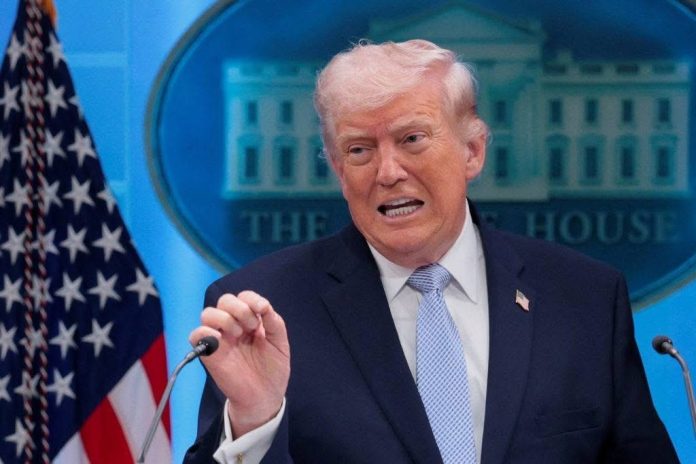
Apr 13(Jowhar)Dowladda Maraykanka ayaa ku dhawaaqday inay hal sano oo horleh ku kordhisay xaaladda degdegga ah ee Soomaaliya, taas oo markii horeba soo socotay tan iyo sannadkii 2010-kii.
How Could a Successor to Orban Unlock Hungary’s EU Funds?
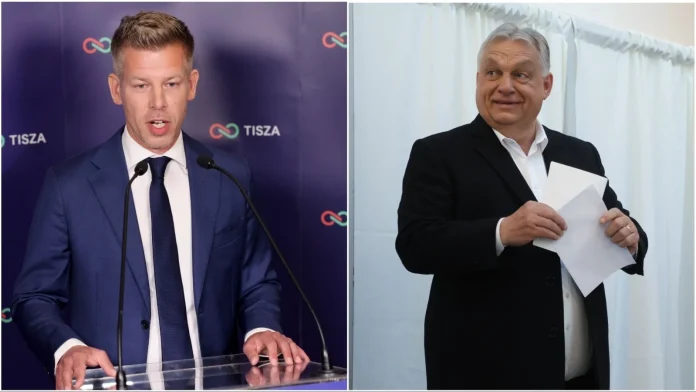
Budapest at Dawn: What Viktor Orbán’s Loss Means for Europe—and for Hungary
The square outside the parliament in Budapest smelled like chimney smoke, coffee and something electric: a civic relief that felt almost audible. Flags flecked the morning light—red, white and green—and people who had learned to speak in clipped, careful sentences about politics were laughing aloud, hugging strangers as if they’d been carrying a weight for a decade and suddenly put it down.
Viktor Orbán’s defeat in the recent parliamentary elections landed like a thunderclap across Europe. For many the mood was less triumphalist than deeply, quietly hopeful—an exhale after years of standoffs, vetoes and bruising rhetoric. Orbán, who shaped Hungary’s political life for more than a decade, leaves behind a country that still bears the imprint of his nationalism, but also a European Union relieved to have one of its most stubborn dissenters walk off the stage.
“It’s not just about one man,” said Anna Kovács, a high-school teacher who voted for change. “It’s about whether the country will choose to join the conversation again. To me, that feels like coming home.”
Five dossiers that Brussels will be watching
European capitals are already making lists. The machinery of the EU will not reset overnight, but Hungary’s new premier, Peter Magyar—a conservative who rose from inside the old guard but campaigned as a reformer—has the chance to peel back several blockages that have stalled EU policy. Here are five dossiers that could move quickly, or not at all, depending on how Budapest chooses to play its cards.
- €90 billion loan to Ukraine
- Sanctions on Russia
- Ukraine’s EU accession process
- Frozen EU funds to Hungary
- The tone at the EU summit table
1. The €90 billion lifeline for Ukraine
Nothing was more emblematic of the last government’s brinkmanship than the decision to hold up a €90 billion EU loan for Ukraine. The veto came after repeated delays and a diplomatic row over a damaged pipeline that had become tangled with nationalist rhetoric. For Kyiv, the money is not an abstract number—it is fuel, salaries, and a buffer for an economy at war.
“We were told this would be a simple procedural step, and then it wasn’t,” a Brussels diplomat said, asking not to be named. “Now we have an opportunity to fix what should never have been fixed in the first place.”
Magyar is not a zealot for immediate full-throttle support of Kyiv—his campaign included cautious language—but he has an opening to signal to Brussels that Hungary will stop using financial dossiers as bargaining chips. If he moves to unblock the loan, he could win goodwill fast. But there’s a second actor in this dance: President Volodymyr Zelensky. Any thaw will require tact around the pipeline dispute and, perhaps, a softening of rhetoric on both sides.
2. Sanctions on Moscow: thaw, stall, or swerve?
Orbán’s Hungary repeatedly delayed EU sanctions against Russia, cultivating relationships in Moscow at a time when many EU capitals hardened their stance. That put Budapest in a lonely spotlight, often prompting whispers that the country was acting as a “Trojan horse” inside summits.
“You can see how these personal ties complicate collective action,” said Márton Székely, who runs a small import business in Debrecen. “But what I want is stability. Businesses want predictability, not geopolitics.”
If Magyar signals a pivot—backing a fresh sanctions package against Moscow—that would leave Slovakia’s Robert Fico more exposed as one of the few EU leaders still flirting with a softer stance toward Russia. Conversely, if Magyar continues to hedge, the EU’s unity on sanctions will remain brittle.
3. Ukraine’s EU membership bid: clusters, referendums and political theater
Horizon-dreaming about Ukraine’s EU membership has been one of the more fraught elements of post-2022 European diplomacy. Orbán vetoed progress on negotiating “clusters” that Brussels says Kyiv was ready to open. Magyar has promised a referendum on Ukraine’s accession—an open invitation to more debate back home.
“Hungary’s full-throated opposition kept other reluctant countries hidden in the shadows,” said an EU official in Brussels. “Now those voices will have to reveal themselves.”
Expect a slow, procedural dance: opening clusters, legal reviews, and political bargaining. Even if Magyar lifts Budapest’s formal blocks, accession remains a long game—years of economic, judicial and administrative alignment. But politically, moving even a little could change the tone of EU-Ukraine relations—and the signal that Europe is, however haltingly, still capable of enlargement.
4. Frozen funds and economic pressure
Here is where Magyar could score tangible, domestic wins. The EU has withheld roughly €18 billion earmarked for Budapest over concerns about democratic backsliding, rule of law issues and controversies over LGBTQ rights. Another roughly €10 billion related to Covid recovery hangs in the balance, with a deadline for reforms approaching in August.
“Imagine walking into a meeting and coming out with €10 billion,” one EU diplomat shrugged. “You don’t need fireworks to win hearts when you can bring home the money.”
For a country of about 9.6 million people, those funds matter—a lot. They pay for highways, hospitals, school refurbishments. Magyar can show voters that mending ties with Brussels produces concrete benefits, not just diplomatic applause.
5. The summit table: gestures that rebuild trust
Beyond money and missiles lies something softer but no less important: tone. Orbán’s summit-style grandstanding eroded trust among EU leaders. He was loud, theatrical and unpredictable—perfect for domestic politics but corrosive for coalition-building.
“I think everyone will welcome Magyar with renewed enthusiasm,” an EU official told me between meetings. “But don’t mistake a smile for submission.”
Magyar has made it clear he won’t be a rubber stamp for Brussels. Expect robust debate—and that’s healthy. EU politics need friction. What they do not need is a member state that treats deliberation as a bulldozer. If Magyar can keep his independence without weaponizing vetoes, the bloc will be stronger for it.
What this moment tells us about Europe
Orbán’s loss is not a final chapter; it’s a turning of the page in an ongoing book. It prompts larger questions: Can the EU reconcile internal differences quickly enough when the continent is facing an active war on its borders? Will eastern and western members find new language to bridge historic mistrust? And at a human level—how does a society emerge from years of polarizing leadership and rebuild civic trust?
“Politics is the art of returning to the table,” said Ildikó Horváth, a civic activist who has organized community dialogues in Budapest for years. “The first weeks are a test: will we choose revenge or repair?”
For readers watching from afar: consider how fragile political compacts can be, and how important small shifts are. A veto lifted here, a tranche of funds released there—these are not just bureaucratic wins. They are pieces of a puzzle that helps democracies function, markets breathe, and neighbors feel less at war.
So what should we watch next? Will Budapest choose compromise and see the money flow back, or will old habits reassert themselves? Will Magyar find a way to speak both to wary Hungarians and to patient Europeans? And perhaps most pressingly—can a Europe shaped by larger-than-life personalities find its footing in the quieter work of rebuilding institutions?
There are no easy answers. But in a Budapest café at dawn, as people traded stories about ballot booths and buses and late-night TV panels, one sentiment stood out: ordinary life—schools, shops, pensions—keeps going, no matter the rhetoric. Politics may change the headlines. But it is the slow, steady work of governance that changes lives.
“We want to be part of Europe again,” Anna Kovács said, stirring her coffee. “Not because Brussels is perfect, but because the rest of Europe has things we need—standards, money, friends. That’s not shameful. It’s smart.”
Viktor Orbán Admits Loss After Hungary’s Election Upset
A Morning of Long Lines and Lofty Hopes: Hungary’s Turning Point
Budapest woke to a sky the color of diluted paprika—clear, bright, and carrying the first heat of spring. Tram bells clattered. Café waiters carried steaming cups of espresso past polling stations where, by mid-afternoon, the lines still stretched around the block. For sixteen years Viktor Orbán’s silhouette had loomed over Hungary; on this day, the country felt like it was holding its breath.
By the time results began to arrive, the moment crystallized: Peter Magyar, the fresh-faced conservative who had once been inside the halls of government and then stepped away, stood poised to unseat the country’s most durable post-communist leader. With roughly half the precincts counted, Magyar’s Tisza party led the field at about 52.49% while Fidesz trailed near 38.83% — figures that pollsters said could translate into roughly 132–135 seats in Hungary’s 199-member National Assembly.
Concession, Congratulations, and a Short Phone Call
“The election results, though not yet final, are clear and understandable; for us, they are painful but unambiguous,” Viktor Orbán said in a brief televised address, acknowledging defeat after 16 years in office. “We have not been entrusted with the responsibility and opportunity to govern. I congratulated the winning party.”
Orbán’s concession came with an immediate, almost ceremonial follow-up: a phone call. Peter Magyar posted that Orbán had rung to offer his congratulations — a spare, almost old-fashioned ritual in a campaign that had sometimes felt very modern and very raw.
The Numbers That Mattered
Turnout was itself a story: record-breaking enthusiasm. At 3pm local time, 74.23% of eligible voters had cast ballots — a substantial leap from 62.92% at the same hour in 2022. Polling stations from leafy Buda to the mosaicked flatlands of the Great Plain recorded long queues, and television cameras captured faces that ranged from resolute to exhausted.
Political scientists watching the tally of precincts cautioned that early leads are not the same as final, certified victories. Still, two well-regarded pollsters — Median and 21 Research Centre — projected that if the momentum held, Tisza could win a solid working majority, possibly even the margin needed to govern with comfort if not the two-thirds supermajority required for constitutional overhaul.
What This Could Mean at Home and in Europe
The potential political ramifications were vast and immediate.
- Inside the European Union, questions about Hungary’s resistance to collective decisions — notably its recent blocking of a proposed €90 billion EU loan to Ukraine — could fade. European Commission President Ursula von der Leyen was quick to celebrate: “Hungary has chosen Europe,” she wrote, adding in Hungarian that “a country reclaims its European path.”
- Brussels could also move to release EU funds that were previously suspended amid concerns about the rule of law in Hungary — a development that would have major budgetary and political consequences for Budapest.
- On the global stage, Hungary’s pivot away from Orbán’s eurosceptic, “illiberal” model would deprive Moscow of a staunch Western interlocutor and might reshape alliances among right-wing movements across Europe and beyond.
Voices From the Polling Places
Walking through neighborhoods, you heard a chorus of reasons for voting that were refreshingly ordinary: inflation, job security, courts, schools, and the weariness of a nation tired of high-stakes politics.
“We need an improvement in public mood,” said Mihály Bacsi, 27, a software tester who had voted for Tisza. “There is too much tension in many areas and the current government only fuels these sentiments.”
Not everyone in line wanted change. “I want the stability we’ve had,” said Zsuzsa Varga, a retired nurse in her sixties. “I am frightened by the war next door. I don’t want anything to rock the boat.”
At a kiosk near the Danube, a small-business owner named László rubbed his knuckles and offered a different calculus: “Three years of little growth and prices going up — that’s what broke it for many of my customers. We voted hoping for better management of the economy.”
Experts Take the Measure
“This is not just a changing of faces,” said Dr. Éva Kovács, who teaches comparative politics at a Budapest university. “It is an expression of fatigue with a political model that concentrated power and blurred public and private interests. But the real test is whether the incoming administration can translate a mandate into institutional reform without polarizing the country further.”
Outside Hungary, reactions were swift. Ireland’s taoiseach, Micheál Martin, rang to congratulate the prime minister‑elect and praised the robust turnout. “I look forward to working with Prime Minister‑elect Magyar to strengthen bilateral relations between Ireland and Hungary,” he said, invoking shared EU values.
The Road Ahead: Reform, Restraint, or Reinvention?
Tisza’s platform promises “system change”: anti-corruption measures, revitalizing the independence of the judiciary, and repairing relations with Brussels. Yet the party faces a narrowed margin for sweeping changes; many of Orbán’s structural legacies are embedded in laws, media ownership, and institutional habits that will not be undone overnight.
Will Magyar pursue rapid de‑consolidation of power, or will he choose a steadier, less dramatic path that prioritizes economic recovery and EU re‑engagement? The difference matters not only to Hungarians but to the neighborhood of nations watching for signs of a renewed European front in support of Ukraine and a resurgent liberal order.
For those thinking about the larger arc of European politics, Hungary’s vote raises urgent questions: Is the age of durable populist incumbency waning? Can Europe reconcile sovereignty concerns with shared democratic norms? And perhaps most poignantly: how do nations heal after long periods of polarized governance?
Small Moments, Big Meanings
As the evening fell and lights came on in the river‑front apartments, a shopkeeper swept the pavement and shook his head. “Whatever happens, we hope the next government makes life more affordable,” he said. “You don’t win a country by fighting all the time. You keep it by making people feel safe and hopeful.”
In the end, this election felt like something intimate and grand at once: a collective exhale, a vote cast not just for policies but for a future. If these first results hold, Hungary has chosen a new path — or at least, chosen to consider one. The next chapters will be written in committee rooms, in the courts, and on the budgets that touch people’s daily lives. The rest of Europe will be watching.
What do you think this shift means for the broader fight over democracy in the 21st century? For a continent balancing security, prosperity, and values, Hungary’s choice is a question as much as a statement — and it will reverberate far beyond the banks of the Danube.
Iran oo kordhisay wax-soo-saarka hubka casriga ah
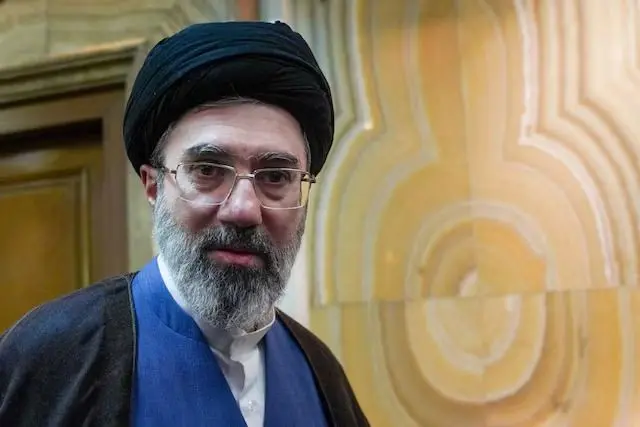
Apr 13(Jowhar)Iran ayaa ku dhawaaqday in ay si weyn u kordhisay wax-soo-saarka gantaalaha balaastigga ah iyo diyaaradaha aan duuliyaha lahayn (drones) ee is-qarxiya, tan iyo markii ay bilaabatay xabbad-joojinta dhowaan la gaaray.
Iran says military ships bound for Hormuz breach ceasefire agreement
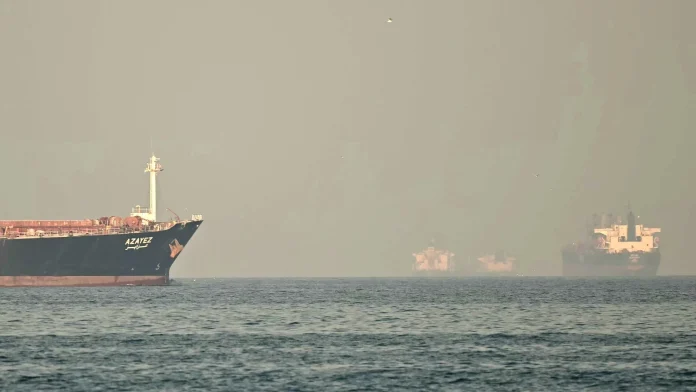
The Strait on Edge: How One Narrow Waterway Became the World’s Pressure Point
The sun lifts slowly over the Persian Gulf, turning the water a brittle silver. On the shore in Bandar Abbas, a cluster of tea vendors sweep the dust from their stalls and watch the horizon with the same wary curiosity they reserve for storm clouds.
“When the navy comes close, the whole city feels it,” says Reza, a tug-boat captain whose weathered hands still smell of diesel and diesel-cured salt. “You can hear it in conversations at the bazaar. People stop talking about weddings and start talking about fuel.”
What happens in this narrow strip of water matters to nearly everyone on the planet. The Strait of Hormuz, a choke point just 21 nautical miles at its narrowest, is the artery through which roughly one-fifth of the world’s seaborne oil travels. It is a place where tankers and trawlers, fishermen and aircraft carriers, diplomacy and intimidation meet — and where even a rumor can ripple into markets.
Words and Warnings
In recent days the tone from both Tehran and Washington has hardened. Iran’s Revolutionary Guards issued a stark reminder that they consider the strait under the “smart management” of their navy and warned that any military vessels attempting to approach would be treated as a breach of a fragile, temporary ceasefire. State media relayed the message: non-military ships may pass — under specific rules — but anyone seen as an aggressor will be met “harshly and decisively.”
On the other side, a U.S. administration statement declared it would not tolerate what it called attempts to “profit” from control of the waterway. U.S. Navy ships have been reported transiting the strait to assess and, officials say, to clear mines — a claim Tehran denies. In social media posts and televised interviews, Washington warned that those who fired on peaceful vessels or sought to lay tolls on international shipping risked a forceful reply.
“We don’t want to see the seas become a toll road for one country’s politics,” said a senior U.S. defense official, speaking on condition of anonymity. “Freedom of navigation is not a slogan. It’s a principle that keeps the global economy moving.”
Local Lives, Global Ripples
For the people who live along the gulf, the abstract language of geopolitics acquires a human weight. That’s clear in the markets of Bandar Abbas, where a grocer named Fatemeh pulls a thermos from beneath a pile of dried limes and speaks quietly about rising prices.
“If ships turn back, if fuel delays, we pay at the pump and for bread,” she says. “My brother works at the port — he asked me to keep a little extra food at home, just in case.”
Fears of escalation are already shaping behavior. Iran’s Fars news agency reported that two Pakistani‑flagged tankers bound for the strait turned back; shipowners are re-routing, insurers are recalculating premiums, and global traders are watching oil futures that are quick to reflect even whispered unrest. Analysts note that disruptions here can send reverberations through supply chains: from fertilizer and petrochemicals to plastics and shipping costs.
Facts to Keep in Mind
- Width at narrowest point: approximately 21 nautical miles (about 39 kilometers).
- Share of global seaborne oil trade: roughly one-fifth passes through the strait.
- Economic sensitivity: even short-lived interruptions can lift crude prices and ripple through fuel-dependent industries.
Diplomacy Strained; Ceasefire Fragile
Diplomatic efforts to steady the situation have been tentative. Talks held in Islamabad brought the two sides to the table for the first time in years, but the negotiations ended without a comprehensive agreement. Both delegations said they had presented proposals; both accused the other of failing to build trust.
“We offered confidence-building measures,” said Mohammad, a member of Iran’s parliamentary delegation who declined to give his full name. “But trust is not negotiated in a day. It’s earned.”
International actors have called for restraint. Leaders in Europe urged a continuation of the ceasefire and warned against unilateral moves that could escalate toward open warfare. A Kremlin readout suggested Moscow is willing to help mediate; regional custodians, like Oman, quietly emphasized the need for calm in private conversations.
Experts Weigh the Options
Maritime analysts describe a fraught calculus. “A blockade is not simply a legal maneuver — it’s a signal,” says an analyst at a global security think tank. “Blockading the strait during a ceasefire risks eroding the credibility of the party that imposes it, especially if the world sees it as a disproportionate step.”
Others focus on the practicalities: clearing mines, enforcing a blockade, or interdicting ships in international waters all require clear rules of engagement, and most importantly, a coalition willing to sustain such operations. Without that, any attempt to unilaterally enforce passage could become costly and chaotic.
The Human Dimension
A tanker chief engineer who recently sailed through the Gulf, speaking to me by phone from a container ship anchored off Muscat, described an atmosphere of strained normalcy.
“You learn to watch the AIS [Automatic Identification System], you watch military channel chatter, and you pray for good weather and clear orders,” he said. “The crew’s families ask every day: ‘When will you be home?’”
Those human moments are a reminder that high-stakes geopolitics is not only about maps and strategy; it is about mothers waiting for sons, port workers wondering about their next paycheck, and small business owners budgeting for uncertainty.
What If the Strait Closes?
Pause and imagine: a protracted closure would force tankers to take longer routes around Africa, add days — and millions of dollars — to shipping costs, and potentially lift global energy prices. Industries from agriculture to pharmaceuticals could feel the squeeze as fertilizer and feedstock movements slow down. Central banks and finance ministers would watch carefully for inflationary pressures.
Is such a scenario inevitable? Not necessarily. The international community has mechanisms — diplomacy, back-channel talks, economic levers — that can keep the lines open. But it requires will, patience, and the willingness to de-escalate when headlines demand otherwise.
Where Do We Go From Here?
The Strait of Hormuz is a narrow stage but the show that plays out there will have far wider consequences. The ships that pass beneath its watchful shorelines carry more than oil and goods; they carry livelihoods and the fragile trust that links nations. Will leaders choose confrontation or containment? Will negotiators find texture and nuance where slogans have failed?
“History teaches us that chokepoints can be tamed by cooperation or inflamed by distrust,” a veteran diplomat told me. “We are choosing, every day, which lesson we will honor.”
As you scroll past the headlines, consider this: the cup of coffee you had this morning, the fertilizer that fed your breakfast, the plastics that wrapped your lunch — they all trace a line through that narrow stretch of sea. What kind of world do we want when the map tightens? What costs are we willing to bear for posturing over passage?
In the bazaars and on the docks, people answer those questions with quiet, practical acts: stocking rice, lending a hand, checking the radio. In the capitals, the answers are louder and more consequential. Between the two — between the everyday and the epic — decisions made in the coming days will shape both markets and lives. And in that delicate balance, the Strait of Hormuz remains, unmistakably, the world’s pressure point.
Shane Lowry, club ace, thrilled by pursuit of Masters green jacket
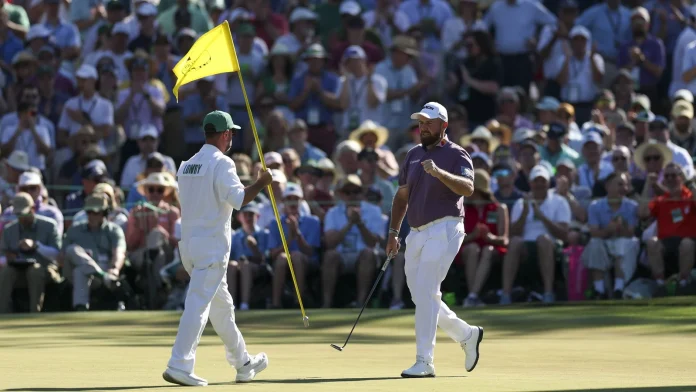
When the Azaleas Held Their Breath: A Day of Aces, Anxious Walks and the Strange Alchemy of Augusta
There are moments at Augusta National that feel less like golf and more like ritual: the hush as a player stands over a putt on the back nine, the sudden bloom of conversation as a ball finds a green, the way the crowd — the “patrons” — seem to move as one organism along the fairways. Saturday delivered one of those moments and one of those slow-motion unspools, both in a single afternoon.
Shane Lowry, the easygoing Irishman from Offaly with a famously calm demeanor, produced a shot that made the Masters crowd gasp and then whoop like a choir slapping its palms. From 190 yards on the par-3 sixth, his tee ball landed and vanished with the merciless cheer of inevitability: ace. In that single instant, Lowry leapt from six under to eight under, his face breaking into something between disbelief and delight.
“That’s wild, isn’t it?” Lowry said afterward, the kind of understatement that belies the rarity of what he’d just done. “You don’t ever expect to make a hole-in-one. I just couldn’t believe it.”
Not Just Another Hole — A Small, Brilliant History
This was no ordinary hole-in-one. Lowry’s ace at the sixth made him the first player ever to record two holes-in-one at Augusta National; his other came at the 16th in the final round of 2016. It was the latest jewel in a hat that now includes aces at Sawgrass’ notorious 17th (2022) and Pebble Beach’s seventh (January 2025). For a professional golfer, these moments are rare—part skill, part nerve, part that intangible element we call luck.
“The walk down the sixth hole with everyone around — the sixteenth and the sixth was very special,” Lowry said, capturing the sense of theater that Augusta so masterfully stages. “It gives you a huge boost. You go from six under to eight under and then all of a sudden you’re only four back. It’s getting real now.”
By the end of his round he had signed for a 69 and stood at nine under, just two strokes shy of the clubhouse lead. For a player who already carries the weight of an Open Championship on his resume, the ace felt like destiny nudging its elbow.
Drama at Amen Corner: Rory McIlroy’s Afternoon Unwinds
If Lowry’s day was a bright comet, Rory McIlroy’s Saturday at Augusta was a lesson in gravity. The two-time world number-one entered the famed Amen Corner — the crucible of holes 11, 12 and 13 — at 13 under and with a 36-hole margin that had set records. By the time he climbed out, the maths had shifted and his lead had evaporated into vulnerability.
McIlroy’s trouble began with a pulled seven-iron into the water at the 11th, followed by a missed green at 12 and a drive that found trees at 13. The three holes combined into a double-bogey, bogey, par sequence that turned a comfortable advantage into a chase. He closed with a 71 — one over — and wasted no time heading for the range to try to patch what ailed his swing.
“There’s a lot of guys in with a chance tomorrow,” McIlroy said candidly, his voice a mixture of frustration and pragmatic focus. “I’m still tied for one of the top scores going into tomorrow… but I know I’m going to have to be better if I want to have a chance to win.”
It’s a reminder that Augusta will not be tamed by any one man. Amen Corner has a way of exposing small weaknesses and magnifying them into narrative turning points. A gust of wind, a misread lie, the burly dogleg that forces a layup — these things can unravel the neatest of scripts. McIlroy’s slide from an unprecedented 36-hole lead into a fight to stay relevant is exactly the kind of drama that keeps legions of fans glued to the leaderboard.
The Numbers, Plain and Stark
Some facts that sharpen the picture:
- Lowry: Finished Saturday at nine under after a 69; his ace came at the 190-yard par-3 sixth.
- McIlroy: Opened the day with the biggest 36-hole lead in Masters history but shot a 71 on Saturday to see his advantage shrink dramatically.
- Cameron Young: Carded a tournament-best 65 on Saturday to climb to 11 under and take a lead that others have to chase.
These numbers tell a story of momentum: one man vaults up the leaderboard with a singular act of brilliance, another sees a lead erode under the weight of one afternoon’s mistakes.
Patrons, Pressure and the Pulse of a Tournament
Walk around Augusta on a Saturday and you hear the course’s living folklore: whispers about Hogan and Palmer, younger caddies swapping anecdotal gold, older patrons recounting the times the wind turned a championship upside down. There’s also the aesthetic — magnolias and azaleas in riotous bloom, the verdant severity of the greens, the strict silence that descends moments before a swing — all of which give the Masters its theatrical power.
“You could feel the electricity,” said a marshal who’d been stationed near the sixth green. “When Lowry’s ball disappeared, the noise was like a dam breaking. Then, when Rory got into trouble at Amen, the crowd went from exultant to very still, very quickly. Everyone knows the storylines; everyone feels them.”
That duality — elation and tension — is one reason the Masters is watched the world over. It’s not just a tournament; it’s a microcosm of everything sport asks of us: to celebrate the improbable, to endure the heartbreak, to hope for redemption.
Tomorrow’s Forecast: What to Watch
If you’re tuning in Sunday, consider these threads as you watch the leaders tee off:
- How will Lowry parlay momentum? An ace is a glorious moment, but sustaining that energy across 18 holes at Augusta is a very different test.
- Will McIlroy find a repair on the range that steadies his driver and irons? He’ll need precision off the tee and composed putting to reverse the afternoon’s slide.
- Can Cameron Young, who shot the day’s best round, maintain his form under the pressure of leading a major?
Each has a narrative thread worth following, and each represents a different truth about competitive golf: brilliance, fragility, and timing.
Beyond the Green: Why This Matters
This is more than a leaderboard update. It’s a living lesson in momentum and humility, a reminder that sporting glory is often cyclical and always fragile. It’s also a window into shared human emotion — the way triumph and setback play out in real time before thousands of fans and millions more watching at home.
So what will you remember from this Masters? A hole-in-one that felt almost mythic, a champion’s stumble on Amen Corner, or the way the crowd held its breath and then exhaled? Which of these images will linger: the flash of Lowry’s grin, the solitary figure of McIlroy on the range, the slow, steady march of patrons between holes?
As the final round approaches, sit back and watch how small decisions — a line chosen on a tee shot, a read on a green — can become the architecture of a legend. And if you’re lucky enough to be there in person, hold your breath when the hush falls: you never know when history will make itself felt, loud as applause and quiet as a dropped ball on velvet green.
United States to impose naval blockade on Iran after talks collapse
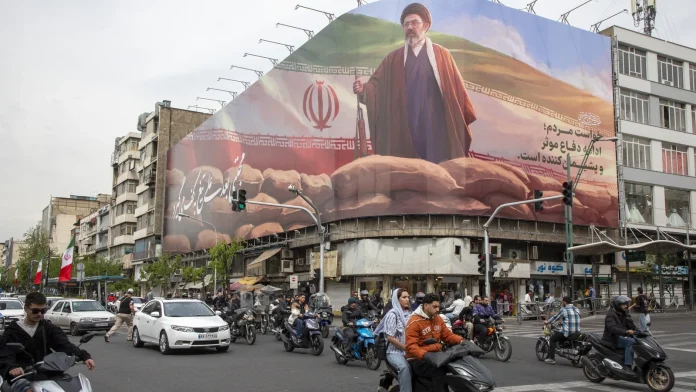
A fragile truce, unraveling beneath the glare of tanker lights
There is a peculiar hush that settles over a port when the world’s engines pause. In Bandar Abbas, fishermen say the nets sit heavier, the usual banter over tea is quieter, and the beacons of supertankers that normally stitch the horizon into a chain of lights have thinned. That hush, born of six weeks of fighting and a two-week ceasefire, has been pierced.
Over the weekend, diplomats met in Islamabad for what many hoped would be the pivot point toward a lasting halt to hostilities. Instead, talks dissolved into recrimination and, within days, a new American naval directive: a blockade of all maritime traffic entering and leaving Iranian ports and coastal areas, to be implemented by the US Central Command starting at 10am ET (3pm Irish time).
For a moment, imagine the Strait of Hormuz not as a line on a map but as the planet’s artery for energy—around one-fifth of global crude oil shipments thread through its narrow waters. Tamper with that artery and the tremors are felt in far-off cities: on the forecourt as higher pump prices, in factory lines delayed by energy uncertainty, in anxious trading floors ticking upward as the market prices risk.
Islamabad: the meeting that came close—and then didn’t
The Islamabad round was striking for its symbolism. It was the highest-level direct engagement between the United States and Iran in decades—a reminder that, even in an era of digital outrage, diplomacy still unfolds in rooms full of exhausted people, stale coffee and last-ditch legal notes.
Officials on both sides emerged saying there had been productive passages—technical discussions, tentative understandings on de-escalatory measures. Yet when it came down to nuclear enrichment, the Straits’ security and the tangled web of regional proxy funding, the meetings ran up against immovable demands. A senior US aide told reporters they had asked Tehran to halt all uranium enrichment activities at major facilities and to give up stocks of highly enriched uranium—requests Iran would not accept. An Iranian diplomat, visibly tired, said the delegates encountered “maximalist stances and shifting goalposts,” a phrase that captured the deadlock as much as any headline.
The blockade: what the US says, and what it will look like
The Central Command’s order was formal and blunt. Foreign-flagged vessels entering or leaving Iranian ports and coastal areas on the Arabian Gulf and Gulf of Oman will be subject to impartial enforcement. Vessels transiting the Strait of Hormuz to and from non-Iranian ports, the statement added, will not be impeded.
“We will not discriminate by flag or cargo,” a US naval official told journalists. “This is a security measure to ensure safe navigation and prevent illicit tolling and interference.” The administration also announced plans for minesweeping operations in the Strait, saying US forces would neutralise explosive hazards that Iran had reportedly placed in the water.
President Donald Trump amplified the rhetoric. On social media he vowed that any vessel that paid an “illegal toll” would forfeit safe passage, and warned of severe responses to attacks. The intensity of the language—an insistence on absolute deterrence—contrasts with the delicate choreography of multinational shipping lanes where a single misstep can spark wider conflict.
Immediate impacts and practicalities
Mariners and shipping companies were given scant time to adjust. The Navy promised a formal notice to commercial mariners before enforcement begins. Insurers and brokers moved quickly: premiums for voyages in and out of the Gulf rose, and several charter operators rerouted tankers to longer, costlier paths to avoid any perceived choke points.
- Strait of Hormuz significance: roughly 20% of the world’s seaborne crude passes through here.
- Human toll: six weeks of fighting have killed thousands and displaced many more across the region.
- Market response: oil and the dollar ticked upward in early trading following the breakdown of talks.
Voices in the Gulf: fishermen, sailors and shopkeepers
“We’re not politicians,” said Ali Reza, a 52-year-old fisherman who has worked the waters off Bandar Abbas for three decades. “We read the weather and the tides. Now we read the politics. The sea was our living room. Today it feels like a room with locked doors.”
A captain of a tanker anchored outside the gulf, who asked not to be named, described a surreal limbo. “We came through two days ago fully laden. Today, we’re waiting on orders. The owner told us to hold position and keep the engines warm. Nobody wants to be the first to push through when a blockade starts.”
At a tea house in Dubai’s bustling Deira district, a shopkeeper folded his hands and sighed. “People here trade on certainty,” he said. “Even the smell of diesel makes our customers plan differently. When the sea shivers, everything on shore does too.”
Bigger themes: law, sovereignty and global interdependence
This crisis is more than a regional spat. It asks hard questions about how international law, maritime sovereignty and geopolitics survive under the pressure of modern hybrid warfare. The US frames the blockade as a neutral security measure; Iran frames any foreign naval presence near the Strait as a breach of ceasefire obligations and a provocation.
“This is about leverage,” said Dr. Emily Carter, an international relations scholar who studies maritime security. “Each side believes they can gain strategic advantage by controlling access—or denying it. But these chokepoints are global commons. The consequences ripple through supply chains and domestic politics far beyond the Gulf.”
Domestic pressures, international consequences
There is also a domestic script running parallel to the diplomatic one. In Washington, officials openly acknowledged that energy prices could remain elevated into the US midterm elections, a reality that converts foreign policy into direct political risk. In Tehran, parliamentarians have posted maps of US gas prices as taunts and warnings, a reminder that retaliatory dynamics can feed public sentiment as much as strategic calculus.
What comes next? The hard truth and an invitation to reflect
There are no tidy endings on the maps of such crises. The blockade could force Iran back to a negotiating table under new terms—or it could harden Tehran’s position and spark a chain of maritime incidents. Minesweepers and rules of engagement sound technical on paper and terrifying in practice when you imagine a cargo ship struck in the dark.
So I ask you, reader: how should the international community respond when crucial sea lanes become bargaining chips? How much risk is acceptable in pursuit of deterrence? And who bears the cost when diplomacy falls short?
One thing is clear: the waters around the Gulf are a stage on which global interdependence is being tested. The next act will determine whether diplomacy regains centre stage or whether the world must brace for a longer, costlier interval of insecurity.
For now, the lights on the horizon dim and ships hold their places. People—fishermen, traders, diplomats, sailors—wait. Meanwhile, the rest of us watch the oil tickers, check our fuel gauges and, if we are honest, wonder how often we take for granted the invisible pathways that keep modern life flowing.
Fanaanada caanka ah ee Hindiya Asha Bhosle ayaa geeriyootay iyadoo 92 jir ah

Apr 12(Jowhar)-Asha Bhosle waxay ka mid ahayd fanaaniinta ugu duubista badan adduunka, iyadoo haysata ilaa 11,000 oo heesood. Waa mid ka mid ah codadka ugu caansan heesaha Bollywood-ka ee taariikhda Hindiya.
Russia and Ukraine Blame Each Other for Ceasefire Violations
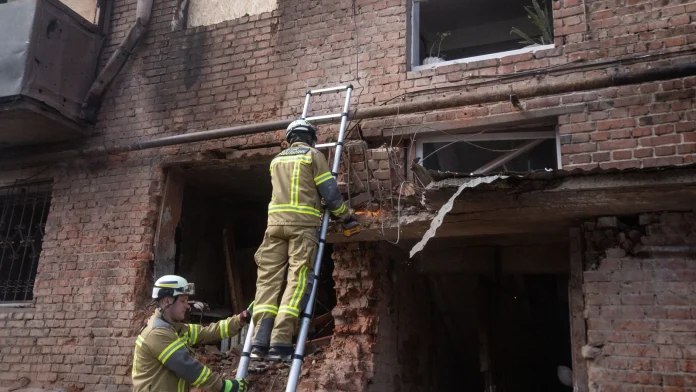
Easter Ceasefire, Shattered: A Day of Bells, Drones and Accusations
On a day when bells should have rung for peace, the skies over parts of Ukraine were filled not with hymns but with the electronic whine of drones and the staccato of shelling.
Both Kyiv and Moscow had agreed—if only on paper—to a temporary halt in hostilities for Orthodox Easter. The Kremlin announced a 32‑hour truce, a fragile pause intended to stretch from late afternoon into the night. Religious observance makes the moment symbolically powerful: churches stay open late, families gather around painted eggs and sweet breads, and communities hope, briefly, to feel normal again.
That hope collided with another reality. The Ukrainian general staff published a tally that read like a litany: “As of 7:00 a.m. on 12 April, 2,299 ceasefire violations were recorded. Specifically: 28 enemy assault actions, 479 enemy shellings, 747 strikes by attack drones… and 1,045 strikes by FPV drones.” The statement went on to note there were “no missile strikes, guided aerial bomb strikes, or Shahed-type UAV strikes” during that window.
Not to be outdone, the Russian defence ministry fired back with its own numbers: “A total of 1,971 ceasefire violations by units of the Ukrainian armed forces were recorded,” it said, accusing Kyiv of firing hundreds of artillery rounds, launching more than a thousand FPV drone strikes, and dropping various munitions by air on nearly 400 occasions.
Two Tallies, Two Truths
Numbers are blunt instruments—useful, contested, and never neutral. Each side presented its count as proof of perfidy by the other. Military statements were precise in a way that felt almost clinical: counts of strikes, classifications of weapons, timestamps. Yet behind each digit are townspeople who could not sleep, liturgical candles left unblown, and empty cots in cradles now kept cold by evacuation.
“We came to church with the children,” said one woman in a village outside Kharkiv, speaking softly on her mobile while the call dropped twice. “We lit a candle and then ran for the cellar. How do you explain that to a six‑year‑old?”
Across many towns and front‑line hamlets, the scene was similar: short prayers, long waits, and the anxiety of not knowing whether the next noise would be a celebration or a strike.
What the Numbers Reveal
The breakdown offered by Kyiv pointed to an asymmetric form of warfare that has taken root since 2022: the proliferation of small, hard‑to‑detect unmanned systems. Of the 2,299 alleged violations recorded by Ukraine, more than 1,700 involved drones—attack and FPV (first‑person view) models that can be launched quickly, at low cost, and with relative impunity.
- 28 assault actions (direct small‑scale ground attacks)
- 479 shellings (artillery and mortar fire)
- 747 attack drone strikes
- 1,045 FPV drone strikes
On the other side, Russia described a barrage of artillery and drone work, claiming to have repelled several attempted advances. Both sides spoke of thwarted attacks, of failed pushes along the line. The symmetry of accusation is as old as war itself.
Local Color: Easter, Interrupted
Orthodox Easter is not merely a religious marker; it is a moment of communal rhythm. In Kyiv and Lviv, families often attend midnight liturgies and return home to share paskha and kulich. In eastern towns close to the line, the rituals persist with a different cadence: candles are brought into basements; priests sometimes bless families in makeshift shelters; eggs are dyed by flashlight.
“We try to keep the traditions,” said Father Mykhailo, an Orthodox priest who has been conducting services in a cellar since 2022. “Faith gives us a little light. But this year, even the light flickered.” He paused. “Imagine, tonight is supposed to be about resurrection, about hope. The irony is heavy.”
Wider Threads: Why Ceasefires Fail
Short truces for religious holidays have been attempted before in this conflict—and elsewhere. Last year, both sides similarly accused one another of breaching a temporary pause for Easter. Why do these ceasefires so often unravel?
Part of the answer lies in the mechanics of modern warfare. Low‑cost drones make it easier to probe defences during a truce, testing responses while leaving plausible deniability. Artillery and indirect fire can be launched from locations that are difficult to monitor or attribute in real time. Command-and-control structures, fragmented units, and the fog of war mean that even if political leaders want a pause, it can be hard to enforce.
“These agreements are politically useful but operationally fragile,” says a senior analyst who studies irregular warfare. “When there’s no neutral monitoring mechanism on the ground—no trusted third party to verify breaches—each side will report what suits its narrative.” He notes further that FPV drones have “changed the calculus”: they are cheap, agile, and often hard to trace to their point of origin.
Geopolitics in the Background
The Easter truce unfolded against the backdrop of stalled diplomacy. Multiple rounds of US‑brokered negotiations have attempted to find paths toward a broader ceasefire or political settlement; so far, none have yielded a durable halt to the fighting. The situation has been complicated further by fresh conflicts elsewhere—most notably the war in the Middle East—which have pulled diplomatic attention and resources away from the European theatre.
When great powers shift their gaze, smaller crises feel the pull. International mediators are stretched. Arms shipments and attention divert. For people on the ground, that can mean fewer observers to call foul when agreements are strained.
Human Cost, Global Questions
Even as the numbers were exchanged by ministries and controllers, the human toll continued to mount in ways that cannot be entirely captured by any ledger. Millions of lives have been disrupted since the invasion began in February 2022—homes lost, communities split, economic futures rewritten. Temporary truces are, for many, a reminder of what peace could be rather than an actual respite.
So what does it mean that a truce tied to a holy day can be violated thousands of times in a single morning? Does the profanation of sacred time strip religion of protective power in modern combat, or does it instead deepen the stakes—making reconciliation more urgent, if harder to imagine?
These questions cut to the heart of a broader global trend: the erosion of norms that once gave certain moments or places special protection. In the era of drones and decentralized warfare, those ancient boundaries look increasingly porous.
After the Bells
As twilight fell, the formal window of the ceasefire reached its scheduled end. The statements from both militaries stood like mirrors—reflecting different truths back at each other. On the streets, life continued in small, stubborn ways: neighbors shared bread that survived the air raid sirens, children colored eggs with crayons by lamplight, and priests continued to speak of resurrection.
“We do what we can,” said an elderly woman who sold painted eggs from a table under a tarpaulin. “If faith doesn’t survive this, what will?”
Her question hangs in the air. It is both literal and philosophical: not only whether a faith community can endure a war, but whether the fragile conventions that make conflict bearable—temporary truces, humanitarian pauses, mutual recognition of the sacred—can be preserved in a century of shifting warfare.
As you read this, somewhere between the ringing of bells and the hum of drones, neighbors will be making food, tending wounds, and deciding whether to stay or go. What do you think—can humanity carve out sanctuaries in the midst of modern war, or have the tools of conflict rendered every hour contested? The answer will shape not just one country, but the future of warfare itself.
US-Iran Negotiations Stall, Fail to Resolve Even a Basic Issue
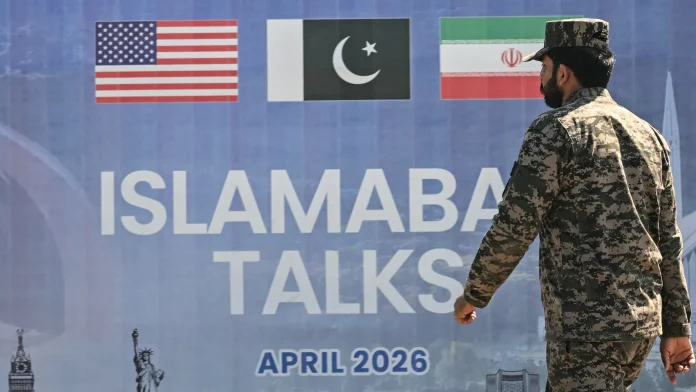
Nightfall in Islamabad: 21 Hours That Barely Bridged a Chasm
The Serena Hotel’s chandeliers were still burning when the delegations finally folded up their notes and left the carpeted ballroom—more exhausted than triumphant, more wary than relieved.
They had spent 21 hours negotiating, talking, and sometimes talking past one another. At dawn, the United States walked away saying it had left a “final and best offer” on the table. Iran walked away saying the other side had failed to earn its trust.
“We have been at it now for 21 hours, and we have had a number of substantive discussions. That’s the good news,” US Vice President JD Vance told reporters in the early hours. “The bad news is that we have not reached an agreement.” The line landed like a cliff: earnest, exhausted—and inconclusive.
For a moment, there was cautious optimism. Face-to-face talks, after all, were a small victory in themselves. Tehran had threatened to stay away. The alternative—messages ferried back and forth by Pakistani intermediaries—would have been a diplomatic limbo. So when both sides actually sat across from one another in the same room, it felt like progress. That it stretched long into the night felt even more hopeful to some: maybe, just maybe, the gaps could be closed.
A game of mirrors and missed looks
But the optimism was brittle. By the time the sun rose over Margalla Hills, neither side could even agree on who should make the next move. Vance said the US had left a deadline-tinged offer for Iran to consider. Tehran’s spokespeople told reporters the United States was searching for an excuse to walk away and that “the ball is in America’s court.” Two delegations, one room, two irreconcilable narratives.
“Diplomacy is partly about the story you tell yourself,” observed a former negotiator who asked not to be named. “Last night, both sides told themselves very different stories about what ‘progress’ looks like.”
What was on the table—and what wasn’t
Officials said the agenda was wide: the nuclear programme, the Strait of Hormuz, sanctions relief, war reparations, and a pledge to end hostilities. The specifics were where the teeth were.
- Nuclear constraints: The United States demanded an explicit Iranian commitment not to develop nuclear weapons. Tehran, officials said, declined to provide that categorical assurance.
- Strait of Hormuz: Iran’s control of the waterway—and its intermittent closure to shipping—became a central irritant. The strait handles roughly one-fifth of the world’s seaborne-traded oil; any disruption is felt in fuel markets from Rotterdam to Singapore.
- Sanctions and reparations: Tehran sought relief from sanctions imposed over the past decade and compensation for civilian damage it blames on military strikes. Washington pushed back, insisting on verifiable steps before easing pressure.
For many analysts, the maritime standoff is the most potent lever Tehran possesses. “If you can turn a global economic artery into a bargaining chip, why would you voluntarily give that back?” one Middle East security analyst asked bluntly. The answer—if one exists—lies in trust, or the lack of it.
Trust, history and the ghost of the JCPOA
You cannot understand these talks without the shadow of 2015 looming over them. The Joint Comprehensive Plan of Action was the product of patient bargaining—20 months of formal negotiations, 18 meetings across 11 cities. When the United States under President Donald Trump withdrew from that deal in 2018, Tehran’s trust tank took a severe hit.
Since then, Iran’s nuclear material stockpile has grown. Independent monitors and analysts have estimated enriched uranium holdings that far exceed the tightly constrained levels set by the original JCPOA. “We are not back to 2015,” said a European diplomat following the talks. “But the trends are worrying.” The International Atomic Energy Agency’s last public tallies put Iranian enriched uranium quantities at levels multiple times greater than before the 2015 deal—enough to complicate any rapid return to former limits.
Iranian parliament speaker Mohammad Bagher Ghalibaf, who led Tehran’s delegation alongside Foreign Minister Abbas Araghchi, bluntly framed the problem as a crisis of confidence. “My colleagues proposed forward-looking initiatives,” he told state media. “But in this round the other side failed to gain our trust.” For many in Tehran, the memory of unilateral strikes and abrupt policy reversals is fresh. For many in Washington, Iran’s enrichment trajectory is equally fresh and troubling.
On the ground in Islamabad: voices and textures
Outside the hotel, the city hummed with normal life—tea stalls, buses, men in shalwar kameez bargaining over fruit—contrasting sharply with the high-stakes choreography inside. A young Serena waiter, who asked only to be identified by his first name, Ahmed, described the mood like the weather: “Tense, like before a big storm. You can feel it in people’s steps.” He paused. “We hope they make a good deal. People are tired.”
A taxi driver, Habib, who ferried a junior aide between the airport and the hotel, offered a different, more world-weary read. “Everyone comes here thinking they can sit at the table and fix everything,” he said. “But the old problems follow them into the room.” Habib shrugged, his hands on the wheel. “We watch from the side and hope the price of petrol doesn’t jump again.”
Why this matters to you
Ask yourself: when diplomats haggle over words like “final offer” and “commitment,” who pays the real cost? For shipping companies, fuel traders, and ordinary commuters, the answer is simple: uncertainty is expensive. The Strait of Hormuz is economically vital; disruptions there ripple through supply chains and squeeze household budgets halfway around the world.
And beyond economics, there is the larger moral calculus. Nuclear proliferation, regional instability, the trauma of airstrikes and reprisals—these are not abstract policy points. They are lives interrupted. “We lived through missile sirens last year,” a teacher from southern Iran told a journalist. “My students still draw rockets and tanks. They ask if the world has peace. I do not have an answer.”
What comes next?
No one in Islamabad left with a blueprint. No follow-up meeting was confirmed. Each side insists the other holds the initiative. But treat the bluster as tactic rather than truth: both delegations have incentives to posture now and soften later.
We should not expect miracles from a single night in a hotel ballroom. Real diplomacy is patient and procedural, not cinematic. Yet the fact that two adversaries sat together at all matters. It keeps a corridor open—however narrow—for conversation where violence might otherwise escalate.
Will they use it? That is the question hanging over the region. Will history—memory of broken agreements, strikes, and deaths—be allowed to harden into permanent distance? Or can some combination of verification, international guarantees, and patient face-to-face bargaining rebuild enough trust to prevent the worst outcomes?
We cannot know the answer tonight. But we can watch, listen, and demand clarity from those who claim to act in our names. Diplomacy is messy, human work: often noisy, sometimes slow, occasionally brave. As the lights in Islamabad dimmed and the negotiators went their separate ways, one thing was clear—the world will be watching, and the next move could come from either side.
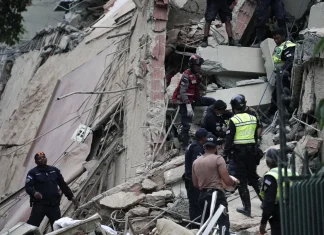
High Death Toll Feared After 7.5-Magnitude Earthquake Strikes Venezuela
Two powerful earthquakes jolted Venezuela just west of Caracas, ripping at buildings in the capital and prompting scientists to warn that the country could...
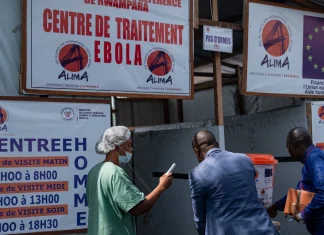
France confirms Ebola infection in doctor who recently returned from Congo
France has reported its first confirmed Ebola case detected within its borders, involving a doctor who returned on a commercial flight from the Democratic...
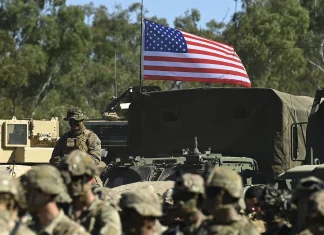
US Senate votes to rein in Trump’s military powers and war authority
In a rare bipartisan rebuke amid a fraught overseas conflict, the US Senate has approved legislation instructing President Donald Trump to stop US military...

Asteroid will be visible to skywatchers this Saturday night
Skywatchers will get a rare chance this weekend to track a massive asteroid as it streaks past Earth — not as a threat, but...
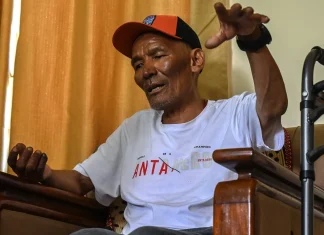
Everest survivor describes dramatic escape after being trapped on the mountain
For three harrowing days on Mount Everest, Nepali mountaineer Dawa Sherpa lay trapped at the bottom of a crevasse, surviving on biscuits, chocolates and...