A Mediterranean Standoff: When Aid Boats Become Headlines
They left from a sleepy harbor on Turkey’s southern coast with olives for breakfast, a patchwork of life vests, and the stubborn conviction that a small wooden deck and a crew of determined civilians could pierce a blockade and deliver relief. Instead, in the blue wash of the eastern Mediterranean, their voyage turned into an international incident: Israeli vessels intercepted a flotilla some 70 nautical miles off Cyprus and, organisers say, detained at least six Irish citizens.
One of those taken, the organisers say, is Dr Margaret Connolly — whose face and voice now appear in video messages recorded before the interception. “If you are watching this video,” she says directly to the camera, “it means I have been kidnapped from my boat in the flotilla by the Israeli occupying forces, and I’m now being held illegally in an Israeli prison. I am so proud to be taking part in this flotilla — it is the largest to date.”
At sea: the moment of interception
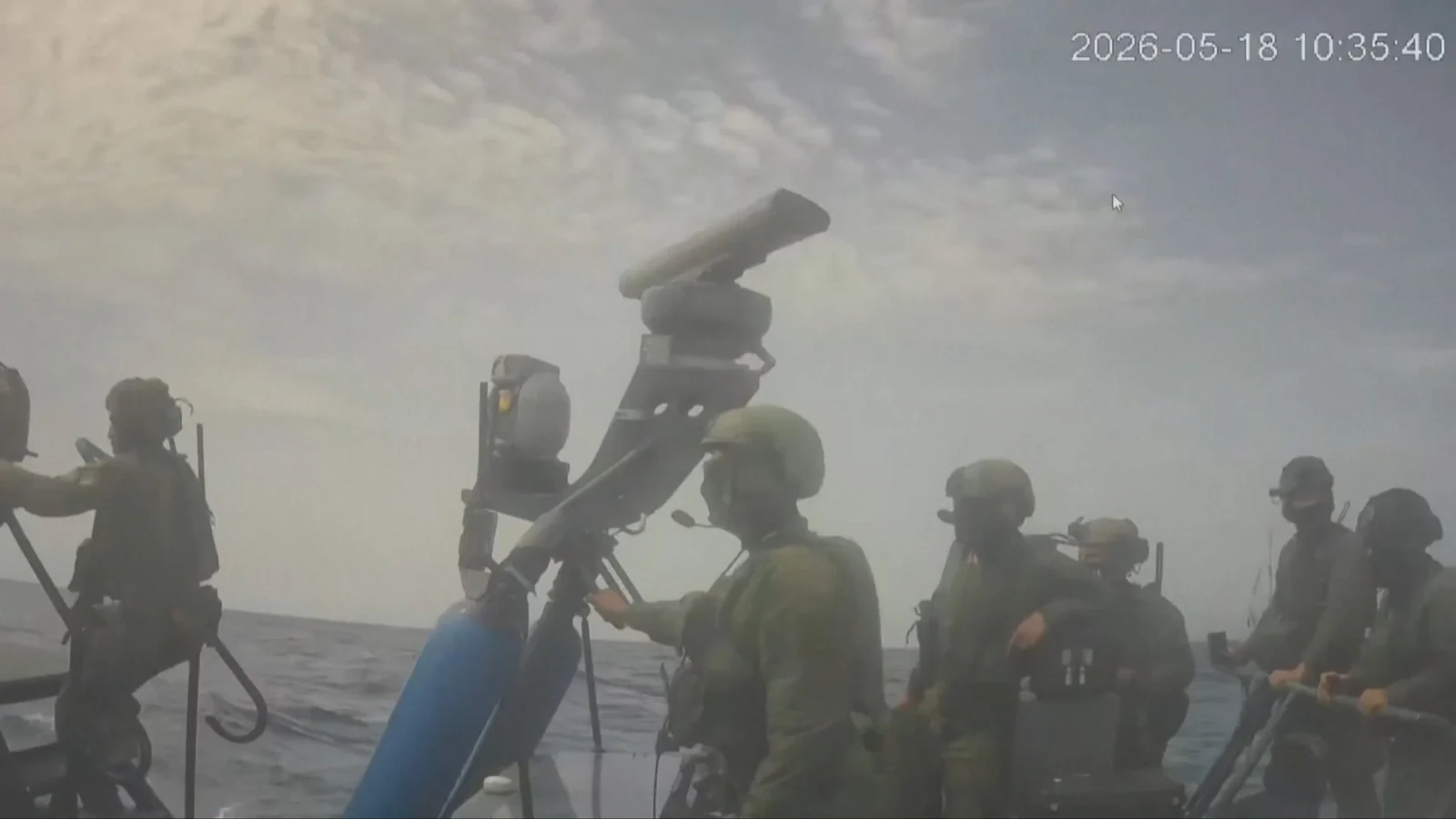
The scene, according to ship-to-shore clips and eyewitnesses, was at once precise and chaotic: naval grey hulls looming against the horizon, small dinghies launched, voices amplified over loudspeakers. Global Sumud, the organisers, posted footage they say was captured before contact was lost — among it, images of boats circling together like a small, vulnerable fleet and shots of men and women who had come from Ireland, Spain, and elsewhere to test the boundaries of maritime law and conscience.
“They told us to change course,” said one crew member via a text message that made its way to shore. “When we didn’t, they came alongside and started boarding. It was clinical — but it felt like a theft.”
Israel’s foreign ministry was blunt on social media: it said it would not allow a breach of its naval blockade on Gaza and urged participants to turn back. The ministry framed the action as enforcement of security policy; the flotilla organisers slammed it as an act of piracy. Between those stark positions, the truth becomes a tangle of law, politics and human risk.
Voices on deck and voices ashore
Not everyone on the flotilla was on the same ship, or even at the same time. Karen Moynihan, who heads the Irish delegation but was not aboard, put the number at 15 Irish citizens sailing as part of the wider effort. “We’re asking the Irish government to make clear that these are legal, non-violent humanitarian missions,” Moynihan told reporters in Dublin. “People who have committed to carrying boxes of medicine, nappies, blankets — they are not combatants.”
Back in the Turkish port where they set off, a retired fisherman named Yusuf paced the quay. He had watched the flotilla leave with a kind of curious pride. “They were small boats, but they had big hearts,” he said, tilting his head to watch the horizon where the sky met the sea. “When the sea takes something, sometimes it gives back a story.”
On the Israeli side, officials framed the interception as consistent with a longstanding naval blockade, a security measure they say is designed to prevent weapons smuggling. International law, however, is not a monochrome document. High seas interceptions, the legality of blockades, and the responsibilities of occupying powers form a contested thicket.
“These events are flashpoints in a much larger legal and moral debate,” said a maritime law academic who asked to remain unnamed. “Boarding vessels in international waters can be lawful under specific conditions — but the application is scrutinised heavily by courts and the public.”
History in the wake: why flotillas resonate
This is not the first time such a convoy has made headlines. The 2010 Mavi Marmara episode, when Israeli forces boarded a Gaza-bound aid ship with fatal results, still echoes in the public memory and the playlists of activists. Older still is the story of civil society trying to circumvent blockades with bundles of aid and moral pressure.
Numbers matter. Organisers say this is the largest flotilla to date. The previous attempt — a departure from Spain earlier in April — ended with Israeli forces diverting vessels to Crete and detaining dozens. More than 100 pro-Palestinian activists were taken to Crete in that interception; two were detained in Israel. The pattern is not only operational; it’s performative: each interception becomes a new argument in the court of public opinion.
Local color and the human seam
Walk along the ports where these missions are born and you meet people who stitch the effort together: dockworkers loading crates of medical supplies, volunteers folding flags, young people who speak three languages and swear like poets. They talk about Gaza in personal terms — cousins, schoolteachers, neighbours — not as abstract geopolitics. “We brought sugar, powdered milk, bandages,” said Aisling, a volunteer from Cork, thumbs still raw from hauling boxes. “We thought if we could put a blanket in a child’s arms, we’d done something.”
And if the sea is a stage, its script is always written in weather and time. The Mediterranean in spring can be treacherous and calm in the same breath. A breeze that seems trivial can turn a night into a trial. For crews who volunteer not because they like danger but because they feel compelled to act, the risk is part of the offering.
Questions to ask, and the wider stakes
So what does this mean beyond the cramped decks of intercepted boats? The episode raises questions about the nature of humanitarianism, the limits of civil disobedience at sea, and the porous line between security and restriction. Who decides when a blockade is legitimate? When does humanitarian intent override sovereign enforcement? And what kind of international framework protects civilians who attempt rescue missions?
It’s worth asking: when activists risk their liberty for a cause, do they change policy — or only the headlines? Does the drama of an interception create sympathy or harden positions? You, reading this from wherever you are — what do you believe the sea should permit and what should it prevent?
What happens next
For the families and friends of those detained, the immediate concern is simple: contact, consular access, and safe return. For governments, the calculus involves diplomacy and, perhaps, public rebuke. For the flotilla movement, every interception is both cost and case study: a proof of principle that draws attention and a reminder of the heavy price of direct action.
“We didn’t come to make trouble,” one volunteer said before departure. “We came to be witnesses.” Whether witness becomes leverage depends on many things: courtrooms, parliaments, social media gusts, and — stubbornly — the small human acts that continue to define this conflict: handing out bread, nursing a child, signing a petition.
In the end, the ships are more than steel and canvas. They are stories pushed out into blue water, and the world watches to see which will make it back to shore.
- At least six Irish citizens detained, according to organisers.
- Flotilla intercepted roughly 70 nautical miles off Cyprus.
- Organisers say 15 Irish citizens are part of the broader flotilla effort.
- Previous flotilla from Spain (12 April) saw more than 100 activists taken to Crete after interception.