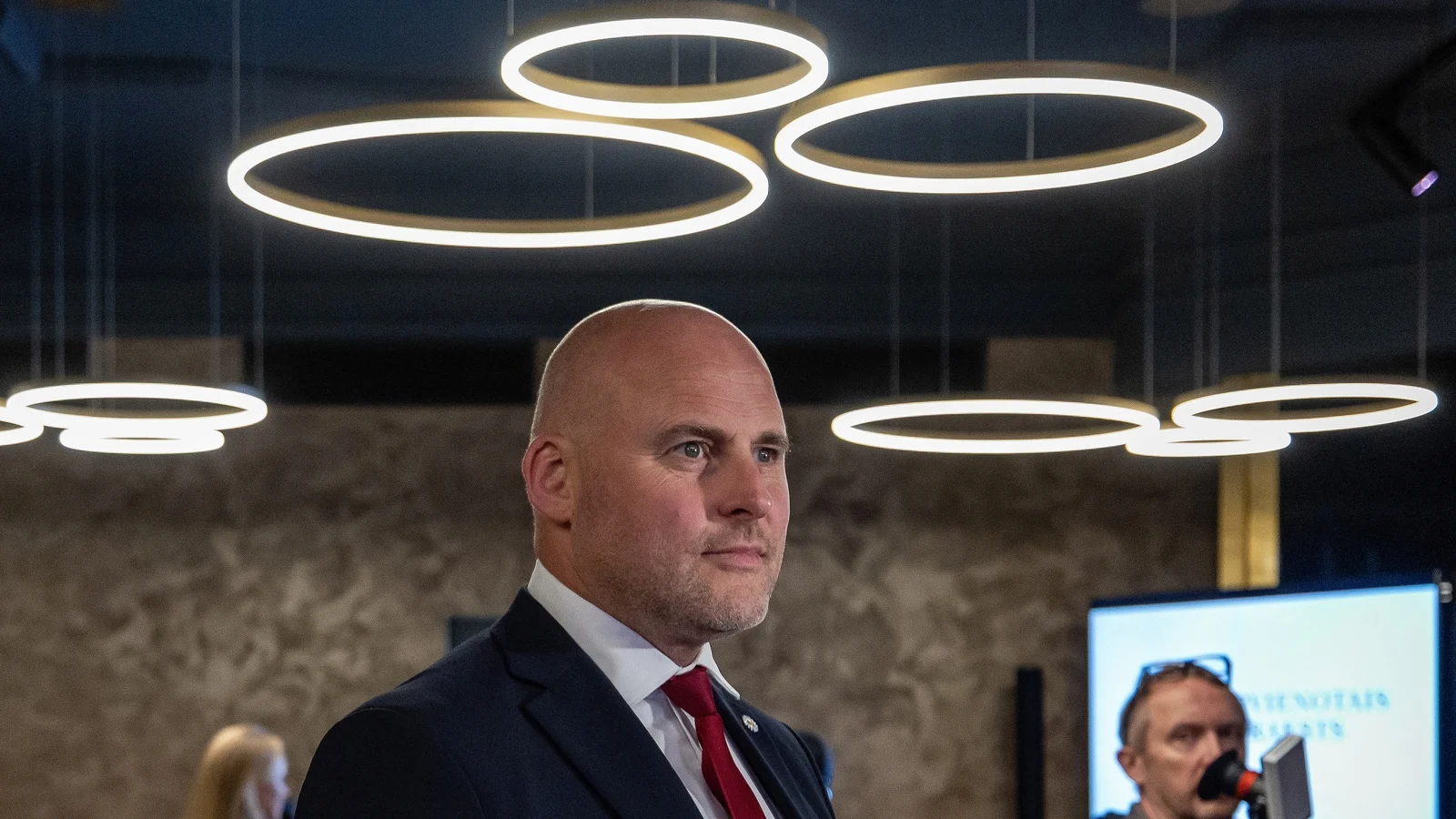
Latvia’s voters handed Prime Minister Andris Kulbergs a commanding mandate at the ballot box, putting his centre-right party firmly in front and setting him up for coalition talks aimed at keeping the country on its pro-European and pro-Ukrainian track.
At the same time, populist forces — drawing increased backing from Latvia’s Russian-speaking minority — also notched significant gains after a campaign shaped by anxiety about neighbouring Russia, the rising cost of living and a range of domestic concerns.
Mr Kulbergs’ United List party captured 42 seats in the 100-seat parliament, a result described as unprecedented in the former Soviet republic’s post-independence era.
With exit polls signalling the scale of the win, Mr Kulbergs said the margin was larger than he had anticipated.
“That means people truly want change,” he said, adding that in his view voters were demanding “economic growth” and a better future for the country’s children.
Mr Kulbergs, who previously managed in the telecoms and automotive industries, became prime minister in May, leading a centre-right coalition.
That governing alliance will now have to be reshaped, because one of its members failed to pass the five-percent threshold required to enter parliament.
‘Strong border’
Security continues to dominate Latvia’s political conversation, more than four years after Russia’s invasion of Ukraine.
Latvia — a NATO and European Union member since 2004 — regards Russia as its primary security threat and has responded by substantially raising defence spending.
Latvia has a population of 1.9 million
“Because we are the external border of Europe, we must have a strong economy… a strong border region,” Mr Kulbergs said.
“That is the main task.”
Yet the election debate also repeatedly returned to pocketbook pressures and long-running social strains: higher living costs, low wages, stress on the healthcare system and sustained population decline.
Although most parties expected to win seats have backed both elevated military spending and continued assistance to Kyiv, one right-wing group, Sovereign Power, has taken a different line.
The party has opposed military support for Ukraine and resisted further increases in defence budgets. After campaigning heavily on cost-of-living concerns, it appeared headed for third place with 15 MPs.
Right-wing populist parties
Soverign Power has been labelled pro-Russian by its critics, and most of Latvia’s major parties have said they will not work with it.
Latvia First — a conservative party led by a property magnate often compared toh US President Donald Trump — finished second and won 17 seats.
Both populist parties were helped by shifting voting patterns among Russian-speaking Latvians, who account for about a third of the population.
For years, many in that community coalesced around Harmony, once the country’s largest party.
But Harmony was widely viewed as pro-Kremlin, and its support plunged in the previous election, held shortly after Russia launched its full-scale invasion of Ukraine.