A Night of Reckoning in Sofia: Bulgaria’s Long Political Winter May Finally End
The square outside Progressive Bulgaria’s modest headquarters in central Sofia felt, for a few electric hours, like the heart of a country finally exhaling.
There were bouquets of red and white roses — the color of the national flag — and clusters of people who had stood through years of uncertainty, waiting for a moment that might tilt history. When preliminary results showed the grouping led by former president Rumen Radev taking an absolute majority, the light in the crowd changed. Strangers hugged. A few elderly women crossed themselves in the quick, private way of those whose faith is woven from long habit and hard times.
“It is not just a victory for a party,” said Maria, a schoolteacher who had come with her teenage daughter to taste the possibility of change. “For many of us it feels like a chance to stop existing on the sidelines of our own country.”
Numbers That Reshape Power
The math was stark: with 91.7% of ballots counted, Progressive Bulgaria stood at 44.7% of the vote — a projection that will translate into roughly 130 seats in the 240-seat National Assembly. If that holds, it would be the first time since 1997 that a single formation has secured an outright parliamentary majority in Bulgaria.
For context: Bulgaria is a nation of about 6.5 million people, the European Union’s member state with the lowest GDP per capita. It has spent the better part of the last five years in a state of political churn, with repeated elections and fragile coalitions that failed to tackle endemic corruption and a long-running brain drain. In that landscape, a decisive result feels seismic.
More Than a Local Story: What Voters Said
At a kiosk near the Alexander Nevsky Cathedral, a retired engineer named Ivan pulled his cap low against an April wind and said, “We are tired of backroom deals. We want someone to look at the courts, to look at the oligarchs, to look at the money that leaves this country. If Radev can do that, then good.”
Others were less certain. “Winning is one thing,” said a passerby who introduced himself as Nikola, a small-business owner, echoing a sentiment that has rattled through Sofia’s cafes for years. “Governing in this system, with entrenched networks, is another.”
Political scientists have been tracking the mood shift. “Turnout surpassed 50 percent — the highest since April 2021 — after a string of elections that saw participation dip to as low as 39 percent in recent ballots,” noted Dobromir Zhivkov of Market Links. “That’s a signal that the electorate took this vote seriously.”
On the Streets: Color and Concern
Local color punctuated the evening. A handful of young activists chanted slogans against corruption while an elderly man sold banitsa from a steaming pan. People hailed taxis in Bulgarian, ragged but proud, and at a shop window someone taped a yellow flyer calling for judicial reform and better pay for nurses.
“Everything simply has to change,” Stiliana Andonova, a retired engineer, told me after she voted. “We saw raids, arrests, seizures of cash. That’s why people came out. We are fed up.”
Promises and Contradictions at the Top
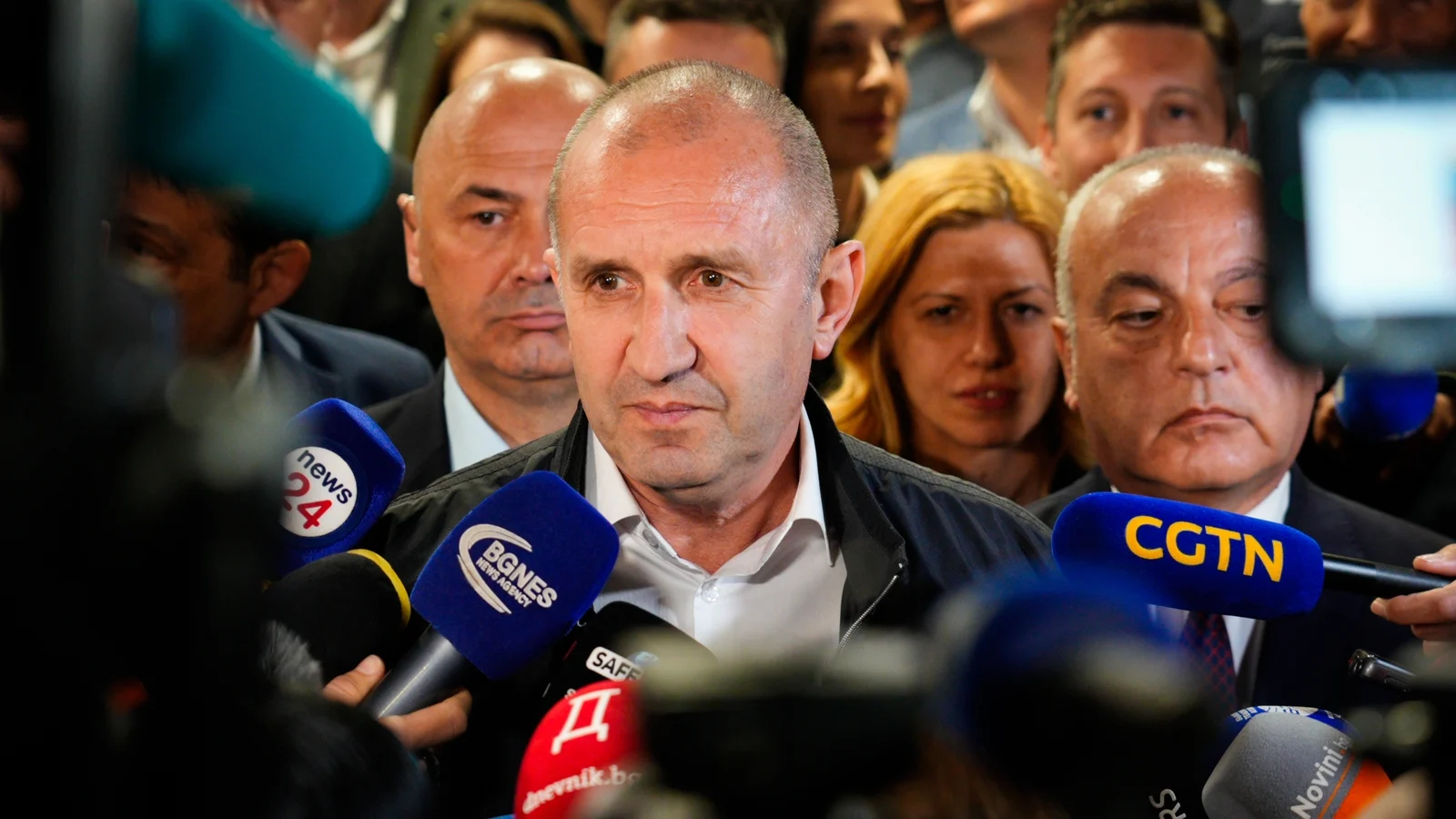
Rumen Radev, 62, stepped up to a microphone with that measured air of a former air force general. He resigned the presidency earlier this year after nine years in the role to lead his movement into the parliamentary arena. His central pitch was simple and direct: clean up the state and dismantle what he calls an “oligarchic governance model.”
“This is a victory for hope over a politics of fear,” he told supporters — a line that landed well with many who have watched a handful of powerful families exert outsized influence over business and media. He also pledged to “make every effort to continue on its European path,” adding a qualifier that revealed his cautious diplomatic posture: Europe, he argued, needed pragmatism and critical thinking in an era of shifting global rules.
That comment points to one of the central tensions: Radev has cast himself as an EU critic who favors closer, more practical relations with Russia. He has also opposed sending weapons to Ukraine and criticized a recent ten-year defence pact between Bulgaria and Kyiv — a stance that alarms some in Brussels and Washington but resonates with a segment of Bulgarian society wary of being drawn further into a geopolitical crossfire.
Voices of Warning
Boyko Borissov, the former prime minister who has loomed over Bulgarian politics for nearly a decade, was quick to temper the celebrations. “Winning elections is one thing, governing is another,” he said. He emphasized his party’s pro-European credentials and reiterated support for Ukraine, framing the debate as one about continuity versus change.
Analysts say these differences matter. Bulgaria sits on the European Union’s eastern flank, sharing history, trade links and a complex strategic position with its neighbours. How Sofia positions itself on issues such as energy, sanctions and regional security will ripple beyond its borders.
Corruption, Raids, and a Public That Said Enough
In the run-up to the vote, Bulgarian law enforcement struck hard: more than one million euros were seized in anti-vote-buying raids, and hundreds were detained, including mayors and local councillors. Those headlines fed a larger narrative of citizens who have watched public money and public office slip into private hands.
“There were times when votes felt like market goods,” said Boryana Dimitrova, a pollster with Alpha Research. “This result shows voters were prepared to push back. They wanted to end the logic of short-lived governments and to demand real judicial reform.”
Whether a single parliamentary majority will be enough to uproot long-standing malpractices is an open question. Institutional change requires more than parliamentary arithmetic; it demands sustained pressure, independent courts, and a civic culture of transparency.
What This Means for Europe — and for You
If Progressive Bulgaria’s majority is confirmed, Sofia will have a rare chance to act decisively. But choices will be messy: balancing EU obligations with a desire for “practical” ties to Moscow; curbing oligarchic power without sparking a backlash from entrenched interests; translating popular frustration into durable reforms that stop the brain drain and revive public services.
This election is not simply about one country’s politics. It raises questions that resonate across the continent: How do democracies rebuild trust after years of fragmentation? Can economic stagnation and corruption be addressed without social upheaval? And how should small states navigate great-power competition in a polarized world?
As you read this, consider this: what would you demand of leaders if you had lived for years seeing power concentrate in a few hands — and watched young people leave for brighter futures abroad? How do you balance security, sovereignty and values when those priorities collide?
Looking Ahead
For now, Bulgaria waits. Parliament will be convened, laws will be proposed, and the hard work of governance will begin. On the streets of Sofia, in villages where the old clock towers keep time for windows that look onto empty playgrounds, people are cautiously hopeful. Whether that hope is rewarded will depend on choices made in committee rooms and court chambers as much as in the smoke-filled corners of backroom deals.
“We voted for a new chapter,” said a young mother holding her child, whose eyes were already heavy with sleep. “Now let’s see if the story changes.”
- Votes counted so far: 91.7%
- Progressive Bulgaria share: 44.7%
- Projected seats: around 130 of 240
- Population (approx.): 6.5 million
- Turnout: over 50% (highest since April 2021)
- Recent low turnout (2024): about 39%
- Anti-vote-buying seizures: over €1 million; hundreds detained
In the weeks ahead, watch for how Sofia handles judicial appointments, anti-corruption legislation, and its foreign-policy posture. These will tell us whether this election was a fleeting burst of enthusiasm or the opening chapter of a deeper, more transformative story for Bulgaria — and perhaps for a Europe that is still learning how to mend its own fractures.