The Day Romania’s Short-Lived Coalition Came Crashing Down
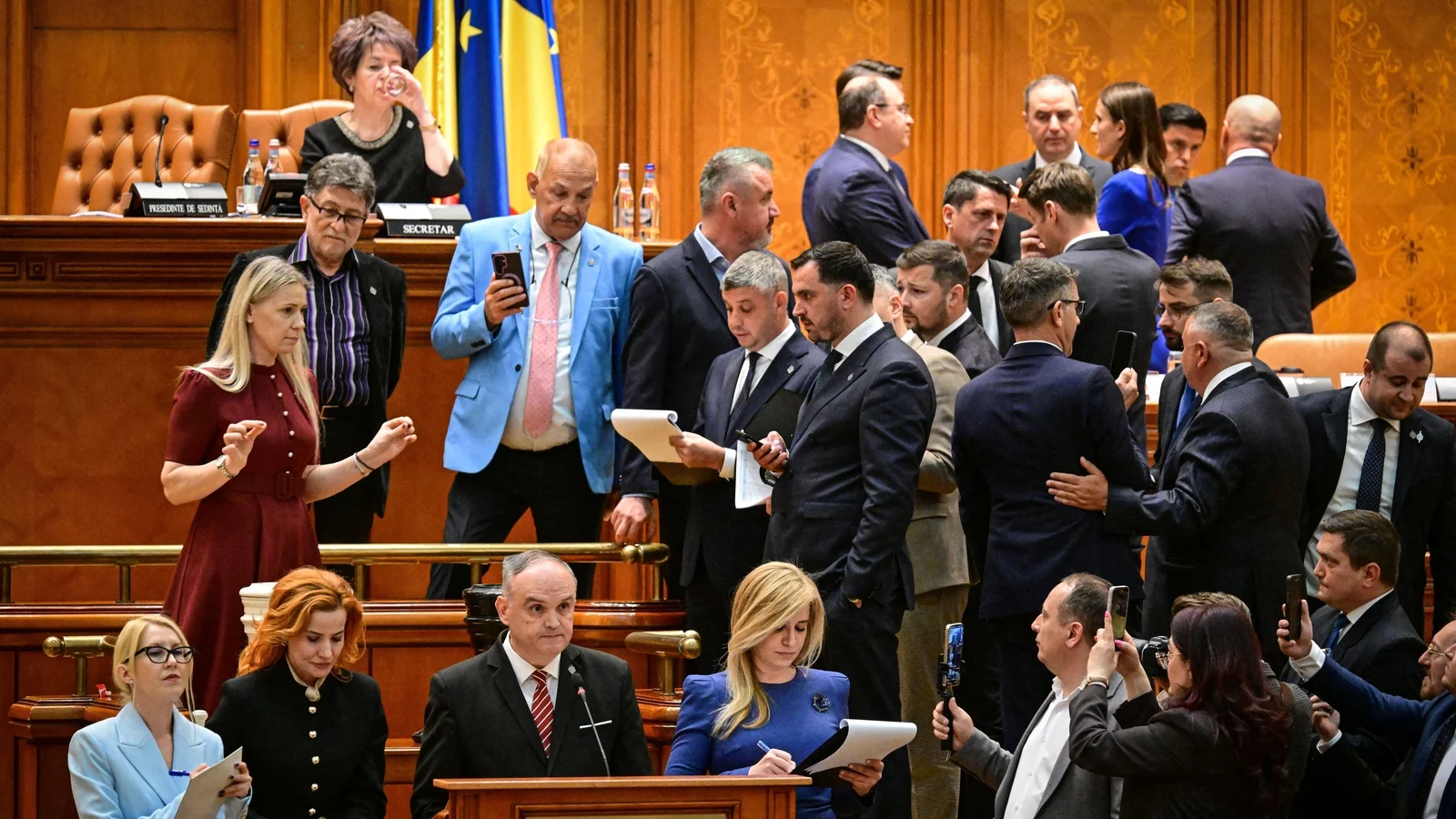
On a gray afternoon in Bucharest, inside a parliament chamber that has known its share of drama, the lights stayed on and the microphones worked as expected. What didn’t survive was a government: Ilie Bolojan’s pro-European, four-party coalition was swept away by a no-confidence vote that felt, to those watching, like the culmination of months of political friction and economic strain.
The tally was decisive. Out of 465 MPs in the room, 281 backed the motion — comfortably above the 233 needed to topple the cabinet. It marked the formal end of a coalition that had only been in power for ten months and had been operating as a minority government since 21 April, after the Social Democrats (PSD) withdrew their support.
“You cannot tear down a house without telling people where they will sleep next,” Bolojan told reporters afterward, hands folded, voice tired but composed. “We are removing an administration; we are not presenting an alternative.”
How We Got Here: Budget Battles and Political Fault Lines
The immediate cause of the rupture was fiscal policy — a string of austerity measures aimed at slashing a swelling budget deficit. Tax hikes and spending cuts were part of Bolojan’s attempt to steady public finances, but those same measures provoked anger within the PSD, the single largest party in parliament.
Romania has been wrestling with a ballooning deficit: official figures show the fiscal gap narrowed from 9.3% of GDP in 2024 to roughly 8% in 2025 — still the highest among European Union members. For parties and voters accustomed to robust public spending, that kind of belt-tightening felt politically risky, even unbearable.
“People are already feeling the squeeze,” said Ana-Maria Ionescu, who runs a small bakery near Piața Victoriei. “When prices rise and wages don’t, politicians pay a price at the ballot box. That’s why PSD had to take a stand — or at least say they did.”
Complicating the arithmetic was an uncomfortable alliance of convenience on the day of the vote. The motion was co-sponsored by PSD and the far-right Alliance for the Union of Romanians (AUR) — two parties that insist they won’t govern together. Their temporary alignment to remove Bolojan’s cabinet has left political scars, and raised questions about future negotiations and trust among parties that might otherwise be natural partners.
Numbers That Mattered in Parliament
- Votes for no-confidence: 281
- Votes required to pass: 233
- Coalition lifespan: 10 months
- Minority government in place since: 21 April
- 2024 budget deficit: 9.3% of GDP
- 2025 budget deficit: almost 8% of GDP (highest in the EU)
What Happens Next: An Interim, a President, and a Clock
For now, Bolojan’s team will stay on in a caretaker role, their hands tied on major policy decisions. The constitution hands the next moves to President Nicușor Dan, a centrist with a clear pro-EU tilt. Mr. Dan is expected to ask a leader of a pro-European party to attempt to form a new government.
But forming a coalition in Romania is less like assembling furniture and more like negotiating a complex cultural treaty. If parliament fails to approve a nominated prime minister after two attempts within 60 days, the constitution triggers a snap parliamentary election. (Officially the next general election isn’t due until 2028.) That ticking clock will shape every negotiation, every back-channel conversation, and every public statement over the coming weeks.
“There is no quick fix,” said political analyst Dr. Radu Petrescu. “Coalitions are fragile everywhere in Europe right now. The added factor here is the PSD choosing to side with the far-right to topple a pro-EU cabinet. That creates a reputational problem: who will trust them in the next round of talks?”
Markets and the Everyday: A Currency Reacts
Markets responded with immediacy. The Romanian leu slumped to a record low against the euro in the hours leading up to the vote, a small but sharp reminder that political uncertainty has economic consequences. Investors hate unpredictability; families buying groceries, paying mortgages, or sending money abroad feel the ripple effects.
“When the leu drops, prices follow,” said Mircea Pop, owner of a small electronics shop near the university. “We import a lot. Customers complain when the same TV now costs more. The cost of instability is real, not just an abstract number in a financial column.”
Beyond currency moves, analysts warn that prolonged political instability could complicate Romania’s access to foreign capital and slow investment — just as the country needs funds for infrastructure, health, and education.
The Human Moment: Beyond Numbers and Coalitions
Walk the city and you hear fragments that explain the stakes: a grandmother haggling over bread price two tram stops from the parliament precincts; students in cafes debating whether any politician represents them; municipal bus drivers grumbling over pay. These are the textures of political life that statistics don’t capture but that shape elections and protests, trust and cynicism.
“We want stability, not theatre,” said Elena Matei, a primary-school teacher who voted in the last local elections. “People want to know what will happen to health services, to our pensions, to the road repairs the mayor promised. That’s what matters on Monday morning.”
What This Means for Europe — and for Us
Romania’s drama is not an isolated Balkan parable. It reflects wider trends across the continent: fragile centrist coalitions, the political potency of fiscal pain, and the awkward dance between mainstream parties and those on the extremes. European institutions watch carefully because instability can affect cohesion funds, infrastructure projects, and migration policies.
Are we seeing a short-term rupture that will be algebraically resolved by horse-trading in party rooms? Or is this a deeper reorientation, where voters will reward parties promising immediate relief even if that means long-term uncertainty?
As you read from afar, consider the trade-offs that democratic governments everywhere face: the urgency of fiscal responsibility versus the political cost of austerity; the necessity of broad coalitions versus the fragility of compromise. Romania is, for now, another chapter in a larger European conversation about governance under pressure.
Keep an Eye On
- Who President Nicușor Dan will nominate as prime minister.
- Whether parliament approves a nominee within the 60-day window.
- How markets react in the coming days and whether the leu stabilizes.
- Whether PSD can mend bridges with former partners after teaming up with AUR for the vote.
There is poetry in political collapse — the sudden quiet in an emptied corridor, the smoldering phone conversations that follow a decisive vote. There is also consequence: budgets to balance, teachers to pay, soup to put on the table. The coming weeks will tell whether a new, stable majority can be stitched together in Romania, or whether citizens will be asked to return to the polls earlier than expected.
Would you trust a government that had to be propped up by opponents you claim you’ll never sit with? And how much uncertainty should a society tolerate in the name of fiscal prudence? Romania’s answer will matter not just at home, but to every corner of Europe watching how democracies juggle economics, ideology, and the everyday needs of people. Stay tuned — the next act is already being written.