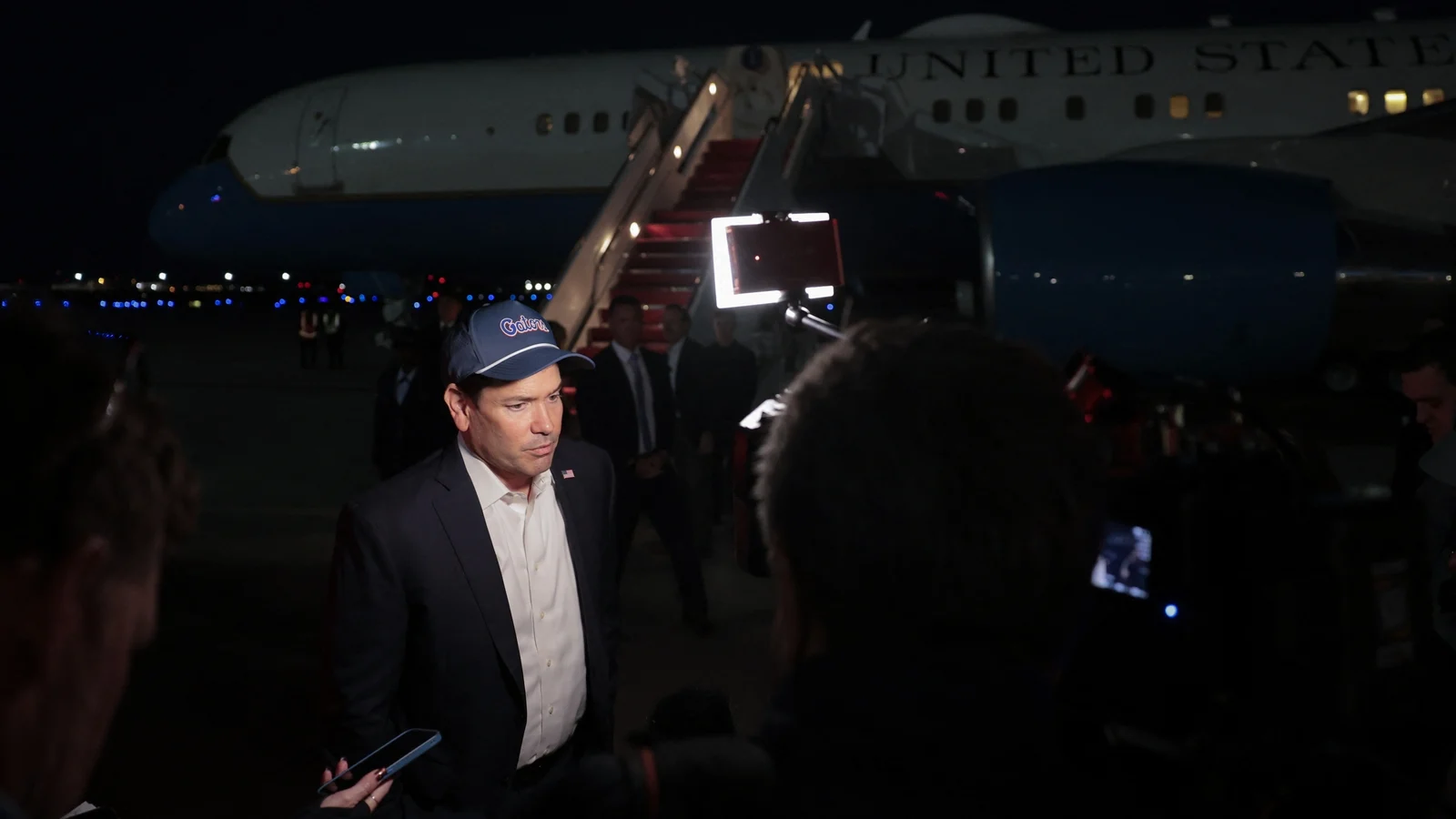
Washington’s abrupt decision to hit pause on sweeping economic penalties aimed at Russia is now being framed as a deliberate timeout — not a retreat. US Secretary of State Marco Rubio said US President Donald Trump’s waiver would amount to a 60-day break designed to assess what broad sanctions and tariffs could do to the global economy.
“The president wants to take the 60-day period of time to sort of analyse what imposing both sanctions and tariffs will mean to the global economy and even to the US economy,” Mr Rubio said, stressing that the proposed restrictions would ripple across multiple countries, not solely Russia.
Mr Rubio argued that a cluster of simultaneous crises is already pushing and pulling at energy markets, pointing to the US war on Iran and attacks on Saudi Arabia by Yemen’s Houthis as major pressures on prices.
“These conflicts around the world are starting to crash into each other, and they’re having an impact not just on global oil and diesel prices” but on economies as well, Mr Rubio said.
‘A very good decision’
Mr Trump insisted the move would ultimately help the United States, even as he suggested the final contours of the policy were still taking shape.
“We’ll figure it out, and you’ll figure it out,” he said. “It’s a very good decision, and it’s going to be a decision that’s good for the country, and I think good for the world.”
His order drew swift blowback from lawmakers in both parties after he signed an executive order on Friday waiving sweeping sanctions and tariffs targeting Russia — measures adopted by Congress last month.
The law passed in September, and signed by Mr Trump, included sanctions targeting Russian officials, oligarchs and financial institutions, and gave the President authority to impose sanctions on major buyers of Russian oil and gas.
Supporters of the legislation said the intent was straightforward: cut off funding streams to those backing Russian President Vladimir Putin and his war on Ukraine.
Instead, late Friday — two days before the law was set to take effect — Mr Trump exempted Russia from those economic restrictions.
“Beyond irresponsible,” Republican Senator Thom Tillis, a frequent Trump critic who will leave office in January, said in a post on X.
“If the President wants to actually bring down energy prices, he can do it by solving the Iran problem, not by doing a solid for Vladimir Putin.”
Ted Cruz, and other Republicans, were critical of Donald Trump’s sanctions decision
Ted Cruz, a senior Republican senator from Texas, also rebuked the decision, calling it “a mistake” in comments aired on Fox News.
Mr Trump’s executive order followed a deal he struck with Kremlin leader Vladimir Putin that would allow exports of Russian diesel in exchange for easing sanctions.
With the effects of sharp diesel price increases tied to the Iran war beginning to show up in the US economy, cost-of-living pressures have become a central concern for voters heading into key midterm elections next month.
Polls show Mr Trump’s Republicans are likely to receive a drubbing at the polls.
Mr Rubio said the diesel at the centre of the arrangement would have reached world markets regardless, contending that the real question was how much supply the United States would be able to access. He underscored diesel’s outsized role in the American economy, including road hauling, agriculture and construction.
“The diesel that Putin was going to sell, they were (going to) make it available to the global market one way or the other. The only difference is how much of it the United States was going to get,” Mr Rubio said.
Ukraine’s President Volodymyr Zelensky said he feared Washington could go further by lifting additional Russia sanctions, warning that Mr Trump’s action “rewards” Mr Putin.
Even so, Mr Zelensky said the United States has restarted the flow of critical intelligence that helps Ukraine defend against Russian missile strikes, after a brief pause.
Ukraine has leaned heavily on US intelligence to track the fast-moving ballistic missiles Russia has launched in repeated waves at Ukrainian cities.
Speaking to NBC’s Meet the Press, Mr Zelensky said the intelligence-sharing had been interrupted but later “de-blocked”.
“We are very thankful for this,” he said. “Now it works.”
But he warned that other US actions — including the diesel import deal and the waiver of sanctions that had been set to take effect this week — would come at Ukraine’s expense.
“If the United States will officially take the side of Russia, of course if these two countries will be together, of course we will not prevail and we will not be able to stand,” he said.
Over the past week, a widening rift between Mr Trump and Mr Zelensky has raised new concerns that their turbulent relationship could translate into even more damaging outcomes for Kyiv.
Mr Zelensky told NBC he still hopes Mr Trump will continue to stand with Ukraine.
“We want to trust him, and I hope that he will change his decisions,” Mr Zelensky said. “Because I think that it’s all mistakes and it will not help us. And it will not help United States.”
US Treasury Secretary Scott Bessent, also speaking to NBC, said Ukraine receives US assistance that Russia does not, pointing to intelligence-sharing and the provision of US munitions to other countries for resale to Ukraine.
But appearing on “Meet the Press” after Mr Zelensky’s interview aired, Mr Bessent did not directly answer when asked repeatedly whether the United States views Ukraine as an ally.
“Zelensky presents a false binary this morning that Ukraine must win,” Mr Bessent said. “The war must end, and that will be with some kind of a negotiated settlement.”