At Munich’s Edge: A Plea for Renewal and the Quiet Work of Rebuilding Trust
The conference center in Munich sits like an oversized living room for the anxious and the ambitious—rows of folding chairs, impossible coffee, badges that double as passports to an anxious conversation about the future. Outside, the Bavarian air has a winter bite. Inside, a different chill has settled: the transatlantic alliance, frayed by four years of public burps and private alarms, is trying to stitch itself back together.
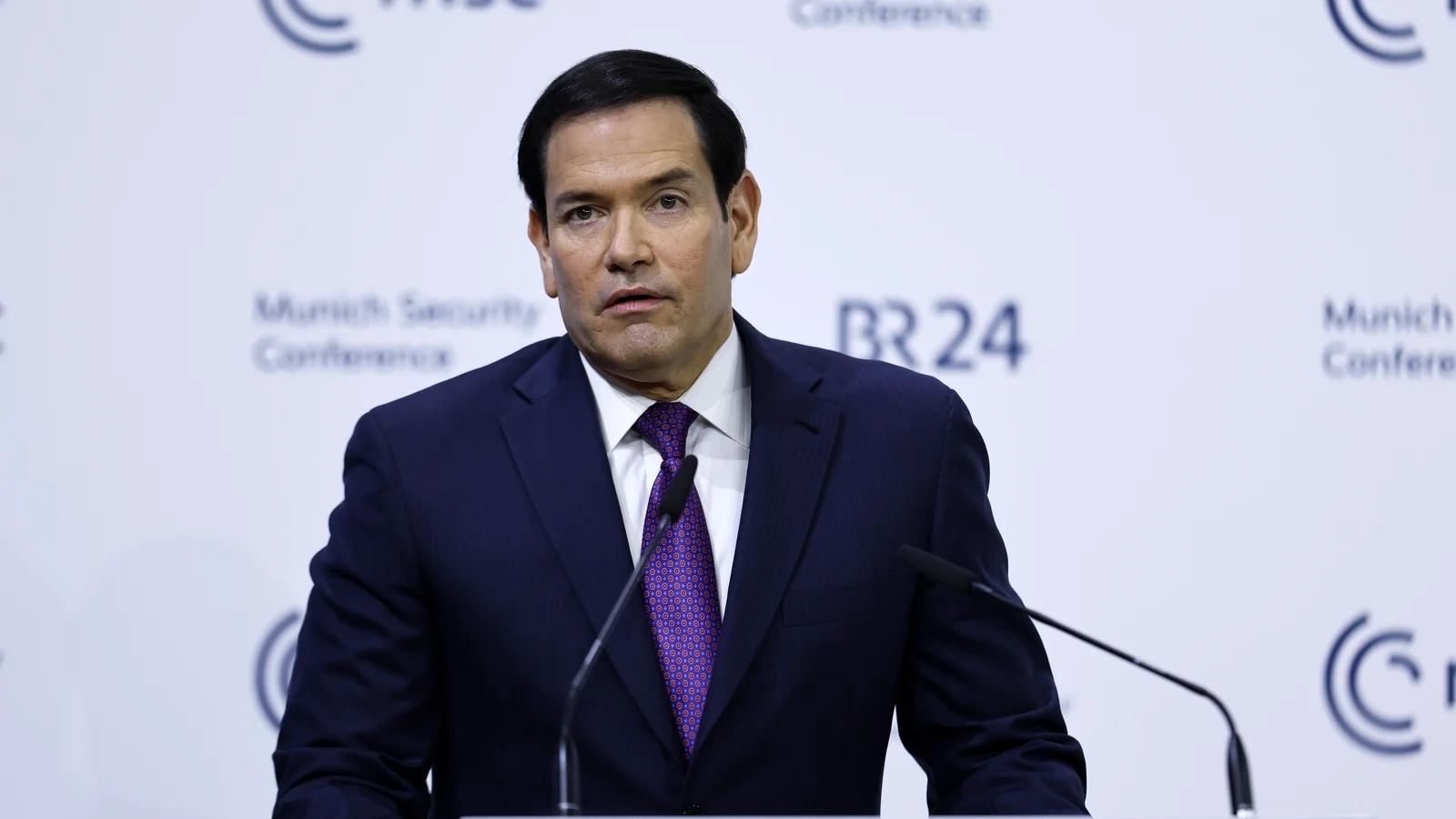
When the United States’ top diplomat took the stage, you could feel the room lean in. Not because an old script was being dusted off, but because the lines being read were deliberately softer, a measure of balm. The message was clear: not a retreat, but a revival. Yet words—however well chosen—have to find purchase in deeds. That is the work people came here to press for.
“We do not seek to separate”—and what that sounds like in a changing world
“We do not seek to separate,” one official paraphrased, describing the tone coming from Washington this week. “We want to revitalize.” It is a sentence meant to be at once reassurance and summons: Europe should be strong—and it will be stronger, the argument goes, if both sides can anchor themselves to a shared sense of purpose.
For some attendees the speech read as a hand extended. For others it was a reminder that the ground beneath the alliance has shifted. “Words are welcome,” said Anna Kovač, who runs a small think-tank in Zagreb, sipping an espresso between sessions. “But we’ve heard promises. This time, we need predictable policy and shared burden—especially on defense and economic resilience.”
Local eyes on a global stage
At a cafe near the conference halls, a security analyst named Elias, who has watched NATO summits from the press pit for more than a decade, offered a wry observation: “You can smell politics here—the cologne of long meetings and short patience. The question now is whether allyship is performative or structural.” He traced his finger along a paper map of Europe and added, “Europe needs room to grow up—not to grow away.”
The mood in Munich was not only about great-power strategy. It was peppered with the small, human realities of geopolitics: an Estonian veteran who worries her country’s voice is getting lost; a Polish NGO coordinator who spoke of refugees of conflict zones; an architect from Lisbon who argued Europe must invest in cyber-defenses as fiercely as in tanks.
Where rhetoric meets reality
Since 2022, European capitals have shifted budgets, ratcheted up stockpiles and recalibrated strategy. NATO’s 2% of GDP guideline—long a lodestar—has become a baseline conversation rather than a goal. Several member states that once viewed defense outlays as a reluctant necessity now cast them as central to their sovereignty. That change is not merely monetary: it is psychological. The old assumption that the United States would always pick up the tab has been tested and found wanting.
“We saw the cracks,” a European foreign ministry official told me off the record. “Now we’re working to fill them—nationally and collectively.”
And Washington’s messaging is adjusting. The call here was for a “reinvigorated alliance,” for Europe to be a partner that can both stand on its own feet and be a reliable co-laborer in global crises. The new tone avoided the culture-war fireworks that have recently detonated in transatlantic relations, even as it reiterated contentious positions on immigration and global institutions.
On institutions and the rules-based order
One of the more provocative themes at the conference was the critique of the post-Cold War complacency—the belief that liberal democracy had, as some once claimed, reached a final form. “Calling it ‘the end of history’ was a mistake,” said a retired ambassador attending the conference. “It assumed uniform progress. It ignored cycles, and those cycles are back.”
That skepticism extended to international institutions. Delegates of varying stripes argued that organizations such as the United Nations still have immense potential, but they are hamstrung by structural weaknesses and political gridlock. “We can’t rely on institutions to solve everything,” an African delegate said, “but we also can’t abandon the architecture that has kept so much of the post-war world functioning.”
Ukraine, Russia and the long test of solidarity
Shadowing every conversation was the war in Ukraine—an event that continues to test the durability of alliances. Leaders from Kyiv have come to Munich repeatedly to press their case for sustained support, and they were present again: a reminder that conflict does not pause while diplomats recalibrate their rhetoric.
“What we hear here matters,” said a Ukrainian liaison in a corridor conversation. “If Europe steps up, it helps deter further aggression. If it falters, the consequences are regional and global.”
European leaders used the platform to stress a new posture: greater autonomy in defense combined with continued partnership with the United States. “We’re not seeking a divorce from the transatlantic relationship,” one Western European minister told me. “We are asking for a marriage with clearer roles.”
The Greenland episode and public trust
Not all setbacks are strategic. Some are theatrical: the episode about Greenland—one of many recent eyebrow-raising moments—left a residue of confusion that many Europeans still say needs addressing. “It felt like an impulse play,” an academic in Copenhagen said, “and impulses don’t build alliances.”
Rebuilding trust, diplomats said, involves both the mundane and the monumental: routine consultations, clearer lines on defense commitments, and a shared doctrine for navigating economic coercion and technological rivalry.
What comes next—and what you can watch for
If Munich was a reset button, it was a tentative one. Expect several markers in the coming months that will show whether the hour is the start of true repair or merely a pause in tension:
- Concrete defense cooperation frameworks from Brussels and selected capitals, not just vague pledges.
- Visible coordination on sanctions and energy security linked to the war in Ukraine.
- Reforms in international institutions that actually allocate decision-making to those on the front lines of crises.
Ask yourself: do you believe alliances are built by speeches or by structures? By optics or by ordnance? The answer matters because the next decade will test these bonds in ways that outstrip one bad year or one controversial tweet. The cost of miscalculation is not just political embarrassment; it is lives, markets and the fragile sense of security communities have come to expect.
Closing notes from Munich
Walking back through the conference hall toward the tram, I overheard a young diplomat from Latvia say, “We came here to be seen as needed, not as an afterthought.” That line lingered because it captures the essential bargain being renegotiated: mutual respect, predictable support, and shared responsibility.
The task ahead is both practical and moral. If transatlantic leaders can move past rhetoric to durable policies—investment in defense, governance reforms, and a credible commitment to shared values—then Munich will prove to be a beginning, not an elegy. If they cannot, the alliance risks becoming a museum of past glories rather than a living instrument for navigating a turbulent century.
Which path will leaders choose? The answer will unfold not just in summit communiqués, but in the lives of people across Europe, North America, and beyond who depend on a world where agreements are kept and trust is not merely proclaimed—it is lived.