Paris, Power Cuts and the Pulse of a Continent on Edge
In a marble room in Paris, leaders and generals and diplomats scribbled the shape of tomorrow — a compact that, if enacted, could place Western troops on Ukrainian soil should a ceasefire be reached. Outside, the winter sky over Europe was a hard, metallic gray; inside, words were chosen for both diplomacy and deterrence.
“It’s a line in the sand,” one French official told me afterwards, speaking on condition of anonymity. “Not a provocation, but a promise: that Ukraine will not be left as a sitting duck.”
That promise drew a ferocious rebuke from Moscow. In a terse communique, the Russian Foreign Ministry warned that any Western units, bases or depots deployed in Ukraine would be viewed as “foreign intervention” and declared “legitimate combat targets.” The language snapped like a taut wire across an already precarious security landscape.
How a Declaration Became a Flashpoint
The agreement, a declaration of intent signed by the UK and France in the French capital, is framed as contingent — contingent on a ceasefire, contingent on legal frameworks and, supporters emphasize, contingent on Ukrainian consent. French President Emmanuel Macron suggested the deployment could involve thousands of troops; British Prime Minister Keir Starmer cast it as groundwork for a legal architecture to “secure Ukraine’s skies and seas and regenerate its armed forces for the future.”
“We are not seeking to escalate,” a senior British aide told reporters. “This is about prevention — about making sure that peace, when it comes, is anchored by credible security guarantees.”
Moscow sees it differently. The Russian statement accused the “coalition of the willing” and Kyiv’s leadership of forging an “axis of war,” painting the initiative as destabilising for Europe and as a dangerous invitation to further confrontation. It was a reminder that what looks like reassurance from one capital can read as threat to another.
Questions for the Reader
Ask yourself: when does deterrence become provocation? And who decides? The answers are not abstract. They play out in power grids, in hospitals, and in the frozen yards of towns where life tries to continue under the constant thrum of conflict.
Lights Out: What the War Looks Like on the Ground
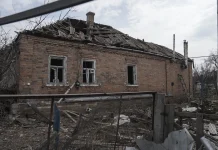
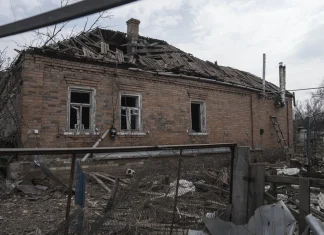
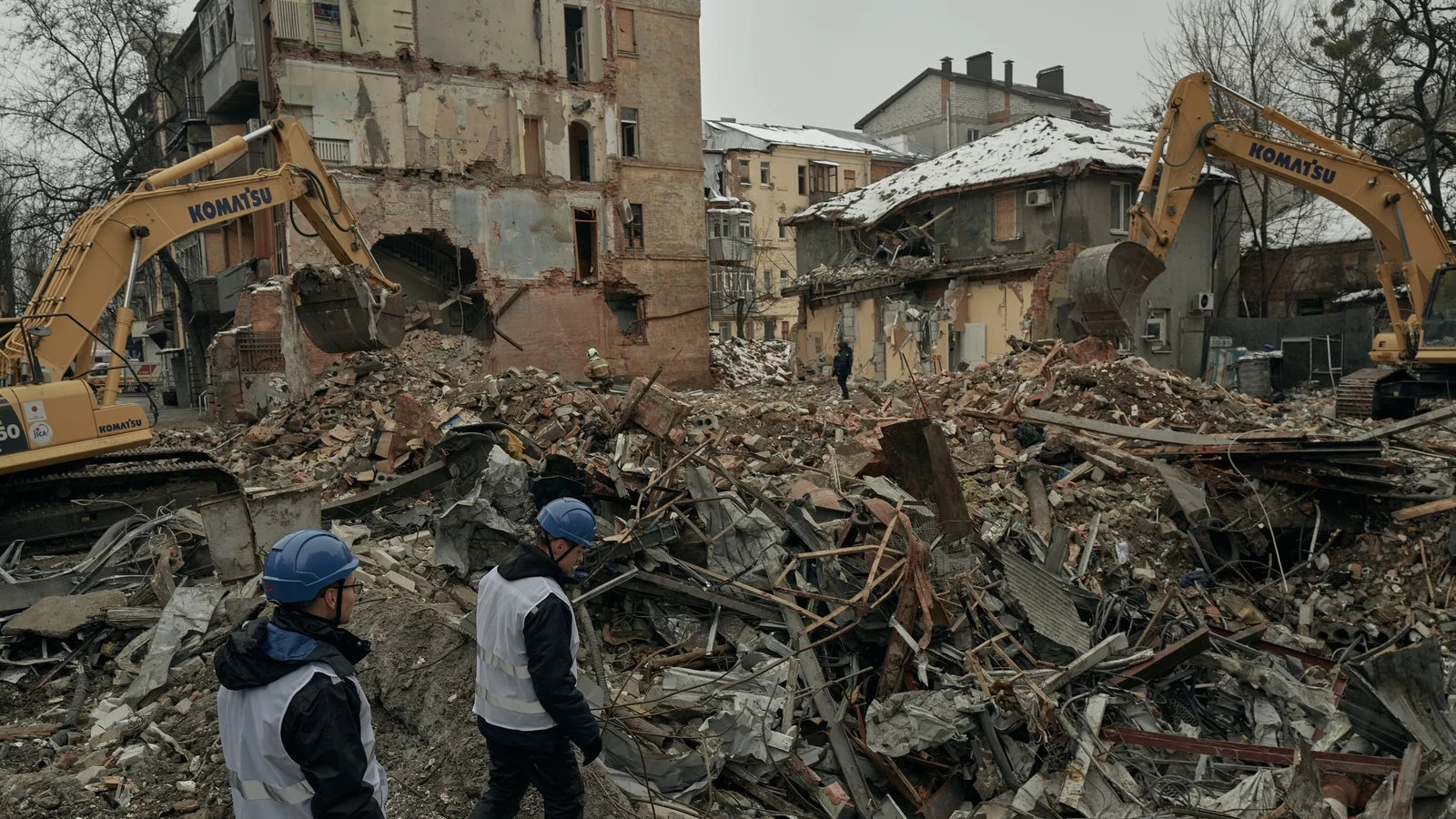
The same night leaders signed on to the Paris accord, Ukraine’s industrial southeast was plunged into darkness. Russian drone strikes sliced through energy infrastructure, knocking out power to hundreds of thousands and plunging entire communities into near-total blackout.
In Dnipropetrovsk region, a hub of steelworks, factories and working-class neighbourhoods, private energy company DTEK reported almost half a million households without power. Deputy Prime Minister Oleksiy Kuleba warned that more than a million consumers were temporarily left without heating or running water — in January, when cold is a silent enemy of its own.
“People were lighting candles and heating soup on what was left of the gas rings,” said Natalia, a schoolteacher in the city of Dnipro, pressing her hands against a steaming mug. “You never get used to the feeling of the whole world going dark. It’s as if someone pressed pause on warmth.”
Zaporizhzhia, further southeast, reported that power had been restored after critical services relied on reserves. But Governor Ivan Fedorov called the blackout “total” and said it was the first of its kind in recent memory. For him and for many regional officials, the attacks on energy infrastructure are not collateral — they are purposeful, strategic blows aimed at breaking the civilian backbone of resistance.
Numbers That Matter
- Nearly 500,000 households in Dnipropetrovsk left without power after drone strikes (DTEK)
- More than 1 million consumers reported without heating or running water in the affected region (Deputy PM Oleksiy Kuleba)
- Russia occupies territory amounting to roughly one-fifth of Ukraine, according to Western assessments — a reminder of how much land and how many lives are at stake
The Human Texture Behind Headlines
Walk through a town on the edge of the blacked-out region and you will hear stories. An ambulance driver who started the engine with a jump pack to reach a maternity ward. A retiree who queued for hours at a communal kitchen, trading jars of homemade preserves for warm bread. A teenager who used his phone’s last percent of battery to video a generator humming and the faces of neighbours clustered around it.
“We have friends who can’t afford diesel for their generators,” said Petro, an electrician. “They ask, ‘Is this punishment for choosing to be Ukrainian?’ There are no simple answers.”
Energy-as-weapon is a grim theme of modern conflict, and Ukraine’s experience is a cautionary tale for the wider world. In a continent where infrastructures are deeply interconnected, attacks on power and water ripple far beyond borders.
Geopolitics, Grand Strategy and Everyday Survival
The Paris agreement — and Moscow’s loud counterclaim — touches on questions that extend well beyond Ukrainian skies. How do states balance the moral and strategic imperatives of defending an ally without turning a proxy conflict into a wider, direct confrontation? How do democratic publics square the costs of military support with the political appetite for risk?
For now, the United States has publicly ruled out sending its own troops. Yet Washington’s envoy at the Paris meeting, Special Envoy Steve Witkoff, relayed that President Donald Trump “strongly stands behind” security protocols designed to deter future attacks on Ukraine. The patchwork of commitments and denials only underlines a new reality: security in Europe may come in the form of multinational contingents, legal statements and hardware flows as much as traditional alliances.
“This is 21st-century deterrence,” said Dr. Amina Yusuf, a security analyst at an independent think-tank. “It’s a blend of kinetic force, legal postures and the projection of logistical depth. That makes it complex — and, crucially, makes it possible to misread moves as escalations.”
Where Do We Go From Here?
There are no tidy endings. The Paris declaration is both balm and tinderbox, depending on your vantage. It offers Ukraine a kind of insurance policy — a promise that Western boots could, in principle, help anchor peace — while also giving Moscow a pretext to raise the alarm about foreign intervention. Meanwhile, civilians trudge through blackouts and snow, warming hands over generator engines and clinging to small rituals that assert normalcy.
What do you think should come first: a guaranteed security umbrella for Ukraine, or a ceasefire that removes the immediate need for foreign forces? Is it possible to thread the needle between assistance and escalation? These questions are not academic; they will determine whether the next winter finds families warmed by radiators or by the glow of petrol-lit stoves.
As the continent watches, leaders will sign papers and issue warnings. But the real work — the fragile, exhausting business of keeping lights on and children warm, of rebuilding trust and infrastructure — will be done in kitchens and hospital basements, where hope is both practical and stubborn.
For now, the light that matters the most is not the flash of a diplomatic photograph but the steady hum of a generator under a kitchen table, a small engine keeping a community alive through a very long night. That hum is both a sound and a promise: people endure, and the world must decide how to answer their endurance.