Gunfire, a Sprint, and an Unnerving Pause at the Gates of Power
Washington hums with a thousand small certainties: the rhythm of the Metro, the clack of tourists’ shoes on Pennsylvania Avenue, the steady pulse of black SUVs. Yesterday afternoon that hum fractured. For a tense, surreal half-hour, the city that hosts the United States’ most visible seat of power felt—as one witness put it—like “a place you only see in movies.”
What unfolded
Agents patrolling the outer ring of the White House complex noticed a person who, they later said, seemed to be carrying a firearm. The individual fled when approached. Shots were fired. Secret Service officers returned fire. A suspect was struck and taken to a hospital.
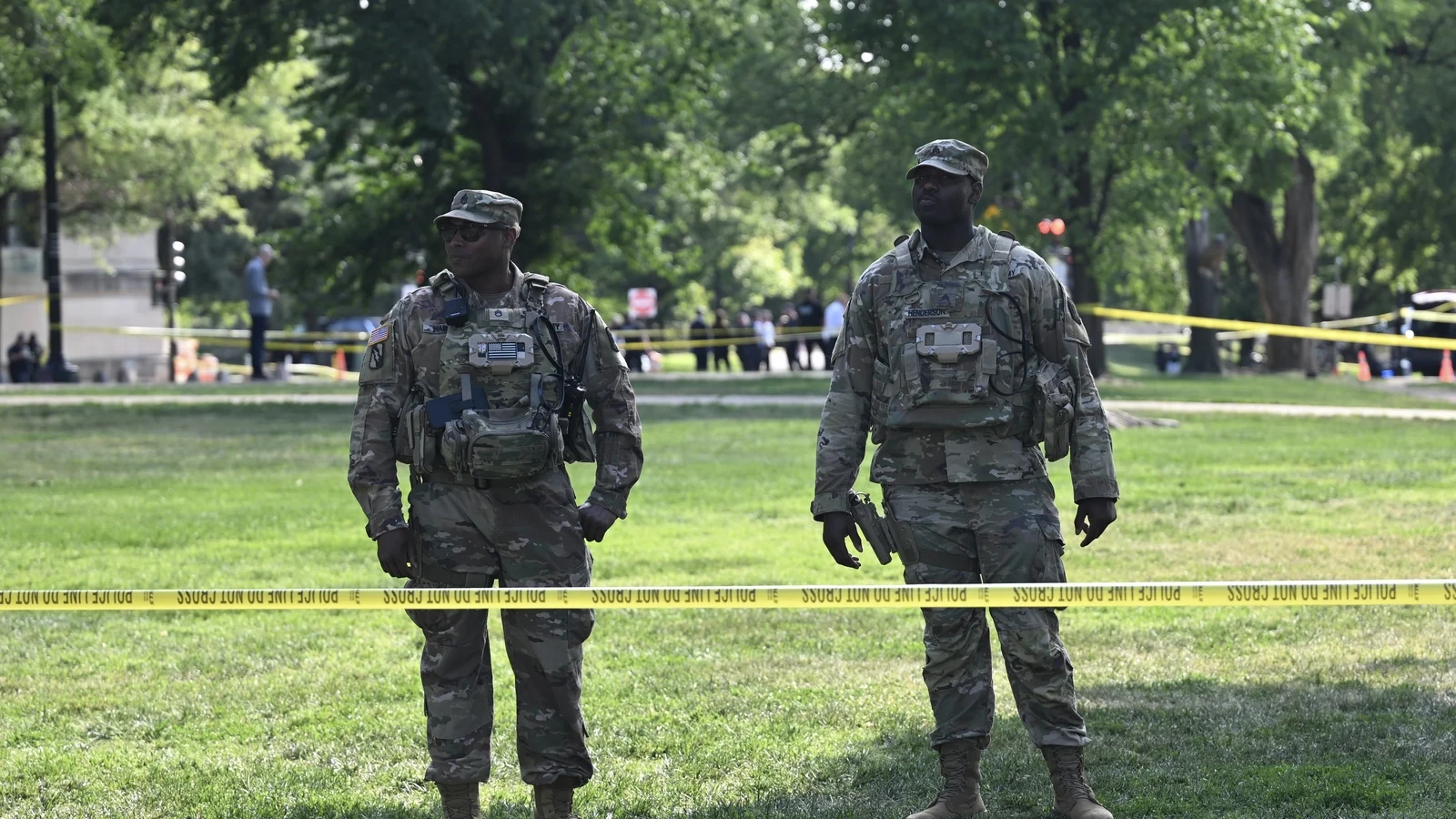
The exchange took place near 15th Street and Independence Avenue, an intersection that sits within sightlines of the White House but, crucially, outside the formal grounds. The scene was quickly cordoned off. Police lights painted the stone facades of government buildings. A lockdown order reverberated through the complex: doors shuttered, motorcades rerouted, and staffers and tourists alike were asked to step away from windows and wait.
“I heard the bangs and then I saw officers sprinting,” said Marcus Johnson, a café worker two blocks from the Ellipse, who had been serving a late lunch when the sirens began. “People froze. Phones came out. A woman started praying out loud.”
Officials’ account
At a briefing, Secret Service leadership described the episode as an officer-involved shooting sparked by an armed, “suspicious” individual who fired at officers as he fled. They said a weapon was recovered, and that a juvenile bystander was struck by gunfire but sustained injuries that were not life-threatening.
Deputy Director Matthew Quinn, who addressed reporters, framed the event in stark terms: “Our officers saw someone who appeared to have a firearm and, after an attempt to contact him, there was gunfire directed at our personnel. The situation was contained swiftly, and medical aid was provided.” He also noted that Vice President J.D. Vance’s motorcade had passed through the area not long before the incident and that there was no immediate indication the suspect had intended to target the motorcade.
Authorities asked patience as investigations proceeded. The District of Columbia Police Department is leading the inquiry into precisely what happened and why.
Voices from the street
In a city where politics is everyday conversation, yesterday’s events jolted more than the briefings and press notes. They landed in living rooms and on stoops, in the barbershop and at the tourists’ information kiosks.
“My daughter goes to school near here,” said Angela Ruiz, a parent who had been picking up groceries when the lockdown was announced. “You think you’re safe. You think these things don’t happen. Then you hear the sirens and everything becomes very small and immediate.”
A young man who lives in a boarding house two blocks from Lafayette Park described the surreal sight of Secret Service officers with rifles silhouetted against the tulips. “It looked like something out of a war movie. But it was just Thursday.”
Context: Why this matters
The White House complex exists behind multiple layers of security—bollards, checkpoints, and a force whose whole mission is to anticipate and neutralize threats to the president, vice president, and related protectees. That the shooting occurred just outside the property raises familiar but uncomfortable questions: how do you secure a public-facing capital without turning it into an impregnable fortress? How do you protect both the populace’s right to access and the leadership’s safety?
These questions are not academic. Gun violence remains a leading cause of death in the United States: in the early 2020s, annual firearm fatalities hovered around 48,000–50,000 across homicides, suicides, and accidental shootings. High-profile incidents near centers of power—whether the assassination attempts of history or the more recent attacks and disruptions—have amplified concerns about the safety of public officials and the spaces around them.
“What we’re seeing repeatedly is that threats are diffuse and unpredictable,” said Dr. Lisa Moreno, a security analyst who studies urban countermeasures at a Washington university. “Securing the immediate grounds is one thing; securing the public space outside those grounds is another. As cities become more porous, the challenge intensifies.”
The human toll, small and large
Beyond the suspect and the officers involved, a juvenile bystander was hit and taken to hospital. Officials described the injuries as not life-threatening, but the incident underscores the ripple effects of a single violent act: a child at a bus stop becomes part of a federal investigation; a nearby shopkeeper loses a few hours of business and gains a story they’ll tell for years.
“He’s at the local clinic,” said a neighbor who asked not to be named. “They’re saying he’ll be okay. There’s a lot of prayers in this neighborhood tonight.”
What’s next? Questions, investigations, and the conversation about safety
Law enforcement agencies will comb through CCTV, witness statements, ballistics, and digital traces to trace the sequence of events. Did the suspect have an agenda? Was it a random act? Mental health, access to firearms, political motivations—any number of factors could be part of the eventual explanation.
But the incident also feeds larger, enduring debates: the balance between open public spaces and secure perimeters; how intelligence-sharing works among municipal and federal agencies in real time; and the broader social currents that produce violence in the first place.
Consider this: Washington is both a workplace and a living community. Residents wake up to security barriers, dress codes, and motorcades the way others wake up to subways and commutes. Yet when the department of the commonplace—the corner shop, the elementary school—gets touched by the machinery of federal protection, it creates a dissonance that lingers.
Takeaway: A city on edge, a society reflecting
When the shutters rose and the motorcades resumed, the city exhaled. But for many, the moment will not pass quickly. It will lodge as a reminder that even places designed to symbolize continuity and order are vulnerable to abrupt rupture. It will reopen debates about how we coexist with the risk of violence, how we regulate access to lethal tools, and how we support communities caught in the crossfire.
What do you think? Should cities around major government centers adopt stricter perimeter controls, or should public accessibility remain sacrosanct, even at some risk? How do we make public spaces both safe and free? This event—like so many before it—asks of us not only to respond but to reflect.
As investigators work to stitch together motive, movement, and consequence, Washington will return to its rhythms. But the questions remain: how did we get here, and where do we go from here? Today, in coffee shops and committee rooms, people will be searching for answers—some immediate, some structural, and some, inevitably, personal.