Stranded at Sea: A Cruise Ship, a Silent Virus, and the People Waiting to Go Home
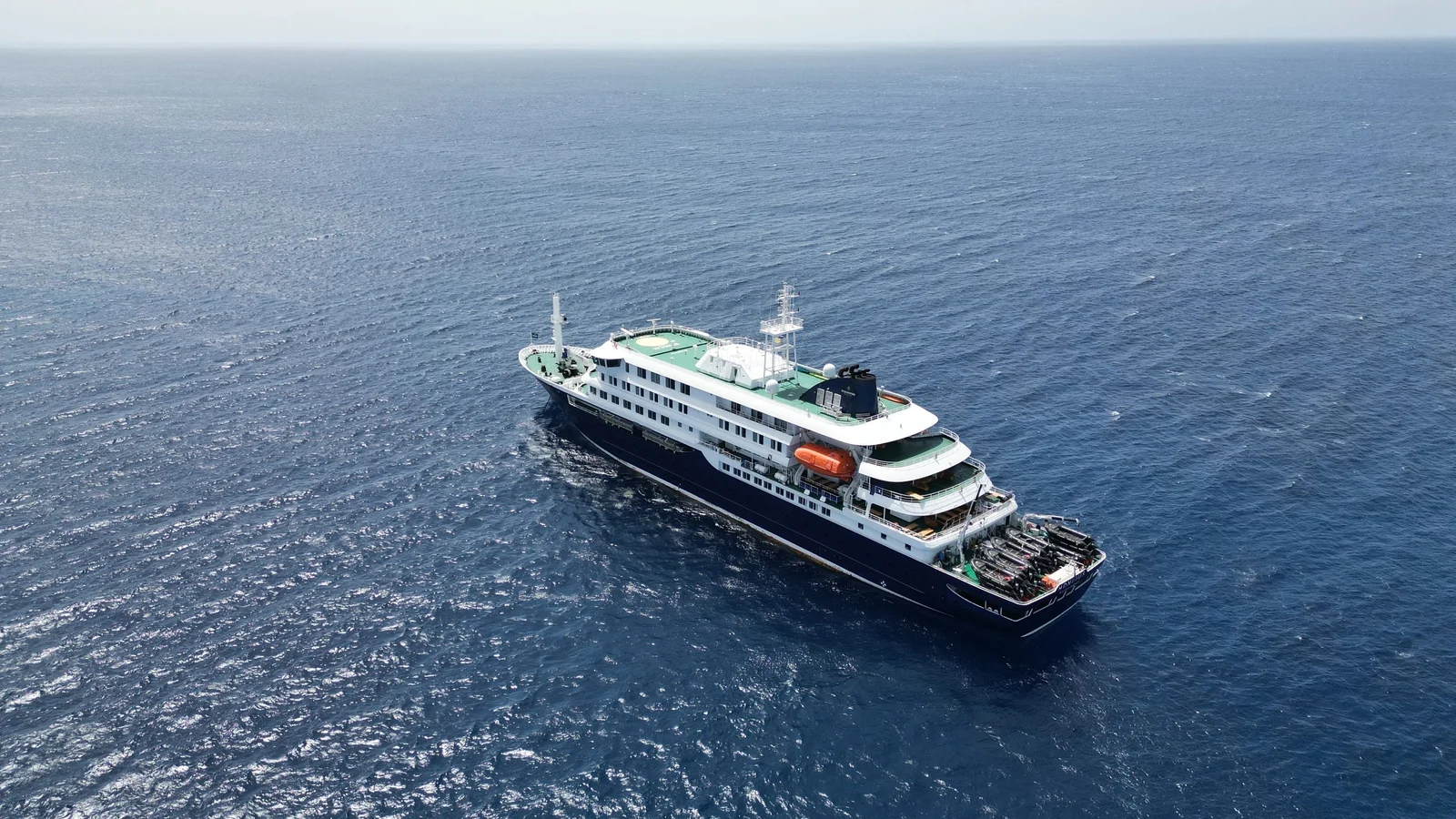
The MV Hondius sits like a slow-moving question mark in the Atlantic, bobbing off the coast of Cape Verde while the world watches and waits. Cabins sealed, corridors empty, a hundred and fifty people — give or take — trapped inside a steel hull built for adventure, now quarantined by fear and uncertainty.
Three deaths. Seven cases identified so far (two laboratory‑confirmed, five suspected). One passenger flown to Johannesburg in critical condition. A flight from the remote island of Saint Helena put under contact tracing because a traveller who boarded there later died. And above it all, the still, careful voice of the World Health Organization advising calm while scientists race to sequence a virus and public-health officials negotiate where the ship might safely dock.
The raw facts, in one breath
Oceanwide Expeditions’ Dutch-flagged MV Hondius departed Ushuaia, Argentina, in March on what was billed as a once-in-a-lifetime Antarctic nature voyage — berths reportedly priced between €14,000 and €22,000.
The itinerary read like a map of remote wonders: mainland Antarctica, the Falklands, South Georgia, Nightingale Island, Tristan da Cunha, Saint Helena, Ascension — and then Cape Verde, where the ship arrived in waters on 3 May and was denied permission to dock as a precaution.
As of early May, the World Health Organization reported seven cases linked to the vessel: two confirmed hantavirus infections and five suspected, including three deaths, one patient critically ill and three with mild symptoms. The WHO has said the risk to the wider public remains low, while acknowledging the possibility of limited human-to-human transmission among very close contacts.
How it may have started — and why the origin matters
Hantaviruses are primarily rodent-borne. They can be inhaled when dried droppings, urine or nest material become airborne, and in the Americas certain strains cause hantavirus pulmonary syndrome (HPS), a severe respiratory illness with a mortality rate that can approach 35–40% in some outbreaks.
“We know that, historically, human-to-human transmission has been rare,” said Maria van Kerkhove, WHO’s director for epidemic and pandemic preparedness and prevention. “But there are precedents — the Andes virus in Argentina and Chile has shown person-to-person spread in close contacts.”
That geographic detail is not trivial. The Hondius began its voyage in Argentina. “So it’s significant that this cruise ship started its journey in Argentina,” said Dr Daniel Bausch, a visiting professor at the Geneva Graduate Institute who has studied hantaviruses. “There is evidence for human-to-human spread with Andes virus.”
Incubation can be slow — one to eight weeks — meaning someone infected before boarding could fall ill days or weeks later, and others exposed might not yet show symptoms. Genetic sequencing, now underway in South Africa, will help determine which strain is involved and whether this is a rare person-to-person event or a more typical rodent-to-human spillover.
Onboard: voices from cabins and corridors
The human cost of an outbreak is not only measured in lab results. There are faces, voices, small rituals interrupted: shared meals, late-night lectures on penguins and ice flows, conversations with crew who have become friends over a month at sea.
“We’re not just headlines: we’re people with families, with lives, with people waiting for us at home,” said Jake Rosmarin, a US travel blogger aboard the Hondius, in a tearful Instagram video posted from the ship. “There is a lot of uncertainty and that is the hardest part.”
A crew member who asked not to be named described the ship’s atmosphere like a town under siege. “People put up signs on their doors to say they’re okay. We deliver meals in silence. There’s fear, but there’s also kindness — neighbors checking on each other through the hatch.”
Another passenger, a British woman in her sixties who has been on expedition cruises for years, said she told herself to think of the voyage’s wild places rather than the headlines. “We saw albatrosses riding the air for hours. That’s what I replay in my head at night,” she said. “But every creak of the ship, every cough in the hall, makes you hold your breath.”
Officials, diplomacy and logistics: who decides where the ship goes?
Public-health agencies have been engaged in delicate diplomacy. The WHO has said it is working with Spanish authorities, who have indicated they could welcome the ship for disembarkation, full epidemiologic investigation and disinfection — but Spanish officials say no formal decision has yet been made.
Cape Verde, for its part, refused permission to dock the Hondius as a precaution, a move that left passengers isolated offshore and raised questions about the bandwidth of small island states to manage a potential outbreak. “We have to protect our islands,” a Cape Verdean official said in a statement, underscoring the tough balance between compassion and public safety.
Oceanwide Expeditions said it had instructed passengers to remain in cabins, was arranging repatriation for symptomatic crew, and was exploring options to screen and disembark passengers in Las Palmas or Tenerife in the Canary Islands. “We are doing everything we can,” a company spokesperson said.
Contact tracing, sequencing and treatment
Contact tracing is underway for passengers on a flight from Saint Helena to Johannesburg because a woman who had fallen ill disembarked on Saint Helena with gastrointestinal symptoms and later died in South Africa on 26 April. WHO spokesperson Tarik Jašarević said tracing “has been initiated” for people on that flight.
There are no antiviral drugs specifically licensed for hantavirus infection. Medical care is supportive: oxygen, intensive care and mechanical ventilation for those who progress to respiratory failure. Early recognition and prompt supportive care remain the pillars of treatment.
Wider questions: travel, risk and the new normal
What does this episode tell us about travel in an interconnected age? Expedition cruises tap a growing market of affluent, adventure-seeking travellers eager to reach the edges of the map. They also concentrate older travellers in close quarters for extended periods — a demographic and logistic reality that can magnify the impact of infectious diseases.
Are we adequately prepared for zoonotic risks that can emerge far from major medical centers? Do island nations have the capacity to deal with sudden public-health threats brought by international tourism? And how do we balance empathy for sick individuals with the duty to protect communities onshore?
These questions aren’t academic. Covid taught the world costly lessons about speed and surveillance, and scientists increasingly warn that human encroachment into wildlife habitats, climate-driven shifts in species ranges, and global mobility create more opportunities for spillover.
What to watch next
- Results of the genetic sequencing underway in South Africa to identify the strain.
- Whether Spain formally accepts the ship into the Canary Islands for disembarkation and investigation.
- Contact-tracing outcomes from the Saint Helena–Johannesburg flight.
- Updates from Oceanwide Expeditions and the national health ministries of the countries involved.
Parting thought
At sea, decisions feel magnified. A small cough echoes down a corridor. A single lab test can change an itinerary, a family’s plans, a country’s policy. The Hondius episode is a reminder that the world is still learning how to live with the microbes that surround us — and how to do so with compassion and intelligence.
So what would you do if you were on that ship? Would you stay put, trusting authorities to steer you home? Or would you push for disembarkation, impatient with the unknown? The truth is, there are no easy answers — only people trying to make the best choices in the hardest of circumstances.