Sweden is heading for a change of government after a knife-edge election result pushed Prime Minister Ulf Kristersson to announce he will step down once the final count confirmed his bloc had fallen short.
Centre-left opposition parties secured 176 seats in Sunday’s parliamentary election, while Kristersson’s ruling right-wing bloc won 173, according to the election authority after ballot counting ended.
“Now it is the speaker who will lead the next stage of the way to a new government. I am herewith requesting that I be relieved of the office of prime minister to allow that work to start immediately,” Mr Kristersson said in a letter posted on social media X.
The four-party left-wing bloc, led by Magdalena Andersson’s Social Democrats, now holds a narrow majority in the 349-seat parliament over the outgoing prime minister’s right-wing alliance, which includes the anti-immigration Sweden Democrats.
The margin in the popular vote was equally tight: only around 50,000 votes separated the two sides in a country of 10.6 million people.
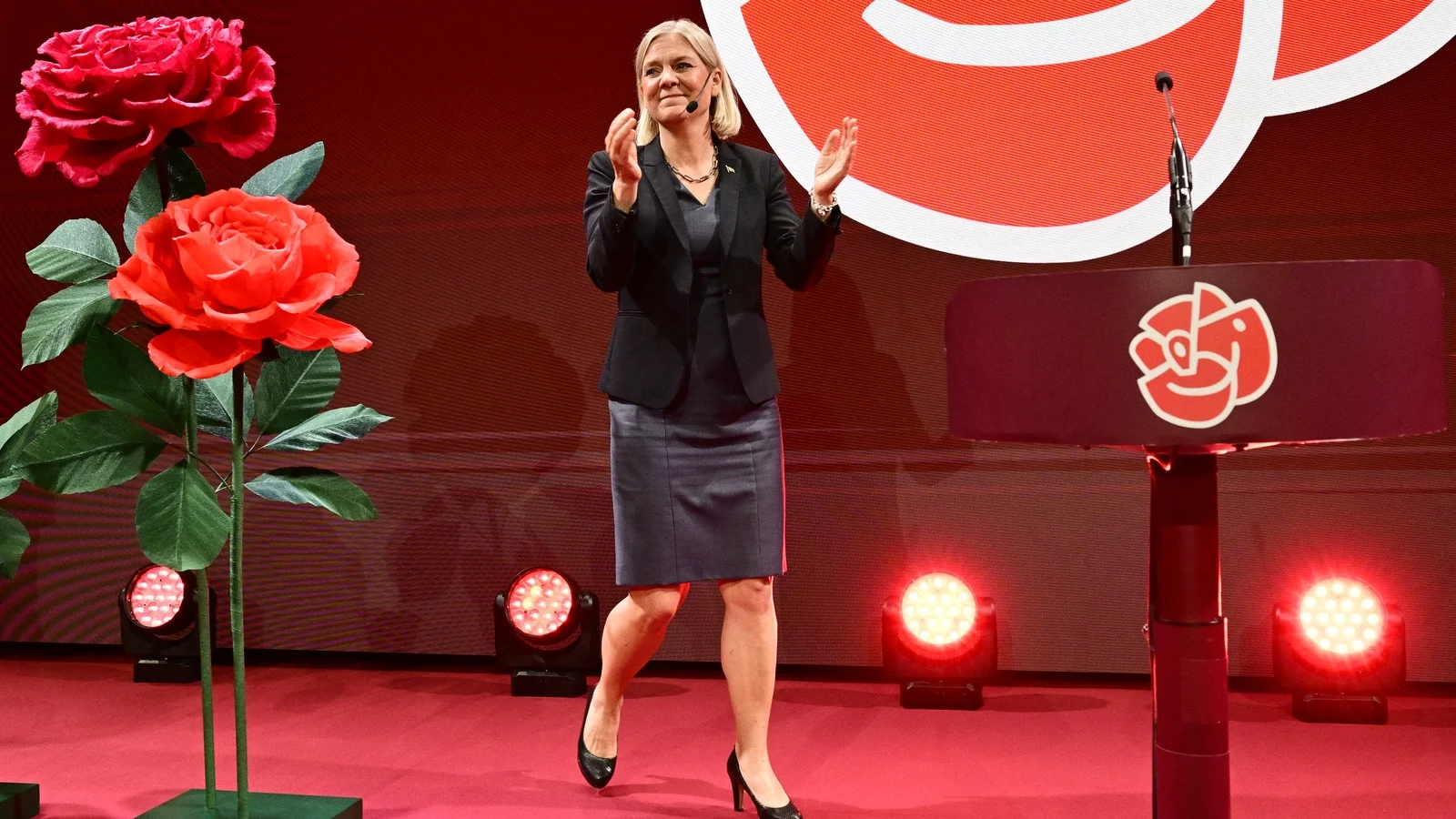
Speaking today, Ms Andersson promised to steer Sweden in a “new direction” following four years of right-wing rule supported by the far-right.
“The Swedish people have voted for a new direction for our country. Voted for unity and against division. The Swedish people have voted to move Sweden forward, and I want to realise the new direction that you have voted for,” she said in a speech posted on social media.
Yet the opposition’s path to power is complicated by ideological rifts inside its own camp. Ms Andersson will need to bring together the Social Democrats, the Left Party, the Greens Party and the Centre Party—an alliance that spans from democratic socialism to liberal centrism.
The 59-year-old—Sweden’s first woman prime minister in 2021-2022—previously served seven years as finance minister and is widely regarded as a tough-minded technocrat with a blunt, no-frills style.
Coalition talks could stretch for weeks as she looks for a formula that bridges the gap between the socialist Left Party and the liberal Centre Party.
The Centre Party has said it will oppose a government that includes cabinet posts for the Left Party, which has insisted it wants a minister.
Prime Minister Ulf Kristersson has announced his resignation
Ms Andersson has previously ruled out a government that includes the Left Party, while still seeking its support in parliament.
On election night, she had already signalled what a confirmed result would mean, saying that if the numbers held “Sweden will have a new government”.
Spanish Prime Minister Pedro Sanchez, who leads one of the few left-wing governments in Europe, welcomed the outcome.
“Social democracy has won the elections in Sweden. After four years of a right-wing government with the far right, the Swedes are once again backing the welfare state, social justice and the green agenda,” Mr Sanchez said in a post to X.
Parliament can vote on a new prime minister on 29 September at the earliest.
Centre as kingmaker
Mr Kristersson moved to resign after the final results were released, clearing the way for the parliament speaker to open formal talks with party leaders and identify a candidate who can form a government.
On election night, he said he would respect Ms Andersson’s effort to build a governing majority, while wishing her “good luck” in light of the fractures within her left-wing bloc.
He also indicated he was willing to test the waters for an alternative majority among “non-socialist” parties.
That strategy is widely seen as an attempt to court the Centre Party, which previously sat with the right-wing bloc, but which firmly rejects any government arrangement that includes the Sweden Democrats.
Centre Party leader Elisabeth Thand Ringqvist underlined that stance on election night, saying the party had “been clear that we are going into the election on the basis that the extremes should not dominate a government”.
The Social Democrats—who governed the Scandinavian country for much of the 20th century and remain Sweden’s largest party—also appeared to be heading for their weakest result in more than 100 years, with 28% of the vote.
In another notable development, the anti-immigration Sweden Democrats, in parliament since 2010, lost support for the first time. The party won 17.5 percent of the vote, down three percentage points from the last election in 2022.