Sweden woke up to an election cliffhanger, with an early tally suggesting the opposition centre-left bloc has edged ahead by the slimmest of margins.
A partial count released by the election authority indicated that the left-leaning alliance led by Social Democrats leader Magdalena Andersson was on track for 176 seats in the 349-seat Riksdag. The projection was based on returns from 6,195 of Sweden’s 6,312 election districts.
Prime Minister Ulf Kristersson’s right-wing governing bloc was projected to win 173 seats as counting continued, with final results not expected before Wednesday at the earliest.
Although the outcome is not expected to alter Sweden’s broadly pro-Western and pro-Ukraine direction, it could determine whether Mr Kristersson’s drive toward a tougher, hard-right approach on migration carries on — or intensifies.
With the race so close, the final winner could remain uncertain for days until overseas ballots are fully counted.
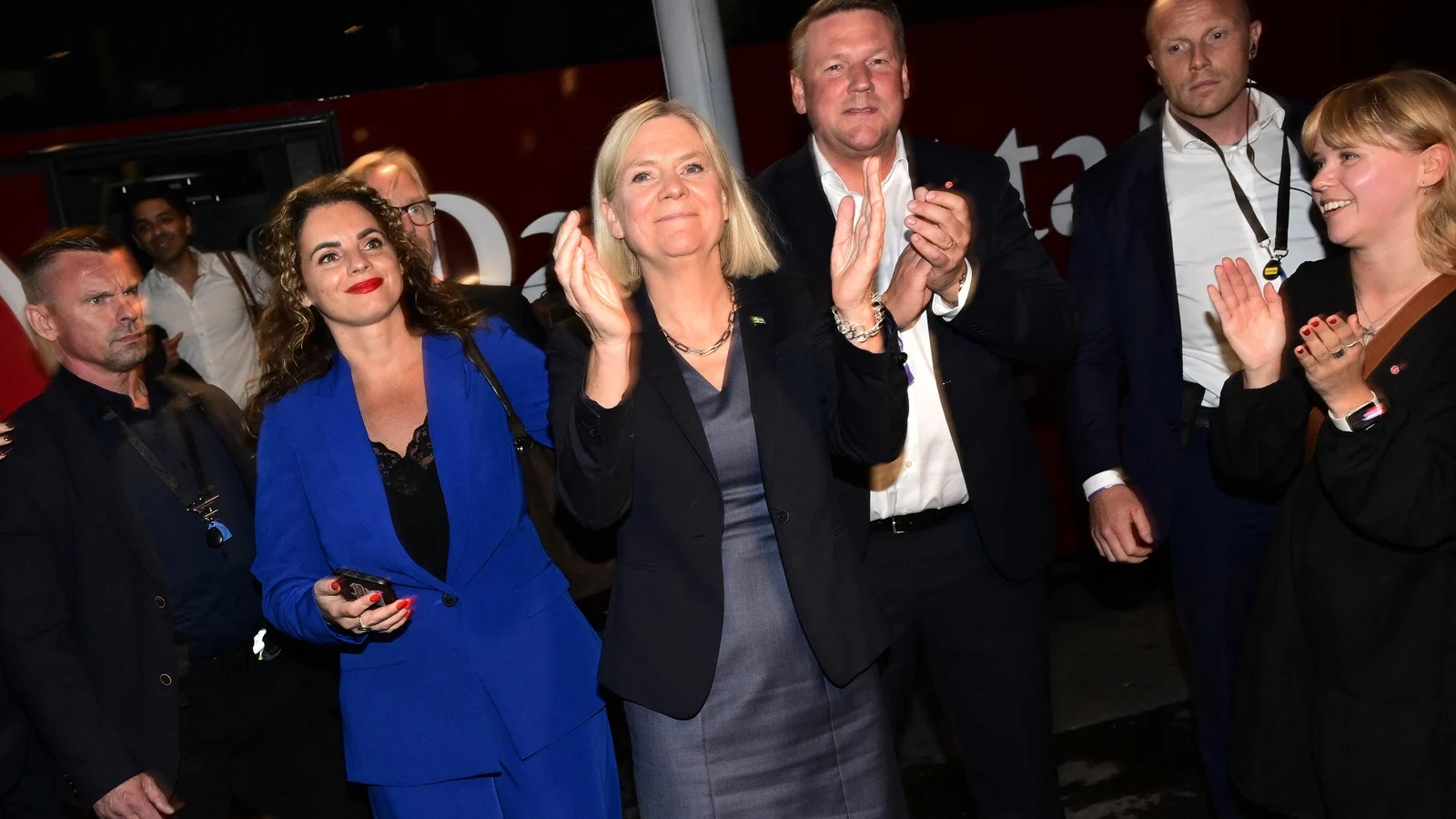
“It’s a very tight race, it’s going to be a very long night but I think the Social Democrats have done quite a good election,” Adonay Endrias Kidane, a doctor and supporter of the Social Democrats, said at the party’s post-election gathering in central Stockholm.
Sweden’s Prime Minister Ulf Kristersson has recovered from low opinion polls
Central to the campaign was Mr Kristersson’s pre-election pledge to cross a longstanding political red line by bringing the Sweden Democrats into government. The far-right party has roots in the neo-Nazi fringe, and Mr Kristersson said the move was aimed at forging a majority-right coalition.
On the right, many voters argue that a victory would validate policies they say have helped curb gang violence and sharply reduce immigration.
Yet across the Nordic country of 10.6 million, others have voiced unease, warning that opening the door to the far right went too far.
Critics of the Prime Minister also contend that his migration agenda — combining incentives and penalties designed to pressure migrants to conform more closely to Swedish cultural norms or leave — is eroding civil liberties.
Mr Kristersson spent much of his four years in office trailing in opinion polls, but he narrowed the gap in the closing weeks of the campaign as Ms Andersson and the Social Democrats slipped.
Within hours of polls closing, Mr Kristersson said he still believed he could assemble a workable majority among the eight political groupings that won seats in the Riksdag, arguing that voters preferred his party’s approach to the economy.
“Even if tonight’s results hold, I will explore whether it’s possible to find a viable government constellation… capable of securing support for the fiscal policy Swedish voters have voted for,” he said.
Ms Andersson’s side faces its own internal strains, with partners split on issues ranging from migration — where she favours a more restrictive stance than some allies — to a proposed tax on billionaires and whether to build new nuclear reactors.
Her budgets could also face hurdles because the Left Party, Sweden’s former Communist party, and the pro-market Centre Party often clash on economic policy and do not share a common view on major spending and tax questions.
Across Europe, strong results for the Sweden Democrats would be cheered by a far right on the rise, emboldened after the anti-immigrant Alternative for Germany won a German state election last week.
Sweden Democrats leader Jimmie Akesson is hoping to enter government for the first time
Far-right parties are now eyeing further gains in elections across the continent, with the National Rally’s push for the French presidency next year seen as a potential marquee prize.
On Saturday, after casting his vote in Rinkeby near Stockholm, Sweden Democrats leader Jimmie Akesson — who has led the party for more than two decades — pointed to the suburb, home to one of Sweden’s largest Swedish-Somali populations, and said it “doesn’t look like Sweden”.
For years, Sweden was regarded as one of Europe’s most welcoming destinations for immigrants, until Mr Kristersson took office four years ago.
His government has since abolished permanent residency for refugees, tightened welfare rules and stepped up expulsions of people without the right to remain.
The Sweden Democrats say their party was founded partly by neo-Nazis and white supremacists in the 1980s, but argue they have purged extremists, and they have apologised for their history.
They have said that, if they enter government, they would seek to ban women from wearing face coverings in public and to defund all projects linked to integrating newcomers.
Yet the latest results pointed to an unexpected setback: the Sweden Democrats were set to lose parliamentary seats and vote share — the first such decline during Mr Akesson’s time as leader.