When Armored Vans Cross the Checkpoint: Hasakeh, a City Between Claims
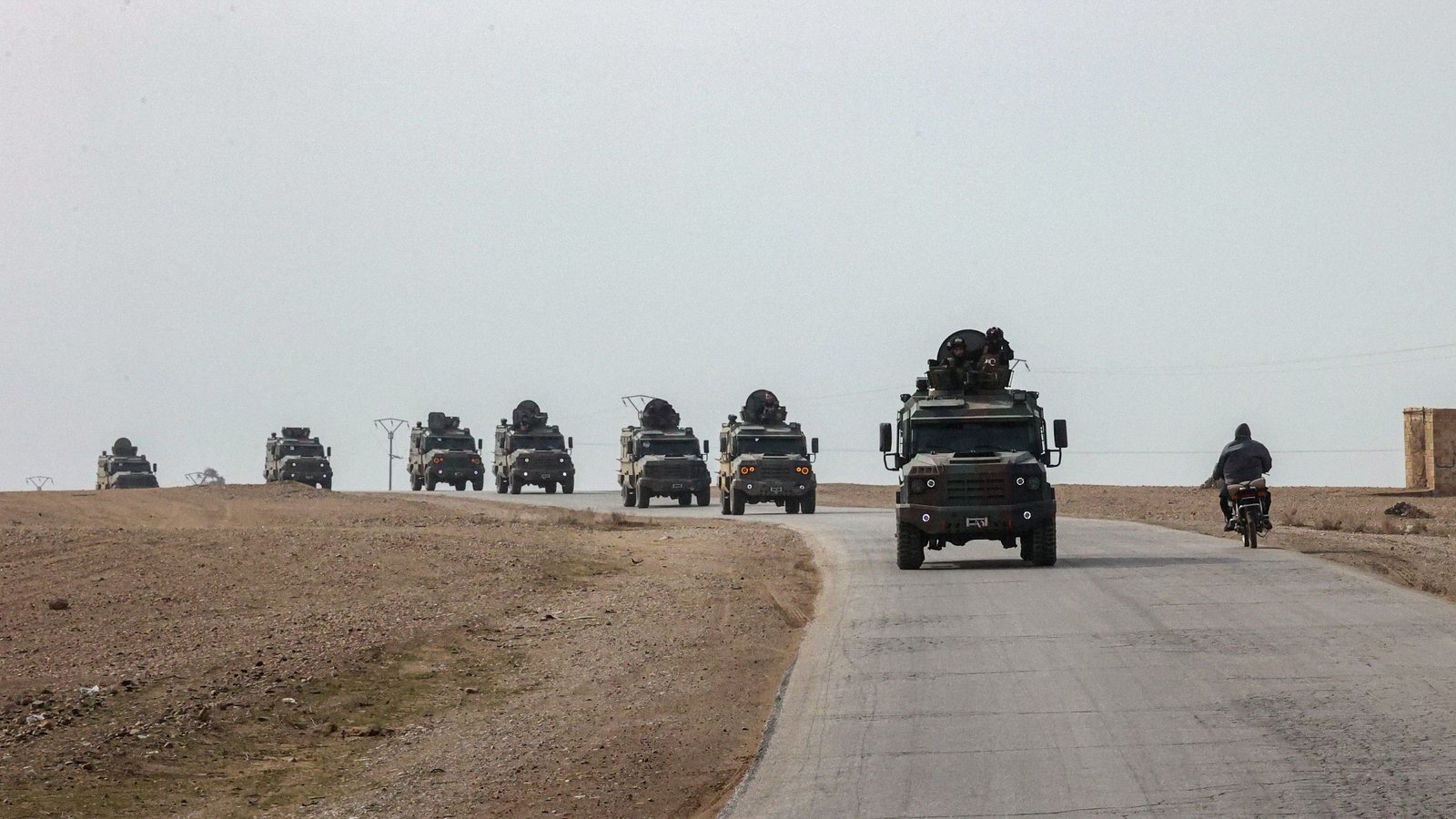
The sun had not yet burned off the winter haze when a convoy threaded its way through Hasakeh’s scarred avenues—dark green SUVs, a couple of armored personnel carriers, and a few plain white vans with government insignia. People leaned from balconies, children in mismatched sweaters craning their necks. Someone raised a Syrian flag. A woman in a faded headscarf ululated, the sharp sound slicing the morning air like a trumpet call.
“We have been waiting for this day and dreading it at the same time,” murmured Ahmed Khalil, a baker who has lived in Hasakeh all his life. “The bread oven keeps the neighborhood together. Today, the oven smelled different—too many uniforms.”
A fragile choreography: integration on the ground
What unfolded in Hasakeh this week was less a triumphal march than a cautious, choreographed entrance. Syrian government security personnel moved into parts of the city under an agreement struck last Friday with Kurdish authorities—a deal that, at least on paper, promises to fold the Kurds’ military and administrative apparatus back into Damascus’s structures.
“This is about state sovereignty,” said Marwan al-Ali, the government’s newly named head of internal security in Hasakeh province, as he addressed officers in the city’s old square. “Carry out your tasks according to the plans and fully comply with laws and regulations.”
Across the street, a Kurdish security commander watched with folded arms. “We are pulling back to reduce friction,” he told me simply. “But this is not surrender—it is a tactical repositioning to keep our people safe.”
Flags, checkpoints and the sound of a city holding its breath
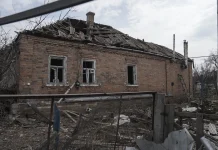
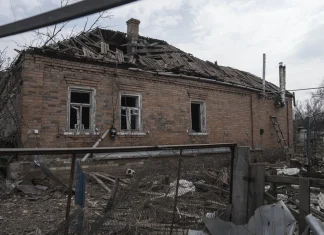
Hasakeh is a patchwork—Kurdish neighborhoods shoulder Arab quarters; a market stall selling pistachios sits next to a shop with a bright blue Arabic calligraphy sign. The city is also a palimpsest of wars: scaffolding and fresh plaster over shell-shocked buildings, macramé curtains fluttering at windows, children still kicking makeshift footballs in alleyways scarred by checkpoints.
An AFP team reported seeing a government convoy pass a Kurdish checkpoint while armed Kurdish personnel stood by the roadside. Locals we spoke to described everything from relief to resignation. “We waved the old flag because my father’s picture is behind it,” said Layla Hassan, a schoolteacher. “We hope for stability. The children are tired of drills.”
Curfews were imposed in parts of Hasakeh and nearby Qamishli. In the town of Kobane—symbolic for its hard-won resistance against the Islamic State—state television says government forces also entered nearby countryside, and a UN convoy of 20 trucks reportedly reached the town. The convoy was an unmistakable sign of how humanitarian concerns thread through these power plays.
What the deal actually does—and leaves undecided
The agreement that paved the way features familiar political promises: unifying territory, a continued ceasefire, and the “gradual integration” of local forces into national structures. It even makes room for some Kurdish demands, allowing brigades drawn from the Kurdish-led Syrian Democratic Forces (SDF) to remain in some form.
Yet the devil is in the details—and in the habits of mistrust. SDF commander Mazloum Abdi stressed implementation would begin on Monday, that forces would pull back from frontline positions, and that there would be no entry of government military units into “any Kurdish city or town.” The language is layered with caveats.
“Words are easy,” said Dr. Samar Nuri, a political analyst based in Beirut who follows Syria closely. “Implementation is messy. Who controls the airports, the oil fields, the borders—that is where power actually flows.”
And indeed, the agreement reportedly includes handing over oil fields, Qamishli airport, and border crossings to the central government within ten days. For a country whose energy map was fractured during the civil war, that is a seismic shift: northeast Syria has accounted for an estimated two-thirds of the country’s pre-war oil output at various points, underpinning both local governance and international leverage.
A regional ripple effect
Across borders, Turkey watched closely. President Recep Tayyip Erdogan hailed the agreement as “a new chapter” for Syria, warning bluntly that anyone seeking to sabotage the deal would be “crushed.” The language was as much for domestic audiences as for regional ones: Ankara has long viewed Kurdish armed groups in Syria as an extension of domestic separatist threats.
The United States, which once partnered with the Kurds against IS, has signaled its priorities have shifted. “The purpose of our alliance with the Kurdish forces was largely over,” a senior Western diplomat summarized off the record, reflecting a broader recalibration in Washington’s Syria policy.
Daily life, danger and the calculus of survival
For ordinary residents, geopolitics is translated into everyday decisions: when to fetch water, whether to close the shutters at night, whether to enroll children in a school run by one authority or another. “We tried to keep politics out of the bakery,” chuckled Ahmed, the baker, as he kneaded dough. “But politics has a way of getting into everything.”
Humanitarian groups estimate hundreds of thousands remain displaced within northeast Syria, and shortages of electricity and clean water continue to shape life. Medical workers I spoke with complained about thin supplies and the razor-edge of funding cycles that dictate whether a clinic in Hasakeh can stay open for a week or a year.
“We mended more than we stitched,” said Amina, a nurse, recalling a winter with frost in hospital corridors because the generator failed and fuel was scarce. “People come to us exhausted from movement, from loss. They want simple things: safety for their children, a shop that doesn’t close forever.”
Why this matters to outsiders—and to readers like you
When a convoy crosses a checkpoint in Hasakeh it is local—and it is global. The Red Sea trade routes, European migration corridors, the geopolitics of energy and counterterrorism—all are tethered, in small and large ways, to what happens on these streets. The question is not only who raises the flag, but who pays the teachers, maintains the wells, and keeps the peace long enough for normal life to reacclimatize.
So, what should we watch next? Watch the checkpoints and the markets. Watch which institutions get funding and which do not. Watch for the slow bureaucratic gestures that make a takeover legitimate—or delegitimize it entirely.
- Key fact: A reported UN aid convoy of 20 trucks reached Kobane.
- Key fact: The deal reportedly includes transfer of oil fields, Qamishli airport, and border crossings to government control within 10 days.
- Key context: Northeast Syria has long held much of the country’s oil infrastructure—an economic prize in any transition.
Hasakeh’s morning faded into a cautious afternoon; a man at a tea shop poured a small glass and pushed it across the table. “Sit. Drink. The world is complicated, but tea is simple,” he said with a weary smile. It’s a small mercy. In a region where maps are redrawn by the passing weeks, perhaps the practice of sharing tea will outlast political vows—if only because it is, in the end, the human moments that stitch communities back together.
Will these stitches hold? That remains the question echoing beneath the flags and the curfews. Keep watching. Keep asking. And remember: history here is not only made by leaders and convoys, but by the people who bake the bread, keep the clinics open, and insist on ululating when the flag is raised—even if their reasons are mixed.