In a sharp escalation of rhetoric with Tehran, US President Donald Trump is now demanding that Iran pay compensation for victims he says it has killed in wars, attacks and protests, even as hopes dimmed for a near-term agreement to reopen the Strait of Hormuz.
Mr Trump said he was answering Iran’s earlier insistence that Washington meet a set of conditions — including payments to Tehran for damage it says followed US and Israeli strikes on Iranian territory more than five months ago.
“I am likewise demanding compensation from Iran, for all of the people that they have killed and gravely wounded with their roadside bombs and many conflicts, for which they are famous,” Mr Trump wrote on his Truth Social service.
Abbas Araghchi said an agreement with Oman on the strait was in its ‘final stages’
Oil markets reacted swiftly. After rising earlier on the Iranian comments, prices pushed higher following Mr Trump’s post, with Brent crude up 4.25%.
Trump cites attack blamed on al-Qaeda, not Iran
Mr Trump’s compensation demand had not been part of previous US negotiating positions or public statements.
He said the issue would be folded into all future negotiations with Iran’s leadership, including calls for payments to the families of hundreds of thousands of protesters whom he said Iran had killed.
Rights groups say the Iranian government has continued to crack down on opponents during the war.
Mr Trump also said Iran should compensate “families of those killed on the USS Cole”, a reference to the 12 October 2000, attack on that naval vessel in Yemen which killed 17 US sailors, and has been blamed on al Qaeda, not Iran.
“Also, with respect to the Iran negotiations, Iran should be responsible for the damages and death caused to the people of Lebanon, Syria, Yemen, and Gaza!” Mr Trump wrote in a second post.
Earlier, Iran said it was close to concluding a final pact with Oman that would define new shipping lanes between the two countries through the Strait of Hormuz. At the same time, Tehran reiterated that the US must meet conditions — including compensation, and an end to sanctions and military threats — before the vital waterway is reopened.
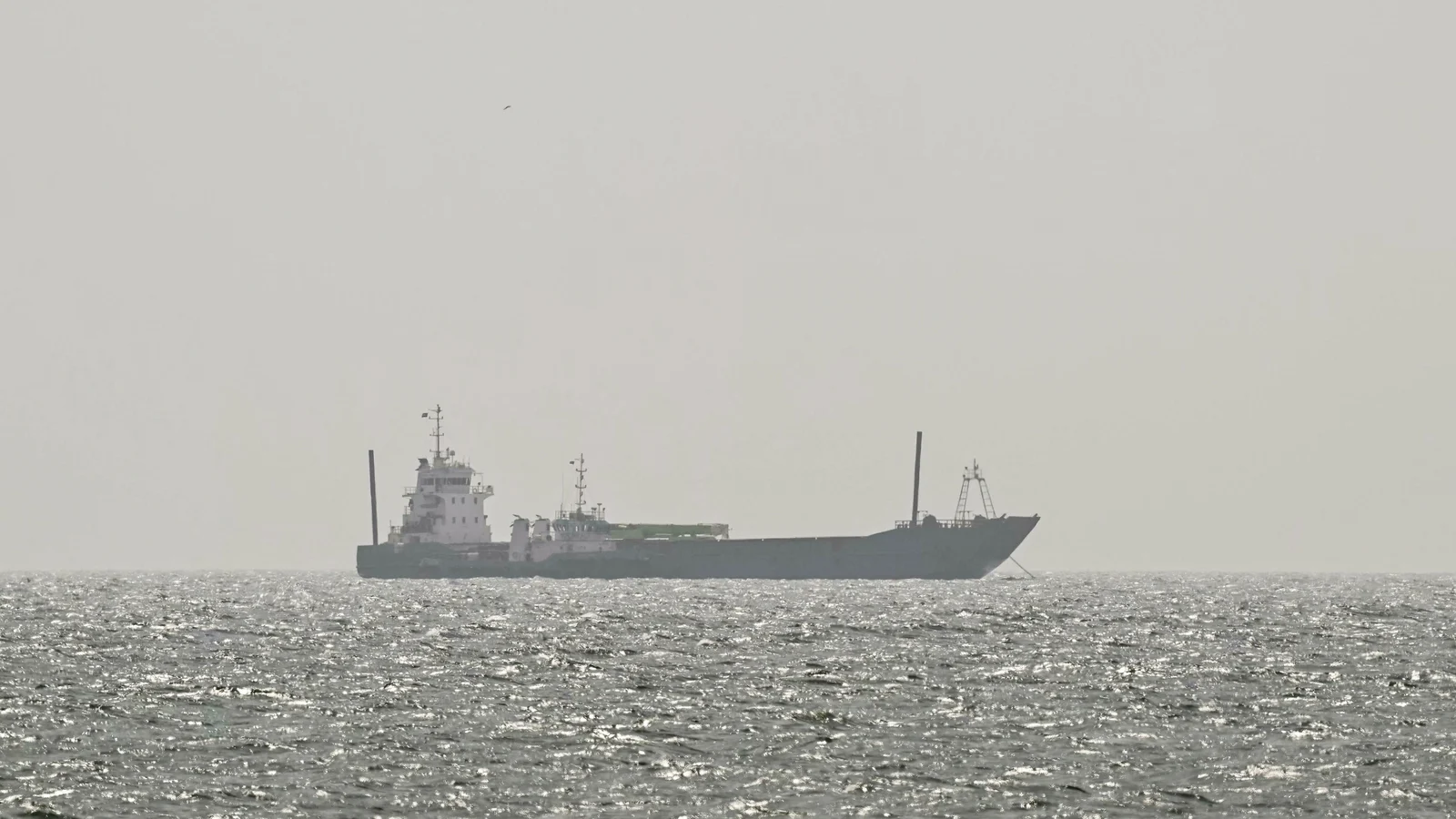
Iran has imposed an effective blockade of the strait since the US and Israel struck Iran in late February
The strait, which carried about a fifth of global oil and liquefied natural gas before the conflict, has been effectively blocked since the US-Israeli attacks on Iran on February 28, driving up oil prices and adding to inflation pressures.
Trump under pressure
Mr Trump has said the strikes on Iran were designed to prevent the Islamic Republic from developing nuclear weapons and to weaken its ability to threaten the region. He is also facing pressure to bring an end to a war that is deeply unpopular at home ahead of midterm elections in November.
The duelling US and Iranian compensation demands marked the latest turn in a volatile back-and-forth that has repeatedly seen Mr Trump warn of imminent attacks on Iran or proclaim breakthroughs in negotiations, only for neither to materialise.
Earlier, Iranian Foreign Ministry spokesman Esmaeil Baghaei said discussions with Oman on navigation arrangements in the strait were “progressing smoothly and constructively”, with an agreement reached on a shipping route map, while some technical issues tied to a joint statement were still unresolved.
Speaking at a weekly press conference in Tehran, he said the talks also addressed mechanisms for safe navigation, environmental protection, maritime services and fighting crime, noting that such services would ordinarily involve payment in return.
Latest Middle East stories
US officials have repeatedly said they would not accept any agreement that allowed Tehran to control access to the strait or impose fees for passage.
But months of US military efforts — including a two-week campaign of strikes in July — have not loosened Iran’s hold on the chokepoint.
Washington and Tehran agreed to a ceasefire in June, but the US reinstated a blockade on Iranian shipping in the Gulf in July. Tehran said the step violated the truce, which by then had already broken down.
Iran has retaliated with missiles and drones against Washington’s allies across the region, while also going after commercial ships transiting the strait without its permission.
Another Houthi attack reported
Iran’s Yemen-based allies, the Houthi rebels, have also struck at shipping near another strategic oil chokepoint on the far side of the Arabian Peninsula between the Red Sea and the Gulf of Aden.
Last month, the Houthis declared a naval blockade against Saudi Arabia in the Red Sea, saying it was a response to what they described as a Saudi siege in Yemen — a claim denied by Riyadh, which backs Yemen’s internationally recognised government.
Clashes have intensified between the Houthis and government forces, with the Yemeni military reporting that seven people, including military personnel and civilians, were killed in a Houthi attack on the Red Sea port city of Mocha.
Air defences intercepted and shot down 11 Houthi drones that participated in the attack, the military said.