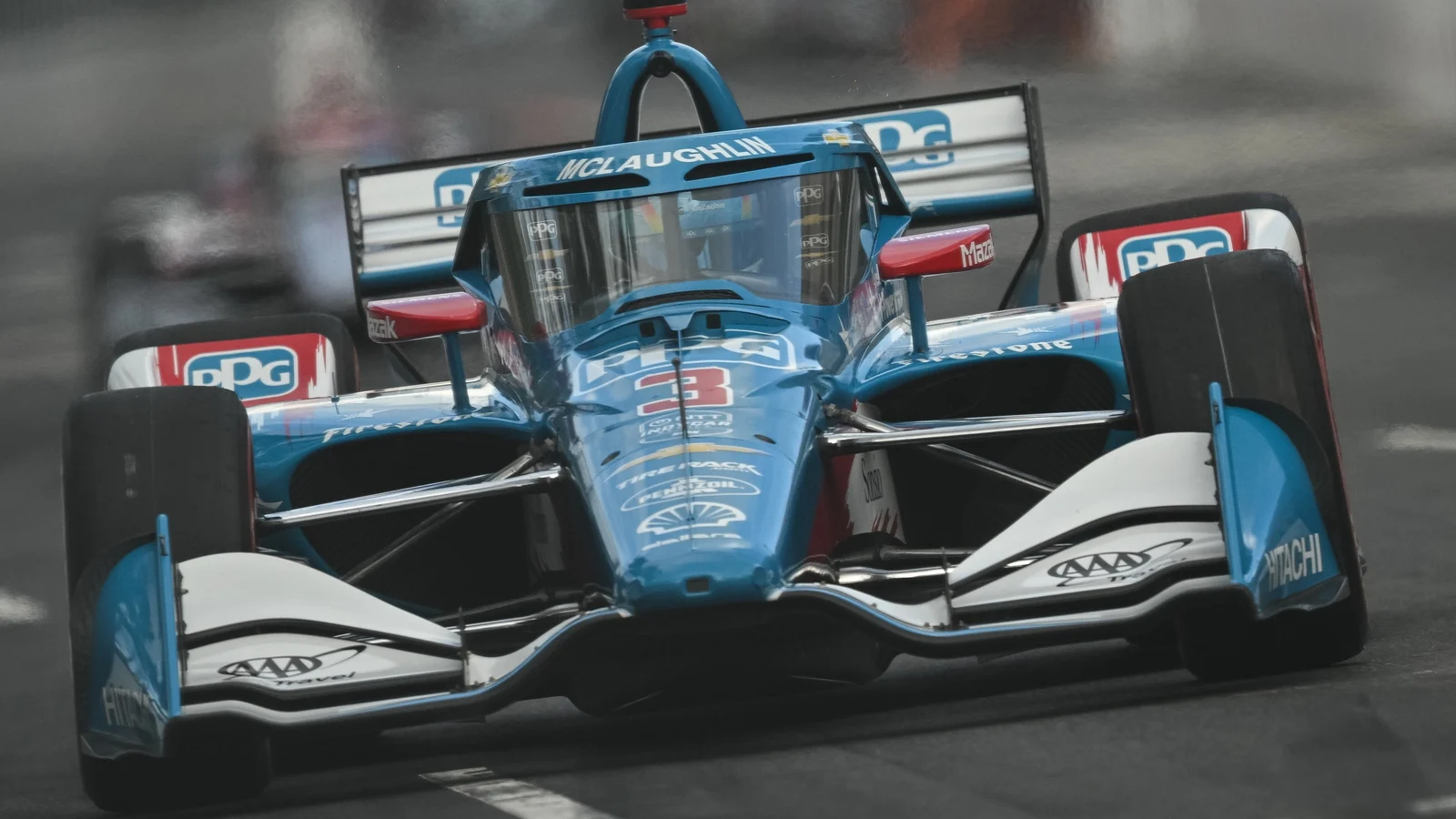
With engines set to howl against the skyline of the US capital, US President Donald Trump is preparing to punctuate the nation’s 250th anniversary with an unprecedented spectacle: an auto race threading through the streets of Washington.
The event is designed to put an exclamation point on a summer steeped in sport and pageantry, with drivers expected to blast past some of the city’s most recognisable sites.
Billed as IndyCar’s Freedom 250 Grand Prix, the course will run through the National Mall, sweep by the Capitol, charge down historic Pennsylvania Avenue and loop around the National Archives.
Officials said the race could attract about 200,000 spectators, and admission is free. For fans seeking a premium view, passes to private trackside clubs have sold for $5,000 (€4,300).
Mr Trump’s motorcade is slated to make an honorary circuit of the track, and he is expected to wave the green flag to launch the 402km contest.
“I don’t know if anything will ever top what we’re going to be having,” he said in July, when drivers came to the White House to mark the start of track construction.
Drivers sped through Washington’s streets yesterday in practice rounds
The race arrives as the latest in a run of headline sporting moments Mr Trump has leaned on to project celebration during his second term, even as his approval rating has fallen to its lowest point since he returned to the White House in January 2025 and the US is embroiled in a war with Iran.
He kicked off the summer by hosting a professional mixed martial arts bout on the South Lawn of the White House, then a month later handed the championship trophy to FIFA World Cup champion Spain.
Earlier this month, he also took part in the “Patriot Games,” a made-for-television mash-up of game show and track meet featuring high school athletes, broadcast on ESPN.
For Mr Trump, these appearances have doubled as a platform to keep his profile high at home and abroad.
The UFC card was streamed internationally, and at the World Cup trophy ceremony he remained at mid-pitch as Spain lifted the cup — a moment carried to a global television audience that likely surpassed 1 billion viewers.
On Saturday, Washington residents got a preview of what is coming as cars thundered along downtown streets in practice and qualifying for today’s first-of-its-kind race.
IndyCar drivers pushed open-wheel cars to speeds of up to 298km/h across the bumps and bends of a seven-turn, 2.7km layout that winds around the Washington Monument, US Capitol, National Gallery of Art and the Smithsonian’s Air and Space Museum, all bordering the National Mall.
“This is surreal for all of us drivers,” said American Kyle Kirkwood, who went second in practice with a lap of 56.691 seconds.
“The history, going around the museums, the monument, the Capitol building – everything about this is something you dream about.
“Thirty years from now we’re going to look back and realize that was one of the coolest races we’ve ever done.”
Spain’s Alex Palou, the season points leader with six wins this year, claimed his seventh pole position of the campaign after a qualifying lap of 56.899 seconds, having set the pace in practice at 56.614.
“Such a privilege to be racing here. Spectacular place,” said Palou, who visited the White House earlier this week. “To see the buildings we have around, the Capitol when you exit turn seven, it’s just incredible.”
Organisers expect up to 200,000 people to attend the race
Even so, officials and teams suggested the leaderboard mattered less than the setting — a dramatic stage for racing that Mr Trump put in motion by executive order as part of the United States’ 250th birthday celebrations.
“This is a once-in-a-lifetime event,” said Bud Denker, Freedom 250 chairman and president of IndyCar owner Penske Corporation.
“The president and Cabinet members, they really made it happen,” Mr Denker said, pointing to a seven-month build-out timeline for work that typically takes two years.
Organisers expect up to 100,000 people to attend the race, with Mr Trump among those anticipated to be on hand.
A 25-car field will run 147 laps for 402km, making it the second-longest street-course race in IndyCar history behind the 498km events held in 1982 and 1983 in Cleveland.
“I can’t think of a cooler setting when you’re looking at the Capitol in the background,” said Zak Brown, chief executive officer of McLaren Racing. “I’m already hoping there’s a year two.”
Drivers learned quickly that Washington’s streets will punish mistakes: bumps on Pennsylvania Avenue just past turn one — with the start-finish line at the US Capitol — and more jolts before turns two and six sent several cars into the padded concrete outer wall.
The course takes in many iconic Washington landmarks
“It’s good to be racing here,” said France’s Romain Grosjean. “There’s definitely a few more bumps, a bit less corners, but generally there are some really good flowing sections.”
Mexico’s Pato O’Ward said staying precise over the uneven pavement will be crucial.
“There are certain ones that are right where maybe the car doesn’t love it all the time. That’s a little bit of probably what we’re going to be working around,” O’Ward said.
“You need to be quite aware of where to place the car. It’s about getting all the small details right. I expect it to be a tough race.”
Palou said he plans to race with the kind of intensity usually reserved for the Indianapolis 500 as he pursues a fourth straight IndyCar season title and his fifth in six years.
“The race is going to be tough – 250 miles, a long day. It’s going to be rough,” Palou said.
“Huge bumps heading into turn two and turn six, massive bumps that are going to spice things up.
“The bumps are so big, there’s not much you can do. You need to have a car that’s alright over bumps, that’s not trying to kill you every time.
“Once it’s manageable, you just need to go over them and try and make the car as fast as possible.”