A Garden, Two Men and a Fragile Calm: Inside a Beijing Summit That Was More Theater Than Triumph
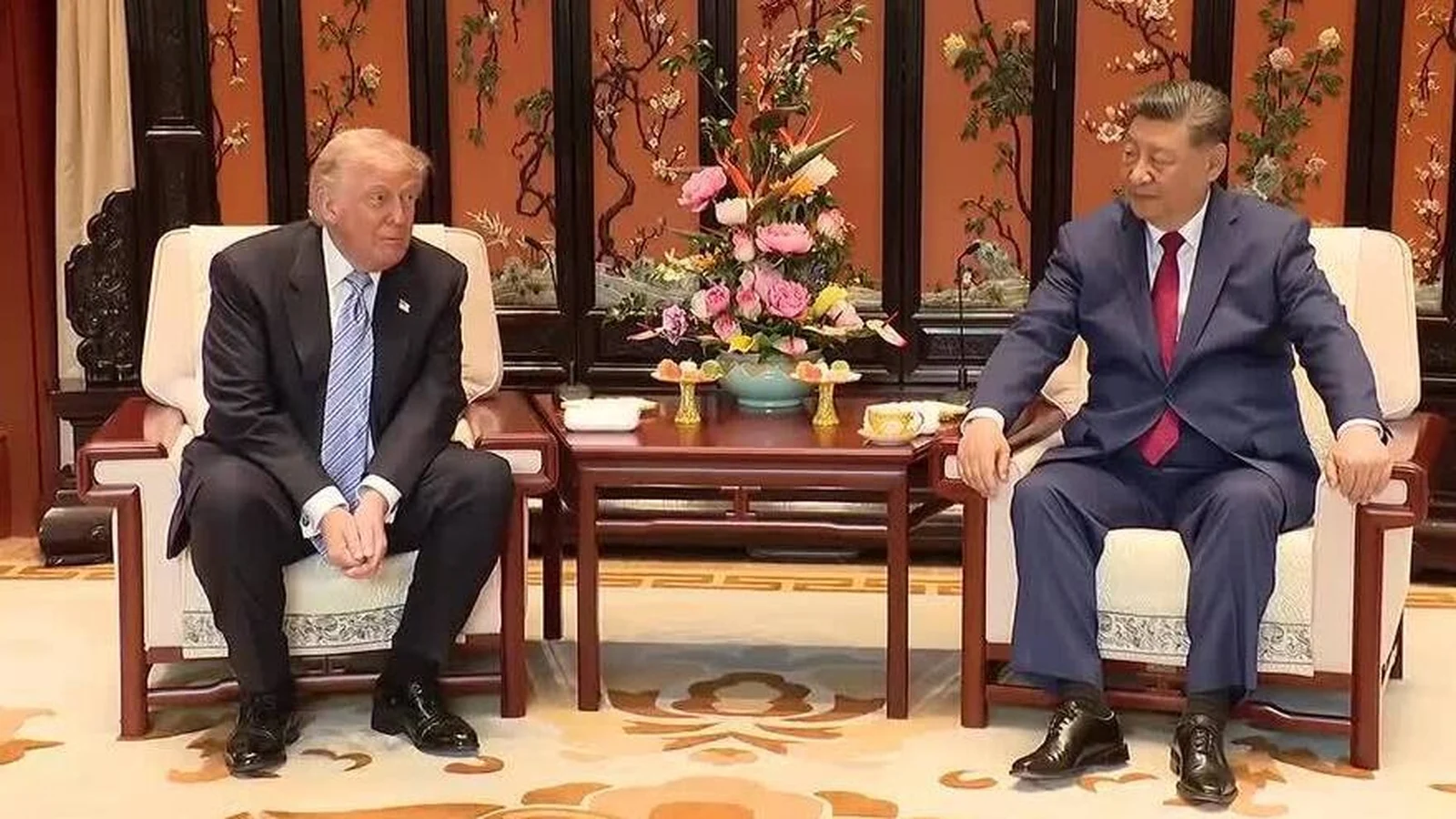
There is something ceremonial about power when it chooses to wear the trappings of a garden. Against the walled hush of Zhongnanhai — the imperial gardens repurposed into the nerve center of modern Chinese command — two leaders met between roses and lacquered pavilions. They strolled. They exchanged small courtesies. They sat in ornate red chairs and sipped tea in a place where emperors once listened to ministers and now two of the most consequential politicians on Earth parsed economics and diplomacy.
If you closed your eyes, you might have believed the choreography: friendly smiles, an offer to send seeds, a mutual nod toward stability. Open them, though, and the scene felt like a taut, well-lit stage, with curtains concealing unresolved lines. For a global audience watching a U.S. president visit China for the first time since 2017, the optics were deliberate—warmth met restraint—yet substance remained stubbornly evasive.
Trade Truce, Not a Breakthrough
On paper, the summit produced lists and talking points: promises to buy American farm goods, beef and energy, talk of aviation orders, and murmurings about mechanisms to manage future trade. On the tarmac of markets and political expectations, the outcome felt smaller.
“These were stability deals, not headline-making breakthroughs,” said Chim Lee, a senior analyst who has watched Sino-U.S. ties for years. “Both sides wanted to avoid collision, but neither wanted to cede strategic leverage.”
President aides described roughly $30 billion in “identified” non-sensitive purchases — an attempt to show movement without touching the thorny issues that have defined relations in recent years. A claim that China had agreed to buy 200 Boeing jets was made on U.S. television, but investors greeted the figure with skepticism: Boeing shares dropped more than 4% the day after, a testament to how muted promised purchases can be when markets expect more.
And then there was the long, cold shadow of cutting-edge technology. No breakthrough emerged on the sale of high-end AI chips. The future of advanced semiconductors—chips that are the blood in the veins of artificial intelligence—remains a geopolitical standoff. One CEO’s last-minute accompaniment to the trip underscored the point: business wants access; governments are wary to cede the edge.
Why the Market Gave a Lukewarm Reception
Investors had hoped for a roadmap out of tariff standoffs and supply-chain disruptions. Instead, what they got was reassurance that neither leader wanted to escalate, coupled with hedging language that leaves policy flexible. That’s not nothing. But in a world where capital prices volatility on certainty, the summit felt strategically calming but economically underwhelming.
Energy, Iran and the Strait of Hormuz
Beyond trade, energy security was a central theme—hard to avoid when politics in the Middle East have a direct line to pump prices at the global pump. The Strait of Hormuz, an artery through which some 20% of the world’s seaborne oil and liquefied natural gas normally flows, was invoked as a shared concern.
“Disruptions in the Middle East are not an American problem or a Chinese problem; they are a global problem,” explained Dr. Amina Farouk, an energy economist. “When shipping lanes are threatened, every economy pays.”
Beijing’s foreign ministry did not mince words about a recent conflict involving Iran: “This conflict, which should never have happened, has no reason to continue,” officials said publicly during the talks, adding that China would support efforts to find a peace settlement. In private, analysts doubt Beijing will suddenly push Tehran to capitulate—after all, Tehran serves as a strategic counterweight in Beijing’s calculations about global influence and pressure.
Taiwan: The Thin Line Between Warning and Threat
Midway through the banquet speeches and polite exchange, a steeper tone entered the room. Taiwan—just 80km from China’s coast and a perennial flashpoint—was raised. Beijing used the occasion to underscore a blunt message: mishandling the island issue risks conflict.
“We talked about Taiwan because it is where misjudgment could become catastrophic,” said a diplomat who requested anonymity. “It’s a message in a gilded envelope.”
Washington, bound by law to ensure Taiwan can defend itself, offered the predictable response: policy unchanged, support steady. Yet the room’s conviviality revealed how fragile that equilibrium is. The warning was sharp, but tucked within an otherwise friendly summit—another reminder that diplomacy often couples caution with charm.
Human Rights and the Limits of Courting
Not all sticks were put away. The U.S. side raised human-rights cases—most notably a high-profile media tycoon held in Hong Kong—urging for compassion and legal fairness. Beijing framed such matters as internal affairs, an immutable line in its diplomatic script.
“We will always bring up human dignity and legal process,” said an American official. “Whether that translates into results is another matter. For now, we keep the conversation alive.”
Local Voices from Beijing
Walking away from Zhongnanhai, the city felt indifferent and intimate at once. A tea vendor near the gate offered a wry smile, stirring jasmine leaves into a cup.
“They come to drink our tea and practice smiles,” she said. “We have our daily worries—rents, school places—but every summit makes us feel both important and invisible.”
A university student, carrying a backpack emblazoned with an English slogan, noted the spectacle with the distance of youth. “It’s a play of power. We want peace, jobs, chance to study abroad. I just hope these talks mean my friends can work somewhere without politics stealing their futures.”
What This Moment Tells Us About the Wider World
What unfolded in Zhongnanhai is both a microcosm and a symptom. The display of cordiality set against stubborn disagreements speaks to a world where competition and cooperation must coexist. Supply chains are being rebalanced; technology is being weaponized into geopolitics; energy security remains a global common good precariously dependent on local conflicts.
Consider these threads:
- 20%: Rough share of global seaborne oil and LNG typically flowing through the Strait of Hormuz.
- 200: The number of Boeing jets reportedly discussed—enough to stir markets, but not to soothe investor expectations.
- Ongoing: The elusive talks over advanced AI chips and semiconductors, a technology tug-of-war that underpins tomorrow’s economic advantage.
Where Do We Go From Here?
Diplomacy here was pragmatic and performative. It bought time and avoided escalation. But time is not an answer; it is a resource. Will it be used to build transparent mechanisms for trade, to stabilize energy routes, to reduce the chance of a miscalculation over Taiwan—or will it be saved as political cover until the next election cycle and the next crisis?
Ask yourself: do you want a world where major powers keep one another close enough to prevent war but distant enough to allow confrontation in the shadows? Or do you imagine a different pathway—one where global issues like energy, technology governance and human rights are managed through inclusive institutions rather than ad hoc pacts?
As the leaders departed their tea cups and rose gardens, the global audience was left with a sense of cautious relief and nagging incompletion. The garden had been pleasant. The roses smelled fine. But the seeds planted—if any—will need careful tending.