Two Tankers, One Strait, and the Fragile Breath Between War and Peace
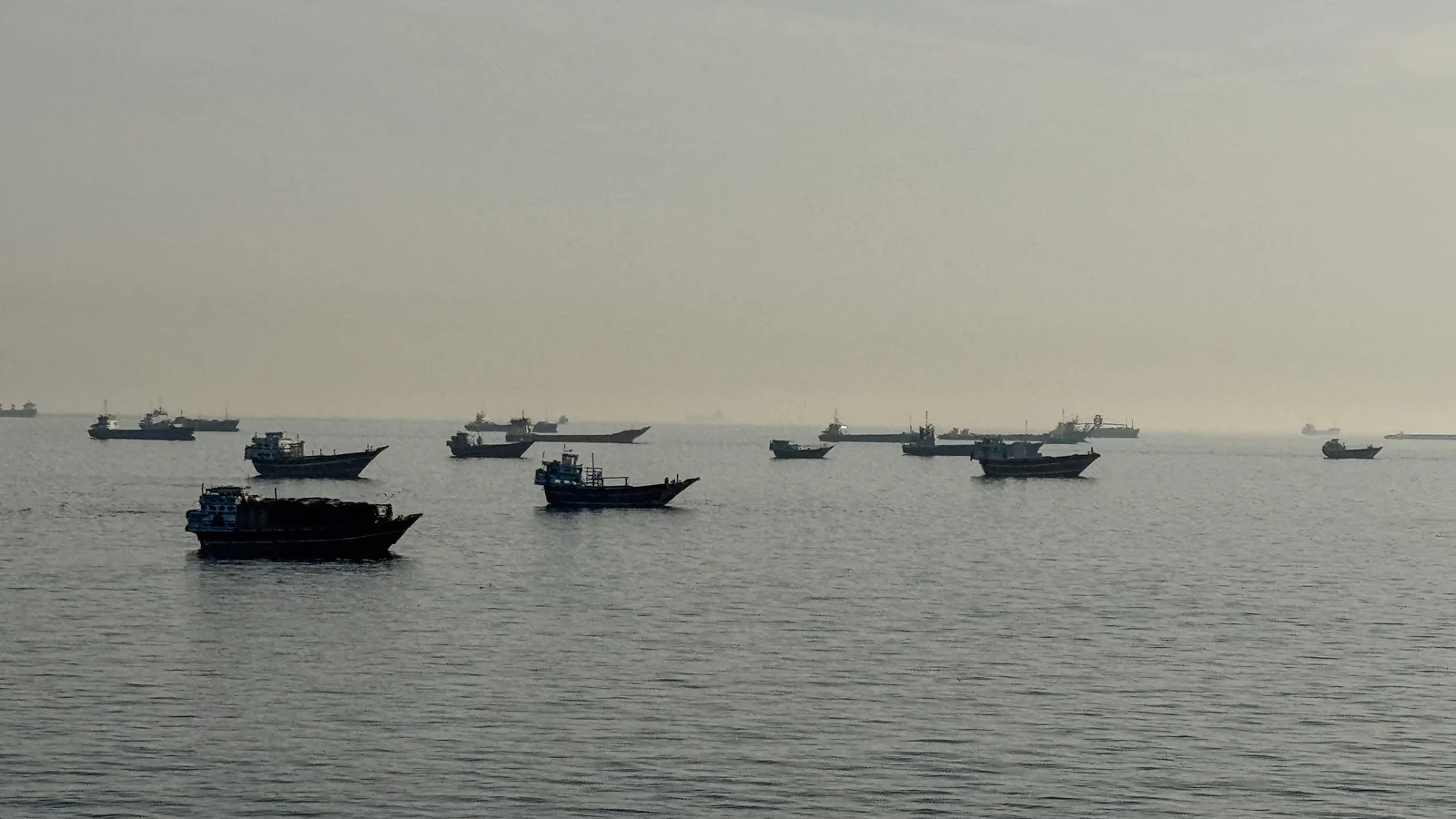
There is something quietly cinematic about a supertanker cutting through the wake of the Strait of Hormuz — a hulking shadow moving across a narrow throat of water where a fifth of the world’s seaborne oil once flowed, where the fate of economies and elections can feel as immediate as the salt on your lips.
Last week two Chinese-flagged tankers carrying Iraqi crude slipped out of that chokepoint, according to shipping trackers LSEG and Kpler. Together they carried roughly four million barrels of oil — a small figure in the global ledger, perhaps, but a gargantuan symbol for a world watching whether a three-month-old war between the US, Israel and Iran might be heading toward a fragile ceasefire.
Signals, Not Certainties
The departure of the ships arrived on the back of unusually optimistic language from Washington. President Donald Trump said the war could end “very quickly,” while Vice-President J.D. Vance described the administration as being “in a pretty good spot” at a White House briefing. Mr. Trump even suggested he had been moments away from ordering attacks before pausing to consider a new Iranian proposal.
These are not tidy diplomatic communiqués. They are, instead, the halting syllables of a larger, clumsy negotiation — public, televised, and roiling with domestic politics. “We’re trying to make our red lines clear,” Mr. Vance told reporters, acknowledging the difficulty of talking to a fractured Iranian leadership. His words underscored how much of diplomacy now happens in the glare of global media and the sway of campaign-season pressure.
Investors took the signals seriously. Brent crude sank to as low as $110.16 a barrel before clawing back some ground. “Markets are fragile and reactive; they’re trying to price in hope,” said Toshitaka Tazawa, an analyst at Fujitomi Securities. “Investors want to know if Washington and Tehran can actually bridge their differences — and the tone out of the White House keeps changing.”
What Tehran Says It Wants
On the Iranian side, state outlets described a package of demands: an end to hostilities on all fronts, including Lebanon; the removal of US forces from areas near Iran; reparations for damage; lifting of sanctions; release of frozen funds; and an end to the maritime blockade. Iranian officials framed the pause from Washington as recognition that any new US strike would elicit a decisive response.
“We are not seeking perpetual confrontation,” said a fictionalized version of a senior Iranian negotiator in the kinds of candid moments diplomats sometimes allow themselves in private. “But there must be guarantees — not promises on paper, but concrete measures that rebuild trust.”
Washington has, for now, treated those demands with caution. US officials have publicly insisted that a deal must prevent a regional nuclear arms race and protect American interests and allies. Behind those high-sounding goals sits a humbler reality: a president under political pressure to reduce gasoline prices, reopen a vital shipping corridor, and steady approval ratings ahead of looming elections.
On the Ground: Port Cities, Tanker Crews, and Markets
Down on the docks — whether in Fujairah, Bandar Abbas, or the ash-grey quays of Basra — people measure the conflict in different units: days without work, the price of diesel, the number of colleagues who never came home. A Basra-born tanker mechanic I spoke with over a crackling phone line laughed ruefully when asked if the vessel departures felt like a turning point.
“We have been here before,” he said. “You pray when the seas are quiet, and you pray harder when they are loud. A tanker leaving is not peace; it’s breathing. We will believe in real safety when the pipelines flow and the kids can go to school without sirens.”
The commercial impact has been stark. Shipping analysts say the conflict caused the worst disruption to global energy supplies in recent memory, blocking hundreds of vessels and damaging facilities across the region. Tanker traffic in the Gulf was rerouted; insurance premiums spiked; spot freight rates leapt. For consumers in Europe, Asia and the United States, the shock translated into more expensive fuel at the pump and a new household-level anxiety about scarcity.
- Estimated share of globally traded seaborne oil that transits the Strait of Hormuz: roughly 20%.
- Number of barrels aboard the two recently departed supertankers: around 4 million (LSEG and Kpler).
- Recent low for Brent crude on positive signals: $110.16 per barrel.
Human Costs and the Hard Facts
Behind the economic numbers are human stories that refuse easy summation. Official and media tallies from the region describe thousands of deaths from bombing campaigns, mass displacement in Lebanon, and scores killed by Iranian strikes across Israel and neighboring Gulf nations. Those figures — to heavy to list fully here — are reminders that any diplomatic accord must squarely address reconstruction, accountability, and the long shadow of trauma.
“You can negotiate about barrels and sanctions, but you cannot negotiate away the dead,” said a Beirut relief worker. “Every promise must include practical help for families who lost homes and livelihoods.”
Those realities make the present pause perilous in two ways: first, because a deal cobbled together under domestic pressure could leave core issues unaddressed; second, because the longer gray zones persist, the more opportunity there is for miscalculation — a drone here, a misfired missile there — to reputationally sink fragile diplomacy.
What Would a Deal Actually Look Like?
The contours of any credible pause would likely include several elements: specific, time-bound military de-escalation steps; verifiable arrangements for the release of frozen funds; a phased easing of sanctions; and international mechanisms to guarantee compliance. It might also involve regional confidence-building measures — perhaps new inspections or multilateral patrols in busy shipping lanes.
“Without independent verification, we’re just trading promises,” said an arms control specialist in London. “Verification is the currency of peace.”
Yet both sides bring domestic constraints to the table. Tehran must answer hardliners and a leadership that only recently survived large-scale protests. Washington answers voters and a political class that demands visible results. That is why the Strait — more than geography — has become a barometer of political will.
Broader Themes: Supply Chains, Power, and the New Realities of War
What happens in the Gulf reverberates far beyond the sand and salt. The past year has underlined a simple truth: in a globalized economy, distant conflicts can be felt in suburban garages, in the price of a loaf of bread, in the margins of fragile businesses.
But there is another, quieter lesson. The crisis has shown how diplomacy in the 21st century is a hybrid of negotiation rooms and social feeds — a world where leaders broadcast their bargains and their threats, where markets respond in minutes, and where small gestures (two tankers leaving a strait) can lift spirits and markets alike.
Questions for the Reader
What should count more in the calculus of peace: the immediate return of oil to markets and lower prices at the pump, or deeper, riskier investments in justice and reconstruction? Can a deal that placates markets also heal communities that have been ripped apart by months of war?
As night falls over the Gulf and the two ships continue on their routes, the world watches and waits. For now, there is breathing room. There is hope. There is also the long work of turning a pause into a durable peace — and that will take more than ships moving through a strait.
“If the deal is to last,” the Basra mechanic told me before we said goodbye, “it must feel like life again when you wake up. Not just safer on the maps, but safe at the tea stall.”