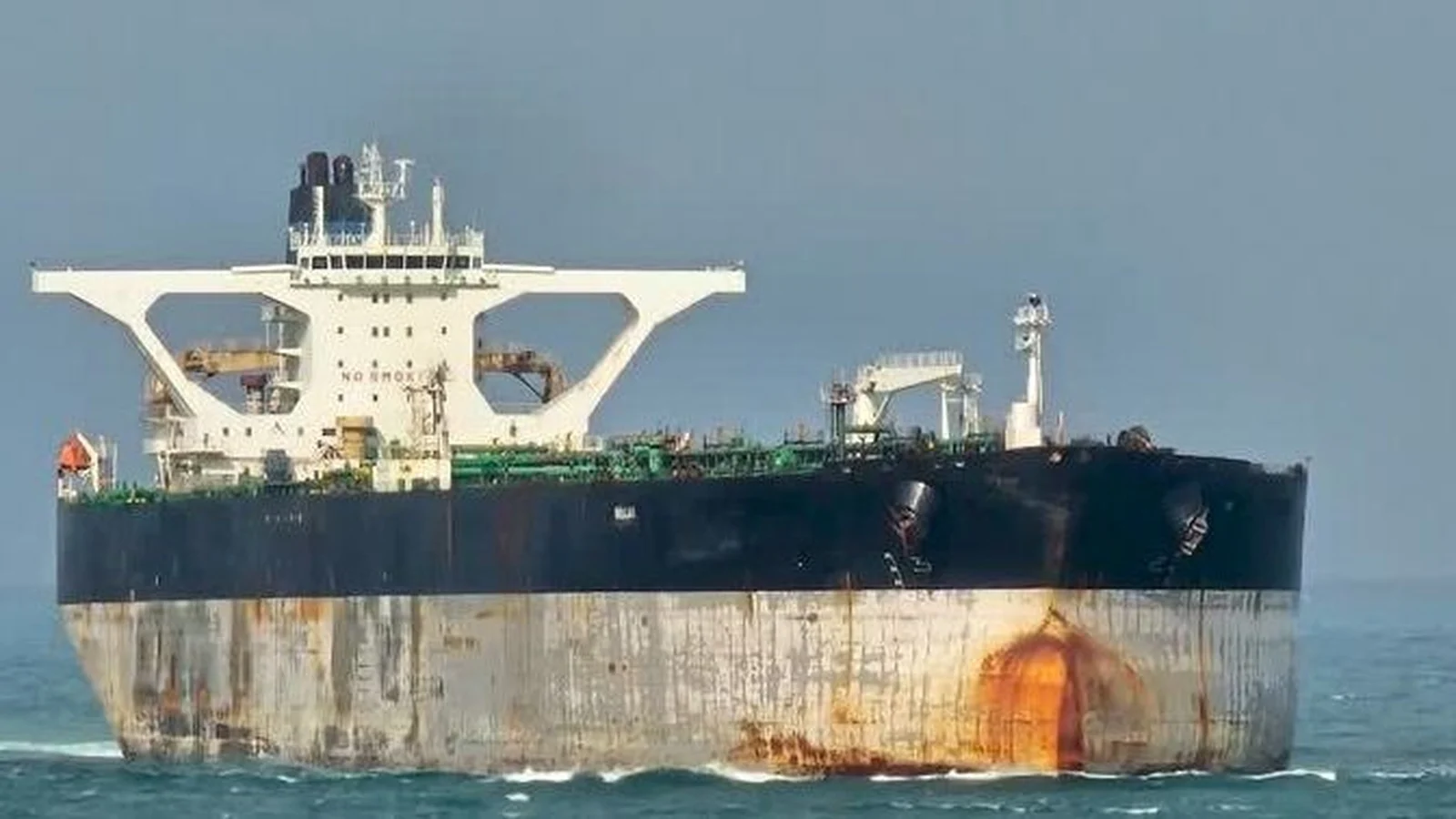
When a Tanker Becomes a Drumbeat: The North Atlantic Boarding That Echoed Across Capitals
The North Atlantic is a cold, wind-swept theater where weather and geopolitics sometimes intersect in ways that feel impossibly cinematic. On a grey January morning, a single oil tanker — rechristened the Marinera, its hull freshly painted with a Russian flag — became the focal point of an international chase that stretched from the Caribbean to the waters west of Ireland and up toward Iceland.
United States authorities announced they had seized the vessel after a multi-week pursuit that began near Venezuela. The operation was described as a coordinated effort between the Department of Homeland Security and U.S. military forces under U.S. European Command. Officials said the ship had been implicated in moving sanctioned Venezuelan oil and was deemed stateless after what they described as a false-flag reflagging to Russia.
A chase that reads like a map of modern tensions
Tracking feeds showed the ship altering course again and again: off the Venezuelan coast, skirting attempts by the U.S. Coast Guard to board it, changing its name from M/V Bella 1 to Marinera, and — by U.S. accounts — even having crew members paint a Russian flag on deck. Satellite positions placed the tanker roughly 400 kilometers west of Ireland at one point, outside that state’s exclusive economic zone, and later approaching Icelandic waters.
“This was a Venezuelan shadow fleet vessel that has transported sanctioned oil,” White House Press Secretary Karoline Leavitt told reporters, adding that the ship “was deemed stateless after flying a false flag, and it had a judicial seizure order, and that’s why the crew will be subject to prosecution.”
U.S. military spokespeople framed the interdiction as part of a broader campaign to choke off sanctioned Venezuelan oil flows — a move tied closely to the Trump administration’s hardline posture toward Caracas. “The blockade of sanctioned and illicit Venezuelan oil remains in FULL EFFECT — anywhere in the world,” U.S. Defense Secretary Pete Hegseth wrote on social media in response to the operation.
Voices from Moscow to coastal towns
In Moscow the reaction was swift and angry. Russia called the seizure a violation of maritime law and a senior Russian lawmaker labeled the action “outright piracy.” The Russian Transport Ministry said contact with the ship had been lost after U.S. naval forces boarded it near Iceland, and the Foreign Ministry demanded that any Russian crew members be treated “humane and dignified” and returned home swiftly.
“In accordance with the 1982 UN Convention on the Law of the Sea, freedom of navigation applies in the high seas,” a Russian ministry statement read. “No state has the right to use force against vessels duly registered in the jurisdictions of other states.”
Closer to shorelines, the seizure raised eyebrows and a flurry of questions. Ireland, whose airspace and maritime approaches were used by surveillance flights supporting the operation, sought quick clarifications. Foreign Affairs Minister Helen McEntee said she had received assurances from the U.S. Embassy that agreed protocols were respected, but she requested a detailed departmental report to lay out exactly what happened.
“We need to be sure that our rules and our sovereignty are respected,” McEntee told local media, acknowledging the precarious balancing act small states face when major powers operate in their skies and seas.
Experts and skeptics weigh in
For maritime law experts and retired seafarers, the incident reopened old debates about flag states, stateless vessels, and the legal grounds for boarding on the high seas.
Chris Reynolds, the former head of the Irish Coastguard, told reporters there is a high legal bar for boarding a foreign-flagged ship in international waters: only in cases of piracy, slavery, unauthorized broadcasting, or if the ship is flying an illegal flag. “That ship is technically Russian territory,” he said. “You’re on Russian soil when you step aboard a Russian-flagged vessel.”
Scott Lucas, a professor of international politics, argued the reflagging itself was a political maneuver — likely intended to offer the vessel a measure of protection. “Russia was trying to give some protection to Venezuela by reflagging and renaming the Bella 1,” he said, adding that while Moscow would loudly denounce the seizure, he doubted it would escalate into a military confrontation that risks wider war.
What the tanker tells us about energy, sanctions and the “dark fleet”
This episode is not an isolated maritime skirmish; it is a node in a global network of commerce, sanctions, and ingenuity. Since 2024, U.S. authorities have increasingly targeted what they call “shadow fleets” — tankers that obscure ownership and routing to move oil in defiance of sanctions regimes. Analysts say such vessels sometimes switch flags, shut off transponders, and use elaborate ship-to-ship transfers to evade detection.
There is also an economic logic at play. Venezuela, sitting on some of the world’s largest proven oil reserves, has been the center of sanctions and political contestation for years. The U.S. has tightened pressure to cut off revenue streams to the regimes and networks it deems problematic. When oil is worth tens to hundreds of millions of dollars per cargo, the incentives to find workarounds are enormous.
- Tracking data placed the Marinera near Ireland at roughly 400 km offshore — outside Ireland’s 200-nautical-mile exclusive economic zone.
- U.S. officials said the ship had been under sanction since 2024 for alleged links to Iran and Hezbollah.
- The operation reportedly included support from the U.K., which provided Royal Air Force surveillance in what London called full compliance with international law.
The human scenes: small moments amid geopolitics
In a coastal pub in Galway, a retired trawlerman leaned back, fingers stained with old grease and tea, and summed up what many locals felt: “It’s strange to think global wars happen out where we fish,” he said. “But we see the planes, we see the navy on the news, and you wonder — whose rules are we all supposed to live by?”
For the crew aboard the seized vessel, details remain murky. Moscow has demanded humane treatment and speedy repatriation of any Russian citizens on board. U.S. officials say the crew will be subject to prosecution under a judicial seizure order; Russia insists that boarding a vessel registered under its flag without consent violates the law of the sea.
Beyond the boarding: what comes next?
Two immediate questions hang in the air. First: will actions like these become the new normal — a patchwork of interdictions across the high seas where law, power, and money clash? Second: how will major powers calibrate responses to avoid dangerous escalations at sea?
The U.S. has now also announced the seizure of a second tanker, the M/T Sophia, in the Caribbean, underscoring that this is an ongoing campaign rather than a one-off operation. Whether other countries will follow suit, push back, or demand changes in how maritime law is applied will shape the future of international waters.
Stories like the Marinera’s force us to confront messy, modern questions: What does sovereignty mean on the open ocean? Who writes the rules when commerce, sanction regimes, and geopolitics collide? And as you read this, somewhere offshore a ship is slowing, turning, or disappearing from trackers — a reminder that beneath every headline there are sailors, dockworkers, and coastal communities whose lives ripple with each decision made in distant capitals.
So, what do you imagine when a single ship becomes a flashpoint? And how would you balance the demands of enforcing sanctions with the imperatives of law and human dignity? The Atlantic has room for a thousand answers — and for now, this tanker has provided one more question to steer by.