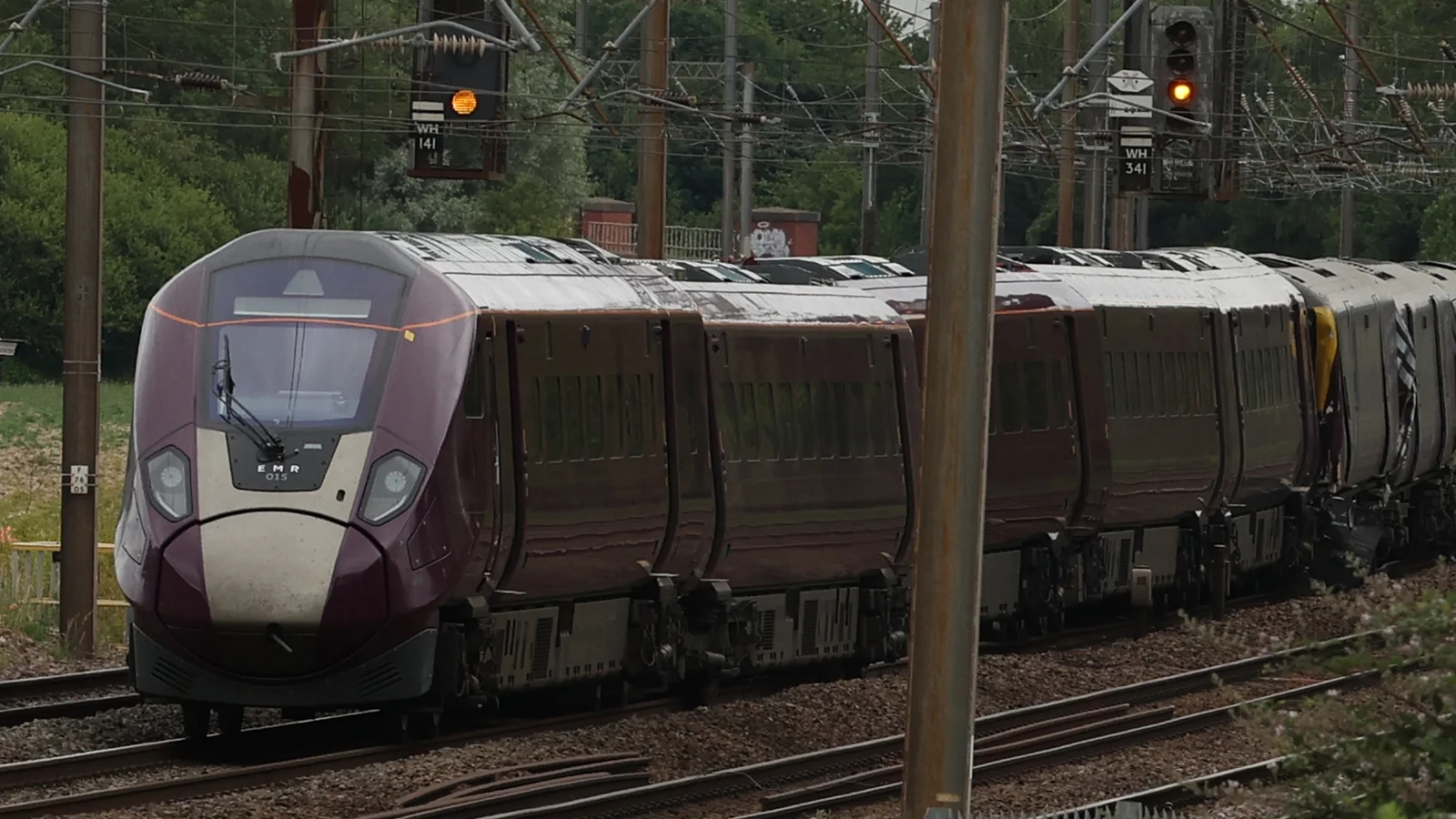
Fresh evidence from onboard cameras and data recorders has shed new light on Friday’s deadly UK rail crash, with investigators saying the driver of the moving train passed a red stop signal and only applied the brakes seconds before impact.
A London-bound electric train ploughed into another train that was stationary on the same track, injuring more than 100 people and killing the driver of the rear train, 60-year-old Shaun Burton.
Of those hurt, British Transport Police said “40 remain in hospital, with four of those still in a critical condition,” underscoring the severity of injuries suffered in the collision.
In preliminary findings released by the government, the Rail Accident Investigation Branch (RAIB) reported that onboard CCTV showed an automatic signal on the line “was displaying a red aspect” as the moving train “approached and then passed it”.
The RAIB, which independently examines rail incidents and works with the transport ministry to strengthen safety, said early analysis points to critical questions about how the warning systems and signals were operating in the moments before the crash.
Information downloaded from a black box at the back of the moving train showed the brake was activated “around nine seconds before the collision, while the train was travelling at approximately 76 miles (122 km) per hour,” investigators said.
Even with braking, the train slowed only modestly, dropping to about 78km per hour before it struck the train ahead.
Investigators said a red signal is intended to trigger an “audible and visual warning” in the cab, alerting the driver to an immediate hazard.
The automatic warning system is designed to sound a claxon onboard when a train approaches a signal that is not green, which the driver must acknowledge by pressing a button.
“If a warning is not responded to within a short timeframe, the train’s emergency brake is applied,” the report said.
The RAIB also said the train in front had stopped after a fault with its automatic warning system caused its brakes to apply.
However, investigators cautioned that they were still working to retrieve and assess information from the black box at the front of the moving train because of damage at that end. As a result, they said they could not yet comment on whether its automatic warning system functioned as intended or how the driver responded.
The investigation was expected to scrutinise the “positioning” and “visibility” of the red signal, key factors in understanding whether it could be clearly seen and reacted to in time.
Investigators said they would also assess the “crashworthiness performance of both trains during the collision” in light of the horrific injuries reported.
Transport minister Heidi Alexander said on X that “there is still much to establish” and “we will leave no stone unturned to understand what happened”.
ASLEF general secretary Dave Calfe echoed the need for answers, writing on X that “it was important to understand how and why” the train passed a red signal.