As Russian attacks intensify over Kyiv, a newly formed Gaelic games club is feeling the strain in real time — from disrupted routines to the constant calculation of where the nearest shelter lies.
Kyiv Gaels, founded in 2024 by Dublin humanitarian worker Alex Brock, was created to give the Irish community in the Ukrainian capital a focal point and to build a lasting link for Ukrainians who have taken up the GAA in Ireland.
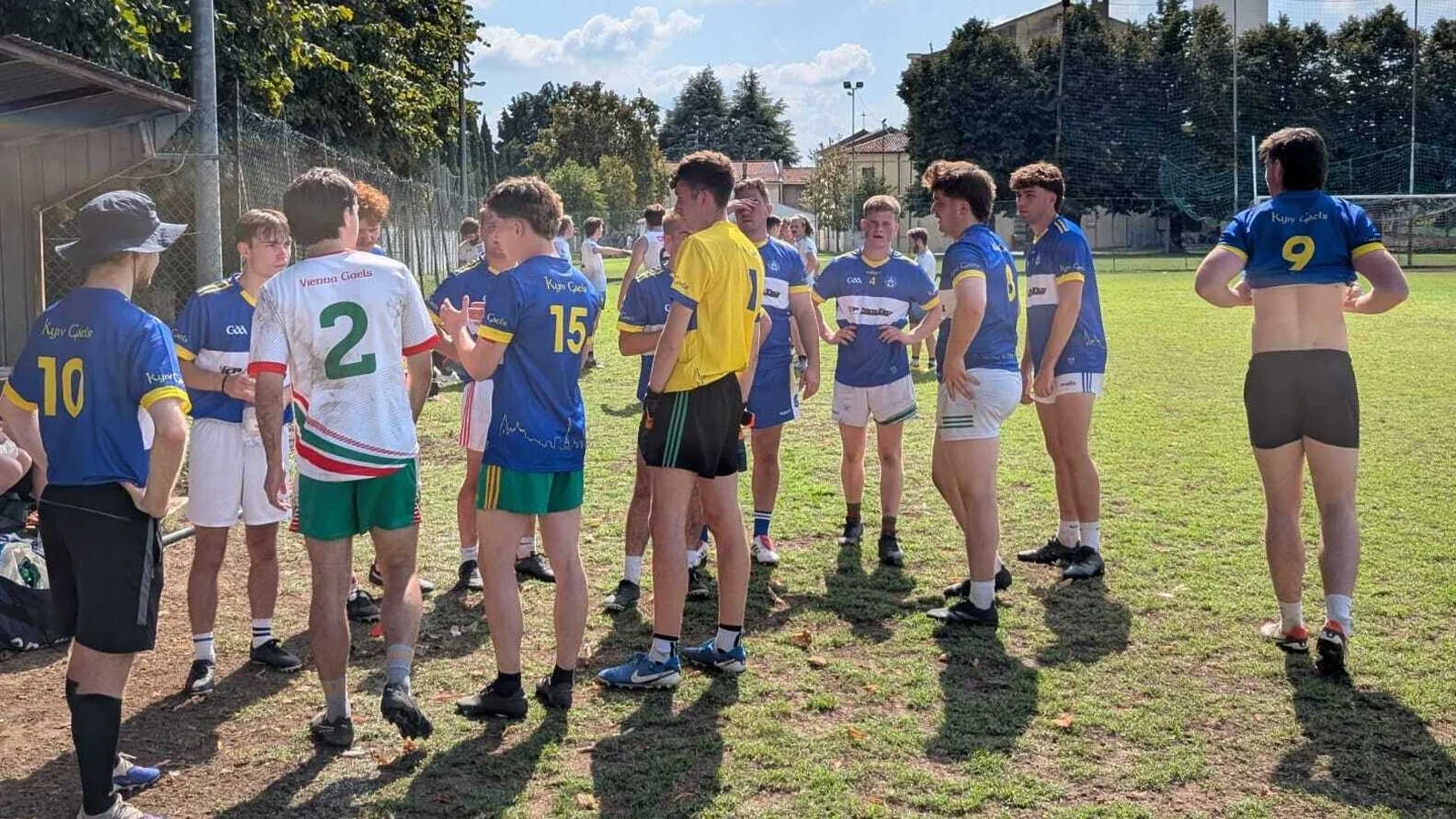
That young club marked a milestone this weekend, travelling to Italy to take part in its first European competition in Verona.
The side competed in the Central East GAA Regional Finals, staged during this year’s Tocatí festival in Verona, where Ireland was the guest of honour.
Mr Brock said the club’s mission was shaped by two clear goals.
One was to bring together Irish people living and working in Kyiv. The other was to create a welcoming home base for the thousands of Ukrainians now playing Gaelic games with schools and clubs across Ireland.
“There are thousands of Ukrainians involved in GAA with schools and clubs throughout Ireland. We wanted to create a space for them when the war is over and they return home, we will welcome them back and they will have a place to continue to play our games,” he said.
Alex Brock and Melissa McKay of Kyiv Gaels
But, he said, the worsening security situation in the capital is increasingly shaping everyday life — including training and club activity.
“The current situation is the worst we have seen in the Capital Kyiv since the war started. There is a lack of air defences which means a lot more of the attacks are landing in Kiev and there is a lot more destruction.
“We play at our grounds every Monday night, and we check the alarms before playing to see if there are any incoming missiles and to make sure we have a shelter nearby”.
Mr Brock said the rhythm of the threat has shifted sharply, with air-raid alerts no longer confined mainly to the night.
On how the situation has changed recently, he said that night-time incoming missile alarms were the norm previously, “but this has changed now to alarms nearly 24/7”, Mr Brock said.
He said the escalation is adding anxiety for those living and working in Kyiv, including people connected to the club.
“It’s very worrying for our friends and colleagues working there. A lot of our members have received notice that they are being relocated to the Western part of Ukraine for safety reasons. There is a heightened level of risk not only to humanitarian workers but it’s also being felt more acutely by Ukrainians themselves in Kyiv”, he said.
Even with the uncertainty, Mr Brock said he believes Kyiv Gaels will endure — continuing as a gathering point for Irish workers and, in time, a place for returning Ukrainian refugees who want to keep playing Gaelic games at home once the war ends.