The quiet before departure: a mission that became a country’s thread
There is a particular hush that settles over Camp Shamrock at dusk — a silence stitched together from boots, the distant clatter of a generator and the long, slow exhale of the Mediterranean. For nearly half a century the United Nations Interim Force in Lebanon has been that hush for parts of southern Lebanon: a human buffer standing between two adversaries, a daily reminder that some conflicts require a constant, living presence to keep worse things at bay.
Now, those boots are being asked to step back. UNIFIL, the peacekeeping mission that has tangibly shaped life along Lebanon’s southern frontier, plans to withdraw most of its uniformed personnel by mid-2027, with the final curtain drawn by year’s end, a UN spokesperson told reporters. The mission’s official mandate expires at the end of December 2026 after a Security Council decision last year — one heavily influenced by pressure from Washington and Jerusalem — that called for “an orderly and safe drawdown and withdrawal” within a year.
What UNIFIL has meant — and what leaving will feel like
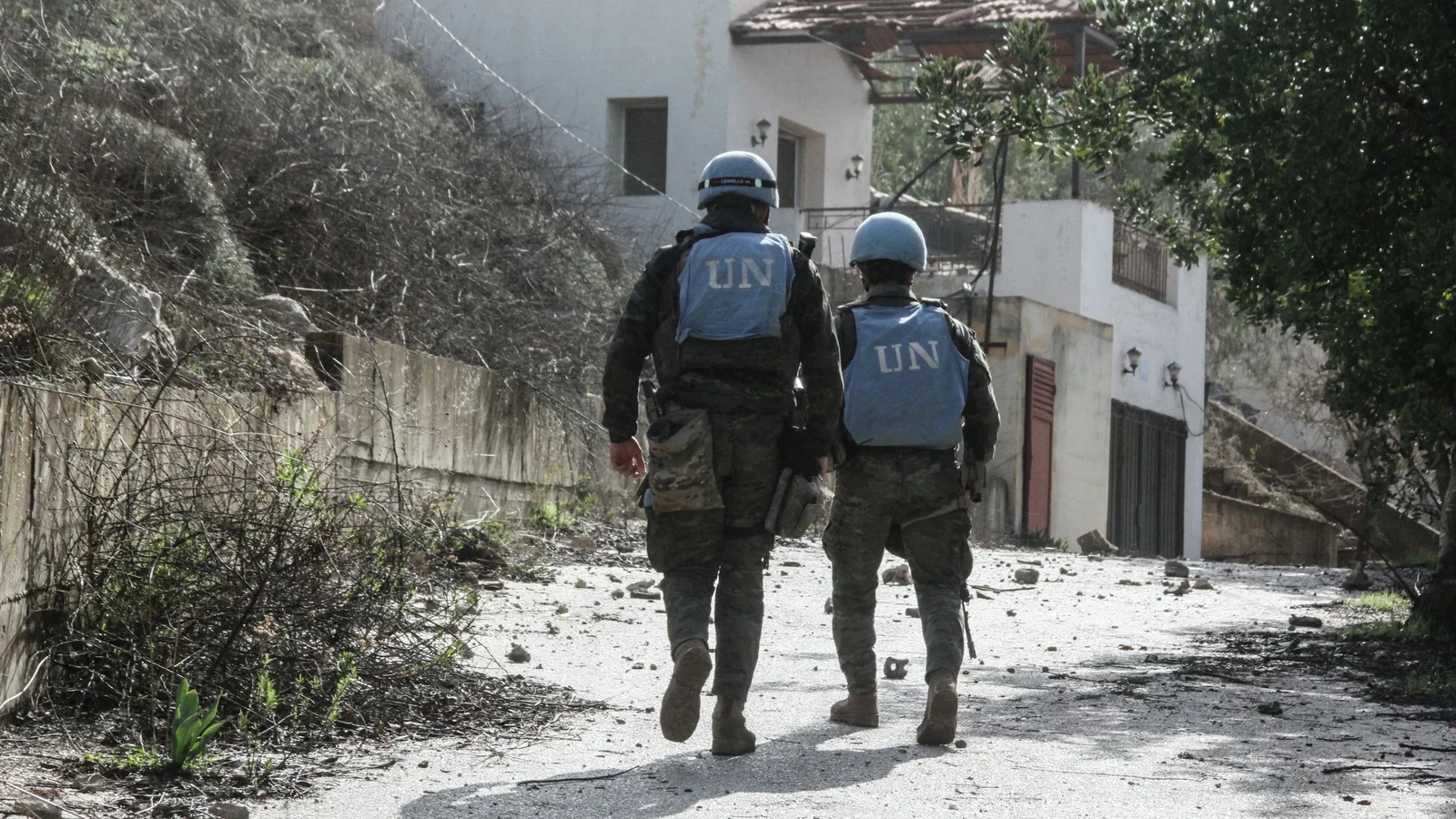
Walk through any of the southern border towns and you’ll see the mission’s footprint: sandbagged observation posts, UN blue helmets in markets, the Irish tricolour on uniforms and a guard of honour at Camp Shamrock when Ireland’s Taoiseach visited in December 2025. For many Lebanese, UNIFIL has been a symbol of continuity, the most visible thread of a complicated international relationship with their own security.
“We used to know when the blue helmets changed shift,” said Ali, a fisherman from Naqoura, watching nets being mended on the shore. “They were there when shells fell in 2006 and when there was calm afterward. It’s not just about soldiers — it’s about knowing someone is watching.”
UNIFIL currently counts roughly 7,500 peacekeepers from 48 countries, including around 300 Irish troops — making Ireland’s involvement one of the mission’s longest and most personal commitments. But this winter the force has already trimmed its ranks by almost 2,000, with a couple hundred more slated to depart in the spring. The United Nations has pointed to an organisation-wide financial squeeze as the immediate driver behind those cuts, framing them as cost-savings rather than political repositioning.
From ceasefires to skirmishes: the fragile calm
Lebanon’s border with Israel has rarely been a place of untroubled peace. The current lull traces back to a ceasefire brokered in November 2024 following more than a year of fierce exchanges between Israel and Hezbollah, an Iran-backed Lebanese militia and political faction. The 2006 UN resolution that underpinned UNIFIL’s original mandate remains the legal lodestar for monitoring violations — but enforcement, in practice, has looked uneven.
“We’ve had periods of relative quiet and periods when our personnel were taking fire,” said Kandice Ardiel, a UNIFIL spokesperson, in a briefing. “After operations cease on 31 December, we begin the process of sending UNIFIL personnel and equipment home and transferring our UN positions to the Lebanese authorities. During that drawdown, our authorised activities will necessarily be limited to protecting UN personnel and overseeing a safe departure.”
That admission — of limited authority in the final months — has left many locals and diplomats uneasy. Israeli forces have continued targeted strikes they say are aimed at Hezbollah, and Israeli troops remain in five border areas. UNIFIL itself has repeatedly reported instances of Israeli fire at or near its personnel since the truce, underscoring the fragile reality of a ceasefire that can be punctured in an instant.
Local color: food, faith and everyday life under blue helmets
To understand what UNIFIL’s presence means on the ground, taste matters as much as troop numbers. In the market squares near the front line, women sell trays of warm manakish sprinkled with zaatar, hands moving like a choreography learned in childhood. Boys in rugby shirts kick a battered ball beneath watchful eyes. In the evenings, soldiers from Italy, France, Ghana and Ireland share tea and stories with shopkeepers, trading laughter in a dozen languages.
“We gave them lemons one year when the harvest was poor,” laughed Maryam, a local grocer. “They still talk about how they made lemonade for all the children.” Small acts like that have become the mission’s human ledger — accruing goodwill that official reports rarely capture.
Who will fill the gap? The politics of replacement
As UNIFIL retreats, Lebanese authorities have made it clear they do not want the south left unguarded. Beirut has been pressing European partners to maintain some sort of international presence, even in limited numbers, to prevent a vacuum that might embolden non-state actors or trigger new confrontations.
France’s foreign minister visited Beirut this month and suggested the Lebanese army should be prepared to assume greater responsibility when the UN departs. Italy has also signalled its intention to keep a military presence in Lebanon after UNIFIL leaves.
“The Lebanese army is professional and has shown resilience,” said Major-General Antoine Lebrun, a retired military analyst based in Paris. “But the transition from international peacekeepers to national forces is not just a matter of boots. It’s about logistics, intelligence sharing, rules of engagement and the political will to enforce them.”
Choices that ripple beyond borders
This is a story about withdrawal, yes, but also about the shifting nature of peacekeeping in an era of constrained budgets and rising geopolitical tension. The UN’s decision to end UNIFIL’s mandate — and the subsequent drawdown driven partly by financial pressure — raises difficult questions for the wider international community.
What responsibility do powerful states have to backstop fragile post-conflict arrangements when they push for an exit? What happens to communities who have grown used to the quiet delivered by foreign troops? And, perhaps more unsettling: can any external force prevent a return to escalation when the underlying drivers — weapons, ideology, cross-border rivalries — remain?
Looking ahead
In the months to come, the small towns and olive groves that dot Lebanon’s south will become a testing ground for these questions. Will the Lebanese army be able to parity the presence and perceived neutrality that UNIFIL represented? Will European partners step in where the UN recedes? Or will the void be filled by the very dynamics that brought peacekeepers to the line in the first place?
“We sleep with one eye open here,” said Rami, a schoolteacher in a border village. “Not because we are militant people, but because history has taught us to be watchful. I hope those leaving are replaced by something steady — not just another short chapter in a long story.”
There is a melancholy in that hope: equal parts gratitude for decades of protection and anxiety about the future. As the Mediterranean sun drops behind Hizballah’s lines and the UN flags flutter their last, the questions the mission leaves behind will demand answers that are political, local and painfully human.
- UNIFIL personnel: ~7,500 from 48 countries
- Irish peacekeepers: ~300
- Mandate expiry: 31 December 2026
- Planned substantial withdrawal completion: mid-2027; full drawdown by end-2027
What do you think: can a national army step seamlessly into a peacekeeper’s shoes, or does true stability rely on wider international investment and imagination? The people of southern Lebanon will soon have to answer — whether at the polling station, at the negotiating table, or simply, in the daily act of living through another dawn.