In Islamabad’s Quiet Before the Possible Storm: A City Holding Its Breath as Iran and the US Sit Down
There was an almost unnatural hush the morning the two US Air Force planes touched down on the tarmac outside Islamabad. The usual scramble of vendors selling chai and roasted chickpeas near the airport had thinned; the city’s jasmine-scented evenings felt distant. Soldiers in olive fatigues and paramilitary checkpoints ringed the capital like a careful hand around a sleeping bird.
“You could hear the city hold its breath,” said Ayesha Khan, a tea-seller near Blue Area who watched armored vehicles roll past. “People are saying: will this be the end of something terrible, or just the start of a new chapter of trouble?”
High-stakes diplomacy in a low-profile city
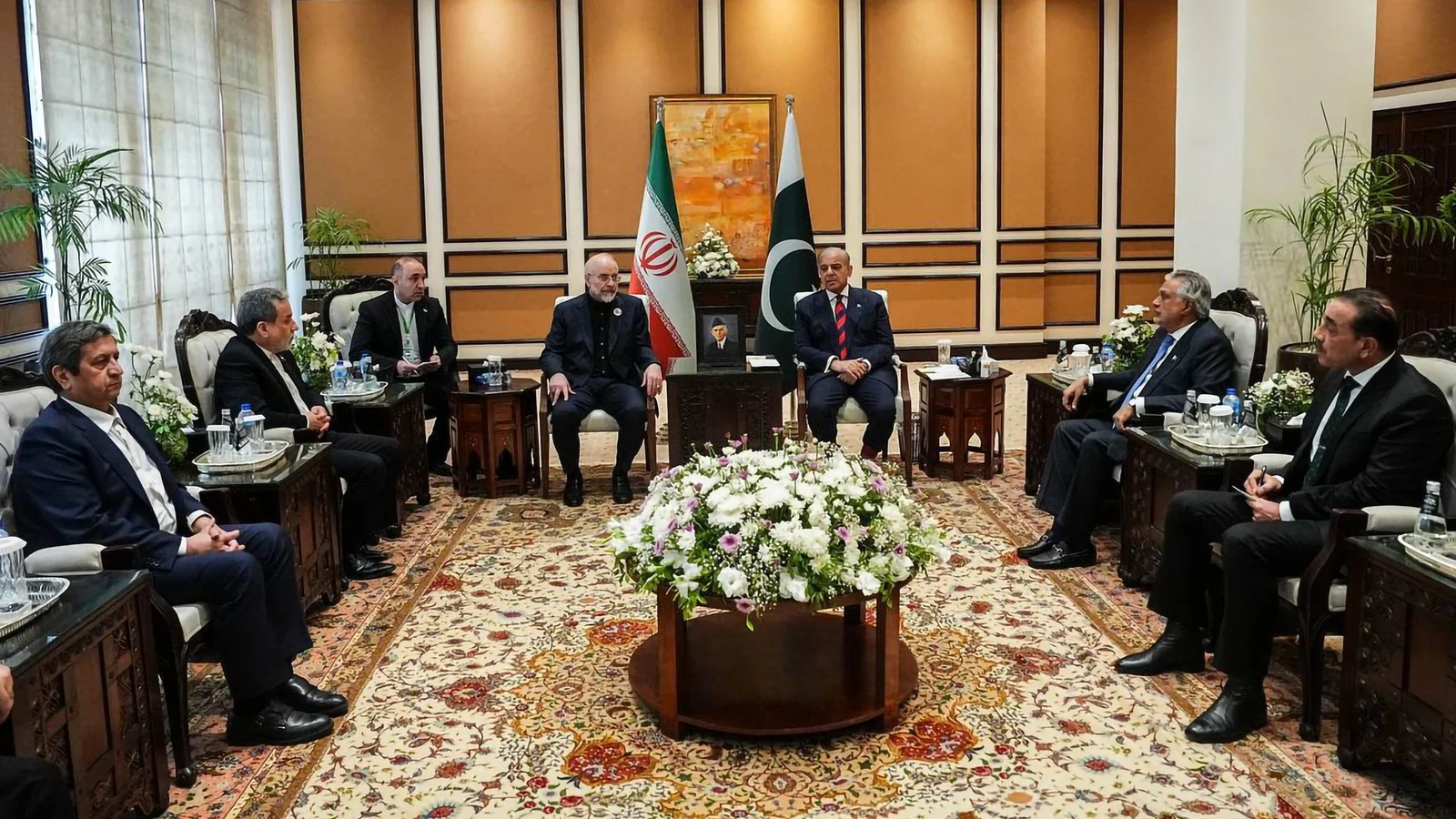
Islamabad’s polished avenues have hosted delegations before, but this was different. Senior figures from Washington and Tehran were in the same city for what diplomats privately described as the highest-level engagement since the 1979 rupture. The US contingent arrived led by Vice-President JD Vance, accompanied by senior envoys; across the city, Iran’s delegation — headed by parliamentary Speaker Mohammad Baqer Qalibaf and foreign affairs chiefs — had already been laying the groundwork.
Pakistan’s government moved quickly to underline its role. Prime Minister Shehbaz Sharif’s office announced the talks had “commenced,” while the army chief personally received the US aircraft on the tarmac. The optics were deliberate: Islamabad wanted to be seen as an honest broker, a calm island amid violent seas.
What’s on the table—and what’s not
At stake are more than headline-grabbing photo-ops. Iran has insisted that any negotiation must address three pillars: the fighting in Lebanon (where air campaigns and cross-border exchanges have killed nearly 2,000 people since the conflict escalated), the lifting of crippling sanctions that have ravaged its economy for years, and control or at least guaranteed navigation rights in the Strait of Hormuz — the chokepoint through which roughly one-fifth of the world’s seaborne petroleum flows.
“We will not enter a conversation that is cosmetic,” Mohammad Baqer Qalibaf was quoted as saying. “This is about restoring rights and redressing wrongs.”
Washington has signaled a narrower remit. US officials have argued that the Lebanon theatre and the Israel-Hezbollah confrontations do not fall under a bilateral Iran-US ceasefire agreement. One senior US official told reporters before departure, “We want a durable halt to direct hostilities with US forces and a rollback of the most dangerous capabilities on the table.”
“If they’re going to try to play us,” Vice-President Vance said as he boarded Air Force Two for Islamabad, “they’re going to find the negotiating team is not that receptive.”
On the ground: tension, inconvenience, and cautious hope
Islamabad was under an unprecedented security lockdown. Thousands of paramilitary and army personnel patrolled neighborhoods; checkpoints slowed traffic for miles. Shopkeepers wrapped their wares and waited. Children darted between concrete barriers, curious about the armored vehicles but wary of the mood adults wore.
“People are tired,” said Farooq Malik, an economist who runs a small import business in Rawalpindi. “Sanctions and regional instability have already pushed up costs. The blockade of the Hormuz has been felt in the price of diesel, in shipping delays. We need more than statements.”
That blockade — Iran’s partial control of navigation through the strait — has led to what many analysts describe as the largest disruption to global energy flows in living memory. The result has been a ripple across global markets: higher energy costs, mounting inflationary pressures, and real economic pain in countries far from the Middle Eastern shorelines. Even if a deal opens Hormuz tomorrow, economists warn that supply chains and markets will take months to normalize.
The background: nuclear history and the long shadow of 2018
These talks are layered over a decade of distrust. The 2015 nuclear accord — the Joint Comprehensive Plan of Action — temporarily curbed Tehran’s nuclear activities in exchange for relief from sanctions. But in 2018 the United States withdrew from the deal, reimposing sanctions that squeezed Iran’s economy. Iran, in turn, pursued a faster enrichment path; intelligence assessments indicate Tehran holds more than 400kg of low-enriched uranium — some of it enriched to levels that regulators and analysts say are closer to weapons thresholds than before.
For Tehran, the conversation is not only about uranium or sanctions; it is also about dignity and deterrence. “Our leaders are asking: what does security look like in a region where outside powers can blockade straits and supply lines?” said Dr. Laleh Shirazi, a regional security scholar. “They want recognition of a role in regional security architecture.”
A fragile ceasefire, and the hard realities beyond it
At a symbolic level, President Donald Trump’s administration announced a two-week ceasefire that has quieted some of the most immediate kinetic exchanges between the US and Iranian forces. Yet that pause has not ended Iran’s blockade of the Strait of Hormuz, nor has it halted Israel’s campaign in Lebanon — a parallel conflict that continues to cost civilian lives and threatens to pull in neighboring states.
Israeli and Lebanese officials have agreed to talks in Washington, though both sides send mixed signals about whether those discussions will be about an immediate ceasefire, a timetable for talks, or broader normalization. The confusion underscores the difficulty of brokering a comprehensive peace when several wars are unfolding in parallel.
Voices from the margins
At a fishing pier near Gwadar, a fisherman named Karim lifted his hands, weathered and small against the vastness of the Arabian Sea. “We used to see tankers pass, slow but certain,” he said. “Now they hesitate. My nets bring smaller catches because ships avoid routes. We feel the global politics in our bellies.”
In the corridors near the Pakistani prime minister’s office, diplomats whispered about the composition of advance teams: roughly 70 officials and specialists from Iran and about 100 from the US, including technical, economic, and media staff. Their job is to translate political will into the language of enforceable agreements.
What would success look like?
Success will be measured on multiple axes. At a minimum: an agreed and verifiable cessation of hostilities involving US forces and Iranian-backed elements; a phased lifting of targeted economic sanctions tied to concrete verification steps; and reopening the Strait of Hormuz to international traffic without Iranian control over transit fees or sovereignty claims.
“Any agreement must be durable,” said Ambassador Richard Haines, a veteran negotiator. “Temporary pauses are useful, but the real work is building institutions and verification that reduce incentives for a return to the brink.”
And yet, perhaps more than any clause, this moment is a test of political imagination. Can two states that have spent decades trading threats find a pathway to coexistence? Can a region that has known foreign intervention, shifting alliances and grinding poverty chart a stable future?
What do you think?
As the world watches a handful of rooms in Islamabad where powerful men and women will decide whether this ceasefire is a prelude or a solution, ask yourself: how do we weigh the urgency of ending violence against the slow necessity of building trust? Is it enough to sign a paper and reopen a strait, or must the world also commit to economic and social rebuild that prevents the next flare-up?
The streets of Islamabad will relax once the convoys pull away; the jasmine will bloom again. But the questions that brought these delegations here will not vanish with the sound of planes. They will shape markets and homes, tank farms and tiny fishing boats, and the daily calculus of millions who live under sanctions, rockets, and fear. That is the true measure of what these talks may — or may not — achieve.