A fresh diplomatic channel has opened between Washington and Tehran as the war in the Gulf grinds on and fears mount of another round of US strikes.
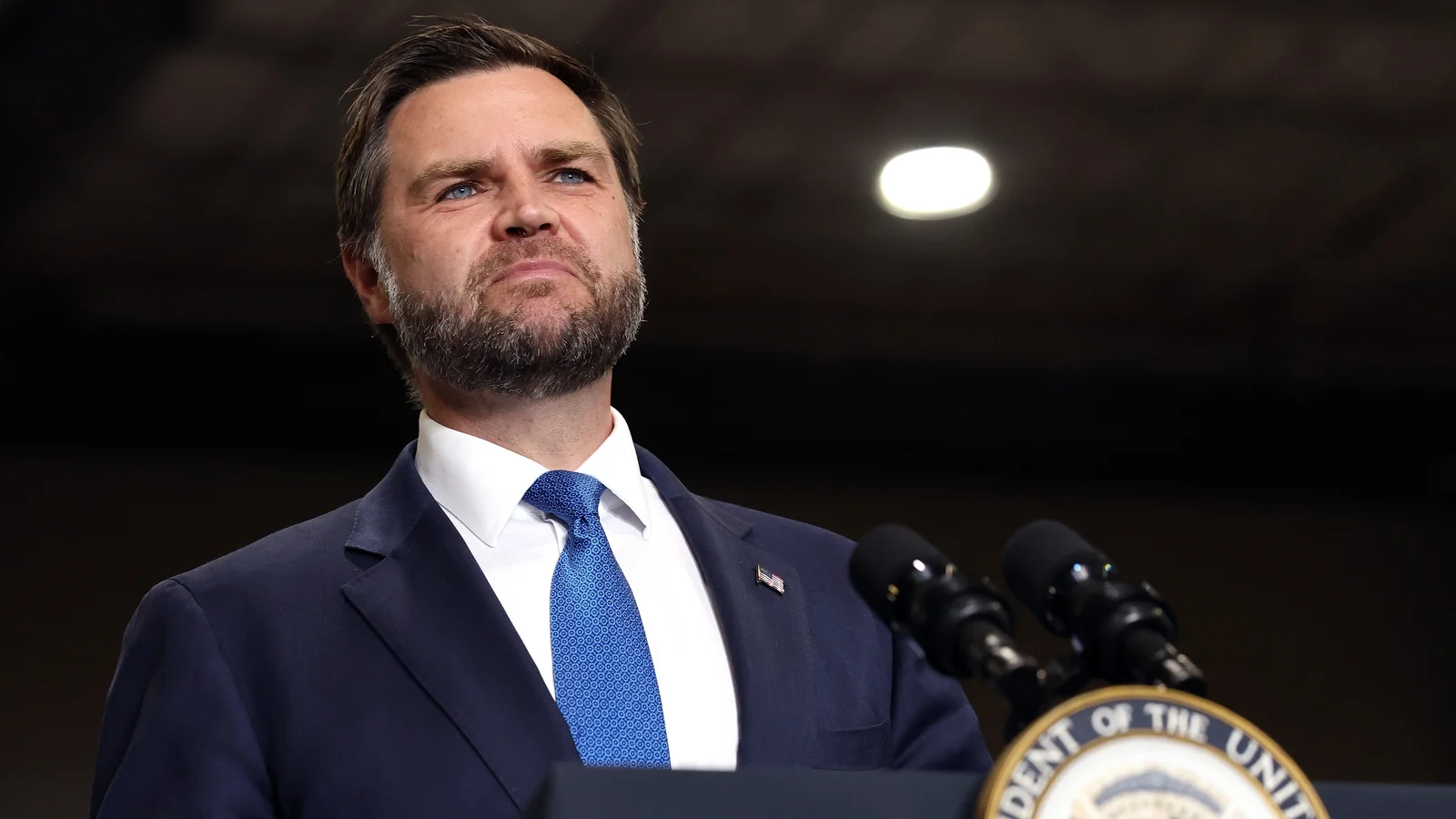
US Vice President JD Vance has reached out directly to Iran’s top security official in an effort to revive peace talks that could avert a renewed American assault on the Islamic republic, the Wall Street Journal reported.
According to the newspaper, Mr Vance sent a letter to Mohsen Rezaei, head of Iran’s Supreme National Security Council, and one source said the move was directed by US President Donald Trump.
The Wall Street Journal said the correspondence — and later contacts between US and Iranian officials — centred on a potential negotiating framework, not detailed terms of a peace proposal.
The war, launched by the United States and Israel in late February, has badly disrupted energy shipments from Gulf countries and sent shockwaves through the global economy.
After fighting began, Iran moved to blockade the Strait of Hormuz, a strategic waterway that previously carried around a fifth of the world’s oil and liquefied natural gas.
Iran has regularly attacked vessels attempting to pass through without its authorisation.
The United States, for its part, has kept a naval blockade on Iranian ports in a bid to choke off Tehran’s economy.
Abbas Araghchi said Iran was discussing a plan with mediators to end the war and reopen the strait
Against that backdrop, Iran warned of severe economic consequences if Israel were to lead a new assault, as ballots were being tallied in an Israeli election that could shape the next phase of the conflict.
Tehran also said it was working with mediators on ways to carry out a seven-day plan intended to halt the Middle East war and reopen the Strait of Hormuz.
Under Israeli Prime Minister Benjamin Netanyahu — who has pledged to topple Iran’s government — the two states have entered direct war for the first time, ending decades in which their hostility played out indirectly.
Yesterday’s high-stakes election offered Israeli voters an opportunity to judge Mr Netanyahu’s right-wing government at a moment when both US and Israeli threats of renewed action against Iran have been growing.
“Devastating impact on int’l markets of any Israel-instigated military misadventure in Persian Gulf region remains major concern for both gas suppliers and consumers,” Iranian Foreign Minister Abbas Araghchi wrote on X, referencing recent talks at the Gas Exporting Countries Forum summit in Moscow.
The Wall Street Journal has also reported that Washington told several Gulf Arab countries to brace for a possible “short, intense military campaign” against Iran after the US midterm elections on 3 November.
However, the paper said Mr Trump had not yet made a final decision, citing people briefed on those discussions.
Mr Araghchi said Iran was in talks with mediators on a path to end the fighting and reopen the strait.
“While our brave armed forces are fully prepared to defend the homeland, Iran continues to give diplomacy a chance to succeed,” he said in another post on X.
“We remain in close and ongoing contact with intermediaries to review ideas that can ensure implementation of our seven-Day Plan in even less than a week.”
Benjamin Netanyahu said Israel has an opportunity to eliminate the ‘existential threat’ posed by Iran
Mr Trump had previously rejected that proposal after Iran first put it forward in September.
At the time, Mr Araghchi said the Strait of Hormuz would be reopened within seven days if “necessary conditions” — including a ceasefire across the Middle East — were met.
Iran also called for its overseas assets to be unfrozen, for sanctions on its oil sector to be lifted, and for the US naval blockade to end.
Talks between Washington and Tehran have been at a standstill for months.
US news website Axios reported that regional intermediaries led by Qatar were pressing for “a diplomatic deal” to restart US-Iran negotiations and prevent a return to war after the US midterm elections.
The report, citing US, Israeli and other regional sources, said Qatari officials were trying “to convince Iran to allow UN inspectors to visit its bombed nuclear sites in return for some sanctions relief from the US”.
Iran said a Qatari delegation travelled to Tehran on Sunday for talks.
Mr Netanyahu, seeking to assemble a coalition government after yesterday’s tight race, has argued Israel now has an opportunity to eliminate the “existential threat” he says Iran poses.
Gadi Eisenkot said Mr Netanyahu should not ‘use Israel’s security for your political needs’
His main challenger, former military chief Gadi Eisenkot, has warned Israel’s top security leadership that they must serve the country — not Mr Netanyahu’s political interests.
“Netanyahu, don’t you dare use Israel’s security for your political needs,” Mr Eisenkot said.
On Sunday, Israel’s Channel 12 reported that Mr Netanyahu and Israeli military chief Lieutenant General Eyal Zamir had clashed over an order for unspecified military action that defence officials feared could reignite fighting with Iran.
Mr Netanyahu denied the report.
As vote-counting continued, neither Mr Netanyahu’s bloc nor the opposition camp led by Mr Eisenkot had secured a clear win.
Tehran has insisted the election result “makes no difference”.
On Sunday, Mr Araghchi said a renewed war involving the US and Israel would not shift Iran’s stance either.
He said: “They have already done so twice and have seen the results.
“If they want to try again, they know they will achieve no different outcome from those of the past.”
Iran’s military has also warned it would widen its retaliation if attacked again, with security chief Mohsen Rezaei saying Iran could strike US-related infrastructure, including data centres and other artificial intelligence targets.
Iran has dismissed Mr Netanyahu’s threat to overthrow the Iranian government, describing such warnings as “empty” and “a sign of desperation”.