Wales at an Inflection Point: The Fall of a First Minister and the Dawn of a New Political Map
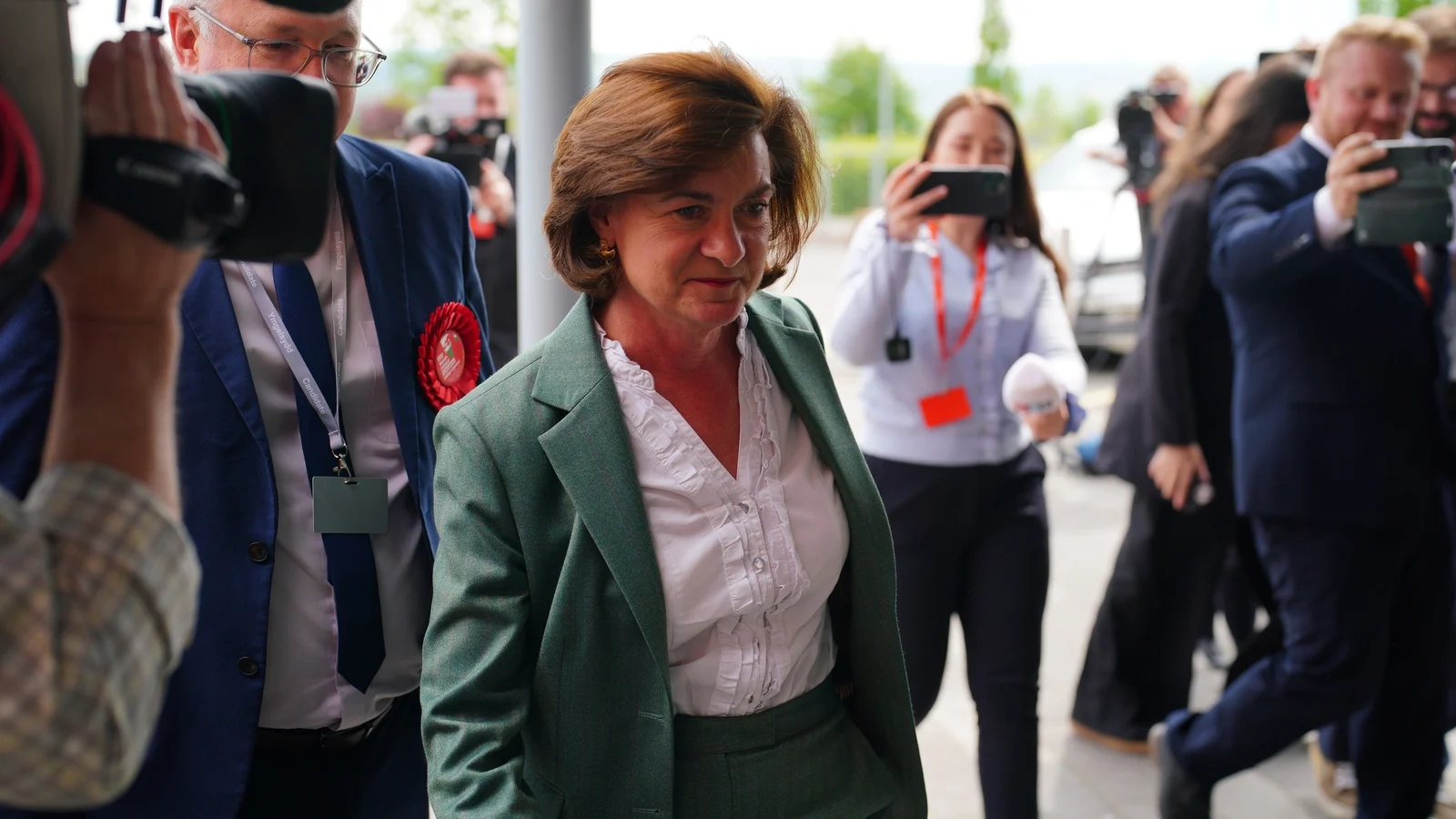
There was a hush in the counting hall — the kind that happens when everyone knows the facts are about to change. Stacks of ballot boxes, a kettle perpetually boiling, volunteers flipping through pages of numbers: it felt less like ceremony and more like history being unstitched. By the end of the night, Eluned Morgan, the First Minister of Wales, would not return to the Senedd. For the first time since the parliament’s birth in 1999, a sitting leader lost their seat. The reverberations are still settling.
The immediate scene: fatigue, disbelief, and resigned applause
“I didn’t expect this,” said Carys Hughes, who runs a small bakery near the counting centre. “People were pinning their hopes on familiarity — but the mood changed in weeks.” Her hands, butter-splattered from the morning batch, nervously tapped the counter. Her words carried a local grief: not just for one politician, but for what the result signals about identity and representation in communities that have long trusted Labour.
For Ms Morgan, who had been a member of the Senedd since 2016 and a minister since 2017, the path to leadership was brief but historic. She became the first woman to hold the role of First Minister of Wales amid turbulence: one predecessor lasted only five months. Now, in an abrupt turn, she has left the chamber she sought to steer.
Numbers and what they mean
The architecture of the Senedd has shifted. Under the new voting system, Wales is divided into 16 constituencies with six Members of the Senedd (MSs) each — 96 representatives in total. Analysts and party insiders said Welsh Labour could be cut down from roughly 30 MSs to about 10. A party spokesperson described the result as “deeply disappointing,” acknowledging that Labour would no longer be in a position to form government and would instead serve as a vocal opposition.
“This has undeniably been a very difficult election for Welsh Labour,” the spokesperson said. “We now expect to lose several hardworking and respected Members of the Senedd. We thank them for their service to their communities.”
Huw Irranca-Davies, the deputy first minister, seemed to accept the bleak arithmetic even as ballots were still being tallied. “I don’t think we’re going to be in that situation,” he told the BBC when asked if Labour could still lead the next government. The language was quiet, resigned—like a captain conceding a storm he couldn’t steer through.
How the ground shifted: the rise of Plaid Cymru and Reform
Long a party of regional pride and cultural advocacy, Plaid Cymru picked up momentum this cycle, topping polls for much of the campaign. Across market towns and coastal villages, red flags were replaced by green conversations about devolution, the Welsh language, and a vision of governance that felt more locally rooted. Meanwhile, Reform — buoyed by national discontent and an increasingly vocal electorate seeking alternatives — also made gains.
“From what we have so far… it’s looking good,” a Plaid Cymru source said as the night unfolded. “The Labour vote has collapsed.”
That collapse is not just a party-level defeat. It’s a reminder of seismic shifts in voter priorities: from bread-and-butter services and union loyalty, to identity, regional autonomy, and a demand for new voices at the table. For many voters, the familiar promise of Labour was no longer serving as a sufficient answer.
Voices from the valleys and the coast
At a community centre in the Amman Valley, retired miner Dai Morgan held court over a chipped mug of tea. “People here are angry,” he said. “Not just with Westminster or Cardiff — with a hollowing out of what used to be our way of life.” His daughter, a teacher, nodded. “There’s a sense that decisions are being made somewhere else, and they don’t see us.”
In contrast, a young nurse, Asha Rahman, spoke of hope. “We want representation that listens. That’s why I volunteered on a Plaid campaign. It’s not hatred of Labour — it’s hunger for change.” Her eyes were tired but fierce. “Politicians should feel the pulse of the wards, the clinics, the schools.”
National ripples: what this means for the UK
The losses in Wales occurred during a broader moment of turbulence for Labour across the UK. British Prime Minister Keir Starmer acknowledged responsibility for a “tough” set of local election results in England where hundreds of Labour councillors were voted out. The Welsh outcomes amplify a critical question: how will Labour recalibrate when long-held strongholds wobble?
Political scientist Dr. Aled Price of Cardiff University offered a measured view. “This is a wake-up call,” he said. “Labour’s machinery in Wales has not been immune to the same trust erosion affecting centre-left parties elsewhere in Europe. Voters are signaling a desire for clearer localism and cultural affirmation.”
He added: “But let’s be cautious about hyperbole. Realignment takes time. Expect an intense period of reflection, policy revision, and re-engagement.”
Beyond party politics: cultural questions and civic fatigue
Wales is small, but its identity is big. From chapel choirs to rugby terraces, language revival projects to local festivals, the cultural bones of the nation dictate political rhythms. The rise of parties emphasizing Welsh distinctiveness is as much cultural as it is political. It’s a reclaiming of narrative and governance — a demand to shape the future without being filtered through Westminster lenses.
Yet there are undercurrents of civic fatigue: lower trust in institutions, anger at perceived elites, and a yearning for more participatory local government. That combination is potent. It is reshaping who gets to speak for Wales, and who gets heard.
What comes next?
For Welsh Labour, the road ahead will be painful and introspective. For voters, it is an invitation to reimagine representation. For the country, it is a test of democratic resilience: can institutions absorb such a shock and channel it constructively?
As the dust settles, one question lingers — and it’s one every reader should consider: What kind of politics do we want in our communities? Do we prefer the comfort of old alliances, or the risk and promise of new voices? Wales has chosen a new chapter; the rest of us are watching, learning, and perhaps asking ourselves the same thing.