The Quiet Architect: Inside the Rise—and Reckoning—of Morgan McSweeney
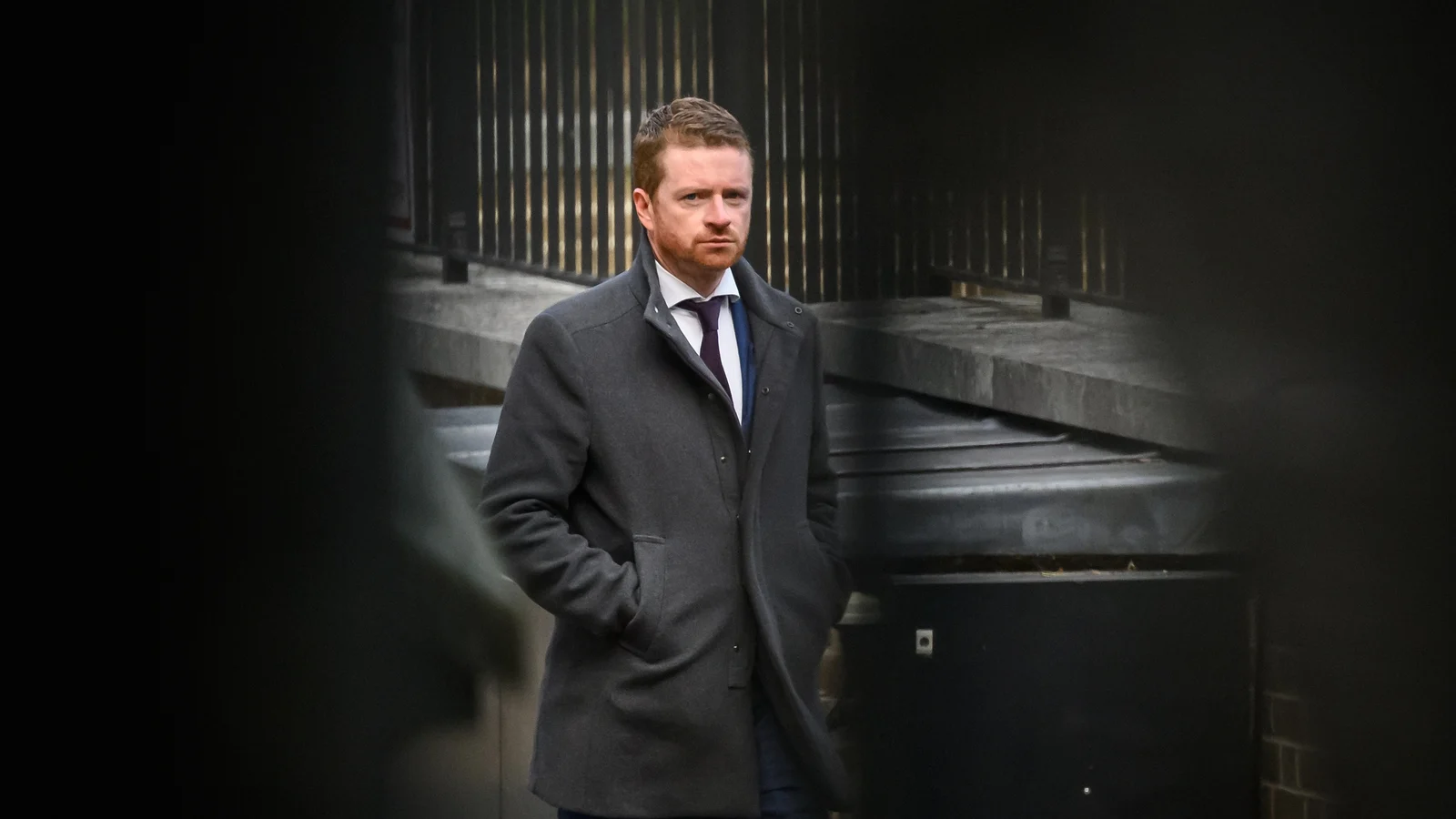
There are people in politics whose faces are plastered across billboards and breakfast shows. And then there are those who prefer the shadow: few photographs, fewer off-the-cuff interviews, almost no recordings of a voice that, until very recently, moved the levers of power. Morgan McSweeney belongs to the latter camp—until a headline pulls him into the light and suddenly we all want to know who has been shaping the script.
Born in Macroom, County Cork, in 1977, McSweeney’s story begins with the kind of restlessness that sends 17‑year‑olds to the ends of the map. He arrived in London with a suitcase and a knack for getting work done—bricklaying in the early mornings, politics in the evenings. There are reports of a six‑month spell on an Israeli kibbutz, a detail that hints at a curiosity for unusual experiences and a hunger to learn outside classrooms. He tried university twice, left once, returned, studied politics and marketing, and began to trench in at Labour HQ as an intern in 2001. Few would have guessed then that this Cork man would wind up as one of the most consequential figures in British politics.
From Grassroots to Inner Circle
McSweeney’s CV reads like a handbook of modern campaigning: council elections, anti‑extremism work, the low‑profile drag of local politics that, for many, preaches patience and persistence. In 2006 he worked on a campaign that helped turn Lambeth council, and he later led projects opposing the fringe appeal of far‑right outfits. In 2015 he ran Liz Kendall’s leadership bid—an effort that flopped but did not bankrupt his reputation for resilience.
It was in 2017 that McSweeney anchored himself more firmly in the party’s strategic heart. As director of Labour Together, a think tank explicitly set up to counter Jeremy Corbyn’s leftward pull, he began to sketch a new route for Labour. The idea was not merely opposition to the ‘hard left’—it was a wholesale recalibration: a party that could reconnect with working‑class voters, embrace patriotic symbolism and present a stripped‑down, pragmatic conservatism of the social kind, often described in political circles as ‘Blue Labour’.
“He was subtle, but purposeful,” says a former campaign colleague who worked with McSweeney in South London. “Morgan believed you could change a party with small, relentless nudges rather than dramatic revolutions. He understood symbols.”
Those “nudges” were concrete. Rebranding exercises that inserted the Union Jack into campaign literature and the decision to play the national anthem at conferences were not aesthetic afterthoughts; they were strategic moves intended to broaden Labour’s appeal. When Keir Starmer rose to the leadership in 2020, McSweeney’s fingerprints were already all over the blueprint of a reinvented Labour.
Downing Street’s Shadow
Starmer appointed McSweeney as chief of staff after the 2024 election victory—a win that transformed the man from behind‑the‑scenes architect into a figure with a seat at the very top table in No.10. The transition from strategist to gatekeeper is one fraught with risks: influence becomes visible, and visibility invites scrutiny. For a man who had long eschewed the spotlight, the new role required navigating a chorus of expectations, rivalries and old grudges.
“You learn quickly in Westminster that loyalty is currency and discretion is survival,” says a civil servant who has worked in multiple administrations. “But chief of staff is also about vetting people and judgement calls—some will look like genius, others like catastrophe.”
It is precisely one of those judgment calls that has turned the whispers into headlines: the appointment of Peter Mandelson as UK ambassador to the United States. The appointment, widely reported to have been pushed by McSweeney, has reopened a long‑dormant and painful conversation—about influence, ethics and the specter of Jeffrey Epstein. Mandelson has been reported to have maintained links with Epstein after the financier’s 2008 conviction, and critics say the appointment ignored those red flags.
The Fallout: Questions of Trust and Responsibility
Within the Labour ranks the reaction has been volatile. Some MPs, speaking on background, have used blunt language—calling McSweeney “a liability” and saying “he has got to go.” One backbencher, angry and weary, told me, “This isn’t just about one appointment. It’s about a pattern of secrecy and shortcuts. When you’re chief of staff, you set the tone.”
Defenders of McSweeney push back just as hard. Housing Secretary Steve Reed—someone who worked closely with him—publicly framed the issue as one of being misled. “You’re only as good as the information you receive,” Reed said, insisting that both Starmer and McSweeney were not at fault and had been deceived by Mandelson over the extent of his ties with Epstein.
Keir Starmer himself apologised to Epstein’s victims for the appointment and for “believing his lies,” while continuing to express confidence in McSweeney. It is a posture familiar in politics: contrition for the mistake, defence of the man. But apologies don’t always placate those calling for accountability; they sometimes inflame the demand for change.
Old Wounds, New Questions
The Mandelson controversy landed on the backdrop of another scandal: Labour Together, the think tank McSweeney once led, was fined £14,250 in 2021 for failing to declare donations within mandated deadlines. Conservative Party chair Kevin Hollinrake later urged the Electoral Commission to reopen inquiries, alleging a “hidden slush fund” used to secure Starmer’s leadership. The Commission declined to pursue a new investigation. Still, the episode hardened sceptics’ views about the murky edges where money, influence and policy intersect.
How should a modern democracy treat the power of the unelected? That’s the question these episodes force us to confront. Advisers like McSweeney are not accountable to voters in quite the same way MPs are. They can manufacture consensus, rebrand parties, and broker appointments—all with a discretion that makes some uneasy.
Consider this: in the past decade, the revolving door between think tanks, party machinery and government offices has only widened. The professionalization of political advising means expertise is higher, but so is the risk that a handful of strategists can remake the political landscape with little public scrutiny. Is that efficient governance—or elite engineering?
Local Colour, Global Echoes
Back in Macroom, people I spoke to described McSweeney as “a clever lad” and “a private soul”—someone who never sought limelight but had ideas that stuck. A barman at a town pub laughed softly and said, “He always had opinions—strong ones. You could tell he’d be in London forever, wearing suits and talking strategy.” Small-town memories like these are humanizing, but they also remind us that national power often originates in banal, everyday beginnings.
And the Mandelson‑Epstein aftershock is more than a Westminster scandal; it’s a global reminder that individual networks have international consequences. Epstein’s crimes and connections rippled around the world, exposing how wealth and access can shield people from scrutiny. When those networks intersect with government appointments, the stakes are not just reputational—they are moral and institutional.
What Comes Next?
For McSweeney, the next chapter is uncertain. Calls for his resignation will not evaporate overnight. Investigations, internal reviews and political manoeuvring will follow their own timelines. For Starmer, the choice is stark: continue to stand by the chief architect of his party’s rebirth, or cede to pressure and make a change that signals a new course for accountability.
For readers around the world, this story is a prompt: how do democracies balance effective governance with transparent, ethical leadership? When power concentrates in the hands of a few advisors who prefer the shadows, how do citizens insist on light? These are not merely Westminster puzzles; they are universal questions about trust, institutions and the fragile architecture of public life.
So ask yourself: would you be comfortable with the people shaping national policy being unexamined, untested by public scrutiny? Or do you think the modern state needs these discreet strategists to navigate complex times? The answer may shape what kind of politics we want next.