Kahramanmaraş Mornings That Won’t Be the Same: When a School Became a Scene of Shock
It began like any other school morning in southern Turkey: the dusty streets of Kahramanmaraş waking into a weekday rhythm, vendors arranging trays of warm simit, a man selling thick, chewy dondurma calling out in his sing-song voice. Then the sound sliced through everything—gunshots, sudden and foreign to a province still rebuilding from past tremors of another kind.
By noon the count was grim. Officials say nine people are dead and 13 wounded, six of them in intensive care and three fighting for their lives. The attacker, an eighth-grader, also died at the scene. Authorities say he carried multiple firearms—five guns and seven magazines—and that he may have used weapons belonging to his father.
The Moment
“I heard bangs and then children screaming,” said one parent who arrived at the school, eyes red with tears. “People were jumping from the first-floor windows. We ran. There was pandemonium.”
Video verified by international agencies shows the frantic exodus: students leaping from a first-floor window, landing on the grass and rolling away, others sprinting across the courtyard. A recording captured about 15 shots in a minute and a half—gunfire that turned classrooms into places of terror.
Governor Mukerrem Ünlüer told reporters that, “a student came to school with guns that we believe belonged to his father in his backpack. He entered two classrooms and opened fire randomly.” Interior Minister Mustafa Çiftçi later confirmed the revised toll and said six of the wounded are in intensive care, three in critical condition.
Voices in the Courtyard
Parents, teachers and neighbors spilled into the street. A teacher wrapped in a scarf flung her arms around a trembling child. “The children were asking if it was a drill,” she said. “No drill sounds like that.”
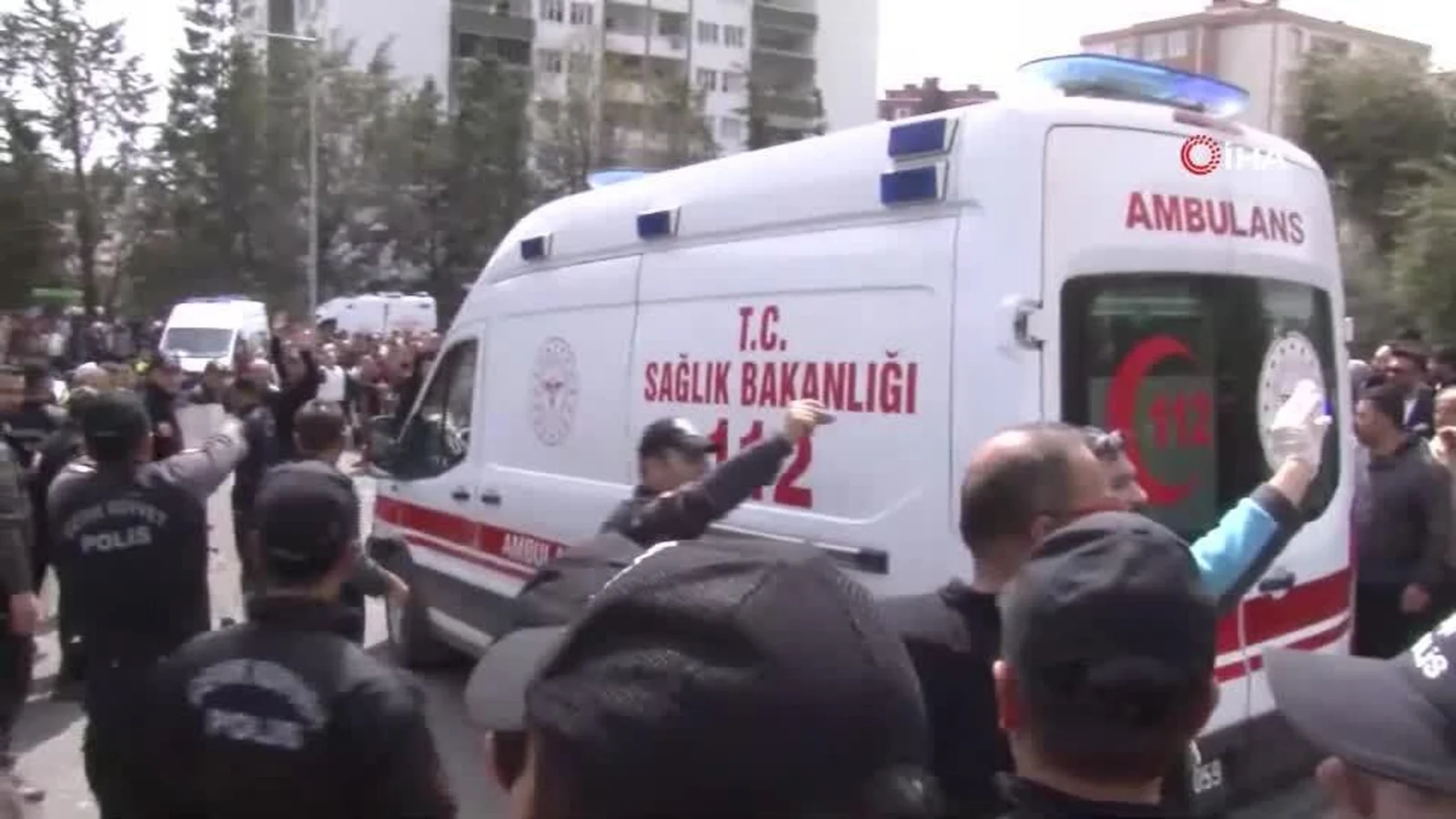
An ambulance driver who helped ferry the wounded away described a schoolyard turned triage zone. “We covered bodies, we carried children wrapped in coats,” he said. “You never think it will be here.”
A grieving father pacing outside the gates whispered, “They were our future.” He looked at the school—the low building with peeling paint—and shook his head. “Why were there guns in a child’s bag?”
What Authorities Say—and What We Still Don’t Know
Local police say the attacker was the son of a former police officer; the father, named in reports as Ugur Mersinli, was detained for questioning. Officials said the young gunman died during the incident—authorities are investigating whether he killed himself or died amid the chaos.
Justice Minister Akin Gürlek announced that prosecutors had opened an immediate investigation. President Recep Tayyip Erdoğan promised that anyone found negligent would be held accountable, as the country reels from a second school shooting in as many days.
Only 24 hours earlier, an ex-student had opened fire at his former high school in Siverek, Şanlıurfa province, wounding 16 people before fatally shooting himself in a police confrontation. Ten students were among the victims in that incident.
Security, Blame, and Urgent Questions
Main opposition leader Özgür Özel argued the country is confronting more than isolated tragedies. “This issue has turned into a growing and deepening security vulnerability,” he said, urging stepped-up measures: tighter control at school gates, more security personnel, stronger camera systems, increased police patrols and ready crisis plans.
The recent twin attacks have left many asking practical and painful questions: How did a 13-year-old obtain multiple firearms? Were the weapons stored securely? Were warning signs missed? And what about the schools’ preparedness for such an unimaginable emergency?
Turkey’s gun laws are strict on paper—licensing, registration, mental and criminal background checks are required, and illegal possession carries severe penalties. Yet the presence of multiple weapons in a child’s backpack has forced a national conversation about enforcement, storage, and domestic safety rules.
Beyond the Numbers: A Community Scarred
Kahramanmaraş is not just a name on a map. It’s a city steeped in history and flavor—the sticky sweetness of its famous Maraş ice cream, the songs of neighborhood tea houses, bazaars where shopkeepers know everyone by name. It was also one of the provinces hit hard by the 2023 earthquakes; the memory of loss still threads the town’s everyday life. This latest violence has layered fresh trauma onto a community long acquainted with mourning.
“We survived earthquakes, we leaned on each other,” said a local shopkeeper. “Now our children are not safe in class. Who will protect them?”
Wider Reverberations: Education, Mental Health, and Gun Access
These incidents raise themes that resonate far beyond Turkey: the vulnerabilities of school systems, the access of minors to lethal weapons, and the gaps in mental health support for youth. School shootings are rare in Turkey compared with some countries, but the back-to-back attacks have highlighted how quickly rare events can become national crises that call for systemic reflection.
Mental health professionals caution that preventing such tragedies requires more than metal detectors or patrols. “We need early intervention, accessible counseling in schools, training for teachers to spot distress,” said a child psychologist who has worked in Turkish schools. “Security measures can save lives in the moment, but prevention comes from care and community.”
What Comes Next?
In the immediate term, schools in the affected regions have been closed, investigations are ongoing, and families are waiting by hospital beds. But the long arc of response must ask harder questions: about weapon storage in homes, the responsibilities of adults to secure firearms, and how education systems prepare for and support students after collective trauma.
What policies should be non-negotiable when a child’s life is at stake? How do societies balance lawful gun ownership with ironclad measures to keep weapons away from minors? And how do communities heal when the spaces meant to teach become scenes of terror?
As Kahramanmaraş mourns, the scenes from the schoolyard—the rolling bodies, the cries, the run of parents—will linger. We owe the victims clarity, answers, and change. We owe the children safety, both physical and psychological. And we owe ourselves the hard work of imagining a future where the bell calls students to learning, not to scramble for their lives.
Immediate Facts at a Glance
- Casualties: 9 dead, 13 wounded (6 in intensive care, 3 in critical condition)
- Attacker: 13-year-old eighth-grader (died during incident); reportedly carried five guns and seven magazines
- Context: Second school shooting in two days in Turkey; previous attack in Siverek wounded 16 and ended with the gunman’s death
- Authorities: Father detained; national investigations launched; calls for accountability and enhanced school security
When you think of a school, what do you picture? For millions of families in Turkey today, that image has shifted. The task now is to rebuild not only safety protocols but the quiet confidence parents once had—a confidence that a classroom is a place for growth, not grief. Will the country answer? Time, policy, and collective will will tell.