Midnight at the Gate: A Quiet Night Disrupted at Mar-a-Lago
It was the kind of night that usually hums with the lullaby of the Atlantic—salt on the air, palm fronds whispering, and the faint glow of lamp posts tracing the driveways of Palm Beach’s gated estates. But in the early hours of a humid Florida morning, that ordinary hush was pierced by the metallic click of a shotgun and the low, urgent voices of law enforcement. A man who had approached the north gate of Mar-a-Lago was shot and killed after refusing orders to drop a gun and a gas can, officials said. President Donald Trump was not on the property at the time; he was in Washington.
What unfolded
According to law-enforcement briefings, agents from the U.S. Secret Service and a deputy from the Palm Beach County Sheriff’s Office confronted a single individual around 1:30 a.m. local time. The man, later identified by some U.S. media as 21-year-old Austin Tucker Martin, had been reported missing from his home in North Carolina the day before.
Palm Beach County Sheriff Ric Bradshaw, speaking to reporters, recounted the exchange in stark, economical language: “The only words that we said to him was ‘drop the items,'” he said. “At which time he put down the gas can, raised the shotgun to a shooting position.” The man was declared dead at the scene; no officers were injured. The FBI has taken over the investigation, gathering evidence and piecing together motive and travel.
Scenes from the gate: Residents and responders
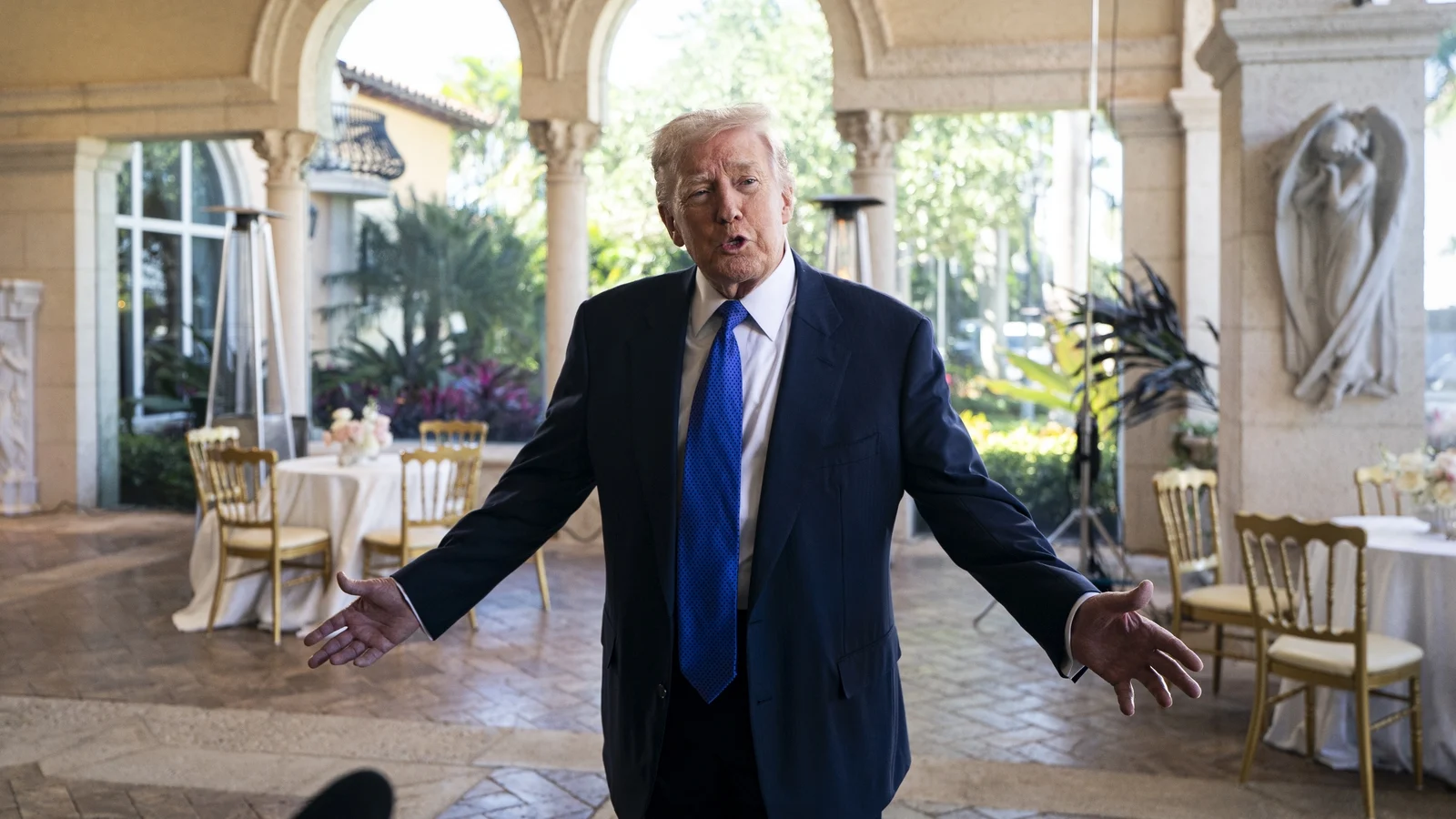
Mar-a-Lago sits like a gilded postcard on South Ocean Boulevard—Mediterranean arches, manicured hedges, and ornate gates that separate the private compound from the public road. Yet the gate that night became a crucible where training and split-second judgment collided with human risk.
“You could feel the adrenaline in the air,” said a neighbor who lives two houses down and asked not to be named. “We saw the flash of headlights, then sirens. It’s unnerving—this place is supposed to be safe, and yet anything can happen.” The witness described a line of uniformed officers moving with tight professionalism, closing off the area as dawn began to lighten the sky.
A Secret Service official, declining to be named while the FBI leads the inquiry, told a reporter, “Protective work is often unsung until something like this forces it into daylight. We train for breaches, and we act to protect those we guard and the public.” Karoline Leavitt, a White House spokesperson, praised the response, saying the Secret Service “acted quickly and decisively to neutralize a crazy person, armed with a gun and a gas canister, who intruded President Trump’s home.” The FBI’s director posted that the agency is dedicating “all necessary resources” to the probe.
Questions that linger
Why did a young man from North Carolina traverse roughly 700 miles to Palm Beach? What drove him to approach one of the nation’s most scrutinized properties with both a firearm and fuel at hand? Those are the simple, jagged questions that investigators now face.
Scott Bessent, the U.S. Treasury Secretary, said he had spoken with the president after the incident and thanked the Secret Service for their swift action. “We don’t know whether this person was a mastermind, unhinged or what,” he said on television, echoing the uncertainty that follows so many such episodes.
Context: Security, politics, and a fraught moment
In an age of amplified threats—ranging from small-scale intrusions to politically motivated violence—protective teams operate against a backdrop of rising anxiety. Assassination attempts on U.S. leaders are rare but historically significant: four U.S. presidents have been successfully assassinated, and countless plots have been thwarted by law enforcement over the decades. The Secret Service, which traces its origins to 1865 as a counterfeiting-fighting agency and assumed protective duties after the assassination of President William McKinley in 1901, now runs one of the most complex security operations in the world.
Still, humans make judgment calls in real time. “You train your whole career for that one second,” said a retired federal agent who has worked protective details for former officials. “Sometimes it’s a fence-jumper with no malicious intent. Other times, the intent is clear and the gap between life and death is measured in heartbeats.”
How communities react
For Palm Beach, a town where tourists come for sun and the wealthy retreat behind private security, the incident stirred familiar tensions about safety, visibility, and the price of celebrity. Local shopkeepers expressed a mixture of concern and weary acceptance.
“This kind of news brings people in for a few days to gawk, then it goes back to normal,” said Maria, who runs a bakery near the island bridge. “But it’s a reminder—we are small and lovely, but we are also in the crosshairs of national drama sometimes.” A valet at a nearby club nodded, adding, “We see high-profile folks all the time, but none of us thought we’d see this at the gate.”
Timeline: The crucial hours
- ~24 hours before: Missing-person report filed in North Carolina concerning a 21-year-old man.
- 1:30 a.m. local time: Man is observed at Mar-a-Lago’s north gate carrying a shotgun and a fuel can.
- Minutes later: Secret Service agents and a Palm Beach County Sheriff’s deputy confront him and order him to drop the items.
- Confrontation escalates; the man is shot and later declared dead at the scene. No officers injured.
- FBI assumes investigative lead; recovery of evidence and witness statements begins.
Wider implications: Beyond one breach
What should we, as observers, take from this event? On one level, it is a discrete encounter—a law-enforcement response to an imminent threat. On another, it is a window into modern anxiety: the mix of political polarization, the ubiquity of weapons, and the ease of travel that lets a person cross states in hours. There is also the human cost: a life ended, a family left with questions, and a community shaken awake.
Security analysts note a trend: while large-scale plots draw headlines, smaller, improvised breaches—driven by mental-health crises, obsession, or opportunism—are increasingly common. “Protection is not just about fences and gates,” said Dr. Anjali Rao, a security studies scholar. “It’s about intelligence, community reporting, mental-health outreach, and understanding pathways that lead individuals to act violently. Reactive force solves an immediate problem; prevention is the long game.”
An invitation to reflect
As you read this, ask yourself: what is safety worth in an open society? How do we balance the need for public access and private protection, for compassion and vigilance? The line between security and spectacle is thin, and every incident like this pulls it taut.
This is not the end of the story. The FBI’s investigation will piece together movement, motive, and method. Families will grieve. Security protocols will be reviewed. The Atlantic will keep washing the same shore. And nights in Palm Beach will continue to sound like the sea—though now perhaps, for a while, with an added edge of watchfulness beneath the stars.