When Cities Became Targets: A Week That Rewrote the Map
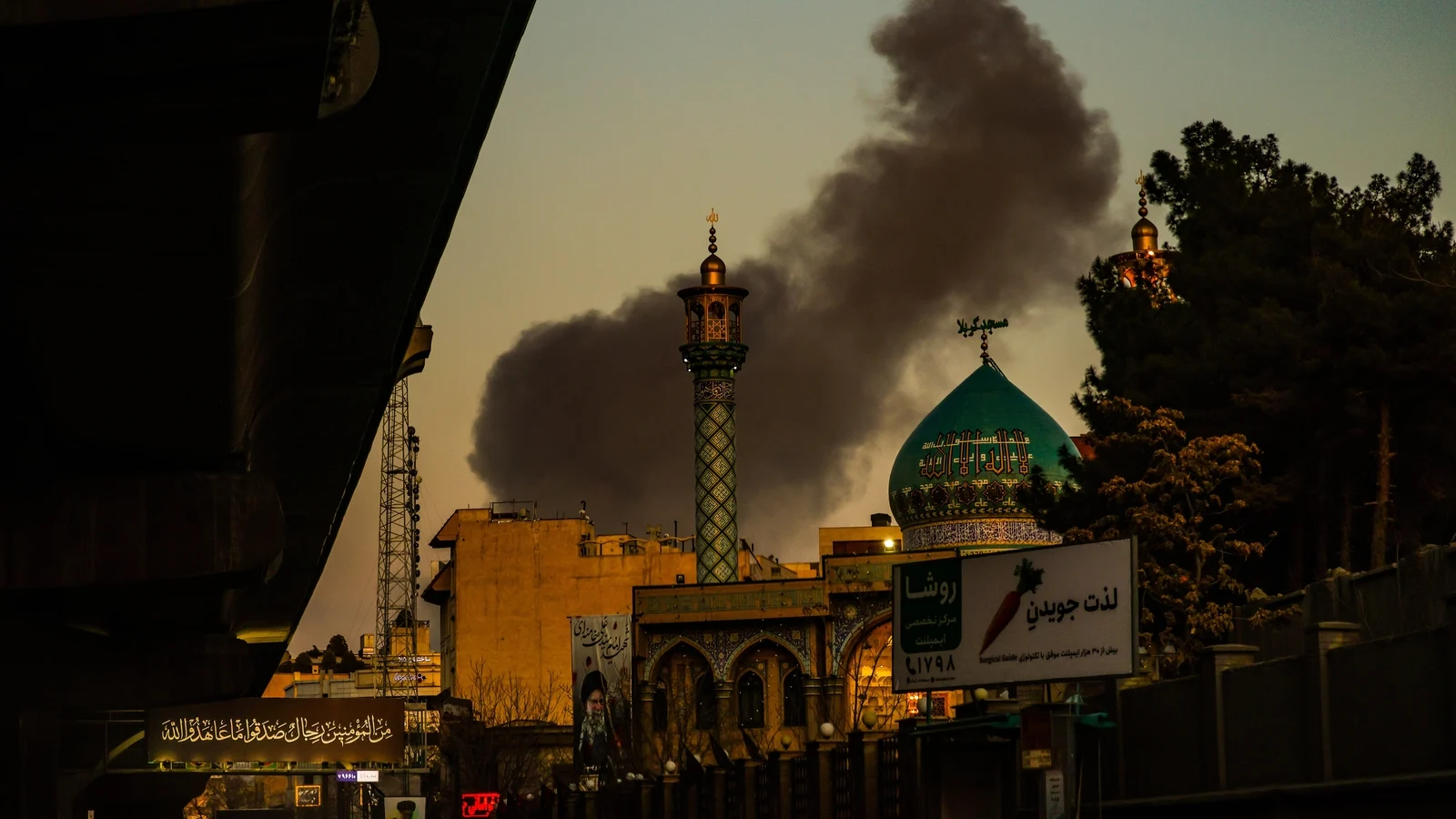
It began, as so many tragedies do, with a sound that should not belong to a capital city: a concussive boom, then the distant clatter of glass and the low, human roar that follows disaster. Tehran’s skyline — usually silhouetted by minarets and a slow, dust-hued light — lit up with smoke. In the space of hours, Sunday felt like a line being redrawn, borders and certainties blurred by missiles, sirens, and the smell of burning rubber.
This was not a small flare-up. Over the past week, more than 3,000 Iranian military targets were hit by US and allied forces, according to US Central Command: Revolutionary Guard headquarters, missile batteries, command-and-control centers, naval vessels and subs. Iran answered with missile and drone strikes on Israel and neighboring Gulf states. Israel, in turn, announced a “broad-scale” wave of strikes on Tehran. The briefest glance at the map shows why this is terrifying: Tehran, the Strait of Hormuz, Beirut, Baghdad — all nodes in a tight, combustible network.
On the ground: noise, smoke, fear
“I was at Mehrabad when the first blast happened,” says a taxi driver in western Tehran, voice rough from sleep and smoke. “We thought an earthquake had come. Then we saw the airport wing burning. People ran without shoes.” The photograph seared into the world’s feed — a plume rising above Mehrabad — is a portrait of shock and ordinary life interrupted.
In Lebanon’s battered south, where Hezbollah holds deep roots, hospitals overflow. The Lebanese health ministry reports at least 217 killed in Israeli airstrikes; the Norwegian Refugee Council says some 300,000 people have been displaced within Lebanon alone. “There is nowhere else to go,” a schoolteacher in Tyre said, as children huddled under blankets in a converted gymnasium. “We have become the story the world clicks past.”
Numbers That Matter — and Their Limits
- 3,000+ Iranian targets struck in recent US-led operations (US Central Command)
- Brent crude jumped to $92.69 per barrel — up 8.5% on the day and nearly 30% for the week
- At least 926 dead, according to Iran’s health ministry (AFP could not independently verify)
- 217 killed in Lebanon, per Lebanon’s health ministry
- Six US service members confirmed killed; three UN peacekeepers wounded
- Strait of Hormuz carries nearly 20% of the world’s crude oil and roughly 20% of global LNG
Numbers help to orient us. They do not, however, convey the sound of a neighborhood in Tel Aviv as sirens cascade through the early evening, or the small, private rituals families perform when burying a child. And numbers are always contested: casualty figures from hot zones are notoriously difficult to verify; claims and counterclaims swirl with propaganda and panic.
Energy on Edge: Why Markets Shudder
When a narrow waterway can carry a fifth of the world’s oil and gas, geopolitics is not just about flags and force — it is about kitchens and factories and the cost of getting to work. Traders watch the Strait of Hormuz like a pulse. Disruptions there ripple outward: Brent crude spiked to $92.69 a barrel, an 8.5% jump in a single day and nearly 30% in a week. For consumers, that looks like higher fuel bills. For emerging markets, it can mean recessionary pressure. For governments, it sparks debate about strategic reserves and alternative routes.
“The economy feels every bullet,” a tanker captain in Dubai told me. “If the sea lane closes or we can’t be assured of insurance, cargo sits in port — and prices rise before anyone has time to think.”
Voices from the Capitals: Power, Posture, and the Language of Ultimatums
If the language of war is blunt, so too has been the rhetoric from leaders. On social media, President Donald Trump wrote, “there will be no deal with Iran except unconditional surrender.” White House officials echoed a similar posture: that when the United States determines Iran no longer poses a threat, Tehran will have effectively capitulated whether it admits it or not.
“We’re tracking everything,” said US Defense Secretary Pete Hegseth on television, brushing off reports that Russia had shared intelligence with Iran. On the other side, Iran’s UN ambassador reminded the world that leadership succession, should it occur, would be a domestic matter: “The selection of Iran’s leadership will take place strictly in accordance with our constitutional procedures,” he said.
World leaders begged for a different path. UN Secretary-General António Guterres called for “serious diplomatic negotiations,” warning of a conflict that “could spiral beyond anyone’s control.” Even Russia’s Vladimir Putin voiced support for an immediate ceasefire in a conversation with Iran’s interim president, signaling that even adversaries fear the contagion of a wider war.
Diplomacy strained, humanitarian alarms sounding
Diplomacy feels like the most fragile thing in a room full of loud weapons. Humanitarian agencies are scrambling. Hospitals report shortages of medicine; refugee organizations speak of routes clogged with families fleeing bombardment. And yet negotiations stall: one side demands unconditional surrender, another vows to choose its destiny without foreign interference.
What Happens Next?
We stand at a crossroads that is both strategic and moral. Will this spiral into a long, grinding war? Will alliances fracture or harden? Will the global energy system adapt quickly enough to keep the lights on in distant homes?
Those questions are not rhetorical. They are practical: how much fuel should a household stock if prices surge? How many communities should brace for waves of refugees? How will fragile states in the region — already weakened by debt, drought and displacement — absorb more shocks?
“The failure is not in the missiles,” an aid worker in Beirut told me. “It is in our inability to imagine a world where these civilians are not collateral.”
Faces, Not Footnotes
Beyond the strategy rooms and market tickers, there are faces: children tracing the smoke lines in the sky, parents trying to remember where they left vital medicines, old men in coffee shops arguing about the last time diplomacy worked. Their lives are not statistics to be toggled on a newsfeed. They are small constellations of hope and despair.
As you read this, you might feel distant — and you should also feel implicated. Wars are made of decisions in rooms far away, but their consequences arrive at doorsteps nobody expected. What responsibility do we, as citizens of a connected world, bear to those living beneath the roar? How do we ensure our leaders choose restraint over rhetoric?
A Call to Watch, to Listen, and to Care
The immediate future is uncertain. Markets will continue to surge and dip, commanders will plan and replan, and humanitarian corridors will be negotiated and violated. What we can do is refuse to let numbers replace names; to remind ourselves that behind every strategic target is a neighborhood, behind every escalation, a child who will remember the sound long after the cameras leave.
For now, the streets are full of smoke and the feed is full of claims. Somewhere in between lies the truth — and the hard work of diplomacy, empathy, and rebuilding that will be needed once the guns fall silent.