A narrow throat, a loud threat: Iran says it will keep the Strait of Hormuz closed
The sea between Iran and Oman is rarely quiet. Fishing boats carve pale wakes against a blue that deepens into navy by the horizon. Container ships pick their slow way through the shipping lanes. And in recent days, the Strait of Hormuz — a narrow, strategic throat through which a staggering share of the world’s oil and gas flows — has become the scene of a renewed geopolitical standoff that feels, to locals and traders alike, both sudden and inevitable.
“They say if we are pushed, we will close it,” a port worker in Bandar Abbas told me on the phone, voice low, as the call dropped into the hiss of a nearby market. “It’s not a threat for us, it’s about survival. But everyone knows what closing the strait means.”
What happened
State media in Tehran reported a firm announcement: Iranian authorities said the Strait of Hormuz would be closed to international shipping if Western powers and their allies continued hostile measures — sanctions, seizures of Iranian oil, or attacks on Iranian vessels. The message was blunt, delivered with the uncompromising rhetoric familiar from years of rivalry between Tehran and Washington, and it landed across global markets with an immediate intensity.
The statement — carried by state broadcasters and amplified across social platforms and diplomatic briefings — framed the move as defensive. “This is not escalation for its own sake,” a senior official told Iranian television. “It is deterrence. Those who try to strangle our economy must understand the consequences.”
Why the Strait matters
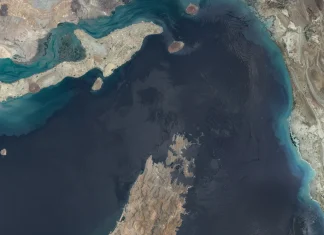
To understand why such pronouncements reverberate around the planet, imagine a single choke point through which a vast portion of the world’s energy must pass. The Strait of Hormuz, between Iran’s southern coast and Oman’s Musandam peninsula, is that narrow path.
Roughly one-fifth of the world’s seaborne crude oil moves through it on any given day. Tankers laden with crude, condensates and liquefied natural gas weave through its lanes; an interruption would ripple through energy markets, shipping insurance, and the already-fraught economies of energy-importing nations.
“When a chokepoint like Hormuz is threatened, markets don’t wait for the first shot to be fired,” said Leila Haddad, a maritime security analyst based in Dubai. “They price in risk. That drives up freight rates, insurance premiums, and ultimately consumer prices. The real victims are ordinary people at the petrol pump and families paying more for food and heating.”
On the ground: fear, defiance, and the daily grind
In Bandar Abbas, the city that serves as Iran’s southern gateway, life goes on with a stubborn normalcy. Merchants sweep dusty thresholds, children sell cold oranges, and the smell of strong tea floats from narrow alleys.
“Every time there’s tension, the city gets nervous,” said Fatemeh, who runs a small bakery near the docks. “Boats come in late, some fishermen don’t go out, and there are more soldiers in the streets. But the bread still must be baked.”
Fishermen, who have made these waters their home for generations, describe a mix of pride and anxiety. “This sea fed our grandfathers,” said Hassan, a weathered man with a sun-scoured face. “If politicians want to use it as a weapon, then they are playing with our lives.”
Across the strait in the Omani port towns, the mood is cautious. Oman has traditionally carved a path of neutrality, hosting negotiations in the past and acting as a middle ground. Local officials there express concern for civilian safety and the potential economic fallout.
Global reaction and the chessboard of alliances
Beyond the region, capitals reacted with alarm, measured statements, and emergency meetings. Western navies have long maintained a presence in the Gulf to ensure the free flow of commerce, and commercial shipping companies scrambled to assess risk and reroute where possible. Energy markets tightened; oil traders watched for spikes in price as uncertainty rose.
“Any closure — even a temporary one — is disruptive,” said Marcus Ellery, a shipping consultant in London. “It’s not only oil: the whole shipping ecosystem recalibrates. Container lines, bulk carriers, insurers, and lenders all react in ways that can last months.”
For governments, the calculus is delicate. Military options risk escalation; sanctions and diplomacy may not persuade a state that views its survival as threatened. Meanwhile, energy-importing countries weigh the short-term pain of higher prices against the long-term strategic imperative of diversifying supplies and accelerating a move away from fossil fuels.
Insurance, shipping costs, and the quiet cost of tension
One immediate, tangible effect of such threats is on the cost of doing business at sea. War risk and Gulf premiums — additional sums insurers charge to cover tankers and other vessels entering dangerous waters — often climb when tensions spike. In past episodes, premiums rose by double-digit percentages, pushing carriers to consider longer, more expensive routes around Africa’s Cape of Good Hope.
“Longer voyages mean higher fuel consumption and delayed deliveries,” said Ellery. “That feeds into higher prices for goods, and for countries dependent on maritime trade, those costs are significant.”
Local stories that reveal the global stakes
In a small café tucked behind the port, an English-speaking tugboat captain, Amir, sipped cardamom tea and reflected on the human dimension. “You think of geopolitics as abstract,” he said. “But when your crew asks if they will still get home to their families, it becomes very personal.”
An energy hedge fund manager in Singapore, on the opposite side of the globe, told me she watches geostrategic chatter more than economic reports these days. “Physical supply matters less now than expectations about supply,” she said. “A credible threat to Hormuz inflates risk premiums and changes positions instantly.”
What comes next — and what this moment asks of us
Will the Strait of Hormuz actually be closed? History shows that while Tehran has at times threatened or briefly restricted passage, a full-scale closure would be a major, risky step with global consequences. Diplomacy, back-channel engagements, and economic calculations will all play a part in the coming days and weeks.
But the declaration opens a larger conversation about vulnerability. How do we manage chokepoints in a world still heavily reliant on maritime flows of energy? How do ordinary people — fishermen, port workers, families — cope when their lives are caught between geopolitical giants? And perhaps most importantly, how do nations de-escalate once brinkmanship becomes the instrument of policy?
“We often focus on tanks and jets,” said Haddad, the analyst. “But modern conflict is also economic and maritime. The sea can be a battlefield without a single missile. That should worry everyone — especially when the livelihoods of millions are at stake.”
Questions to sit with
- How resilient are global supply chains to sudden disruptions in strategic chokepoints?
- What responsibility do major powers have to defuse tensions that threaten global commons like the oceans?
- And how do we support the communities who live on the fault lines of geopolitics — those whose daily work can be upended overnight?
For now, the strait remains a living, breathing place — gulls wheel, engines hum, and the people who depend on these waters watch and wait. The world watches too, because when a narrow stretch of water is threatened, the consequences are not contained by borders. They ripple outward — into markets, into kitchens, into the quiet anxiety of parents checking the news as their children sleep.
In the end, the question is not only whether the Strait of Hormuz will be closed. It is whether the world will choose mechanisms — diplomatic, economic, and structural — that reduce the risk that a single choke point can hold so much of our collective future in suspense.