Paris in the Crosswinds: When a Middle East flare-up tests the West’s resolve on Ukraine
Paris in late winter felt both familiar and strange: the smell of roasting chestnuts around the Madeleine, the metallic hum of armored vehicles rolling discreetly through a quieter-than-usual government quarter, and the brisk choreography of statespeople who keep trying to stitch an old order back together.
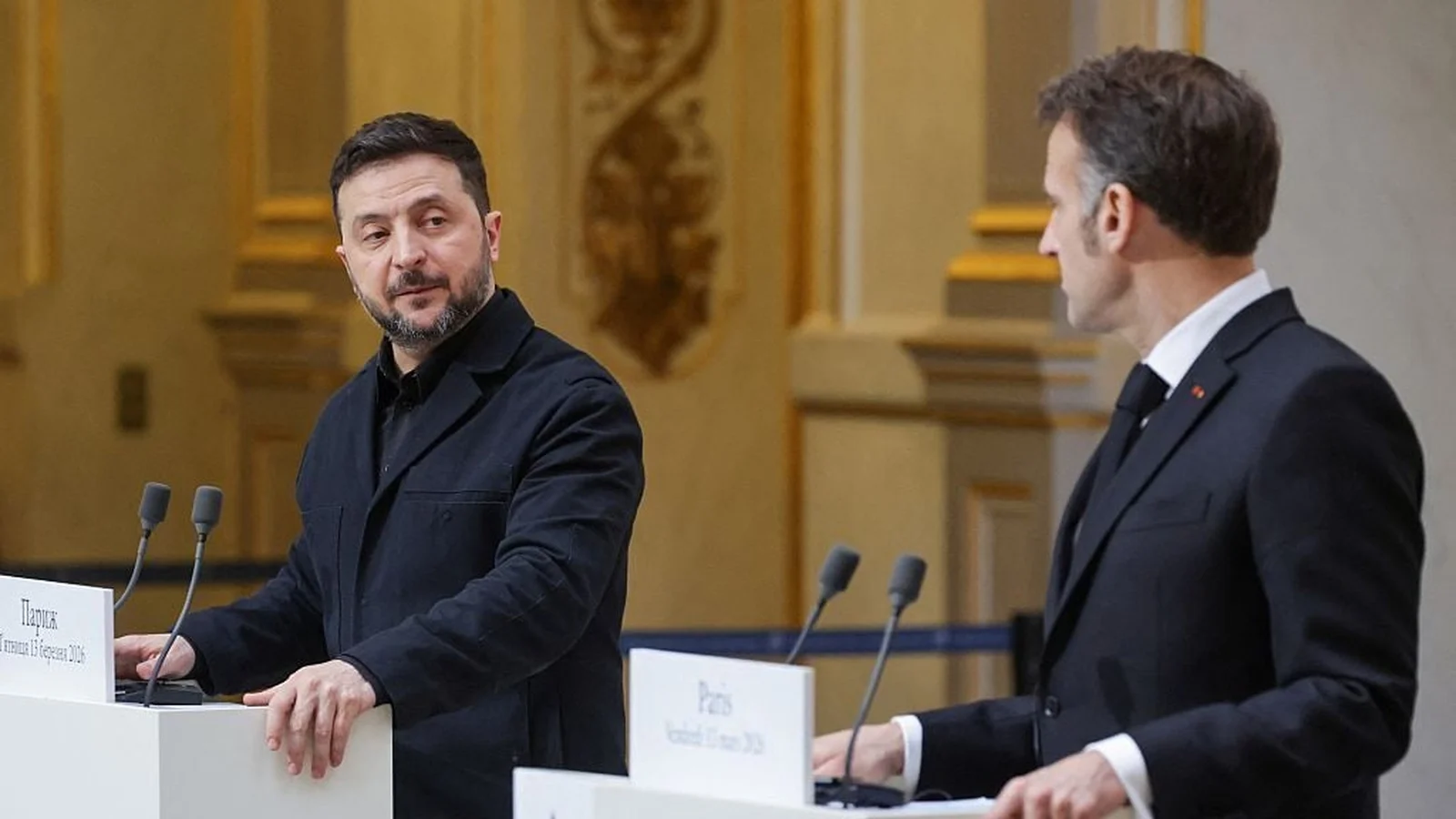
At the Élysée Palace, President Emmanuel Macron and Ukraine’s Volodymyr Zelensky sat, cameras already warmed, shoulders squared against the noise. They were not talking only about parades and protocol. They were talking about how a war in a different corner of the world—bloodier, noisier, and suddenly threatening to choke global energy markets—had sent ripples across the map, making the already fragile campaign to isolate Moscow that much harder to sustain.
Pressure and pause
“Today Russia may believe that the war in Iran will offer it respite. It is mistaken,” Macron told reporters, his voice carrying the weary cadence of a leader who knows geopolitics is often less about moral clarity than messy arithmetic.
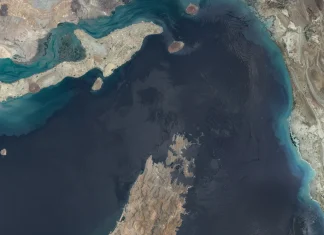
That arithmetic changed after a regional escalation around the Strait of Hormuz—where roughly one-fifth of the world’s traded oil moves each day—pushed oil prices above the $100-a-barrel mark. In response, Washington temporarily eased restrictions on certain sales of Russian oil already at sea, a stopgap aimed at calming markets and capping consumer pain.
The move set off an immediate debate between realpolitik and deterrence. Zelensky was blunt: “This one concession alone by the United States could give Russia about $10 billion for the war. This certainly does not help peace,” he said in Paris, a figure that landed like a cold splash of water on a room already full of anxious ministers and analysts.
Why a temporary oil concession feels like a betrayal to some
To many in Kyiv, the optics were damning. Sanctions are not merely economic levers; they are the symbolic scaffolding that has sustained Ukrainian resistance for more than two years. When cracks show, morale can be affected—among soldiers in trenches and diplomats in conference rooms alike.
“When the price of a loaf of bread goes up in Lviv and the politicians in Brussels argue over technicalities, people ask: who is paying attention?” said Olena Hrytsenko, a schoolteacher in the capital who volunteers at a refugee support center. “We need solidarity, not calculations that look like short-term fixes.”
Allies gathered elsewhere echoed that unease. Germany’s chancellor warned publicly against any loosening of sanctions, while European Commission deliberations over a stalled €90 billion loan to Kyiv became entangled with bilateral bargaining in Budapest.
Hungary’s decision to block both the loan and new sanctions—citing in part the unresolved question of oil deliveries via the Soviet-era Druzhba pipeline—sent a clear signal: unity is fraying at the edges, and when cohesion falters, the costs are not just diplomatic. They are strategic.
Shadow fleets, tankers, and the mechanics of evasion
One of the most vivid images from the last week is not a politician at a podium but a tanker bobbing in the ocean, its name painted on the hull, its papers—sometimes—elsewhere. The so-called “shadow fleet” of tankers that circumvent sanctions has become a mainstay of modern economic warfare.
“You can change flags, you can alter transponders, but you cannot erase where the oil came from or where the money ends up,” said Vanessa Omar, an energy analyst who tracks maritime sanctions. “Targeting these networks is one of the few levers that actually constrains the cash flow to Moscow.”
Macron and Zelensky discussed ways to crack down on that network—measures ranging from tougher port inspections to coordinated intelligence sharing on beneficial ownership. Yet pursuing those policies while also trying to keep oil markets calm is politically fraught.
On the ground: The human ledger of a distant, expanding conflict
Outside the talking points, life in Ukraine has been punctuated by tragedy. A Russian strike on a bus near Kupiansk killed three civilians, a grim reminder that the fighting is not an abstract condition recorded in briefings but a daily danger in towns and villages along the front.
“No map shows the smell of smoke in the kitchen,” said Mykola, a retired electrician who fled his village last year. “Maps don’t show the children’s shoes left under beds because they had to run.”
Meanwhile, France publicly acknowledged its first combat death in the regional hostilities when a soldier died while serving in Iraq’s autonomous Kurdistan region—an operation officials described as defensive in posture but perilous in reality. Zelensky condemned the attack as “despicable,” calling on Tehran to restrain its proxies and end assaults on neighboring states.
Technology, alliances, and the factories of war
Amid the grim news, there were also scenes of ingenuity and alliance-building. Zelensky’s stop in Bucharest culminated in a pact to produce drones jointly—an emblem of how 21st-century warfare often rests as much on chips and propellers as on tanks and trenches.
“We can make a drone here in three weeks that costs a fraction of an old missile and does the job of deterrence,” said Ana Popescu, an engineer at a Romanian aerospace firm contracted to the program. “That is a lifeline for countries like ours and like Ukraine.”
Across Europe, defense ministers are recalculating what support means: more munitions, faster deliveries, coordinated air defences, and the hard logistics of training and maintenance none of which can be conjured overnight.
What does this mean for the rest of us?
Ask yourself: when a conflict thousands of kilometers away lifts the global price of fuel by ten or twenty dollars a barrel, who bears the burden? Consumers in Madrid? Fishermen in Senegal? A mother in Kyiv deciding whether to stay or flee again?
We are seeing how interdependent the globe has become—and how fragile those connections are. Sanctions, oil markets, regional wars, and political disagreements in the European Union all thread together into outcomes that are unpredictable and often painful.
If unity among democracies weakens, the world risks sending two messages at once: higher prices at the pump and a lower appetite for deterrence. Neither comforts the people in dugouts or those queuing for humanitarian aid.
Paths forward
There are, broadly, three approaches on the table:
- Maintain pressure: Keep sanctions tight, accept short-term market turmoil, and focus on long-term degradation of Moscow’s war-making capacity.
- Manage markets: Allow temporary exceptions to stabilize energy costs, while beefing up enforcement against evasion and committing to a clearer timeline for renewals.
- Hedge and protect: Combine aid and sanctions with emergency economic measures for vulnerable states to offset immediate shocks.
Which do we choose? Leaders in Paris, Kyiv, Warsaw, and Washington wrestle with this question every day. Their choices will echo not just in treaty rooms but in kitchens, classrooms, and hospitals across two continents.
In the end, the scene in Paris was less about a single statement than about the labor of keeping a coalition together in a moment when the world is simultaneously smaller—and more fragmented—than many of us imagined. It was, for a brief hour, the human face of geopolitics: a president who has been in office through protests and pandemics, a wartime leader whose city still schools refugees, and advisers cross-legged over maps saying, in many languages, “not now; not together.”
We are left with a simple, unsettling question: can international resolve be flexible enough to protect ordinary people from price shocks, yet firm enough to deny a would-be aggressor the funds to wage war? The answer will shape more than policy papers. It will shape lives.