A New Captain for the BBC: A Tech Chief Steps Into the House of Broadcasting
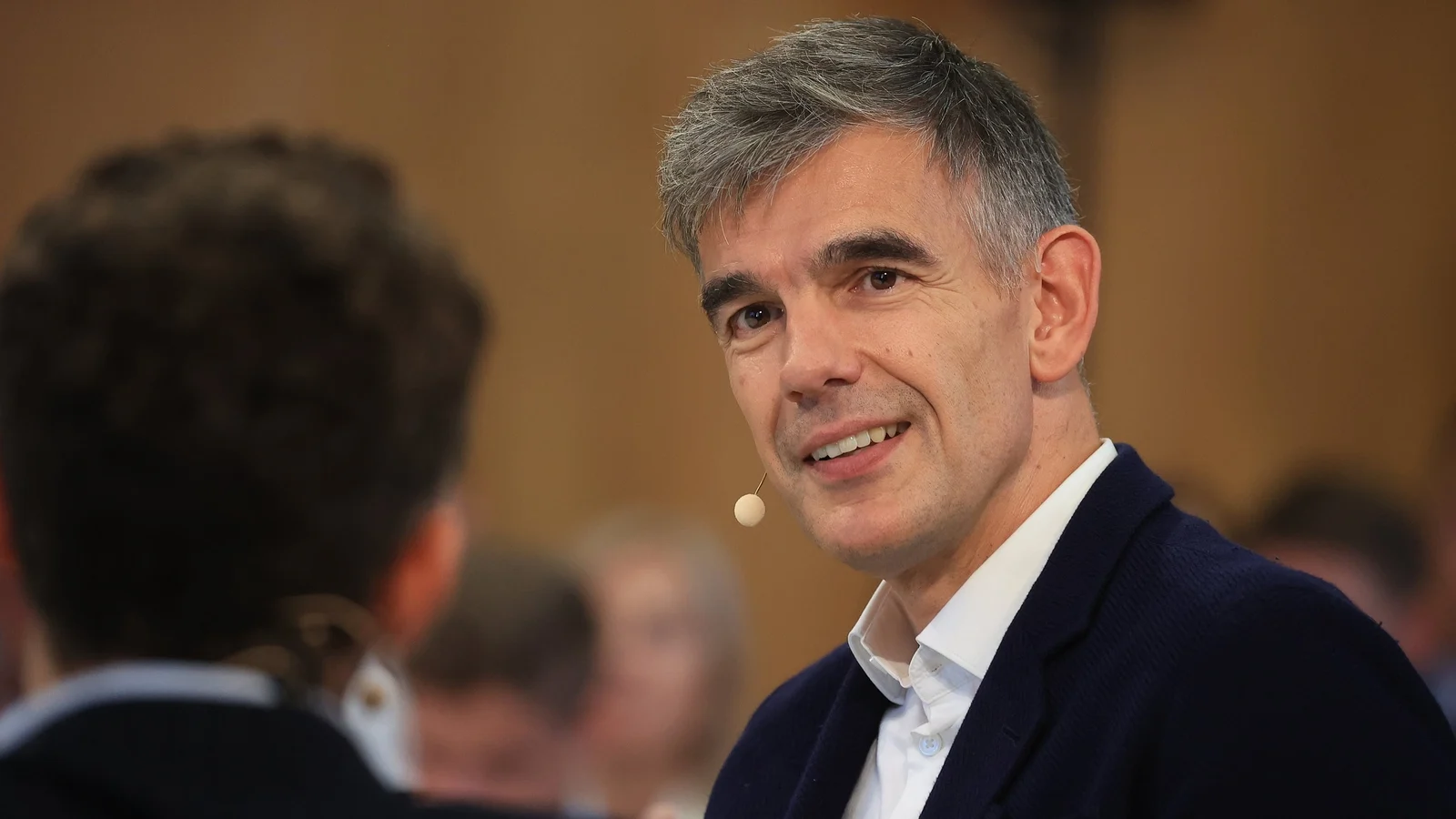
On a bright morning that felt faintly like a stage cue, the corridors of Broadcasting House in London—those familiar, Art Deco arteries where the BBC’s heartbeat is still heard in the hum of printers and the clack of keyboard strokes—welcomed a new figure. Matt Brittin, 57, former Google executive and now the newly appointed Director General of the BBC, will take up the reins on 18 May. The news landed like a stone dropped into a wide pond: ripples of curiosity, relief, scepticism and cautious optimism spread from Salford’s MediaCity to living rooms in Accra, Delhi and Sydney.
“Now, more than ever, we need a thriving BBC that works for everyone in a complex, uncertain and fast changing world,” Brittin said in his first public words after the appointment. “At its best, it shows us and the world who we are.”
From Boat Races to Boardrooms: An Unconventional Path
His résumé reads like a modern fable of reinvention. A Cambridge alumnus who rowed in three consecutive Boat Races and represented Britain in Seoul in 1988, Brittin has the kind of sporting pedigree that still inspires a wry sort of respect in the newsroom—a reminder that discipline, rhythm and teamwork cut across life’s arenas.
After early stints at McKinsey and a near two-decade run at Google—where he rose to become the company’s president for Europe, the Middle East and Africa—Brittin has been described by colleagues as “relentlessly curious” and “strategic-minded.” He was honoured with a CBE in the King’s New Year honours list for services to technology and digital skills, and his transition into public broadcasting feels, to some, like an emblem of the times: the diffusion of tech-sector leadership into civic institutions.
Quick facts
- Start date: 18 May
- Salary: £565,000 (€652,000)
- Background: Former McKinsey consultant; nearly two decades at Google, latterly president for EMEA
- Athletics: Member of 1988 British Olympic rowing team; bronze at 1989 World Rowing Championships
He’s Taking Over in Stormy Waters
Brittin inherits an organisation still raw from recent controversy. Tim Davie resigned in November 2025 amid backlash over a Panorama edit of a speech by Donald Trump; Deborah Turness, the Chief Executive of BBC News, stepped down at the same time. Those exits marked a rare leadership rupture at an institution that, for more than a century, has anchored British public life.
“This is a moment of real risk, yet also real opportunity,” Brittin acknowledged. “The BBC needs the pace and energy to be both where stories are and where audiences are.” It is a clarion call, and one that hints at the balancing act ahead: preserve the BBC’s editorial standards and public-service ethos while racing to meet audiences that increasingly live on screens other than the television.
Inside the Building: Voices from the Ground
In the canteen on the lower ground floor, over mugs of builder-strong tea, reactions were mixed. “We need someone who understands platforms and audience behaviour,” said one senior editor who asked not to be named. “If he can bring pace without eroding editorial independence, that could be transformative.”
A long-serving producer, leaning against a column stacked with scripts, was more guarded: “We’re not Google. You can’t just scale people’s attention the way you scale ad clicks. Our currency is trust.”
Outside the BBC, the response has been global. A freelance journalist in Nairobi noted, “British media sets a tone internationally. If the BBC adapts well, it can help elevate journalism standards elsewhere. But if it pivots too hard towards metrics, we risk losing nuance.”
A media analyst in New York offered a wider perspective: “This appointment signals an acceptance—however reluctant—that public broadcasters must grapple with the realities of a digital marketplace dominated by algorithms. Whether a former tech executive can tilt things without compromising public service values is the central question.”
What’s at Stake: Trust, Money, and Modern Audiences
The BBC is not simply a broadcaster; for many it is a national ledger of stories—history, comedy, investigation, and weather warnings. It remains one of the world’s most recognizable public broadcasters, with “over 100 years of innovation in storytelling, technology and powering creativity,” as Brittin himself put it. But the engine that kept that legacy running—public funding via the licence fee, a remit enshrined by charter—faces relentless pressure.
How do you modernise a hundred-year-old mission for a generation that fragments its attention across apps, podcasts and short-form video? Brittin’s tech background suggests an appetite for data-driven strategy: where are audiences drifting, how do they want news curated, and what formats work for what platforms? Yet the cautionary voices are many: journalism cannot be reduced to engagement metrics alone.
Culture Clash or Convergence?
There is also a human question: will the culture of Silicon Valley—fast, iterative, numbers-led—clash with the BBC’s slow-burn craft of investigative reporting and documentary-making? Some staff worry about performance metrics, others see an opportunity to sharpen digital storytelling.
“I’ve worked with Matt,” a former colleague from his Google days told me. “He’s pragmatic and obsessed with outcomes. That can be a gift for an organisation needing focus. But he listens. And in the BBC, listening will have to extend beyond boardrooms to communities across the UK and overseas.”
A New Playbook? The Deputy and the Details
The BBC has said Brittin will appoint a Deputy Director General—an arrangement that could help balance bold direction with institutional continuity. There’s also the practical matter of leadership bandwidth: the salary—£565,000 a year—signals the seriousness of the role and the expectations that come with it.
And then there’s the public: pensioners in garden chairs in seaside towns, commuters on packed Tube carriages, students in shared flats, and world audiences watching BBC World Service broadcasts. Each brings a different sense of what the BBC should be.
Why This Matters Beyond Britain
At a time when global democracies wrestle with misinformation, concentrated media power, and the ethics of algorithmic distribution, the direction the BBC takes matters far beyond the UK’s borders. A stronger, nimble public broadcaster could be a model for twenty-first-century media stewardship. A misstep, conversely, could be instructive in how not to marry tech and public service.
So here’s my question to you, the reader: what do you want from your public broadcaster in 2026 and beyond? Do you want the BBC to chase audiences where they live—on apps and social platforms—or to double down on slow, painstaking, investigative work that upholds accountability even if viewership is smaller? Can a former tech leader reconcile both?
Closing Notes: Trust, Time, and the Telling of Stories
Matt Brittin walks into a building full of history but also full of unanswered questions. He has spoken about humility—”to listen, to learn, to lead and to serve the public”—and he arrives with a mix of business discipline and athletic rhythm. Whether that blend is the tonic the BBC needs will be tested in editorial decisions, funding debates, and the quiet metrics of public trust.
For the journalists at the BBC, and the millions who rely on its programmes, this is a hinge moment. Change is inevitable. The choice now is how to shape it: with haste, heed and heart, or with a gaze toward the next viral metric. As the newsroom settles and the first editorial meetings begin, everyone will be listening—not just for strategy memos, but for the tone this new leadership sets. After all, at its best, the BBC does not only tell us the news; it reflects something of who we are. The next chapter is about to be written, and the pen is in new hands.