A Senate on Edge: Gunfire, a Fugitive Senator, and the Philippines’ Quiet Crisis
They say the city never sleeps, but on a humid midday in Pasay, the Philippine Senate felt like a trapped heartbeat — quick, jagged, uncertain.
At least five shots cracked through marble corridors and glass-paneled offices, sending senators, staff and journalists into the small sanctuaries of their rooms and closets. For a while the giant building that houses the Senate felt less like a temple of law than a bunker: lights dimmed, voices whispered, and papers rustled like the sound of a country holding its breath.
“We heard them — pops, really, like someone letting off a starter pistol,” said a legislative aide who asked not to be named. “Then the panic. People were under desks. We didn’t know if it would get worse.”
Why the Shots?
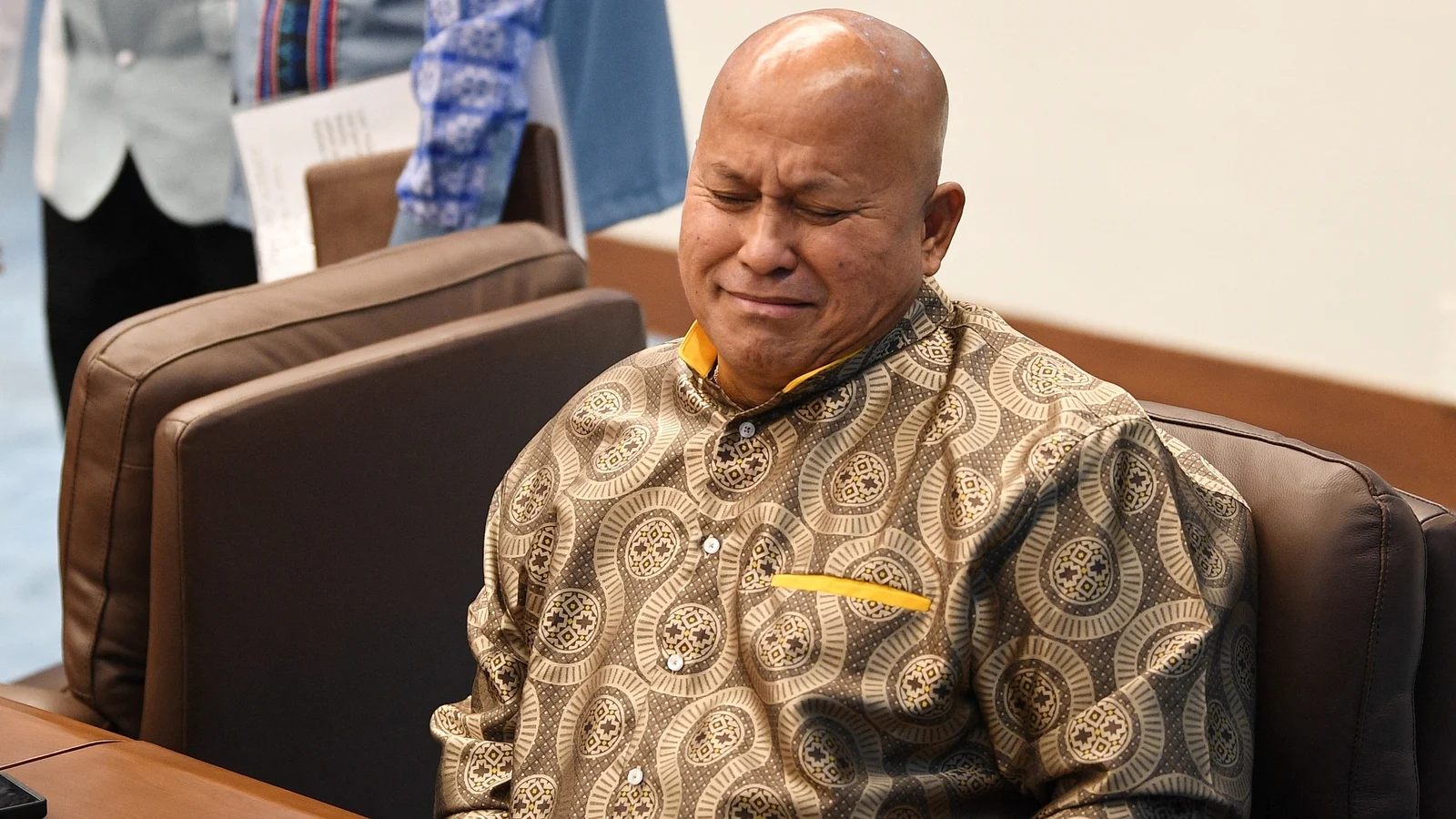
The scene unfolded around one central fact: Senator Ronald “Bato” Dela Rosa — the former national police chief who rose to fame and infamy during the Duterte-era anti-drug campaign — was sheltering inside the Senate complex as authorities sought to detain him ahead of transfer proceedings tied to an International Criminal Court inquiry.
Interior Secretary Juanito Victor Remulla arrived on the scene and told reporters there were no casualties and that the hunt for whoever fired the shots was ongoing. “I am here to ensure the integrity of the Senate and the protection of all the senators,” he said, adding that Mr. Dela Rosa was “safe” and “accompanied by security personnel.”
“We have assured him there is no warrant of arrest to be served,” Mr. Remulla said — a statement that only amplified tensions between branches of government and left many Filipinos asking: who speaks for the rule of law when institutions themselves seem divided?
Voices from Inside
Senate President Alan Peter Cayetano, who drew a line around his chamber to prevent agents from entering, posted online that he didn’t know who had fired the shots. “Everyone’s locked in their rooms now. We cannot go out, we cannot secure our other staff. Why are we under attack here?” he wrote, echoing the bewilderment many felt.
Melvin Matibag, director of the National Bureau of Investigation — whose agents had attempted to serve detention papers earlier — denied that his officers fired any shots, saying his unit had been on “stand down” at the time. “There were no NBI agents inside the Senate when the shooting occurred,” he told local media.
A television reporter, visibly shaken, fought back tears while broadcasting from inside the building; Senator Robin Padilla urged the pack of journalists to evacuate for their own safety. The images were surreal: a democratic chamber converted into a place where people hid, whispered and prayed.
Context: The Long Shadow of the Drug War
To understand why a Senate building could be the refuge for a politician accused in an international inquiry, you need to look at what the Philippines has lived through for the last decade.
Mr. Dela Rosa, nicknamed “Bato” (rock), served as national police chief from 2016 to 2018, during the early and most violent phase of former President Rodrigo Duterte’s war on drugs. Human rights groups say thousands died in police operations and vigilante-style killings; the damage is not merely numerical but social. Families still mourn; communities still carry the memory of sudden knock-at-the-door funerals.
The International Criminal Court has been watching. The prosecutor opened a preliminary examination in 2018 into possible crimes against humanity in the context of the anti-drug campaign, and human rights organizations have urged international attention for years. Whether and how national courts engage with those allegations has become not only a legal question but a political one.
What this Moment Means
When a senator sought sanctuary inside the Senate to avoid transfer abroad, it crystallized tensions around sovereignty, accountability, and the limits of power. Who can be arrested, by whom, and where — these are not hypothetical questions in the Philippines right now. They are being answered, fractiously and publicly.
“This isn’t about one man,” said Ana Rivera, a human rights lawyer in Manila. “It is about whether institutions — courts, legislatures, the executive — can cooperate to pursue justice without turning the pursuit into a spectacle that shields the powerful.”
Beyond the Building: A Nation Watching
Across Metro Manila, people watched broadcasts on small TVs in sari-sari stores and over coffee in street-side carinderias. In one barangay, an elderly vendor said she couldn’t sleep, remembering the late nights when sirens used to run through the neighborhood.
“We want peace, yes, but not this kind of silence where people are afraid to speak,” she said, fingers wrapped around a cup of black coffee. “We need courts, but they must not be used as a way to hide.”
Polls over the past several years show that public trust in institutions in the Philippines has been fragile; for many, the spectacle in the Senate will deepen questions about checks and balances. Does political solidarity matter more than the rule of law? When national pride meets international law, who wins?
Quick Facts
- Location: The Senate of the Philippines meets in the GSIS Building in Pasay City, Metro Manila.
- Senator involved: Ronald “Bato” Dela Rosa — former national police chief (2016–2018).
- Allegations: Linked to the Duterte-era anti-drug campaign; subject of ICC attention regarding alleged crimes against humanity.
- Immediate outcome: No fatalities reported after the shooting; investigation ongoing.
What Comes Next?
The Supreme Court ordered the government to respond within three days to Mr. Dela Rosa’s petition seeking to bar arrest and extradition — a judicial move that adds a new layer to the already complicated legal chess match.
International observers will be watching closely. How the Marcos administration handles this incident — which pits legislative protection against judicial process and international scrutiny — may signal how the Philippines navigates overlapping authorities in the future.
“This episode is a test,” said Mark Santos, a constitutional expert at a Manila university. “It tests whether political loyalties can override due process, and whether institutions will act as guardians of the state or as private clubs protecting their own. The answer will define the shape of Philippine democracy for years.”
Questions to Sit With
As you read this from anywhere in the world, consider: What does it mean when a lawmaker becomes a fortress? How should a society balance national pride and international accountability? And perhaps most urgently: how do everyday people — families who lost sons, daughters, neighbors — see justice being served?
The Senate’s marble floors will be scrubbed and the bullet casings collected. But the stains are deeper than the visible ones. Trust, once splintered, takes time to mend.
For now, the country waits. The Senate remains a room of many voices — some loud, some trembling — and outside, the city keeps walking, trading, gossiping and grieving, as nations do when history knocks a little too loudly at the doors of power.