Under a Furnace Sky: Coachella’s Opening Salvo
By late afternoon the desert becomes a mirage of sequins. Heat and helium mingle; the wind smells faintly of sunscreen, coffee, and diesel. In the long shadow of the San Jacinto mountains, a sprawling sea of tents, art installations and sunburnt shoulders rolls and hums — Coachella is awake.
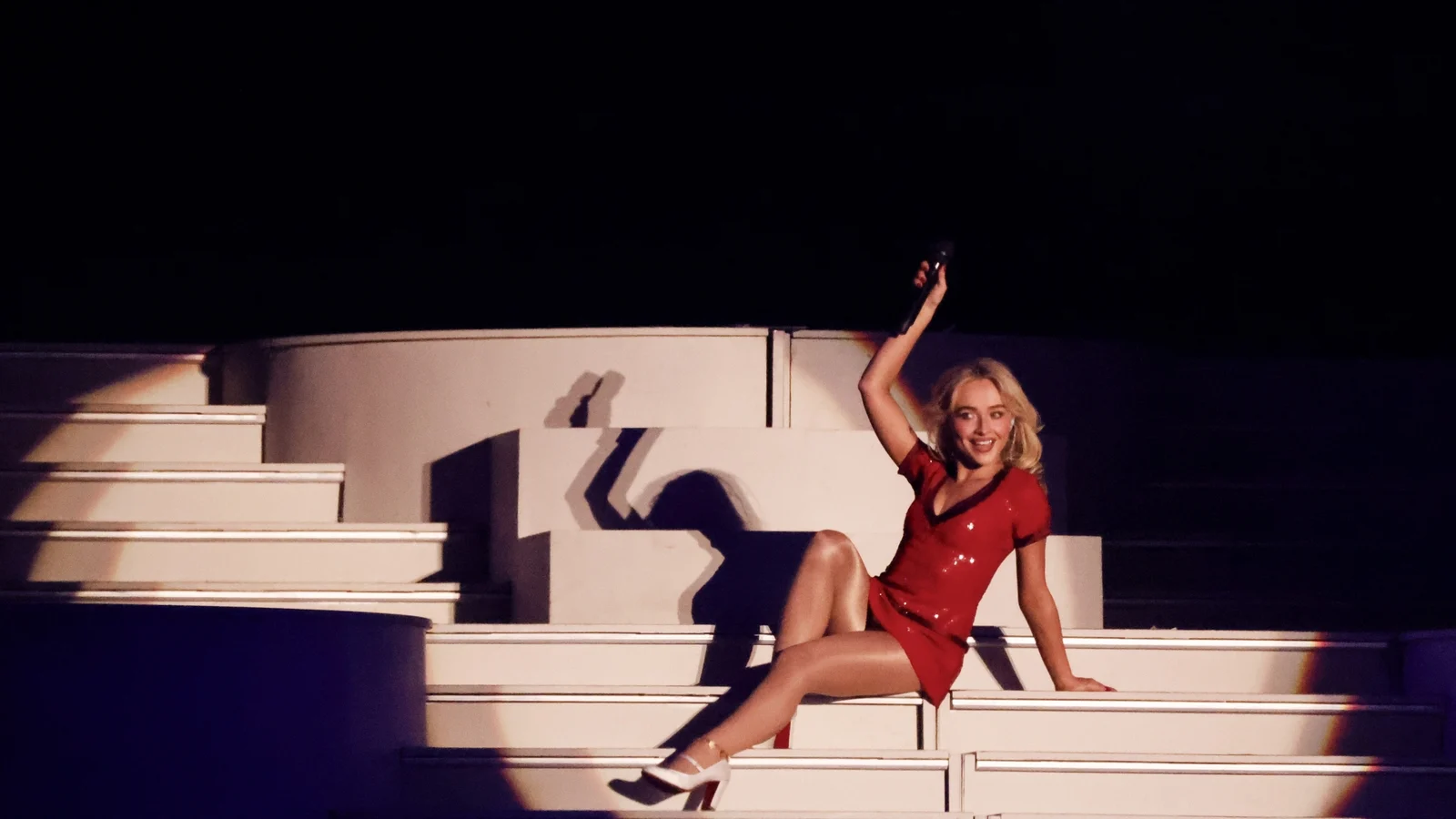
This year’s festival, staged across two back-to-back weekends in Indio, California, arrived like a promised confection: glossy, loud, and unapologetically theatrical. Sabrina Carpenter took the opening-night mantle, leaning into camp and cinema with a spectacle she called “the most ambitious show” of her career. Around her stage, fans queued for slushies, posed by a pastel station wagon, and wandered through a faux gas-stop set that felt equal parts pop video and roadside shrine.
“I wanted people to walk in and understand a whole mood — like stepping into a movie that I made,” Carpenter said in a pre-show interview. “There’s warmth, there’s heartbreak, then there’s glitter.” It landed. The crowd sang along to the hits and to the newly minted anthems, phones lifted like constellations in constant motion.
Style, Sound, and the Art of Place
If Coachella has its own dialect, it’s a blend of cowboy boots and crop tops, utility belts and glitter tears. On opening night, outfits read like love letters to two decades of festival fashion: western fringe met retro cargo shorts; vignettes of K-pop fan merch popped beside thrifted ’90s flannels.
“You don’t come here just for the music,” said Lina Luaces, a former pageant winner from Havana who now lives in Miami and came to Indio with a group of friends. “You come for the feeling — for the ability to be loud and ridiculous and beautiful at the same time.” She propped herself on a vintage car by Carpenter’s installation, laughing as a nearby influencer lined up a shot.
More than style, the festival plays a role as a cultural crossroads. Organizers estimate daily capacities in the tens of thousands — historically Coachella has accommodated roughly 125,000 people per day during its three-day weekends — creating a churn of fans, staff and artists that ripple through the Coachella Valley economy. Hotels and short-term rentals near Palm Springs report bookings for weeks around the event, local restaurateurs say revenue can spike dramatically, and even taxi drivers triple their fares between sets.
Echoes of the Past, Beats of the Present
Friday’s lineup threaded the needle between nostalgia and the contemporary. Veteran acts such as Moby shared billing with emerging voices like Teddy Swims, while Irish indie artists CMAT and NewDad added a spritz of melancholy to the desert air.
There is a deliberate architecture to the billing: legacy acts draw generations while newer, streaming-era stars pull in younger, highly engaged audiences. On Saturday the nostalgia turns up a notch; expect a deep dive into the aughts with The Strokes returning to festival stages after a long creative exile, industrial pioneers Nine Inch Nails merging with electronic provocateurs, and the perennial crowd-pleaser Justin Bieber set to stir whispered “Bieber fever” among longtime fans.
“Festivals today trade in memory as much as discovery,” observed Dr. Amara Singh, a music industry analyst at UCLA. “Curators are building setlists that act like playlists for entire lifetimes — part comfort, part curiosity. It’s a smart way to capture multi-generational audiences and keep streaming numbers high all summer.”
Global Sounds, Borderless Stages
Coachella’s real power is its ability to collapse distance. From the polished choreography of K-pop star Taemin to the reggaeton thunder of Colombia’s Karol G, the festival maps the world into six stages of spectacle.
Karol G’s headline set represents a cultural milestone: a superstar of Latin music taking a prime-time slot, bringing with her the tropical, carnival-inflected aesthetic of her latest project, Tropicoqueta. With eight Latin Grammy wins to her name and a repertoire that traverses reggaeton, pop and Caribbean rhythms, she’s expected to weave a show steeped in color and choreography.
“This is for the girls who grew up on my music,” Karol G told reporters. “If my abuela could see this, she’d shout.” Her performance will carry not just songs but symbols — of visibility, of mainstream doors opening wider for Latinx artists on global stages.
Saturday night also spotlights BIGBANG, the K-pop pioneers marking two decades together with a rare international comeback. Across the grounds, techno pillars like Armin van Buuren and Adam Beyer will hold court, while David Guetta and Fatboy Slim promise to send old-school dancefloor anthems spiraling into the night sky.
Influencers, Intimacy, and an HBO Finale
The festival has never tried to be highbrow; instead it revels in the collision of pop culture’s many vectors. Social-media-born stars like Addison Rae now hold main-stage spots, reflecting the era in which virality births careers. Meanwhile, Coachella’s organizers are aware of spectacle’s second act — the streaming and social commerce that monetize every stage dive and costume reveal.
In another cultural cross-over, festivalgoers will gather for an open-air screening of the first episode of Euphoria’s third season, a savvy nod to serialized storytelling’s place in young audiences’ emotional lives. Zendaya’s series, which explores themes of redemption and consequence, dovetails oddly but perfectly with Coachella’s own narratives of transformation.
- Mainstage diversity: Pop, reggaeton, techno, indie and K-pop across nine stages.
- Audience scale: Daily capacities historically estimated around 125,000 fans per day during each three-day weekend.
- Economic ripple: Local hotels and hospitality businesses typically see bookings spike in the weeks surrounding the festival.
More Than Music: Questions and Consequences
For all its glitter, Coachella prompts harder questions. How sustainable is staging mega-events in the desert amid rising heat waves? What responsibility do festival organizers have to minimize environmental footprints and support local communities year-round? Are we curating culture or packaging it?
“There’s a balancing act between celebration and stewardship,” said Rosa Hernandez, owner of a family-run taco truck that parks near the festival gates every spring. “We love the business, but we want it to last. We want cleaner setups, better water access, and respect for the land that feeds us.” Her truck’s line snakes hours before the headliners, a reminder that livelihoods, too, pulse beneath the spectacle.
And what of the crowd? Beneath the glitter and the glow, Coachella feels like a massive, communal exhale — a place where strangers become companions for a night, where teenagers find identities and veterans revisit youthful rites. For many, the festival isn’t only about who’s on stage; it’s about rituals: the first shared drink, the midnight sunburn, the friend you met in line who might become a lifelong pen-pal.
So what does it mean when art becomes event and events become global? Coachella answers in beats and costumes, in headline names and surprise reunions. It also asks us to reckon with our appetites — for nostalgia, for novelty, for community — and with the planet we borrow every time we gather in the open air.
As the first weekend wraps and sets are reconstructed for the second, the desert exhales, already carrying the next chorus on the wind. Will you be there to hear it?